

The DOI matches its Crossref record; 1 of the 1 references it cites were found in a registry or an index.
Mining the biosynthetic landscape of lactic acid bacteria unearths a new family of RiPPs assembled by a novel type of ThiF-like adenylyltransferases
Open accessPreprint — published as 10.1021/acsomega.4c03760
Abstract
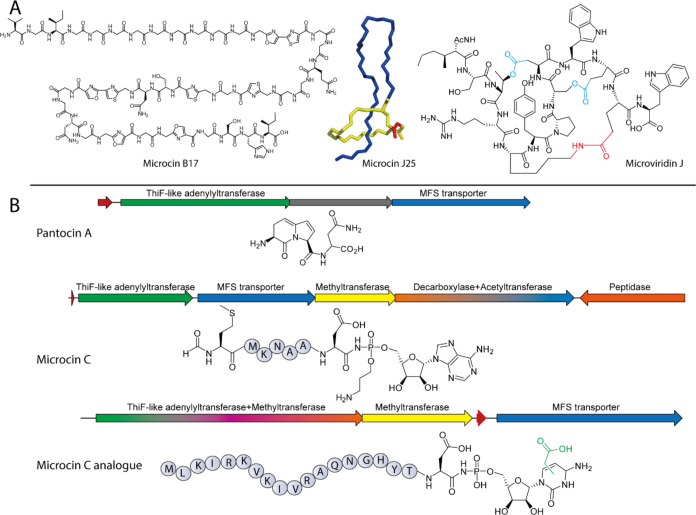
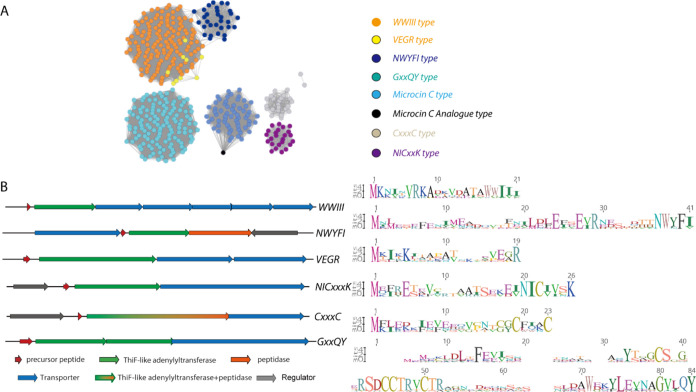
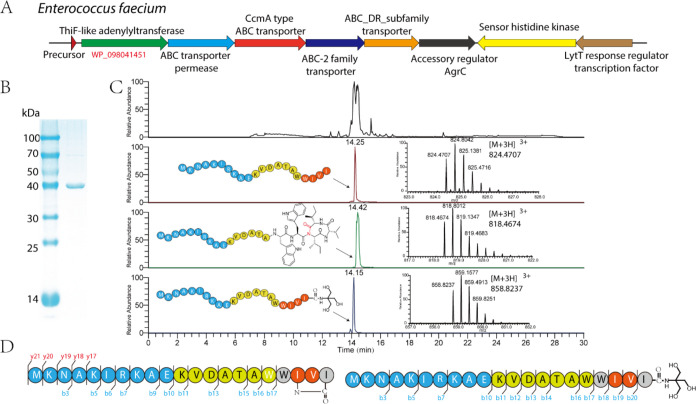
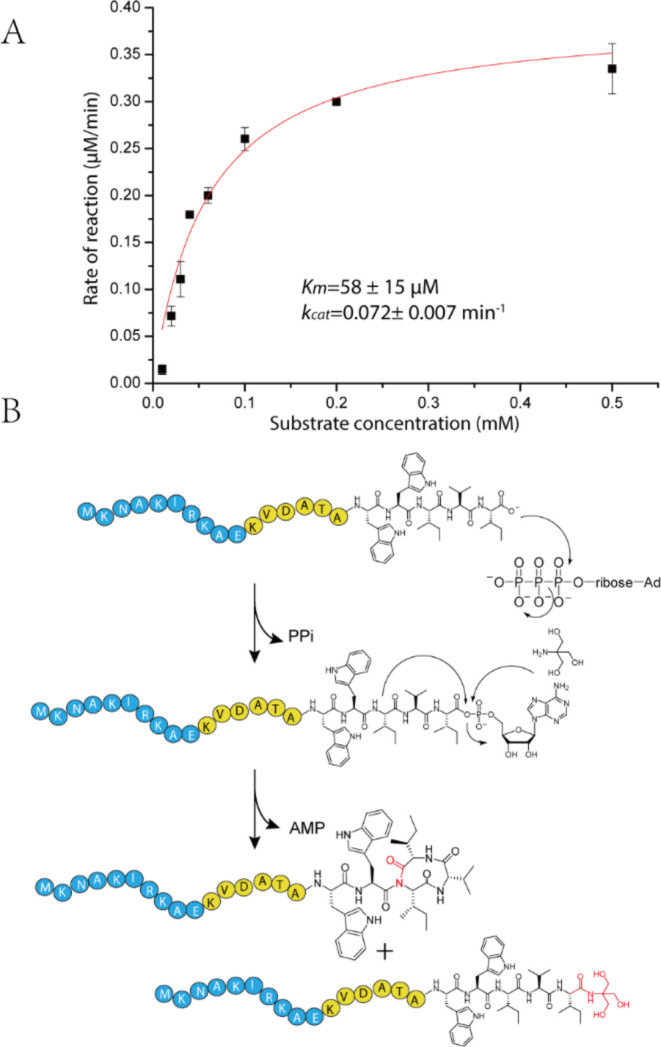
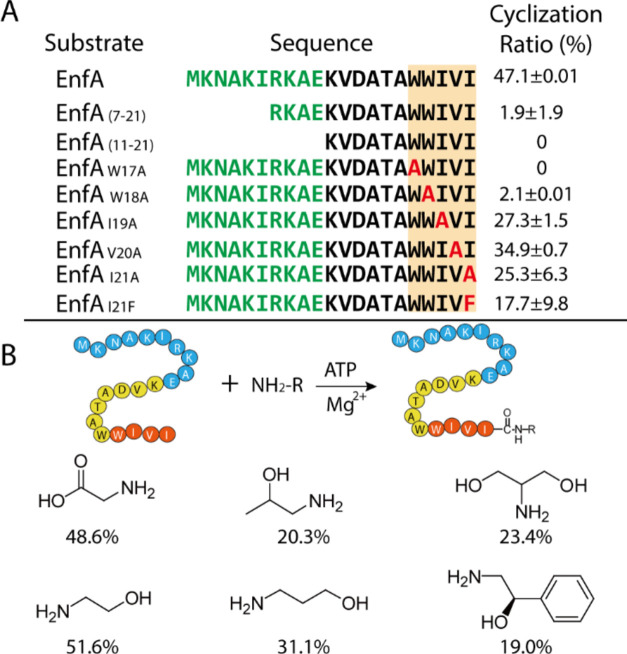
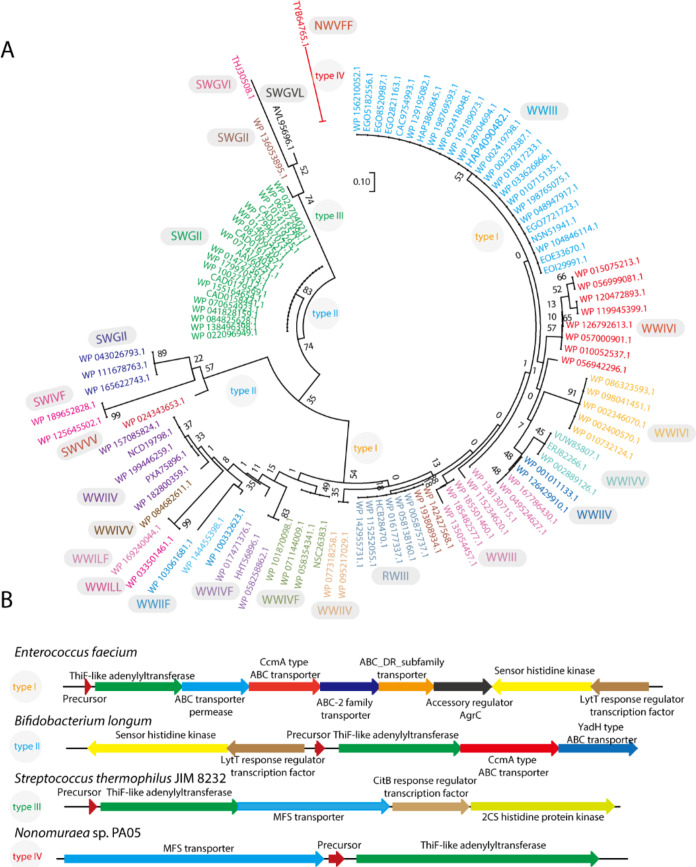
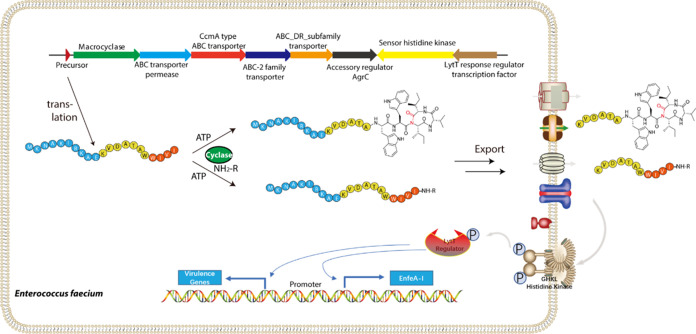
Ribosomally synthesized and post-translationally modified peptides (RiPPs) are chemically diverse natural products of ribosomal origin. These peptides, which frequently act as signals or antimicrobials, are biosynthesized by conserved enzymatic machineries, making genome mining a powerful strategy for unearthing previously uncharacterized members of their class. Herein, we investigate the untapped biosynthetic potential of Lactobacillales (i.e. lactic acid bacteria) – an order of Gram-positive bacteria closely associated with human life, including pathogenic species and industrially-relevent fermenters of dairy products. Through genome mining methods, we systematically explored the distribution and diversity of ThiF-like adenylyltransferases-utilizing RiPP systems in lactic acid bacteria and identified a number of unprecedented biosynthetic gene clusters. In one of these clusters, we found a previously undescribed group of macrocyclic imide biosynthetic pathways containing multiple transporters and may be involved in potential quorum sensing (QS) system. Through in vitro assays, we determined that one such adenylyltranferase specifically catalyzes the intracyclization of its precursor peptide through macrocyclic imide formation. Incubating the enzyme with various primary amines revealed it could effectively amidate the C-terminus of the precursor peptide. This new transformation adds to the growing list of Nature’s peptide macrocyclization strategies and expands the impressive catalytic repertoire of the adenylyltransferase family. The diverse RiPP systems identified herein represent a vast, unexploited landscape for discovery of novel class of natural products and potential QS systems. Abstract Figure: (For Table of Contents use only)
Overview
The claims and statistics of this paper haven’t been checked yet.
Run the check — free, no account needed. It reads the open-access text and checks the sources it cites.
Integrity signals
Registry
Cites
Statistics
Figures
Verification
Claims the paper makes
The claims and statistics of this paper haven’t been checked yet.
Run the check — free, no account needed. It reads the open-access text and checks the sources it cites.
Self-check
Percentages, sums and reported differences re-computed from the paper’s own numbers.
The self-check needs the paper’s full text.
Citations
Cites
Highly accurate protein structure prediction with AlphaFold
Jumper, J., Evans, R., Pritzel, A., Green, T., Figurnov, M., Ronneberger, O., Tunyasuvunakool, K., Bates, R., Žídek, A., Potapenko, A., et al. (2021) · Nature · doi:10.1038/s41586-021-03819-2 · Cited by 43,764
Research works printed but not linked: 70
- 10.1039/D0NP00027B · DOI
- 10.1021/acs.chemrev.2c00210 · DOI
- [3], 2016, New Insights into the Biosynthetic Logic of Ribosomally Synthesized and Post-translationally Modified Peptide Natural Products, Cell Chem Biol, 23, 31, 10.1016/j.chembiol.2015.11.012 · DOI
- 2016, Cyclisation mechanisms in the biosynthesis of ribosomally synthesised and post-translationally modified peptides, Beilstein J Org Chem, 12, 1250, 10.3762/bjoc.12.120 · DOI
- 10.1038/nchembio.944 · DOI
- 10.1021/ja4029507 · DOI
- 10.1126/science.1092600 · DOI
- 10.1039/b708478a · DOI
- 10.1016/j.chembiol.2007.06.004 · DOI
- 10.1002/cbic.200800560 · DOI
- 10.1038/emboj.2009.146 · DOI
- 10.1021/jacs.5b04682 · DOI
- 10.1038/nrm2673 · DOI
- 10.1038/nchembio.1856 · DOI
- 10.1038/nchembio.1608 · DOI
- 2013, The Cyanobactin Heterocyclase Enzyme: A Processive Adenylase That Operates with a Defined Order of Reaction, Angew Chem Int Ed Engl, 52, 13991, 10.1002/anie.201306302 · DOI
- 10.1038/nchembio.1841 · DOI
- 10.1016/j.molcel.2018.11.032 · DOI
- 10.1021/jacs.5b13529 · DOI
- 10.1002/anie.200351054 · DOI
- 10.1002/anie.200351053 · DOI
- 10.1128/jb.177.24.7131-7140.1995 · DOI
- 10.1074/jbc.M513174200 · DOI
- 10.1021/ja7101949 · DOI
- 10.1021/ja505982c · DOI
- 10.1074/jbc.M110.179135 · DOI
- 10.2217/fmb.11.148 · DOI
- [28], 2016, A Trojan-Horse Peptide-Carboxymethyl-Cytidine Antibiotic from Bacillus amyloliquefaciens, J Am Chem Soc, 138, 15690, 10.1021/jacs.6b09853 · DOI
- 10.1111/j.1365-2958.2007.05874.x · DOI
- 10.1128/mBio.01059-14 · DOI
- 2024, Expanding the Landscape of Noncanonical Amino Acids in RiPP Biosynthesis, J Am Chem Soc, 146, 3805, 10.1021/jacs.3c10824 · DOI
- 2021, Metabolism Characteristics of Lactic Acid Bacteria and the Expanding Applications in Food Industry, Front Bioeng Biotechnol May, 12, 612285
- 2022, Enterocins: Classification, Synthesis, Antibacterial Mechanisms and Food Applications, Molecules, 27, 2258, 10.3390/molecules27072258 · DOI · Paper page
- 2009, Streptococcus Adherence and Colonization, Microbiol Mol Biol Rev. Sep, 73, 407, 10.1128/MMBR.00014-09 · DOI · Paper page
- 10.1007/s10295-016-1815-x · DOI
- 10.1111/j.1574-6968.2008.01442.x · DOI
- 10.1093/nar/25.17.3389 · DOI · Paper page
- 10.1021/acs.biochem.9b00735 · DOI
- 10.1101/gr.1239303 · DOI · Paper page
- 10.1093/bioinformatics/bts199 · DOI
- 10.1039/c2np20085f · DOI
- 2017, YcaO-Dependent Posttranslational Amide Activation: Biosynthesis, Structure, and Function, Chem Rev, 117, 5389, 10.1021/acs.chemrev.6b00623 · DOI
- 10.1021/jacs.8b10266 · DOI
- 10.1038/nchembio.2319 · DOI
- 2015, Enzyme Function Initiative-Enzyme Similarity Tool (EFI-EST): A web tool for generating protein sequence similarity networks, Biochimica et Biophysica Acta (BBA) - Proteins and Proteomics, 1854, 1019, 10.1016/j.bbapap.2015.04.015 · DOI
- Su, G. , Morris, J. H. , Demchak, B. , and Bader, G. D . (2014) Biological Network Exploration with Cytoscape 3, Curr Protoc Bioinformatics 47, 8.13.11-18.13.24. · DOI
- 10.1371/journal.pcbi.1000063 · DOI
- [48] Ortega, Manuel A., and van der Donk, Wilfred A., 2016, New Insights into the Biosynthetic Logic of Ribosomally Synthesized and Post-translationally Modified Peptide Natural Products, Cell Chem Biol, 23, 31, 10.1016/j.chembiol.2015.11.012 · DOI
- 10.1128/CMR.3.1.46 · DOI
- 10.1128/microbiolspec.GPP3-0053-2018 · DOI
- 2010, Streptococcus thermophilus strains: Multifunctional lactic acid bacteria, International Dairy Journal, 20, 133, 10.1016/j.idairyj.2009.10.005 · DOI
- 10.1097/00004770-200405000-00004 · DOI
- 10.1128/JB.01028-07 · DOI
- Mirdita, M. , Schütze, K. , Moriwaki, Y. , Heo, L. , Ovchinnikov, S. , and Steinegger, M . (2021) ColabFold - Making protein folding accessible to all, bioRxiv, 2021.2008.2015.456425. · DOI · Paper page
- 10.1039/c8sc03173h · DOI
- 10.1093/oxfordjournals.molbev.a040454 · DOI
- 10.1126/science.1094318 · DOI
- 2015, Quorum-sensing regulation in staphylococci—an overview, Front Microbiol Oct, 27, 1174
- 10.1146/annurev.micro.55.1.165 · DOI
- 10.1128/IAI.68.9.4839-4849.2000 · DOI
- 2015, Nanoporous Superhydrophobic Coatings that Promote the Extended Release of Water-Labile Quorum Sensing Inhibitors and Enable Long-Term Modulation of Quorum Sensing in Staphylococcus aureus, ACS Biomater Sci Eng, 1, 1039, 10.1021/acsbiomaterials.5b00313 · DOI
- 10.1021/ja407533e · DOI
- 10.1021/ja3112115 · DOI
- 10.1038/nature24624 · DOI
- 10.1039/b912037h · DOI
- 10.1039/a909079g · DOI
- 10.1016/j.drudis.2008.07.004 · DOI
- 10.1039/c2np20070h · DOI
- 10.1021/acs.accounts.5b00156 · DOI
- 10.1146/annurev.genet.42.110807.091640 · DOI
Metadata
- Authors
- Wang, M., Wu, M., Han, M., Niu, X., Fan, A., Zhu, S., & Tong, Y.
- Affiliations
- Beijing University of Chemical Technology (CN)
- Peking University (CN)
- Tsinghua University (CN)
- National Institutes for Food and Drug Control (CN)
- Corresponding author
- Fan, Aili
- Zhu, Shaozhou
- Tong, Yigang
- Venue
- ACS Omega
- Publisher
- openRxiv
- Published
- 2024-05-13
- Volume
- 9
- Issue
- 28
- Pages
- 30891-30903
- ISSN
- 2470-1343 (ISSN-L)
- PMC
- PMC11256085
- OpenAlex
- W4400297230
- Cited by
- 8
- References
- 1
- Citations by year
- 2026: 3 · 2025: 4 · 2024: 1
- FWCI
- 2.27
- Type
- journal article
- Language
- en
- Open access
- gold
- doi.org
- Licence
- cc-by-nc-nd
- Locations
- ACS Omega (publishedVersion, cc-by-nc-nd)
- bioRxiv (Cold Spring Harbor Laboratory) (acceptedVersion, cc-by-nc-nd)
- PubMed Central (publishedVersion, cc-by-nc-nd)
- PubMed (publishedVersion)
- DOAJ (DOAJ: Directory of Open Access Journals) (submittedVersion)
- Funders
- National Natural Science Foundation of China (21706005)
- Peking University
- Beijing Municipal Natural Science Foundation (7202107)
- National Key Research and Development Program of China (2022YFC2804900)
- Topics
- Life Sciences › Immunology and Microbiology › Applied Microbiology and Biotechnology › Microbial Natural Products and Biosynthesis
- Life Sciences › Immunology and Microbiology › Microbiology › Antimicrobial Peptides and Activities
- Life Sciences › Biochemistry, Genetics and Molecular Biology › Molecular Biology › Biochemical and Structural Characterization
- Keywords
- ribosomally synthesized and post-translationally modified peptides, lactic acid bacteria, Lactobacillales, genome mining, biosynthetic gene clusters, quorum sensing, peptide transporters, C-terminal amidation, natural product discovery
About these checks
Registry, retraction, Cites and statistics results are computed, not judged, with one exception: a printed reference that no index lists is read once by a model before it counts as a citation error. Claims are extracted by a model and kept only when their quote appears verbatim in the text; each cited source is then checked, with a model’s help, for whether it says what the claim relies on. Those verdicts can be wrong — read the claim’s quote and the cited source before relying on one.
Statistics and arithmetic are recomputed, not judged.
Confidence bands are shown only for fields calibrated on our annotated test set. None is calibrated yet, so no band is shown.
What counts as a claim ›How we measure confidence ›How we check this ›
Are you an author, or do you see a problem with this page? Request a review
