

The DOI matches its Crossref record; 40 of the 42 references it cites were found in a registry or an index.
An Architecture-Tracking Approach to Evaluate a Modular and Extensible Flight Software for CubeSat Nanosatellites
Open accessAbstract
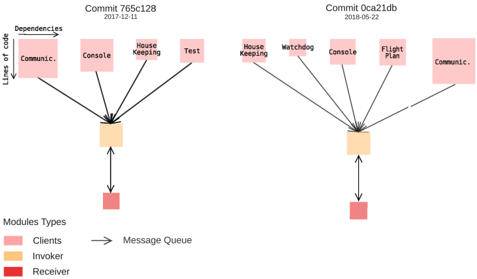
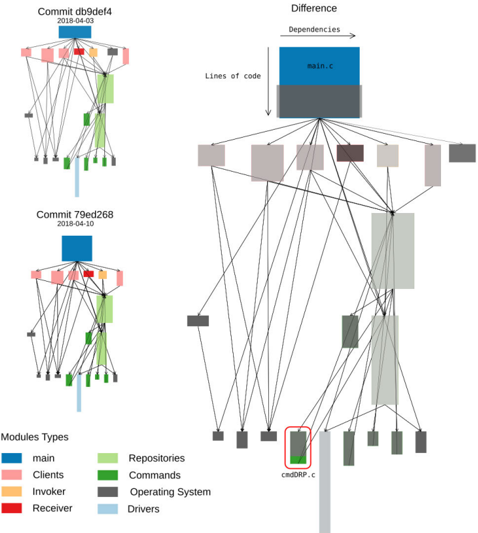
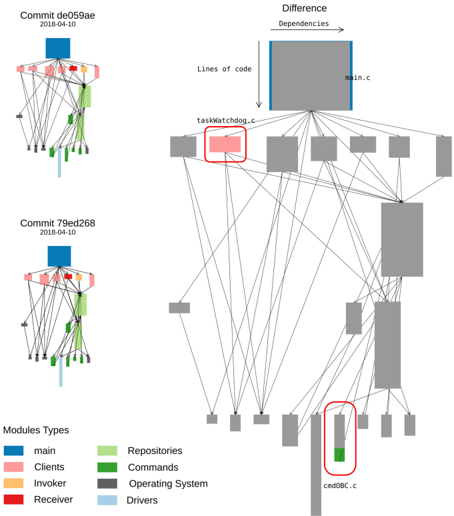
Delivering better flight software is an important concern to improve CubeSat missions success. It has been identified as a key element to enhance team collaboration, increase reusability, reduce the mission risk, and facilitate the development and operation of new mission concepts, such as satellite mega-constellations. An appropriated fight software architecture represents the functional and non-functional requirements and guides the development. Therefore, to achieve the expected software quality, the architecture should be closely monitored during the entire software life cycle. However, ensuring that a flight software for a spacecraft embedded system closely follows the proposed architecture and addresses the set of non-functional requirements is a difficult and nontrivial problem. Motivated by requirements commonly described in previous CubeSat missions, in this work, we present the design and implementation of a flight software architecture based on the command design pattern. We also present an architecture tracking methodology to verify and control the flight software quality criteria during the development process through the use of graphical software analysis tools and agile programming techniques. This automatic software analysis tool was developed using Git, Jenkins, Moose, and Roassal, and has been applied in the SUCHAI series of nanosatellites to evaluate the impact of the architecture verification during the development history. The implemented flight software and the verification tools have been released as open source platforms and are available for the CubeSat community.
Overview
The claims and statistics of this paper haven’t been checked yet.
Run the check — free, no account needed. It reads the open-access text and checks the sources it cites.
Integrity signals
Registry
Cites
Statistics
Figures



Verification
Claims the paper makes
The claims and statistics of this paper haven’t been checked yet.
Run the check — free, no account needed. It reads the open-access text and checks the sources it cites.
Claims other papers make about this one
Each is checked against this paper’s own text: does it say what the citing paper says it does?
The check wasn’t confident either way, so it gives no verdict — never disputed.
In the citing paper
“The Li-Cl is one of the highest energy content carrier batteries however, the high energy capability makes it very sensitive from the designing point of view [127].”
From A Comprehensive Review on Small Satellite Microgrids (2022) · cites this paper as [127]
Experimental — accuracy not yet measured
Self-check
Percentages, sums and reported differences re-computed from the paper’s own numbers.
The self-check needs the paper’s full text.
Citations
Cites
(1994) · Cited by 21,711
Pattern-Oriented Software Architecture Volume 1: A System of Patterns
Buschmann, F., Meunier, R., Rohnert, H., Sommerlad, P., & Stal, M. (1996) · Cited by 3,505
On Non-Functional Requirements
Glinz, M. (2007) · IEEE International Requirements Engineering Conference (RE) · doi:10.1109/re.2007.45 · Cited by 765
Why looking isn't always seeing
Petre, M. (1995) · Communications of the ACM · doi:10.1145/203241.203251 · Cited by 540
Polymetric views - A lightweight visual approach to reverse engineering
Lanza, M., & Ducasse, S. (2003) · IEEE Transactions on Software Engineering · doi:10.1109/tse.2003.1232284 · Cited by 390
Survey of worldwide pico- and nanosatellite missions, distributions and subsystem technology
Bouwmeester, J., & Guo, J. (2010) · Acta Astronautica · doi:10.1016/j.actaastro.2010.06.004 · Cited by 339
NASA Study on Flight Software Complexity
Dvorak, D. L. (2009) · AIAA Infotech@Aerospace Conference · doi:10.2514/6.2009-1882 · Cited by 155
The Power of 10: Rules for Developing Safety-Critical Code
Gerald, J. (2006) · Computer · doi:10.1109/mc.2006.212 · Cited by 133
Results from the Planet Labs Flock Constellation
Boshuizen, C. R., Mason, J., Klupar, P., & Spanhake, S. (2014) · Digital Commons - USU (Utah State University) · Cited by 116
Busch, S., Bangert, P., Dombrovski, S., & Schilling, K. (2015) · Acta Astronautica · doi:10.1016/j.actaastro.2015.08.002 · Cited by 59
Research works printed but not linked: 5
- 2004, MISRA-C 2004 Guidelines for the Use of the C Language in Critical Systems
- bergel, 2016, Agile Visualization
- bergel, 2013, Deep into Pharo
- 2016, Achieving Science with CubeSats Thinking Inside the Box
- sommerville, 2011, Software Engineering
Cited by
A Comprehensive Review on Small Satellite Microgrids
Yaqoob, M., Lashab, A., Vasquez, J. C., Guerrero, J. M., Orchard, M. E., & Bintoudi, A. D. (2022) · IEEE Transactions on Power Electronics · doi:10.1109/tpel.2022.3175093 · Cited by 93
On-Board Computer for CubeSats: State-of-the-Art and Future Trends
Cratere, A., Gagliardi, L., Sanca, G. A., Golmar, F., & Dell’Olio, F. (2024) · IEEE Access · doi:10.1109/access.2024.3428388 · Cited by 60
ENDURUNS: An Integrated and Flexible Approach for Seabed Survey Through Autonomous Mobile Vehicles
Marini, S., Gjeci, N., Govindaraj, S., But, A., Sportich, B., Ottaviani, E., Márquez, F. P. G., Sánchez, P. J. B., Pedersen, J., Clausen, C. V., et al. (2020) · Journal of Marine Science and Engineering · doi:10.3390/jmse8090633 · Cited by 52
Mamani-Saico, A., & Yanyachi, P. R. (2023) · IEEE Access · doi:10.1109/access.2023.3330441 · Cited by 21
A Highly Modular Software Framework for Reducing Software Development Time of Nanosatellites
Allam, A. E., Jallad, A.-H. M., Awad, M., Takruri, M., & Marpu, P. (2021) · IEEE Access · doi:10.1109/access.2021.3097537 · Cited by 20
Metadata
- Authors
- Gonzalez, C. E., Rojas, C. J., Bergel, A., & Diaz, M. A.
- Affiliations
- University of Chile (CL)
- Electrical Engineering Department, Space and Planetary Exploration Laboratory (SPEL), Faculty of Physical and Mathematical Sciences, University of Chile, Santiago, Chile
- Venue
- IEEE Access
- Published
- 2019
- Volume
- 7
- Pages
- 126409-126429
- ISSN
- 2169-3536 (ISSN-L)
- OpenAlex
- W2961353240
- Cited by
- 31
- References
- 42
- Citations by year
- 2026: 5 · 2025: 4 · 2024: 4 · 2023: 6 · 2022: 3 · 2021: 6 · 2020: 3
- FWCI
- 1.38
- Type
- journal article
- Language
- en
- Open access
- gold
- doi.org
- Locations
- IEEE Access (publishedVersion, cc-by)
- DOAJ (DOAJ: Directory of Open Access Journals) (submittedVersion, cc-by-sa)
- Funders
- Grant Fondecyt (1151476)
- Grant Anillo (ACT1405)
- Grant Fondequip (EQM150138)
- Comisión Nacional de Investigación Científica y Tecnológica
- Topics
- Physical Sciences › Computer Science › Software › Advanced Software Engineering Methodologies
- Physical Sciences › Engineering › Aerospace Engineering › Spacecraft Design and Technology
- Physical Sciences › Computer Science › Software › Model-Driven Software Engineering Techniques
- Keywords
- CubeSat, nanosatellites, architecture verification, non-functional requirements, embedded software, agile software development, software quality, open source tools, software analysis tools
About these checks
Registry, retraction, Cites and statistics results are computed, not judged, with one exception: a printed reference that no index lists is read once by a model before it counts as a citation error. Claims are extracted by a model and kept only when their quote appears verbatim in the text; each cited source is then checked, with a model’s help, for whether it says what the claim relies on. Those verdicts can be wrong — read the claim’s quote and the cited source before relying on one.
Statistics and arithmetic are recomputed, not judged.
Confidence bands are shown only for fields calibrated on our annotated test set. None is calibrated yet, so no band is shown.
What counts as a claim ›How we measure confidence ›How we check this ›
Are you an author, or do you see a problem with this page? Request a review
How to cite
Cite CoChat for the checks on this page, and the paper for its own findings.
- This page
- CoChat. (2026). Citation check: An Architecture-Tracking Approach to Evaluate a Modular and Extensible Flight Software for CubeSat Nanosatellites. https://app.cochat.ai/papers/10.1109/access.2019.2927931
- The paper
- Gonzalez, C. E., Rojas, C. J., Bergel, A., & Diaz, M. A. (2019). An Architecture-Tracking Approach to Evaluate a Modular and Extensible Flight Software for CubeSat Nanosatellites. IEEE Access. https://doi.org/10.1109/access.2019.2927931
