

Power System Anomaly Detection Based on OCSVM Optimized by Improved Particle Swarm Optimization
Open accessThe DOI matches its Crossref record; 21 of the 21 references it cites were found in a registry or an index.
Abstract
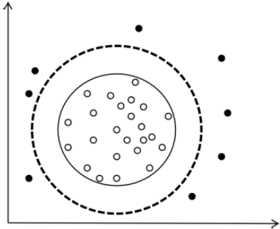
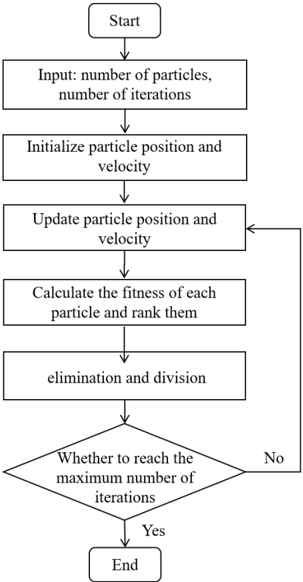
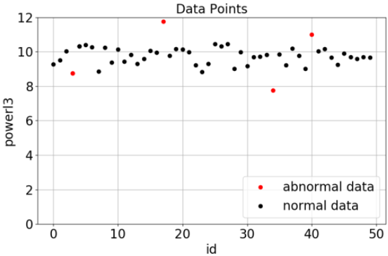
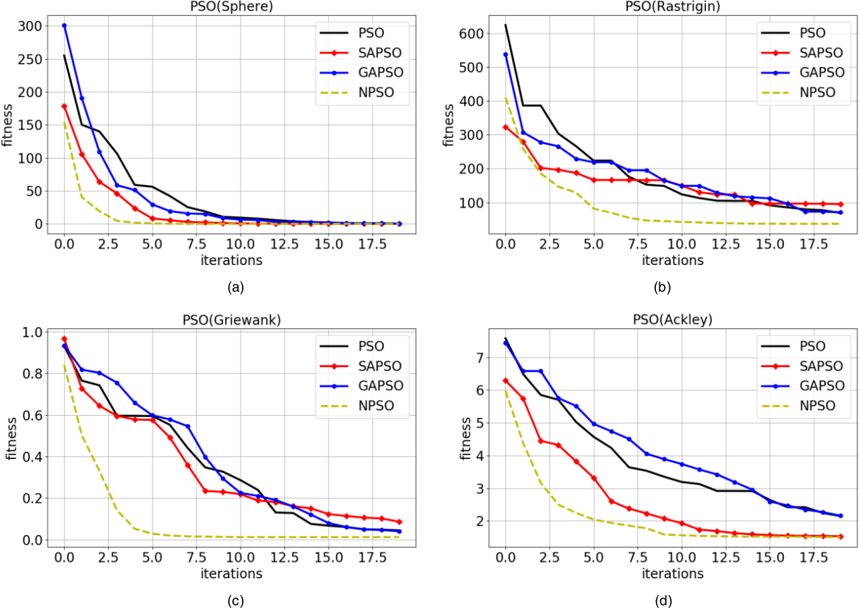
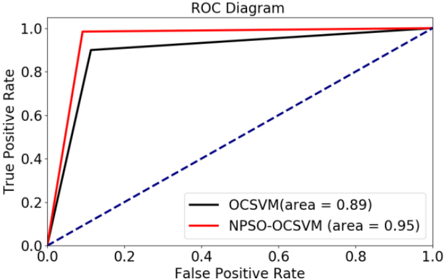
This paper tries to solve anomaly detection, a very important issue in ensuring the safe and stable operation of power system. As the proportion of abnormal data in the operation of power system is very small, a one-class support vector machine (OCSVM) is adopted in this paper, which is suitable for classification of unbalanced data. However, the performance of OCSVM is sensitive to its parameters, and an unsuitable choice will decrease the classification accuracy and generalization ability of it. In this paper, particle swarm optimization (PSO) is used to optimize the parameters of OCSVM. The original PSO algorithm converges slowly and easily falls into local optimum. To overcome this issue, this paper proposes an improved PSO algorithm for parameters optimization, in which adaptive speed weighting and adaptive population splitting are introduced to improve the convergence speed of the algorithm and help the algorithm jump out of the local optimal position. Experiments on standard benchmarks and real power system experimental data sets demonstrate the effectiveness of the proposed algorithm.
Overview
The claims and statistics of this paper haven’t been checked yet.
Free: it reads the open-access text and checks the first 5 claims that cite a source we can check. Create a free account to check every claim.
Integrity signals
Registry
Cites
Statistics
Figures





Verification
Claims the paper makes
The claims and statistics of this paper haven’t been checked yet.
Free: it reads the open-access text and checks the first 5 claims that cite a source we can check. Create a free account to check every claim.
Claims other papers make about this one
Each is checked against this paper’s own text: does it say what the citing paper says it does?
The cited source says what the claim attributes to it.
In the citing paper
“This problem is addressed by the author's modified PSO method for parameter optimization, which introduces adaptive population splitting and adaptive speed weighting to speed up convergence and aid in algorithmic escape from the local optimal location.”
From A Comprehensive Review on the Role of Artificial Intelligence in Power System Stability, Control, and Protection: Insights and Future Directions (2024) · cites this paper as [131]
Self-check
Percentages, sums and reported differences re-computed from the paper’s own numbers.
The self-check needs the paper’s full text.
Citations
Cites
A new optimizer using particle swarm theory
Eberhart, R., & Kennedy, J. (2002) · MHS'95. Proceedings of the Sixth International Symposium on Micro Machine and Human Science · doi:10.1109/mhs.1995.494215 · Cited by 16,067
Estimating the Support of a High-Dimensional Distribution
Schölkopf, B., Platt, J. C., Shawe-Taylor, J., Smola, A. J., & Williamson, R. C. (2001) · Neural Computation · doi:10.1162/089976601750264965 · Cited by 6,168 · cited 1×
“first proposed the concept of one-class SVM in [8], which laid the foundation for the application and research of one-class SVM.”
BackgroundDistributed Online One-Class Support Vector Machine for Anomaly Detection Over Networks
Miao, X., Liu, Y., Zhao, H., & Li, C. (2019) · IEEE Transactions on Cybernetics · doi:10.1109/tcyb.2018.2804940 · Cited by 185 · cited 1×
“is used for anomaly data recognition in wireless sensor networks [18].”
MethodDeng, X., Jiang, P., Peng, X., & Mi, C. (2018) · IEEE Transactions on Industrial Electronics · doi:10.1109/tie.2018.2860568 · Cited by 116 · cited 1×
“used genetic algorithm to optimize parameters [21].”
Hydrological Time Series Anomaly Pattern Detection based on Isolation Forest
Qin, Y., & Lou, Y. (2019) · IEEE Information Technology, Networking, Electronic and Automation Control Conference (ITNEC) · doi:10.1109/itnec.2019.8729405 · Cited by 54 · cited 1×
“Qin and Lou proposed a hydrological time series anomaly pattern detection algorithm based on isolation forest [6].”
BackgroundShort-Time Prediction of Traffic Flow Based on PSO Optimized SVM
Duan, M. (2018) · International Conference on Intelligent Transportation, Big Data & Smart City (ICITBS) · doi:10.1109/icitbs.2018.00018 · Cited by 50 · cited 1×
“introduced particle swarm optimization to solve the parameter selection problem of support vector machine prediction model [13].”
MethodXue, H., Bai, Y., Hu, H., Xu, T. X., & Liang, H. (2019) · IEEE Access · doi:10.1109/access.2019.2897644 · Cited by 47 · cited 1×
“It effectively improves the classification accuracy and efficiency of the classifier [14].”
BackgroundShakya, S., & Sigdel, S. (2017) · International Conference on Computing, Communication and Automation · doi:10.1109/ccaa.2017.8229836 · Cited by 37 · cited 1×
“show a weighted hybrid model utilizing Support Vector Machine and Naive Bayes for anomaly discovery [4].”
MethodResearch on SVM improved algorithm for large data classification
Dai, H. (2018) · IEEE International Conference on Big Data Analysis (ICBDA) · doi:10.1109/icbda.2018.8367673 · Cited by 37 · cited 1×
“In 2018, Dai proposed a weighted Euclidean distance, radial integral kernel function SVM and dimensionality reduction algorithm for large data packet classification, which can effectively shorten the modeling time and improve the classification accuracy [7].”
BackgroundAn Anomaly Detection Algorithm of Cloud Platform Based on Self-Organizing Maps
Liu, J., Chen, S., Zhou, Z. Y., & Wu, T. (2016) · Mathematical Problems in Engineering · doi:10.1155/2016/3570305 · Cited by 36 · cited 1×
“proposed a dynamic and adaptive anomaly detection algorithm based on Self-Organizing Maps (SOM) for virtual machines [5].”
MethodGao, Y. (2018) · International Conference on Virtual Reality and Intelligent Systems (ICVRIS) · doi:10.1109/icvris.2018.00046 · Cited by 29 · cited 1×
“Gao proposed an improved hybrid swarm intelligence algorithm and carried out simulation experiments [15], compared with particle swarm optimization and artificial bee colony algorithm, the convergence speed and accuracy of hybrid algorithm are better than standard algorithm.”
MethodA Survey on Big Data Pre-processing
Guan, Z., Ji, T., Xu, Q., Ma, Y., & Hong, X. (2017) · International Conference on Applied Computing and Information Technology / International Conference on Computational Science and Intelligence (ACIT-CSI) · doi:10.1109/acit-csii-bcd.2017.49 · Cited by 28 · cited 1×
“step in data analysis and mining, and has attracted wide attention of researchers [2].”
BackgroundGaussian Kernel Parameter Optimization in One-Class Support Vector Machines
Anaissi, A., Braytee, A., & Naji, M. (2018) · International Joint Conference on Neural Networks (IJCNN) · doi:10.1109/ijcnn.2018.8489383 · Cited by 20 · cited 1×
“rithm, called edge support vector [20], to adjust parameters of Gauss model.”
MethodSome key problems of data management in army data engineering based on big data
HongJu, X., Fei, W., FenMei, W., & XiuZhen, W. (2017) · IEEE International Conference on Big Data Analysis (ICBDA) · doi:10.1109/icbda.2017.8078796 · Cited by 14 · cited 1×
“INTRODUCTION With the rapid development of information technology, the amount of data generated by various industries has increased dramatically [1].”
BackgroundWeed classification using one class support vector machine
Shahbudin, S., Zamri, M., Kassim, M. B., Abdullah, S. A. C., & Suliman, S. I. (2017) · International Conference on Electrical, Electronics and System Engineering (ICEESE) · doi:10.1109/iceese.2017.8298404 · Cited by 14 · cited 2×
“applied one-class SVM to weed classification, in which feature vectors of weed images were extracted using Gabor Wavelet and Fast Fourier Transform [10].”
MethodA new ant colony optimization with global exploring capability and rapid convergence
Deng, X., Yu, W., & Zhang, L. (2012) · World Congress on Intelligent Control and Automation · doi:10.1109/wcica.2012.6357946 · Cited by 9 · cited 1×
“proposed an improved ant colony algorithm for traveling salesman problem [17].”
BackgroundSalp swarm algorithm based on particle-best
Xiao, B., Wang, R., Yang, X., Song, W., Wang, J., & Wu, Y. (2019) · IEEE Information Technology, Networking, Electronic and Automation Control Conference (ITNEC) · doi:10.1109/itnec.2019.8729243 · Cited by 9 · cited 1×
“put forward a kind of salp swarm algorithm based on particle optimization [16], aiming at the problem that the global search ability and local development ability of the PSO algorithm are difficult to coordinate and easy to fall into local optimization.”
BackgroundFault Detection in the Closed-loop System Using One-Class Support Vector Machine
Li, Z., & Li, X. (2018) · IEEE Data Driven Control and Learning Systems Conference (DDCLS) · doi:10.1109/ddcls.2018.8515960 · Cited by 8 · cited 1×
“uses OCSVM for fault detection in closed-loop systems [19].”
MethodLiu, J., Zhang, H., & Xu, G. (2018) · IEEE Access · doi:10.1109/access.2018.2865114 · Cited by 6 · cited 1×
“proposed an anomaly detector deployment awareness detection framework based on multi-dimensional resources balance, and experiments show that this framework achieves a higher scalability and detection accuracy [3].”
MethodMicro Variation Chaos Genetic Algorithm
Wei, P., Mingming, Y., Tan, Y., & Xie, H. (2018) · Chinese Control and Decision Conference (CCDC) · doi:10.1109/ccdc.2018.8407913 · Cited by 3 · cited 1×
“studied the mutation operator in depth, and discussed how to solve the maximum problem by genetic algorithm [11].”
BackgroundConstant False Alarm Rate for Online one Class Svm Learning
Xue, Y., & Beauseroy, P. (2018) · IEEE International Conference on Acoustics Speech and Signal Processing · doi:10.1109/icassp.2018.8462022 · Cited by 2 · cited 1×
“Huang improves the one-class support vector machine, and propose an online version of v-OeSVM [9].”
Background
Research works printed but not linked: 2
- wang, 2019, Prediction of output power of photovoltaic cells based on the improved particle swarm optimization support vector machine, Auto Electronics, 41, 63
- xu, 2019, Power consumption prediction model of least squares support vector machine based on adaptive Particl, Sci Technol Eng, 19, 136
Cited by
Alhamrouni, I., Abdul Kahar, N. H., Salem, M., Swadi, M., Zahroui, Y., Kadhim, D. J., Mohamed, F. A., & Alhuyi Nazari, M. (2024) · Applied Sciences · doi:10.3390/app14146214 · Cited by 217
“[131] attempted to resolve the problem of anomaly detection.”
BackgroundHealthcare insurance fraud detection using data mining
Hamid, Z., Khalique, F., Mahmood, S., Daud, A. Y., Bukhari, A. A., & Alshemaimri, B. K. (2024) · BMC Medical Informatics and Decision Making · doi:10.1186/s12911-024-02512-4 · Cited by 116
“Wang [31] proposes an improved particle swarm optimization algorithm to enhance the accuracy of the OCSVM-based power system anomaly detection.”
MethodRecent advances in anomaly detection in Internet of Things: Status, challenges, and perspectives
Adhikari, D., Jiang, W., Zhan, J., Rawat, D. B., & Bhattarai, A. (2024) · Computer Science Review · doi:10.1016/j.cosrev.2024.100665 · Cited by 100
A Cloud Edge Collaborative Intelligence Method of Insulator String Defect Detection for Power IIoT
Song, C., Xu, W., Han, G., Zeng, P., Wang, Z., & Yu, S. (2020) · IEEE Internet of Things Journal · doi:10.1109/jiot.2020.3039226 · Cited by 89
“The safe and stable operation of the power system is of great significance [10]–[12].”
BackgroundSelf-citationChaos Particle Swarm Optimization Enhancement Algorithm for UAV Safe Path Planning
Chu, H., Yi, J., & Yang, F. (2022) · Applied Sciences · doi:10.3390/app12188977 · Cited by 76
Metadata
- Authors
- Wang, Z., Fu, Y., Song, C., Zeng, P., & Qiao, L.
- Affiliations
- Shenyang Institute of Automation (CN)
- State Grid Liaoning Electric Power Company (China) (CN)
- Venue
- IEEE Access
- Published
- 2019
- Volume
- 7
- Pages
- 181580-181588
- ISSN
- 2169-3536 (ISSN-L)
- OpenAlex
- W2995769985
- Cited by
- 47
- References
- 21
- Citations by year
- 2026: 1 · 2025: 10 · 2024: 8 · 2023: 9 · 2022: 10 · 2021: 6 · 2020: 3
- FWCI
- 2.19
- Type
- journal article
- Language
- en
- Open access
- gold
- doi.org
- Locations
- IEEE Access (publishedVersion, cc-by)
- DOAJ (DOAJ: Directory of Open Access Journals) (submittedVersion, cc-by-sa)
- SIA OpenIR (Chinese Academy of Sciences) (submittedVersion)
- Funders
- State Grid Corporation Science and Technology Project (SGLNXT00YJJS1800110)
- Topics
- Physical Sciences › Computer Science › Artificial Intelligence › Anomaly Detection Techniques and Applications
- Physical Sciences › Engineering › Electrical and Electronic Engineering › Power System Optimization and Stability
- Physical Sciences › Computer Science › Artificial Intelligence › Metaheuristic Optimization Algorithms Research
- Keywords
- one-class support vector machine, particle swarm optimization, parameter optimization, improved PSO algorithm, local optima avoidance, convergence rate
About these checks
Registry, retraction, Cites and statistics results are computed, not judged, with one exception: a printed reference that no index lists is read once by a model before it counts as a citation error. Claims are extracted by a model and kept only when their quote appears verbatim in the text; each cited source is then checked, with a model’s help, for whether it says what the claim relies on. Those verdicts can be wrong — read the claim’s quote and the cited source before relying on one.
Statistics and arithmetic are recomputed, not judged.
Confidence bands are shown only for fields calibrated on our annotated test set. None is calibrated yet, so no band is shown.
What counts as a claim ›How we measure confidence ›How we check this ›
Are you an author, or do you see a problem with this page? Request a review
Data sources
Bibliographic data: Semantic Scholar, OpenAlex, Crossref.
Contains information from the Semantic Scholar Academic Graph Datasets, made available under the ODC Attribution License (ODC-BY 1.0).
Semantic Scholar’s data is described in: Kinney, R., et al. (2023). The Semantic Scholar Open Data Platform. arXiv:2301.10140.
