

State of Health Estimation for Lithium-Ion Battery Using Empirical Degradation and Error Compensation Models
Open accessThe DOI matches its Crossref record; 36 of the 36 references it cites were found in a registry or an index.
Abstract
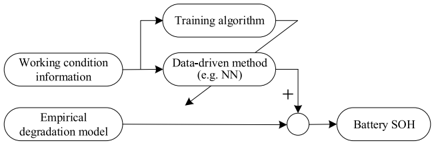
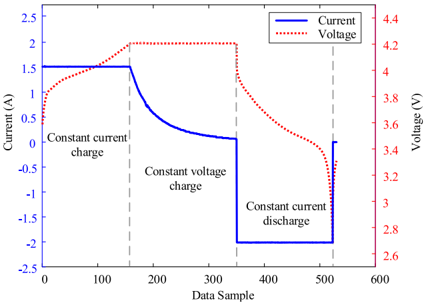
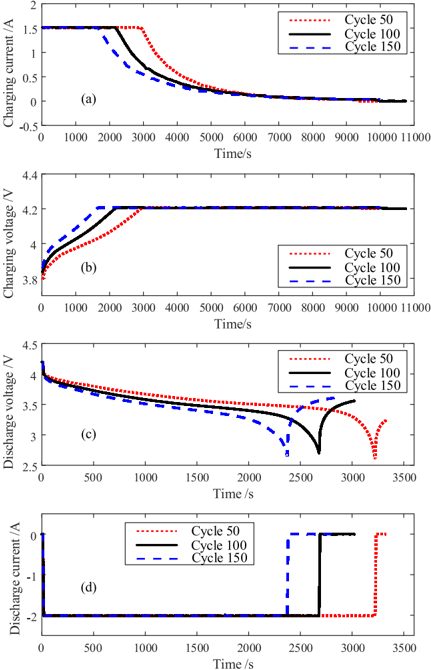
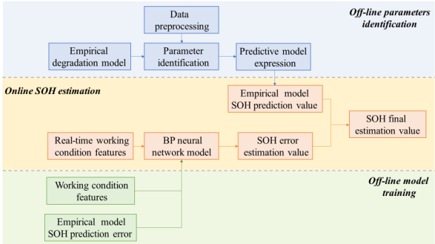
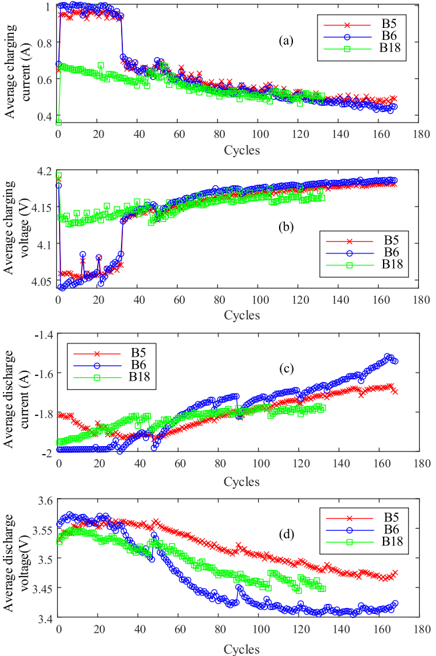
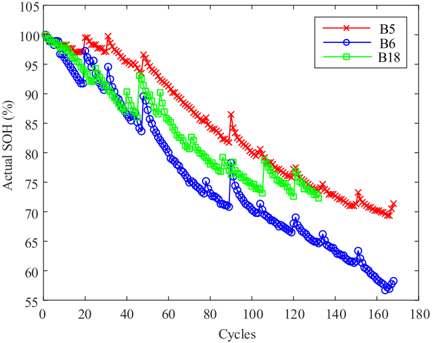
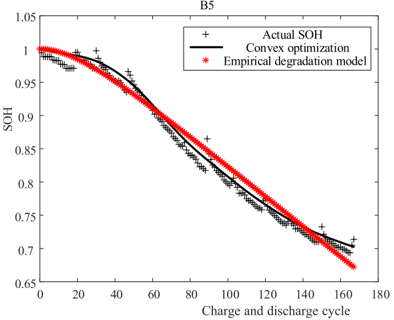
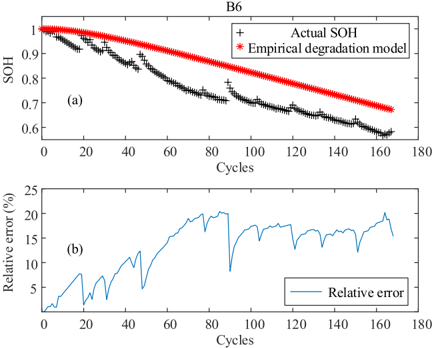
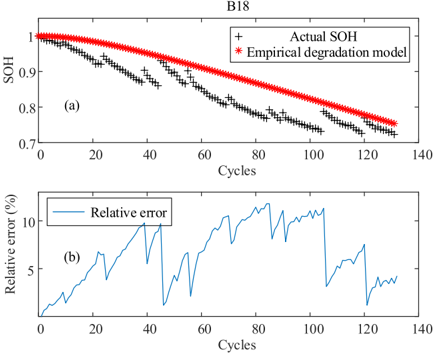
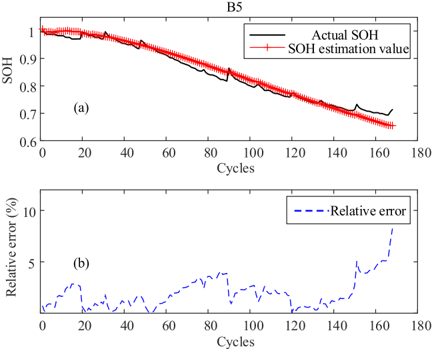
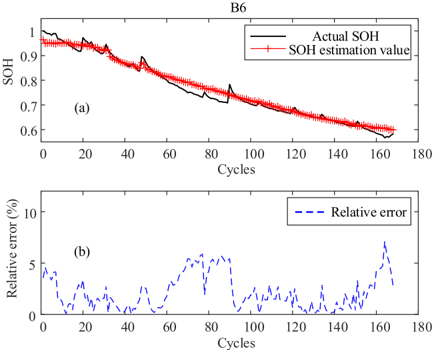
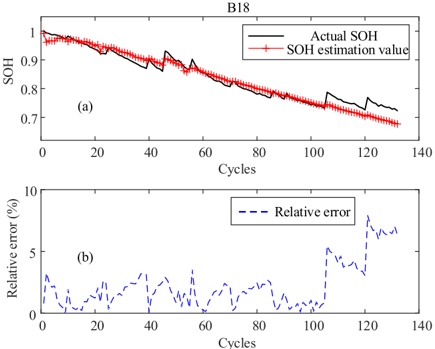
State of health (SOH) estimation is always an important factor in ensuring the reliability and safety of lithium-ion batteries. In view of the shortcomings of the existing SOH estimation methods, such as non-universal, the estimation of different batteries is limited, and the accuracy is insufficient. A fusion estimation method that depends on an empirical degradation model and a data-driven method is proposed. First, we construct an empirical degradation model of lithium-ion battery SOH with charge-discharge cycles. Four working condition characteristics are extracted from the actual charging and discharging process of batteries. Then, with these features as inputs, the prediction error of the empirical degradation model is taken as the output, and training the error compensation model becomes dependent on the data-driven method. The actual working condition characteristics of the tested lithium ion battery are substituted into the training error compensation model, and the model output is fed back to the prediction results of the empirical degradation model. A high-precision estimation of lithium-ion battery SOH is thereby achieved. Finally, the proposed method is verified based on the NASA lithium-ion battery data set. The results show that the fusion method is applicable to different lithium-ion batteries of the same type, and the mean absolute percentage error of SOH estimation is approximately 2%, indicating that the proposed method exhibits good estimation performance and applicability.
Overview
The claims and statistics of this paper haven’t been checked yet.
Free: it reads the open-access text and checks the first 5 claims that cite a source we can check. Create a free account to check every claim.
Integrity signals
Registry
Cites
Statistics
Figures




Verification
Claims the paper makes
The claims and statistics of this paper haven’t been checked yet.
Free: it reads the open-access text and checks the first 5 claims that cite a source we can check. Create a free account to check every claim.
Claims other papers make about this one
Each is checked against this paper’s own text: does it say what the citing paper says it does?
The cited source says what the claim attributes to it.
In the citing paper
“In the proposed methods based on empirical models, the models suffered from low accuracy and other compensation methods were needed.”
From State‐of‐health estimation of lithium‐ion batteries: A comprehensive literature review from cell to pack levels (2024) · cites this paper as [12]
Self-check
Percentages, sums and reported differences re-computed from the paper’s own numbers.
The self-check needs the paper’s full text.
Citations
Cites
Zhang, Y., Xiong, R., He, H., & Pecht, M. G. (2018) · IEEE Transactions on Vehicular Technology · doi:10.1109/tvt.2018.2805189 · Cited by 1,326
He, W., Williard, N., Osterman, M., & Pecht, M. (2011) · Journal of Power Sources · doi:10.1016/j.jpowsour.2011.08.040 · Cited by 1,105 · cited 1×
“) and empirical degradation models [15], [16].”
Yang, D., Zhang, X., Pan, R., Wang, Y., & Chen, Z. (2018) · Journal of Power Sources · doi:10.1016/j.jpowsour.2018.03.015 · Cited by 765 · cited 2×
“It may be described by several performance parameters such as capacity, cycle number, internal resistance [23] and so on.”
BackgroundMethodGaussian process regression for forecasting battery state of health
Richardson, R. R., Osborne, M. A., & Howey, D. A. (2017) · Journal of Power Sources · doi:10.1016/j.jpowsour.2017.05.004 · Cited by 732 · cited 1×
“Data-driven methods do not need to pay attention to the failure mechanism of the lithium-ion battery, which derives solely from the perspective of historical degradation data andmonitoring data, using statistical andmachine learning algorithms(such as neural networks [20], [21], Gaussian process regression [22], [23],…”
MethodZou, Y., Hu, X., Ma, H., & Li, S. E. (2015) · Journal of Power Sources · doi:10.1016/j.jpowsour.2014.09.146 · Cited by 723
An ensemble model for predicting the remaining useful performance of lithium-ion batteries
Xing, Y., Ma, E. W. M., Tsui, K.-L., & Pecht, M. (2013) · Microelectronics Reliability · doi:10.1016/j.microrel.2012.12.003 · Cited by 673
Li, J., Adewuyi, K., Lotfi, N., Landers, R. G., & Park, J. (2018) · Applied Energy · doi:10.1016/j.apenergy.2018.01.011 · Cited by 623 · cited 1×
“The model-based methods mainly include electrochemical models [4]–[7], equivalent circuit models (such as the Theveninmodel [8], [9], RC model [10]–[14], etc.”
MethodFeng, X., Weng, C., He, X., Han, X., Lu, L., Ren, D., & Ouyang, M. (2019) · IEEE Transactions on Vehicular Technology · doi:10.1109/tvt.2019.2927120 · Cited by 505
Galeotti, M., Cinà, L., Giammanco, C., Cordiner, S., & Di Carlo, A. (2015) · Energy · doi:10.1016/j.energy.2015.05.148 · Cited by 412
Wang, D., Miao, Q., & Pecht, M. (2013) · Journal of Power Sources · doi:10.1016/j.jpowsour.2013.03.129 · Cited by 351 · cited 1×
“The SOH estimation method based on an empirical degradationmodel requires that amathematical model is established from the perspective of data characteristics (such as a polynomial model based on capacity degradation data [17], an exponential model [17]–[19], etc.”
Method
Cited by
Calendar Life of Zn Batteries Based on Zn Anode with Zn Powder/Current Collector Structure
Li, Q., Wang, Y., Mo, F., Wang, D., Liang, G., Zhao, Y., Yang, Q., Huang, Z., & Zhi, C. (2021) · Advanced Energy Materials · doi:10.1002/aenm.202003931 · Cited by 265
Elmahallawy, M., Elfouly, T., Alouani, A., & Massoud, A. M. (2022) · IEEE Access · doi:10.1109/access.2022.3221137 · Cited by 253
“Different models have been developed to estimate the capacity loss associated with various aging factors [101], [102], [103], [121].”
BackgroundLiao, Y., Zhang, H., Peng, Y., Hu, Y., Liang, J., Gong, Z., Wei, Y., & Yang, Y. (2024) · Advanced Energy Materials · doi:10.1002/aenm.202304295 · Cited by 244
An overview of data-driven battery health estimation technology for battery management system
Chen, M., Ma, G., Liu, W., Zeng, N., & Luo, X. (2023) · Neurocomputing · doi:10.1016/j.neucom.2023.02.031 · Cited by 172
Estimation of the state of health (SOH) of batteries using discrete curvature feature extraction
Goh, H. H., Lan, Z., Zhang, D., Dai, W., Kurniawan, T. A., & Goh, K. C. (2022) · Journal of Energy Storage · doi:10.1016/j.est.2022.104646 · Cited by 171
Qian, C., Guan, H., Xu, B., Xia, Q., Sun, B., Ren, Y., & Wang, Z. (2024) · Energy · doi:10.1016/j.energy.2024.130764 · Cited by 162
Advances in battery state estimation of battery management system in electric vehicles
Jiang, M., Li, D., Li, Z., Chen, Z., Yan, Q., Fu, L., Yu, C., Jiang, B., Wei, X., Yan, W., et al. (2024) · Journal of Power Sources · doi:10.1016/j.jpowsour.2024.234781 · Cited by 155
Urquizo, J., & Singh, P. (2023) · Journal of Energy Storage · doi:10.1016/j.est.2023.109194 · Cited by 128
El‐Dalahmeh, M., Al‐Greer, M., El-Dalahmeh, M., & Bashir, I. (2023) · Measurement · doi:10.1016/j.measurement.2023.112838 · Cited by 108
Su, L., Xu, Y., & Dong, Z. (2024) · Energy Conversion and Economics · doi:10.1049/enc2.12125 · Cited by 86
“Model-based methods utilize empirical, electrochemical, and equivalent circuit models with parameter fitting and identification algorithms to derive the SOH [12–14].”
Haraz, A., Abualsaud, K., & Massoud, A. M. (2024) · IEEE Access · doi:10.1109/access.2024.3486989 · Cited by 101
Lithium-ion battery health assessment method based on belief rule base with interpretability
Han, P., He, W., Cao, Y., Li, Y., Mu, Q., & Wang, Y. (2023) · Applied Soft Computing · doi:10.1016/j.asoc.2023.110160 · Cited by 83
Amini, M., Nazari, M. H., & Hosseinian, S. H. (2023) · Sustainable Cities and Society · doi:10.1016/j.scs.2023.104492 · Cited by 70
Truong, B. N. M., Sheikh, M. A., Truong, D. Q., Gupta, A., Widanage, W. D., & Marco, J. (2021) · IEEE Access · doi:10.1109/access.2021.3128774 · Cited by 69
“In fact, the battery temperature can always be controlled during the operation so that it can be maintained at either stable temperature or within small variation [45], [54].”
BackgroundLuo, Y., & Lu, K.-Y. (2022) · Journal of Energy Storage · doi:10.1016/j.est.2022.105062 · Cited by 61
Buchanan, S. P., & Crawford, C. A. (2023) · Journal of Energy Storage · doi:10.1016/j.est.2023.109799 · Cited by 67
Liu, H., Deng, Z., Che, Y., Xu, L., Wang, B., Wang, Z., Xie, Y., & Hu, X. (2024) · Mechanical Systems and Signal Processing · doi:10.1016/j.ymssp.2024.111585 · Cited by 66
A review of feature extraction toward health state estimation of lithium-ion batteries
Li, Q., & Xue, W. (2025) · Journal of Energy Storage · doi:10.1016/j.est.2025.115453 · Cited by 70
Huang, H., Meng, J., Wang, Y., Cai, L., Peng, J., Wu, J., Xiao, Q., Liu, T., & Teodorescu, R. (2022) · Automotive Innovation · doi:10.1007/s42154-022-00175-3 · Cited by 48
“[33] uses the differential equations to express the characteristics of physical and chemical dynamic changes, and establish an empirical model as”
MethodYao, J., & Kowal, J. (2024) · Journal of Energy Storage · doi:10.1016/j.est.2024.114888 · Cited by 60
Sun, T., Wu, R., Cui, Y., & Zheng, Y. (2021) · Journal of Energy Storage · doi:10.1016/j.est.2021.102594 · Cited by 43
Zhang, C., Wang, S., Yu, C., Xie, Y., & Fernández, C. (2022) · Journal of The Electrochemical Society · doi:10.1149/1945-7111/ac8a1a · Cited by 37
Liu, D., Wang, S., Fan, Y., Liang, Y., Fernández, C., & Stroe, D. (2023) · Journal of Energy Storage · doi:10.1016/j.est.2023.108040 · Cited by 37
Wang, S., Zhou, R., Ren, Y., Liu, H., Lin, Y., & Lian, C. (2025) · Journal of Energy Chemistry · doi:10.1016/j.jechem.2025.08.093 · Cited by 44
Tian, H., & Qin, P. (2020) · International Journal of Energy Research · doi:10.1002/er.5934 · Cited by 37
Jose, A., & Shrivastava, S. (2025) · Results in Engineering · doi:10.1016/j.rineng.2025.105825 · Cited by 33
Amini, M., Nazari, M. H., & Hosseinian, S. H. (2022) · IET Renewable Power Generation · doi:10.1049/rpg2.12669 · Cited by 28
Yang, X. G., Wang, S., Xu, W., Qiao, J., Yu, C., & Fernández, C. (2021) · International Journal of Circuit Theory and Applications · doi:10.1002/cta.3166 · Cited by 26
Bao, Z., Luo, T., Gao, M., He, Z., Yang, Y., & Nie, J. (2025) · Engineering Applications of Artificial Intelligence · doi:10.1016/j.engappai.2025.110388 · Cited by 28
Feng, H., & Li, N. (2023) · Journal of Energy Storage · doi:10.1016/j.est.2023.108419 · Cited by 24
Dai, H., Lai, Y., Huang, Y., Yu, H., Yang, Y., & Zhu, L. (2024) · Journal of Power Sources · doi:10.1016/j.jpowsour.2024.235482 · Cited by 25
Zhang, Z., Zhu, Y., Zhang, Q., Cui, N., & Shang, Y. (2024) · Energy · doi:10.1016/j.energy.2024.133993 · Cited by 39
Park, S.-W., Yu, J.-U., Lee, J.-W., & Son, S.-Y. (2024) · Applied Energy · doi:10.1016/j.apenergy.2024.123879 · Cited by 25
The need for aging-aware control methods in lithium-ion batteries: A review
Vega–Garita, V., Heydarzadeh, M., Dadash, A. H., & Immonen, E. (2025) · Journal of Energy Storage · doi:10.1016/j.est.2025.117653 · Cited by 26
Huang, J., Wang, S., Xu, W., Shi, W., & Fernández, C. (2021) · Processes · doi:10.3390/pr9050795 · Cited by 20
State-of-Health Prediction Using Transfer Learning and a Multi-Feature Fusion Model
Fu, P., Chu, L., Hou, Z., Guo, Z., Yang, L., & Hu, J. (2022) · Sensors · doi:10.3390/s22218530 · Cited by 16
“Model-driven methods can also be divided into empirical model-based methods [11,12], electrochemical model (EM)-based methods [13,14] and equivalent circuit model (ECM)based methods [15,16].”
MethodModeling and Experimental Determination of Lithium-Ion Battery Degradation in Hot Environment
Almutairi, Z. A., Eltamaly, A. M., Khereiji, A. E., Nassar, A. A., Rished, A. A., Saheel, N. A., Marqabi, A. A., Hamad, S. A., Harbi, M. A., Sherif, R., et al. (2022) · International Middle East Power Systems Conference (MEPCON) · doi:10.1109/mepcon55441.2022.10021809 · Cited by 18
“The state of health (SoH) estimation for lithium-ion batteries using empirical degradation and error compensation models is introduced in [7].”
MethodLi, J., Fan, G., & Zhang, X. (2025) · Energy · doi:10.1016/j.energy.2025.139253 · Cited by 20
Yao, J., Neupert, S., & Kowal, J. (2024) · Batteries · doi:10.3390/batteries10060171 · Cited by 20
A Transfer Gated Recurrent Unit Model for Battery Health Monitoring Under Cross-Domain Conditions
Tian, J., Xie, J., Zhang, J., Huang, C.-S., Jiang, Y., Luo, H., Chow, M., & Yin, S. (2025) · IEEE Transactions on Instrumentation and Measurement · doi:10.1109/tim.2025.3548227 · Cited by 24
“To validate our proposed method, we compare some classic algorithms including the empirical model [35], Gaussian process [15], Polynomial method [36], SVR [13], and random forest [8].”
Self-citationLiang, Y., Wang, S., Fan, Y., Hao, X., Liu, D., & Fernández, C. (2024) · Journal of The Electrochemical Society · doi:10.1149/1945-7111/ad18e1 · Cited by 12
Liu, Y., Zhou, B., Pang, T., Fan, G., & Zhang, X. (2025) · eTransportation · doi:10.1016/j.etran.2025.100446 · Cited by 17
Self-citationAdaptive Real-Time Degradation Modeling for Lithium-Ion Batteries in Grid Energy Storage Systems
Eltamaly, A. M., & Almutairi, Z. A. (2025) · IEEE Access · doi:10.1109/access.2025.3599496 · Cited by 15
“A comprehensive classification of battery degradation modeling approaches, organized into three major categories as shown in Figure 1: Empirical [12], semi-empirical [13], and physics-based models [14].”
Qian, C., Guan, H., Xu, B., Xia, Q., Ren, Y., Sun, B., & Wang, Z. (2023) · SSRN Electronic Journal · doi:10.2139/ssrn.4602630 · Cited by 11
Modeling of Lithium-ion Batteries: An Overview
Aishwarya, M., Sailaja, M. R. V. N., & Brisilla, R. M. (2021) · Innovations in Power and Advanced Computing Technologies (i-PACT) · doi:10.1109/i-pact52855.2021.9696920 · Cited by 14
Zheng, W., Wu, D., Yuan, C., Jiang, H., & Wang, S. (2025) · Journal of Power Sources · doi:10.1016/j.jpowsour.2025.238192 · Cited by 8
Yeregui, J., Lopetegi, I., Fernandez, S., Garayalde, E., & Iraola, U. (2025) · IEEE Transactions on Industrial Informatics · doi:10.1109/tii.2025.3632935 · Cited by 14
Kham, S. L., & Aunsri, N. (2026) · Applied Energy · doi:10.1016/j.apenergy.2026.128015 · Cited by 17
Shen, K., Lei, J., Liu, Z., Wang, T., & Yu, F. (2025) · Journal of The Electrochemical Society · doi:10.1149/1945-7111/adb183 · Cited by 7
Xian, Y., Li, M., & Huang, J. (2025) · PLoS ONE · doi:10.1371/journal.pone.0324868 · Cited by 8
“The more precise the estimation of battery SOH, the more assured the safe and reliable operation of lithium-ion batteries [4].”
Liu, S., Sun, C., Sun, B., Fang, L., & Li, D. (2025) · Journal of Energy Storage · doi:10.1016/j.est.2025.115716 · Cited by 8
Mining Electric Vehicle Adoption of Users
Rodrigues, R., Albuquerque, V., Ferreira, J. C., Dias, M. S., & Martins, A. (2021) · World Electric Vehicle Journal · doi:10.3390/wevj12040233 · Cited by 9
“SoH Estimation for Lithium-Ion Battery Using Empirical Degradation and Error Compensation Models [21] Jiang, Y., Zhang, J., Xia, L., Liu, Y. SoH predictive model.”
MethodLithium-Ion Battery State of Health Estimation Based on Improved Deep Extreme Learning Machine
Zhang, Y., Zeng, W., Chang, C., Wang, Q., & Xu, S. (2021) · Journal of Electrochemical Energy Conversion and Storage · doi:10.1115/1.4052535 · Cited by 9
Zhang, X., Wang, Z., Gong, Q., & Wang, Y. (2025) · Journal of The Electrochemical Society · doi:10.1149/1945-7111/adada3 · Cited by 7
A Transformer-CNN Based Transferable Model for State-of-Health Prediction of Lithium-ion Batteries
Gui, X., Du, J., Song, L., Yan, Z., & Guo, L. (2023) · Global Reliability and Prognostics and Health Management Conference (PHM) · doi:10.1109/phm-hangzhou58797.2023.10482710 · Cited by 6
Tan, P., Zhao, L., Yang, X., Yang, A., & Liu, X. (2024) · Journal of The Electrochemical Society · doi:10.1149/1945-7111/ad940d · Cited by 5
Zhang, Z., Zhu, Y., Gong, Y., Wang, T., Cui, N., & Shang, Y. (2025) · Energy · doi:10.1016/j.energy.2025.135220 · Cited by 13
Gu, X., Liu, M., & Tian, J. (2025) · Energies · doi:10.3390/en18205333 · Cited by 8
RUL prediction for AECs of power electronic systems based on machine learning and error compensation
Sun, Q. H., Yang, L., Li, H., & Sun, G. (2023) · Journal of Intelligent & Fuzzy Systems · doi:10.3233/jifs-220866 · Cited by 4
“Amongtheerror compensationalgorithms,SVRisusedrelativelyfre-quently[24–26].”
He, R., Wang, C., Yin, C., Yang, S., Wang, Y., Fang, Y., Chen, K., & Zhang, J. (2025) · Energies · doi:10.3390/en18215672 · Cited by 4
Self-citationZhang, L., Su, X., Zhang, C., Wang, Y., Wang, Y., Zhu, T., & Fan, X. (2025) · Batteries · doi:10.3390/batteries11070265 · Cited by 4
Sahajpal, K., Chhabra, H., Rana, K. P. S., & Kumar, V. (2025) · Journal of The Electrochemical Society · doi:10.1149/1945-7111/ae3257 · Cited by 2
Robust Polytopic Luenberger Observer for SOC Estimation of a Battery Cell
Khatib, A.-R., Hoblos, G., Langueh, K. A. A., & Duviella, É. (2025) · International Conference on Control, Automation and Diagnosis (ICCAD) · doi:10.1109/iccad64771.2025.11099324 · Cited by 3
“These parameters degrade over time [3], influenced by factors such as temperature, C-rate, SOC, and battery aging[4].”
SAGPCN: Self-Attention Graph Pooling Convolutional Network for Battery State of Health Estimation
Zhang, J., Tian, J., Jiang, Y., Luo, H., Huang, C.-S., Chow, M., & Yin, S. (2023) · IEEE International Conference on Industrial Electronics for Sustainable Energy Systems (IESES) · doi:10.1109/ieses53571.2023.10253731 · Cited by 2
Self-citationQian, C., Guan, H., Xu, B., Xia, Q., Sun, B., Ren, Y., & Wang, Z. (2023) · SSRN Electronic Journal · doi:10.2139/ssrn.4624512 · Cited by 2
A Hybrid Technique for Estimating the State of Health of Lithium‐Ion Batteries
Babu, P. M., Dsouza, O. D., & Shilpa, G. (2025) · Optimal Control Applications and Methods · doi:10.1002/oca.3248 · Cited by 1
“SOH acts as a metric to represent battery health and performance by contrasting actual performance with optimal circumstances and the performance of fresh batteries [12].”
Li, R., He, N., & Cheng, F. (2025) · Batteries · doi:10.3390/batteries11100347 · Cited by 4
Improved Battery Degradation Modelling with Coupled Physical and Machine Learning Modelling
Daniel, N., Stoyanov, S., Bailey, C., & Flynn, D. (2021) · International Spring Seminar on Electronics Technology · doi:10.1109/isse51996.2021.9467565 · Cited by 1
EV Battery Degradation: A Data Mining Approach
Rodrigues, R., Albuquerque, V., Ferreira, J. C., & Dias, M. S. (2022) · Lecture notes of the Institute for Computer Sciences, Social Informatics and Telecommunications Engineering · doi:10.1007/978-3-030-97603-3_13 · Cited by 2
Evaluation of Lithium Ion Battery State of Health Using Deep Leaning Methods
Dutta, K. K., Karamchandani, H., Kehkeshan Jallal, S., & Sarita, K. (2024) · IEEE International Conference on Sustainable Energy and Future Electric Transportation (SEFET) · doi:10.1109/sefet61574.2024.10718085 · Cited by 1
Recent Advances in Battery Management System for Li-Ion Type EVs with Predictive Control and FPGA
Sen, S., Kumar, M., Basetti, V., & Shiva, C. K. (2025) · IEEE International Conference on Smart and Sustainable Developments in Electrical Engineering (SSDEE) · doi:10.1109/ssdee64538.2025.10967729 · Cited by 1
“The thorough reviews on MPC-based fault detection strategies and the role of FPGA in enabling faster fault response times are required to be studied [23].”
Capacity Estimation Of Lithium Ion Battery To Evaluate SOH Using Machine Learning Method.
Shravan Basvaraj, B., & Dutta, K. K. (2022) · International Journal of Electronics Signals and Systems · doi:10.47893/ijess.2022.1215
A Cnn-Sam-Lstm Hybrid Neural Network for Multi-State Estimation of Lithium-Ion BatteriesPreprint
Qian, C., Guan, H., Xu, B., Xia, Q., Sun, B., Ren, Y., & Wang, Z. (2023) · SSRN Electronic Journal · doi:10.2139/ssrn.4574033 · Cited by 2
Xian, Y., Li, M., & Huang, J. (2024) · SSRN Electronic Journal · doi:10.2139/ssrn.4858278
Li, M., Xian, Y., Huang, J., & Liang, W. (2025) · SSRN Electronic Journal · doi:10.2139/ssrn.5225892
Health-Aware Control for Planning Battery Lifespan
Dadash, A. H., Heydarzadeh, M., Immonen, E., & Björsell, N. (2025) · IFAC-PapersOnLine · doi:10.1016/j.ifacol.2025.07.099 · Cited by 1
Health Diagnostics for Lithium-Ion Batteries Using Convolutional Neural Network Model
Romli, I., Isnaini, M. M., Wangsaputra, R., & Iskandar, B. P. (2025) · Lecture notes in mechanical engineering · doi:10.1007/978-981-96-5690-5_31
Real-Time State of Health Prediction of Lithium Ion Batteries Based on Deep Neural Networks
Hind, E. O., Hassani, I. E., & Masrour, T. (2025) · International Conference on Circuit, Systems and Communication (ICCSC) · doi:10.1109/iccsc66714.2025.11134871
“While model-based methods use complex mathematical or equivalent circuit models to simulate internal battery behaviors (6; 7), these approaches often struggle under real-world conditions characterized by uncertainty and noise.”
Experience-fusion dual-cache neural network for battery state of health estimation
Sheng, H., Xu, X., Zhou, W., Zhang, J., & Chen, K. (2026) · Journal of Energy Storage · doi:10.1016/j.est.2025.119992 · Cited by 1
Self-citationA Lightweight Deep Learning Approach for Lithium-ion Battery RUL Estimation
Longarini, L., Prist, M., Freddi, A., Monteriù, A., Rongoni, A., Bonci, A., Cicconi, P., & Pompei, G. (2025) · International Conference on Control, Decision and Information Technologies (CoDIT) · doi:10.1109/codit66093.2025.11321479
“The accurate monitoring of battery health is based on the estimation of two parameters: State of Health (SoH) and the Remaining Useful Life (RUL) [3], [4].”
Smart energy modeling analysis
Wang, S., Xie, Y., Liu, G., Huang, Q., Wang, Y., Zhang, G., & Fernández, C. (2026) · Elsevier eBooks · doi:10.1016/b978-0-443-27578-4.00010-0
(2026) · Elsevier eBooks · doi:10.1016/b978-0-443-27578-4.05028-x
Wu, X., He, T., & Zhu, W. (2026) · Energy Technology · doi:10.1002/ente.70522
Toward self-sustained wearables: Energy harvesting, storage, and smart power management
Wang, Z., 王锡淦, Yi, Z., Wang, L., Xu, M., & Liao, C. (2026) · Wearable electronics. · doi:10.1016/j.wees.2026.06.002
Adu‐Manu, K. S., Lawson, P. K., Kyeremanteng, P. S., Cobbah, E., Ofori, P., & Adjetey, C. (2026) · IET Smart Cities · doi:10.1049/smc2.70034
Autoencoder-Based Signal Correction for Improved State-of-Health Estimation in Lithium-Ion Batteries
Essossi, Y. E. A., Hammou, A., Gualous, H., Yahyaouy, A., & Sabri, M. A. (2026) · International Conference on Circuit, Systems and Communication (ICCSC) · doi:10.1109/iccsc71566.2026.11650094
“ECM models offer real-time operation though accuracy depends on parameter identification [17], [23], [24], electrochemical models provide detailed descriptions at high computational cost [25], [26], and empirical models offer simplicity with limited generalization [15], [16].”
Wang, H., Zhu, T., Cao, Z., & Wen, Y. (2026) · Journal of Energy Storage · doi:10.1016/j.est.2026.124442
Tracking lithium-ion battery degradation with robust voltage–capacity signatures
Hamed, H., Reis, A. C., Amini, S., Nieuwenhuyse, I. V., & Safari, M. (2026) · Journal of Power Sources · doi:10.1016/j.jpowsour.2026.241677
Brindha, T., Vasanthan, B., Ravanan, A., V., Selvakumar, P., & Priya, A. L. (2026) · Next Sustainability · doi:10.1016/j.nxsust.2026.100552
Metadata
- Authors
- Jiang, Y., Zhang, J., Xia, L., & Liu, Y.
- Affiliations
- Anhui University of Science and Technology (CN)
- Venue
- IEEE Access
- Published
- 2020
- Volume
- 8
- Pages
- 123858-123868
- ISSN
- 2169-3536 (ISSN-L)
- OpenAlex
- W3037304217
- Cited by
- 89
- References
- 36
- Citations by year
- 2026: 11 · 2025: 29 · 2024: 15 · 2023: 14 · 2022: 10 · 2021: 9 · 2020: 1
- FWCI
- 3.14
- Type
- journal article
- Language
- en
- Open access
- gold
- doi.org
- Locations
- IEEE Access (publishedVersion, cc-by)
- DOAJ (DOAJ: Directory of Open Access Journals) (submittedVersion, cc-by-sa)
- Funders
- Natural Science Foundation of Anhui (KJ2019ZD12, KJ2018A0759)
- Foreign Visiting Project of Outstanding, Young Talents in Anhui (gxfx2017025)
- Topics
- Physical Sciences › Engineering › Automotive Engineering › Battery Modeling and Management
- Physical Sciences › Engineering › Electrical and Electronic Engineering › Advancements in Battery Materials
- Physical Sciences › Engineering › Civil and Structural Engineering › Structural Health Monitoring Techniques
- Keywords
- state of health estimation, lithium-ion batteries, empirical degradation model, error compensation model, charge-discharge cycling, battery degradation
About these checks
Registry, retraction, Cites and statistics results are computed, not judged, with one exception: a printed reference that no index lists is read once by a model before it counts as a citation error. Claims are extracted by a model and kept only when their quote appears verbatim in the text; each cited source is then checked, with a model’s help, for whether it says what the claim relies on. Those verdicts can be wrong — read the claim’s quote and the cited source before relying on one.
Statistics and arithmetic are recomputed, not judged.
Confidence bands are shown only for fields calibrated on our annotated test set. None is calibrated yet, so no band is shown.
What counts as a claim ›How we measure confidence ›How we check this ›
Are you an author, or do you see a problem with this page? Request a review
Data sources
Bibliographic data: Semantic Scholar, OpenAlex, Crossref.
Contains information from the Semantic Scholar Academic Graph Datasets, made available under the ODC Attribution License (ODC-BY 1.0).
Semantic Scholar’s data is described in: Kinney, R., et al. (2023). The Semantic Scholar Open Data Platform. arXiv:2301.10140.
