

The DOI matches its Crossref record; 12 of the 12 references it cites were found in a registry or an index.
Edge Workloads Monitoring and Failover: a StarlingX-Based Testbed Implementation and Measurement Study
Open accessAbstract
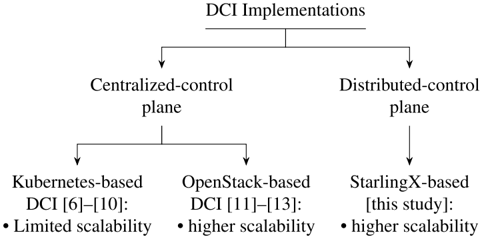
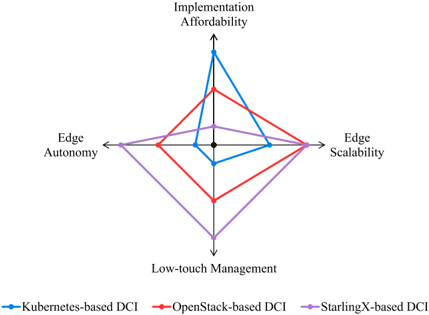
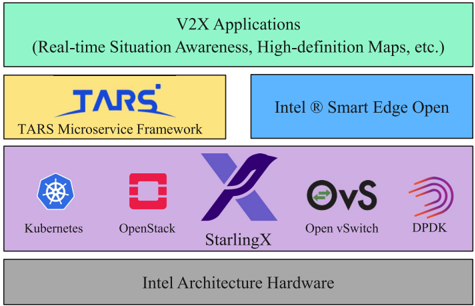
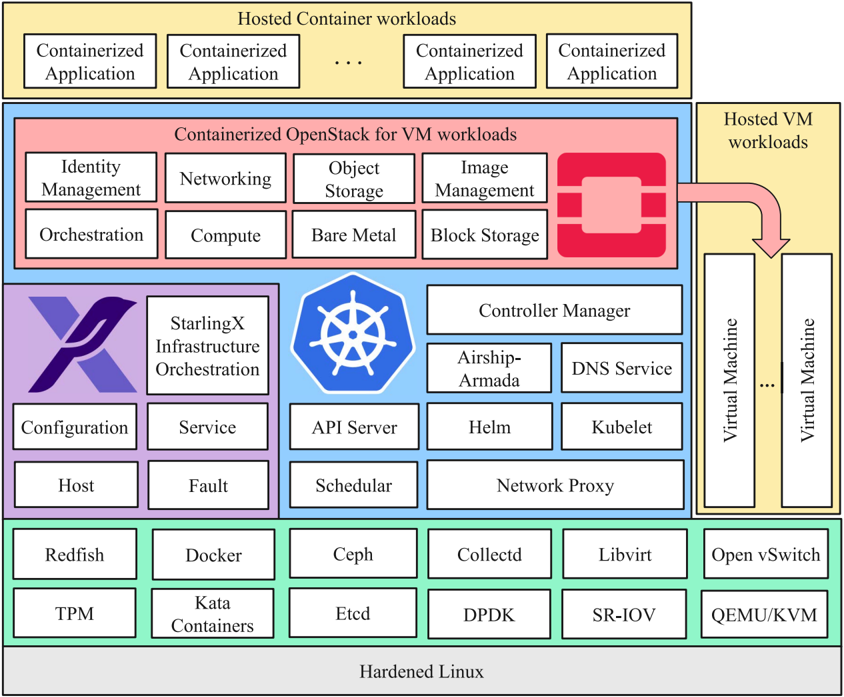
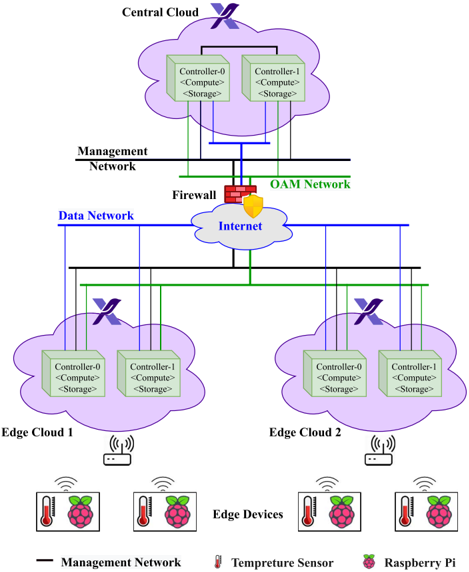
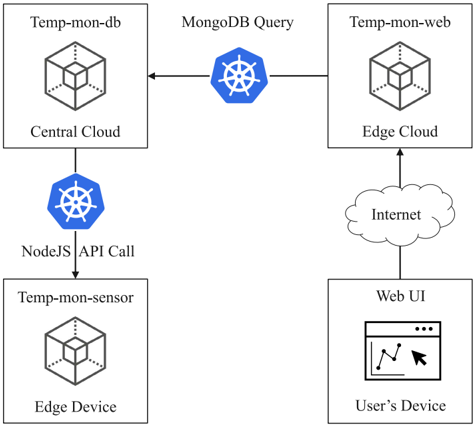
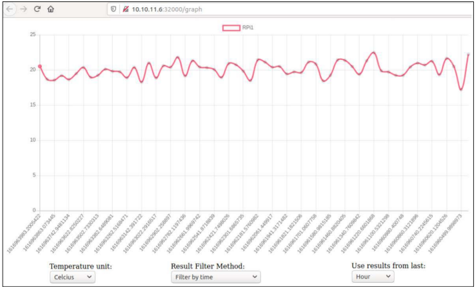
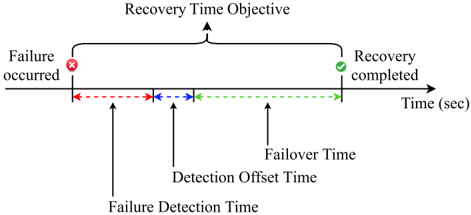
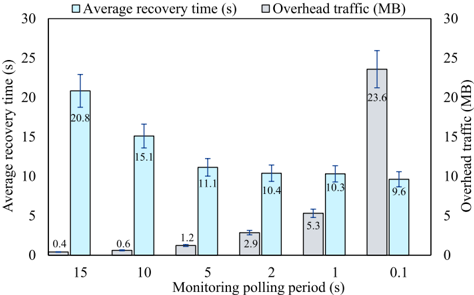
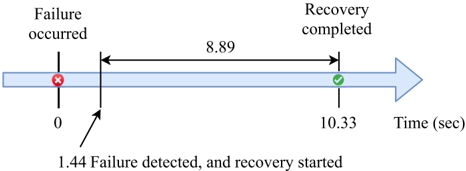
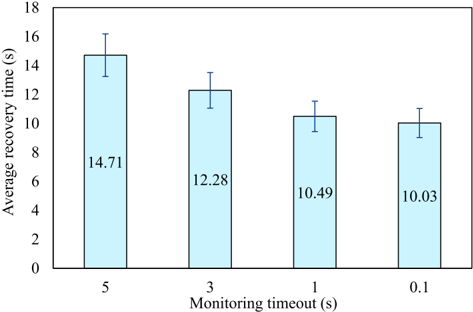
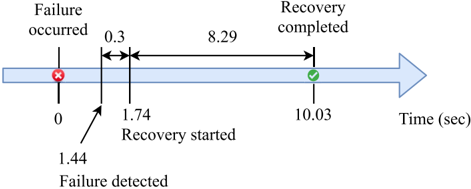
With the ever-growing amount of time-critical, compute-intensive, and private IoT applications, the need for High Availability (HA) Edge Clouds becomes indispensable. Realizing HA Edge Clouds is inherently challenging due to the geographically-dispersed hierarchy of the Distributed Cloud Infrastructure (DCI). For example, frequent isolation between the central Cloud and Edge Clouds due to networking instability necessitates some autonomous operations at the Edge Clouds. Furthermore, because Edge Clouds have fewer resources than central Clouds, configuring the Edge functions (i.e., control, compute, and storage) in HA clusters will undoubtedly reduce downtime. However, it will limit the Edge scalability. To that end, StarlingX is developing an HA-protected and scalable DCI virtualization platform based on the open-source ecosystem, focusing on low-touch management of Edge Clouds. StarlingX provides a fault management service that realizes DCI-wide alarming and logging capabilities, allowing for rapid response to virtualized infrastructure events. Recently, the IETF Network Working Group proposed that monitoring both the DCI and the Edge workloads (software containers) is critical for an Edge Computing Platform to maintain HA IoT application deployment. Indeed, the possibility of the infrastructure remaining stable and healthy while the workloads suffer a fatal failure simultaneously necessitates failover functionality that monitors both the infrastructure and the Edge workloads. In this paper, we first propose a dynamic failover functionality that centrally monitors Edge workloads to recover from deployment or Edge node failures, motivated by the IETF direction. Second, we experimentally optimize the failover functionality for monitoring a microservice-architected IoT application deployed on a StarlingX-based DCI testbed to collect temperature sensor readings from Raspberry Pis. Regardless of how quickly the Edge workload health checks are collected, the recorded failover measurements reveal that the recovery time will not drop below a predetermined level controlled by Edge resources and network speed. Furthermore, reducing the statistics collection timeout reduces the recovery time of an Edge node failure. When the timeout value is less than the minimum achievable recovery time, false-positive failures (FPFs) can occur. Third, to supplement the StarlingX fault management service, we provide a modular implementation of the proposed failover functionality. Finally, we present the first-ever introduction of the StarlingX platform’s software stack to promote its use in academic research.
Overview
The claims and statistics of this paper haven’t been checked yet.
Run the check — free, no account needed. It reads the open-access text and checks the sources it cites.
Integrity signals
Registry
Cites
Statistics
Figures



Verification
Claims the paper makes
The claims and statistics of this paper haven’t been checked yet.
Run the check — free, no account needed. It reads the open-access text and checks the sources it cites.
Claims other papers make about this one
Each is checked against this paper’s own text: does it say what the citing paper says it does?
The cited source says what the claim attributes to it.
In the citing paper
“faster than container orchestration (K8s 9.59 s [8], StarlingX 10.33 s [12])”
From Digital Twins at the Edge: A High-Availability Framework for Resilient Data Processing in IoT Sensor Networks (2026) · cites this paper as [12]
The cited source says what the claim attributes to it.
In the citing paper
“whereas platforms such as StarlingX [12], IoT recovery frameworks [11], and ZigBee [29] self-healing mechanisms report results from deployed or hardware-based implementa- tions.”
From Digital Twins at the Edge: A High-Availability Framework for Resilient Data Processing in IoT Sensor Networks (2026) · cites this paper as [12]
The cited source says what the claim attributes to it.
In the citing paper
“monitoring-centric systems such as StarlingX [12] may reduce detection latency at the expense of increased network polling and associated overhead”
From Digital Twins at the Edge: A High-Availability Framework for Resilient Data Processing in IoT Sensor Networks (2026) · cites this paper as [12]
Self-check
Percentages, sums and reported differences re-computed from the paper’s own numbers.
The self-check needs the paper’s full text.
Citations
Cites
Edge computing: Vision and challenges
Shi, W., Cao, J., Zhang, Q., Li, Y., & Xu, L. (2016) · IEEE Internet of Things Journal · doi:10.1109/jiot.2016.2579198 · Cited by 8,733
ENORM: A Framework For Edge NOde Resource Management
Wang, N., Varghese, B., Matthaiou, M., & Nikolopoulos, D. S. (2017) · IEEE Transactions on Services Computing · doi:10.1109/tsc.2017.2753775 · Cited by 213
A Comparison of MQTT Brokers for Distributed IoT Edge Computing
Koziolek, H., Grüner, S., & Rückert, J. (2020) · Lecture notes in computer science · doi:10.1007/978-3-030-58923-3_23 · Cited by 67
Kristiani, E., Yang, C., Huang, C., et al. (2020) · Mobile Networks and Applications · doi:10.1007/s11036-020-01620-5 · Cited by 57
Distributed analytics in fog computing platforms using tensorflow and kubernetes
Tsai, P.-H., Hong, H.-J., Cheng, A., et al. (2017) · Asia-Pacific Network Operations and Management Symposium (APNOMS) · doi:10.1109/apnoms.2017.8094194 · Cited by 44
Cloud-based Enabling Mechanisms for Container Deployment and Migration at the Network Edge
Benomar, Z., Longo, F., Merlino, G., & Puliafito, A. (2020) · ACM Transactions on Internet Technology · doi:10.1145/3380955 · Cited by 27
Decentralized Kubernetes Federation Control Plane
Larsson, L., Gustafsson, H., Klein, C., et al. (2020) · IEEE/ACM International Conference on Utility and Cloud Computing (UCC) · doi:10.1109/ucc48980.2020.00056 · Cited by 21
Opportunistic Deployment of Distributed Edge Clouds for Latency-Critical Applications
Huedo, E., Montero, R. S., Moreno‐Vozmediano, R., Vázquez, C., Holer, V., & Llorente, I. M. (2021) · Journal of Grid Computing · doi:10.1007/s10723-021-09545-3 · Cited by 14
Instability in Geo-Distributed Kubernetes Federation: Causes and Mitigation
Tamiru, M. A., Pierre, G., Tordsson, J., et al. (2020) · Proceedings - International Symposium on Modeling, Analysis, and Simulation of Computer and Telecommunication Systems · doi:10.1109/mascots50786.2020.9285934 · Cited by 10
Serverless architecture for edge computing
Javadi, B., Sun, J., & Ranjan, R. K. (2020) · Institution of Engineering and Technology eBooks · doi:10.1049/pbpc033e_ch12 · Cited by 9
Research works printed but not linked: 5
- 2021, StarlingX, R4.0
- 2021, Distributed Cloud Installation R4.0
- 2017, Mobile Edge Computing (MEC); Mobile Edge Management; Part 1: System, Host and Platform Management
- 2014, Network Functions Virtualisation (NFV); Architectural Framework
- Mohammed, 2021, StarlingX R4.0 Virtual All-in-One Duplex Distributed Cloud Infrastructure Installation Guidelines
Cited by
Sorted by citations
Neagu, M., Serban, C. M., Hangan, A., & Sebestyen, G. (2026) · Future Internet · doi:10.3390/fi18030137 · Cited by 3
Metadata
- Authors
- Abuibaid, M., Ghorab, A. H., Seguin-Mcpeake, A., Yuen, O., Yungblut, T., & St-Hilaire, M.
- Affiliations
- Carleton University (CA)
- Department of Systems and Computer Engineering, Carleton University, Ottawa, Canada
- Corresponding author
- Abuibaid, Mohammed
- Venue
- IEEE Access
- Published
- 2022
- Volume
- 10
- Pages
- 97101-97116
- ISSN
- 2169-3536 (ISSN-L)
- OpenAlex
- W4296437371
- Cited by
- 11
- References
- 12
- Citations by year
- 2026: 4 · 2025: 4 · 2024: 2 · 2022: 1
- FWCI
- 0.78
- Type
- journal article
- Language
- en
- Open access
- gold
- doi.org
- Locations
- IEEE Access (publishedVersion, cc-by)
- Carleton University's Institutional Repository (MacOdrum Library, Carleton University) (submittedVersion, cc-by-nc-nd)
- DOAJ (DOAJ: Directory of Open Access Journals) (submittedVersion, cc-by-sa)
- Topics
- Physical Sciences › Computer Science › Computer Networks and Communications › IoT and Edge/Fog Computing
- Physical Sciences › Computer Science › Information Systems › Cloud Computing and Resource Management
- Physical Sciences › Computer Science › Computer Networks and Communications › Distributed systems and fault tolerance
- Keywords
- edge computing, high availability, distributed cloud infrastructure, workload monitoring, fault management, microservices, IoT applications, recovery time, testbed implementation
About these checks
Registry, retraction, Cites and statistics results are computed, not judged, with one exception: a printed reference that no index lists is read once by a model before it counts as a citation error. Claims are extracted by a model and kept only when their quote appears verbatim in the text; each cited source is then checked, with a model’s help, for whether it says what the claim relies on. Those verdicts can be wrong — read the claim’s quote and the cited source before relying on one.
Statistics and arithmetic are recomputed, not judged.
Confidence bands are shown only for fields calibrated on our annotated test set. None is calibrated yet, so no band is shown.
What counts as a claim ›How we measure confidence ›How we check this ›
Are you an author, or do you see a problem with this page? Request a review
