

The DOI matches its Crossref record.
The Rapid Development of Bioeconomy Policies in the EU and other Regions of the World
Abstract
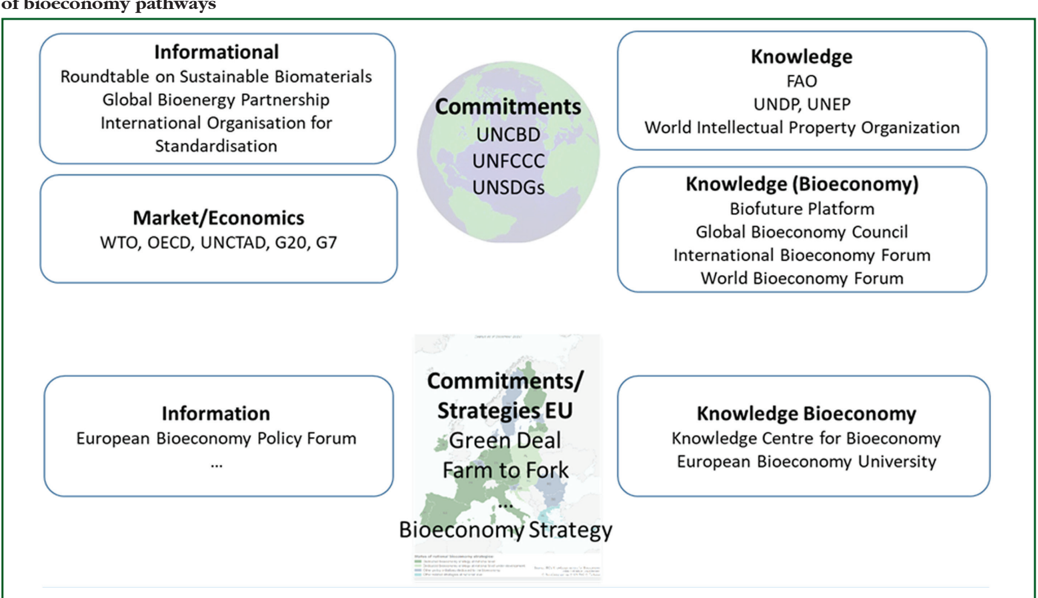
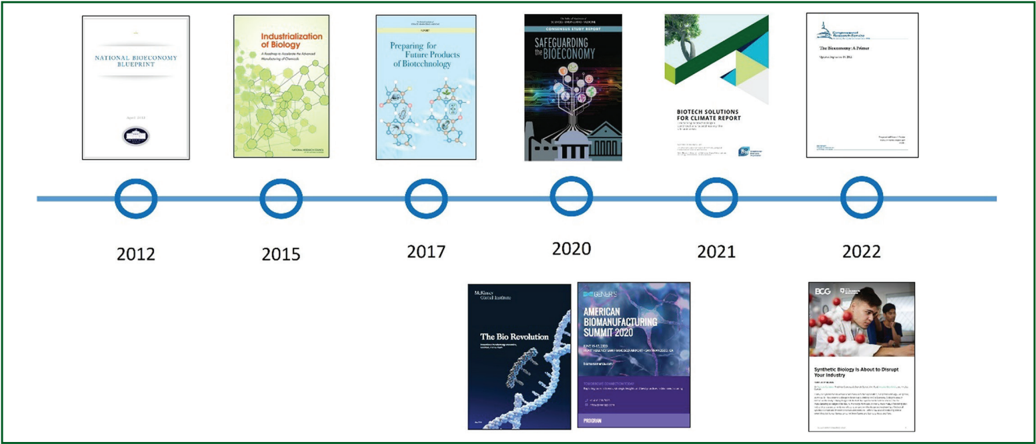
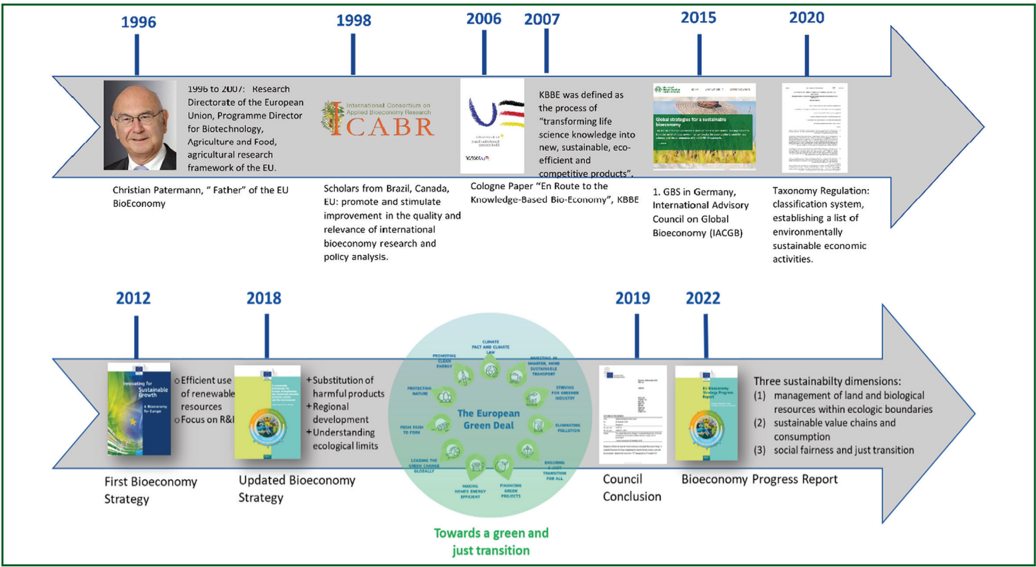
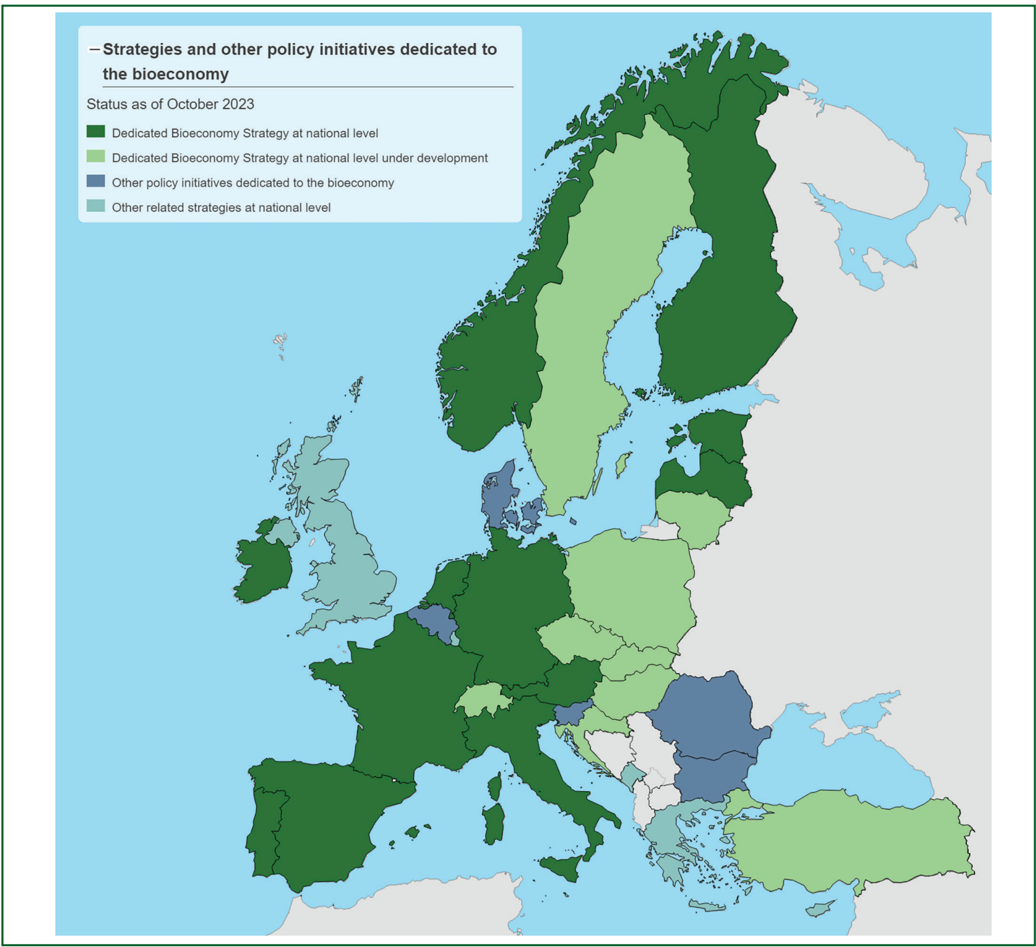
Summary: In the European Union, the bioeconomy is very broadly defined, encompassing all sectors and associated services and investments that produce, use, process, distribute or consume biological resources, including ecosystem services. It is seen as a natural enabler and result of the transformation proposed by Europe's sustainable growth strategy, the Green Deal. EU Member States and regions also have strategies to further target the implementation of the bioeconomy. The bioeconomy and its related policies have shown a rapid development in the EU and other regions of the world. In challenging times, the sustainable and circular bioeconomy is a central element in supporting the transition to an economy that is climate‐neutral, while preserving the biosphere. From the global agenda of United Nation's Sustainable Development Goals (SDGs), climate change and biodiversity, several other international organisations, global fora, and private initiatives, all provide knowledge, analyses and perspectives for the bioeconomy. Africa's bioeconomy has a huge potential as a catalyser for advancing towards many SDGs. In North America, the US has recently defined bold goals for biotechnology and biomanufacturing. South American countries foster their enormous agricultural and forestry potential in supporting the bioeconomy, while playing a key role for global climate and biodiversity. The bioeconomy in its different designs is thus an important building block for the global transformation towards a more sustainable economic system.
Overview
The claims and statistics of this paper haven’t been checked yet.
Run the check — free, no account needed. It reads the open-access text and checks the sources it cites.
Integrity signals
Registry
Cites
Statistics
Figures

Verification
Claims the paper makes
The claims and statistics of this paper haven’t been checked yet.
Run the check — free, no account needed. It reads the open-access text and checks the sources it cites.
Claims other papers make about this one
Each is checked against this paper’s own text: does it say what the citing paper says it does?
In the citing paper
“Despite the advancements and efforts of the EU regions, the issue of a lack of measurement and monitoring of bioeconomy contributions keeps re-emerging [13].”
From Governance Strategies for Sustainable Circular Bioeconomy Development in Europe: Insights and Typologies (2024) · cites this paper as [13]
Self-check
Percentages, sums and reported differences re-computed from the paper’s own numbers.
The self-check needs the paper’s full text.
Citations
Cites
No references could be resolved yet.
Research works printed but not linked: 25
- Bogdanski A., 2021, Guidance Note on Monitoring the Sustainability of the Bioeconomy at a Country or Macro‐Regional Level
- Bracco S., 2019, Indicators to Monitor and Evaluate the Sustainability of Bioeconomy
- European Commission, 2012, EU bioeconomy strategy 2012, COM/2012/060 final
- European Commission, 2022, EU bioeconomy strategy progress report, COM(2022) 283 final
- EU Bioeconomy Conference, 2022, Proceeds of the EU Bioeconomy conference
- European Commission, 2023, A green deal industrial plan for the net‐zero age, COM(2023) 62 final
- European Commission, 2023, Transition pathway for the EU chemical sector
- European Parliament, 2020, Regulation (EU) 2020/852 of the European Parliament and of the Council of 18 June 2020 on the establishment of a framework to facilitate sustainable investment, and amending Regulation (EU) 2019/2088 (Text with EEA relevance)
- Gomez San Juan M., 2022, Sustainable and Circular Bioeconomy in the Climate Agenda: Opportunities to Transform Agrifood Systems
- Haarich S., 2022, Bioeconomy strategy development in EU regions
- EFB Bioeconomy Journal, 2022, Christian Patermann and The Bioeconomy: A Testimony on his 80th Anniversary: Important next steps for speeding up and unlocking the full potential of a circular biobased economy, The EFB Bioeconomy Journal, 2
- 10.1016/j.bioeco.2022.100038 · DOI
- Lasarte Lopez J., 2022, Estimating employment and value added in the bioeconomy of EU regions, EUR 31058 EN
- Lier M., 2018, Synthesis on bioeconomy monitoring systems in the EU Member States – indicators for monitoring the progress of bioeconomy, Natural Resources and Bioeconomy Studies, 38/2018
- Mubareka S., 2023, Trends in the EU bioeconomy, EUR 31434 EN
- SCS Global, 2023, Roundtable on Sustainable Biomaterials
- 10.3390/su13073687 · DOI
- 10.1016/j.cesys.2022.100073 · DOI
- The White House Office of Science and Technology Policy, 2023, Bold Goals for U.S. Biotechnology and Biomanufacturing, Harnessing Research and Development to Further Societal Goals
- 10.1007/978-3-031-15703-5_45 · DOI
- 10.4324/9781315745183 · DOI
- Webb P., 2022, Everyone at the table: Transforming food systems by connecting science, policy and society
- 10.1016/j.njas.2016.03.009 · DOI
- Wesseler J., 2010, Special Issue of AgBioForum, contribution of the ICABR 2009 conference to the Emerging Bioeconomy, AgBioForum, 13
- Zhu Benz Xinqi, 2022, Presentation at BioMonitor Meeting with Stakeholders Workshop, 5 October 2022
Cited by
Sorted by citations
Skondras, A., Nastis, S. A., Skalidi, I., Theofilou, A., Bakousi, A., Mone, T., Tsifodimou, Z. E., Gaffey, J., Ludgate, R., O’Connor, T., et al. (2024) · Sustainability · doi:10.3390/su16125140 · Cited by 19
Metadata
- Authors
- M'barek, R., & Wesseler, J.
- Affiliations
- European Commission Joint Research Centre Spain
- Agricultural Economics and Rural Policy Group Wageningen University and Research The Netherlands
- Venue
- EuroChoices
- Publisher
- Wiley
- Published
- 2023-12
- Volume
- 22
- Issue
- 3
- Pages
- 5-12
- ISSN
- 1478-0917
- 1746-692X
- Cited by
- 14
- References
- 0
- Language
- en
About these checks
Registry, retraction, Cites and statistics results are computed, not judged, with one exception: a printed reference that no index lists is read once by a model before it counts as a citation error. Claims are extracted by a model and kept only when their quote appears verbatim in the text; each cited source is then checked, with a model’s help, for whether it says what the claim relies on. Those verdicts can be wrong — read the claim’s quote and the cited source before relying on one.
Statistics and arithmetic are recomputed, not judged.
Confidence bands are shown only for fields calibrated on our annotated test set. None is calibrated yet, so no band is shown.
What counts as a claim ›How we measure confidence ›How we check this ›
Are you an author, or do you see a problem with this page? Request a review
