

The DOI matches its Crossref record; 23 of the 23 references it cites were found in a registry or an index.
Measuring cereblon as a biomarker of response or resistance to lenalidomide and pomalidomide requires use of standardized reagents and understanding of gene complexity
Open accessAbstract
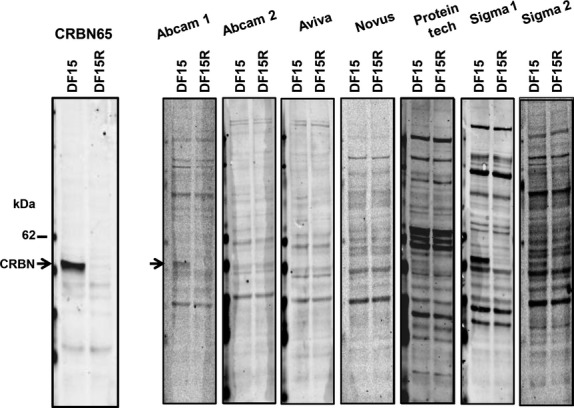
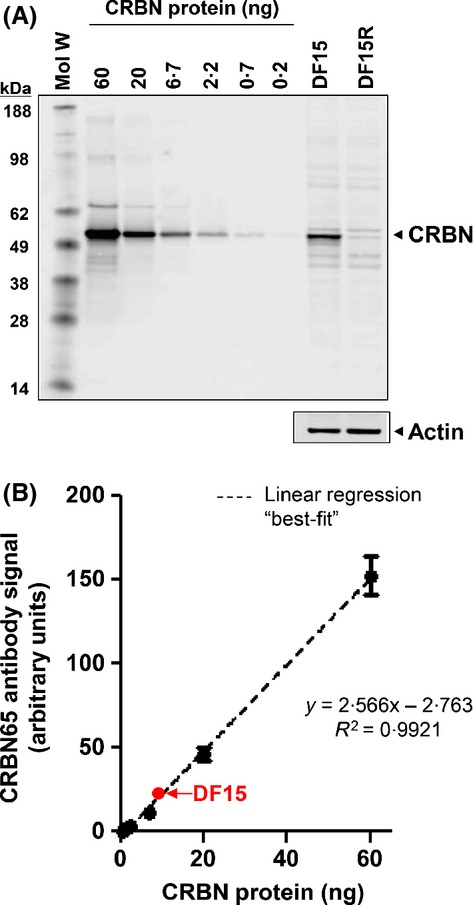
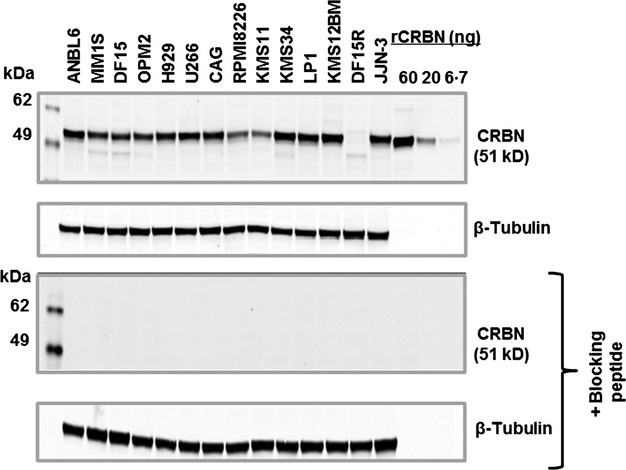
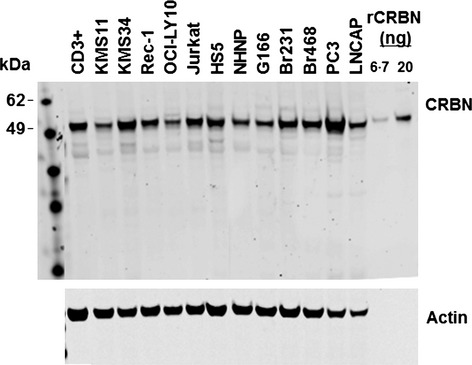
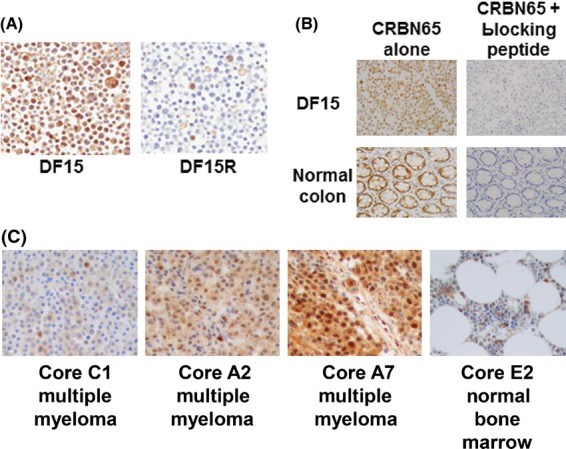
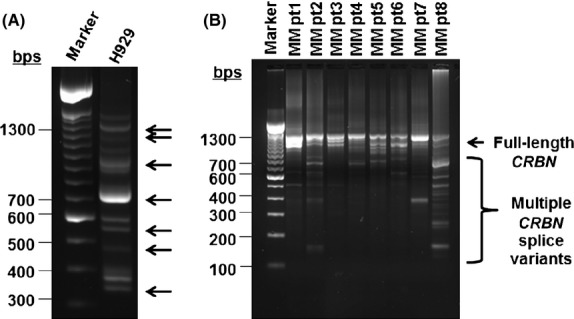
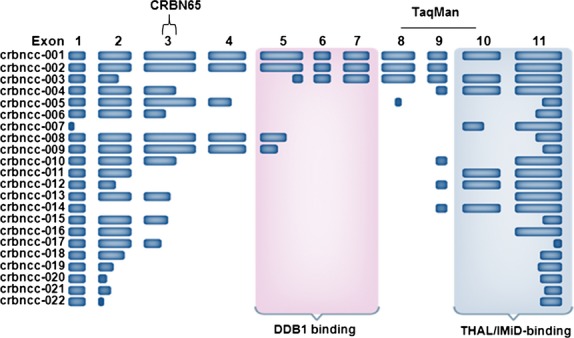
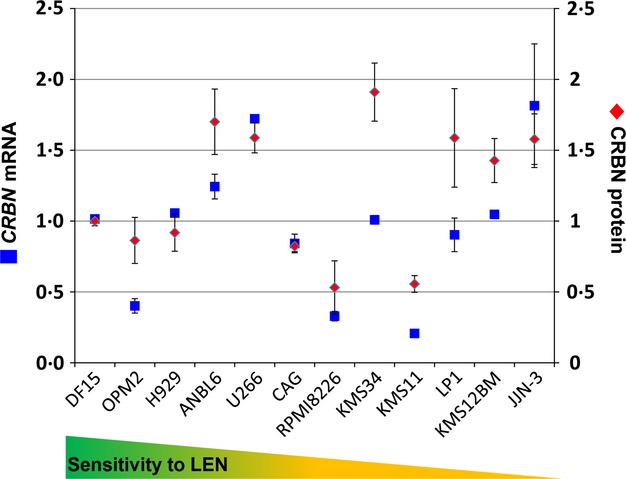
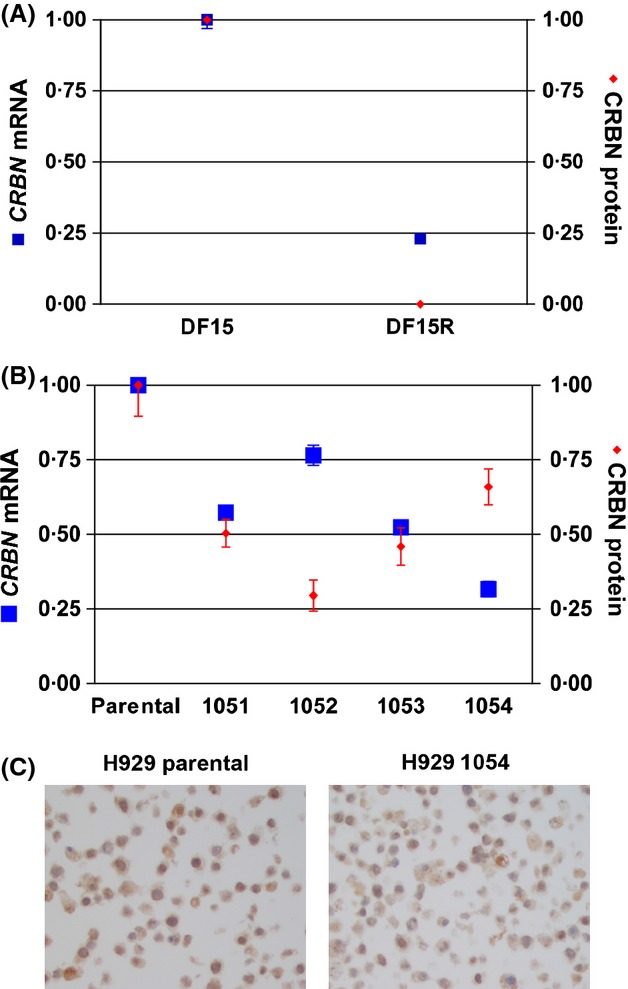
Summary: Cereblon, a member of the cullin 4 ring ligase complex ( CRL 4), is the molecular target of the immunomodulatory drugs ( IM i D s) lenalidomide and pomalidomide and is required for the antiproliferative activity of these agents in multiple myeloma ( MM ) and immunomodulatory activity in T cells. Cereblon's central role as a target of lenalidomide and pomalidomide suggests potential utility as a predictive biomarker of response or resistance to IM i D therapy. Our studies characterized a cereblon monoclonal antibody CRBN 65, with high sensitivity and specificity in W estern analysis and immunohistochemistry that is superior to commercially available antibodies. We identified multiple cereblon splice variants in both MM cell lines and primary cells, highlighting challenges with conventional gene expression assays given this gene complexity. Using CRBN 65 antibody and T aq M an quantitative reverse transcription polymerase chain reaction assays, we showed lack of correlation between cereblon protein and mRNA levels. Furthermore, lack of correlation between cereblon expression in MM cell lines and sensitivity to lenalidomide was shown. In cell lines made resistant to lenalidomide and pomalidomide, cereblon protein is greatly reduced. These studies show limitations to the current approaches of cereblon measurement that rely on commercial reagents and assays. Standardized reagents and validated assays are needed to accurately assess the role of cereblon as a predictive biomarker.
Overview
The claims and statistics of this paper haven’t been checked yet.
Run the check — free, no account needed. It reads the open-access text and checks the sources it cites.
Integrity signals
Registry
Cites
Statistics
Figures
Verification
Claims the paper makes
The claims and statistics of this paper haven’t been checked yet.
Run the check — free, no account needed. It reads the open-access text and checks the sources it cites.
Claims other papers make about this one
Each is checked against this paper’s own text: does it say what the citing paper says it does?
In the citing paper
“Such analyses have revealed the importance of competition among both substrates and E3 ubiquitin ligase complexes in determining neosubstrate abundance during thalidomide analogue therapy.”
From Cancer therapies based on targeted protein degradation — lessons learned with lenalidomide (2021) · cites this paper as [159]
In the citing paper
“Beyond substrate competition for CRBN, CRBN itself competes with other substrate receptors for access to limiting concentrations of CRL4159.”
From Cancer therapies based on targeted protein degradation — lessons learned with lenalidomide (2021) · cites this paper as [159]
Self-check
Percentages, sums and reported differences re-computed from the paper’s own numbers.
The self-check needs the paper’s full text.
Citations
Cites
Abraham, J. M. (2010) · Brill | Nijhoff eBooks · doi:10.1163/ej.9789004163300.i-1081.897 · Cited by 2,612
Identification of a Primary Target of Thalidomide Teratogenicity
Ito, T., Ando, H., Suzuki, T., Ogura, T., Hotta, K., Imamura, Y., Yamaguchi, Y., & Handa, H. (2010) · Science · doi:10.1126/science.1177319 · Cited by 2,136
Frequent pathway mutations of splicing machinery in myelodysplasia
Yoshida, K., Sanada, M., Shiraishi, Y., Nowak, D., Nagata, Y., Yamamoto, R., Sato, Y., Sato-Otsubo, A., Kon, A., Nagasaki, M., et al. (2011) · Nature · doi:10.1038/nature10496 · Cited by 2,029
Initial genome sequencing and analysis of multiple myeloma
Chapman, M. A., Lawrence, M. S., Keats, J. J., Cibulskis, K., Sougnez, C. L., Schinzel, A. C., Harview, C. L., Brunet, J.-P., Ahmann, G. J., Adli, M., et al. (2011) · Nature · doi:10.1038/nature09837 · Cited by 1,457
Somatic SF3B1 Mutation in Myelodysplasia with Ring Sideroblasts
Papaemmanuil, E., Cazzola, M., Boultwood, J., Malcovati, L., Vyas, P., Bowen, D., Pellagatti, A., Wainscoat, J. S., Hellstrom-Lindberg, E., Gambacorti-Passerini, C., et al. (2011) · New England Journal of Medicine · doi:10.1056/nejmoa1103283 · Cited by 1,222
SF3B1 and Other Novel Cancer Genes in Chronic Lymphocytic Leukemia
Wang, L., Lawrence, M. S., Wan, Y., Stojanov, P., Sougnez, C. L., Stevenson, K. E., Werner, L. L., Sivachenko, A., DeLuca, D. S., Zhang, L., et al. (2011) · New England Journal of Medicine · doi:10.1056/nejmoa1109016 · Cited by 1,103
Flicek, P., Amode, M. R., Barrell, D. G., Beal, K. M., Brent, S., Carvalho‐Silva, D., Clapham, P., Coates, G. M. P., Fairley, S., Fitzgerald, S. F., et al. (2011) · Nucleic Acids Research · doi:10.1093/nar/gkr991 · Cited by 842
Lopez-Girona, A., Mendy, D., Ito, T., Miller, K., Gandhi, A. K., Kang, J., Karasawa, S., Carmel, G., Jackson, P., Abbasian, M., et al. (2012) · Leukemia · doi:10.1038/leu.2012.119 · Cited by 814
Self-citationMiguel, J. F. S., Weisel, K. C., Moreau, P., Lacy, M. Q., Song, K., Delforge, M., Karlin, L., Goldschmidt, H., Banos, A., Oriol, A., et al. (2013) · The Lancet Oncology · doi:10.1016/s1470-2045(13)70380-2 · Cited by 806
Baber, N. S. (1994) · British Journal of Clinical Pharmacology · doi:10.1111/j.1365-2125.1994.tb05705.x · Cited by 762
Research works printed but not linked: 2
- Gandhi A.K., 2013, Exon mutations in cereblon (CRBN) and DNA damage binding protein 1 (DDB1) genes are rare in myeloma cells and patients, Clinical Lymphoma Myeloma and Leukemia, 13, S182
- Schuster S.R., 2012, Cereblon expression predicts response, progression free and overall survival after pomalidomide and dexamethasone therapy in multiple myeloma (oral presentation), Blood (ASH Annual Meeting Abstracts), 120, 194
Cited by
Sorted by citations
Chamberlain, P. P., Lopez-Girona, A., Miller, K., Carmel, G., Pagarigan, B., Chie-Leon, B., Rychak, E., Corral, L. G., Ren, Y. J., Wang, M., et al. (2014) · Nature Structural & Molecular Biology · doi:10.1038/nsmb.2874 · Cited by 531
Self-citationDonovan, K. A., An, J., Nowak, R. P., Yuan, J. C., Fink, E. C., Berry, B. C., Ebert, B. L., & Fischer, E. S. (2018) · eLife · doi:10.7554/elife.38430 · Cited by 509
SALL4 mediates teratogenicity as a thalidomide-dependent cereblon substrate
Matyskiela, M. E., Couto, S., Zheng, X., Lu, G., Hui, J., Stamp, K., Drew, C., Ren, Y., Wang, M., Carpenter, A., et al. (2018) · Nature Chemical Biology · doi:10.1038/s41589-018-0129-x · Cited by 338
Self-citationBjorklund, C. C., Lu, L., Kang, J., Hagner, P. R., Havens, C. G., Amatangelo, M., Wang, M., Ren, Y., Couto, S., Breider, M., et al. (2015) · Blood Cancer Journal · doi:10.1038/bcj.2015.66 · Cited by 221
Self-citationEichner, R., Heider, M., Fernández-Sáiz, V., van Bebber, F., Garz, A.-K., Lemeer, S., Rudelius, M., Targosz, B.-S., Jacobs, L., Knorn, A.-M., et al. (2016) · Nature Medicine · doi:10.1038/nm.4128 · Cited by 183
Gooding, S., Ansari-Pour, N., Towfic, F., Ortiz Estévez, M., Chamberlain, P. P., Tsai, K.-T., Flynt, E., Hirst, M., Rozelle, D., Dhiman, P., et al. (2021) · Blood · doi:10.1182/blood.2020007081 · Cited by 172
Self-citationCaers, J., Garderet, L., Kortüm, K. M., O'Dwyer, M. E., van de Donk, N. W. C. J., Binder, M., Dold, S. M., Gay, F., Corre, J., Beguin, Y. P., et al. (2018) · Haematologica · doi:10.3324/haematol.2018.189159 · Cited by 153
Prognostic and predictive biomarker developments in multiple myeloma
Wallington-Beddoe, C. T., & Mynott, R. L. (2021) · Journal of Hematology & Oncology · doi:10.1186/s13045-021-01162-7 · Cited by 148
Cancer therapies based on targeted protein degradation — lessons learned with lenalidomide
Jan, M., Sperling, A. S., & Ebert, B. L. (2021) · Nature Reviews Clinical Oncology · doi:10.1038/s41571-021-00479-z · Cited by 137
Sehgal, K., Das, R., Zhang, L., Verma, R., Deng, Y., Kocoglu, M. H., Vasquez, J. C., Koduru, S. V., Ren, Y., Wang, M., et al. (2015) · Blood · doi:10.1182/blood-2014-11-611426 · Cited by 134
Self-citationShirasaki, R., Matthews, G. M., Gandolfi, S., de Matos Simoes, R., Buckley, D. L., Raja Vora, J., Sievers, Q. L., Brüggenthies, J. B., Dashevsky, O., Poarch, H., et al. (2021) · Cell Reports · doi:10.1016/j.celrep.2020.108532 · Cited by 123
Paiva, B., Corchete, L. A., Vídriales, M., Puig, N., Maiso, P., Rodríguez, I., Alignani, D., Burgos, L., Sánchez, M.-L., Bárcena, P., et al. (2016) · Blood · doi:10.1182/blood-2015-08-665679 · Cited by 104
Ocio, E. M., Fernández‐Lázaro, D., San‐Segundo, L., López‐Corral, L., Corchete, L. A., Gutierrez, N. C., Garayoa, M., Paíno, T., García-Gómez, A., Delgado, M., et al. (2014) · Leukemia · doi:10.1038/leu.2014.238 · Cited by 91
Self-citationDimopoulos, K., Helbo, A. S., Munch‐Petersen, H. F., Sjø, L. D., Christensen, J. F., Kristensen, L. S., Asmar, F., Hermansen, E., O'Connel, C., Gimsing, P., et al. (2017) · Molecular Oncology · doi:10.1002/1878-0261.12157 · Cited by 89
p97/VCP promotes degradation of CRBN substrate glutamine synthetase and neosubstrates
Nguyen, T. V., Li, J., Lu, C.-C. (., Mamrosh, J. L., Lu, G., Cathers, B. E., & Deshaies, R. J. (2017) · Proceedings of the National Academy of Sciences · doi:10.1073/pnas.1700949114 · Cited by 85
Self-citationMondala, P. K., Vora, A. A., Zhou, T., Lazzari, E., Ladel, L., Luo, X., Kim, Y., Costello, C. L., MacLeod, A. R., Jamieson, C. H. M., et al. (2021) · Cell stem cell · doi:10.1016/j.stem.2020.12.017 · Cited by 70
Franssen, L. E., Nijhof, I. S., Couto, S., Levin, M.-D., Bos, G. M. J., Broijl, A., Klein, S. K., Ren, Y., Wang, M., Koene, H. R., et al. (2018) · Haematologica · doi:10.3324/haematol.2017.186601 · Cited by 66
Self-citationSperling, A. S., Burgess, M. W., Keshishian, H., Gasser, J. A., Bhatt, S., Jan, M., Slabicki, M. M., Sellar, R. S., Fink, E. C., Miller, P. G., et al. (2019) · Blood · doi:10.1182/blood.2019000789 · Cited by 65
Huang, S.-Y., Lin, C.-W., Lin, H.-H., Yao, M., Tang, J.-L., Wu, S.-J., Chen, Y.-C., Lu, H.-Y., Hou, H.-A., Chen, C.-Y., et al. (2014) · Annals of Hematology · doi:10.1007/s00277-014-2063-7 · Cited by 62
Thakurta, A., Gandhi, A. K., Waldman, M. F., Bjorklund, C., Ning, Y., Mendy, D., Schafer, P., Lopez-Girona, A., Lentzsch, S., Schey, S. A., et al. (2014) · Leukemia · doi:10.1038/leu.2013.315 · Cited by 56
Self-citationTargeting cereblon in hematologic malignancies
Fuchs, O. (2023) · Blood Reviews · doi:10.1016/j.blre.2022.100994 · Cited by 55
Liu, Y., Huang, X., He, X., Zhou, Y., Jiang, X., Chen‐Kiang, S., Jaffrey, S. R., & Xu, G. (2015) · The FASEB Journal · doi:10.1096/fj.15-274050 · Cited by 55
Cereblon in health and disease
Kim, H. K., Ko, T. H., Nyamaa, B., Lee, S. R., Kim, N., Ko, K. S., Rhee, B. D., Park, C., Nilius, B., & Han, J. (2016) · Pflügers Archiv - European Journal of Physiology · doi:10.1007/s00424-016-1854-1 · Cited by 55
Akuffo, A. A., Alontaga, A. Y., Metcalf, R. S., Beatty, M. S., Becker, A., McDaniel, J. M., Hesterberg, R. S., Goodheart, W. E., Gunawan, S., Ayaz, M., et al. (2018) · Journal of Biological Chemistry · doi:10.1074/jbc.m117.816868 · Cited by 55
Díaz, T., Rodríguez, V., Lozano, E., Mena, M.-P., Calderón, M., Rosiñol, L., Martı́nez, A., Tovar, N., Pérez‐Galán, P., Bladé, J., et al. (2017) · Haematologica · doi:10.3324/haematol.2017.164632 · Cited by 52
USP15 antagonizes CRL4 CRBN -mediated ubiquitylation of glutamine synthetase and neosubstrates
Nguyen, T. V. (2021) · Proceedings of the National Academy of Sciences · doi:10.1073/pnas.2111391118 · Cited by 49
Krönke, J., Kuchenbauer, F., Kull, M., Teleanu, V, Bullinger, L., Bunjes, D., Greiner, A., Kolmus, S., Köpff, S., Schreder, M., et al. (2017) · Leukemia · doi:10.1038/leu.2016.384 · Cited by 46
Multiple myeloma cells’ capacity to decompose H2O2 determines lenalidomide sensitivity
Sebastian, S., Zhu, Y. X., Braggio, E., Shi, C.-X., Panchabhai, S. C., Wier, S. A. V., Ahmann, G. J., Chesi, M., Bergsagel, P. L., Stewart, A. K., et al. (2016) · Blood · doi:10.1182/blood-2016-09-738872 · Cited by 45
Cereblon-Recruiting PROTACs: Will New Drugs Have to Face Old Challenges?
Cieślak, M., & Słowianek, M. (2023) · Pharmaceutics · doi:10.3390/pharmaceutics15030812 · Cited by 42
Shrestha, P., Davis, D. A., Jaeger, H. K., Stream, A., Aisabor, A. I., & Yarchoan, R. (2021) · PLoS Pathogens · doi:10.1371/journal.ppat.1009091 · Cited by 39
Lu, X., Sabbasani, V. R., Amponsa, V. O., Evans, C. N., King, J. C., Tarasov, S. G., Dyba, M., Das, S., Chan, K. C., Schwieters, C. D., et al. (2021) · Nature Communications · doi:10.1038/s41467-021-27570-4 · Cited by 35
Roy, A. L., Prébet, T., Castellano, R., Goubard, A., Riccardi, F., Fauriat, C., Granjeaud, S., Benyamine, A., Castanier, C., Orlanducci, F., et al. (2018) · Frontiers in Immunology · doi:10.3389/fimmu.2018.00977 · Cited by 35
Understanding the multiple biological aspects leading to myeloma
Boyle, E. M., Davies, F. E., Leleu, X. P., & Morgan, G. J. (2014) · Haematologica · doi:10.3324/haematol.2013.097907 · Cited by 34
Jonasova, A., Bokorova, R., Polak, J., Vostry, M., Kostecka, A., Hajkova, H., Neuwirtova, R., Siskova, M., Sponerova, D., Cermak, J., et al. (2015) · European Journal of Haematology · doi:10.1111/ejh.12457 · Cited by 31
Dimopoulos, K., Munch‐Petersen, H. F., Eskelund, C. W., Sjø, L. D., Ralfkiaer, E. M., Gimsing, P., & Grønbæk, K. (2018) · Leukemia & lymphoma/Leukemia and lymphoma · doi:10.1080/10428194.2018.1466290 · Cited by 29
Beedie, S., Huang, P. A., Harris, E. M., Strope, J. D., Mahony, C. B., Chau, C. H., Vargesson, N., & Figg, W. D. (2020) · The FASEB Journal · doi:10.1096/fj.201903060rr · Cited by 28
Misiewicz-Krzemińska, I., Ramón, C. D., Corchete, L. A., Krzemiński, P., Rojas, E. A., Isidro, I. M., García‐Sánz, R., Martínez‐López, J., Oriol, A., Bladé, J., et al. (2020) · Blood Advances · doi:10.1182/bloodadvances.2020002711 · Cited by 27
Kulig, P., Milczarek, S., Bakinowska, E., Szalewska, L., Baumert, B., & Machaliński, B. (2023) · Cancers · doi:10.3390/cancers15030963 · Cited by 26
Treatment of Lymphoid and Myeloid Malignancies by Immunomodulatory Drugs
Fuchs, O. (2018) · Cardiovascular & Haematological Disorders - Drug Targets · doi:10.2174/1871529x18666180522073855 · Cited by 26
BSG and MCT1 Genetic Variants Influence Survival in Multiple Myeloma Patients
Łacina, P., Butrym, A. K., Mazur, G. J., & Bogunia‐Kubik, K. (2018) · Genes · doi:10.3390/genes9050226 · Cited by 24
Kwiatkowski, N., Liang, T., Sha, Z., Collier, P. N., Yang, A., Sathappa, M., Paul, A., Su, L., Zheng, X., Aversa, R., et al. (2025) · Cell Chemical Biology · doi:10.1016/j.chembiol.2025.03.006 · Cited by 23
Synthesis, biological evaluation and clinical trials of Cereblon-based PROTACs
Vicente, A. T. S., Moura, S. P. S. P., & Salvador, J. A. R. (2025) · Communications Chemistry · doi:10.1038/s42004-025-01598-9 · Cited by 23
Offidani, M., Corvatta, L., Caraffa, P., Leoni, P., Pautasso, C., Larocca, A., & Palumbo, A. P. (2014) · Expert Review of Anticancer Therapy · doi:10.1586/14737140.2014.906904 · Cited by 23
Polymorphisms within beta-catenin encoding gene affect multiple myeloma development and treatment
Butrym, A. K., Rybka, J., Łacina, P., Gębura, K., Frontkiewicz, D., Bogunia‐Kubik, K., & Mazur, G. J. (2015) · Leukemia Research · doi:10.1016/j.leukres.2015.10.007 · Cited by 21
Dytfeld, D., Rosebeck, S., Kandarpa, M., Mayampurath, A. M., Mellacheruvu, D., Alonge, M. M., Ngoka, L. C. M., Jasielec, J. K., Richardson, P. G. G., Volchenboum, S. L., et al. (2015) · British Journal of Haematology · doi:10.1111/bjh.13394 · Cited by 19
Baicalein Inhibits Proliferation of Myeloma U266 Cells by Downregulating IKZF1 and IKZF3
Liu, X., Li, H., Zhang, Q., Zeng, X., & Liu, S.-Q. (2018) · Medical Science Monitor · doi:10.12659/msm.907058 · Cited by 18
Sellin, M., Berg, S. A., Hagen, P. A., & Zhang, J. (2022) · Translational Oncology · doi:10.1016/j.tranon.2022.101448 · Cited by 17
Oekelen, O. V., Parekh, S. S., Cho, H. J., Vishnuvardhan, N., Madduri, D., Richter, J. R., Ip, C., Lau, K., Florendo, E., Mancia, I. S., et al. (2020) · Leukemia & lymphoma/Leukemia and lymphoma · doi:10.1080/10428194.2020.1805111 · Cited by 16
Self-citationMisiewicz-Krzemińska, I., Corchete, L. A., Rojas, E. A., Martínez‐López, J., García‐Sánz, R., Oriol, A., Bladé, J., Lahuerta, J. J., Miguel, J. F. S., Mateos, M., et al. (2018) · Haematologica · doi:10.3324/haematol.2017.181628 · Cited by 16
Ren, Y., Wang, M., Couto, S. S., Hansel, D. E., Miller, K., Lopez‐Girona, A., Bjorklund, C. C., Gandhi, A. K., Thakurta, A., Chopra, R., et al. (2015) · Applied immunohistochemistry & molecular morphology · doi:10.1097/pai.0000000000000246 · Cited by 16
Self-citationBolomsky, A., Hübl, W., Spada, S., Müldür, E., Schlangen, K., Heintel, D., Rocci, A., Weißmann, A., Fritz, V., Willheim, M., et al. (2017) · American Journal of Hematology · doi:10.1002/ajh.24634 · Cited by 15
Cereblon: promise and challenges for combating human diseases
Kim, H. K., Seol, J. E., Ahn, S. W., Jeon, S., Park, C., & Han, J. (2021) · Pflügers Archiv - European Journal of Physiology · doi:10.1007/s00424-021-02624-0 · Cited by 14
Maffei, R., Colaci, E., Fiorcari, S., Martinelli, S., Potenza, L., Luppi, M., & Marasca, R. (2015) · Critical Reviews in Oncology/Hematology · doi:10.1016/j.critrevonc.2015.09.003 · Cited by 13
Kim, G. W., Yoo, J. H., Won, H.-R., Yeon, S.-K., Lee, S. W., Lee, D. H., Jeon, Y. H., & Kwon, S. H. (2020) · Leukemia Research · doi:10.1016/j.leukres.2020.106398 · Cited by 12
Tumor and microenvironmental mechanisms of resistance to immunomodulatory drugs in multiple myeloma
Chen, L., & Gooding, S. (2022) · Frontiers in Oncology · doi:10.3389/fonc.2022.1038329 · Cited by 13
Targeting plasma cells: are we any closer to a panacea for diseases of antibody‐secreting cells?
Low, M. S. Y., Infantino, S., Grigoriadis, G., & Tarlinton, D. M. (2016) · Immunological Reviews · doi:10.1111/imr.12388 · Cited by 13
Kiesewetter, B., Simonitsch‐Klupp, I., Kornauth, C., Dolak, W., Lukas, J., Mayerhoefer, M. E., & Raderer, M. (2017) · Hematological Oncology · doi:10.1002/hon.2472 · Cited by 12
Caspase-8 Regulates the Antimyeloma Activity of Bortezomib and Lenalidomide
Zhou, L., Huang, X., Niesvizky, R., Pu, Z., & Xu, G. (2021) · Journal of Pharmacology and Experimental Therapeutics · doi:10.1124/jpet.121.000818 · Cited by 12
Qian, X., Dimopoulos, M. A., Amatangelo, M. D., Bjorklund, C. C., Towfic, F., Flynt, E., Weisel, K. C., Ocio, E. M., Yu, X., Peluso, T., et al. (2018) · Leukemia & lymphoma/Leukemia and lymphoma · doi:10.1080/10428194.2018.1485915 · Cited by 12
Self-citationModulation of cereblon levels by anti-myeloma agents
Dı́az-Rodrı́guez, E., & Pandiella, A. (2015) · Leukemia & lymphoma/Leukemia and lymphoma · doi:10.3109/10428194.2015.1037752 · Cited by 11
Iskierka‐Jazdzewska, E., Canzian, F., Stępień, A., Martino, A., Campa, D., Stein, A., Krawczyk‐Kuliś, M., Rybicka‐Ramos, M., Kyrcz‐Krzemień, S., Butrym, A. K., et al. (2019) · Leukemia & lymphoma/Leukemia and lymphoma · doi:10.1080/10428194.2019.1689391 · Cited by 10
Mechanism of immunomodulatory drug resistance and novel therapeutic strategies in multiple myeloma
Zuo, X., & Liu, D. (2022) · Hematology · doi:10.1080/16078454.2022.2124694 · Cited by 9
Zhou, L., Yu, W.-J., Jayabalan, D. S., Niesvizky, R., Jaffrey, S. R., Huang, X., & Xu, G. (2020) · Frontiers in Cell and Developmental Biology · doi:10.3389/fcell.2020.605989 · Cited by 9
Wang, B., Li, M., Cao, D., Sun, Q., Yu, W.-J., Ma, J., Ren, H., Xu, G., & Zhou, L. (2024) · Cellular and Molecular Life Sciences · doi:10.1007/s00018-024-05390-1 · Cited by 8
Maffei, R., Fiorcari, S., Martinelli, S., Benatti, S., Bulgarelli, J., Rizzotto, L., Debbia, G., Santachiara, R., Rigolin, G. M., Forconi, F., et al. (2017) · Leukemia & lymphoma/Leukemia and lymphoma · doi:10.1080/10428194.2017.1339872 · Cited by 7
Li, Y., Kassir, N., Wang, X., Palmisano, M., & Zhou, S. Y. (2020) · The Journal of Clinical Pharmacology · doi:10.1002/jcph.1602 · Cited by 7
Cereblon gene variants and clinical outcome in multiple myeloma patients treated with lenalidomide
Huang, P. A., Beedie, S., Chau, C. H., Venzon, D. J., Gere, S., Kazandjian, D. G., Korde, N., Mailankody, S., Landgren, O., & Figg, W. D. (2019) · Scientific Reports · doi:10.1038/s41598-019-51446-9 · Cited by 7
Barankiewicz, J., Szumera-Ciećkiewicz, A., Salomon-Perzyński, A., Wieszczy, P., Malenda, A., Garbicz, F., Prochorec-Sobieszek, M., Misiewicz-Krzemińska, I., Juszczyński, P., & Lech-Marańda, E. (2021) · Journal of Clinical Medicine · doi:10.3390/jcm10122683 · Cited by 7
Karagoz, K., Stokes, M. P., Ortiz-Estévez, M., Towfic, F., Flynt, E., Gooding, S., Pierceall, W. E., & Thakurta, A. (2022) · Frontiers in Genetics · doi:10.3389/fgene.2022.831779 · Cited by 6
Self-citationZhang, S.-H., Zeng, N., Sun, J., Liu, C., Xu, J., Xu, M., An, Y., Zhong, X., Ma, S., He, H., et al. (2023) · Heliyon · doi:10.1016/j.heliyon.2023.e16644 · Cited by 6
Chang, X.-B., Xu, Q., Hou, Y., Li, C., Xu, Y., & Stewart, A. K. (2017) · International Journal of Molecular Sciences · doi:10.3390/ijms18091999 · Cited by 6
Zou, L., Cao, D., Sun, Q. P., Yu, W.-J., Li, B.-Z., Xu, G., & Zhou, L. (2025) · Cellular & Molecular Biology Letters · doi:10.1186/s11658-025-00697-8 · Cited by 5
Prognostic indicators of lenalidomide for multiple myeloma: consensus and controversy
Kuroda, J., Kobayashi, T., & Taniwaki, M. (2015) · Expert Review of Anticancer Therapy · doi:10.1586/14737140.2015.1044249 · Cited by 5
Mondello, P., Pitini, V. V., Barresi, V., Brea, E. J., Mirto, C. D., Arrigo, C., Cuzzocrea, S., & Mian, M. (2015) · Experimental Hematology and Oncology · doi:10.1186/s40164-015-0030-1 · Cited by 5
Immunomodulatory drugs and their therapeutic effect in hematological malignancies through cereblon
Fuchs, O. (2017) · Hematology & Medical Oncology · doi:10.15761/hmo.1000129 · Cited by 5
Borsi, E., Mazzocchetti, G., Dico, A. F., Vigliotta, I., Martello, M., Poletti, A., Solli, V., Armuzzi, S., Taurisano, B., Kanapari, A., et al. (2023) · Clinical and Experimental Medicine · doi:10.1007/s10238-023-01205-y · Cited by 5
Mechanisms and Design Principles of Proteolysis-Targeting Chimeras and Their Emerging Applications
Knoll, N., Neamati, N., & Üren, A. (2026) · ACS Pharmacology & Translational Science · doi:10.1021/acsptsci.5c00730 · Cited by 5
Chari, A., Cho, H. J., Parekh, S. S., Lau, K., Morgan, G., Catamero, D., Cortes, M., Curtis, M., Escalon, J., Florendo, E., et al. (2016) · Blood · doi:10.1182/blood.v128.22.4520.4520 · Cited by 4
The treatment of multiple myeloma in an era of precision medicine
Kint, N., Vlayen, S., & Delforge, M. (2019) · Expert Review of Precision Medicine and Drug Development · doi:10.1080/23808993.2019.1606672 · Cited by 4
[Advances on immunomodulatory drugs against multiple myeloma].
Wang, S., & Jin, F. (2016) · PubMed Central · doi:10.3760/cma.j.issn.0253-2727.2016.03.021 · Cited by 3
Cereblon – a New Target of Therapy in the Treatment of Multiple Myeloma
Staňková, M., Bešše, L., Sedlaříková, L., Vrábel, D., Hájek, R., & Ševčı́ková, S. (2014) · Klinicka onkologie · doi:10.14735/amko2014326 · Cited by 2
Lee, B., Kang, K., Jeon, M. J., Yu, E. S., Kim, D. S., Lee, S. R., Sung, H. J., Park, Y., Choi, C. W., & Kim, B. S. (2021) · Frontiers in Oncology · doi:10.3389/fonc.2021.687361 · Cited by 2
Dai, Y., & Jin, F. (2016) · International Journal of Hematology and Therapy · doi:10.15436/2381-1404.15.008 · Cited by 3
Kalff, A., Khong, T. T., Ramachandran, M., Walker, P., Schwarer, A. P., Roberts, A. W., Campbell, P. J., Filshie, R., Norton, S., Reynolds, J., et al. (2021) · Leukemia & lymphoma/Leukemia and lymphoma · doi:10.1080/10428194.2021.1948030 · Cited by 2
Self-citationTsuji, K., Huang, X., Miyamoto, M., Sukegawa, S., Yokoo, H., Takeuchi, H., Demizu, Y., & Tamamura, H. (2025) · RSC Chemical Biology · doi:10.1039/d5cb00125k · Cited by 1
Tailoring treatment in myeloma: are there clues from biology?
Zojer, N., & Ludwig, H. (2015) · memo - Magazine of European Medical Oncology · doi:10.1007/s12254-015-0207-7 · Cited by 1
Toward optimizing pomalidomide therapy in MM patients
Podar, K. (2015) · Blood · doi:10.1182/blood-2015-05-641746 · Cited by 1
Pomalidomide for the treatment of relapsed and refractory multiple myeloma
Guidetti, A., Prada, C. P., Laubach, J. P., Varga, C., Maglio, M. E., McKenney, M., Doss, D. S., Schlossman, R. L., Mitsiades, C. S., Hideshima, T., et al. (2014) · Expert Opinion on Orphan Drugs · doi:10.1517/21678707.2014.953480 · Cited by 1
History of IMiDs and Protein Degradation as a Pharmacological Modality
Yamamoto, J., Asatsuma‐Okumura, T., Ito, T., Yamaguchi, Y., & Handa, H. (2022) · Wiley eBooks · doi:10.1002/9781119774198.ch8 · Cited by 1
Heaney, M. L. (2015) · European Journal Of Haematology · doi:10.1111/ejh.12525
Cereblon as a Predictive Biomarker for Imid Therapy Sensitivity
Gouri, A. (2014) · Journal of Hematology & Thromboembolic Diseases · doi:10.4172/2329-8790.1000e112
Cereblon and Its Role in the Treatment of Multiple Myeloma by Lenalidomide or Pomalidomide
Fuchs, O., Bokorová, R., Vostrý, M., Kostečka, A., & Poläk, J. (2014) · doi:10.12691/ijhd-1-1a-3
Myelodysplastic Disorders, 5q-Syndrome
Al‐Anazi, K. A. (2016) · InTech eBooks · doi:10.5772/64202 · Cited by 1
IMiD-induced gene expression profiling predicts multiple myeloma prognosis
Sebastian, S. (2017) · The Lancet Haematology · doi:10.1016/s2352-3026(17)30153-9
Katenin-β és glutathion-S-transzferáz P1 génpolimorfizmusok vizsgálata myeloma multiplexben
Pál, I., Illés, Á., Nagy, B., Szilágyi, B., & Váróczy, L. (2018) · Hematológia–Transzfuziológia · doi:10.1556/2068.2018.51.2.5
Pál, I., Szilágyi, B., Nagy, B., Pál, T., Hodosi, K., Illés, Á., & Váróczy, L. (2019) · Pathology & Oncology Research · doi:10.1007/s12253-019-00747-5
[Progress in clonal evolution of multiple myeloma].
Wang, Y., An, G., & Qiu, L. (2021) · Europe PMC (PubMed Central) · doi:10.3760/cma.j.issn.0253-2727.2021.07.017 · Cited by 1
Mostafa, N. N., El-Ghammaz, A. M. S., Abulmaged, D. F. A.-G. M., & Abdalla, N. E.-H. H. (2024) · The Egyptian Journal of Haematology · doi:10.4103/ejh.ejh_62_23
Marquez, J. C., Park, N., Choi, J. H., Garcia, M. V. F., Flores, J., Nyamaa, B., Seol, J. E., Kim, H. K., Shin, M., Park, S. G., et al. (2025) · BMB Reports · doi:10.5483/bmbrep.2024-0130
Metadata
- Authors
- Gandhi, A. K., Mendy, D., Waldman, M., Chen, G., Rychak, E., Miller, K., Gaidarova, S., Ren, Y., Wang, M., Breider, M., Carmel, G., Mahmoudi, A., Jackson, P., Abbasian, M., Cathers, B. E., Schafer, P. H., Daniel, T. O., Lopez‐Girona, A., Thakurta, A., & Chopra, R.
- Affiliations
- Celgene (United States) (US)
- Celgene Corporation San Diego USA
- Celgene Corporation San Francisco CA USA
- Corresponding author
- Gandhi, Anita K.
- ORCID
- Venue
- British Journal of Haematology
- Publisher
- Wiley
- Published
- 2013-10-28
- Volume
- 164
- Issue
- 2
- Pages
- 233-244
- ISSN
- 0007-1048 (ISSN-L)
- 1365-2141
- PMC
- PMC4253085
- OpenAlex
- W2076744879
- Cited by
- 106
- References
- 23
- Citations by year
- 2026: 3 · 2025: 6 · 2024: 2 · 2023: 4 · 2022: 6 · 2021: 14 · 2020: 7 · 2019: 5 · 2018: 13 · 2017: 9 · 2016: 10 · 2015: 15 · 2014: 11 · 2013: 1
- FWCI
- 8.85
- Type
- journal article
- Language
- en
- Open access
- hybrid
- doi.org
- Licence
- Locations
- British Journal of Haematology (publishedVersion, cc-by-nc-nd)
- PubMed Central (publishedVersion, cc-by-nc-nd)
- PubMed (publishedVersion)
- Funders
- Celgene
- Cancer Research UK (11566)
- Topics
- Health Sciences › Medicine › Hematology › Multiple Myeloma Research and Treatments
- Life Sciences › Biochemistry, Genetics and Molecular Biology › Molecular Biology › Protein Degradation and Inhibitors
- Life Sciences › Immunology and Microbiology › Immunology › Monoclonal and Polyclonal Antibodies Research
- Keywords
- cereblon, lenalidomide, pomalidomide, immunomodulators, multiple myeloma, predictive biomarkers, lenalidomide resistance, mRNA-protein correlation, assay standardization
- MeSH terms
- Antibodies, Monoclonal, Antibody Specificity, Humans, Multiple Myeloma, Peptide Hydrolases, Thalidomide, Biomarkers, Tumor, Alternative Splicing, Drug Resistance, Neoplasm, Ubiquitin-Protein Ligases, Cell Line, Tumor, Adaptor Proteins, Signal Transducing, RNA Isoforms
About these checks
Registry, retraction, Cites and statistics results are computed, not judged, with one exception: a printed reference that no index lists is read once by a model before it counts as a citation error. Claims are extracted by a model and kept only when their quote appears verbatim in the text; each cited source is then checked, with a model’s help, for whether it says what the claim relies on. Those verdicts can be wrong — read the claim’s quote and the cited source before relying on one.
Statistics and arithmetic are recomputed, not judged.
Confidence bands are shown only for fields calibrated on our annotated test set. None is calibrated yet, so no band is shown.
What counts as a claim ›How we measure confidence ›How we check this ›
Are you an author, or do you see a problem with this page? Request a review
