

The DOI matches its Crossref record; 66 of the 67 references it cites were found in a registry or an index.
Behaviour change techniques associated with adherence to prescribed exercise in patients with persistent musculoskeletal pain: Systematic review
Open accessAbstract
PURPOSE: Exercise (planned, structured, repetitive movement) improves pain and function in people with persistent musculoskeletal pain (PMSK), but adherence is often poor. This systematic review evaluates the evidence from randomized controlled trials (RCTs) on the effectiveness of interventions to improve exercise adherence in people with PMSK and describes the content, context, and theoretical underpinning of behaviour change interventions designed to increase adherence. METHODS: Nine electronic databases were searched from inception dates to August 2017. Studies were included if they were RCTs that included adults with PMSK ≥3 months; ≥one measure of exercise adherence, exercise prescribed to both groups, and employed ≥one behaviour change technique (BCT) in the treatment group. Independent data extraction, theory coding, BCT taxonomy coding, and quality assessment using Cochrane Risk of Bias (RoB) tool was conducted by two reviewers. RESULTS: Eight RCTs (five low, three high RoB) met inclusion criteria. Five trials reported between-group differences in exercise adherence, favouring the treatment group. Three trials reported theoretical underpinning. There was moderate evidence that five BCTs, social support, goal setting, instruction of behaviour, demonstration of behaviour, and practice/rehearsal, improved exercise adherence. Interventions employing ≤seven BCTs, unique to those included in the control group, were most effective at enhancing exercise adherence. CONCLUSIONS: Limited moderate-quality evidence supports using a small number of BCTs to enhance exercise adherence in people with PMSK. Further research should explore the associations and synergies between BCTs and explicitly report how theory was utilized. This may inform recommendations for health care professionals working with this population. Statement of contribution What is already known on this subject? Exercise (i.e., planned, structured, repetitive movements) improves pain and function in people with persistent musculoskeletal pain (PMSK). Many people with PMSK do not adhere to exercises prescribed by a health care professional. Little research has explored how to enhance adherence to prescribed exercise in people with PMSK. What does this study add? Moderate-quality evidence from eight trials suggests behaviour change interventions enhance exercise adherence. Social support, goal setting, demonstration, instruction, and rehearsal were employed in effective interventions. Interventions with ≤7 behaviour change techniques were more effective at improving adherence than those employing >7.
Overview
The claims and statistics of this paper haven’t been checked yet.
Run the check — free, no account needed. It reads the open-access text and checks the sources it cites.
Integrity signals
Registry
Cites
Statistics
Figures
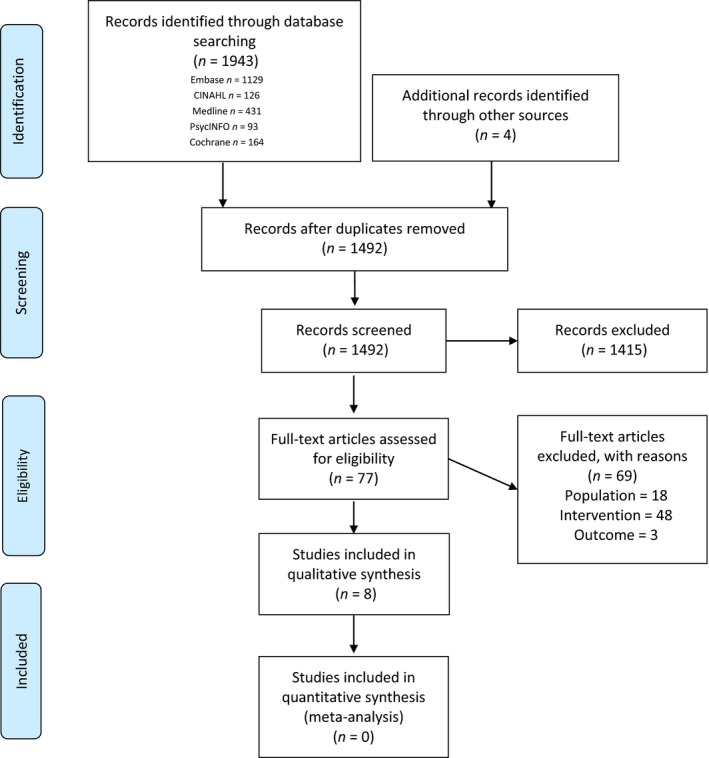
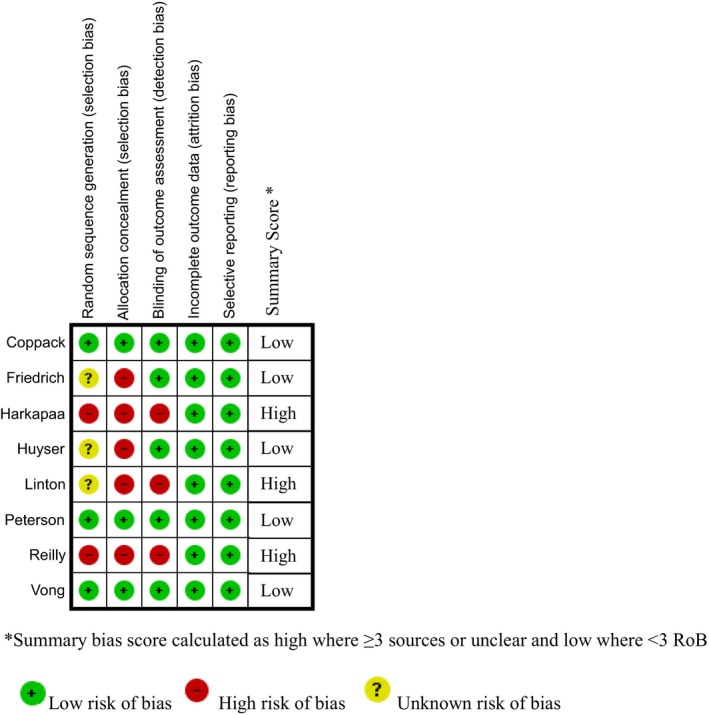
Verification
Claims the paper makes
The claims and statistics of this paper haven’t been checked yet.
Run the check — free, no account needed. It reads the open-access text and checks the sources it cites.
Claims other papers make about this one
Each is checked against this paper’s own text: does it say what the citing paper says it does?
The source backs part of the claim, not all of it — or backs it for a different population, condition or comparison.
In the citing paper
“Furthermore, the labor of psychologists may enhance adherence to exercise by conducting different behavioral change techniques or cognitive-behavioral programs [49,50,55,56,60,65].”
From Key Factors Associated with Adherence to Physical Exercise in Patients with Chronic Diseases and Older Adults: An Umbrella Review (2021) · cites this paper as [56]
Experimental — accuracy not yet measured
Self-check
Percentages, sums and reported differences re-computed from the paper’s own numbers.
The self-check needs the paper’s full text.
Citations
Cites
Preferred Reporting Items for Systematic Reviews and Meta-Analyses: the PRISMA statement
Moher, D., Liberati, A., Tetzlaff, J., Altman, D. G., & for the PRISMA Group (2009) · BMJ · doi:10.1136/bmj.b2535 · Cited by 83,823
Preferred reporting items for systematic reviews and meta-analyses: The PRISMA statement
Moher, D., Liberati, A., Tetzlaff, J., Altman, D. G., & the PRISMA Group* (2009) · Annals of Internal Medicine · doi:10.7326/0003-4819-151-4-200908180-00135 · Cited by 37,554
Health Behavior and Health Education: Theory, Research, and Practice
(1992) · Annals of Internal Medicine · doi:10.7326/0003-4819-116-4-350_1 · Cited by 13,232
Developing and evaluating complex interventions: the new Medical Research Council guidance
Craig, P., Dieppe, P., Macintyre, S., Michie, S., Nazareth, I., & Petticrew, M. (2008) · BMJ · doi:10.1136/bmj.a1655 · Cited by 10,995
Hoffmann, T. C., Glasziou, P. P., Boutron, I., Milne, R., Perera, R., Moher, D., Altman, D. G., Barbour, V., Macdonald, H., Johnston, M., et al. (2014) · BMJ · doi:10.1136/bmj.g1687 · Cited by 10,548
(1985) · Europe PMC (PubMed Central) · Cited by 9,143
Osterberg, L., & Blaschke, T. (2005) · New England Journal of Medicine · doi:10.1056/nejmra050100 · Cited by 7,974
Michie, S., Richardson, M., Johnston, M., Abraham, C., Francis, J., Hardeman, W., Eccles, M. P., Cane, J., & Wood, C. E. (2013) · Annals of Behavioral Medicine · doi:10.1007/s12160-013-9486-6 · Cited by 7,629
Adherence to Long-Term Therapies: Evidence for Action
Geest, S. D., & Sabate, E. J. (2003) · European Journal of Cardiovascular Nursing · doi:10.1016/s1474-5151(03)00091-4 · Cited by 6,310
Kirk, J. M. W., MacDonald, A., Lavender, P., Dean, J. M., & Rubin, G. (2017) · Biomedicine Hub · doi:10.1159/000480347 · Cited by 3,902
Research works printed but not linked: 5
- Bandura A., 1986, Social foundations of thought and action: A social cognitive theory
- Clinical Standards Advisory Group, 2000, Services for patients with pain
- Dieppe P., 2012, ABF of pain, 16
- Harkapaa K., 1990, A controlled study on the outcome of inpatient and outpatient treatment of low back pain, Scandinavian Journal of Rehabilitation Medicine, 22, 181, 10.2340/165020051990181188 · DOI
- Lefcourt H. M., 1981, Research with the locus of control construct vol. 1, assessment methods
Cited by
Sorted by citations
Collado-Mateo, D., Lavín-Pérez, A. M., Peñacoba, C., Del Coso, J., Leyton-Román, M., Luque-Casado, A., Gasque, P., Fernández-del-Olmo, M. Á., & Amado-Alonso, D. (2021) · International Journal of Environmental Research and Public Health · doi:10.3390/ijerph18042023 · Cited by 791
Wolf, S., Seiffer, B., Zeibig, J., Welkerling, J., Brokmeier, L. L., Atrott, B., Ehring, T. W., & Schuch, F. B. (2021) · Sports Medicine · doi:10.1007/s40279-021-01468-z · Cited by 327
Lambert, J. E., Hayes, L. D., Keegan, T., Subar, D. A., & Gaffney, C. J. (2020) · Annals of Surgery · doi:10.1097/sla.0000000000004527 · Cited by 201
Whittaker, J. L., Culvenor, A. G., Juhl, C. B., Berg, B., Bricca, A., Filbay, S. R., Holm, P. M., Macri, E. M., Urhausen, A. P., Ardern, C. L., et al. (2022) · British Journal of Sports Medicine · doi:10.1136/bjsports-2022-106299 · Cited by 139
Black, N., Johnston, M., Michie, S., Hartmann‐Boyce, J., West, R., Viechtbauer, W., Eisma, M. C., Scott, C., & de Bruin, M. (2020) · Addiction · doi:10.1111/add.15056 · Cited by 111
Metadata
- Authors
- Meade, L. B., Bearne, L. M., Sweeney, L. H., Alageel, S. H., & Godfrey, E. L.
- Affiliations
- King's College London (GB)
- Corresponding author
- Meade, Laura B.
- Godfrey, Emma L.
- Venue
- British Journal of Health Psychology
- Publisher
- Wiley
- Published
- 2018-06-17
- Volume
- 24
- Issue
- 1
- Pages
- 10-30
- ISSN
- 1359-107X (ISSN-L)
- 2044-8287
- PMC
- PMC6585717
- OpenAlex
- W2803407939
- Cited by
- 152
- References
- 67
- Citations by year
- 2026: 20 · 2025: 23 · 2024: 22 · 2023: 16 · 2022: 29 · 2021: 22 · 2020: 16 · 2019: 3
- FWCI
- 1.39
- Type
- journal article
- Language
- en
- Open access
- hybrid
- doi.org
- Licence
- Locations
- British Journal of Health Psychology (publishedVersion, cc-by-nc)
- PubMed Central (publishedVersion, cc-by-nc)
- PubMed (publishedVersion)
- Research Repository (Kingston University London) (acceptedVersion)
- St George's Online Research Archive (St George's University of London) (acceptedVersion)
- Research Portal (King's College London) (submittedVersion, cc-by-nc)
- Topics
- Social Sciences › Psychology › Applied Psychology › Behavioral Health and Interventions
- Health Sciences › Health Professions › Physical Therapy, Sports Therapy and Rehabilitation › Musculoskeletal pain and rehabilitation
- Health Sciences › Health Professions › General Health Professions › Health Policy Implementation Science
- Keywords
- behaviour change techniques, exercise adherence, chronic musculoskeletal pain, behaviour change interventions, social support, goal setting, BCT taxonomy
- MeSH terms
- Adolescent, Adult, Aged, Behavior Therapy, Exercise Therapy, Female, Humans, Male, Middle Aged, Patient Compliance, Randomized Controlled Trials as Topic, Young Adult, Musculoskeletal Pain
About these checks
Registry, retraction, Cites and statistics results are computed, not judged, with one exception: a printed reference that no index lists is read once by a model before it counts as a citation error. Claims are extracted by a model and kept only when their quote appears verbatim in the text; each cited source is then checked, with a model’s help, for whether it says what the claim relies on. Those verdicts can be wrong — read the claim’s quote and the cited source before relying on one.
Statistics and arithmetic are recomputed, not judged.
Confidence bands are shown only for fields calibrated on our annotated test set. None is calibrated yet, so no band is shown.
What counts as a claim ›How we measure confidence ›How we check this ›
Are you an author, or do you see a problem with this page? Request a review
