

Use of immunoglobulin Ghomeostatic set point and recovery time in plasmapheresis donor safety monitoring: A retrospective observational cohort study
Open accessThe DOI matches its Crossref record; 26 of the 26 references it cites were found in a registry or an index; none of the 14 sources its claims cite is checked for support yet.
Abstract
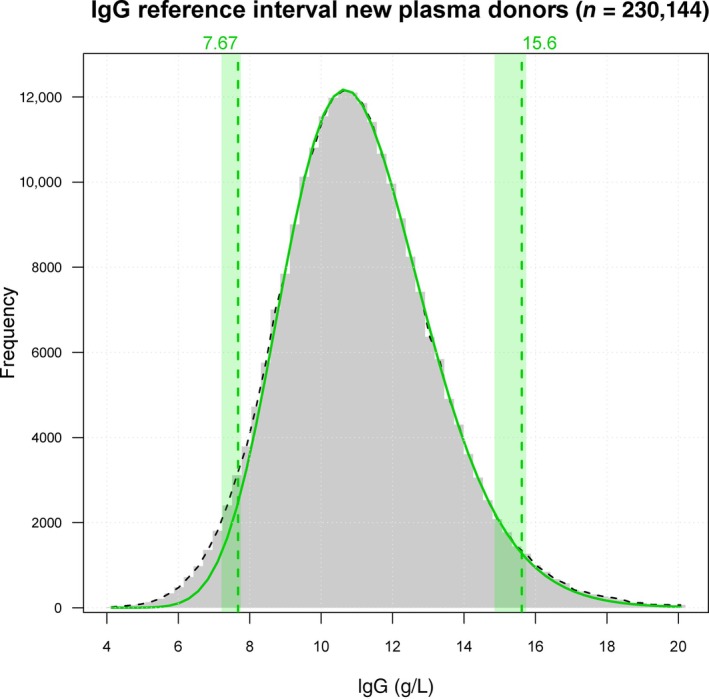
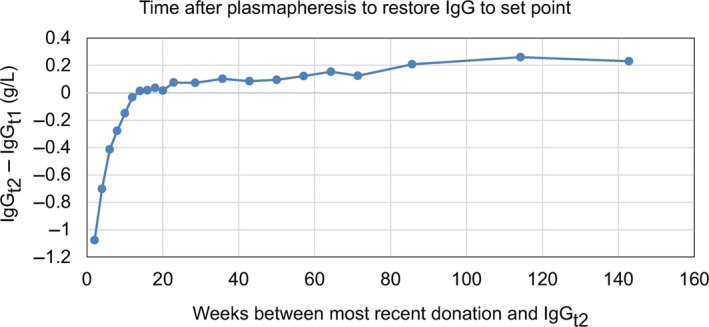
Background and Objectives: Serum immunoglobulin G (IgG) and total protein are used to monitor plasmapheresis donor safety. However, there is a lack of information from large donor cohorts to determine the best use of these measurements. Materials and Methods: We identified 230,144 plasmapheresis donors making their first donation between 1 July 2020 and 31 March 2024. IgG and total protein were measured prior to the first donation and then annually, following our donor safety monitoring protocol. We considered individuals who had not donated for 12 months to estimate intra‐individual biological variability of IgG. We compared four models to predict which donors would develop IgG < 6 g/L. Results: The IgG reference interval for the cohort was 7.67–15.6 g/L. IgG declines 5%–11% after the age of 45 years. The intra‐individual biological variability of IgG (5.2%) is small, indicating that there is homeostatic set point for individual IgG. IgG is reduced by plasmapheresis but recovers to recruitment level after 12 weeks. When plasma is donated every 2–3 weeks, mean IgG plateaus 1 g/L below recruitment concentration. IgG at recruitment is the best predictor of which donors will have IgG < 6 g/L after a year of donations. Total protein is a low‐value test in this context. Conclusion: Plasmapheresis is safe and sustainable for almost every donor, at the 2‐weekly frequency allowed in Australia. The donors most likely to experience unacceptably low IgG are those with very low recruitment IgG levels. These donors could be recommended 12‐week intervals between donations or other donation types.
Overview
CoChat Summary
TL;DR
In a large retrospective cohort of Australian plasmapheresis donors, serum IgG showed a homeostatic set point with low intra-individual variability, and recruitment IgG was the strongest predictor of later IgG <6 g/L. Donating every 14–21 days lowered IgG by about 1 g/L and plateaued within the first year, with recovery to set point after about 12 weeks.
Key findings
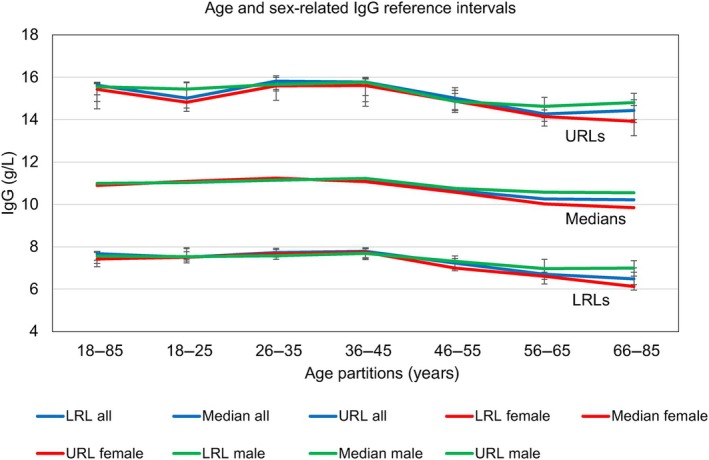
- The IgG reference interval for the cohort was 7.67–15.6 g/L; IgG declined 5%–11% after age 45 years (5% in males, 11% in females).
- Intra-individual biological variability of IgG was 5.2% overall (5.0% males, 5.4% females), indicating a homeostatic set point.
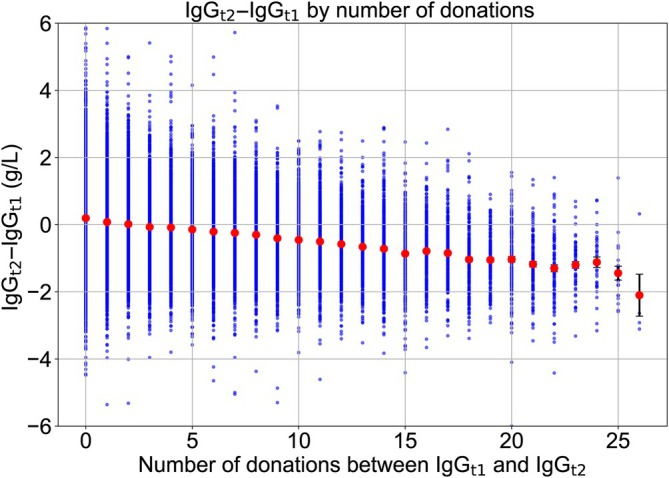
- IgG fell about 1 g/L in donors donating every 14–21 days and plateaued: 1128 donors averaged 1.06 g/L below recruitment (mean IgGt1 = 10.77 g/L) after 1 year, and 300 donors at 2 years showed no further fall (−0.84 ± 0.06 g/L). Recovery to recruitment level after plasmapheresis took approximately 12 weeks.
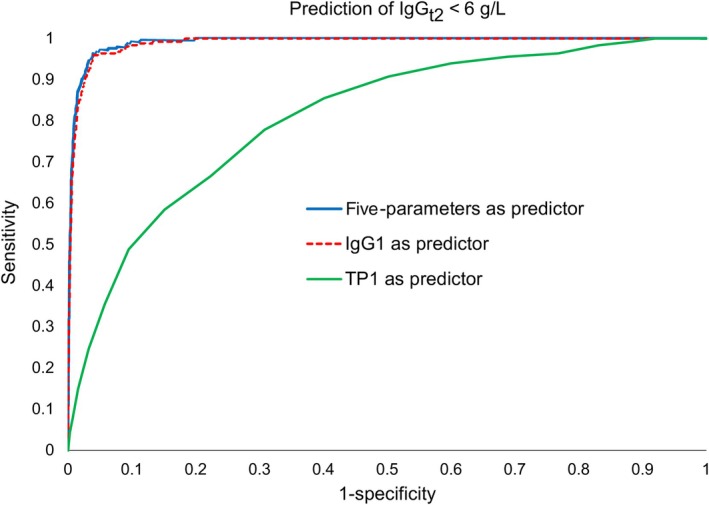
- IgG at recruitment best predicted IgGt2 <6 g/L; only 248/60,712 (0.4%) had IgGt2 <6 g/L. Maximum Youden indices were 0.924 for the five-parameter model, 0.914 for IgGt1 alone (at IgGt1 = 7.8 g/L), and 0.470 for TPt1 alone (at TPt1 = 69 g/L).
Methods
- Retrospective observational cohort using de-identified Australian Red Cross Lifeblood apheresis plasma donor data from 1 July 2020 to 31 March 2024; 230,144 first-time plasma donors had IgG, IgA, IgM, and total protein measured before first donation, with IgG and total protein measured annually thereafter.
- Subsets included 60,712 donors with a second IgG measurement, 10,735 donors who donated only once before the second measurement for intra-individual variability, 1128 donors donating every 14–21 days for 1 year, and 300 donors donating every 14–21 days for 2 years.
- Analyses used refineR for age- and sex-related reference intervals, a CV formula to estimate intra-individual biological variability, and logistic regression models (five-parameter, three-parameter, IgGt1 alone, TPt1 alone) with ROC curves to predict IgGt2 <6 g/L.
Limitations
- Stated: results may not apply in countries allowing more frequent plasma donation than Australia’s 14-day minimum, and evidence indicates IgG falls more than 1 g/L in very frequent donors; changes beyond 2 years cannot be excluded.
- Stated: IgG assays are not standardized or harmonized between manufacturers, so numerical values may not transfer to services using other assays; a prospective study with clinical outcomes is needed to clarify optimal donation and testing frequencies.
- Evident from the text: the design is observational with no clinical outcomes; the cohort is restricted to healthy screened donors, so findings may not generalize to donors with comorbidities; a positive calibration drift of up to 0.2 g/L after January 2023 was included in the analytical CV.
Model-written summary. Check it against the paper before relying on it.
Integrity signals
Registry
Cites
Statistics
Figures
Verification
Claims the paper makes
0 Valid · 1 Not valid · 10 Not checked · 33 Own results and interpretations
A result the paper reports from its own data — it cites no other source for it, so there is none to check. The quote shows it is in the paper.
In the paper
“Measuring IgA and IgM at donor recruitment does not assist in predicting low IgG in ongoing donors.”
§ Use of immunoglobulin G homeostatic set point and recovery time in plasmapheresis donor safety monitoring: A retrospective observational cohort study > DISCUSSION
plain- Asserted: passes — The authors put it forward as true.
- Checkable: passes — It can be checked against evidence.
- Load-bearing: passes — The paper’s conclusions depend on it.
- Based: passes — The paper gives a reason why it holds.
A result the paper reports from its own data — it cites no other source for it, so there is none to check. The quote shows it is in the paper.
In the paper
“Of our 60,712 donors with IgGt2 results, only 248 (0.4%) had IgGt2 < 6 g/L.”
§ Use of immunoglobulin G homeostatic set point and recovery time in plasmapheresis donor safety monitoring: A retrospective observational cohort study > RESULTS > Prediction of IgGt2 < 6 g/L
plainn = 60,712- Asserted: passes — The authors put it forward as true.
- Checkable: passes — It can be checked against evidence.
- Load-bearing: passes — The paper’s conclusions depend on it.
- Based: passes — The paper gives a reason why it holds.
A result the paper reports from its own data — it cites no other source for it, so there is none to check. The quote shows it is in the paper.
In the paper
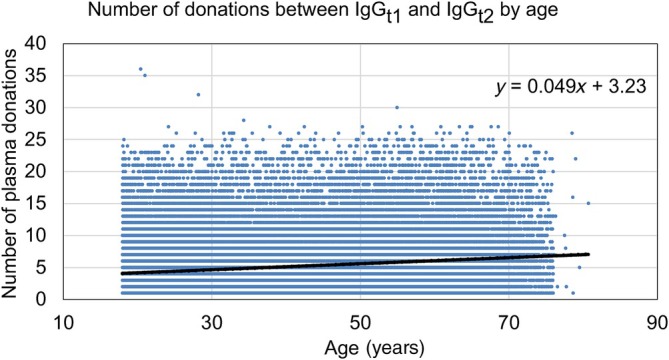
“There was a significant tendency for older donors to donate more frequently: the line of best fit in Figure 3 (number of donations against age) has a slope of 0.049 (standard error of the mean, SEM = 0.001) donations per year (p < 0.001).”
§ Use of immunoglobulin G homeostatic set point and recovery time in plasmapheresis donor safety monitoring: A retrospective observational cohort study > RESULTS > Donor age and donation rates
plainstates an associationn = 230,144- Asserted: passes — The authors put it forward as true.
- Checkable: passes — It can be checked against evidence.
- Load-bearing: unclear — It is unclear whether the paper’s conclusions depend on it.
- Based: passes — The paper gives a reason why it holds.
A result the paper reports from its own data — it cites no other source for it, so there is none to check. The quote shows it is in the paper.
In the paper
“The analytical imprecision, CVA, is calculated from between‐ and within‐run analyser quality control measurements to be 2%.”
§ Use of immunoglobulin G homeostatic set point and recovery time in plasmapheresis donor safety monitoring: A retrospective observational cohort study > MATERIALS AND METHODS > Intra‐individual biological variability
plain- Asserted: passes — The authors put it forward as true.
- Checkable: passes — It can be checked against evidence.
- Load-bearing: passes — The paper’s conclusions depend on it.
- Based: passes — The paper gives a reason why it holds.
A result the paper reports from its own data — it cites no other source for it, so there is none to check. The quote shows it is in the paper.
In the paper
“Analysis according to age and sex (Figure 2) shows that IgG concentration declines after the age of 45 years by a final average of 5% in males and 11% in females. We calculated the differences by comparing the median levels for ages 66–85 to the medians for ages 18–45.”
- Also stated in: § Results · plain
“IgG declines 5%–11% after the age of 45 years.”
§ Use of immunoglobulin G homeostatic set point and recovery time in plasmapheresis donor safety monitoring: A retrospective observational cohort study > RESULTS > IgG population reference intervals at recruitment
plainstates a causen = 230,144- Asserted: passes — The authors put it forward as true.
- Checkable: passes — It can be checked against evidence.
- Load-bearing: unclear — It is unclear whether the paper’s conclusions depend on it.
- Based: passes — The paper gives a reason why it holds.
- Also stated in: § Results · plain
15 more claims
Create a free account to see all 44 claims and to verify the 14 references still open.
- It may state two separate claims as one. 14
- The quote only partly states this claim. 2
- Probably not a substantial claim. 10
Citations
Cites
On the calculation of a "reference change" for comparing two consecutive measurements.
Harris, E. K., & Yasaka, T. (1983) · Clinical Chemistry · doi:10.1093/clinchem/29.1.25 · Cited by 274 · cited 1×
“Assuming there is no correlation between successive measurements [27], CVTD i is given by q : If we further assume that the biological variability CVI is the same for all donors, then the total variability in the difference between two measurements for all donors, CVTD, is We measure CVTD directly…”
refineR: A Novel Algorithm for Reference Interval Estimation from Real-World Data
Ammer, T., Schützenmeister, A., Prokosch, H.-U., Rauh, M., Rank, C. M., & Zierk, J. (2021) · Scientific Reports · doi:10.1038/s41598-021-95301-2 · Cited by 161 · cited 1×
“%) were computed from 200 bootstrap iterations [24, 25].”
Serum Immunoglobulins and Risk of Infection: How Low Can You Go?
Fürst, D. E. (2008) · Seminars in Arthritis and Rheumatism · doi:10.1016/j.semarthrit.2008.05.002 · Cited by 156 · cited 1×
“…reporting from the plasma donor population, infection due to immunoglobulin deficiency is typically observed in individuals with pathologically sustained low concentrations of immunoglobulins rather than the transient reduction in immunoglobulin concentration characteristic of plasma donors [18].”
Schulzki, T., Seidel, K., Storch, H., Karges, H., Kiessig, S., Schneider, S., Taborski, U., Wolter, K., Steppat, D., Behm, E., et al. (2006) · Vox Sanguinis · doi:10.1111/j.1423-0410.2006.00794.x · Cited by 76 · cited 2×
“There is a variation in the frequency of IgG measurement worldwide, with some measuring every 3 months [11] or after every 15 donations [15], or annually (as in Australia).”
Effects of Intensive Plasmapheresis on Normal Blood Donors
Kliman, A., Carbone, P. P., Gaydos, L. A., & Freireich, E. J. (1964) · Blood · doi:10.1182/blood.v23.5.647.647 · Cited by 72 · cited 1×
“Plasmapheresis of blood donors for the therapeutic use of plasma or its constituents has been undertaken for more than 7 decades [1 – 4].”
Short‐Term and Long‐Term Effects of Plasmapheresis on Serum Proteins and Immunoglobulins
Friedman, B. A., Schork, M. A., Mocniak, J. L., & Oberman, H. A. (1975) · Transfusion · doi:10.1046/j.1537-2995.1975.15576082222.x · Cited by 67
Repeated Plasmapheresis of Blood Donors As a Source of Platelets
Kliman, A., Gaydos, L. A., Schroeder, L. R., & Freireich, E. J. (1961) · Blood · doi:10.1182/blood.v18.3.303.303 · Cited by 67 · cited 1×
“As a simpler, cheaper and older assay, measurement of serum TP using the biuret method predates donor safety monitoring by IgG immunoassay [3, 8].”
Estimation of Reference Intervals from Routine Data Using the refineR Algorithm—A Practical Guide
Ammer, T., Schützenmeister, A., Rank, C. M., & Doyle, K. J. (2023) · The Journal of Applied Laboratory Medicine · doi:10.1093/jalm/jfac101 · Cited by 60 · cited 1×
“%) were computed from 200 bootstrap iterations [24, 25].”
Immunoglobulins and immunoglobulin subclasses in the elderly
Lock, R. J., & Unsworth, D. J. (2003) · Annals of Clinical Biochemistry: International Journal of Laboratory Medicine · doi:10.1258/000456303763046067 · Cited by 58
Laub, R., Baurin, S., Timmerman, D., Branckaert, T., & Strengers, P. (2010) · Vox Sanguinis · doi:10.1111/j.1423-0410.2010.01345.x · Cited by 57 · cited 1×
“It is accepted that total protein (TP) and IgG levels fall during plas-mapheresis donation [ 13, 14, 19, 20].”
Safety and Long‐term Effects of Plasmapheresis
Cohen, M. A., & Oberman, H. A. (1970) · Transfusion · doi:10.1111/j.1537-2995.1970.tb00706.x · Cited by 49
Tran‐Mi, B., Storch, H., Seidel, K., Schulzki, T., Haubelt, H., Anders, C., Nagel, D., Siegler, K. E., Vogt, A., Seiler, D., et al. (2004) · Vox Sanguinis · doi:10.1111/j.0042-9007.2004.00408.x · Cited by 42 · cited 3×
“For example, although lower total IgG concentrations were found in plasma donors undergoing different intensities of plasmapheresis, anti-cytomegalovirus and anti-tetanus IgG levels, as specific markers of humoral immunity, were not significantly different when compared with non-donors [ 14].”
Use of Plasmapheresis in Blood Donors
Grifols-Lucas, J. A. (1952) · BMJ · doi:10.1136/bmj.1.4763.854 · Cited by 38 · cited 1×
“Plasmapheresis of blood donors for the therapeutic use of plasma or its constituents has been undertaken for more than 7 decades [1 – 4].”
Long‐term Plasmapheresis: Effects on Specific Plasma Proteins
Shanbrom, E., Lundak, R. L., & Walford, R. L. (1972) · Transfusion · doi:10.1111/j.1537-2995.1972.tb00003.x · Cited by 37
Human Plasmapheresis and Its Effect on Antibodies
Smolens, J., Stokes, J., & Vogt, A. B. (1957) · The Journal of Immunology · doi:10.4049/jimmunol.79.5.434 · Cited by 36
Protein levels and plasmapheresis intensity
Ciszewski, T., Ralston, S., Acteson, D., Wasi, S., & Strong, S. J. (1993) · Transfusion Medicine · doi:10.1111/j.1365-3148.1993.tb00105.x · Cited by 34
Wasi, S., Santowski, T., Murray, S. A., Perrault, R. A., & Gill, P. (1991) · Vox Sanguinis · doi:10.1111/j.1423-0410.1991.tb00879.x · Cited by 25 · cited 1×
“There is a variation in the frequency of IgG measurement worldwide, with some measuring every 3 months [11] or after every 15 donations [15], or annually (as in Australia).”
Plasmavigilance—Adverse events among US Source plasma donors
Schreiber, G. B., Becker, M., Fransen, M., Hershman, J., Lenart, J., Song, G., & Simon, T. (2021) · Transfusion · doi:10.1111/trf.16612 · Cited by 23 · cited 1×
“…events, attributable to immunoglobulin or other protein depletion caused by plasma donation, even in individuals who regularly donate more than once per week or have recurrent immunoglobulin G (IgG) concentrations less than 6 g/L, have not been identified in prior publications [5, 16, 17].”
Review and assessment of the donor safety among plasma donors
Purohit, M., Berger, M., Malhotra, R., & Simon, T. L. (2023) · Transfusion · doi:10.1111/trf.17369 · Cited by 20 · cited 2×
“Blood services worldwide are continuously engaged in maintaining and improving the supply of donor plasma in the face of increasing healthcare demand for these essential therapeutics [5 – 7].”
Plasma proteins and lymphocyte phenotypes in long‐term plasma donors
Lewis, S. L., Kutvirt, S. G., Bonner, P. N., & Simon, T. L. (1994) · Transfusion · doi:10.1046/j.1537-2995.1994.34794330011.x · Cited by 20 · cited 1×
“It is accepted that total protein (TP) and IgG levels fall during plas-mapheresis donation [ 13, 14, 19, 20].”
Mortier, A., Khoudary, J., van Dooslaer de Ten Ryen, S., Lannoy, C., Benoit, N., Antoine, N., Copine, S., Van Remoortel, H., Vandekerckhove, P., Compernolle, V., et al. (2024) · Vox Sanguinis · doi:10.1111/vox.13569 · Cited by 17
Biological Variability of Serum 25-Hydroxyvitamin D and Other Biomarkers in Healthy Subjects
Brescia, V., Tampoia, M., & Cardinali, R. (2013) · Laboratory Medicine · doi:10.1309/lmf62nsleryc8pad · Cited by 17 · cited 1×
“We assumed each IgG measurement for a given donor, ‘ i ’ , fluctuates around a homeostatic set point for that donor according to their intra-individual biological variability CVI i , and the analytical imprecision (CVA) of the IgG immunoassay [26].”
Safety and protection of plasma donors: A scoping review and evidence gap map
Schroyens, N., D'aes, T., De Buck, E., Mikkelsen, S., Tiberghien, P., van den Hurk, K., Erikstrup, C., Compernolle, V., & Van Remoortel, H. (2024) · Vox Sanguinis · doi:10.1111/vox.13544 · Cited by 13 · cited 1×
“A recent knowledge gap analysis has highlighted the need for additional studies of donor health with respect to donation frequency [6].”
Moog, R., Laitinen, T., & Taborski, U. (2022) · Transfusion Medicine and Hemotherapy · doi:10.1159/000522528 · Cited by 11 · cited 1×
“…events, attributable to immunoglobulin or other protein depletion caused by plasma donation, even in individuals who regularly donate more than once per week or have recurrent immunoglobulin G (IgG) concentrations less than 6 g/L, have not been identified in prior publications [5, 16, 17].”
Incidence of gammopathies in long‐term plasmapheresis donors at Canadian Blood Services
Palmer, D. S., Scalia, V., O'Toole, J., Welch, C., Yi, Q., & Goldman, M. (2015) · Transfusion · doi:10.1111/trf.12991 · Cited by 8 · cited 1×
“Given the homeostatic disturbance that plasma donation might impose, it is also important to note that there is no evidence that repeated plasmapheresis increases the risk of monoclonal gammopathy [22].”
(1992) · PubMed
Research works printed but not linked: 1
- Web Annex A. World Health Organization model list of essential medicines – 23rd list, 2023. The selection and use of essential medicines 2023: Executive summary of the report of the 24th WHO Expert Committee on the Selection and Use of Essential Medicines, 24–28 April 2023. Geneva: World Health Organization; 2023 (WHO/MHP/HPS/EML/2023.02).
Cited by
Relevance of circulating IgG levels as a marker of health in plasma donors
Laforce‐Lavoie, A., Deschênes, J., Cloutier, M., Lewin, A., & Bazin, R. (2026) · Transfusion · doi:10.1111/trf.70373
Metadata
- Authors
- Warner, J. V., Drinkwater, M. J., Chu, G. J., Kelly, S., & McComish, J. S.
- Affiliations
- Australian Red Cross Lifeblood (AU)
- The University of Queensland (AU)
- Corresponding author
- Drinkwater, Michael J.
- McComish, Jeremy S.
- Venue
- Vox Sanguinis
- Publisher
- Wiley
- Published
- 2025-01-29
- Volume
- 120
- Issue
- 4
- Pages
- 374-382
- ISSN
- 0042-9007 (ISSN-L)
- 1423-0410
- PMC
- PMC12017950
- OpenAlex
- W4406932837
- Semantic Scholar
- 76d739ed8dc54374f8c049aade9e781803b62efb
- Cited by
- 1
- References
- 26
- Citations by year
- 2026: 1
- FWCI
- 0.51
- Type
- journal article
- Language
- en
- Open access
- hybrid
- doi.org
- Licence
- Locations
- Vox Sanguinis (publishedVersion, cc-by)
- PubMed Central (publishedVersion, cc-by)
- PubMed (publishedVersion)
- Funders
- University of Queensland
- Topics
- Health Sciences › Medicine › Hematology › Blood donation and transfusion practices
- Health Sciences › Health Professions › Medical Laboratory Technology › Clinical Laboratory Practices and Quality Control
- Health Sciences › Medicine › Hematology › Blood transfusion and management
- Keywords
- plasmapheresis, IgG, total protein
- MeSH terms
- Adult, Blood Donors, Female, Homeostasis, Humans, Immunoglobulin G, Male, Middle Aged, Plasmapheresis, Retrospective Studies
About these checks
Registry, retraction, Cites and statistics results are computed, not judged, with one exception: a printed reference that no index lists is read once by a model before it counts as a citation error. Claims are extracted by a model and kept only when their quote appears verbatim in the text; each cited source is then checked, with a model’s help, for whether it says what the claim relies on. Those verdicts can be wrong — read the claim’s quote and the cited source before relying on one.
A language model drew the claims from the paper on 2026-11-28, under version 3 of the claim definition (model deepseek-v4.1-flash, prompt extract-v3).
A second model labelled each claim on 2026-11-28 (model jev-1.13-20260917, definition revision gold-guideline-v0.2).
Statistics and arithmetic are recomputed, not judged.
Confidence bands are shown only for fields calibrated on our annotated test set. None is calibrated yet, so no band is shown.
What counts as a claim ›How we measure confidence ›How we check this ›
Are you an author, or do you see a problem with this page? Request a review
Data sources
Bibliographic data: Semantic Scholar, OpenAlex, Crossref.
Contains information from the Semantic Scholar Academic Graph Datasets, made available under the ODC Attribution License (ODC-BY 1.0).
Semantic Scholar’s data is described in: Kinney, R., et al. (2023). The Semantic Scholar Open Data Platform. arXiv:2301.10140.
