

Learning skillful medium-range global weather forecasting
Open accessThe DOI matches its Crossref record; 65 of the 66 references it cites were found in a registry or an index, and 1 are not checked yet; 12 of the 38 sources its claims cite were checked for support.
Abstract
Global medium-range weather forecasting is critical to decision-making across many social and economic domains. Traditional numerical weather prediction uses increased compute resources to improve forecast accuracy but does not directly use historical weather data to improve the underlying model. Here, we introduce GraphCast, a machine learning–based method trained directly from reanalysis data. It predicts hundreds of weather variables for the next 10 days at 0.25° resolution globally in under 1 minute. GraphCast significantly outperforms the most accurate operational deterministic systems on 90% of 1380 verification targets, and its forecasts support better severe event prediction, including tropical cyclone tracking, atmospheric rivers, and extreme temperatures. GraphCast is a key advance in accurate and efficient weather forecasting and helps realize the promise of machine learning for modeling complex dynamical systems.
Verified 2026-11-19 · 1 reference not checked yet
Overview
CoChat Summary
TL;DR
GraphCast is a graph neural network trained directly on ERA5 reanalysis that produces 10-day global weather forecasts at 0.25° resolution in under one minute. It outperforms the operational HRES deterministic system on most evaluated targets and supports better prediction of tropical cyclones, atmospheric rivers, and extreme temperatures.
Key findings
- GraphCast significantly outperformed HRES on 90.3% of 1380 verification targets, and significantly on 89.9% of targets; excluding 50 hPa it significantly outperformed HRES on 96.9% of 1280 targets, and excluding 50 and 100 hPa on 99.7% of 1180 targets.
- On z500, GraphCast had better skill across all lead times, with skill score improvement around 7%–14%; it also outperformed Pangu-Weather on 99.2% of the 252 targets Pangu-Weather presented.
- For severe events, GraphCast had lower median cyclone track error and was significantly better than HRES for lead times 18 hours to 4.75 days; it improved atmospheric river ivt prediction from 25% at short lead time to 10% at longer horizons; extreme heat precision-recall curves were above HRES at 5- and 10-day lead times, while HRES was better at 12 hours.
- Training on more recent data improved GraphCast’s skill scores, with variants trained up to before 2021 generally outperforming earlier-trained variants on 2021 test data.
Methods
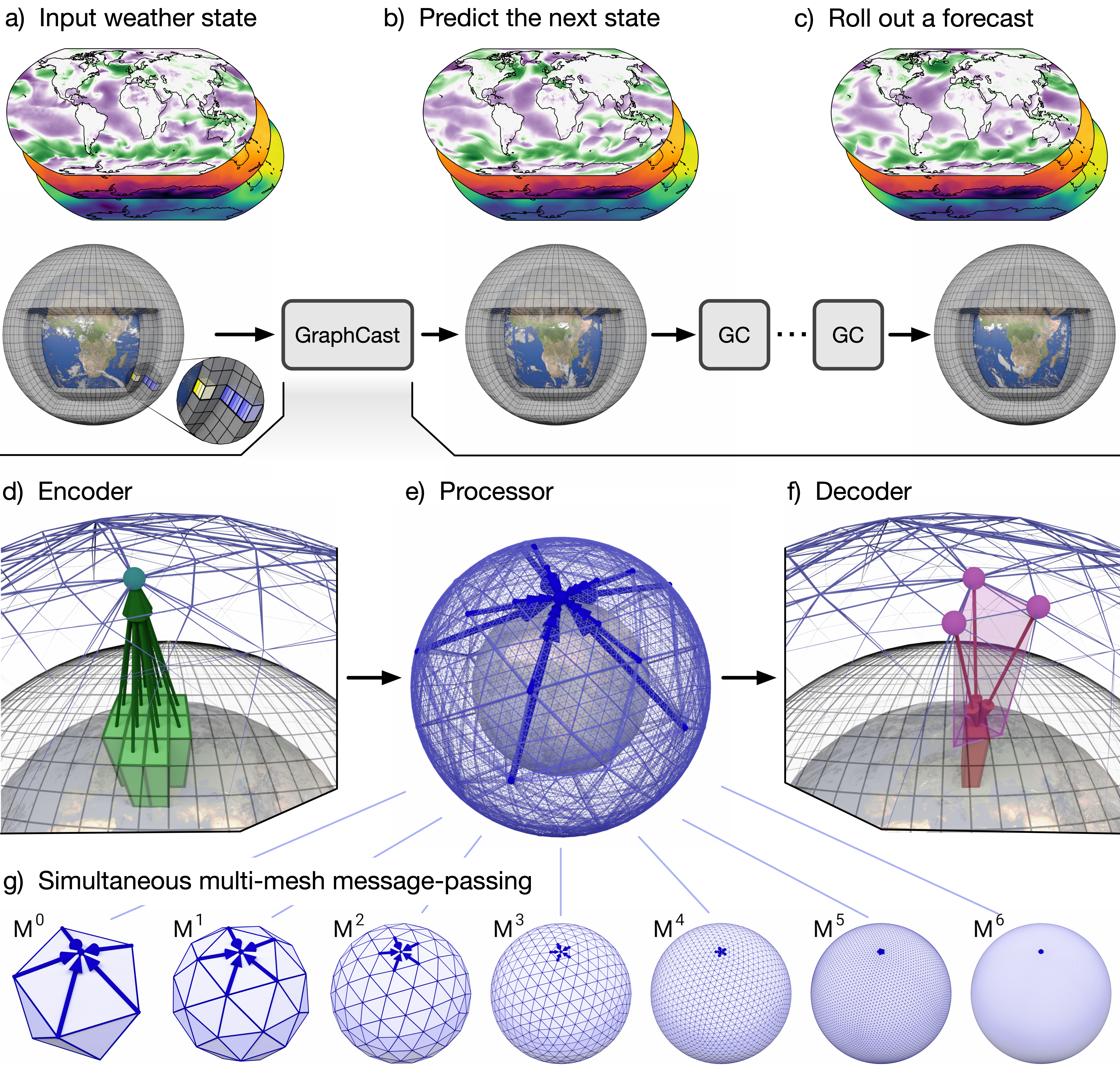
- GraphCast is a 36.7-million-parameter graph neural network in an encode-process-decode configuration, using a multi-mesh icosahedral representation with 40,962 nodes and 327,660 mesh edges; it takes two most recent weather states and predicts the next 6-hour state autoregressively.
- It was trained on 39 years (1979–2017) of ERA5 reanalysis, using a weighted MSE objective over 12 autoregressive steps, with training taking roughly four weeks on 32 Cloud TPU v4 devices; evaluation used held-out 2018 data, with some analyses on 2018–2021 and 2021.
- Forecast skill was evaluated against HRES using RMSE and ACC, with HRES-fc0 as HRES ground truth and ERA5 as GraphCast ground truth; comparisons used 06z/18z initializations and 12-hour target intervals to match data assimilation lookahead.
Limitations
- The paper states that GraphCast is deterministic and does not explicitly model uncertainty like ECMWF’s ensemble system ENS; its MSE training objective encourages spatial blurring, which may limit value for some applications.
- The paper states GraphCast operates at 0.25° resolution, 37 vertical levels, and 6-hour time steps, versus HRES at 0.1°, 137 levels, and up to 1-hour time steps, and that it depends critically on large quantities of high-quality data assimilated via NWP, so it should not be regarded as a replacement for traditional weather forecasting.
- The paper reports reduced skill in the stratosphere, especially at 50 hPa, and at high surface elevations; it also notes possible ERA5 versus HRES-fc0 domain differences and spurious spectral artifacts around 100 km wavelengths.
Model-written summary. Check it against the paper before relying on it.
Integrity signals
Registry
Cites
Statistics
Figures
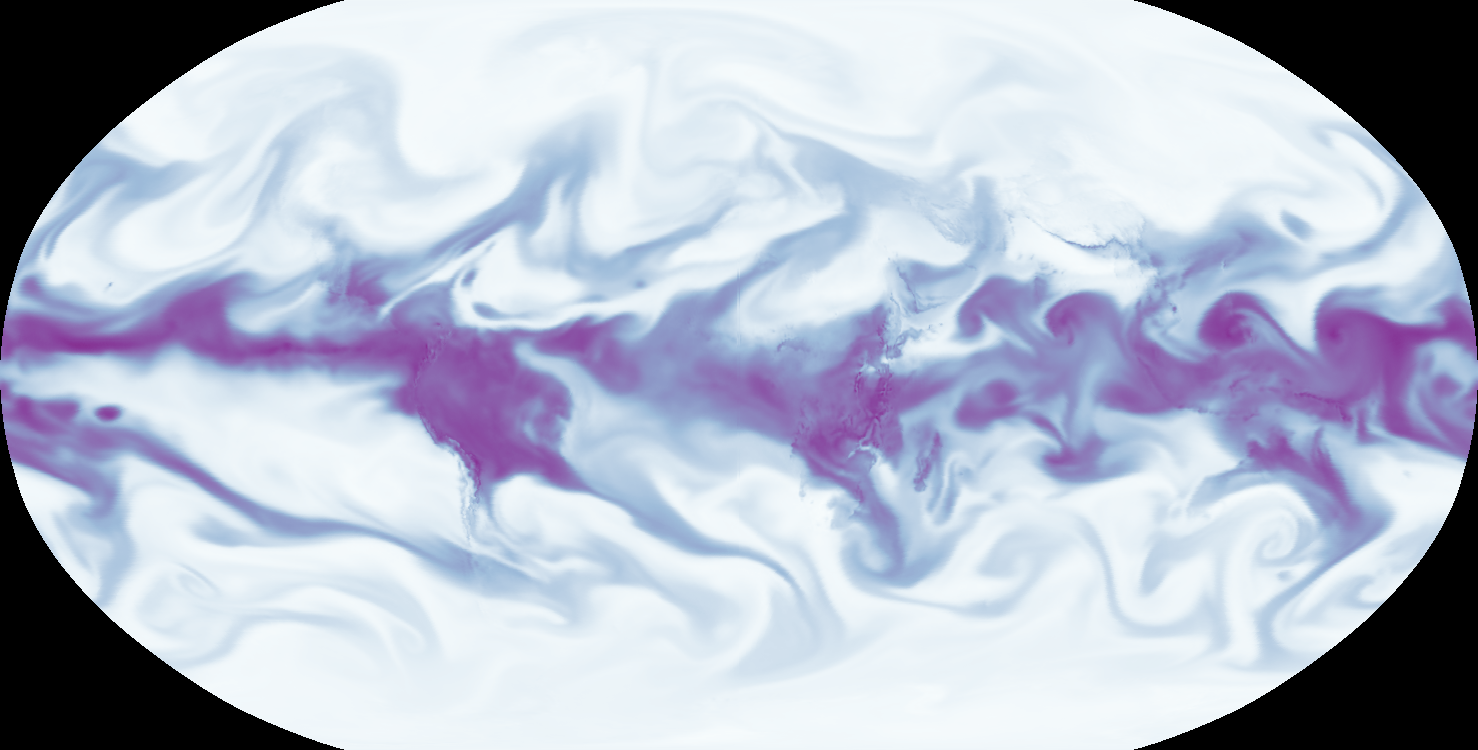
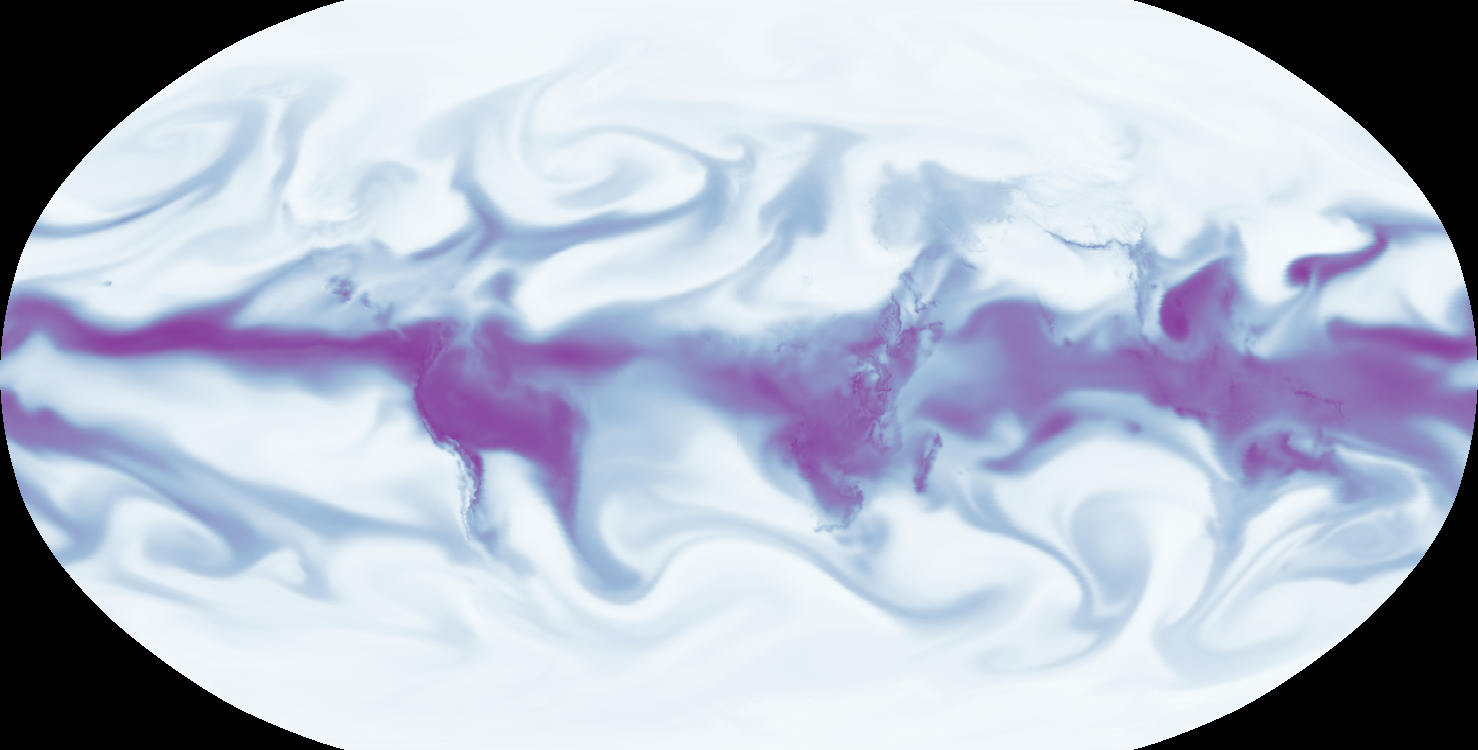
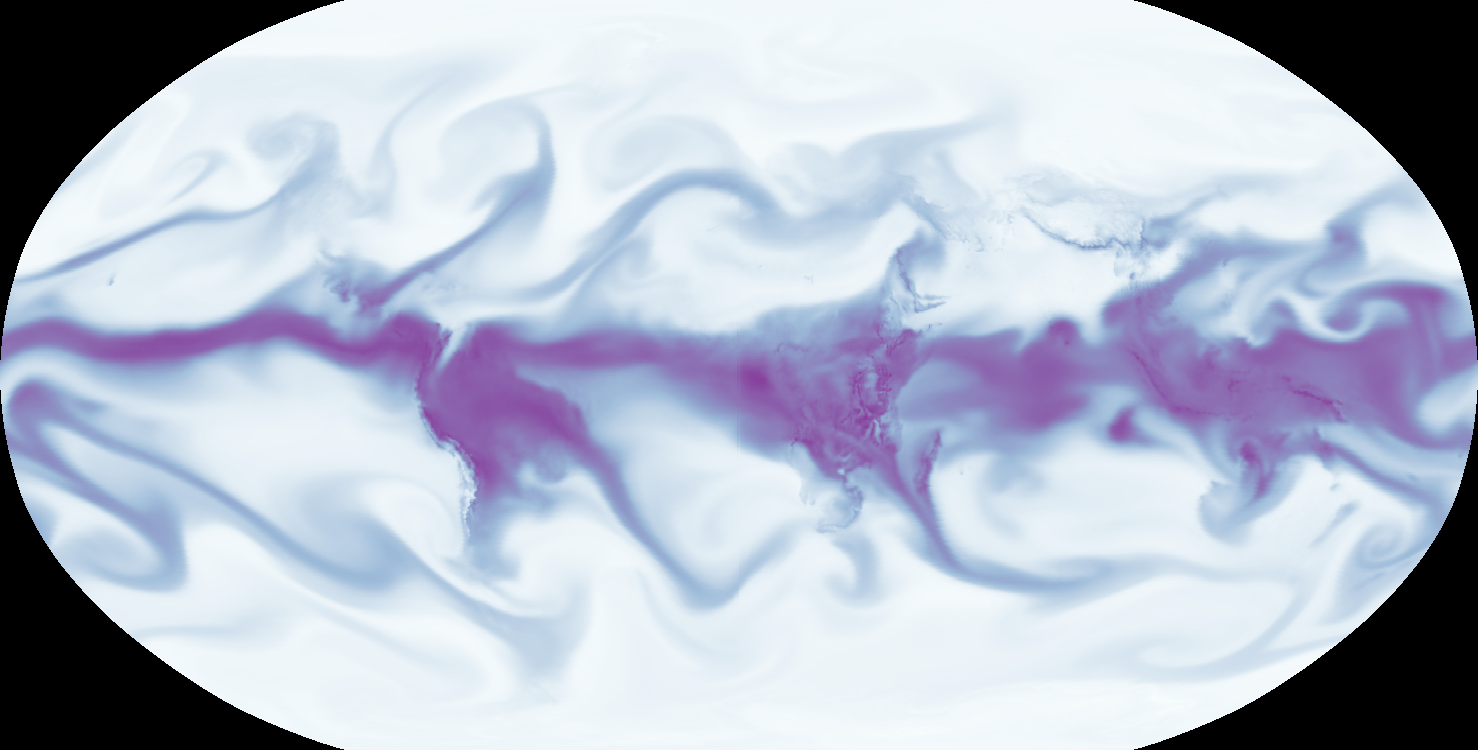
Verification
Claims the paper makes
9 Valid · 0 Not valid · 18 Not checked · 150 Own results and interpretations
The cited sources support only part of this claim — read each source’s verdict below.
In the paper
“Generally, verifying a model against its own analysis gives the best skill estimates [45].”
§ 5. Verification methods > 5.2. Comparing GraphCast to HRES
What the sources say
- Partly supportedcites [45] [45] Richard Swinbank, Masayuki Kyouda, Piers Buchanan, Lizzie Froude, Thomas M Hamill, Tim D Hewson, Julia H Keller, Mio Matsueda, John Methven, Florian Pappenberger, et al. The TIGGE project and its achievements. Bulletin of the American Meteorological Society, 97(1):49–67, 2016. sourceExperimental — accuracy not yet measured
The Verification section reports an example in low-level tropical regions where the model verified against its own analysis appeared most accurate. It does not establish this as a general rule; instead, it warns that skill rankings depend strongly on the analysis used and recommends verifying against more than one analysis. (LLM, conf=0.86)
plainstates a cause- Asserted: passes — The authors put it forward as true.
- Checkable: passes — It can be checked against evidence.
- Load-bearing: passes — The paper’s conclusions depend on it.
- Based: passes — The paper gives a reason why it holds.
- Partly supported
The cited sources support only part of this claim — read each source’s verdict below.
In the paper
“For the HRES baseline, we used the TIGGE archive, which provides cyclone tracks estimated with the operational tracker, from HRES's forecasts at 0.1° resolution [8, 46].”
§ 1. Datasets > 1.3. Tropical cyclone datasets
What the sources say
- Partly supportedcites [8] [8] Philippe Bougeault, Zoltan Toth, Craig Bishop, Barbara Brown, David Burridge, De Hui Chen, Beth Ebert, Manuel Fuentes, Thomas M Hamill, Ken Mylne, et al. The THORPEX interactive grand global ensemble. Bulletin of the American Meteorological Society, 91(8):1059–1072, 2010. sourceExperimental — accuracy not yet measured
The Applications of TIGGE section says TIGGE providers supplied tropical cyclone tracks and that the archive centers would distribute them. It does not establish that those tracks came from HRES forecasts at 0.1° resolution or were estimated with the operational tracker; the examples instead describe ECMWF and UKMO ensemble tracks. (LLM, conf=0.85)
- Partly supportedcites [46] [46] Richard Swinbank, Masayuki Kyouda, Piers Buchanan, Lizzie Froude, Thomas M. Hamill, Tim D. Hewson, Julia H. Keller, Mio Matsueda, John Methven, Florian Pappenberger, Michael Scheuerer, Helen A. Titley, Laurence Wilson, and Munehiko Yamaguchi. The TIGGE project and its achievements. Bulletin of the American Meteorological Society, 97(1):49 – 67, 2016. sourceExperimental — accuracy not yet measured
The TIGGE Project and Its Achievements describes TIGGE as an archive of ensemble forecasts, and its Dynamics and Predictability section reports cyclone tracks derived from TIGGE data using a tracking method employed operationally by ECMWF. It does not establish that the archive provides tracks from HRES forecasts at 0.1° resolution; the tracking passage concerns global ensembles, not HRES. (LLM, conf=0.85)
plain- Asserted: passes — The authors put it forward as true.
- Checkable: passes — It can be checked against evidence.
- Load-bearing: passes — The paper’s conclusions depend on it.
- Based: passes — The paper gives a reason why it holds.
- Partly supported
Every source the paper cites for this claim was checked and supports it.
In the paper
“Because extreme prediction is by definition an imbalanced classification problem, we base our analysis on precision-recall plots which are well-suited for this case [42].”
§ 1 2 3 4 5 6 7 8 9 10 > 8.3. Extreme heat and cold
What the sources say
- Supportedcites [42] [42] Takaya Saito and Marc Rehmsmeier. The precision-recall plot is more informative than the ROC plot when evaluating binary classifiers on imbalanced datasets. PloS one, 10(3):e0118432, 2015. 101 https://confluence.ecmwf.int/display/FCST/202208+-+Heatwave+-+UK https://confluence.ecmwf.int/display/FCST/202208+-+Heatwave+-+UK https://www.ecmwf.int/node/17262 https://www.ecmwf.int/node/17262 GraphCast: Learning skillful medium-range global weather forecasting source
The Summary of the re-evaluation says precision-recall plots show classifiers’ susceptibility to imbalanced datasets with clear visual cues. This supports using them to evaluate an imbalanced classification problem; the citing authors’ characterization of extreme prediction is their own framing. (LLM, conf=0.93)
boostedstates an association- Asserted: passes — The authors put it forward as true.
- Checkable: passes — It can be checked against evidence.
- Load-bearing: passes — The paper’s conclusions depend on it.
- Based: passes — The paper gives a reason why it holds.
- Supported
The cited sources support only part of this claim — read each source’s verdict below.
In the paper
“However, the HRES cyclone tracks in the TIGGE archive [8] are only initialized at 00z and 12z.”
§ 8. Additional severe event forecasting results > 8.1. Tropical cyclone track forecasting
What the sources say
- Partly supportedcites [8] [8] Philippe Bougeault, Zoltan Toth, Craig Bishop, Barbara Brown, David Burridge, De Hui Chen, Beth Ebert, Manuel Fuentes, Thomas M Hamill, Ken Mylne, et al. The THORPEX interactive grand global ensemble. Bulletin of the American Meteorological Society, 91(8):1059–1072, 2010. sourceExperimental — accuracy not yet measured
The Applications of TIGGE section says tropical cyclone tracks were to be distributed by TIGGE archive centers. Table 3 lists two daily forecast cycles for ECMWF’s ensemble, but the paper does not identify HRES cyclone tracks or state that their only initialization times are 00z and 12z. (LLM, conf=0.79)
plain- Asserted: passes — The authors put it forward as true.
- Checkable: passes — It can be checked against evidence.
- Load-bearing: passes — The paper’s conclusions depend on it.
- Based: passes — The paper gives a reason why it holds.
- Partly supported
Every source the paper cites for this claim was checked and supports it.
In the paper
“we can derive this quantity from the predicted atmospheric variables specific humidity, q, and horizontal wind, (u, v), via the relation [38]:”
§ 1 2 3 4 5 > 8.2. Atmospheric rivers
What the sources say
- Supportedcites [38] [38] Paul J Neiman, F Martin Ralph, Gary A Wick, Jessica D Lundquist, and Michael D Dettinger. Meteorological characteristics and overland precipitation impacts of atmospheric rivers affecting the West Coast of North America based on eight years of ssm/i satellite observations. Journal of Hydrometeorology, 9(1):22–47, 2008. source
In section c, “The link between SSM/I IWV plumes and atmospheric rivers” (page not provided), the paper defines IVT as vertically integrated horizontal water-vapor flux calculated from q and the horizontal wind components. It describes summing the flux components through pressure layers, which supports the cited relation; the paper uses reanalysis variables rather than predictions. (LLM, conf=0.92)
plainstates a cause- Asserted: passes — The authors put it forward as true.
- Checkable: passes — It can be checked against evidence.
- Load-bearing: passes — The paper’s conclusions depend on it.
- Based: passes — The paper gives a reason why it holds.
- Supported
65 more claims
Create a free account to see all 177 claims and to verify the 16 references still open.
- Probably not a substantial claim. 54
- It may state two separate claims as one. 70
- The quote only partly states this claim. 2
Claims other papers make about this one
Each is checked against this paper’s own text: does it say what the citing paper says it does?
The source backs part of the claim, not all of it — or backs it for a different population, condition or comparison.
In the citing paper
“Existing machine-learning models have focused on deterministic prediction, and surpass deterministic numerical weather prediction in terms of the aggregate metrics for which they are trained3,4.”
From Neural general circulation models for weather and climate (2024) · cites this paper as [3]
Experimental — accuracy not yet measuredThe source backs part of the claim, not all of it — or backs it for a different population, condition or comparison.
In the citing paper
“Most state-of-the-art machine learning models utilized in medium-range weather forecasting are built upon encoder-decoder84 architectures27–29,85.”
From A machine learning model that outperforms conventional global subseasonal forecast models (2024) · cites this paper as [27]
Experimental — accuracy not yet measuredThe source backs part of the claim, not all of it — or backs it for a different population, condition or comparison.
In the citing paper
“However, these advances have focused primarily on single, deterministic forecasts that fail to represent uncertainty and estimate risk.”
From Probabilistic weather forecasting with machine learning (2025) · cites this paper as [2]
Experimental — accuracy not yet measuredThe source backs part of the claim, not all of it — or backs it for a different population, condition or comparison.
In the citing paper
“They are typically trained to minimize the mean squared error (MSE) of their predictions and as a result tend to produce blurry forecasts, especially at longer lead times, rather than a specific realization of a possible weather state2.”
From Probabilistic weather forecasting with machine learning (2025) · cites this paper as [2]
Experimental — accuracy not yet measuredThe cited source says what the claim attributes to it.
In the citing paper
“Even so, these techniques are still fundamentally reliant on precise meteorological observations [1-3].”
From Advancing Data Quality Assurance with Machine Learning: A Case Study on Wind Vane Stalling Detection (2025) · cites this paper as [3]
10 more claims about this paper
Create a free account to see every claim other papers make about this one.
Self-check
Percentages, sums and reported differences re-computed from the paper’s own numbers.
Each contradiction between two passages listed here was confirmed by an independent check.
Rated minor: it would not touch a result — a value no result rests on, a p-value that stays on the same side of the significance level, or a conflict that is clerical, resolved elsewhere in the paper, or outside its own findings.
In the paper
§ 7. Additional forecast verification results > 7.1. Detailed results for additional variables
“The ACC skill score is the normalized ACC difference between model 𝐴 and baseline 𝐵 as (ACC𝐴 − ACC𝐵)/(1 − RMSE𝐵).”
§ 1 2 3 4 > 5.3. Evaluation metrics
“and the normalized ACC difference as (ACC𝐴 − ACC𝐵)/(1 − ACC𝐵).”
Rated minor: it would not touch a result — a value no result rests on, a p-value that stays on the same side of the significance level, or a conflict that is clerical, resolved elsewhere in the paper, or outside its own findings.
In the paper
§ 1 2 3 4 5 6 7
“The x-axis represents lead time, at 6-hour steps over 10 days.”
§ 6. Comparison with previous machine learning baselines
“Pangu-Weather[7] reports its 7-day forecast accuracy (RMSE and ACC) on: z500, t500, t850,”
Rated minor: it would not touch a result — a value no result rests on, a p-value that stays on the same side of the significance level, or a conflict that is clerical, resolved elsewhere in the paper, or outside its own findings.
In the paper
§ Conclusions
“because of the ERA5 training data's native 0.25° resolution”
§ 102 103 104
“the native resolution of ERA5 is 0.28125◦ corresponding to a shortest wavelength of 62km”
Citations
Cites
Vaswani, A., Shazeer, N., Parmar, N., Uszkoreit, J., Jones, L., Gomez, A. N., Kaiser, L., & Polosukhin, I. (2017) · arXiv · doi:10.48550/arxiv.1706.03762 · Cited by 120,404
Adam: A Method for Stochastic Optimization
Kingma, D. P., & Ba, J. (2014) · arXiv · doi:10.48550/arxiv.1412.6980 · Cited by 98,946
Exploiting Generative AI to Scale up Intelligent Tutoring Systems
Jakubův, J., Chvalovský, K., Goertzel, Z., Kaliszyk, C., Olšák, M., Piotrowski, B., Schulz, S., Suda, M., & Urban, J. (2023) · DROPS (Schloss Dagstuhl – Leibniz Center for Informatics) · doi:10.4230/lipics.itp.2023.19 · Cited by 76,658
Hersbach, H., Bell, B., Berrisford, P., Hirahara, S., Horányi, A., Muñoz‐Sabater, J., Nicolas, J., Peubey, C., Radu, R., Schepers, D., et al. (2020) · Quarterly Journal of the Royal Meteorological Society · doi:10.1002/qj.3803 · Cited by 31,882
Decoupled Weight Decay Regularization
Loshchilov, I., & Hutter, F. (2017) · arXiv · doi:10.48550/arxiv.1711.05101 · Cited by 12,522
Veličković, P., Cucurull, G., Casanova, A., Romero, A., Liò, P., & Bengio, Y. (2017) · arXiv · doi:10.48550/arxiv.1710.10903 · Cited by 12,107
Saito, T., & Rehmsmeier, M. (2015) · PLOS ONE · doi:10.1371/journal.pone.0118432 · Cited by 5,309
SGDR: Stochastic Gradient Descent with Warm Restarts
Loshchilov, I., & Hutter, F. (2016) · arXiv · doi:10.48550/arxiv.1608.03983 · Cited by 5,309
Backpropagation through time: what it does and how to do it
Werbos, P. J. (1990) · Proceedings of the IEEE · doi:10.1109/5.58337 · Cited by 4,879
Knapp, K. R., Kruk, M. C., Levinson, D. H., Diamond, H. J., & Neumann, C. J. (2010) · Bulletin of the American Meteorological Society · doi:10.1175/2009bams2755.1 · Cited by 3,237
Research works printed but not linked: 3
- [46] Richard Swinbank, Masayuki Kyouda, Piers Buchanan, Lizzie Froude, Thomas M. Hamill, Tim D. Hewson, Julia H. Keller, Mio Matsueda, John Methven, Florian Pappenberger, Michael Scheuerer, Helen A. Titley, Laurence Wilson, and Munehiko Yamaguchi. The TIGGE project and its achievements. Bulletin of the American Meteorological Society, 97(1):49 – 67, 2016.
- [31] David H Levinson, Howard J Diamond, Kenneth R Knapp, Michael C Kruk, and Ethan J Gibney. Toward a homogenous global tropical cyclone best-track dataset. Bulletin of the American Meteorological Society, 91(3):377–380, 2010.
- ECMWF IFS Documentation CY45R1 – Part II: Data assimilation (European Centre for Medium-Range Weather Forecasts 2018); .10.21957/a3ri44ig4 · doi:10.21957/a3ri44ig4
Cited by
Items 801–900 of 2,424
Generative emulation of chaotic dynamics with coherent prior
Nathaniel, J., & Gentine, P. (2025) · Computer Methods in Applied Mechanics and Engineering · doi:10.1016/j.cma.2025.118410 · Cited by 8
A comprehensive survey and assumption of remote sensing foundation modal
Fu, K., Lu, W., Liu, X., Deng, C., Hongfeng, Y. U., & Xian, S. U. N. (2023) · National Remote Sensing Bulletin · doi:10.11834/jrs.20233313 · Cited by 11
Koopman Ensembles for Probabilistic Time Series Forecasting
Frion, A., Drumetz, L., Tochon, G., Mura, M. D., & Bey, A. A. E. (2024) · European Signal Processing Conference (EUSIPCO) · doi:10.23919/eusipco63174.2024.10715299 · Cited by 9
A Mathematical Framework for Computability Aspects of Algorithmic Transparency
Boche, H., Fono, A., & Kutyniok, G. (2024) · IEEE International Symposium on Information Theory (ISIT) · doi:10.1109/isit57864.2024.10619190 · Cited by 8
Haitsiukevich, K., Poyraz, O., Marttinen, P., & Ilin, A. (2024) · Machine learning for signal processing ... · doi:10.1109/mlsp58920.2024.10734762 · Cited by 5
A computer vision approach for satellite-driven wind nowcasting over complex terrains
Alves, D., Mendonça, F., Mostafa, S. S., & Morgado‐Dias, F. (2024) · Environmental Research Communications · doi:10.1088/2515-7620/ad4984 · Cited by 5
GNN-VPA: A Variance-Preserving Aggregation Strategy for Graph Neural NetworksPreprint
Schneckenreiter, L., Freinschlag, R., Sestak, F., Brandstetter, J., Klambauer, G., & Mayr, A. (2024) · arXiv (Cornell University) · doi:10.48550/arxiv.2403.04747 · Cited by 10
Artificial Intelligence and Machine Learning in Atmospheric Chemistry
Silva, S. J., & Evans, M. J. (2024) · ACS ES&T Air · doi:10.1021/acsestair.4c00075 · Cited by 5
ExioML: Eco-economic dataset for Machine Learning in Global Sectoral SustainabilityPreprint
Guo, Y., Guan, C., & Ma, J. (2024) · arXiv (Cornell University) · doi:10.48550/arxiv.2406.09046 · Cited by 5
Embed and Emulate: Contrastive representations for simulation-based inferencePreprint
Jiang, R., Lu, P. Y., & Willett, R. M. (2024) · arXiv (Cornell University) · doi:10.48550/arxiv.2409.18402 · Cited by 5
Solaris: A Foundation Model of the SunPreprint
Majid, H. A., Sittoni, P., & Tudisco, F. (2024) · arXiv (Cornell University) · doi:10.48550/arxiv.2411.16339 · Cited by 5
Scientific Machine Learning: A Symbiosis
Keith, B., O’Leary-Roseberry, T., Sanderse, B., Scheichl, R., & Waanders, B. V. B. (2024) · Foundations of Data Science · doi:10.3934/fods.2024051 · Cited by 6
A Learning-Based Domain Decomposition MethodPreprint
Wu, R., Kovachki, N., & Liu, B. (2025) · SSRN Electronic Journal · doi:10.2139/ssrn.5364231 · Cited by 6
Key role of the Madden-Julian Oscillation on tropical and subtropical humid heat and heatwavesPreprint
Rocuet, C., Izumo, T., Pagli, B., Holbrook, N. J., Cravatte, S., Hopuare, M., & Colin, M. (2025) · arXiv (Cornell University) · doi:10.48550/arxiv.2509.17526 · Cited by 5
NWP-based deep learning for tropical cyclone intensity predictionPreprint
Kieu, C., Luong, K., & Nguyen, T. (2025) · arXiv (Cornell University) · doi:10.48550/arxiv.2504.09143 · Cited by 7
TianQuan-S2S: A Subseasonal-to-Seasonal Global Weather Model via Incorporate Climatology State
Li, G., Liu, X., Liu, Y., Chen, M., Cao, S., Wang, X., Zheng, J., Zhang, J., Liang, H., Zhang, L., et al. (2026) · International Conference on Learning Representations · doi:10.48550/arxiv.2504.09940 · Cited by 6
Wang, W., Shi, X., Shu, R., Gao, Y., Chen, R., Wang, K., Xu, F., Xue, J., Li, S., Tao, Y., et al. (2025) · arXiv (Cornell University) · doi:10.48550/arxiv.2502.18925 · Cited by 7
Generative Urban Flow Modeling: From Geometry to Airflow with Graph DiffusionPreprint
Giral, F., Manzano, Á., Gómez, I., Koumoutsakos, P., & Clainche, S. L. (2025) · arXiv (Cornell University) · doi:10.48550/arxiv.2512.14725 · Cited by 5
WIND: Weather Inverse Diffusion for Zero-Shot Atmospheric ModelingPreprint
Aich, M., Fürst, A., Sestak, F., Ruiz-Gonzalez, C., Boers, N., & Brandstetter, J. (2026) · arXiv (Cornell University) · doi:10.48550/arxiv.2602.03924 · Cited by 8
WxC-Bench: A Novel Dataset for Weather and Climate Downstream Tasks
Shinde, R. C., Kumar, A., Phillips, C. E., Gupta, A., Pfreundschuh, S., Roy, S., Kirkland, S., Gaur, V., Kolluru, V., Lin, A., et al. (2026) · Scientific Data · doi:10.1038/s41597-026-06839-7 · Cited by 8
Miralles, O., Mile, M., Artturi, C., Nipen, T. N., & Seierstad, I. A. (2026) · arXiv (Cornell University) · doi:10.48550/arxiv.2606.18436 · Cited by 5
Liu, X., Chen, J., Zhu, Y., Liu, Y., Chen, F., Huo, Z., Peng, F., Ma, Y., & Gong, Y. (2025) · Advances in Atmospheric Sciences · doi:10.1007/s00376-024-4173-z · Cited by 7
Improving PM2.5 and Visibility Predictions in China Using Machine Learning and Ensemble Forecasting
Zhang, Z., Xu, F., Zhao, X., & Cheng, S. (2025) · Journal of Geophysical Research Machine Learning and Computation · doi:10.1029/2025jh000640 · Cited by 8
Equivariant and Invariant Message Passing for Global Subseasonal-to-seasonal Forecasting
Liu, Y., Zheng, Z., Rong, Y., Zhao, D., Cheng, H., & Li, J. (2025) · ACM SIGKDD Conference on Knowledge Discovery and Data Mining (KDD) · doi:10.1145/3711896.3736939 · Cited by 10
Huang, H., Deng, D., Hu, L., Chen, Y., & Sun, N. (2025) · Remote Sensing · doi:10.3390/rs17152675 · Cited by 4
Castoldi, M. F., Bazan, G. H., de Souza, W. A., Graciola, C. L., Silva, R. M., & Goedtel, A. (2025) · IEEE Access · doi:10.1109/access.2025.3592886 · Cited by 4
Saha, S., Das, M., & Bandyopadhyay, S. (2025) · IEEE Transactions on Neural Networks and Learning Systems · doi:10.1109/tnnls.2025.3589330 · Cited by 6
CERA: A Framework for Improved Generalization of Machine Learning Models to Changed Climates
Liu, S., & O’Gorman, P. A. (2026) · Journal of Advances in Modeling Earth Systems · doi:10.1029/2025ms005431 · Cited by 6
Projecting U.S. coastal storm surge risks and impacts with deep learning
Rice, J. R., Balaguru, K., Rollano, F. T., Wilson, J., Daniel, W. B., Judi, D. R., Sun, N., & Leung, L.-Y. R. (2025) · Environmental Research Letters · doi:10.1088/1748-9326/adfd74 · Cited by 4
Artificial Intelligence–Enabled Digital Twin for U.S. Cities
Kotamarthi, R., Wang, J., Stock, J., Fytanidis, D. K., Munson, T., Niyogi, D., Muradyan, P., Jackson, R., O'Brien, J., Grover, M., et al. (2025) · Bulletin of the American Meteorological Society · doi:10.1175/bams-d-25-0229.1 · Cited by 4
Mesh Interpolation Graph Network for Dynamic and Spatially Irregular Global Weather Forecasting
Zheng, Z., Liu, Y., & Li, J. (2025) · neural information processing systems · doi:10.52202/085713-0850 · Cited by 9
Gousseau, Z., Lamontagne, P., Jahangir, M. S., & Scott, K. A. (2025) · Applied Ocean Research · doi:10.1016/j.apor.2025.104793 · Cited by 4
Empowering scientific discovery with explainable small domain-specific and large language models
Yu, H., Wang, Y., Cheng, T., Yan, Y., Dawson, K. A., Li, S. F. Y., Zheng, Y., & Jin, Y. (2025) · Artificial Intelligence Review · doi:10.1007/s10462-025-11365-w · Cited by 5
Meta-X design: from tools to partners in human–machine co–creation for industry 5.0
Yu, C., Yan, T., & Chen, Y. (2025) · Journal of Engineering Design · doi:10.1080/09544828.2025.2571005 · Cited by 4
Using Diffusion Models to Do Data Assimilation
Hodyss, D., & Morzfeld, M. (2025) · Monthly Weather Review · doi:10.1175/mwr-d-25-0125.1 · Cited by 13
PseudospectralNet: Toward Hybrid Atmospheric Models for Climate Simulations
Gelbrecht, M., Klöwer, M., & Boers, N. (2025) · Journal of Advances in Modeling Earth Systems · doi:10.1029/2025ms004969 · Cited by 7
Erfani, E., & Hosseinpour, F. (2025) · Atmosphere · doi:10.3390/atmos16111252 · Cited by 4
Zhou, L., Xue, W., & Shen, X. (2025) · Geoscientific model development · doi:10.5194/gmd-18-8175-2025 · Cited by 5
Temporal super-resolution reconstruction of weather radar echoes using a deep learning approach
Wang, H., Zeng, Q., Wang, H., He, J., Yu, T., & Liu, G. (2025) · Expert Systems with Applications · doi:10.1016/j.eswa.2025.130189 · Cited by 5
Can data-driven weather models accurately forecast atmospheric rivers?
López-Martí, F., Olivetti, L., Vallejo‐Bernal, S. M., Rutgersson, A., & Messori, G. (2025) · Environmental Research Letters · doi:10.1088/1748-9326/ae1e8e · Cited by 4
Global performance benchmarking of artificial intelligence models in atmospheric river forecasting
Zhang, L., Lu, M., Bao, Q., Zhao, Y., & Yang, J. (2025) · Communications Earth & Environment · doi:10.1038/s43247-025-02823-y · Cited by 8
AERIS: Argonne Earth Systems Model for Reliable and Skillful Predictions
Hatanpää, V., Ku, E., Stock, J., Emani, M. K., Foreman, S., Jung, C., Madireddy, S., Nguyen, T., Sastry, V. K., Sinurat, R. A. O., et al. (2025) · International Conference for High Performance Computing, Networking, Storage and Analysis (SC) · doi:10.1145/3712285.3772094 · Cited by 9
Gupta, A., Sheshadri, A., Roy, S., Schmude, J., Gaur, V., Leong, W. J., Maskey, M., & Ramachandran, R. (2025) · Journal of Advances in Modeling Earth Systems · doi:10.1029/2025ms005075 · Cited by 6
Dynamic modelling of the ALSFRS-R: leveraging population-based scores using neural networks
McFarlane, R., Ross, R., Domhnaill, É. M., Chiò, A., Corcia, P., Ingre, C., McDermott, C. J., Panadés, M. P., Shaw, P. J., Damme, P. V., et al. (2025) · EBioMedicine · doi:10.1016/j.ebiom.2025.106029 · Cited by 5
On the under-reaching phenomenon in message passing neural PDE solvers: Revisiting the CFL condition
Tesan, L., Iparraguirre, M. M., González, D., Martins, P., & Cueto, E. (2025) · Computer Methods in Applied Mechanics and Engineering · doi:10.1016/j.cma.2025.118476 · Cited by 4
Almeida, R., Otero, N., Fernández‐Torres, M., & Ma, J. (2026) · Artificial Intelligence for the Earth Systems · doi:10.1175/aies-d-25-0113.1 · Cited by 4
Advancing AI for science: From the revolution of tools to the tools for revolution
Zhou, B., Ding, N., Bai, L., & Zhou, H. (2025) · AI Open · doi:10.1016/j.aiopen.2025.11.002 · Cited by 7
Generating realistic global precipitation fields from modelled atmospheric circulation
Aich, M., Bathiany, S., Hess, P., Huang, Y., & Boers, N. (2026) · Climate Dynamics · doi:10.1007/s00382-026-08239-4 · Cited by 5
Selz, T., & Craig, G. C. (2026) · Journal of Geophysical Research Machine Learning and Computation · doi:10.1029/2025jh001180 · Cited by 4
Performance of a machine‐learning‐physics hybrid model on 2024 typhoons and land precipitations
Niu, Z., Huang, W., Yang, Y., Yang, M., Fan, X., Deng, L., & Qin, B. (2025) · Quarterly Journal of the Royal Meteorological Society · doi:10.1002/qj.70101 · Cited by 5
Blasone, V., Coppola, E., Sanguinetti, G., Arora, V., Gioia, S. D., & Bortolussi, L. (2025) · Environmental Data Science · doi:10.1017/eds.2025.10022 · Cited by 6
Dacre, H., Charlton-Perez, A. J., Driscoll, S., Gray, S. L., Harvey, B. J., Harvey, N. J., Hodges, K. I., Hunt, K. M. R., & Volonté, A. (2025) · Bulletin of the American Meteorological Society · doi:10.1175/bams-d-25-0129.1 · Cited by 10
Fast electromagnetic field simulation using a current-density- based physics-informed neural network
Gao, Z., Sun, C.-A., Ma, Z., Liu, Z., Zhao, L., & Wang, Q. (2025) · Scientific Reports · doi:10.1038/s41598-025-33166-5 · Cited by 4
Low-Cost Malware Detection with Artificial Intelligence on Single Board Computers
Steadman, P., Jenkins, P., Rathore, R. S., & Hewage, C. T. E. R. (2026) · Future Internet · doi:10.3390/fi18010046 · Cited by 5
Severe Weather Forecasts from Artificial Intelligence Weather Prediction Models
White, E., & Hill, A. J. (2026) · Artificial Intelligence for the Earth Systems · doi:10.1175/aies-d-25-0065.1 · Cited by 7
A deep learning-based land-atmosphere coupled model for heatwave prediction
Cho, D., Ham, Y.-G., Jeong, S., & Kang, S.-Y. (2026) · npj Climate and Atmospheric Science · doi:10.1038/s41612-025-01311-6 · Cited by 7
Forecast verification using information and noise
Bonavita, M., & Geer, A. (2026) · Quarterly Journal of the Royal Meteorological Society · doi:10.1002/qj.70109 · Cited by 6
Spatiotemporal Graph Learning on Urban Environments
Li, H., Hou, L., Cui, J., Wang, Y., Tao, Y., Wang, H., Savic, D. A., Wang, A., & Ren, N. (2026) · Environmental Science & Technology · doi:10.1021/acs.est.5c12640 · Cited by 5
Cognitive Assemblages: Living with Algorithms
Grumbach, S. (2026) · Big Data and Cognitive Computing · doi:10.3390/bdcc10020063 · Cited by 4
Zeng, Y., Liu, H., Zeng, G.-Z., Ni, Y.-Q., Chen, Z., & Chan, P. W. (2026) · Physics of Fluids · doi:10.1063/5.0303579 · Cited by 6
Zhang, J., Wang, Y., Zhao, L., Sun, R., Sun, J., Wang, S., Xu, S., & Yang, Z. (2026) · Environmental Modelling & Software · doi:10.1016/j.envsoft.2026.106927 · Cited by 4
Fillola, E., Santos‐Rodríguez, R., Tunnicliffe, R. L., Clark, J. N., Keshtmand, N., Ganesan, A. L., & Rigby, M. (2026) · Geoscientific model development · doi:10.5194/gmd-19-1893-2026 · Cited by 9
Reconstructing fine-scale 3D wind fields with terrain-informed machine learning
Lin, C., Tie, R., Yi, S., Liu, D., Zhong, X., Hu, Z., & Li, H. (2026) · Nature Communications · doi:10.1038/s41467-026-70562-5 · Cited by 10
Routes towards an effective AI in CFD: an epistemological and technical perspective
Bauerheim, M. (2026) · Journal of Fluid Mechanics · doi:10.1017/jfm.2026.11256 · Cited by 5
Kim, H., Ryu, J., Son, S., Jeong, J., Kim, H., & Yoon, J. (2026) · npj Climate and Atmospheric Science · doi:10.1038/s41612-026-01380-1 · Cited by 9
SCGRN: Spatiotemporal causal graph reasoning network for regional economic development modeling
Zhou, L., Wang, M., Chen, Q., & Han, H. (2026) · Information Processing & Management · doi:10.1016/j.ipm.2026.104761 · Cited by 6
Predicting thunderstorm risk probability at very short time range using deep learning
Bosc, M., Chan-Hon-Tong, A., Bouchard, A., & Béréziat, D. (2026) · Natural hazards and earth system sciences · doi:10.5194/nhess-26-1603-2026 · Cited by 4
Pasquini, F., Baatsen, M., François, B., Theeuwes, N., & Schmeits, M. J. (2026) · Quarterly Journal of the Royal Meteorological Society · doi:10.1002/qj.70315 · Cited by 4
Niu, Z., Huang, W., Huang, S., Qin, B., Yang, M., Sun, H., Huo, Z., Xiao, H., & Feng, K. (2026) · Journal of Geophysical Research Machine Learning and Computation · doi:10.1029/2025jh001072 · Cited by 6
Advancing subseasonal forecasting with machine learning
Guan, H., Mouatadid, S., Orenstein, P., Cohen, J. L., Dong, H., Ni, Z., Berman, J. D., Flaspohler, G., Lu, A., Schlör, J., et al. (2026) · Nature · doi:10.1038/s41586-026-11126-x · Cited by 4
Shahvandi, M. K. (2026) · Geodesy and Geodynamics · doi:10.1016/j.geog.2026.07.002 · Cited by 4
Evaluating the Predictability of Selected Weather Extremes with Aurora, an AI Weather Forecast Model
Huang, Q., Liu, M., Kwon, Y., & Lall, U. (2026) · Atmosphere · doi:10.3390/atmos17080716 · Cited by 4
Ennis, K. E., Arcodia, M. C., Fernandez, M. A., Maloney, E. D., & Barnes, E. A. (2026) · Meteorological Applications · doi:10.1002/met.70249 · Cited by 5
Li, Y., Ju, X., Xiao, Y., Jia, Q., Zhou, Y., Qian, S., Lin, R., Yang, B., Shi, S., Liu, X., et al. (2023) · International Conference for High Performance Computing, Networking, Storage and Analysis (SC) · doi:10.1145/3581784.3607031 · Cited by 4
Research on Short-Term Prediction Methods for Small-Scale Three-Dimensional Wind Fields
Ma, Y., Han, H., Tang, X., & Chan, P. W. (2024) · Applied Sciences · doi:10.3390/app14051871 · Cited by 4
On the Training Efficiency of Shallow Architectures for Physics Informed Neural Networks
Rishi, J., Azhar Gafoor, C. T. P., Kumar, S., & Subramani, D. (2024) · Lecture notes in computer science · doi:10.1007/978-3-031-63759-9_39 · Cited by 4
Distributional Regression U-Nets for the Postprocessing of Precipitation Ensemble Forecasts
Pic, R., Dombry, C., Naveau, P., & Taillardat, M. (2025) · Artificial Intelligence for the Earth Systems · doi:10.1175/aies-d-24-0067.1 · Cited by 8
Peng, K., Xin, J., Zhu, X., Xu, Q., Wang, X., Wang, W., Tan, Y., Zhao, D., Jia, D., Cao, X., et al. (2024) · Journal of Geophysical Research Atmospheres · doi:10.1029/2023jd039993 · Cited by 6
Enhancing climate monitoring and prediction: The integration of advanced AI techniques
Zeng, C. (2024) · Applied and Computational Engineering · doi:10.54254/2755-2721/71/20241583 · Cited by 4
Efficient Fine-Tuning of 37-Level GraphCast with the Canadian Global Deterministic Analysis
Subich, C. J. (2025) · Artificial Intelligence for the Earth Systems · doi:10.1175/aies-d-24-0101.1 · Cited by 10
Climate Forecasts. Part I: Current Status and Development Prospects
Kulikova, I. A., Вильфанд, Р. М., Хан, В. М., Kruglova, E. N., Tishchenko, V. A., Emelina, S. V., Каверина, Е. С., Nabokova, Е. V., Subbotin, A. V., Sumerova, K. A., et al. (2024) · Russian Meteorology and Hydrology · doi:10.3103/s106837392407001x · Cited by 4
Improving Subseasonal Wind Speed Forecasts in Europe with a Nonlinear Model
Tian, G., Coz, C. L., Charantonis, A., Tantet, A., Goutham, N., & Plougonven, R. (2025) · Monthly Weather Review · doi:10.1175/mwr-d-24-0248.1 · Cited by 6
Improving blended probability forecasts with neural networks
Trotta, B. (2024) · Meteorological Applications · doi:10.1002/met.70021 · Cited by 5
The challenge of land in a neural network ocean model
Furner, R., Haynes, P., Jones, D. C., Munday, D. R., Paige, B., & Shuckburgh, E. F. (2024) · Environmental Data Science · doi:10.1017/eds.2024.49 · Cited by 5
Rabault, J., Sætra, M. L., Dobler, A., Eastwood, S., & Berge, E. (2025) · Solar Energy · doi:10.1016/j.solener.2025.113337 · Cited by 5
Refining satellite trajectories with celestial body features using neural networks
Calderón, J., Ayala, D., Ayala, R., Cabrera, L. V., Hernández, I., & Ruiz, D. (2025) · Expert Systems with Applications · doi:10.1016/j.eswa.2025.127453 · Cited by 4
Fan, H., Liu, Y., Huo, Z., Liu, Y., Shi, Y., & Li, Y. (2025) · Monthly Weather Review · doi:10.1175/mwr-d-24-0057.1 · Cited by 4
Chen, M., Zhang, J., Dong, R., Xu, Y., Liang, H., Zheng, J., Wang, L., & Fu, H. (2025) · Geophysical Research Letters · doi:10.1029/2024gl114310 · Cited by 7
Localized Forest Fire Risk Prediction: A Department-Aware Approach for Operational Decision Support
Caron, N., Noura, H., Guyeux, C., & Aynes, B. (2025) · Computing, Communications and IoT Applications (ComComAp) · doi:10.1109/comcomap68359.2025.11353174 · Cited by 7
Cuervo-Londoño, G. A., Sánchez, J., & Rodríguez-Santana, Á. (2026) · Ocean Modelling · doi:10.1016/j.ocemod.2026.102782 · Cited by 5
HoGA: Higher-Order Graph Attention via Diversity-Aware k-Hop Sampling
Bailie, T., Koh, Y. S., & Mukkavilli, S. K. (2026) · ACM International Conference on Web Search and Data Mining (WSDM) · doi:10.1145/3773966.3777960 · Cited by 4
Adaptive Graph Learning with Transformer for Multi-Reservoir Inflow Prediction
Hu, P., Fan, M., Han, X., Lu, C., Zhang, W., Kang, H., Ning, Y., & Lu, D. (2025) · IEEE ... International Conference on Data Mining workshops · doi:10.1109/icdmw69685.2025.00099 · Cited by 4
Lguensat, R. (2023) · La Météorologie · doi:10.37053/lameteorologie-2023-0030 · Cited by 5
Artificial intelligence to predict climate and weather change
Jeon, S., & Kim, J.-H. (2024) · JMST Advances · doi:10.1007/s42791-024-00068-y · Cited by 4
Shi, Z., Zheng, H., & Dong, J. (2024) · Knowledge-Based Systems · doi:10.1016/j.knosys.2024.112090 · Cited by 4
STAA: Spatiotemporal Alignment Attention for Short-Term Precipitation Forecasting
Chen, M., Yang, H., Li, S., & Qin, X. (2024) · IEEE Geoscience and Remote Sensing Letters · doi:10.1109/lgrs.2024.3431099 · Cited by 6
Weng, Y., Xie, J., Sampath, L. P. M. I., Macdonald, R. L., Vorobev, P., & Nguyen, H. D. (2024) · IEEE Transactions on Smart Grid · doi:10.1109/tsg.2024.3459653 · Cited by 4
A Lightning Nowcasting Model Using GNSS PWV and Multisource Data
Yin, W., Zhou, C., Zhou, F., Tian, Y., Xu, Y., Wang, X., Tian, R., Xiao, Y., Zhang, W., Kong, J., et al. (2024) · IEEE Transactions on Geoscience and Remote Sensing · doi:10.1109/tgrs.2024.3487774 · Cited by 4
SkyMap: a generative graph model for GNN benchmarking
Wassington, A., Higueras, R., & Abadal, S. (2024) · Frontiers in Artificial Intelligence · doi:10.3389/frai.2024.1427534 · Cited by 4
Long-term urban air quality prediction with hierarchical attention loop network
Zheng, H., Zhao, J., Zhu, J., Ye, Z., & Deng, F. Y. (2024) · Sustainable Cities and Society · doi:10.1016/j.scs.2024.106010 · Cited by 4
Metadata
- Authors
- Lam, R., Sanchez-Gonzalez, A., Willson, M., Wirnsberger, P., Fortunato, M., Alet, F., Ravuri, S., Ewalds, T., Eaton-Rosen, Z., Hu, W., Merose, A., Hoyer, S., Holland, G., Vinyals, O., Stott, J., Pritzel, A., Mohamed, S., & Battaglia, P.
- Affiliations
- Google DeepMind, London, UK.
- Google DeepMind (United Kingdom) (GB)
- Google (United States) (US)
- Corresponding author
- Willson, Matthew
- Wirnsberger, Peter
- Fortunato, Meire
- Alet, Ferran
- Ravuri, Suman
- Mohamed, Shakir
- Battaglia, Peter
- ORCID
- Venue
- Science
- Published
- 2023-12-22
- Volume
- 382
- Issue
- 6677
- Pages
- 1416-1421
- ISSN
- 0036-8075 (ISSN-L)
- 1095-9203
- OpenAlex
- W4388654737
- Cited by
- 1,466
- References
- 48
- Citations by year
- 2026: 599 · 2025: 522 · 2024: 319 · 2023: 25
- FWCI
- 161.54
- Type
- journal article
- Language
- en
- Open access
- hybrid
- doi.org
- Licence
- cc-by
- Locations
- Science (publishedVersion, cc-by)
- PubMed (publishedVersion)
- Topics
- Physical Sciences › Earth and Planetary Sciences › Atmospheric Science › Meteorological Phenomena and Simulations
- Physical Sciences › Environmental Science › Environmental Engineering › Hydrological Forecasting Using AI
- Social Sciences › Transportation › Traffic Prediction and Management Techniques
- Keywords
- medium-range weather forecasting, GraphCast, reanalysis data, machine learning weather prediction, deterministic forecasting, tropical cyclone tracking, atmospheric rivers, severe weather forecasting
About these checks
Registry, retraction, Cites and statistics results are computed, not judged, with one exception: a printed reference that no index lists is read once by a model before it counts as a citation error. Claims are extracted by a model and kept only when their quote appears verbatim in the text; each cited source is then checked, with a model’s help, for whether it says what the claim relies on. Those verdicts can be wrong — read the claim’s quote and the cited source before relying on one.
The claim verdicts this report counts are experimental: their accuracy is not yet measured.
A language model drew the claims from the paper on 2026-11-08, under version 3 of the claim definition (model deepseek-v4.1-flash, prompt extract-v3).
A second model labelled each claim on 2026-11-08 (model jev-1.13-20260917, definition revision gold-guideline-v0.2).
Cited sources are checked with a language model’s help (gpt-6-sol).
Statistics and arithmetic are recomputed, not judged.
Confidence bands are shown only for fields calibrated on our annotated test set. None is calibrated yet, so no band is shown.
What counts as a claim ›How we measure confidence ›How we check this ›
Are you an author, or do you see a problem with this page? Request a review
Data sources
Bibliographic data: Semantic Scholar, OpenAlex, Crossref.
Contains information from the Semantic Scholar Academic Graph Datasets, made available under the ODC Attribution License (ODC-BY 1.0).
Semantic Scholar’s data is described in: Kinney, R., et al. (2023). The Semantic Scholar Open Data Platform. arXiv:2301.10140.
