

Bruising in children who are assessed for suspected physical abuse
Open accessThe DOI matches its Crossref record; 14 of the 14 references it cites were found in a registry or an index; none of the 27 sources its claims cite is checked for support yet.
Abstract
OBJECTIVE: To describe the characteristics of bruising and mode of presentation of children referred to the paediatric child protection team with suspected physical abuse (PA), and the extent to which these differ between the children where abuse was confirmed and those where it was excluded. DESIGN: Cross-sectional study. SETTING AND PATIENTS: 519 children, <6 years, referred to two paediatric child protection teams. MAIN OUTCOME MEASURES: The mode of presentation, number, anatomical distribution, size and appearance of bruises according to whether PA was confirmed or excluded. ORs with 95% CI were calculated where relevant. RESULTS: PA was confirmed in 69% of children; the rate varied from 84% when abuse was witnessed, admitted, alleged or where explanation for injury was absent or implausible, to 50% where there was a concerning history. Significantly more children with PA had bruises (89.4%) than PA-excluded (69.9%) and had significantly more sites affected (p<0.001). The odds of a PA child having bruising to: buttocks/genitalia (OR 10.9 (CI 2.6 to 46), left ear (OR 7.10 (CI 2.2 to 23.4), cheeks (Left (OR 5.20 (CI 2.5 to 10.7), Right OR 2.83 (CI 1.5 to 5.4)), neck (OR 3.77 (CI 1.3 to 10.9), trunk (back (OR 2.85 (CI 1.6 to 5.0) front (OR 4.74 (CI 2.2 to 10.2), front of thighs (OR2.48 (CI 1.4 to 4.5) or upper arms (OR 1.90 (CI 1.1 to 3.2) were significantly greater than in children with PA-excluded. Petechiae, linear or bruises with distinct pattern, bruises in clusters, additional injuries or a child known to social services for previous child abuse concerns were significantly more likely in PA. CONCLUSIONS: Features in the presenting history, the extent and pattern of bruising differed between children with confirmed PA and those where abuse was excluded. These findings can provide a deeper understanding of bruising sustained from PA.
Overview
CoChat Summary
TL;DR
In 506 children under 6 years referred to two paediatric child protection teams for suspected physical abuse (PA), PA was confirmed in 69.2% and was associated with more bruising, more affected body sites, and distinct bruising patterns compared with children in whom PA was excluded. Bruising to buttocks/genitalia, cheeks, ears, neck, trunk, front thighs, and upper arms, plus petechiae, linear/patterned bruises, and clusters, was significantly more likely when PA was confirmed.
Key findings
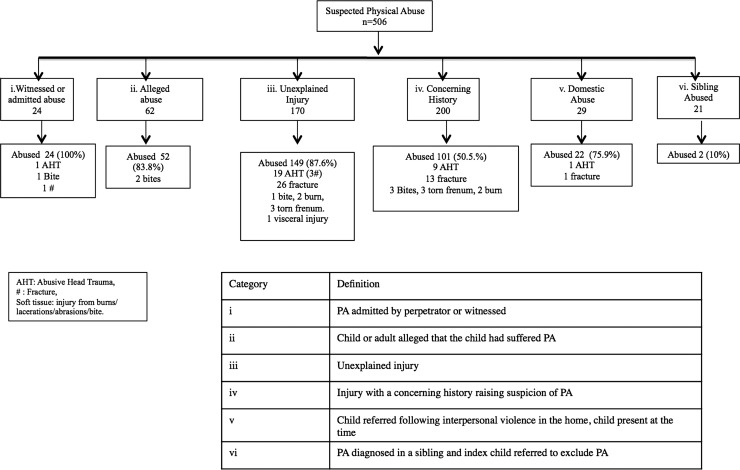
- PA was confirmed in 350/506 children (69.2%); confirmation varied from at least 84% when abuse was witnessed, admitted, alleged, or the injury was unexplained/implausible, to 50.5% when the referral reason was a concerning history.
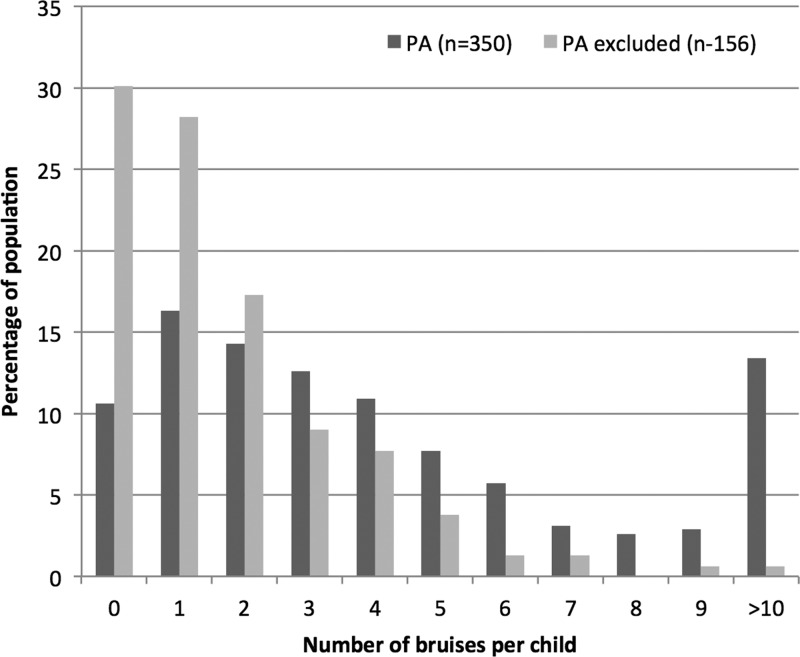
- Bruising was more common in confirmed PA: 89.4% (313/350) vs 69.9% (109/156) in PA-excluded, difference 19.6% (95% CI 12.0% to 27.7%); PA children also had significantly more bruises and more body regions affected (p<0.001). Mean total bruises were 4.9 vs 1.7, and mean regions with bruises 2.3 vs 1.1, in PA vs PA-excluded.
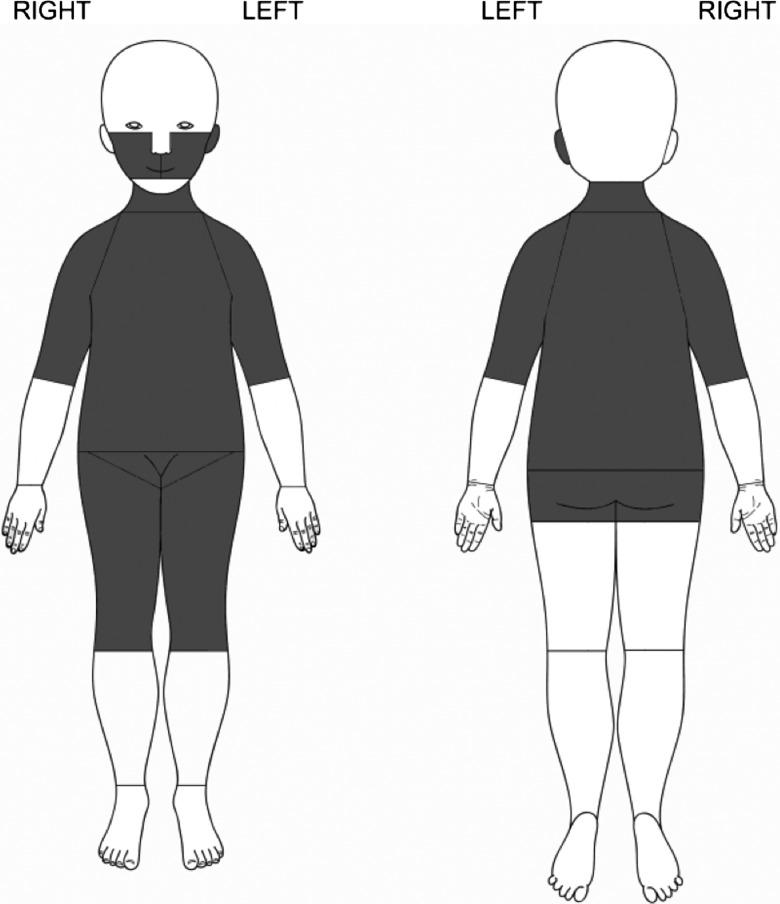
- Adjusted odds of bruising in confirmed PA were significantly higher for buttocks/genitalia (OR 10.9, 95% CI 2.6 to 46), left ear (OR 7.10, 95% CI 2.2 to 23.4), left cheek (OR 5.20, 95% CI 2.5 to 10.7), front trunk (OR 4.74, 95% CI 2.2 to 10.2), neck (OR 3.77, 95% CI 1.3 to 10.9), rear trunk (OR 2.85, 95% CI 1.6 to 5.0), right cheek (OR 2.83, 95% CI 1.5 to 5.4), front thighs (OR 2.48, 95% CI 1.4 to 4.5), and upper arm (OR 1.90, 95% CI 1.1 to 3.2).
- Petechiae occurred in 15.4% of PA vs 1.9% of PA-excluded (OR 9.3, 95% CI 2.9 to 30.2); linear or distinct-pattern bruises had OR 5.9 (95% CI 2.1 to 16.7); clusters occurred in 67.4% vs 33.9% (OR 4.0, 95% CI 2.5 to 6.4); previous social services child abuse concerns had OR 2.9 (95% CI 1.3 to 6.2); additional injuries had OR 2.9 (95% CI 1.7 to 5.2). Abusive head trauma children had fewer bruises than other confirmed PA children: 60% (18/30) vs 93.4% (299/320), OR 0.1 (95% CI 0.04 to 0.25).
Methods
- Retrospective cross-sectional study of case records of consecutive children aged <6 years referred to two paediatric child protection teams in southeast Wales for clinical and forensic assessment of suspected PA between November 2003 and December 2011; children with bleeding disorders were excluded. The results report 518 children identified, 12 excluded for medical cause, neglect, or Mongolian blue spot, and data collected from 506 children.
- A standardised clinical proforma recorded visible injuries on a body chart and radiological injuries; bruise location was recorded across 36 anatomical sites, with size and appearance (petechiae, distinct shape, or cluster). Shins were excluded from analysis because they were not consistently recorded. Development was categorised as baby (premobile, rolling, sitting), early mobility (crawling, cruising), or walking independently.
- Proportions were compared with χ² tests; logistic regression estimated ORs with adjustment for confounders/development stage; means were compared with t tests when approximately normal; count data were modelled with negative binomial distributions and generalised linear models; significance was set at 5%.
Limitations
- The paper states that data were gathered retrospectively; the great majority of cases were Caucasian, so analysis by skin colour or ethnicity was not possible; the population was children where suspicion of PA had already been raised, so the bruise pattern is unlikely to be representative of an age-matched general population; and there is an inherent risk of circular reasoning because the bruises themselves may form part of the PA decision, although the multiagency child protection team decision was taken as confirmation of abuse.
- Evident in the text: the abstract reports 519 children, while the results report 518 identified and 506 analysed, an inconsistency in the reported sample numbers.
Model-written summary. Check it against the paper before relying on it.
Integrity signals
Registry
Cites
Statistics
Figures
Verification
Claims the paper makes
0 Valid · 0 Not valid · 16 Not checked · 39 Own results and interpretations
A result the paper reports from its own data — it cites no other source for it, so there is none to check. The quote shows it is in the paper.
In the paper
“bruises in clusters”
- Also stated in: § The number and distribution of bruises · plain
“Clustering of bruises was significantly more likely in PA children, OR 4.0 (95% CI 2.5 to 6.4).”
- Also stated in: § Discussion · plain
“Petechiae, bruises of a linear nature or with a distinct pattern, and ‘clusters’ of bruises were seen more frequently in the children with confirmed PA.”
§ Bruising in children who are assessed for suspected physical abuse > Abstract > Results
plainstates an associationn = 313 ·- Asserted: passes — The authors put it forward as true.
- Checkable: passes — It can be checked against evidence.
- Load-bearing: passes — The paper’s conclusions depend on it.
- Based: passes — The paper gives a reason why it holds.
- Also stated in: § The number and distribution of bruises · plain
A result the paper reports from its own data — it cites no other source for it, so there is none to check. The quote shows it is in the paper.
In the paper
“back (OR 2.85 (CI 1.6 to 5.0)”
- Also stated in: § The number and distribution of bruises · plain
“Rear trunk | Rear trunk | 9.3 | 7.5 | 36.2 | 10.0 | 8.6 | 13.2 | 2.85 (1.6 to 5.0)*”
- Also stated in: § Discussion · plain
“Bruising to the left ear, cheeks, neck, trunk, front of thighs, upper arms, buttocks and genitalia were found significantly more frequently in the PA-confirmed children, than when PA was excluded.”
§ Bruising in children who are assessed for suspected physical abuse > Abstract > Results
plainstates an association- Asserted: passes — The authors put it forward as true.
- Checkable: passes — It can be checked against evidence.
- Load-bearing: passes — The paper’s conclusions depend on it.
- Based: passes — The paper gives a reason why it holds.
- Rests on an assumption not shown here.
- Also stated in: § The number and distribution of bruises · plain
A result the paper reports from its own data — it cites no other source for it, so there is none to check. The quote shows it is in the paper.
In the paper
“Petechiae, linear or bruises with distinct pattern, bruises in clusters, additional injuries or a child known to social services for previous child abuse concerns were significantly more likely in PA.”
- Also stated in: § The number and distribution of bruises · plain
“Petechiae were reported in 54 (15.4%) of the 350 physically abused children, and in three (1.9%) of the 156 PA-excluded children. The difference is highly significant OR 9.3 (95% CI 2.9 to 30.2).”
- Also stated in: § Discussion · plain
“Petechiae, bruises of a linear nature or with a distinct pattern, and ‘clusters’ of bruises were seen more frequently in the children with confirmed PA.”
§ Bruising in children who are assessed for suspected physical abuse > Abstract > Results
plainstates an associationn = 350 ·- Asserted: passes — The authors put it forward as true.
- Checkable: passes — It can be checked against evidence.
- Load-bearing: passes — The paper’s conclusions depend on it.
- Based: passes — The paper gives a reason why it holds.
- Also stated in: § The number and distribution of bruises · plain
A result the paper reports from its own data — it cites no other source for it, so there is none to check. The quote shows it is in the paper.
In the paper
“front (OR 4.74 (CI 2.2 to 10.2)”
- Also stated in: § The number and distribution of bruises · plain
“Front trunk | Front trunk | 16.8 | 5.0 | 24.1 | 3.3 | 2.9 | 6.6 | 4.74 (2.2 to 10.2)*”
- Also stated in: § Discussion · plain
“Bruising to the left ear, cheeks, neck, trunk, front of thighs, upper arms, buttocks and genitalia were found significantly more frequently in the PA-confirmed children, than when PA was excluded.”
§ Bruising in children who are assessed for suspected physical abuse > Abstract > Results
plainstates an association- Asserted: passes — The authors put it forward as true.
- Checkable: passes — It can be checked against evidence.
- Load-bearing: passes — The paper’s conclusions depend on it.
- Based: passes — The paper gives a reason why it holds.
- Rests on an assumption not shown here.
- Also stated in: § The number and distribution of bruises · plain
A result the paper reports from its own data — it cites no other source for it, so there is none to check. The quote shows it is in the paper.
In the paper
“had significantly more sites affected (p<0.001)”
- Also stated in: § The number and distribution of bruises · plain
“Fitting negative binomial regression models showed that PA children had significantly more bruises and more sites affected than the PA-excluded group (p<0.001 for bruises and sites)”
- Also stated in: § Discussion · plain
“These children had significantly more bruises distributed over a greater number of regions of the body than when PA was excluded.”
§ Bruising in children who are assessed for suspected physical abuse > Abstract > Results
plainstates an association- Asserted: passes — The authors put it forward as true.
- Checkable: passes — It can be checked against evidence.
- Load-bearing: passes — The paper’s conclusions depend on it.
- Based: passes — The paper gives a reason why it holds.
- Also stated in: § The number and distribution of bruises · plain
35 more claims
Create a free account to see all 55 claims and to verify the 27 references still open.
- It may state two separate claims as one. 8
- Probably not a substantial claim. 9
Claims other papers make about this one
Each is checked against this paper’s own text: does it say what the citing paper says it does?
In the citing paper
“Accordingly, child abuse experts and professional organizations recommend strong consideration of abuse evaluations in young pre-mobile infants with bruising not caused by a medical condition.”
From The Prevalence of Bruising Among Infants in Pediatric Emergency Departments (2016) · cites this paper as [21]
In the citing paper
“The relatively low rates of abuse evaluations among bruised infants was unexpected given that literature reports bruising in this young age group is a red flag for abuse that warrants further evaluation.”
From The Prevalence of Bruising Among Infants in Pediatric Emergency Departments (2016) · cites this paper as [21]
Self-check
Percentages, sums and reported differences re-computed from the paper’s own numbers.
Each contradiction between two passages listed here was confirmed by an independent check.
Rated minor: it would not touch a result — a value no result rests on, a p-value that stays on the same side of the significance level, or a conflict that is clerical, resolved elsewhere in the paper, or outside its own findings.
In the paper
§ Bruising in children who are assessed for suspected physical abuse > Results > The number and distribution of bruises
“The odds of a PA child having a bruise on the buttocks or genitalia, cheeks, neck, trunk, head, front of thighs, or upper arms, were significantly greater than in PA-excluded children (table 3, figure 3).”
§ Bruising in children who are assessed for suspected physical abuse > Results > The number and distribution of bruises
“| Head | Head: top, back, right and left side | 15.0 | 12.5 | 9.5 | 13.3 | 2.9 | 6.6 | 1.55 (0.8 to 3.1) |”
Rated minor: it would not touch a result — a value no result rests on, a p-value that stays on the same side of the significance level, or a conflict that is clerical, resolved elsewhere in the paper, or outside its own findings.
In the paper
§ Bruising in children who are assessed for suspected physical abuse > Results > The number and distribution of bruises
“| Baby | 2.5 (3.2) (0, 22) | 1.6 (1.4) (0, 6) | 2.8 (3.5) (0, 22) | 1.6 (1.5) (0, 6) | 1.3 (1.8) (0, 7) | 0.8 (0.8) (0, 3) |”
§ Bruising in children who are assessed for suspected physical abuse > Results > Study population
“| Baby (%) | 137/502 (27.3) | 107/346 (30.9) | 30/156 (19.2) |”
Rated minor: it would not touch a result — a value no result rests on, a p-value that stays on the same side of the significance level, or a conflict that is clerical, resolved elsewhere in the paper, or outside its own findings.
In the paper
§ Bruising in children who are assessed for suspected physical abuse > Abstract > Setting and patients
“519 children, <6 years, referred to two paediatric child protection teams.”
§ Bruising in children who are assessed for suspected physical abuse > Results > Study population
“Five hundred and eighteen children were identified from records.”
Citations
Cites
Schools, & Families (2010) · Stationery Office eBooks · Cited by 397
Bruises in Infants and Toddlers: Those Who Don't Cruise Rarely Bruise
Sugar, N. F. (1999) · Archives of Pediatrics & Adolescent Medicine · doi:10.1001/archpedi.153.4.399 · Cited by 306
Bruising Characteristics Discriminating Physical Child Abuse From Accidental Trauma
Pierce, M. C., Kaczor, K., Aldridge, S., O'Flynn, J., & Lorenz, D. J. (2010) · Pediatrics · doi:10.1542/peds.2008-3632 · Cited by 296
Maguire, S. (2005) · Archives of Disease in Childhood · doi:10.1136/adc.2003.044065 · Cited by 278
Self-citationCan the Initial History Predict Whether a Child With a Head Injury Has Been Abused?
Hettler, J., & Greenes, D. S. (2003) · Pediatrics · doi:10.1542/peds.111.3.602 · Cited by 156
The prevalence and distribution of bruising in babies
Carpenter, R. F. (1999) · Archives of Disease in Childhood · doi:10.1136/adc.80.4.363 · Cited by 122
The Cutaneous Manifestations of Child Abuse and Neglect
Ellerstein, N. S. (1979) · Archives of Pediatrics and Adolescent Medicine · doi:10.1001/archpedi.1979.02130090034005 · Cited by 80
A scoring system for bruise patterns: a tool for identifying abuse
Dunstan, F. D. (2002) · Archives of Disease in Childhood · doi:10.1136/adc.86.5.330 · Cited by 59
Self-citationPatterned Abusive Bruises of the Buttocks and the Pinnae
FELDMAN, K. W. (1992) · Pediatrics · doi:10.1542/peds.90.4.633 · Cited by 44
How useful is the presence of petechiae in distinguishing non-accidental from accidental injury?
Nayak, K., Spencer, N., Shenoy, M., Rubithon, J., Coad, N., & Logan, S. (2006) · Child Abuse & Neglect · doi:10.1016/j.chiabu.2005.09.005 · Cited by 28
Research works printed but not linked: 1
- Brinkmann B Püschel K Mätzsch T Forensic dermatological aspects of the battered child syndrome. Aktuelle Derm 1979; 5: 217– 32
Cited by
The Evaluation of Suspected Child Physical Abuse
Christian, C. W., & COMMITTEE ON CHILD ABUSE AND NEGLECT (2015) · Pediatrics · doi:10.1542/peds.2015-0356 · Cited by 712
Pierce, M. C., Kaczor, K., Lorenz, D. J., Bertocci, G., Fingarson, A. K., Makoroff, K., Berger, R. P., Bennett, B., Magana, J., Staley, S., et al. (2021) · JAMA Network Open · doi:10.1001/jamanetworkopen.2021.5832 · Cited by 159
The yield of high-detail radiographic skeletal surveys in suspected infant abuse
Barber, I., Pérez-Rosselló, J. M., Wilson, C. R., & Kleinman, P. K. (2014) · Pediatric Radiology · doi:10.1007/s00247-014-3064-3 · Cited by 111
Abusive Head Trauma in Infants and Children: Technical Report
Narang, S. K., Haney, S. B., Duhaime, A.-C., Martin, J. E., Binenbaum, G., Campomanes, A. G. D. A., Barth, R., Bertocci, G. E., Caré, M. M., McGuone, D., et al. (2025) · PEDIATRICS · doi:10.1542/peds.2024-070457 · Cited by 88
The Prevalence of Bruising Among Infants in Pediatric Emergency Departments
Pierce, M. C., Magana, J. N., Kaczor, K., Lorenz, D. J., Meyers, G., Bennett, B. L., & Kanegaye, J. T. (2016) · Annals of Emergency Medicine · doi:10.1016/j.annemergmed.2015.06.021 · Cited by 55
“The relatively low rates of abuse evaluations among bruised infants was unexpected, given that literature reports that bruising in this young age group is a red flag for abuse that warrants further evaluation.(1-5,21,22) However, the factors influencing the decision to evaluate for abuse and the outcomes of those eval…”
BackgroundSarkar, R., Ozanne‐Smith, J., & Bassed, R. (2019) · Trauma Violence & Abuse · doi:10.1177/1524838019827617 · Cited by 48
“A few investigators (Kemp et al., 2014; Kenney, 1979; Pierce, Kaczor, Aldridge, O’Flynn, & Lorenz, 2010; Willging et al., 1992) provided injury mapping pertaining to regions of ear, chin, eyes, forehead, face, lip, and nose.”
BackgroundExternal Validation of the PECARN Head Trauma Prediction Rules in Japan
Ide, K., Uematsu, S., Tetsuhara, K., Yoshimura, S., Kato, T., & Kobayashi, T. (2017) · Academic Emergency Medicine · doi:10.1111/acem.13129 · Cited by 47
Rosen, T., LoFaso, V. M., Bloemen, E. M., Clark, S., McCarthy, T. J., Reisig, C., Gogia, K., Elman, A., Markarian, A., Flomenbaum, N., et al. (2020) · Annals of Emergency Medicine · doi:10.1016/j.annemergmed.2020.03.020 · Cited by 46
The medical assessment of bruising in suspected child maltreatment cases: A clinical perspective
Michelle, G. W., Ornstein, A. E., Niec, A., Louise, M. C., & Canadian Paediatric Society (2013) · Paediatrics & Child Health · doi:10.1093/pch/18.8.433 · Cited by 43
“Adapted from references [4]-[6][9]-[11][15][41][42]”
Christian, C. W., & States, L. J. (2017) · American Journal of Roentgenology · doi:10.2214/ajr.16.17450 · Cited by 41
Development of Hospital-Based Guidelines for Skeletal Survey in Young Children With Bruises
Wood, J. N., Fakeye, O. A., Mondestin, V., Rubin, D. M., Localio, R., & Feudtner, C. (2015) · PEDIATRICS · doi:10.1542/peds.2014-2169 · Cited by 42
“17 The subsequent sequential phases of scenario rating are as follows: (1) panelists rated the appropriateness of SS for each clinical scenario (Round 1); (2) panelists reviewed the Round 1 ratings and made revisions to scenarios during a moderated discussion; (3) panelists re-rated the appropriateness of SS for the r…”
BackgroundMethodInfluentialChildhood bruising distribution observed from eight mechanisms of unintentional injury
Hibberd, O., Nuttall, D., Watson, R., Watkins, W. J., Kemp, A., & Maguire, S. (2017) · Archives of Disease in Childhood · doi:10.1136/archdischild-2017-312847 · Cited by 40
Self-citationRaising suspicion of maltreatment from burns: Derivation and validation of the BuRN-Tool
Kemp, A., Hollén, L., Emond, A. M., Nuttall, D., Rea, D., & Maguire, S. (2017) · Burns · doi:10.1016/j.burns.2017.08.018 · Cited by 39
“As the over-riding purpose of this study was to identify cases that need to be referred to a children’s social care team for further assessment, we used practioners’ referral to children’s social care as the outcome measure in the knowledge that maltreatment is confirmed in an estimated 70-75% of children referred by…”
Self-citationDetection of Inflicted Bruises by Alternate Light: Results of a Randomized Controlled Trial
Scafide, K. N., Sheridan, D. J., Downing, N. R., & Hayat, M. J. (2020) · Journal of Forensic Sciences · doi:10.1111/1556-4029.14294 · Cited by 38
“Frequency, n (%) 26 (17) 27 (17) 25 (16) 27 (17) 26 (17) 26 (17) 56 (100) Sex, n Female 16 21 19 22 16 20 114 (73) Male 10 6 6 5 10 6 43 (27) Race, n Asian 0 2 7 8 7 0 24 (15) Black 0 0 0 1 9 26 36 (23) Caucasian/White 24 22 17 10 3 0 76 (48) Hispanic 2 2 1 5 4 0 14 (9) Native American 0 0 0 2 3 0 5 (3) Multiracial/Ot…”
Patterns of bruising in preschool children with inherited bleeding disorders: a longitudinal study
Collins, P. W., Hamilton, M., Dunstan, F., Maguire, S., Nuttall, D., Liesner, R. J., Thomas, A. E., Hanley, J. P., Chalmers, E. A., Blanchette, V. S., et al. (2016) · Archives of Disease in Childhood · doi:10.1136/archdischild-2015-310196 · Cited by 38
Self-citationSociodemographic determinants of non-accidental traumatic injuries in children
Lopez, O. N., Hughes, B. D., Adhikari, D., Williams, K. E., Radhakrishnan, R. S., & Bowen, K. A. (2018) · The American Journal of Surgery · doi:10.1016/j.amjsurg.2018.05.009 · Cited by 33
A Multispecialty Approach to the Identification and Diagnosis of Nonaccidental Trauma in Children
Manan, M. R., Rahman, S., Komer, L., Manan, H., & Iftikhar, S. (2022) · Cureus · doi:10.7759/cureus.27276 · Cited by 32
“[50] have pictorially represented (Figure 3) the results of their retrospective cross-sectional study highlighting particular bruise locations in children more likely to be associated with cases of confirmed physical abuse in comparison to cases where abuse was ruled out.”
BackgroundEvaluation of an Emergency Department High-risk Bruising Screening Protocol
Crumm, C. E., Brown, E. C. B., Thomas-Smith, S. E., Yu, D. T. Y., Metz, J. B., & Feldman, K. W. (2021) · PEDIATRICS · doi:10.1542/peds.2020-002444 · Cited by 26
“2021;147(4): e2020002444 Seattle Children’s Hospital and Divisions of General Pediatrics and Emergency Medicine, Department of Pediatrics, University of Washington, Seattle, Washington; and Divisions of Pediatric Hospitalist Medicine and”
BackgroundEscobar, M. A., Flynn‐O’Brien, K. T., Auerbach, M. A., Tiyyagura, G. K., Borgman, M. A., Duffy, S. J., Falcone, K. S., Burke, R. V., Cox, J. M., & Maguire, S. (2017) · The Journal of Trauma: Injury, Infection, and Critical Care · doi:10.1097/ta.0000000000001441 · Cited by 26
Self-citationTrefán, L., Harris, C., Evans, S., Nuttall, D., Maguire, S., & Kemp, A. (2018) · Journal of Forensic and Legal Medicine · doi:10.1016/j.jflm.2018.07.015 · Cited by 23
Self-citationHarris, C., Alcock, A., Trefán, L., Nuttall, D., Evans, S., Maguire, S., & Kemp, A. (2018) · Journal of Forensic and Legal Medicine · doi:10.1016/j.jflm.2017.12.020 · Cited by 23
Self-citationNonaccidental Injury in Pediatric Patients: Detection, Evaluation, and Treatment
Tiyyagura, G. K., Beucher, M., & Bechtel, K. A. (2017) · PubMed · Cited by 20
Clinical evaluation and management of children with suspected physical abuse
Bennett, C. E., & Christian, C. W. (2021) · Pediatric Radiology · doi:10.1007/s00247-020-04864-1 · Cited by 19
“Additionally, they might have clusters of bruises or patterns of bruises such as the negative imprint of an object such as a hand or a looped wire or cord [2, 49].”
BackgroundPatterned Bruises From Abusive Squeezing
Petska, H. W., Frasier, L. D., Livingston, N., Moles, R. L., & Sheets, L. K. (2019) · Pediatric Emergency Care · doi:10.1097/pec.0000000000001717 · Cited by 18
Bruise detection and visibility under alternate light during the first three days post-trauma
Scafide, K. N., Sharma, S. S., Tripp, N. E., & Hayat, M. J. (2019) · Journal of Forensic and Legal Medicine · doi:10.1016/j.jflm.2019.101893 · Cited by 17
Cowley, L., Farewell, D. M., & Kemp, A. (2018) · Child Abuse & Neglect · doi:10.1016/j.chiabu.2018.09.017 · Cited by 16
Self-citationMitä teen, kun epäilen lapsiin kohdistuvaa väkivaltaa?
Nikkola, E., Joki‐Erkkilä, M., & Laajasalo, T. (2022) · Tampere University Institutional Repository (Tampere University) · Cited by 16
Yield of Neuroimaging in Infant Physical Abuse Evaluations: Do Infant Age and Injury Type Matter?
Fingarson, A. K., & Fortin, K. (2019) · Journal of Emergency Medicine · doi:10.1016/j.jemermed.2019.03.041 · Cited by 14
Can TEN4 distinguish bruises from abuse, inherited bleeding disorders or accidents?
Kemp, A., Maguire, S., Nuttall, D. E., Collins, P. W., Dunstan, F., & Farewell, D. M. (2021) · Archives of Disease in Childhood · doi:10.1136/archdischild-2020-320491 · Cited by 14
Self-citationReliability of tristimulus colourimetry in the assessment of cutaneous bruise colour
Scafide, K. N., Sheridan, D. J., Taylor, L. A., & Hayat, M. J. (2016) · Injury · doi:10.1016/j.injury.2016.01.032 · Cited by 13
Has This Child Experienced Physical Abuse? The Rational Clinical Examination Systematic Review
Shah, S. N., Fong, H., Haney, S. B., Harper, N. S., Pierce, M. C., & Neuman, M. I. (2025) · JAMA · doi:10.1001/jama.2025.2216 · Cited by 13
Bruising characteristics from unintentional injuries in children: the ‘green flag’ study
Pierce, M. C. (2017) · Archives of Disease in Childhood · doi:10.1136/archdischild-2017-313367 · Cited by 13
Inter-rater reliability of physical abuse determinations in young children with fractures
Buesser, K. E., Leventhal, J. M., Gaither, J. R., Tate, V. V., Cooperman, D. R., Moles, R. L., Silva, C. T., Ehrlich, L. J., & Sharkey, M. S. (2017) · Child Abuse & Neglect · doi:10.1016/j.chiabu.2017.08.001 · Cited by 12
Biss, T. T., Sibson, K. R., Baker, P. M., Macartney, C. A., Grayson, C., Grainger, J., Chalmers, E. A., & Dixon, S. (2022) · British Journal of Haematology · doi:10.1111/bjh.18361 · Cited by 11
Child Abuse, Misdiagnosed by an Expertise Center—Part II—Misuse of Bayes’ Theorem
van Gemert, M. J. C., Zwinderman, A. H., Koppen, P. J. V., Neumann, H. A. M., & Vlaming, M. (2023) · Children · doi:10.3390/children10050843 · Cited by 8
“We have to evaluate For bruises, LECK used the work of Kemp et al. [13], particularly their Table 3, where the percentage of infants with at least one bruise on 17 body locations was mentioned, for 107 physical abuse diagnosed babies and 30 physical abuse excluded babies.”
Child Abuse, Misdiagnosed by an Expertise Center: Part I—Medico-Social Aspects
Vlaming, M., Sauer, P. J. J., Janssen, E. P. F., Koppen, P. J. V., Bruijninckx, C. M. A., van Zelst, M. A.-Z., Neumann, H. A. M., & van Gemert, M. J. C. (2023) · Children · doi:10.3390/children10060963 · Cited by 8
Matthews, L., Kemp, A., & Maguire, S. (2017) · Child Abuse Review · doi:10.1002/car.2474 · Cited by 8
Self-citationThe Impact of an Emergency Department Bruising Pathway on Disparities in Child Abuse Evaluation
Crumm, C. E., Brown, E. C. B., Vora, S. B., Lowry, S., Schlatter, A., & Rutman, L. (2023) · Pediatric Emergency Care · doi:10.1097/pec.0000000000002998 · Cited by 8
Sexual Abuse Prevention Program for School Age Children
Aziz, M. S. A. E., Ismail, S. S., & Ahmed, H. M. (2017) · American Journal of Nursing Science · doi:10.11648/j.ajns.20170601.11 · Cited by 8
“Child sexual abuse prevention programs are of value because they provide information, support and empowerment [21-30].”
BackgroundImpact sites representing potential bruising locations associated with rearward falls in children
D’Souza, R., & Bertocci, G. E. (2016) · Forensic Science International · doi:10.1016/j.forsciint.2016.02.012 · Cited by 8
“Compared to previous clinical studies describing bruising locations for a range of accident types, the head and posterior torso were found to be common regions of bruising [20,21].”
BackgroundResultThe frequently dismissed importance of properly sampling skin bruises
Maggioni, L., Maderna, E., Gorio, M. C., Cappella, A., Andreola, S. A., Bulfamante, G., & Cattaneo, C. (2021) · Legal Medicine · doi:10.1016/j.legalmed.2021.101867 · Cited by 7
Identifying inflicted injuries in infants and young children
Cho, N., & Koti, A. S. (2024) · Seminars in Pediatric Neurology · doi:10.1016/j.spen.2024.101138 · Cited by 7
Bruising: the most common injury in physical child abuse
Johnson, E. L., Jones, A. L., & Maguire, S. (2021) · Paediatrics and Child Health · doi:10.1016/j.paed.2021.08.001 · Cited by 7
Self-citationRole of the medical community in detecting and managing child abuse
Oates, R. K. (2014) · The Medical Journal of Australia · doi:10.5694/mja13.11368 · Cited by 6
Development and Pilot Analysis of the Bruise Visibility Scale
Scafide, K. N., Bahari, G., Kutahyalioglu, N. S., Mohammadifirouzeh, M., & Senko, S. M. (2021) · SAGE Open Nursing · doi:10.1177/23779608211020931 · Cited by 6
“From intimate partner violence to child abuse, bruising is the most common manifestation of physical assault across the lifespan (Kemp et al., 2014; Savall et al., 2017).”
BackgroundWong, Y., Sung, S., Wu, C.-S., Su, Y.-H., Lin, M.-H., Su, C.-Y., & Ong, C.-T. (2025) · Journal of Clinical Neuroscience · doi:10.1016/j.jocn.2025.111465 · Cited by 6
Impact sites representing potential bruising locations associated with bed falls in children
D’Souza, R., & Bertocci, G. E. (2018) · Forensic Science International · doi:10.1016/j.forsciint.2018.02.018 · Cited by 6
Skin Lesions and Other Associated Findings in Children with Abusive Head Trauma
Luyet, F. M., Wipperfurth, J., Palm, A., & Knox, B. L. (2016) · Journal of Family Violence · doi:10.1007/s10896-016-9841-z · Cited by 6
“a and c) is 5 times more frequent in abuse than in accidental injuries (Kemp et al. 2014).”
BackgroundMeunier, S., Harroche, A., Rauch, A., Bally, C., Huguenin, Y., Voltzenlogel, R., Tabélé, C., Chambost, H., Balençon, M., & FranceCoag (2024) · Haemophilia · doi:10.1111/hae.15033 · Cited by 6
Cutaneous manifestations of physical and sexual child abuse
Noble, J., Hartwig, E., & Shwayder, T. (2019) · Indian Journal of Paediatric Dermatology · doi:10.4103/ijpd.ijpd_62_19 · Cited by 5
“[22] Bruises associated with petechiae are much more common in abusive trauma.[17] Unexplained petechiae or bruising of the palate, specifically at the junction of the hard and soft palate, may be evidence of forced oral sex.”
BackgroundInfluentialMichelle, G. W., Ornstein, A. E., Niec, A., Louise, M. C., & de pédiatrie, S. C. (2013) · Paediatrics & Child Health · doi:10.1093/pch/18.8.438 · Cited by 5
“Adapté des références [4]-[6][9]-[11][15][41][42]”
Diagnosis of Abusive Head Trauma : Neurosurgical Perspective
Kwak, Y. H. (2022) · Journal of Korean Neurosurgical Society · doi:10.3340/jkns.2021.0284 · Cited by 5
Von Willebrand Disease: diagnosis and management
Williams, M., & Patel, J. (2015) · Paediatrics and Child Health · doi:10.1016/j.paed.2015.05.005 · Cited by 5
Identifying Risk Factors of Children Who Suffered Physical Abuse: A Systematic Review
Flaherty, A. F., Ghandour, S., Mirochnik, K., Lucaciu, A. R., Nassour, N., Kwon, J. Y., Harris, M. B., & Ashkani‐Esfahani, S. (2025) · JAAOS Global Research and Reviews · doi:10.5435/jaaosglobal-d-24-00163 · Cited by 4
Child protection: a blend of art and science
Cass, H. (2014) · Archives of Disease in Childhood · doi:10.1136/archdischild-2013-304689 · Cited by 4
Marletta, D. A., Giuca, G., Leonetti, D., Chiodini, F., Pellegrin, M. D., & Guindani, N. (2025) · Child Abuse & Neglect · doi:10.1016/j.chiabu.2025.107807 · Cited by 3
Prasad, T., & Tully, J. (2017) · Journal of Paediatrics and Child Health · doi:10.1111/jpc.13608 · Cited by 3
A Closer Look: Medical Conditions that Mimic Physical Abuse
Ngo, V. (2020) · Pediatric Annals · doi:10.3928/19382359-20200721-01 · Cited by 3
Imaging: Radiology, Pediatric, and Child Abuse – Skeletal Imaging
Offiah, A. C. (2015) · Elsevier eBooks · doi:10.1016/b978-0-12-800034-2.00402-x · Cited by 3
Testing for Bleeding Disorders in Child Abuse: Aap Recommendation Adherence and Testing Results
Hultman, L., Doswell, A., Puls, H. T., Carpenter, S. L., Bachim, A. N., McNamara, C. R., Brink, F. W., Frasier, L. D., Harper, N. S., Laub, N., et al. (2025) · Child Abuse & Neglect · doi:10.1016/j.chiabu.2025.107431 · Cited by 2
Herrmann, B., Dettmeyer, R. B., Banaschak, S., & Thyen, U. (2016) · Springer eBooks · doi:10.1007/978-3-662-48844-7_4 · Cited by 2
Killough, E. F., Horton, D., Kilbride, S., & Hansen, J. B. (2025) · Pediatric Clinics of North America · doi:10.1016/j.pcl.2025.01.004 · Cited by 2
Experimental modelling of imposed upper airway obstruction in infants and children
Johnson, G. W., Green, F., Clift, H., & Johnson, C. P. (2020) · Forensic Science Medicine and Pathology · doi:10.1007/s12024-020-00298-1 · Cited by 2
Bruising in Infants and Children: Minor Skin Injuries Can Have Major Implications
Gregory, K., & Fingarson, A. K. (2020) · Clinical Pediatric Emergency Medicine · doi:10.1016/j.cpem.2020.100785 · Cited by 2
The haematological investigation of suspected Non Accidental Injury
Williams, M., & Lancashire, J. (2017) · Paediatrics and Child Health · doi:10.1016/j.paed.2017.08.002 · Cited by 2
Management of Child Abuse as Related to Three Cases
Yalçin, N., İnce, D., Acar, Y., KANDIRICI, A., & Atilgan, H. (2014) · Turkish Journal of Pediatric Disease · doi:10.12956/tjpd.2014.47 · Cited by 2
Child Abuse, Non-Accidental Trauma, and Inflicted Injuries
Bilo, R. A. C., Vester, M. E. M., Loeve, A. J., & Teeuw, R. (2023) · Springer eBooks · doi:10.1007/978-3-031-12041-1_1 · Cited by 1
Bruising in Infants and Children
Robinson, D. L. (2017) · Springer eBooks · doi:10.1007/978-3-319-45337-8_2 · Cited by 1
Challenges and innovations in diagnosing nonphysical child abuse in pediatric emergency departments
Onyejesi, C. D., Miranda, J. C. D. C., Abdelbar, S. M. M., Aziz, M. M., Abady, E. M. A., Omran, J. A., Zehra, S. A., & Alsabri, M. (2024) · Pediatric Emergency Medicine Journal · doi:10.22470/pemj.2024.01137 · Cited by 1
Bruises in Premobile Infants: A Contested Area of Research, Policy and Practice
Bilson, A., & Talia, A. (2022) · Practice · doi:10.1080/09503153.2022.2140132 · Cited by 1
“The Royal College of Paediatrics and Child Health ’ s (RCPCH) provides a regularly updated review of the evidence on bruising, which has been influential in shaping local procedures.”
InfluentialSchwend, R. M. (2014) · Springer eBooks · doi:10.1007/978-1-4614-8515-5_39 · Cited by 1
Napolskij, M. S. (2021) · Portuguese National Funding Agency for Science, Research and Technology (RCAAP Project by FCT) · doi:10.34626/n5js-zv13 · Cited by 1
Eagamy, S., Badawy, S., Girgis, N. F., Elden, F. N., Abouhatab, H. M., & Seidy, A. E. (2023) · The Egyptian Journal of Forensic Sciences and Applied Toxicology · doi:10.21608/ejfsat.2023.231813.1302 · Cited by 1
Findings Associated With Nonaccidental Trauma in Children With Isolated Femoral Diaphyseal Fractures
Ina, J. G., Dumaine, A. M., Flanagan, C. D., Haase, L. R., Moore, R. D., Rimnac, C. M., & Gilmore, A. (2024) · Journal of Pediatric Orthopaedics · doi:10.1097/bpo.0000000000002740 · Cited by 1
Slot, L., Thorlacius‐Ussing, L., Justesen, D., Bugge, A. B. D., Lynnerup, N., Wingren, C. J., & Banner, J. (2025) · Journal of Forensic Sciences · doi:10.1111/1556-4029.70199 · Cited by 1
“Most of the existing studies focus on bruises in children under 7 years of age [2–4, 6, 8, 10].”
InfluentialHallazgos de necropsias en maltrato infantil en Bogotá, Colombia, entre el 2000-2005 y el 2011-2013
Barrios, M. Z., & Fino, C. A. G. (2015) · Colombia Forense · doi:10.16925/cf.v3i1.1297 · Cited by 1
“Kemp [29] refiere que en un 83% de sus casos confirmados como malos tratos fueron encontradas equimosis; Gondim [30] afirma que el primer órgano afectado en el maltrato es la piel; y Kos [31] y Lachica [26] señalan que un 90% de los menores maltratados muestra lesiones en piel.”
BackgroundBrown, J. C., & Metz, J. B. (2019) · Pediatric Emergency Care · doi:10.1097/pec.0000000000001883 · Cited by 1
Pressure Urticaria in an Infant Appearing Similar to Physical Abuse
Shih, A. F., & Sharaf, M. (2020) · PEDIATRICS · doi:10.1542/peds.2019-3644 · Cited by 1
Çocuklarda istismar yaralanmaları
Aslantürk, O., Özdeş, H. U., & Ertem, K. (2024) · Türk Ortopedi ve Travmatoloji Birliği Derneği · doi:10.5578/totbid.dergisi.2024.37 · Cited by 1
Shedding light on non-accidental bruising
Stephenson, T. J. (2015) · Archives of Disease in Childhood · doi:10.1136/archdischild-2014-307869 · Cited by 1
Marc, B., & Barthès, A. (2015) · Elsevier eBooks · doi:10.1016/b978-0-12-800034-2.00066-5 · Cited by 1
Onkenhout, N. H., Terlingen, H. C., Nagtegaal, M., van de Putte, E. M., Boos, S. C., & Berger, C. E. H. (2024) · Children · doi:10.3390/children11121429 · Cited by 1
ÖZGÜR, N. Y. (2018) · Hacettepe University Institutional Repository (hacettepe.edu.tr) · Cited by 1
Albrecht, M. (2014) · Kindesmisshandlung und -vernachlässigung · doi:10.13109/kind.2014.17.2.112
Schwend, R. M. (2014) · Springer eBooks · doi:10.1007/978-1-4614-8758-6_39-1
Huidafwijkingen en vermoedens van kindermishandeling
Affourtit, M. J., Teeuw, A. H., Terlingen, H. C., & Bilo, R. A. C. (2024) · Bohn Stafleu van Loghum eBooks · doi:10.1007/978-90-368-2960-1_5
Outcome Data Needed: Interpreting Variation in the Medical Evaluation of Child Physical Abuse
Campbell, K. A. (2015) · PEDIATRICS · doi:10.1542/peds.2015-0694
The significance of bruising in the pre-mobile infant
Malumphy, S., Patterson, D., & Hoy, L. (2015) · Journal of Health Visiting · doi:10.12968/johv.2015.3.8.426
Bruising in Suspected Child Maltreatment
McLaughlin, R., Stymiest, L. C., Ward, M. G. K., & Ornstein, A. E. (2020) · Springer eBooks · doi:10.1007/978-3-319-62122-7_250-1
Bruising in Suspected Child Maltreatment
McLaughlin, R., Stymiest, L. C., Ward, M. G. K., & Ornstein, A. E. (2021) · Springer eBooks · doi:10.1007/978-3-319-89999-2_250
Mecrow, I. K. (2014) · Archives of Disease in Childhood · doi:10.1136/archdischild-2014-306295
D’Souza, R. (2015) · ThinkIR: The University of Louisville's Institutional Repository (University of Louisville) · doi:10.18297/etd/2019
“However, Kemp et al.(78) and Maguire et al.”
BackgroundMethodResultInfluentialSurveying paediatricians’ assessment of childhood bruising patterns
Course, C. W., Mott, A., & Tuthill, D. P. (2017) · Archives of Disease in Childhood · doi:10.1136/archdischild-2017-313449
Fifteen-minute consultation: Bruising in the premobile child
Wallace, F., Collins, J.-A., Camara, N. T. D., Kemp, A., Prosser, I., & Mullen, S. (2021) · Archives of Disease in Childhood Education & Practice · doi:10.1136/archdischild-2021-321661
Self-citationvan den Bruele, T. (2021) · Bohn Stafleu van Loghum eBooks · doi:10.1007/978-90-368-2739-3_57
Kemp, A. (2014) · Archives of Disease in Childhood · doi:10.1136/archdischild-2014-306380
Self-citationBruising and child protection investigation outcomes
(2014) · Journal of Paediatrics and Child Health · doi:10.1111/jpc.12521_2
van den Bruele, T. (2017) · Bohn Stafleu van Loghum eBooks · doi:10.1007/978-90-368-1696-0_57
Marc, B. (2024) · Elsevier eBooks · doi:10.1016/b978-0-443-21441-7.00069-8
Metadata
- Authors
- Kemp, A. M., Maguire, S. A., Nuttall, D., Collins, P., & Dunstan, F.
- Affiliations
- Cardiff University (GB)
- Corresponding author
- Kemp, A. M.
- Venue
- Archives of Disease in Childhood
- Publisher
- BMJ
- Published
- 2013-09-16
- Volume
- 99
- Issue
- 2
- Pages
- 108-113
- ISSN
- 0003-9888 (ISSN-L)
- 1468-2044
- PMC
- PMC3913107
- OpenAlex
- W2123729893
- Semantic Scholar
- 1f052cf17c4b194ed0796f0700bddf7b415c9309
- Cited by
- 116
- References
- 14
- Citations by year
- 2026: 9 · 2025: 10 · 2024: 11 · 2023: 5 · 2022: 5 · 2021: 11 · 2020: 8 · 2019: 6 · 2018: 7 · 2017: 15 · 2016: 6 · 2015: 11 · 2014: 10 · 2013: 2
- FWCI
- 7.66
- Type
- journal article
- Language
- en
- Open access
- hybrid
- doi.org
- Licence
- cc-by
- Locations
- Archives of Disease in Childhood (publishedVersion, cc-by)
- Europe PMC (PubMed Central) (publishedVersion, other-oa)
- PubMed Central (publishedVersion, cc-by-nc)
- PubMed (publishedVersion)
- ORCA Online Research @Cardiff (Cardiff University) (acceptedVersion)
- HighWire Press Open Archive (submittedVersion)
- Funders
- National Institute for Social Care and Health Research
- University of Birmingham
- Medical Research Council (G 0601638)
- Topics
- Health Sciences › Medicine › Pediatrics, Perinatology and Child Health › Child Abuse and Related Trauma
- Social Sciences › Psychology › Clinical Psychology › Child Abuse and Trauma
- Health Sciences › Medicine › Geriatrics and Gerontology › Elder Abuse and Neglect
- Keywords
- physical abuse, bruising, children, petechiae, injury patterns, social services referral
- MeSH terms
- Child Abuse, Child Welfare, Child, Preschool, Contusions, Cross-Sectional Studies, Female, Humans, Infant, Male, Purpura, Retrospective Studies, Wales, Prevalence, Linear Models, Odds Ratio
About these checks
Registry, retraction, Cites and statistics results are computed, not judged, with one exception: a printed reference that no index lists is read once by a model before it counts as a citation error. Claims are extracted by a model and kept only when their quote appears verbatim in the text; each cited source is then checked, with a model’s help, for whether it says what the claim relies on. Those verdicts can be wrong — read the claim’s quote and the cited source before relying on one.
A language model drew the claims from the paper on 2026-11-22, under version 3 of the claim definition (model deepseek-v4.1-flash, prompt extract-v3).
A second model labelled each claim on 2026-11-22 (model jev-1.13-20260917, definition revision gold-guideline-v0.2).
Statistics and arithmetic are recomputed, not judged.
Confidence bands are shown only for fields calibrated on our annotated test set. None is calibrated yet, so no band is shown.
What counts as a claim ›How we measure confidence ›How we check this ›
Are you an author, or do you see a problem with this page? Request a review
Data sources
Bibliographic data: Semantic Scholar, OpenAlex, Crossref.
Contains information from the Semantic Scholar Academic Graph Datasets, made available under the ODC Attribution License (ODC-BY 1.0).
Semantic Scholar’s data is described in: Kinney, R., et al. (2023). The Semantic Scholar Open Data Platform. arXiv:2301.10140.
