

Prevalence and predictors of data and code sharing in the medical and health sciences: systematic review with meta-analysis of individual participant data
Open accessThe DOI matches its Crossref record; 162 of the 162 references it cites were found in a registry or an index.
Abstract
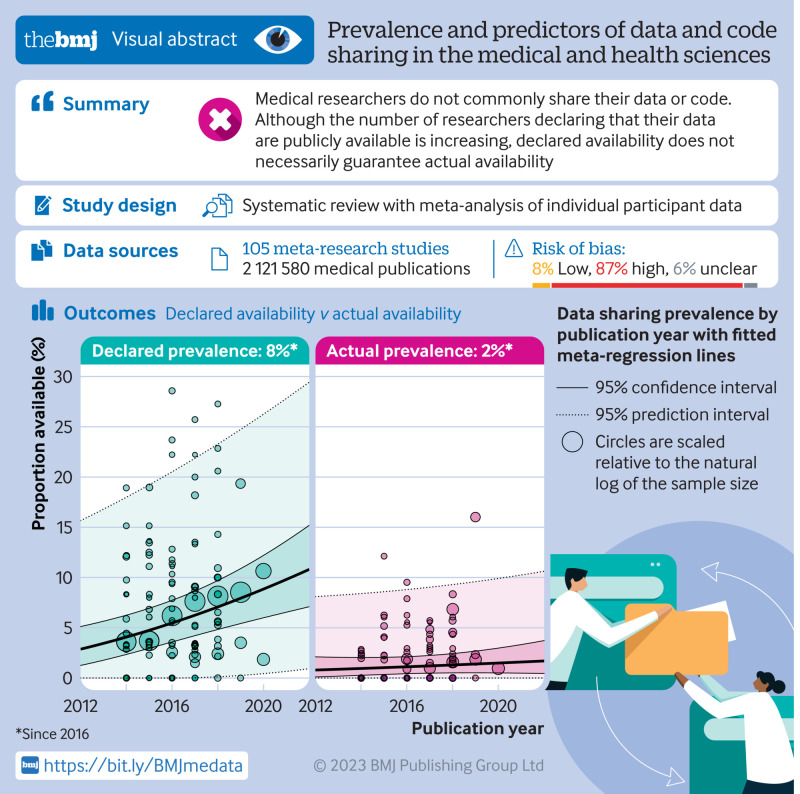
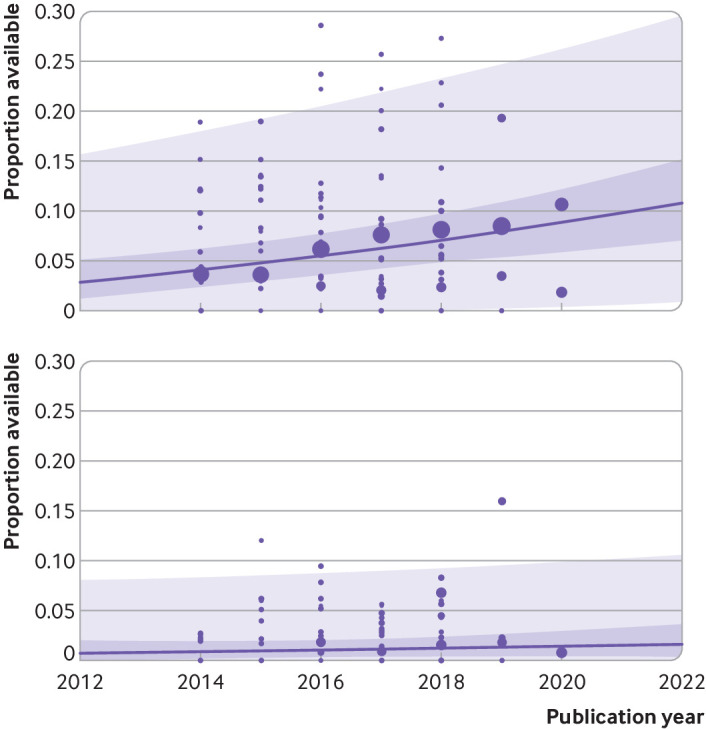
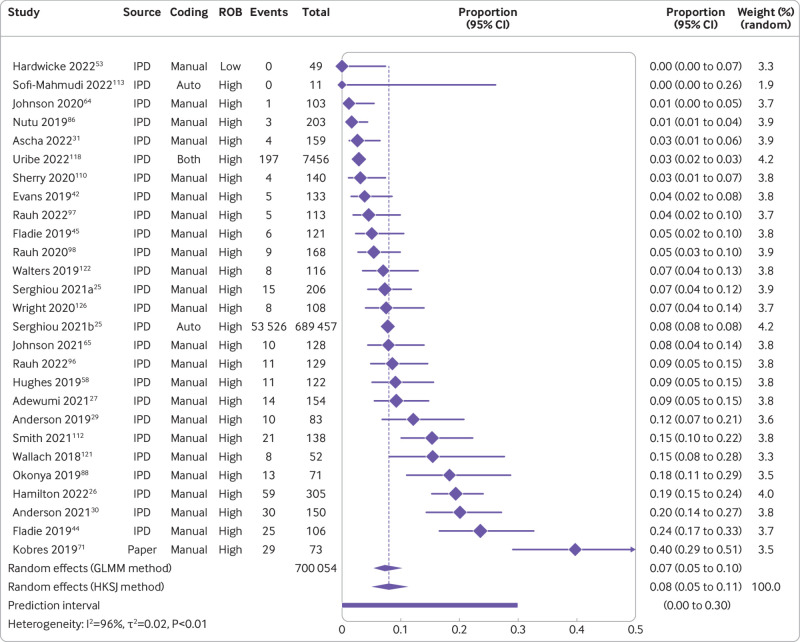
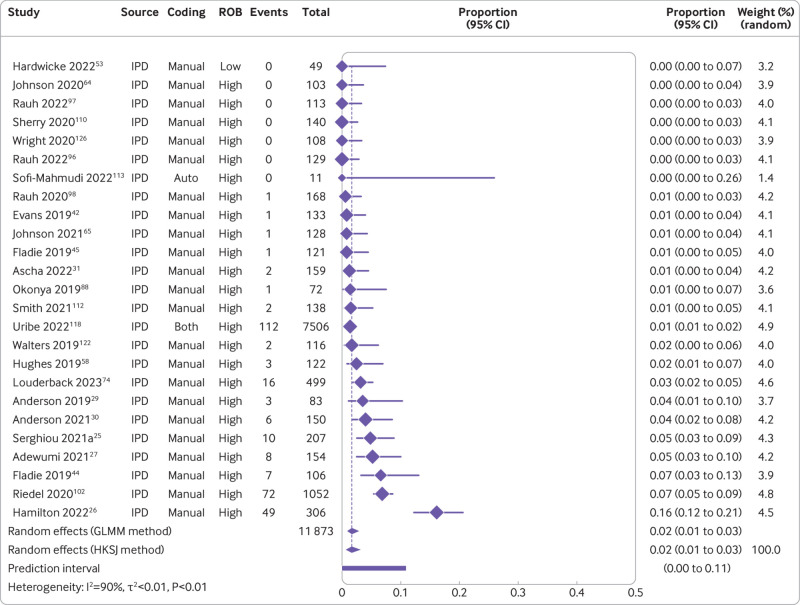
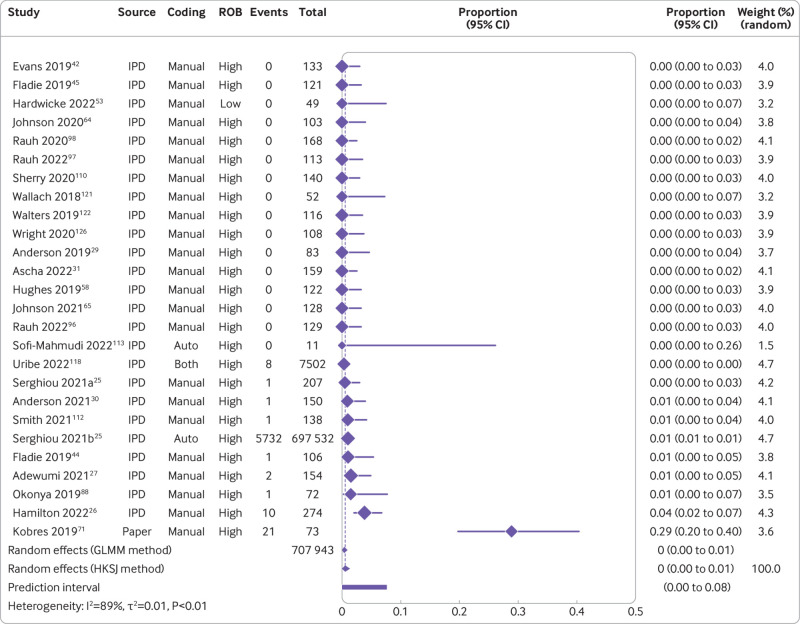
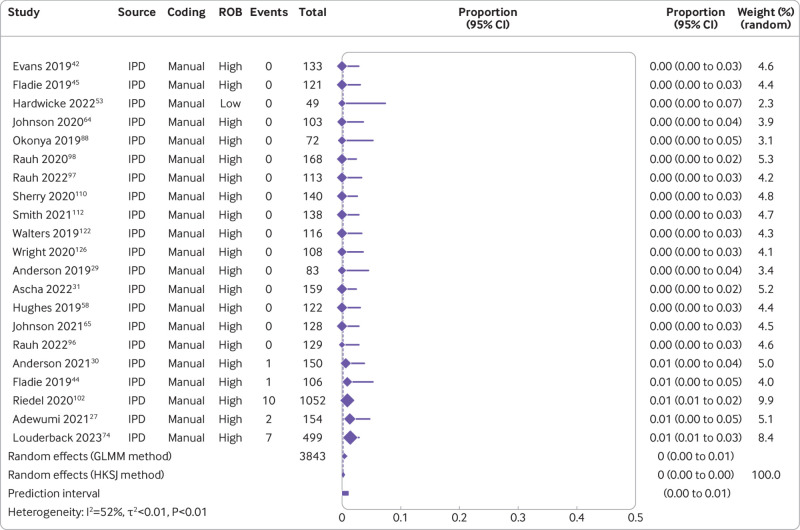
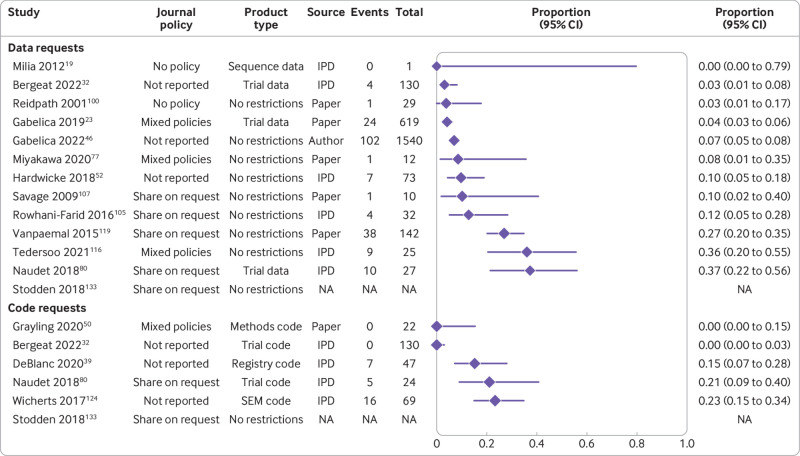
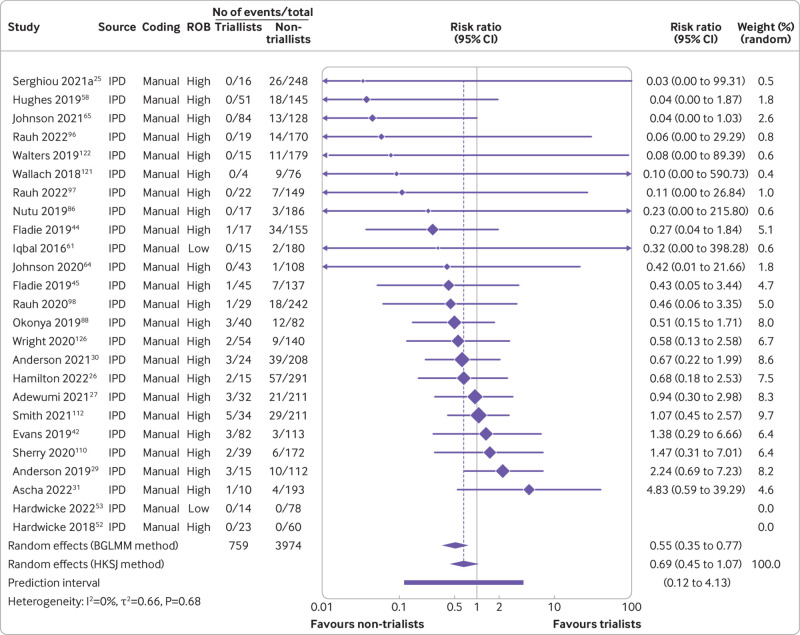
Objectives: To synthesise research investigating data and code sharing in medicine and health to establish an accurate representation of the prevalence of sharing, how this frequency has changed over time, and what factors influence availability. Design: Systematic review with meta-analysis of individual participant data. Data sources: Ovid Medline, Ovid Embase, and the preprint servers medRxiv, bioRxiv, and MetaArXiv were searched from inception to 1 July 2021. Forward citation searches were also performed on 30 August 2022. Review methods: Meta-research studies that investigated data or code sharing across a sample of scientific articles presenting original medical and health research were identified. Two authors screened records, assessed the risk of bias, and extracted summary data from study reports when individual participant data could not be retrieved. Key outcomes of interest were the prevalence of statements that declared that data or code were publicly or privately available (declared availability) and the success rates of retrieving these products (actual availability). The associations between data and code availability and several factors (eg, journal policy, type of data, trial design, and human participants) were also examined. A two stage approach to meta-analysis of individual participant data was performed, with proportions and risk ratios pooled with the Hartung-Knapp-Sidik-Jonkman method for random effects meta-analysis. Results: The review included 105 meta-research studies examining 2 121 580 articles across 31 specialties. Eligible studies examined a median of 195 primary articles (interquartile range 113-475), with a median publication year of 2015 (interquartile range 2012-2018). Only eight studies (8%) were classified as having a low risk of bias. Meta-analyses showed a prevalence of declared and actual public data availability of 8% (95% confidence interval 5% to 11%) and 2% (1% to 3%), respectively, between 2016 and 2021. For public code sharing, both the prevalence of declared and actual availability were estimated to be <0.5% since 2016. Meta-regressions indicated that only declared public data sharing prevalence estimates have increased over time. Compliance with mandatory data sharing policies ranged from 0% to 100% across journals and varied by type of data. In contrast, success in privately obtaining data and code from authors historically ranged between 0% and 37% and 0% and 23%, respectively. Conclusions: The review found that public code sharing was persistently low across medical research. Declarations of data sharing were also low, increasing over time, but did not always correspond to actual sharing of data. The effectiveness of mandatory data sharing policies varied substantially by journal and type of data, a finding that might be informative for policy makers when designing policies and allocating resources to audit compliance. Systematic review registration: Open Science Framework doi: 10.17605/OSF.IO/7SX8U .
Overview
The claims and statistics of this paper haven’t been checked yet.
Free: it reads the open-access text and checks the first 5 claims that cite a source we can check. Create a free account to check every claim.
Integrity signals
Registry
Cites
Statistics
Figures
Verification
Claims the paper makes
The claims and statistics of this paper haven’t been checked yet.
Free: it reads the open-access text and checks the first 5 claims that cite a source we can check. Create a free account to check every claim.
Claims other papers make about this one
Each is checked against this paper’s own text: does it say what the citing paper says it does?
The source backs part of the claim, not all of it — or backs it for a different population, condition or comparison.
In the citing paper
“None of the included modelling studies provided access to the associated model code, in line with recent estimates that, to date, only 0⋅5% of medical studies provide public access codes.127”
From Severe acute respiratory syndrome (SARS) mathematical models and disease parameters: a systematic review (2025) · cites this paper as [127]
Experimental — accuracy not yet measuredThe source backs part of the claim, not all of it — or backs it for a different population, condition or comparison.
In the citing paper
“Poor distribution of labor and lack of task specialization may be part of the reason data and code sharing remain rare [48,54]”
From Open Science 2.0: Towards a truly collaborative research ecosystem (2023) · cites this paper as [48]
Experimental — accuracy not yet measuredThe source backs part of the claim, not all of it — or backs it for a different population, condition or comparison.
In the citing paper
“However, a recent meta-analysis of over 2 million publications revealed that while 5% to 11% (95% confidence interval) of publications declared to have publicly available data, only 1% to 3% actually had publicly available data [48].”
From Open Science 2.0: Towards a truly collaborative research ecosystem (2023) · cites this paper as [48]
Experimental — accuracy not yet measuredThe cited source says what the claim attributes to it.
In the citing paper
“Conversations about open science have reached the mainstream, yet many open science practices such as data sharing remain uncommon.”
From Open Science 2.0: Towards a truly collaborative research ecosystem (2023) · cites this paper as [48]
The cited source says what the claim attributes to it.
In the citing paper
“For code sharing, the estimate was <0.5%.”
From Open Science 2.0: Towards a truly collaborative research ecosystem (2023) · cites this paper as [48]
1 more claim about this paper
Create a free account to see every claim other papers make about this one.
Self-check
Percentages, sums and reported differences re-computed from the paper’s own numbers.
The self-check needs the paper’s full text.
Citations
Cites
The FAIR Guiding Principles for scientific data management and stewardship
Wilkinson, M. D., Dumontier, M., Aalbersberg, I. J., Appleton, G., Axton, M., Baak, A., Blomberg, N., Boiten, J.-W., da Silva Santos, L. B., Bourne, P. E., et al. (2016) · Scientific Data · doi:10.1038/sdata.2016.18 · Cited by 18,423
The PRISMA 2020 statement: an updated guideline for reporting systematic reviews
Page, M. J., McKenzie, J. E., Bossuyt, P. M., Boutron, I., Hoffmann, T. C., Mulrow, C. D., Shamseer, L., Tetzlaff, J. M., Akl, E. A., Brennan, S. E., et al. (2021) · Systematic Reviews · doi:10.1186/s13643-021-01626-4 · Cited by 13,874
Self-citationIntHout, J., Ioannidis, J. P., & Borm, G. F. (2014) · BMC Medical Research Methodology · doi:10.1186/1471-2288-14-25 · Cited by 2,419
The arcsine is asinine: the analysis of proportions in ecology
Warton, D. I., & Hui, F. K. C. (2011) · Ecology · doi:10.1890/10-0340.1 · Cited by 2,280
Stewart, L. A., Clarke, M., Rovers, M., Riley, R. D., Simmonds, M., Stewart, G., & Tierney, J. F. (2015) · JAMA · doi:10.1001/jama.2015.3656 · Cited by 2,134
What to add to nothing? Use and avoidance of continuity corrections in meta‐analysis of sparse data
J. Sweeting, M., J. Sutton, A., & C. Lambert, P. (2004) · Statistics in Medicine · doi:10.1002/sim.1761 · Cited by 1,734
Sharing Detailed Research Data Is Associated with Increased Citation Rate
Piwowar, H. A., Day, R. S., & Fridsma, D. B. (2007) · PLoS ONE · doi:10.1371/journal.pone.0000308 · Cited by 881
Stijnen, T., Hamza, T. H., & Özdemir, P. (2010) · Statistics in Medicine · doi:10.1002/sim.4040 · Cited by 757
Haddaway, N. R., Grainger, M. J., & Gray, C. T. (2022) · Research Synthesis Methods · doi:10.1002/jrsm.1563 · Cited by 604
Meta‐analysis of prevalence: I 2 statistic and how to deal with heterogeneity
Migliavaca, C. B., Stein, C., Colpani, V., Barker, T. H., Ziegelmann, P. K., Munn, Z., Falavigna, M., & Prevalence Estimates Reviews—Systematic Review Methodology Group (PERSyst) (2022) · Research Synthesis Methods · doi:10.1002/jrsm.1547 · Cited by 577
Research works printed but not linked: 2
- 10.1007/s11948-02000203-7 · doi:10.1007/s11948-02000203-7
- Institute of Medicine (IOM). Sharing clinical trial data: Maximizing benefits, minimizing risk. The National Academies Press, 2015. 25590113
Cited by
Slideflow: deep learning for digital histopathology with real-time whole-slide visualization
Dolezal, J. M., Kochanny, S. E., Dyer, E., Ramesh, S., Srisuwananukorn, A., Sacco, M., Howard, F. M., Li, A., Mohan, P., & Pearson, A. T. (2024) · BMC Bioinformatics · doi:10.1186/s12859-024-05758-x · Cited by 99
“At present, most computational pathology research papers either share code that is custom written for the specific research application and not immediately generalizable to other datasets or research questions, or do not share code at all [14].”
BackgroundOpen Science 2.0: Towards a truly collaborative research ecosystem
Thibault, R. T., Amaral, O. B., Argolo, F., Bandrowski, A. E., Davidson, A. R., & Drude, N. I. (2023) · PLOS Biology · doi:10.1371/journal.pbio.3002362 · Cited by 72
General-purpose foundation models for increased autonomy in robot-assisted surgery
Schmidgall, S., Kim, J. W., Kuntz, A., Ghazi, A., & Krieger, A. (2024) · Nature Machine Intelligence · doi:10.1038/s42256-024-00917-4 · Cited by 60
“61), which is in contrast to the field of artificial intelligence, which has rates from 35% to 51% (ref.”
OpenSAFELY: A platform for analysing electronic health records designed for reproducible research
Nab, L., Schaffer, A. L., Hulme, W., DeVito, N. J., Dillingham, I., Wiedemann, M., Andrews, C. D., Curtis, H., Fisher, L., Green, A., et al. (2024) · Pharmacoepidemiology and Drug Safety · doi:10.1002/pds.5815 · Cited by 34
Enhancing the trustworthiness of pain research: A call to action.
O'Connell, N. E., Belton, J. L., Crombez, G., Eccleston, C., Fisher, E., Ferraro, M. C., Hood, A., Keefe, F. J., Knaggs, R., Norris, E., et al. (2024) · Journal of Pain · doi:10.1016/j.jpain.2024.104736 · Cited by 37
Wang, S. V., & Pottegård, A. (2023) · American Journal of Epidemiology · doi:10.1093/aje/kwae087 · Cited by 29
Hardwicke, T. E., Thibault, R. T., Clarke, B., Moodie, N., Crüwell, S., Schiavone, S. R., Handcock, S. A., Nghiem, K. A., Mody, F., Eerola, T., et al. (2024) · Advances in Methods and Practices in Psychological Science · doi:10.1177/25152459241283477 · Cited by 38
Dudda, L., Kormann, E., Kozula, M., DeVito, N. J., Klebel, T., Dewi, A. P. M., Spijker, R., Stegeman, I., Van den Eynden, V., Ross-Hellauer, T., et al. (2025) · Royal Society Open Science · doi:10.1098/rsos.242057 · Cited by 28
Wilkinson, J., Heal, C., Antoniou, G. A., Flemyng, E., Ahnström, L., Alteri, A., Avenell, A., Barker, T. H., Borg, D. N., Brown, N. J. L., et al. (2025) · Journal of Clinical Epidemiology · doi:10.1016/j.jclinepi.2025.111824 · Cited by 28
Ioannidis, J. P. A., Berkwits, M., Flanagin, A., & Bloom, T. (2023) · JAMA · doi:10.1001/jama.2023.17607 · Cited by 25
Mandatory data and code sharing for research published by The BMJ
Loder, E., Macdonald, H., Bloom, T., & Abbasi, K. (2024) · BMJ · doi:10.1136/bmj.q324 · Cited by 24
Data is not available upon requestPreprint
Hussey, I. (2023) · PsyArXiv (OSF Preprints) · doi:10.31234/osf.io/jbu9r · Cited by 24
Making data sharing the norm in medical research
Locher, C., Goff, G. L., Louarn, A. L., Mansmann, U., & Naudet, F. (2023) · BMJ · doi:10.1136/bmj.p1434 · Cited by 23
Bogdan, T., Xie, W., Talaat, H., Mir, H., Venkataraman, B., Banfield, L. E., Georgiades, K., & Duncan, L. (2023) · JCPP Advances · doi:10.1002/jcv2.12186 · Cited by 25
Collins, G. S., Whittle, R., Bullock, G. S., Logullo, P., Dhiman, P., de Beyer, J. A., Riley, R. D., & Schlussel, M. M. (2024) · Journal of Clinical Epidemiology · doi:10.1016/j.jclinepi.2023.10.015 · Cited by 21
Bann, D., Courtin, É., Davies, N. M., & Wright, L. (2023) · International Journal of Epidemiology · doi:10.1093/ije/dyad181 · Cited by 23
Towards sharing tools and artefacts for reusable simulations in healthcare
Monks, T., Harper, A. L., & Mustafee, N. (2024) · Journal of Simulation · doi:10.1080/17477778.2024.2347882 · Cited by 22
“In contrast, a meta-analysis of code and data sharing in medicine and health (examining a total of nearly 12,000 articles) estimated code sharing rates since 2016 to be less than 0.5%, with little change over time (Hamilton et al., 2023).”
InfluentialSystematic Review: AI Applications in Liver Imaging with a Focus on Segmentation and Detection
Pomohaci, M. D., Grasu, M. C., Băicoianu-Nițescu, A.-Ş., Enache, R. M., & Lupescu, I. G. (2025) · Life · doi:10.3390/life15020258 · Cited by 19
“Despite being included as a strong recommendation or as a mandatory part of scientific articles in most journals, sharing practices in medical sciences remain low [75].”
ENTRUST-PE: An Integrated Framework for Trustworthy Pain Evidence. White Paper.Preprint
O'Connell, N. E., Richards, G. C., Soliman, N., Ferraro, M. C., Segelcke, D., Eccleston, C., Stewart, G. B., Smart, K. M., Palermo, T. M., Rice, A. S. C., et al. (2024) · OSF Preprints (OSF Preprints) · doi:10.31219/osf.io/e39ys · Cited by 17
Seas, A., Zachem, T. J., Valan, B. N., Goertz, C., Nischal, S. A., Chen, S., Sykes, D. A. W., Tabarestani, T. Q., Wissel, B. D., Blackwood, E. R., et al. (2024) · The Spine Journal · doi:10.1016/j.spinee.2024.09.010 · Cited by 13
Code-sharing policies are associated with increased reproducibility potential of ecological findings
Sánchez‐Tójar, A., Bezine, A., Purgar, M., & Čulina, A. (2025) · Peer Community Journal · doi:10.24072/pcjournal.541 · Cited by 16
Data is not available upon request
Hussey, I. (2025) · Meta-Psychology · doi:10.15626/mp.2023.4008 · Cited by 15
“The recent systematic review of the rate of data sharing upon request by Hamilton et al. (2023) noted that no meta-analysis of the rate of sharing across studies was possible due to methodological differences between the component studies, such as differences in journal policies between fields and…”
A commitment to act on data sharing
Abbasi, K. A. (2023) · BMJ · doi:10.1136/bmj.p1609 · Cited by 13
Wang, P., Loignon, A. C., Shrestha, S., Banks, G. C., & Oswald, F. L. (2024) · Journal of Business and Psychology · doi:10.1007/s10869-024-09997-w · Cited by 15
“Synthetic data primarily serves as a substitute for original data, particularly when the original data cannot be easily shared due to privacy concerns or other restrictions, such as the low rates of individual-level participant data sharing in the medical and health sciences (Hamilton et al., 2023).”
Reproducibility failure in biomedical research: problems and solutions
Haven, T. L., & Ioannidis, J. P. A. (2026) · Annual Review of Medicine · doi:10.1146/annurev-med-050124-050859 · Cited by 9
Reproducibility of meta-analytic results in systematic reviews of interventions: meta-research study
Nguyen, P., McKenzie, J. E., Alqaidoom, Z., Hamilton, D. G., Moher, D., & Page, M. J. (2025) · BMJ Medicine · doi:10.1136/bmjmed-2025-002024 · Cited by 9
“13 We encourage systematic reviewers to routinely make the data files underlying the results of the meta-analysis publicly available on open access platforms (eg,Open Science Framework, Zenodo, GitHub, or medRxiv).”
Self-citationWhy can’t epidemiology be automated (yet)?
Bann, D., Lowther, E., Wright, L., & Kovalchuk, Y. (2026) · International Journal of Epidemiology · doi:10.1093/ije/dyaf210 · Cited by 9
“The fact that AI systems provide analytical syntax also aids in reproducibility: something that 2% of health researchers currently do [32].”
Trinks, J., Mascardi, M. F., Gadano, A. C., & Marciano, S. (2024) · World Journal of Gastroenterology · doi:10.3748/wjg.v30.i14.1982 · Cited by 9
“Although many leading journals now demand to make data and protocols publicly available as a prerequisite for publication[18], this practice remains inconsistent across journals and omics studies.”
Sharing practices of software artefacts and source code for reproducible research
Jean-Quartier, C., Jeanquartier, F., Stryeck, S., Simon, J., Söser, B., & Hasani‐Mavriqi, I. (2024) · International Journal of Data Science and Analytics · doi:10.1007/s41060-024-00617-7 · Cited by 10
The rise of open data practices among bioscientists at the University of Edinburgh
Deeb, H., Creasey, S., de Ugarte, D. L., Strevens, G., Usman, T., Wong, H. Y., Kutzer, M. A. M., Wilson, E., Zieliński, T., & Millar, A. J. (2025) · PLoS ONE · doi:10.1371/journal.pone.0328065 · Cited by 8
“We assume that the inclusion of a DAS reflects journal policy more than researcher preference [20].”
InfluentialStreiber, A. M., Hoepel, S. J. W., Blok, E., van Rooij, F. J. A., Neitzel, J., Labrecque, J. A., Ikram, M. K., & Bos, D. (2025) · BMJ Open · doi:10.1136/bmjopen-2025-104691 · Cited by 8
“1 3 4 However, Hamilton and colleagues 5 estimated that less than 0.5% of medical research studies that were published since 2016 shared their analytical code.”
InfluentialBreaking the silence of sharing data in medical research
Chen, H., Zhao, Y., Cao, B., Petersen, D. J., Valente, M. J., & Cen, W. (2024) · PLoS ONE · doi:10.1371/journal.pone.0301917 · Cited by 10
Tazare, J., Wang, S. V., Gini, R., Prieto‐Alhambra, D., Arlett, P. R., Leaver, D. R. M., Morton, C. E., Logie, J. W., Popovic, J. R., Donegan, K. L., et al. (2024) · Pharmacoepidemiology and Drug Safety · doi:10.1002/pds.5856 · Cited by 8
Schueller, S., Mikelis, F., Eliades, T., & Koletsi, D. (2024) · European Journal of Orthodontics · doi:10.1093/ejo/cjae064 · Cited by 8
“Furthermore, a discrepancy be-tween data-sharing declarations in publications and actual data availability has been documented [9].”
Sofi‐Mahmudi, A., Raittio, E. J., Khazaei, Y., Ashraf, J., Schwendicke, F., Uribe, S. E., & Moher, D. (2024) · PLoS ONE · doi:10.1371/journal.pone.0313991 · Cited by 7
“Notably, recent studies demonstrate that data sharing as the first requirement for open data remains sparse in medical research (16), and that shared data often fail to meet the FAIR principles (17).”
Morgenstern, C., Rawson, T., Routledge, I., Kont, M., Imai-Eaton, N., Skarp, J., Doohan, P., McCain, K., Johnson, R., Unwin, H. J. T., et al. (2025) · The Lancet Microbe · doi:10.1016/j.lanmic.2025.101144 · Cited by 6
Home-based treatment for patients with hematological cancer in Denmark–A national overview
Nørskov, K. H., Bødtcher, H., Rosenberg, T., Damgaard, C. T., Nielsen, I. H., Enggaard, H., & Dalton, S. O. (2025) · Supportive Care in Cancer · doi:10.1007/s00520-025-10048-0 · Cited by 7
Responsibilities for receiving and using individual participant data
Hunter, K. E., Tan, A., Webster, A. C., Hamilton, D. G., Barnett, A. G., Jones, L. V., Cheng, M., Fahridin, S., Laguna‐Camacho, A., Libesman, S., et al. (2023) · Cochrane Evidence Synthesis and Methods · doi:10.1002/cesm.12028 · Cited by 6
Self-citationHamilton, D. G., McKenzie, J. E., Nguyen, P., Rethlefsen, M. L., McDonald, S. J., Brennan, S. E., Fidler, F., Higgins, J. P. T., Kanukula, R., Karunananthan, S., et al. (2026) · Research Synthesis Methods · doi:10.1017/rsm.2025.10064 · Cited by 8
“22,23”
Self-citationHamilton, D. G., Page, M. J., Everitt, S., Fraser, H. S., & Fidler, F. M. (2024) · Accountability in Research · doi:10.1080/08989621.2024.2308606 · Cited by 5
“Given the low frequency with which data are shared in oncology (Hamilton et al. 2022; Walters et al. 2019), medicine in general (Hamilton et al. 2023) and most scientific disciplines more broadly (Serghiou et al. 2021), many surveys of researchers, as well as other key stakeholders (e.g., funders,…”
Self-citationBobrov, E., Riedel, N., & Kip, M. (2024) · Quantitative Science Studies · doi:10.1162/qss_a_00301 · Cited by 5
“Research regarding data sharing covers a wide range of research fields (Hamilton, Hong et al., 2023; Roche, Kruuk et al., 2015; see Velden & Tcypina, 2023, for a comparison between fields).”
BackgroundBramley, P. (2024) · Anaesthesia · doi:10.1111/anae.16503 · Cited by 4
“In contrast to previous studies investigating whether IPD were provided on request [6], I found that despite most manuscripts not making a statement about data availability, 87% of authors would provide IPD on request.”
Open data sharing: what could possibly go wrong?
Adams, M. C. B., & Clauw, D. J. (2025) · Pain · doi:10.1097/j.pain.0000000000003696 · Cited by 4
Hamilton, D. G., Everitt, S., Page, M. J., & Fidler, F. M. (2024) · Asia-Pacific Journal of Clinical Oncology · doi:10.1111/ajco.14075 · Cited by 4
“14,15 Furthermore, research on this topic has focussed on certain data types (e.g., omics data 16,17 ), study designs for which public sharing of data is not routine (e.g., clinical trials 15,18,19 ), or specific cancer types (e.g., breast cancer 4 ).”
Self-citationPeer review and scientific publication at a crossroads
Ioannidis, J. P. A., Berkwits, M., Flanagin, A., & Bloom, T. (2023) · BMJ · doi:10.1136/bmj.p1992 · Cited by 4
Research Transparency in 59 Disciplines of Clinical Medicine: A Meta-Research StudyPreprint
Sofi‐Mahmudi, A., Raittio, E. J., Uribe, S. E., Khademioore, S., Zeraatkar, D., Mbuagbaw, L. C. E., Bouter, L. M., & Robinson, K. A. (2024) · MetArXiv (OSF Preprints) · doi:10.1101/2024.04.08.24305416 · Cited by 4
“The review also noted discrepancies between declared and actual data sharing practices and challenges in privately obtaining data and code from authors (15).”
BackgroundInfluentialSix solutions for clinical study data sharing in Germany
Bobrov, E., Habermehl, C., Strech, D., Weissgerber, T. L., & Bernard, R. (2025) · BMC Medical Research Methodology · doi:10.1186/s12874-025-02560-y · Cited by 3
“A comprehensive meta-analysis has shown that only 2% of research articles in medical and health science share underlying data [10].”
Park, J. R., Bae, I., Ryu, S., Kim, M., Bang, H., Won, J., & Lee, H. (2025) · Integrative Medicine Research · doi:10.1016/j.imr.2025.101229 · Cited by 3
Challenges in the Computational Reproducibility of Linear Regression Analyses: An Empirical StudyPreprint
Jones, L. V., Barnett, A. G., Härtel, G., & Vagenas, D. (2026) · medRxiv · doi:10.64898/2026.04.07.26350286 · Cited by 3
Is full transparency in clinical trials an achievable goal?
Dal‐Ré, R. (2024) · European Journal of Internal Medicine · doi:10.1016/j.ejim.2024.03.006 · Cited by 2
Lee, D. Y. H., Parker, A. J., Norbury, C., & Shanks, D. R. (2026) · Royal Society Open Science · doi:10.1098/rsos.250381 · Cited by 2
Open Science Policies and Practices Among Medical Journals
Vinatier, C., Dewi, A. P. M., Freyermuth, G., Millour, M., Scheidecker, M., Arnault, F.-J., Acher, M., Nachev, V., Weissgerber, T. L., DeVito, N., et al. (2026) · JAMA Network Open · doi:10.1001/jamanetworkopen.2026.32070 · Cited by 2
FAIR Data: What It Is and How We Can Support Its Principles
Alves, T. (2024) · Science Editor · doi:10.36591/se-4703-04 · Cited by 2
An overview of open science in eco-evo research and the publisher effect.Preprint
Belkhir, K., Smadja, C. M., Antoine, P., Scornavacca, C., & Galtier, N. (2025) · doi:10.32942/x26w73 · Cited by 2
Avenell, A., & Bishop, D. (2026) · medRxiv · doi:10.64898/2026.05.15.26353284 · Cited by 2
AI-assisted scoping review of code sharing in clinical prediction model research
Sounack, T., Giancotti, R., Gao, C. A., Barreñada, L., Lee, H., Lee, H.-C., Celi, L. A., Moons, K. G. M., Collins, G. S., Lindvall, C., et al. (2026) · Nature Medicine · doi:10.1038/s41591-026-04691-1 · Cited by 2
Li, W., Liu, X., Zhang, Q., Shi, L., Zhang, J.-X., Zhang, X., Luan, J., Li, Y., Xu, T., Zhang, R., et al. (2026) · Accountability in Research · doi:10.1080/08989621.2025.2481943 · Cited by 5
“Although the poor quality of DAC sharing and low policy compliance have been previously acknowledged in the literature (Hamilton et al. 2023, Naudet et al. 2018), we identified and detailed specific practices that hinder readers’ access to DAC.”
InfluentialJamshidi‐Naeini, Y., Vorland, C. J., Kapoor, P., Ortyl, B. K., Mineo, J., Still, L., Sorsor, K., Rodney, S., Tooze, X. A., Flickinger, B., et al. (2026) · Nutrition and Diabetes · doi:10.1038/s41387-026-00444-8 · Cited by 1
Mak, H. W. F., Cheung, C.-K., Lau, J., Chan, S. C. W., & Li, P. (2025) · Journal of Allergy and Clinical Immunology: Global · doi:10.1016/j.jacig.2025.100447 · Cited by 1
Liu, X., Li, W., Zhang, Q., Lei, J., Han, X., Wang, Y., Shen, C., Yu, Z., Li, Y., Shi, L., et al. (2025) · PNAS Nexus · doi:10.1093/pnasnexus/pgaf238 · Cited by 1
Woźniak, Ł., Lompart, A., Wabiszczewicz, M., Kosarewicz, A., & Krysiak, P. (2025) · Quality in Sport · doi:10.12775/qs.2025.44.62873 · Cited by 1
Journal data-sharing policies and its impact in publications: A cross-sectional study protocol
Zhao, P., Zhang, X., Dai, L., Ma, B., Duan, Y., Xu, Y., Hongmei, W., Wu, S., & Xiong, L. (2025) · PLoS ONE · doi:10.1371/journal.pone.0331697 · Cited by 2
“However, data sharing in clinical research publications is unsatis-factory, with a prevalence of actual data sharing of only 2% between 2016 and 2021 [2].”
The hidden crisis in open science: when officially ‘open’ mental health databanks close doors
Yan, W., Yadollahpour, A., & Chen, Z. (2025) · Nature Mental Health · doi:10.1038/s44220-025-00507-2 · Cited by 1
The potential and limits of scrutiny in medical research
Abbasi, K. A. (2025) · BMJ · doi:10.1136/bmj.r2411 · Cited by 1
Gee, B. M. (2026) · Journal of eScience Librarianship · doi:10.7191/jeslib.1170 · Cited by 1
Geographic and Sex Distribution of LI-RADS Research Globally: A Cross-Sectional Meta-Research Study
Osman, H., Lam, E., van der Pol, C. B., Mahdi, H., Awad, R., Islam, N., Alabousi, M., Salameh, J., Bashir, M. R., Costa, A. F., et al. (2026) · Canadian Association of Radiologists Journal · doi:10.1177/08465371261429344 · Cited by 1
“29 Overreliance on data from a narrow set of countries risks limiting the generalizability of LI-RADS toward specific populations.”
Data and code (Un)availability in sports meta-analysis studies
Wolff, P. A., Sainani, K. L., & Borg, D. N. (2026) · Annals of Epidemiology · doi:10.1016/j.annepidem.2026.110126 · Cited by 1
Overcoming barriers to computational reproducibility
Hornung, R., Németh, L., Zadorozhnyi, O., Ullmann, T., Kammer, M., Killick, R., Paciorek, C., Chiquet, J., Herrmann, M., Batinović, L., et al. (2026) · Royal Society Open Science · doi:10.1098/rsos.252489 · Cited by 2
Goldstein, C. E., Armond, A. C. V., Cobey, K. D., Voldal, E. C., Chen, Y., Tingley, K., Shaw, J. F., Heagerty, P. J., Hemming, K., Kenny, A., et al. (2026) · Journal of Clinical Epidemiology · doi:10.1016/j.jclinepi.2026.112353 · Cited by 1
Agentic T-STROBE: a front-shifted STROBE paradigm for observational research
Bo, C., Li, R., 赵敬华, Feng, S., Ji, X., & Xue, F. (2026) · Statistics Innovation · doi:10.48130/stati-0026-0014 · Cited by 1
The role of programming code sharing in improving the transparency of medical research
Schultze, A., & Tazare, J. (2023) · BMJ · doi:10.1136/bmj.p2402 · Cited by 1
Brysbaert, M. (2024) · PsyArXiv (OSF Preprints) · doi:10.31234/osf.io/m72w8 · Cited by 1
Questionable practices in data and code sharing policy in high-profile medical journal and researchPreprint
Li, W., Liu, X., Zhang, Q., Shi, L., Zhang, J., Zhang, X., Luan, J., Li, Y., Xu, T., Zhang, R., et al. (2024) · medRxiv · doi:10.1101/2024.08.29.24312818 · Cited by 1
Trust from mistrust: When is trust rationally justified?Preprint
Alfano, M., Bland, S., Klincewicz, M., & Ross, R. M. (2025) · PsyArXiv (OSF Preprints) · doi:10.31234/osf.io/4r8xk_v1 · Cited by 1
Data is not available upon requestPreprint
Hussey, I. (2025) · PsyArXiv (OSF Preprints) · doi:10.31234/osf.io/jbu9r_v2 · Cited by 1
Cheung, C.-K., Mak, H. W. F., Lau, J., Chan, S. C. W., & Li, P. (2024) · International Journal of Rheumatic Diseases · doi:10.1111/1756-185x.15429
Investing in Open Science: Key Considerations for FundersPreprint
Cobb-Lewis, D. E., Snyder, D. E., Dumanis, S. B., Thibault, R. T., Marebwa, B., Clark, E., Clair, L. S., Kirsch, L., Durborow, M., & Riley, E. A. U. (2024) · bioRxiv (Cold Spring Harbor Laboratory) · doi:10.1101/2024.12.09.627554
Transparency and Accountability Initiatives in Peer Review: Principles and Reform Strategies
(2024) · Advances in medical education, research, and ethics (AMERE) book series · doi:10.4018/979-8-3693-3828-5.ch008
Population Health Management, Fit Lifecycles in Future AnalyticsPreprint
Henry, J. A. (2025) · OSF Preprints (OSF Preprints) · doi:10.31219/osf.io/6k2dv
How Transparent and Reproducible Are Studies That Use Animal Models of Opioid Addiction?
Blackwell, J. C., Beitner, J., & Holcombe, A. O. (2025) · Addiction Biology · doi:10.1111/adb.70027
Call to integrate long tail and dark data for the advancement of sports medicine research
Kupperman, N., Magee, N. E., & Kuenze, C. M. (2025) · British Journal of Sports Medicine · doi:10.1136/bjsports-2024-108890
The State of Data Sharing in Plastic Surgery: An Analysis of Journal Practices and Author Adherence
Keefer, K., Marchbanks, J., Hagood, A., Gardner, T., Dennis, B., Duncan, J., Paul, E., Ford, A. I., & Vassar, M. B. (2025) · Plastic & Reconstructive Surgery Global Open · doi:10.1097/gox.0000000000006761
Sánchez‐Tarragó, N., & Oliveira, T. D. A. (2025) · doi:10.1590/scielopreprints.12798
Lareyre, F., & Raffort, J. (2025) · Angiology · doi:10.1177/00033197251395816
Sánchez‐Tarragó, N., & Oliveira, T. D. A. (2025) · Biblios Journal of Librarianship and Information Science · doi:10.5195/biblios.2025.1277
Dolezal, J. M., Kochanny, S. E., Dyer, E., Ramesh, S., Srisuwananukorn, A., Sacco, M., Howard, F. M., Li, A., Mohan, P., & Pearson, A. T. (2024) · Figshare · doi:10.6084/m9.figshare.26698715
Silveira, G. P. (2025) · Lume (Universidade Federal do Rio Grande do Sul)
BOISVERT, M. F. (2025) · ScholarWorks (Walden University)
Flanagan, M., Gurrin, L. C., Li, W., Patabendige, M., Rolnik, D. L., & Mol, B. W. (2026) · JBI Evidence Synthesis · doi:10.11124/jbies-24-00548
“In 1962, a study found that 24% of data were available on request; in 2006, another study estimated that number to be 24.5%; 26-28 These low rates have been previously explained by logistical factors and institutional protocols preventing data sharing.”
InfluentialGoos, C., Bakker, M., Wicherts, J. M., & Nuijten, M. B. (2026) · PLoS ONE · doi:10.1371/journal.pone.0356070
Oliveira, A. M. O., Moreno, L. B., Fernandez, M. D. S., Muniz, F. W. M. G., & Montagner, A. F. (2025) · Revista Científica Odontológica · doi:10.21142/2523-2754-1401-2026-275
“The meta-regressions also indicated that the prevalence estimates for data sharing increased over time ( 26 ).”
Investigating Data Sharing Practices in Teaching Effectiveness Research
Sajjad, T., Hartig, J., Lösch, T., & Köhler, C. (2026) · AERA Open · doi:10.1177/23328584251409658
Seidler, A. L., Aagerup, J., Nicholson, L., Hunter, K. E., Bajpai, R. C., Hamilton, D. G., Love, T., Marlin, N., Nguyen, D., Riley, R. D., et al. (2026) · medRxiv · doi:10.64898/2026.02.03.26345481 · Cited by 1
Self-citationExtent of Open Science Practices in the Reporting of Real World Evidence Research
Liu, L., Jorm, L. R., Kim, N., Honeyman, T., & Vajdic, C. M. (2026) · International Journal for Population Data Science · doi:10.23889/ijpds.v10i2.2960
“Whilst low code sharing rates are seen across health research in general [16], internationally there are several successful initiatives that could be adapted to help encourage code sharing.”
Sánchez‐Tarragó, N., & Oliveira, T. D. A. (2025) · Dialnet (Universidad de la Rioja)
A Guide to Reanalyzing Data From Psychology Articles for Verification, Meta‐Analysis, and Reuse
Wicherts, J. M. (2026) · Social and Personality Psychology Compass · doi:10.1111/spc3.70152
Oh, S., Park, Y., & Sim, S. (2026) · Learned Publishing · doi:10.1002/leap.2083
Who Funds Open Data Sharing? Analysis of data availability statements in biomedical publicationsPreprint
Lawrimore, J., Li, C., Moraczewski, D., Poline, J., & Thomas, A. G. (2026) · bioRxiv (Cold Spring Harbor Laboratory) · doi:10.64898/2026.07.17.739022
Challenges of analyzing synthetic tabular data generated from 115 phase 3 oncology trials
Decruyenaere, A., Polet, C., Decruyenaere, J. M. A., Dehaene, H., Rabaey, P., Demeester, T., Vansteelandt, S., & Rottey, S. (2026) · Scientific Reports · doi:10.1038/s41598-026-62212-z
Kuijten, R. H., Groot, T. M., van Weezenbeek, M. A., Doornberg, J. N., Verlaan, J., & Groot, O. Q. (2026) · Journal of Clinical Epidemiology · doi:10.1016/j.jclinepi.2026.112438
Metadata
- Authors
- Hamilton, D. G., Hong, K., Fraser, H., Rowhani-Farid, A., Fidler, F., & Page, M. J.
- Affiliations
- The University of Melbourne (AU)
- University of Maryland, Baltimore (US)
- Monash University (AU)
- Corresponding author
- Hamilton, Daniel G
- Venue
- BMJ
- Publisher
- BMJ
- Published
- 2023-07-11
- Volume
- 382
- Pages
- e075767
- ISSN
- 1756-1833 (ISSN-L)
- PMC
- PMC10334349
- OpenAlex
- W4383878837
- Semantic Scholar
- bde1eaeccd37e477d92e55d1c1df53dff5a91be9
- Cited by
- 86
- References
- 156
- Citations by year
- 2026: 20 · 2025: 26 · 2024: 30 · 2023: 10
- FWCI
- 3.55
- Type
- journal article
- Language
- en
- Open access
- hybrid
- doi.org
- Licence
- Locations
- BMJ (publishedVersion, cc-by-nc)
- PubMed Central (publishedVersion, cc-by-nc)
- PubMed (publishedVersion)
- HighWire Press Open Archive (submittedVersion)
- Funders
- U.S. Food and Drug Administration
- Laura and John Arnold Foundation
- Australian Research Council
- Topics
- Physical Sciences › Computer Science › Information Systems › Research Data Management Practices
- Social Sciences › Library and Information Sciences › Academic Publishing and Open Access
- Social Sciences › Decision Sciences › Statistics, Probability and Uncertainty › Meta-analysis and systematic reviews
- Keywords
- data sharing, code sharing, research data availability, open science, data sharing policy, research reproducibility, meta-research, medical research, health research, research transparency, research ethics
- MeSH terms
- Administrative Personnel, Humans, Medicine, Prevalence, Information Dissemination, Biomedical Research
About these checks
Registry, retraction, Cites and statistics results are computed, not judged, with one exception: a printed reference that no index lists is read once by a model before it counts as a citation error. Claims are extracted by a model and kept only when their quote appears verbatim in the text; each cited source is then checked, with a model’s help, for whether it says what the claim relies on. Those verdicts can be wrong — read the claim’s quote and the cited source before relying on one.
Statistics and arithmetic are recomputed, not judged.
Confidence bands are shown only for fields calibrated on our annotated test set. None is calibrated yet, so no band is shown.
What counts as a claim ›How we measure confidence ›How we check this ›
Are you an author, or do you see a problem with this page? Request a review
Data sources
Bibliographic data: Semantic Scholar, OpenAlex, Crossref.
Contains information from the Semantic Scholar Academic Graph Datasets, made available under the ODC Attribution License (ODC-BY 1.0).
Semantic Scholar’s data is described in: Kinney, R., et al. (2023). The Semantic Scholar Open Data Platform. arXiv:2301.10140.
