

Development of a model to predict 5-year risk of severe hypoglycemia in patients with type 2 diabetes
Open accessThe DOI matches its Crossref record; 35 of the 35 references it cites were found in a registry or an index.
Abstract
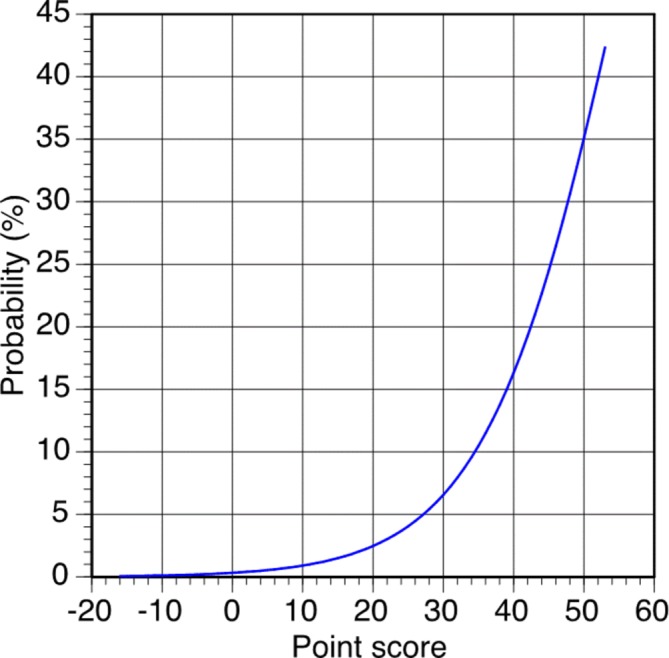
Objective: We constructed a predictive model of long-term risk for severe hypoglycemia (SH: hypoglycemia requiring assistance) in patients with type 2 diabetes (T2DM). Research design and methods: Data from the Action to Control Cardiovascular Risk in Diabetes (ACCORD) study (original n=10 251, n=5135 used in the current analysis), a randomized, multicenter, double 2×2 factorial design study examining the effect of glycemic, blood pressure, and lipid control on cardiovascular outcomes in patients with diagnosed T2DM, were used. Over the follow-up (3.76±1.12 years), the ACCORD participants experienced 607 incident SH events. Cox regression was used to identify the SH risk prediction model. Results: We identified 17 predictors—glycemic management, age, race, education, waist circumference, medications (insulin, antihypertensive, HMG-CoA reductase inhibitors, sulfonylurea, biguanide and meglitinide), years since diabetes diagnosis, history of hypoglycemia in the last week, systolic blood pressure, diastolic blood pressure, serum creatinine, and urinary albumin creatinine ratio—to construct a prediction model for SH (c-statistic=0.782). Using this information, we derived point scores to estimate the 5-year risk for SH in individual patients with T2DM. After adjusting for other variables in the model, the three strongest predictors for SH over 5 years were intensive glycemic management (HR=2.37, 95% CI 1.99 to 2.83), insulin use (HR=2.14, 95% CI 1.77 to 2.59), and antihypertensive medication use (HR=1.90, 95% CI 1.26 to 2.86). Conclusion: Using the ACCORD data, we identified attributes to predict 5-year risk of SH in patients with T2DM, which warrant evaluation in broader populations to determine applicability.
Overview
The claims and statistics of this paper haven’t been checked yet.
Free: it reads the open-access text and checks the first 5 claims that cite a source we can check. Create a free account to check every claim.
Integrity signals
Registry
Cites
Statistics
Figures
Verification
Claims the paper makes
The claims and statistics of this paper haven’t been checked yet.
Free: it reads the open-access text and checks the first 5 claims that cite a source we can check. Create a free account to check every claim.
Claims other papers make about this one
Each is checked against this paper’s own text: does it say what the citing paper says it does?
The cited source says what the claim attributes to it.
In the citing paper
“Validated tools have been developed to estimate hypoglycemia risk using predominantly electronic health record data (101-103).”
From 6. Glycemic Goals, Hypoglycemia, and Hyperglycemic Crises: Standards of Care in Diabetes-2026. (2026) · cites this paper as [103]
Self-check
Percentages, sums and reported differences re-computed from the paper’s own numbers.
The self-check needs the paper’s full text.
Citations
Cites
Turner, R. C., Fox, C., Matthews, McElroy, H. H., Cull, C. A., Holman, R. R., Neil, P., Hadden, D. R., Wright, D., Manley, E., et al. (1998) · The Lancet · Cited by 8,419
Effects of Intensive Glucose Lowering in Type 2 Diabetes
(2008) · New England Journal of Medicine · doi:10.1056/nejmoa0802743 · Cited by 7,888
10-year follow-up of intensive glucose control in type 2 diabetes
Holman, R. R., Paul, S. K., Bethel, M. A., Matthews, D. R., & Neil, H. A. W. (2008) · New England Journal of Medicine · doi:10.1056/nejmoa0806470 · Cited by 7,751 · cited 1×
“Intensive glucose control to lower hemoglobin A1C (HbA1c) to near-normal levels has many benefits in patients with diabetes, including reduction in microvascular disease and possibly macrovascular events.(3) 5 Yet achieving this target safely while minimizing hypoglycemia remains challenging.”
BackgroundIntensive blood glucose control and vascular outcomes in patients with type 2 diabetes
(2008) · New England Journal of Medicine · doi:10.1056/nejmoa0802987 · Cited by 7,397
Glucose control and vascular complications in veterans with type 2 diabetes
Duckworth, W., Abraira, C., Moritz, T., Reda, D., Emanuele, N., Reaven, P. D., Zieve, F. J., Marks, J., Davis, S. N., Hayward, R., et al. (2009) · New England Journal of Medicine · doi:10.1056/nejmoa0808431 · Cited by 4,762
Gupta, A., & Uribarri, J. (2016) · Hormone Research in Paediatrics · doi:10.1159/000444053 · Cited by 4,006
Inzucchi, S. E., Bergenstal, R. M., Buse, J. B., Diamant, M., Ferrannini, E., Nauck, M., Peters, A. L., Tsapas, A., Wender, R., & Matthews, D. R. (2015) · Diabetes Care · doi:10.2337/dc14-2441 · Cited by 3,066 · cited 4×
“Previously, investigators from the ACCORD study reported higher risk for hypoglycemia with intensive glycemic treatment, age, sex, race, educational level, insulin use, duration of diabetes, body mass index (BMI), peripheral neuropathy, albuminuria, serum creatinine, and higher HbA1c.8 For the clinician, however, the…”
InfluentialPresentation of multivariate data for clinical use: The Framingham Study risk score functions
Sullivan, L. M., Massaro, J. M., & D'Agostino, R. B. (2004) · Statistics in Medicine · doi:10.1002/sim.1742 · Cited by 1,753 · cited 2×
“Using the final variables, a point score was constructed using methods previously published by Sullivan et al.(30) Briefly, continuous variables were split into categories and a reference group was identified for all variables.”
MethodSevere hypoglycemia and risks of vascular events and death
Zoungas, S., Patel, A., Chalmers, J., de Galan, B. E., Li, Q., Billot, L., Woodward, M., Ninomiya, T., Neal, B., MacMahon, S., et al. (2010) · New England Journal of Medicine · doi:10.1056/nejmoa1003795 · Cited by 1,471
Cited by
6. Glycemic Goals and Hypoglycemia: Standards of Care in Diabetes—2024
American Diabetes Association Professional Practice Committee, ElSayed, N. A., Aleppo, G., Bannuru, R. R., Bruemmer, D., Collins, B. S., Ekhlaspour, L., Hilliard, M. E., Johnson, E. L., Khunti, K., et al. (2024) · Diabetes Care · doi:10.2337/dc24-s006 · Cited by 486
6. Glycemic Goals and Hypoglycemia: Standards of Care in Diabetes—2025
American Diabetes Association Professional Practice Committee, ElSayed, N. A., McCoy, R. G., Aleppo, G., Balapattabi, K., Beverly, E. A., Briggs Early, K., Bruemmer, D., Echouffo-Tcheugui, J. B., Ekhlaspour, L., et al. (2025) · Diabetes Care · doi:10.2337/dc25-s006 · Cited by 440
6. Glycemic Goals, Hypoglycemia, and Hyperglycemic Crises: Standards of Care in Diabetes-2026.
American Diabetes Association Professional Practice Committee for Diabetes*, Bajaj, M., McCoy, R. G., Balapattabi, K., Bannuru, R. R., Bellini, N. J., Bennett, A. K., Beverly, E. A., Briggs Early, K., ChallaSivaKanaka, S., et al. (2026) · Diabetes Care · doi:10.2337/dc26-s006 · Cited by 172
Le, P., Chaitoff, A., Misra-Hebert, A. D., Ye, W., Herman, W. H., & Rothberg, M. B. (2020) · Diabetes Care · doi:10.2337/dc19-2424 · Cited by 82
“On the basis of clinical trial and observational studies (13,14), we identified patients at risk for hypoglycemia by age ($65 years), HbA1c (,6%), or both.”
MethodKang, S., Kang, S. M., Choi, J. H., Ko, S., Koo, B. K., Kwon, H.-S., Kim, M. K., Kim, S. Y., Kim, S., Kim, Y., et al. (2025) · Diabetes & Metabolism Journal · doi:10.4093/dmj.2025.0469 · Cited by 85
Zhang, L., Yang, L., & Zhou, Z. (2023) · Frontiers in Public Health · doi:10.3389/fpubh.2023.1044059 · Cited by 46
Shi, M., Yang, A., Lau, E. S. H., Luk, A. O. Y., Ronald, C. W., Kong, A. P. S., Wong, R. S. M., Chan, J. C. M., Chan, J. C. N., & Chow, E. (2024) · PLoS Medicine · doi:10.1371/journal.pmed.1004369 · Cited by 41
Sun, X., Bee, Y. M., Lam, S. W., Liu, Z., Zhao, W., Chia, S. Y., Kadir, H. B. A., Wu, J. T., Ang, B. Y., Liu, N., et al. (2021) · Journal of Medical Internet Research · doi:10.2196/27858 · Cited by 39
Artificial Intelligence to Diagnose Complications of Diabetes
Ayers, A. T., Ho, C., Kerr, D. E., Cichosz, S. L., Mathioudakis, N. N., Wang, M., Najafi, B., Moon, S. J., Pandey, A., & Klonoff, D. C. (2024) · Journal of Diabetes Science and Technology · doi:10.1177/19322968241287773 · Cited by 30
Approaches to risk assessment among older patients with diabetes
Pilla, S. J., Schoenborn, N. L., Maruthur, N. M., & Huang, E. S. (2019) · Current Diabetes Reports · doi:10.1007/s11892-019-1172-z · Cited by 24
Ma, S., Schreiner, P. J., Seaquist, E. R., Ugurbil, M., Zmora, R., & Chow, L. S. (2020) · Journal of Biomedical Informatics · doi:10.1016/j.jbi.2020.103379 · Cited by 21
“Risk models predicting short-term (2-12 months) (43-48) and long-term (5 years) (49) hypoglycemia have been developed.”
BackgroundSelf-citationA New Analysis Tool for Continuous Glucose Monitor Data
OLAWSKY, E. A., Zhang, Y., Eberly, L. E., Helgeson, E. S., & Chow, L. S. (2021) · Journal of Diabetes Science and Technology · doi:10.1177/19322968211028909 · Cited by 21
Self-citationSchliess, F., Heise, T., Benesch, C., Mianowska, B., Stegbauer, C., Broge, B., Gillard, P., Binkley, G., Crône, V., Carlier, S., et al. (2019) · Journal of Diabetes Science and Technology · doi:10.1177/1932296818803588 · Cited by 17
Heller, S. R., Lingvay, I., Marso, S. P., Philis‐Tsimikas, A., Pieber, T. R., Poulter, N. R., Pratley, R. E., HACHMANN-NIELSEN, E., Kvist, K., Lange, M., et al. (2020) · Diabetes Obesity and Metabolism · doi:10.1111/dom.14208 · Cited by 17
“Other groups have developed risk scores with similar objectives; the strength of this hypoglycaemia risk score is its simplicity and inclusion of easily accessible variables.(23,25,26,38,39) Chow et al(38) developed a 5-year severe hypoglycaemia risk score for patients at high cardiovascular risk with T2D, based on Co…”
BackgroundYunir, E., Nugraha, A. R. A., Rosana, M., Kurniawan, J., Iswati, E., Sarumpaet, A., Tarigan, T. J. E., & Tahapary, D. L. (2023) · Scientific Reports · doi:10.1038/s41598-023-43459-2 · Cited by 18
“Compared to other studies, our study subjects had a longer duration of T2DM, a higher proportion of insulin use, and a higher proportion of CKD, which contribute to the higher incidence of severe hypoglycemia 21–24 .”
ResultCrutzen, S., Nagaraj, S. B., Taxis, K., & Denig, P. (2020) · Diabetes/Metabolism Research and Reviews · doi:10.1002/dmrr.3426 · Cited by 17
“30 However, these models mainly focus on the inpatient setting or do not make a distinction between type 1 and T2D.”
BackgroundMethodInfluentialPrediction models of diabetes complications: a scoping review
Ndjaboué, R., Ngueta, G., Rochefort-Brihay, C., Delorme, S., Guay, D., Ivers, N. M., Shah, B. R., Straus, S. E., Yu, C. H. Y., Comeau, S., et al. (2022) · Journal of Epidemiology & Community Health · doi:10.1136/jech-2021-217793 · Cited by 17
Hu, X., Xu, W., Lin, S., Zhang, C., Ling, C., & Chen, M. (2020) · Journal of Diabetes Research · doi:10.1155/2020/7292108 · Cited by 14
“Regarding the effect of oral antidiabetic drugs on hypoglycemia, some studies showed that the use of sulfonylureas and biguanides affected the occurrence of hypoglycemia in patients with T2DM [26, 34, 35].”
MethodResultJude, E. B., Trescolí, C., Emral, R., Ali, A., LUBWAMA, R. N., PALMER, K. D., Shaunik, A., Nanda, N., Raskin, P., & Peralta, F. G. (2021) · Diabetes Obesity and Metabolism · doi:10.1111/dom.14298 · Cited by 15
Lara-Abelenda, F. J., Chushig-Muzo, D., Wägner, A. M., Tayefi, M., & Soguero-Ruíz, C. (2025) · Engineering Applications of Artificial Intelligence · doi:10.1016/j.engappai.2025.110142 · Cited by 14
Ratzki‐Leewing, A. A., Ryan, B. L., Zou, G., Webster-Bogaert, S., Black, J. E., Stirling, K., Timcevska, K., Khan, N., Buchenberger, J. D., & Harris, S. B. (2022) · JMIR Research Protocols · doi:10.2196/33726 · Cited by 8
Tucker, A. P., Erdman, A. G., Schreiner, P. J., Ma, S., & Chow, L. S. (2022) · Journal of Diabetes Science and Technology · doi:10.1177/19322968221100839 · Cited by 7
Self-citationRatzki‐Leewing, A. A., Black, J. E., Ryan, B. L., Zou, G., Klar, N. S., Webster-Bogaert, S., Timcevska, K., & Harris, S. B. (2023) · Diabetes Obesity and Metabolism · doi:10.1111/dom.15186 · Cited by 7
Blood glucose prediction for type 2 diabetes using clustering-based domain adaptation
Yang, T., Yu, X., Tao, R., Li, H., & Zhou, J. (2025) · Biomedical Signal Processing and Control · doi:10.1016/j.bspc.2025.107629 · Cited by 8
Examining Sensor Agreement in Neural Network Blood Glucose Prediction
Tucker, A. P., Erdman, A. G., Schreiner, P. J., Ma, S., & Chow, L. S. (2021) · Journal of Diabetes Science and Technology · doi:10.1177/19322968211018246 · Cited by 7
Self-citationWu, Y., Li, R., Zhang, Y., Long, T., Zhang, Q., & Li, M. (2022) · Biological Research For Nursing · doi:10.1177/10998004221115856 · Cited by 5
“The remaining 15 studies met our eligible criteria (Chandran et al., 2019; Chow et al., 2018; Claydon-Platt et al., 2014; Elbaz et al., 2021; Ena et al., 2018; K. Han et al., 2018; Heller et al., 2020; Hu et al., 2020; Karter et al., 2017; Lagani et al., 2015; Misra-Hebert et al., 2020; Murata et…”
BackgroundMethodInfluentialGray, N., Hl, P., Buchan, I. E., & Joyce, D. W. (2026) · ACM Transactions on Computing for Healthcare · doi:10.1145/3830235 · Cited by 5
Ma, S., ALVEAR, A. C., Schreiner, P. J., Seaquist, E. R., Kirsh, T., & Chow, L. S. (2023) · Journal of Diabetes Science and Technology · doi:10.1177/19322968231184497 · Cited by 5
Self-citationThe effects of a hypoglycaemia education programme on the outcomes in patients with type 2 diabetes
Özen, A. T., & Özcan, Ş. (2024) · Kontakt · doi:10.32725/kont.2024.041 · Cited by 3
Hypoglycemia During Bowel Preparation for Colonoscopy in Outpatients: A Cross-Sectional Study
Shao, Y.-R., Shan, X., Li, S., & Xu, Y. (2025) · Gastroenterology Nursing · doi:10.1097/sga.0000000000000868 · Cited by 3
“Studies in the type 2 diabetes population found that patients with a history of hypoglycemia had a higher probability of recurrent hypoglycemia episodes (Chow et al., 2018; Han et al., 2018).”
Xu, H., Yu, H., Cheng, Z., Mu, C., Bao, D., Li, X., & Xing, Q. (2024) · Journal of Diabetes Investigation · doi:10.1111/jdi.14135 · Cited by 3
“This study supported previous fi ndings and described this indicator as a risk factor for hypoglycemia 15,26 .”
Liu, Y., Guo, C., Li, X., Li, S., Huang, J., Zhao, L., Zhu, Y., Liu, X., Wang, B., Lin, R., et al. (2026) · Frontiers in Endocrinology · doi:10.3389/fendo.2025.1685969 · Cited by 2
A scoping review of the predictive models of diabetes complicationsPreprint
Ndjaboué, R., Ngueta, G., Rochefort-Brihay, C., Delorme, S., Guay, D., Ivers, N. M., Shah, B. R., Straus, S. E., Yu, C. H. Y., Comeau, S., et al. (2021) · OSF Preprints (OSF Preprints) · doi:10.31219/osf.io/pnv25 · Cited by 2
Cahyaningsih, I., Asiri, A., de Vos, S., Bos, J., Schuiling‐Veninga, C. C. M., Taxis, K., & Denig, P. (2024) · Journal of Clinical Medicine · doi:10.3390/jcm13195855 · Cited by 2
Meyer James, M., & DEVONA, M. C. (2021) · International Archives of Endocrinology Clinical Research · doi:10.23937/2572-407x.1510025
Liu, Z., Chen, J., Liang, Q., Luo, W., Cheng, Q., Li, Q., Mei, M., & Zan, L. (2025) · Diabetes/Metabolism Research and Reviews · doi:10.1002/dmrr.70035
“Subsequently, the Inpatient Dietary Behaviour Score (IDBS) was calculated using the formula [28, 29]:”
Medications for the Management of Hypoglycemia
Giruzzi, M. E. (2025) · American Diabetes Association eBooks · doi:10.2337/9781580408462-ch28
Hypoglycaemia Risk Prediction Models for Type 2 Diabetes: A Systematic Review and Meta‐Analysis
Wei, Y., Liu, Y., Bo, J., & Bai, X. (2026) · Endocrinology Diabetes & Metabolism · doi:10.1002/edm2.70227
McCoy, R. G., Patel, S., Faust, L. J., Heien, H. C., Zhang, N., Caffo, B., & Ngufor, C. (2026) · Nature Communications · doi:10.1038/s41467-026-76673-3
“Multiple models have been developed to predict atherosclerotic cardiovascular events (typically as a composite of fatal and non-fatal CVD and CeVD events) 4 – 12 , chronic kidney disease 13 – 16 , retinopathy 17 – 19 , and severe hypoglycemia 20 – 23 .”
Metadata
- Authors
- Chow, L. S., Zmora, R., Ma, S., Seaquist, E. R., & Schreiner, P. J.
- Affiliations
- University of Minnesota (US)
- Corresponding author
- Chow, Lisa S
- Venue
- BMJ Open Diabetes Research & Care
- Publisher
- BMJ
- Published
- 2018-08
- Volume
- 6
- Issue
- 1
- Pages
- e000527
- ISSN
- 2052-4897 (ISSN-L)
- PMC
- PMC6091902
- OpenAlex
- W2887823243
- Cited by
- 37
- References
- 35
- Citations by year
- 2026: 2 · 2025: 7 · 2024: 6 · 2023: 5 · 2022: 4 · 2021: 5 · 2020: 6 · 2019: 1 · 2018: 1
- FWCI
- 2.59
- Type
- journal article
- Language
- en
- Open access
- gold
- doi.org
- Licence
- cc-by-nc
- Locations
- BMJ Open Diabetes Research & Care (publishedVersion, cc-by-nc)
- Europe PMC (PubMed Central) (publishedVersion, cc-by-nc)
- PubMed Central (publishedVersion, cc-by-nc)
- PubMed (publishedVersion)
- Funders
- Abbott Laboratories
- AstraZeneca
- GlaxoSmithKline
- Sanofi
- University of Minnesota
- Omron Healthcare
- Bayer HealthCare
- Novo Nordisk
- National Institutes of Health (n01hc95183-23-0-0, n01hc95180-24-0-1, n01hc95184-24-0-1, n01hc95181-23-0-1, n01hc95182-23-0-1, n01hc95178-28-0-1, n01hc95179-25-0-0)
- Centers for Disease Control and Prevention
- National Institute on Aging
- National Heart, Lung, and Blood Institute (N01- HC-95181, N01 HC095184, N01-HC- 95180, N01-HC-95178, N01 HC095182, N01 HC095181, N01-HC-095183, N01 HC095178, N01-HC-95184, N01HC95179, IAAY1-HC-1010, IAA #Y1-HC-9035, N01 HC095180, Y01 HC009035, N01‐HC‐95183, N01-HC-95182, N01 HC095179)
- National Eye Institute
- National Institute of Diabetes and Digestive and Kidney Diseases
- Topics
- Health Sciences › Medicine › Endocrinology, Diabetes and Metabolism › Diabetes Management and Research
- Health Sciences › Medicine › Endocrinology, Diabetes and Metabolism › Diabetes Treatment and Management
- Health Sciences › Medicine › Endocrinology, Diabetes and Metabolism › Diabetes, Cardiovascular Risks, and Lipoproteins
- Keywords
- severe hypoglycemia, type 2 diabetes, hypoglycemia risk prediction, risk prediction model, tight glycemic control, insulin use, antihypertensive drugs, ACCORD trial, cardiovascular risk, urinary albumin-creatinine ratio, systolic blood pressure
About these checks
Registry, retraction, Cites and statistics results are computed, not judged, with one exception: a printed reference that no index lists is read once by a model before it counts as a citation error. Claims are extracted by a model and kept only when their quote appears verbatim in the text; each cited source is then checked, with a model’s help, for whether it says what the claim relies on. Those verdicts can be wrong — read the claim’s quote and the cited source before relying on one.
Statistics and arithmetic are recomputed, not judged.
Confidence bands are shown only for fields calibrated on our annotated test set. None is calibrated yet, so no band is shown.
What counts as a claim ›How we measure confidence ›How we check this ›
Are you an author, or do you see a problem with this page? Request a review
Data sources
Bibliographic data: Semantic Scholar, OpenAlex, Crossref.
Contains information from the Semantic Scholar Academic Graph Datasets, made available under the ODC Attribution License (ODC-BY 1.0).
Semantic Scholar’s data is described in: Kinney, R., et al. (2023). The Semantic Scholar Open Data Platform. arXiv:2301.10140.
