

Superior weight loss with once-weekly semaglutide versus other glucagon-like peptide-1 receptor agonists is independent of gastrointestinal adverse events
Open accessThe DOI matches its Crossref record; 38 of the 40 references it cites were found in a registry or an index.
Abstract
Introduction: Gastrointestinal (GI) adverse events (AEs) are the most common AEs with glucagon-like peptide-1 receptor agonists (GLP-1RAs). Weight loss (WL) is slightly greater in people who experience GI AEs than those who do not. A previous mediation analysis of the SUSTAIN 1–5 trials indicated minor contribution of nausea/vomiting to the greater WL with once-weekly semaglutide versus comparators. Semaglutide demonstrated superior glycated hemoglobin and body weight (BW) reductions versus other GLP-1RAs in SUSTAIN 3 (versus exenatide extended release 2.0 mg), SUSTAIN 7 (versus dulaglutide) and SUSTAIN 10 (liraglutide 1.2 mg). The objective of this analysis was to assess if significantly greater WL with semaglutide versus other GLP-1RAs is mediated by nausea/vomiting and other GI AEs (diarrhea, constipation, dyspepsia) during dose escalation (baseline to week 12, when GI AEs are generally most prevalent) and from baseline to end of treatment (EOT: week 56 (SUSTAIN 3), 40 (SUSTAIN 7) or 30 (SUSTAIN 10)). Research design and methods: Subjects within trials were subdivided into those who reported (yes/no) nausea/vomiting or any other GI AE. Change from baseline in BW was assessed within each trial and subgroup. A mediation analysis separated WL into direct or indirect (mediated by GI AEs) effects. Results: From baseline to week 12 or EOT, the nausea/vomiting-mediated difference in WL was, respectively: 0.05 or 0.09 kg of 3.78 kg at EOT (SUSTAIN 3); 0.06 or 0.03 kg of 2.26 kg at EOT (low-dose comparison) and 0.08 or 0.04 kg of 3.55 kg at EOT (high-dose comparison) (SUSTAIN 7) and 0.05 or 0.09 kg of 3.82 kg at EOT (SUSTAIN 10). Conclusions: In SUSTAIN 3, 7 and 10, nausea/vomiting by week 12 (end of dose escalation) or throughout treatment contributed minimally (<0.1 kg) to the superior WL with semaglutide versus GLP-1RA comparators at EOT.
Overview
The claims and statistics of this paper haven’t been checked yet.
Free: it reads the open-access text and checks the first 5 claims that cite a source we can check. Create a free account to check every claim.
Integrity signals
Registry
Cites
Statistics
Figures
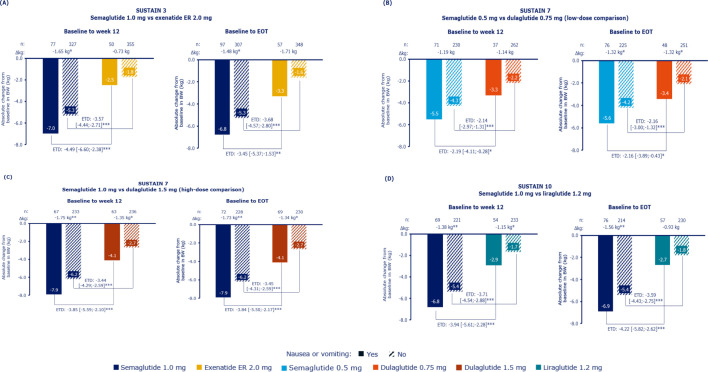
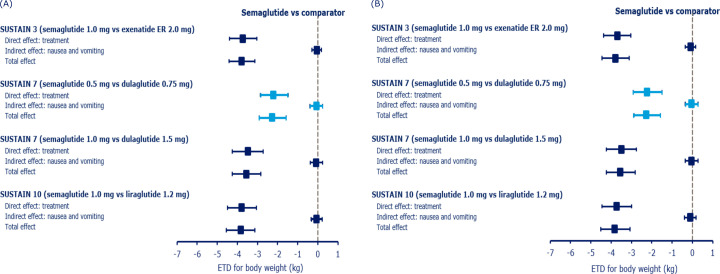
Verification
Claims the paper makes
The claims and statistics of this paper haven’t been checked yet.
Free: it reads the open-access text and checks the first 5 claims that cite a source we can check. Create a free account to check every claim.
Claims other papers make about this one
Each is checked against this paper’s own text: does it say what the citing paper says it does?
The source backs part of the claim, not all of it — or backs it for a different population, condition or comparison.
In the citing paper
“These results are consistent with previous analyses of the weight‐loss effects of GLP‐1RAs in people with obesity and/or T2D, which typically showed a small contribution of GI AEs to GLP‐1RA‐induced weight loss. 13 , 17 , 18 , 23 , 24”
From Gastrointestinal tolerability of once‐weekly semaglutide 2.4 mg in adults with overweight or obesity, and the relationship between gastrointestinal adverse events and weight loss (2022) · cites this paper as [18]
Experimental — accuracy not yet measuredThe source backs part of the claim, not all of it — or backs it for a different population, condition or comparison.
In the citing paper
“Researchers observed that weight loss with semaglutide ranged from 9.6 to 17.1% in participants without gastrointestinal AEs and from 11.4 to 17.7% in those with gastrointestinal AEs, suggesting gastrointestinal AEs appeared to contribute little to the weight-loss benefit of semaglutide”
From Gastrointestinal adverse events associated with semaglutide: A pharmacovigilance study based on FDA adverse event reporting system (2022) · cites this paper as [37]
Experimental — accuracy not yet measuredThe source backs part of the claim, not all of it — or backs it for a different population, condition or comparison.
In the citing paper
“In contrast, when combining data from SUSTAIN 3, 7 and 10, the occurrence of nausea and vomiting was not associated with superior weight loss (53).”
From Safety of Semaglutide (2021) · cites this paper as [53]
Experimental — accuracy not yet measuredThe cited source says what the claim attributes to it.
In the citing paper
“Notably, the sustained and significant decrease in BW observed for semaglutide was attributed to its therapeutic effects rather than the emergence of those AEs.”
In the citing paper
“Compared with other selective GLP-1 analogues, semaglutide is more potent and has higher affinity for GLP-1R, resulting in greater weight loss and glucose-lowering properties (45–47).”
From The glucagon-like peptide-1 (GLP-1) analogue semaglutide reduces alcohol drinking and modulates central GABA neurotransmission (2023) · cites this paper as [46]
Self-check
Percentages, sums and reported differences re-computed from the paper’s own numbers.
The self-check needs the paper’s full text.
Citations
Cites
International Diabetes Federation 2017
Carracher, A. M., Marathe, P. H., & Close, K. L. (2018) · Journal of Diabetes · doi:10.1111/1753-0407.12644 · Cited by 13,418
Semaglutide and Cardiovascular Outcomes in Patients with Type 2 Diabetes
Marso, S. P., Bain, S. C., Consoli, A., Eliaschewitz, F. G., Jódar, E., Leiter, L. A., Lingvay, I., Rosenstock, J., Seufert, J., Warren, M. L., et al. (2016) · New England Journal of Medicine · doi:10.1056/nejmoa1607141 · Cited by 6,900
Self-citationDavies, M. J., D’Alessio, D. A., Fradkin, J., Kernan, W. N., Mathieu, C., Mingrone, G., Rossing, P., Tsapas, A., Wexler, D. J., & Buse, J. B. (2018) · Diabetes Care · doi:10.2337/dci18-0033 · Cited by 3,518
Glucagon-like peptide 1 (GLP-1)
Müller, T. D., Finan, B., Bloom, S. R., D'Alessio, D., Drucker, D. J., Flatt, P. R., Fritsche, A., Gribble, F., Grill, H. J., Habener, J. F., et al. (2019) · Molecular Metabolism · doi:10.1016/j.molmet.2019.09.010 · Cited by 1,868
Self-citationWing, R. R., Lang, W., Wadden, T. A., Safford, M., Knowler, W. C., Bertoni, A. G., Hill, J. O., Brancati, F. L., Peters, A., Wagenknecht, L., et al. (2011) · Diabetes Care · doi:10.2337/dc10-2415 · Cited by 1,828 · cited 1×
“The previous mediation analysis of the SUSTAIN 1–5 trials showed that only a small component of the superior weight loss with semaglutide was associated with GI AEs.”
Davies, M. J., D’Alessio, D. A., Fradkin, J., Kernan, W. N., Mathieu, C., Mingrone, G., Rossing, P., Tsapas, A., Wexler, D. J., & Buse, J. B. (2018) · Diabetologia · doi:10.1007/s00125-018-4729-5 · Cited by 1,455
Pratley, R. E., Aroda, V. R., Lingvay, I., Lüdemann, J., Andreassen, C., Navarria, A., & Viljoen, A. (2018) · The Lancet Diabetes & Endocrinology · doi:10.1016/s2213-8587(18)30024-x · Cited by 790 · cited 4×
“The inclusion and exclusion criteria were similar in the SUSTAIN 3, 7 and 10 trials.(1-3) Key inclusion criteria were: diagnosis of type 2 diabetes (T2D); age ≥18 years; HbA1c ≥53.”
InfluentialSelf-citationSorli, C., Harashima, S.-I., Tsoukas, G. M., Unger, J., Karsbøl, J. D., Hansen, T., & Bain, S. C. (2017) · The Lancet Diabetes & Endocrinology · doi:10.1016/s2213-8587(17)30013-x · Cited by 745
Self-citationSemaglutide lowers body weight in rodents via distributed neural pathways.
Gabery, S., Salinas, C. G., Paulsen, S. J., Ahnfelt-Rønne, J., Alanentalo, T., Baquero, A. F., Buckley, S. T., Farkas, E., Fekete, C., Frederiksen, K. S., et al. (2020) · JCI Insight · doi:10.1172/jci.insight.133429 · Cited by 717
Blundell, J., Finlayson, G., Axelsen, M., Flint, A., Gibbons, C., Kvist, T., & Hjerpsted, J. B. (2017) · Diabetes, Obesity and Metabolism · doi:10.1111/dom.12932 · Cited by 693 · cited 1×
“39 Other GLP-1RAs promote weight loss through a similar mechanism of action; 40 hence, the difference between semaglutide and other GLP-1RAs may just be quantitative.”
Cited by
Gorgojo-Martínez, J. J., Mezquita-Raya, P., Carretero-Gómez, J., Castro, A., Cebrián-Cuenca, A., de Torres-Sánchez, A., García-de-Lucas, M. D., Núñez, J., Obaya, J. C., Soler, M. J., et al. (2022) · Journal of Clinical Medicine · doi:10.3390/jcm12010145 · Cited by 358
“A study performed to assess whether or not there was a direct association between GI AEs and the extent of weight loss concluded that weight loss was largely independent of GI AEs [47,64].”
BackgroundSmits, M. M., & Van Raalte, D. H. (2021) · Frontiers in Endocrinology · doi:10.3389/fendo.2021.645563 · Cited by 332
Chuong, V., Farokhnia, M., Khom, S., Pince, C. L., Elvig, S. K., Vlkolinsky, R., Marchette, R. C. N., Koob, G. F., Roberto, M., Vendruscolo, L. F., et al. (2023) · JCI Insight · doi:10.1172/jci.insight.170671 · Cited by 214
“Furthermore, the superior effect of semaglutide on weight loss relative to other selective GLP-1 analogues cannot be attributed to greater incidence of adverse gastrointestinal events in clinical populations, and such events are often transient and associated with dose escalation (46, 98).”
Wharton, S., Calanna, S., Davies, M., Dicker, D., Goldman, B., Lingvay, I., Mosenzon, O., Rubino, D. M., Thomsen, M., Wadden, T. A., et al. (2022) · Diabetes, Obesity and Metabolism · doi:10.1111/dom.14551 · Cited by 200
“These results are consistent with previous analyses of the weight-loss effects of GLP-1RAs in people with obesity and/or T2D, which typically showed a small contribution of GI AEs to GLP-1RA-induced weight loss.(13,17,18,23,24) The ability of 102 WHARTON ET AL.”
MethodResultSelf-citationShu, Y., He, X., Wu, P., Liu, Y., Ding, Y., & Zhang, Q. (2022) · Frontiers in Public Health · doi:10.3389/fpubh.2022.996179 · Cited by 145
The therapeutic potential of GLP‐1 receptor biased agonism
Jones, B. (2022) · British Journal of Pharmacology · doi:10.1111/bph.15497 · Cited by 98
“Monitoring acute reductions in food intake may be an approximate surrogate of nausea in mice, although the lack of an association between gastro-intestinal adverse effects and weight loss in GLP-1 agonist clinical trials suggest different mechanisms may be involved in humans (Lingvay et al., 2020).”
BackgroundNovikoff, A., O'Brien, S. L., Bernecker, M., Grandl, G., Kleinert, M., Knerr, P. J., Stemmer, K., Klingenspor, M., Zeigerer, A., DiMarchi, R., et al. (2021) · Molecular Metabolism · doi:10.1016/j.molmet.2021.101181 · Cited by 95
Emerging glucagon-like peptide 1 receptor agonists for the treatment of obesity
Jepsen, M. M., & Christensen, M. B. (2021) · Expert Opinion on Emerging Drugs · doi:10.1080/14728214.2021.1947240 · Cited by 96
Gao, X., Hua, X., Wang, X., Xu, W., Zhang, Y., Shi, C., & Gu, M. (2022) · Frontiers in Pharmacology · doi:10.3389/fphar.2022.935823 · Cited by 81
Qin, W., Yang, J., Deng, C., Ruan, Q., & Duan, K. (2024) · Diabetes, Obesity and Metabolism · doi:10.1111/dom.15386 · Cited by 72
“45 In summary, semaglutide can be considered to be a promising pharmacological treatment of obesity, with generally tolerable safety endpoints.”
BackgroundHow glucagon-like peptide 1 receptor agonists work
Andreasen, C. R., Andersen, A., Knop, F. K., & Vilsbøll, T. (2021) · Endocrine Connections · doi:10.1530/ec-21-0130 · Cited by 71
“The figure illustrates GLP-1(7-36) amide.”
MethodVolpe, S., Lisco, G., Racaniello, D., Fanelli, M., Colaianni, V., Vozza, A., Triggiani, V., Sabbà, C., Tortorella, C., De Pergola, G., et al. (2022) · Nutrients · doi:10.3390/nu14122414 · Cited by 67
“BW loss is usually independent of the baseline BMI and partially independent to gastrointestinal adverse events [14,16].”
BackgroundGastric Sensory and Motor Functions and Energy Intake in Health and Obesity—Therapeutic Implications
Cifuentes, L., Camilleri, M., & Acosta, A. (2021) · Nutrients · doi:10.3390/nu13041158 · Cited by 57
Abdelmalek, M. F., Harrison, S. A., & Sanyal, A. J. (2024) · Diabetes Obesity and Metabolism · doi:10.1111/dom.15524 · Cited by 48
Okamoto, A., Yokokawa, H., Nagamine, T., Fukuda, H., Hisaoka, T., & Naito, T. (2021) · Journal of Diabetes & Metabolic Disorders · doi:10.1007/s40200-021-00899-9 · Cited by 48
Wan, J., Ferrari, C., & Tadros, M. S. (2024) · Gastroenterology Insights · doi:10.3390/gastroent15010014 · Cited by 34
“The mechanisms behind nausea/vomiting and diarrhea induced by GLP-1RAs are incompletely understood but may include effects on gastric emptying, the central nervous system, nutrient absorption, and intestinal motil-Gastroenterol ity [63–69].”
BackgroundResultStretton, B., Kovoor, J., Bacchi, S., Chang, S., Ngoi, B., Murray, T., Bristow, T. C., Heng, J., Gupta, A., Ovenden, C., et al. (2023) · Internal Medicine Journal · doi:10.1111/imj.16126 · Cited by 26
Shamim, M. A., Patil, A., Amin, U., Roy, T., Tiwari, K., Husain, N., Kumar, J., Chenchula, S., Rao, P. P., Ganesh, V., et al. (2024) · Diabetes Obesity and Metabolism · doi:10.1111/dom.15777 · Cited by 27
“22 However, young people with type 2 diabetes (T2D) are under-represented in these trials.”
Camilleri, M. (2023) · Neurogastroenterology & Motility · doi:10.1111/nmo.14660 · Cited by 26
“69 However, the latter analysis of the impact of GI adverse effects in comparison of the different GLP-1 receptor agonists is compromised by the very high prevalence of GI adverse events in the different comparisons: 42% with semaglutide 1.0 mg versus 33% with exenatide ER 2.0 mg in SUSTAIN 3; 43%…”
BackgroundInfluentialSemaglutide treatment of hypothalamic obesity – a real-life data study
Svendstrup, M., Rasmussen, A. K., Kistorp, C., Klose, M., & Andreassen, M. (2024) · Pituitary · doi:10.1007/s11102-024-01429-5 · Cited by 23
“Semaglutide has previously shown superiority compared to other GLP-1 analogues [23, 24].”
Barrea, L., Annunziata, G., Verde, L., Galasso, M., Savastano, S., Colao, A. A. L., & Muscogiuri, G. (2025) · Current Obesity Reports · doi:10.1007/s13679-025-00667-3 · Cited by 26
“Data from the STEP [ 52] and SUSTAIN [53, 54] trials consistently demonstrate that the substantial weight loss achieved with semaglutide at doses of 0.5 mg, 1.0 mg, and 2.4 mg is largely independent of these symptoms, with less than 1% of the total weight loss benefit attributable to GI semaglutide…”
InfluentialRossing, P. R., Bain, S. C., Bosch‐Traberg, H., Sokareva, E., Heerspink, H. J. L., Rasmussen, S., & Mellbin, L. (2023) · Cardiovascular Diabetology · doi:10.1186/s12933-023-01949-7 · Cited by 25
“Importantly, a mediation analysis of the SUSTAIN 3, 7 and 10 trials showed that superior weight loss with OW s.c. semaglutide versus other GLP-1RAs is independent of GI tolerability [27].”
MethodEmbracing the Pros and Cons of the New Weight Loss Medications (Semaglutide, Tirzepatide, Etc.)
Moyad, M. A. (2023) · Current Urology Reports · doi:10.1007/s11934-023-01180-7 · Cited by 21
“It should also be noted that weight loss has currently not been correlated with the extent of GI side effects with these newer GLP-1 agonists [32, 33], which may be another advantage compared to some older medications in this class [34], but this issue requires more analysis.”
ResultRiedinger, C. J., Sakach, J. C., Maples, J. M., Fulton, J., Chippior, J., OʼDonnell, B., O’Malley, D. M., & Chambers, L. (2024) · Gynecologic Oncology · doi:10.1016/j.ygyno.2024.07.008 · Cited by 18
Ali, S., Baig, S., Wanninayake, S., Xavier, G. D. S., Dawson, C., Paisey, R., & Geberhiwot, T. (2023) · Diabetes Obesity and Metabolism · doi:10.1111/dom.15398 · Cited by 19
“…trials on various GLP-1 RAs in patients with T2D administered at standard doses have reported an average weight loss of (cid:4) 2-7 kg. 12,36,37 Recently, one of the largest published studies of real-world efficacy of these agents in (cid:4) 2400 patients with obesity and T2D showed a mean…”
BackgroundBiology and Clinical Use of Glucagon-Like Peptide-1 Receptor Agonists in Vascular Protection
Yau, K., Odutayo, A., Dash, S., & Cherney, D. Z. I. (2023) · Canadian Journal of Cardiology · doi:10.1016/j.cjca.2023.07.007 · Cited by 22
Control of human pancreatic beta cell kinome by glucagon‐like peptide‐1 receptor biased agonism
Xiao, J., Eid, L. E., Buenaventura, T., Boutry, R., Bonnefond, A., Jones, B. J., Rutter, G. A., Froguel, P., & Tomás, A. (2023) · Diabetes Obesity and Metabolism · doi:10.1111/dom.15083 · Cited by 13
Glucagon-Like Peptide 1 Therapy: From Discovery to Type 2 Diabetes and Beyond
Viljoen, A., & Bain, S. C. (2023) · Endocrinology and Metabolism · doi:10.3803/enm.2022.1642 · Cited by 11
Hoffmann, K., Michalak, M., & Paczkowska, A. (2025) · Diabetes Metabolic Syndrome and Obesity · doi:10.2147/dmso.s531697 · Cited by 11
“29 However, a recent study that showed a significant difference in the profiles of reporting risk and time-to-onset during the treatment with semaglutide or liraglutide, underlines that individual treatment choices should be considered when choosing an agent among GLP-1 analogues.”
Wu, T., Wong, C. K. H., Lui, D. T. W., Wong, S. K., Lam, C. L. K., Chung, M. S. H., McAllister, D., Welbourn, R., & Dixon, J. B. (2023) · BJS Open · doi:10.1093/bjsopen/zrad077 · Cited by 12
Semaglutide 2.4 Mg: The Latest GLP-1RA Approved for Obesity
Villela, R., & Correa, R. R. (2022) · Journal of Investigative Medicine · doi:10.1136/jim-2021-002227 · Cited by 8
Lee, J., Li, Y., Cheng, J., Liu, I.-M., & Cheng, K. (2024) · Pharmaceuticals · doi:10.3390/ph17040538 · Cited by 7
“Recently, these agonists have been utilized in body weight reduction, with clinical reports noting that they contribute 0.1 kg to the weight loss superiority of semaglutide [7] compared with other agonists (dulaglutide or liraglutide).”
BackgroundInfluentialAl-Humadi, A. W., Al‐Najim, W., Bleiel, S. B., & le Roux, C. W. (2024) · Obesity Surgery · doi:10.1007/s11695-024-07492-y · Cited by 7
Semaglutide for the treatment of obesity: Results of two open randomized pharmacokinetic studies
Noskov, S. M., Arefeva, A., Banko, V. V., Radaeva, К. S., Gefen, M., Archakova, O. A., Константиновна, К. П., Сергеевна, В. Е., Андреевна, К. П., Комаров, Т. Н., et al. (2024) · Meditsinskiy sovet = Medical Council · doi:10.21518/ms2024-346 · Cited by 7
El-Gamal, F., Ghandoura, A. N., Alammari, A., Alghamdi, B., Babhair, L., & Alsabhani, S. (2021) · World Family Medicine Journal/Middle East Journal of Family Medicine · doi:10.5742/mewfm.2021.94120 · Cited by 7
Rasalam, R. R., Abdo, S., Deed, G., O’Brien, R. C., & Overland, J. (2023) · Diabetes Obesity and Metabolism · doi:10.1111/dom.14953 · Cited by 7
“vous system effects on appetite are largely responsible for weight loss.(90,91)”
BackgroundLopes, A. C., Roque, F., Lourenço, O. M., Herdeiro, M. T., & Morgado, M. (2023) · Expert Opinion on Drug Safety · doi:10.1080/14740338.2023.2172159 · Cited by 7
Semaglutide in type 2 diabetes management: review of current evidence from concept to date
Demidova, T. Y., Омариевна, У. Ф., & Леонидовна, Б. Т. (2023) · FOCUS Endocrinology · doi:10.15829/2713-0177-2023-3-11 · Cited by 10
Thewjitcharoen, Y., Yenseung, N., Butadej, S., Nakasatien, S., Chotwanvirat, P., Chatchomchuan, W., Wanothayaroj, E., Krittiyawong, S., & Himathongkam, T. (2023) · Journal of the ASEAN Federation of Endocrine Societies · doi:10.15605/jafes.038.01.11 · Cited by 5
Wang, X., Lu, G., Zhou, Y., & Zhao, G. (2026) · Journal of Endocrinological Investigation · doi:10.1007/s40618-026-02891-7 · Cited by 4
“Gastrointestinal adverse events remain the most common class-limiting effects (Table 4), plausibly related to central actions and delayed gastric emptying [164], while dose-dependent elevations in amylase/lipase and a modestly increased risk of gallbladder disease warrant routine vigilance [4, 165].”
Prieto, B. L. A., & Lozano, E. W. M. (2001) · Repositorio Institucional Universidad Católica de Colombia (Universidad Católica de Colombia) · Cited by 6
Impact of GLP-1 receptor agonists on gastrointestinal function and symptoms
Frazier, R., & Hasler, W. L. (2025) · Expert Review of Gastroenterology & Hepatology · doi:10.1080/17474124.2025.2579117 · Cited by 4
“However, one study observed that weight reductions on weekly semaglutide were nearly independent of GI symptoms [55].”
Sancho-Haro, E. S., Muñoz-López, M., Baz-Valle, E., Villanueva-Tobaldo, C. V., Tornero-Aguilera, J. F., López-Gil, J. F., López‐Moreno, M., Martín-Rodríguez, A., & Clemente‐Suárez, V. J. (2026) · Pharmaceuticals · doi:10.3390/ph19060897 · Cited by 2
Clinical Response to Xultophy Possibly Varies from Each Different Metabolic Function
Bando, H., Kazuki, S., Tomoya, O., Naoki, K., Hatakeyama, S., Kobayashi, T., & Noboru, I. (2021) · Edelweiss Applied Science and Technology · doi:10.33805/2576-8484.190 · Cited by 2
Semaglutide for the treatment of obesity – a review
Bham, A., & Ditta, M. A. (2021) · World Family Medicine Journal/Middle East Journal of Family Medicine · doi:10.5742/mewfm.2021.94116 · Cited by 2
“Lingvay et al (2020) conducted a mediation analysis to identify whether individuals who experienced gastrointestinal (GI) issues when on semaglutide had any difference in weight loss (19).”
MethodHong, K. M., SULO, S. S., Wang, W., Kim, M., Hong, L., Kerr, K. W., Fan, L., & Williams, D. (2026) · Diabetes Metabolic Syndrome and Obesity · doi:10.2147/dmso.s574765 · Cited by 1
Li, Y. C., Xu, X., Tuersun, A., Fan, X., Qin, M., Zhao, X., Abuduaini, S., Xing, H., & Chen, H. (2026) · Pharmacological Research · doi:10.1016/j.phrs.2026.108333 · Cited by 1
Semaglutide versus liraglutide for treatment of obesity
Mikhail, N. E. (2021) · RePEc: Research Papers in Economics · doi:10.32474/ado.2021.03.000162 · Cited by 3
Alsaleh, R. A., Althagafi, N. K., Algaid, S. N., Alhasawi, N. A., & Algaedy, R. A. (2021) · World Family Medicine Journal/Middle East Journal of Family Medicine · doi:10.5742/mewfm.2021.94119 · Cited by 1
Burden of hypothyroidism in the primary care population in Qatar
Shaikh, S., & Honest, P. C. R. (2021) · World Family Medicine Journal/Middle East Journal of Family Medicine · doi:10.5742/mewfm.2021.94126 · Cited by 4
Functional segregation of body-brain signals in the area postremaPreprint
López-Cruz, A., Burgos, N. S. F., Hakimi, A. M., Xie, K., Mao, M., Kaur, M., Spina, A., Choi, K., Qiu, L., Lever, T. E., et al. (2026) · bioRxiv (Cold Spring Harbor Laboratory) · doi:10.64898/2026.06.15.732473 · Cited by 1
Alharthi, M. H. (2021) · World Family Medicine Journal/Middle East Journal of Family Medicine · doi:10.5742/mewfm.2021.94123
Ebrahim, E. E. S., Ahmed, M., Gaber, D. M., & Elnahas, H. G. (2021) · World Family Medicine Journal/Middle East Journal of Family Medicine · doi:10.5742/mewfm.2021.94125
Reply: Real-world weight loss with diabetes medications: but is it actually real?
Albanese, N. P., Jacobs, D. M., Frieling, K., & Monte, S. V. (2021) · Journal of the American Pharmacists Association · doi:10.1016/j.japh.2021.10.024
Real-world weight loss with diabetes medications: But is it actually real?
Elmes, A. T., & Jarrett, J. B. (2021) · Journal of the American Pharmacists Association · doi:10.1016/j.japh.2021.10.025
Once weekly semaglutide for treatment of obesity
Mikhail, N. E. (2021) · Journal of Clinical and Laboratory Research · doi:10.31579/2768-0487/015
“Meanwhile, post-hoc analysis by Lingway et al [15] suggest that GI adverse effects contribute minimally (less than 0.1 kg) to the superior weight loss effects of semaglutide vs other GLP-1RA agonists.”
BackgroundMethodInfluentialIntertrochanteric Fracture Treated by Dynamic Hip Screw, Aden, Yemen
Mohsen, A. A. H. (2021) · World Family Medicine Journal/Middle East Journal of Family Medicine · doi:10.5742/mewfm.2021.94122
Alabdali, A. M., Elganainy, M. N., Alzahrani, W. S., Asiri, A., Alhuthali, H. R., Alqahtani, H. S., & kabrah, D. K. (2021) · World Family Medicine Journal/Middle East Journal of Family Medicine · doi:10.5742/mewfm.2021.94118
IMPACT OF PHARMACEUTICAL BIOTECHNOLOGY
Aslam, A., & Ishtiyaq, W. (2021) · International Journal of Pharmacy & Integrated Health Sciences · doi:10.56536/ijpihs.v1i1.4
Tailoring the Treatment of Type 2 Diabetes Mellitus to the Individual
Peter, P. R., & Inzucchi, S. E. (2023) · Contemporary cardiology · doi:10.1007/978-3-031-13177-6_37
Patient with newly diagnosed type 2 diabetes? Remember these steps
Jarrett, J. B. (2023) · The Journal of Family Practice · doi:10.12788/jfp.0608
Arruda, T. B., Júnior, J. A. T. L., de Albuquerque, T. M., Coelho, R. V., Melo, A. A. J., & Bachur, T. P. R. (2023) · Revista Intertox de Toxicologia Risco Ambiental e Sociedade · doi:10.22280/revintervol16ed2.545
Rossing, P., Bain, S. C., Bosch‐Traberg, H., Sokareva, E., Heerspink, H. J. L., Rasmussen, S., & Mellbin, L. G. (2023) · Figshare · doi:10.6084/m9.figshare.26612690
Rossing, P., Bain, S. C., Bosch‐Traberg, H., Sokareva, E., Heerspink, H. J. L., Rasmussen, S., & Mellbin, L. G. (2023) · Figshare · doi:10.6084/m9.figshare.26612693
Rossing, P., Bain, S. C., Bosch‐Traberg, H., Sokareva, E., Heerspink, H. J. L., Rasmussen, S., & Mellbin, L. G. (2023) · Figshare · doi:10.6084/m9.figshare.26612687
Rossing, P., Bain, S. C., Bosch‐Traberg, H., Sokareva, E., Heerspink, H. J. L., Rasmussen, S., & Mellbin, L. G. (2023) · Figshare · doi:10.6084/m9.figshare.26612684
Rossing, P., Bain, S. C., Bosch‐Traberg, H., Sokareva, E., Heerspink, H. J. L., Rasmussen, S., & Mellbin, L. G. (2023) · Figshare · doi:10.6084/m9.figshare.26612675
Rossing, P., Bain, S. C., Bosch‐Traberg, H., Sokareva, E., Heerspink, H. J. L., Rasmussen, S., & Mellbin, L. G. (2023) · Figshare · doi:10.6084/m9.figshare.26612681
Rossing, P., Bain, S. C., Bosch‐Traberg, H., Sokareva, E., Heerspink, H. J. L., Rasmussen, S., & Mellbin, L. G. (2023) · Figshare · doi:10.6084/m9.figshare.26612678
Withrow, N. A., Hsueh, E. E., Wolever, T., Jenkins, A. L., Campbell, J. C., Zurbau, A., McMahon, R., & Valentine, C. J. (2026) · Current Developments in Nutrition · doi:10.1016/j.cdnut.2026.109393
“Moreover, differences in the rate and magnitude of individuals ’ weight loss represent an additional confounding factor that can affect GI symptoms patterns and overall nutritional intake [24].”
Biryukova, E. V., & Викторович, Ш. М. (2026) · Meditsinskiy sovet = Medical Council · doi:10.21518/ms2026-103
Metadata
- Authors
- Lingvay, I., Hansen, T., Macura, S., Marre, M., Nauck, M. A., de la Rosa, R., Woo, V., Yildirim, E., & Wilding, J.
- Affiliations
- The University of Texas Southwestern Medical Center (US)
- Novo Nordisk (Denmark) (DK)
- Centre de Recherche des Cordeliers (FR)
- St. Josef-Hospital (DE)
- Endocrinology, Millennium Physician Group, Englewood, Florida, USA
- University of Manitoba (CA)
- University of Liverpool (GB)
- Corresponding author
- Lingvay, Ildiko
- Venue
- BMJ Open Diabetes Research & Care
- Publisher
- BMJ
- Published
- 2020-10
- Volume
- 8
- Issue
- 2
- Pages
- e001706
- ISSN
- 2052-4897 (ISSN-L)
- PMC
- PMC7594204
- OpenAlex
- W3097926417
- Cited by
- 71
- References
- 40
- Citations by year
- 2026: 7 · 2025: 3 · 2024: 8 · 2023: 24 · 2022: 5 · 2021: 23
- FWCI
- 9.80
- Type
- journal article
- Language
- en
- Open access
- gold
- doi.org
- Licence
- Locations
- BMJ Open Diabetes Research & Care (publishedVersion, cc-by-nc)
- PubMed Central (publishedVersion, cc-by-nc)
- PubMed (publishedVersion)
- DOAJ (DOAJ: Directory of Open Access Journals) (submittedVersion, cc-by-sa)
- Funders
- Novo Nordisk
- Topics
- Health Sciences › Medicine › Endocrinology, Diabetes and Metabolism › Diabetes Treatment and Management
- Health Sciences › Medicine › Pharmacology (medical) › Pharmacology and Obesity Treatment
- Health Sciences › Medicine › Endocrinology, Diabetes and Metabolism › Diabetes Management and Research
- Keywords
- semaglutide, GLP-1 receptor agonists, weight loss, nausea and vomiting, gastrointestinal adverse effects, mediation analysis, obesity, type 2 diabetes, exenatide extended-release, dulaglutide, liraglutide, dose escalation, SUSTAIN trials, HbA1c, dyspepsia, diarrhea, constipation, direct and indirect effects
- MeSH terms
- Glucagon-Like Peptide-1 Receptor, Semaglutide, Diabetes Mellitus, Type 2, Glucagon-Like Peptides, Humans, Hypoglycemic Agents, Weight Loss
About these checks
Registry, retraction, Cites and statistics results are computed, not judged, with one exception: a printed reference that no index lists is read once by a model before it counts as a citation error. Claims are extracted by a model and kept only when their quote appears verbatim in the text; each cited source is then checked, with a model’s help, for whether it says what the claim relies on. Those verdicts can be wrong — read the claim’s quote and the cited source before relying on one.
Statistics and arithmetic are recomputed, not judged.
Confidence bands are shown only for fields calibrated on our annotated test set. None is calibrated yet, so no band is shown.
What counts as a claim ›How we measure confidence ›How we check this ›
Are you an author, or do you see a problem with this page? Request a review
Data sources
Bibliographic data: Semantic Scholar, OpenAlex, Crossref.
Contains information from the Semantic Scholar Academic Graph Datasets, made available under the ODC Attribution License (ODC-BY 1.0).
Semantic Scholar’s data is described in: Kinney, R., et al. (2023). The Semantic Scholar Open Data Platform. arXiv:2301.10140.
