

‘Never again will I be carefree’: a qualitative study of the impact of hypoglycemia on quality of life among adults with type 1 diabetes
Open accessThe DOI matches its Crossref record; 32 of the 33 references it cites were found in a registry or an index, and 1 are not checked yet.
Abstract
Introduction: Achieving glycemic targets and optimizing quality of life (QoL) are important goals of type 1 diabetes care. Hypoglycemia is a common barrier to achieving targets and can be associated with significant distress. However, the impact of hypoglycemia on QoL is not fully understood. The aim of this study was to explore how adults with type 1 diabetes are impacted by hypoglycemia in areas of life that are important to their overall QoL. Research design and methods: Participants responded to a web-based qualitative survey involving a novel ‘Wheel of Life’ activity. Responses were analyzed using reflexive thematic analysis. Results: The final sample included 219 adults with type 1 diabetes from Denmark, Germany, the Netherlands, and the UK. They had a mean±SD age of 39±13 years and diabetes duration of 20±14 years. Participants identified eight areas of life important to their overall QoL, including relationships and social life, work and studies, leisure and physical activity, everyday life, sleep, sex life, physical health, and mental health. Participants reported emotional, behavioral, cognitive, and social impacts of hypoglycemia within domains. Across domains, participants described interruptions, limited participation in activities, exhaustion, fear of hypoglycemia, compensatory strategies to prevent hypoglycemia, and reduced spontaneity. Conclusions: The findings emphasize the profound impact of hypoglycemia on QoL and diabetes self-care behaviors. Diabetes services should be aware of and address the burden of hypoglycemia to provide person-centered care. Clinicians could ask individuals how hypoglycemia affects important areas of their lives to better understand the personal impact and develop tailored management plans.
Overview
The claims and statistics of this paper haven’t been checked yet.
Free: it reads the open-access text and checks the first 5 claims that cite a source we can check. Create a free account to check every claim.
Integrity signals
Registry
Cites
Statistics
Figures
Verification
Claims the paper makes
The claims and statistics of this paper haven’t been checked yet.
Free: it reads the open-access text and checks the first 5 claims that cite a source we can check. Create a free account to check every claim.
Self-check
Percentages, sums and reported differences re-computed from the paper’s own numbers.
The self-check needs the paper’s full text.
Citations
Cites
Harris, P. A., Taylor, R., Thielke, R., Payne, J., Gonzalez, N., & Conde, J. G. (2009) · Journal of Biomedical Informatics · doi:10.1016/j.jbi.2008.08.010 · Cited by 51,384
(1993) · New England Journal of Medicine · doi:10.1056/nejm199309303291401 · Cited by 24,667
(1995) · Social Science & Medicine · doi:10.1016/0277-9536(95)00112-k · Cited by 7,643
Wild, D., Grove, A., Martin, M., Eremenco, S., McElroy, S., Verjee-Lorenz, A., & Erikson, P. (2005) · Value in Health · doi:10.1111/j.1524-4733.2005.04054.x · Cited by 5,521
Bolinder, J., Antuna, R., Geelhoed-Duijvestijn, P., Kröger, J., & Weitgasser, R. (2016) · The Lancet · doi:10.1016/s0140-6736(16)31535-5 · Cited by 893
Gold, A. E., Macleod, K. M., & Frier, B. M. (1994) · Diabetes Care · doi:10.2337/diacare.17.7.697 · Cited by 810
5. Lifestyle Management:Standards of Medical Care in Diabetes—2019
American Diabetes Association (2019) · Diabetes Care · doi:10.2337/dc19-s005 · Cited by 700 · cited 1×
“There were no further differences between groups (online supplemental tables 6–8).”
Bradley, C., Todd, C., Gorton, T., Symonds, E., Martin, A., & Plowright, R. (1999) · Quality of Life Research · doi:10.1023/a:1026485130100 · Cited by 668 · cited 2×
“Past research has examined the impact of diabetes on sex life 20 and fear of hypoglycemia during sex for young adults with diabetes, 21 but not the impact of hypoglycemia on sex life for adults with type 1 diabetes.”
Peyrot, M., Burns, K. K., Davies, M., Forbes, A., Hermanns, N., Holt, R., Kalra, S., Nicolucci, A., Pouwer, F., Wens, J., et al. (2013) · Diabetes Research and Clinical Practice · doi:10.1016/j.diabres.2012.11.016 · Cited by 253
Self-citationNot all roads lead to Rome—a review of quality of life measurement in adults with diabetes
Speight, J., Reaney, M. D., & Barnard, K. D. (2009) · Diabetic Medicine · doi:10.1111/j.1464-5491.2009.02682.x · Cited by 251
Self-citation
Cited by
McCall, A. L., Lieb, D. C., Gianchandani, R., MacMaster, H., Maynard, G. A., Murad, M. H., Seaquist, E., Wolfsdorf, J. I., Wright, R. F., & Wiercioch, W. (2023) · The Journal of Clinical Endocrinology & Metabolism · doi:10.1210/clinem/dgac596 · Cited by 123
Precision medicine in type 1 diabetes
Carr, A. L. J., Evans‐Molina, C., & Oram, R. A. (2022) · Diabetologia · doi:10.1007/s00125-022-05778-3 · Cited by 72
“Risk of hypoglycaemia is perhaps the largest barrier to intensive diabetes control and is often reported as having a profound impact on quality of life and diabetes self-care behaviours [105, 106].”
BackgroundRoldan, V. D. T., Urtecho, M., Nayfeh, T., Firwana, M., Muthusamy, K., Hasan, B., Abd‐Rabu, R., Maraboto, A., Qoubaitary, A., Prokop, L. J., et al. (2022) · The Journal of Clinical Endocrinology & Metabolism · doi:10.1210/clinem/dgac601 · Cited by 49
Søholm, U., Broadley, M. M., Zaremba, N., Divilly, P., Baumann, P. M., MAHMOUDI, Z., Martine‐Edith, G., Mader, J. K., Cigler, M., Brøsen, J. M. B., et al. (2024) · Diabetologia · doi:10.1007/s00125-024-06233-1 · Cited by 40
“In a recent qualitative study, people with type 1 diabetes reported how hypoglycaemia impacted several aspects of their QoL, such as mental health, sleep, leisure activities, work and social life [23].”
Self-citationChatwin, H., Broadley, M. M., Hendrieckx, C., Carlton, J., Heller, S. R., Amiel, S. A., de Galan, B. E., McCrimmon, R. J., Pedersen‐Bjergaard, U., Pouwer, F., et al. (2022) · Journal of Diabetes and its Complications · doi:10.1016/j.jdiacomp.2022.108232 · Cited by 28
“5%) 71% (734) Hypoglycaemia awareness status HypoA-Q Impaired Awareness subscale 9±4 (1-18) Gold score 3±2 (1-7) Impaired awareness (Gold score ≥4) 33% (342) Hypoglycaemia frequency Number of episodes of any severity in the past week 3 [2-5]”
BackgroundSelf-citationRokszin, G., Kiss, Z., Sütő, G., Kempler, P., Jermendy, G., Fábián, I., Szekanecz, Z., Poór, G., Wittmann, I., & Molnár, G. A. (2021) · Frontiers in Oncology · doi:10.3389/fonc.2021.725465 · Cited by 24
Socio-economic inequalities in diabetes and prediabetes among Bangladeshi adults
Sarker, A. R., & Khanam, M. (2021) · Diabetology International · doi:10.1007/s13340-021-00556-9 · Cited by 22
Sarteau, A. C., Muthukkumar, R., Smith, C., Busby‐Whitehead, J., Lich, K. H., Pratley, R. E., Thambuluru, S. R., Weinstein, J., Weinstock, R. S., Young, L., et al. (2023) · Diabetic Medicine · doi:10.1111/dme.15156 · Cited by 17
“22 Research also suggests that OAs who experience technical difficulties are less likely to trust CGM. 23,24 Our study builds upon these findings by characterizing in greater detail the multi-level barriers and facilitators that interact to influence adoption and sustainment of new management…”
BackgroundSøholm, U., Zaremba, N., Broadley, M. M., Axelsen, J. L., Divilly, P., Martine‐Edith, G., Amiel, S. A., Mader, J. K., Pedersen‐Bjergaard, U., McCrimmon, R. J., et al. (2023) · JMIR Diabetes · doi:10.2196/42100 · Cited by 13
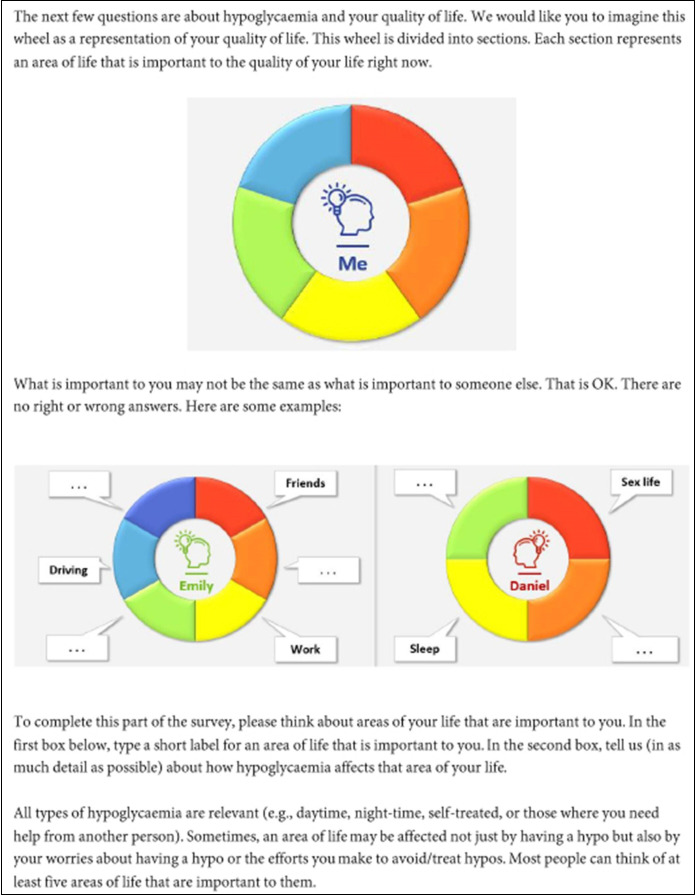
“…with T1DM explored the areas most important to an individual’s quality of life and described how hypoglycemia affects the following domains: relationships and social life, work and studies, leisure and physical activity, everyday life, sleep, sex life, physical health, and mental health [27].”
BackgroundSelf-citationLega, I. C., Yale, J.-F., Chadha, A., Paty, B., Roscoe, R., Snider, M., Steier, J., Bajaj, H. S., Barnes, T., Gilbert, J., et al. (2023) · Canadian Journal of Diabetes · doi:10.1016/j.jcjd.2023.08.003 · Cited by 25
“Individuals with type 1 diabetes describe numerous consequences of hypoglycemia on their quality of life [67].”
BackgroundChatwin, H., Broadley, M. M., Hendrieckx, C., Carlton, J., Heller, S. R., Amiel, S. A., de Galan, B. E., Hermanns, N., Finke-Gröne, K., Speight, J., et al. (2021) · Diabetic Medicine · doi:10.1111/dme.14727 · Cited by 14
Self-citationMartine‐Edith, G., Divilly, P., Zaremba, N., Søholm, U., Broadley, M. M., Baumann, P. M., MAHMOUDI, Z., Gomes, M., Ali, N., Abbink, E. J., et al. (2024) · Diabetes Technology & Therapeutics · doi:10.1089/dia.2023.0522 · Cited by 11
“6,7 Key research studies to date that have reported on nocturnal hypoglycemia rates 8–10 used a clock-based method to distinguish between daytime and nighttime, based on the assumption that sleep occurs between predefined hours (e.g., 00:00–06:00 or 23:00–07:00).”
Self-citationBarnard-Kelly, K. D., Marrero, D. G., de Wit, M., Pouwer, F., Khunti, K., Hermanns, N., Pierce, J. S., Laffel, L. M., Holt, R. I. G., Battelino, T., et al. (2024) · Diabetic Medicine · doi:10.1111/dme.15484 · Cited by 10
Self-citationQi, Y., Li, L., Feng, G., Shao, C., Cai, Y., & Wang, Z. (2021) · Frontiers in Cardiovascular Medicine · doi:10.3389/fcvm.2021.713971 · Cited by 8
Russell-Jones, D. L., Smout, V., Roy, S. S., Myers, G., Littlewood, R., & Shojaee‐Moradie, F. (2025) · Diabetes Obesity and Metabolism · doi:10.1111/dom.70323 · Cited by 7
“32 The reported improvements in post-treatment effects and enhanced management confidence suggest FLO may address the psychological burden of hypoglycaemia that often leads to defensive behaviours and suboptimal diabetes management.”
Wang, Y., Bernatchez, F., Chouinard-Castonguay, S., Tremblay, M., Vanasse, A., Kinnard, N., Mégalli, M., Millette, M., Boulet, G., Henderson, M., et al. (2023) · Diabetes Technology & Therapeutics · doi:10.1089/dia.2023.0290 · Cited by 5
Broadley, M. M., Chatwin, H., Søholm, U., Amiel, S. A., Carlton, J., de Galan, B. E., Hendrieckx, C., McCrimmon, R. J., Skovlund, S. E., Pouwer, F., et al. (2022) · BMJ Open Diabetes Research & Care · doi:10.1136/bmjdrc-2022-002890 · Cited by 6
Self-citationSerné, E. H., Buompensiere, M. I., de Portu, S., Smith‐Palmer, J., Pöhlmann, J., & Cohen, O. (2025) · Diabetes Technology & Therapeutics · doi:10.1089/dia.2024.0647 · Cited by 5
Teigen, I. A., Riaz, M., Åm, M. K., Christiansen, S. C., & Carlsen, S. M. (2022) · Frontiers in Bioengineering and Biotechnology · doi:10.3389/fbioe.2022.986858 · Cited by 5
“The fear of hypoglycaemia significantly reduces the quality of life for patients with DM1 and prevents tight glucose control (Chatwin et al., 2021).”
BackgroundLemos, C. A., Gonçalves, A. M. R. F., Vieira, E. M., & Pereira, L. (2024) · LA Referencia (Red Federada de Repositorios Institucionales de Publicaciones Científicas) · doi:10.1590/1518-8345.6963.4168 · Cited by 3
Recomendaciones para la práctica clínica: hipoglucemia en personas con diabetes mellitus
Martín, C. G., Loredo, S. D., Forlino, M., Rodríguez, A., Ré, M., Santos, N. C. G., Dimov, L., Apoloni, S. B., Remón, J., Ávila, P. J., et al. (2022) · Revista de la Sociedad Argentina de Diabetes · doi:10.47196/diab.v56i2sup.539 · Cited by 6
“56 (53-59) Revista de la Sociedad Argentina de Diabetes Año 56 Vol.”
Backgroundde Jongh, D., Lapré, S., Özcan, B., Zietse, R., Bunnik, E. M., & Massey, E. K. (2024) · Transplantation Direct · doi:10.1097/txd.0000000000001711 · Cited by 3
“19 With the prospect of having more constant blood glucose levels with a BAP, diabetes-specific fears could disappear, explained by people with T1D as ultimately providing “emotional relief.””
Külcü, D. P., Altintas, M. G., & Çelebioğlu, A. (2025) · Journal of Nursology · doi:10.17049/jnursology.1555373 · Cited by 2
Looping for (Self)Care—Personal Digital Health Technology and Algorithmic Systems
Langstrup, H., & Jansky, B. (2024) · Springer eBooks · doi:10.1007/978-3-031-52049-5_9 · Cited by 3
Halliday, J. A., Holmes‐Truscott, E., Thuraisingam, S., Søholm, U., Chatterton, M. L., Russell‐Green, S., Eric, O., Andrikopoulos, S., Black, T., Davidson, S., et al. (2024) · Trials · doi:10.1186/s13063-024-08556-1 · Cited by 2
“They manage self-treated and severe episodes and live with the ongoing anxiety related to the risk of such episodes, as well as the often-overlooked impacts on their productivity, sleep and quality of life [7, 27, 28, 55, 56], as well as on their family members and relationships [28, 51, 57].”
BackgroundResultSelf-citationPenfornis, A., Down, S., Seignez, A., Vives, A., Bonnemaire, M., & Kulzer, B. (2025) · Diabetes Therapy · doi:10.1007/s13300-024-01685-5 · Cited by 4
“Acute complications such as hypo-glycemia and hyperglycemia are a major burden for PWD and have a negative impact on the quality of life and self-care behaviors [6, 7].”
van der Stoep, M. Y. E. C., Berghuis, D., Bredius, R. G. M., Buddingh, E. P., Mohseny, A. B., Smiers, F. J. W., Guchelaar, H., Lankester, A. C., & Zwaveling, J. (2021) · Scientific Reports · doi:10.1038/s41598-021-98669-3 · Cited by 3
Russell-Jones, D. L., Bailey, T. S., Lane, W. S., Mathieu, C., & Pedersen‐Bjergaard, U. (2024) · Diabetic Medicine · doi:10.1111/dme.15339 · Cited by 1
Ajie, M., van Heck, J. I. P., Verhulst, C. E. M., Fabricius, T. W., Hendriksz, M. S., McCrimmon, R. J., Pedersen‐Bjergaard, U., de Galan, B. E., Stienstra, R., & Tack, C. J. (2024) · Diabetes Obesity and Metabolism · doi:10.1111/dom.15712 · Cited by 1
“9 A high frequency of hypoglycaemia has been associated with decreased quality of life, 10 cognitive impairments 11 and an increased risk of cardiovascular complications and mortality.”
Asongafac, A. A., Sturt, J. A., Rowland, E., & Due‐Christensen, M. (2025) · Family Relations · doi:10.1111/fare.70071 · Cited by 1
Lambadiari, V., Tentolouris, N., Vazeou, A., Christoforidis, A., Kanaka‐Gantenbein, C., Makrilakis, K., Didangelos, T., Juachon, M. J., Smaniotto, V., van den Heuvel, T. R. A., et al. (2026) · Diabetes Therapy · doi:10.1007/s13300-026-01883-3 · Cited by 1
Addressing Sexual Dysfunction in Women With Type 1 Diabetes
Sklepinski, S. M., Ratzki‐Leewing, A. A., WESTEN, S. C., & McCoy, R. G. (2025) · Clinical Diabetes · doi:10.2337/cd24-0090 · Cited by 1
Riangkam, C., Sanguanthammarong, S., & Lertwattanarak, R. (2025) · Patient Preference and Adherence · doi:10.2147/ppa.s521692 · Cited by 2
“53 This study found that less than half of the participants (42.9”
InfluentialHidden in the Night: Wearable Sleep Assessment of Nocturnal Hypoglycaemia in Type 1 DiabetesPreprint
Alsuhaymi, A., Nutter, P. W., Thabit, H., & Harper, S. (2026) · medRxiv · doi:10.64898/2026.01.22.26344161 · Cited by 1
Fear of hypoglycemia: a new therapeutic target
Chernaya, M. E., Nersesyan, A. A., Ostroukhova, E. N., & Volkova, A. R. (2022) · Endocrinology News Opinions Training · doi:10.33029/2304-9529-2022-11-4-70-77
Hanaire, H. P., Naïditch, N., Melki, V., Morcel, P., Puech-Bret, N., Scharbarg, E., Godàs, R. T., Lancman, G., Schaller, M., Delval, C., et al. (2023) · EMJ Diabetes · doi:10.33590/emjdiabet/10303508
Dervişoğlu, M., Besen, D. B., & Günbaş, M. (2025) · Geriatric Nursing · doi:10.1016/j.gerinurse.2025.103450
Associação entre a homeostase glicêmica e transtornos mentais em pacientes diabéticos tipo 1
Coelho, K. D. O., de Souza, L. G., Gaudio, M. S., de Oliveira, L. M., Mariano, M. P. M., Madeira, A. B., Alves, G. L., Carlos, A. S., & d’Avila, J. C. (2025) · Revista de Medicina · doi:10.11606/issn.1679-9836.v104i6e-233196
Fobia à Hipoglicemia e a Qualidade de Vida das Pessoas com Diabetes tipo 1
Silva, I. D. G. F. D. (2024) · Portuguese National Funding Agency for Science, Research and Technology (RCAAP Project by FCT)
Hansson, J., & Lundgren, M. (2024) · Uppsala University Publications (Uppsala University)
McVicker, K. (2024) · Hogskolan Ihalmstad (Halmstad University)
Powell, P. A., Frances, S. M., de Galan, B. E., Heller, S. R., Speight, J., Rosilio, M., Pouwer, F., Gall, M.-A., Child, C. J., McCrimmon, R. J., et al. (2026) · Diabetic Medicine · doi:10.1111/dme.70240
“4 The multi-faceted impacts of hypoglycaemia on people's daily lives include disruptions to their social, working, leisure and everyday activities 5 ; difficulties with self management of symptoms 5 6 ; challenges to emotional and psychological well-being 7 ; interruptions to activities of daily…”
Self-citationLin, Y. K., Søholm, U., Ratzki‐Leewing, A. A., Ye, W., Hepworth, E., Agni, A., Amiel, S. A., & Speight, J. (2026) · Diabetes Obesity and Metabolism · doi:10.1111/dom.71028
“…research has demonstrated that generic and diabetes-specific quality- of-life measures lack the specificity to capture hypoglycaemia's distinct impacts [5], which may explain inconsistent findings regarding the relationship between hypoglycaemia and overall diabetes-related quality of life [16].”
Self-citationPyatak, E. A., Schneider, S., Hernandez, R., Hoogendoorn, C. J., Hawkins, M., & Gonzalez, J. S. (2026) · Diabetes Care · doi:10.2337/dc26-0603 · Cited by 1
Russell-Jones, D. L., Meehan, E., Smout, V., Roy, S., Frost, W., Young, T., & Bartlett, D. B. (2026) · Diabetes Therapy · doi:10.1007/s13300-026-01929-6
Asgari, R., Mohammadi, N., Baradaran, H. R., Jabarbeigi, R., Osooli, M., & Jafari, E. (2026) · Journal of Diabetes & Metabolic Disorders · doi:10.1007/s40200-026-02057-5
Søholm, U., Halliday, J. A., Holmes‐Truscott, E., Hagger, V. L., Robinson, A., Rogers, C., Criado‐Perez, C., Russell‐Green, S., Andrikopoulos, S., Shaw, J., et al. (2026) · Diabetic Medicine · doi:10.1111/dme.70496
Self-citation
Metadata
- Authors
- Chatwin, H., Broadley, M., Valdersdorf Jensen, M., Hendrieckx, C., Carlton, J., Heller, S., Amiel, S., de Galan, B., Hermanns, N., Finke-Groene, K., Speight, J., & Pouwer, F.
- Affiliations
- University of Southern Denmark (DK)
- Department of Psychology, University of Southern Denmark, Odense, Denmark
- Deakin University (AU)
- University of Sheffield (GB)
- King's College London (GB)
- Department of Internal Medicine, Radboud University Medical Center, Nijmegen, The Netherlands
- Forschungsinstitut der Diabetes Akademie Mergentheim (DE)
- Research Institute Diabetes Academy Mergentheim (FIDAM), Bad Mergentheim, Germany
- Corresponding author
- Chatwin, Hannah
- ORCID
- Venue
- BMJ Open Diabetes Research & Care
- Publisher
- BMJ
- Published
- 2021-08
- Volume
- 9
- Issue
- 1
- Pages
- e002322
- ISSN
- 2052-4897 (ISSN-L)
- PMC
- PMC8370551
- OpenAlex
- W3196045752
- Cited by
- 42
- References
- 32
- Citations by year
- 2026: 8 · 2025: 8 · 2024: 8 · 2023: 5 · 2022: 8 · 2021: 5
- FWCI
- 4.85
- Type
- journal article
- Language
- en
- Open access
- gold
- doi.org
- Licence
- Locations
- BMJ Open Diabetes Research & Care (publishedVersion, cc-by-nc)
- PubMed Central (publishedVersion, cc-by-nc)
- PubMed (publishedVersion)
- University of Southern Denmark Research Portal (University of Southern Denmark) (publishedVersion, cc-by-nc)
- White Rose Research Online (University of Leeds, The University of Sheffield, University of York) (acceptedVersion)
- Research Publications (Maastricht University) (submittedVersion, cc-by-nc)
- DOAJ (DOAJ: Directory of Open Access Journals) (submittedVersion, cc-by-sa)
- Figshare (submittedVersion, cc-by-nc)
- Minerva Access (University of Melbourne) (submittedVersion, cc-by-nc)
- Research Portal (King's College London) (submittedVersion, other-oa)
- Radboud Repository (Radboud University) (submittedVersion)
- Radboud Repository (Radboud University) (submittedVersion, other-oa)
- Research Publications (Maastricht University) (submittedVersion, other-oa)
- Figshare (cc-by)
- Funders
- Innovative Medicines Initiative (777460)
- Topics
- Health Sciences › Medicine › Endocrinology, Diabetes and Metabolism › Diabetes Management and Research
- Health Sciences › Medicine › Endocrinology, Diabetes and Metabolism › Diabetes Management and Education
- Health Sciences › Medicine › Endocrinology, Diabetes and Metabolism › Diabetes Treatment and Management
- Keywords
- hypoglycemia, type 1 diabetes, quality of life, fear of hypoglycemia, diabetes self-care, emotional and social impact, wheel of life, person-centred care, adults with diabetes
- MeSH terms
- Adult, Blood Glucose, Diabetes Mellitus, Type 1, Humans, Hypoglycemia, Middle Aged, Quality of Life, Surveys and Questionnaires
About these checks
Registry, retraction, Cites and statistics results are computed, not judged, with one exception: a printed reference that no index lists is read once by a model before it counts as a citation error. Claims are extracted by a model and kept only when their quote appears verbatim in the text; each cited source is then checked, with a model’s help, for whether it says what the claim relies on. Those verdicts can be wrong — read the claim’s quote and the cited source before relying on one.
Statistics and arithmetic are recomputed, not judged.
Confidence bands are shown only for fields calibrated on our annotated test set. None is calibrated yet, so no band is shown.
What counts as a claim ›How we measure confidence ›How we check this ›
Are you an author, or do you see a problem with this page? Request a review
Data sources
Bibliographic data: Semantic Scholar, OpenAlex, Crossref.
Contains information from the Semantic Scholar Academic Graph Datasets, made available under the ODC Attribution License (ODC-BY 1.0).
Semantic Scholar’s data is described in: Kinney, R., et al. (2023). The Semantic Scholar Open Data Platform. arXiv:2301.10140.
