

Intimate partner violence and pregnancy spacing: results from a meta-analysis of individual participant time-to-event data from 29 low-and-middle-income countries
Open accessThe DOI matches its Crossref record; 37 of the 38 references it cites were found in a registry or an index; none of the 34 sources its claims cite is checked for support yet.
Abstract
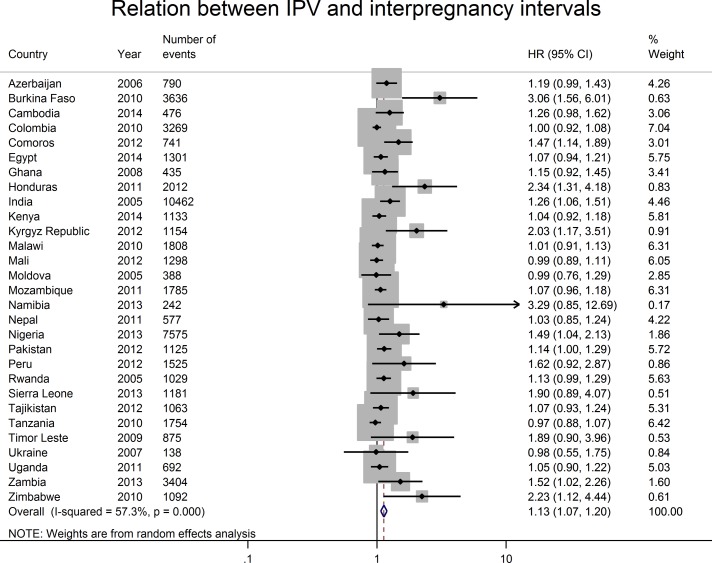
Introduction: Inadequately spaced pregnancies, defined as pregnancies fewer than 18 months apart, are linked to maternal, infant, and child morbidity and mortality, and adverse social, educational and economic outcomes in later life for women and children. Quantifying the relation between intimate partner violence (IPV) and women’s ability to space and time their pregnancies is an important part of understanding the burden of disease related to IPV. Methods: We applied Cox proportional hazards models to monthly data from the Demographic and Health Surveys’ Reproductive Health Calendar to compare interpregnancy intervals for women who experienced physical, sexual and/or emotional IPV in 29 countries. We conducted a one-stage meta-analysis to identify the periods when women who experienced IPV were at the highest risk of unintended and incident pregnancy, and a two-stage meta-analysis to explore cross-country variations in the magnitude of the relation between women’s experience of IPV and pregnancy spacing. Results: For the one-stage analysis, considering 52 959 incident pregnancies from 90 446 women, which represented 232 394 person-years at risk, women’s experience of IPV was associated with a 51% increase in the risk of pregnancy (95% CI 1.38 to 1.66), although this association decreased over time. When limiting our inference to unintended pregnancies that resulted in live births, women’s experience of IPV was associated with a 30% increase in the risk of unintended pregnancy (95% CI 1.25 to 1.34; n=13 541 pregnancies, 92 848 women, 310 319 person-years at risk). In the two-stage meta-analyses, women’s experience of IPV was associated with a 13% increase in the probability of incident pregnancy (95% CI 1.07 to 1.20) and a 28% increase in the likelihood of unintended pregnancy (95% CI 1.19 to 1.38). Conclusions: Across countries, women’s experience of IPV is associated with a reduction in time between pregnancies and an increase in the risk of unintended pregnancy; the magnitude of this effect varied by country and over time.
Overview
CoChat Summary
TL;DR
In a 29-country analysis of Demographic and Health Surveys data, women who experienced intimate partner violence (IPV) had shorter time to pregnancy and higher risk of unintended pregnancy. The association varied by country and, for all incident pregnancies, diminished over time.
Key findings
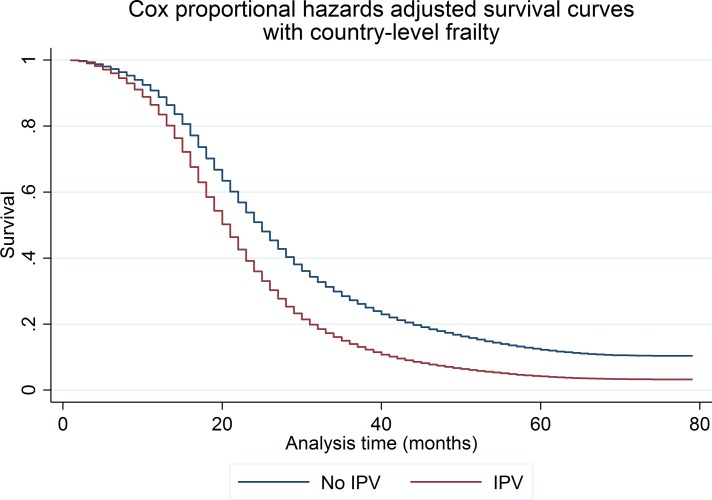
- In the one-stage meta-analysis, among 52,959 incident pregnancies from 90,446 women (232,394 person-years at risk), IPV was associated with a 51% higher risk of incident pregnancy (HR 1.51, 95% CI 1.38 to 1.66), with the effect decreasing over time (IPV × ln(time) HR 0.89, 95% CI 0.86 to 0.92).
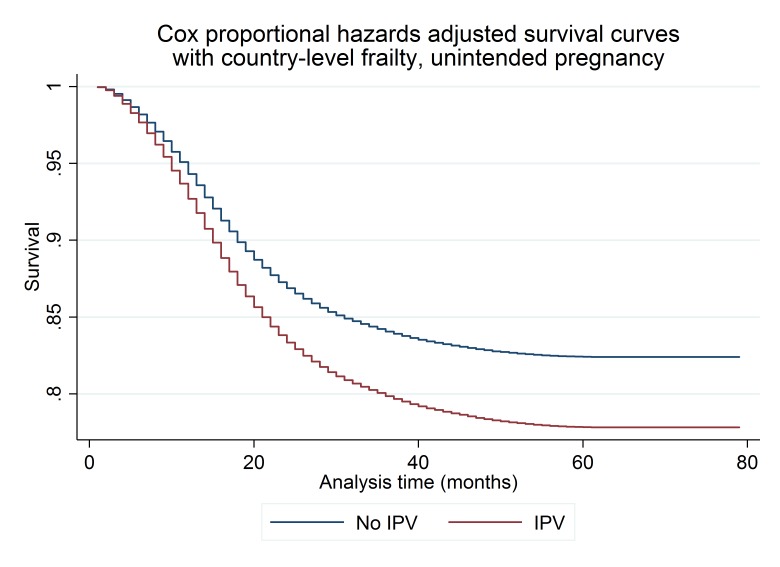
- For unintended pregnancies that resulted in live births, IPV was associated with a 30% higher risk (HR 1.30, 95% CI 1.25 to 1.34; n=13,541 pregnancies, 92,848 women, 310,319 person-years at risk); within 18 months of the index pregnancy, women who experienced IPV were 35% more likely to have an unintended pregnancy (95% CI 1.28 to 1.43).
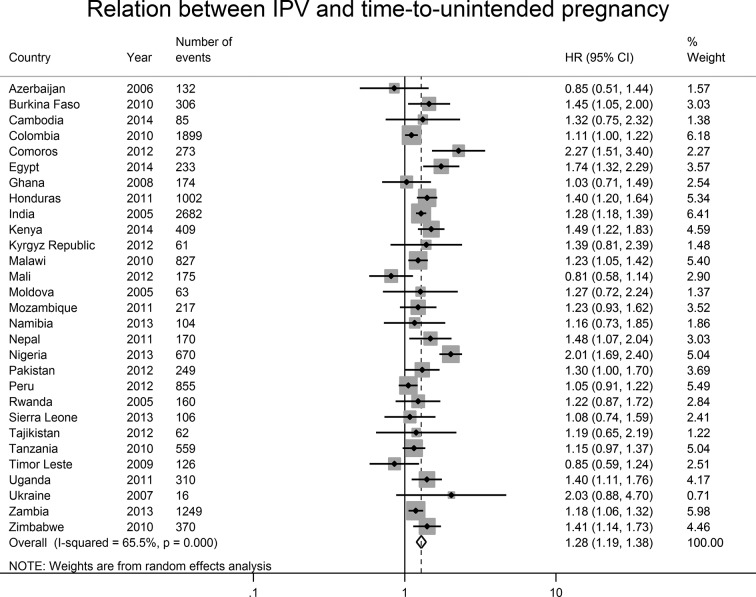
- In two-stage meta-analyses, IPV was associated with a 13% increase in the probability of incident pregnancy (HR 1.13, 95% CI 1.07 to 1.20) and a 28% increase in the likelihood of unintended pregnancy (HR 1.28, 95% CI 1.19 to 1.38); heterogeneity was moderate-to-high (I²=57, 95% CI 35 to 72 for incident pregnancy; I²=66, 95% CI 49 to 77 for unintended pregnancy).
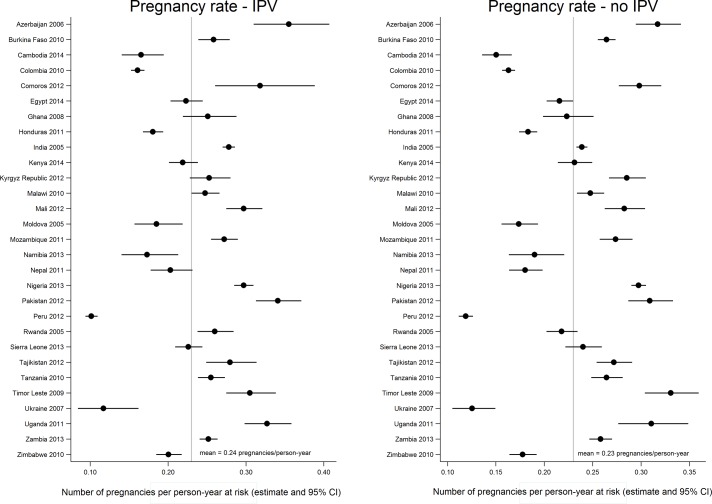
- Overall, 36.3% of women reported ever experiencing any form of IPV, ranging from 11.5% in Comoros to 61.1% in Uganda.
Methods
- Used the most recent DHS data from 29 low- and middle-income countries surveyed between 2005 and 2014, including countries that asked when IPV began in the most recent partnership and administered the Reproductive Health Calendar; analysis was restricted to ever-partnered women aged 39 and younger at survey, excluding women widowed at survey (n=95,159 in the analysis dataset).
- Exposure was any emotional, physical, and/or sexual IPV, measured using the DHS Domestic Violence Module, with the year IPV began in the most recent partnership; the authors assumed IPV continued after the first reported instance. Outcomes were incident pregnancy from monthly Reproductive Health Calendar data and unintended pregnancy (mistimed or unwanted) limited to pregnancies resulting in live births.
- Applied Cox proportional hazards shared frailty models for one-stage meta-analysis with country-level frailties and time interactions, and stratified Cox PH models per country pooled with random-effects meta-analysis for two-stage meta-analysis; adjusted for maternal age, marital status, maternal and partner education, household wealth, rural residence, and proportion of surviving male children, with sensitivity analyses including country-level women’s empowerment and contraceptive access proxies.
Limitations
- The paper states: IPV exposure was assumed to continue after the first reported instance; only the year, not month, IPV began was available; different forms of IPV could not be isolated; time-varying information on IPV and important confounders was lacking; breastfeeding was not included because it was measured only for most recent pregnancy; contraception and parity could not be assessed as mediators; and self-reported pregnancy timing over 5 years is subject to recall bias.
- The paper states: substantial residual between-country heterogeneity remained, and determinants such as ideal family size, access to induced abortion, breastfeeding, contraceptive use, conflict/displacement, and norms varied across countries but were not fully included.
- The text makes evident: the Discussion reports a 26% increase in unintended pregnancy with n=13,545 pregnancies, 92,858 women, and 310,349 person-years, whereas the Abstract and Table 3 report a 30% increase with n=13,541 pregnancies, 92,848 women, and 310,319 person-years; also, because DHS intendedness is recorded only for live births, the unintended-pregnancy analysis excludes pregnancies not resulting in live birth.
Model-written summary. Check it against the paper before relying on it.
Integrity signals
Registry
Cites
Statistics
Figures
Verification
Claims the paper makes
0 Valid · 0 Not valid · 26 Not checked · 80 Own results and interpretations
A result the paper reports from its own data — it cites no other source for it, so there is none to check. The quote shows it is in the paper.
In the paper
“the likelihood ratio test for the inclusion of the frailty term (H0 θ=0) was significant (P<0.0001)”
§ Intimate partner violence and pregnancy spacing: results from a meta-analysis of individual participant time-to-event data from 29 low-and-middle-income countries > Results > Time-to-pregnancy
plainn = 446- Asserted: passes — The authors put it forward as true.
- Checkable: passes — It can be checked against evidence.
- Load-bearing: unclear — It is unclear whether the paper’s conclusions depend on it.
- Based: passes — The paper gives a reason why it holds.
A result the paper reports from its own data — it cites no other source for it, so there is none to check. The quote shows it is in the paper.
In the paper
“The proportion of surviving male children was associated with increased time between pregnancies (HR: 0.93; 95% CI 0.91 to 0.95)”
§ Intimate partner violence and pregnancy spacing: results from a meta-analysis of individual participant time-to-event data from 29 low-and-middle-income countries > Results > Time-to-pregnancy
plainstates an association- Asserted: passes — The authors put it forward as true.
- Checkable: passes — It can be checked against evidence.
- Load-bearing: unclear — It is unclear whether the paper’s conclusions depend on it.
- Based: passes — The paper gives a reason why it holds.
A result the paper reports from its own data — it cites no other source for it, so there is none to check. The quote shows it is in the paper.
In the paper
“In the two-stage model, women’s experience of IPV was associated with a 13% increase in the probability of incident pregnancy”
§ Intimate partner violence and pregnancy spacing: results from a meta-analysis of individual participant time-to-event data from 29 low-and-middle-income countries > Discussion
plainstates an association- Asserted: passes — The authors put it forward as true.
- Checkable: passes — It can be checked against evidence.
- Load-bearing: passes — The paper’s conclusions depend on it.
- Based: passes — The paper gives a reason why it holds.
A result the paper reports from its own data — it cites no other source for it, so there is none to check. The quote shows it is in the paper.
In the paper
“women who experienced IPV were 41% more likely to become pregnant within the 18 months after the index pregnancy than women who did not experience IPV during that time (95% CI 1.21 to 1.64).”
§ Intimate partner violence and pregnancy spacing: results from a meta-analysis of individual participant time-to-event data from 29 low-and-middle-income countries > Results > Time-to-pregnancy
plainstates an association- Asserted: passes — The authors put it forward as true.
- Checkable: passes — It can be checked against evidence.
- Load-bearing: passes — The paper’s conclusions depend on it.
- Based: passes — The paper gives a reason why it holds.
A result the paper reports from its own data — it cites no other source for it, so there is none to check. The quote shows it is in the paper.
In the paper
“We found that IPV was associated with the highest risk of unintended pregnancy in Comoros (HR: 2.27; 95% CI 1.51 to 3.40)”
§ Intimate partner violence and pregnancy spacing: results from a meta-analysis of individual participant time-to-event data from 29 low-and-middle-income countries > Results > Time-to-unintended pregnancy
plainstates an association- Asserted: passes — The authors put it forward as true.
- Checkable: passes — It can be checked against evidence.
- Load-bearing: unclear — It is unclear whether the paper’s conclusions depend on it.
- Based: passes — The paper gives a reason why it holds.
53 more claims
Create a free account to see all 106 claims and to verify the 34 references still open.
- It may state two separate claims as one. 22
- Probably not a substantial claim. 36
- The quote only partly states this claim. 1
Claims other papers make about this one
Each is checked against this paper’s own text: does it say what the citing paper says it does?
In the citing paper
“In addition, it should be noted that several factors influencing pregnancy intention, such as access to contraceptive methods, societal norms related to ideal family size, exposure to situations of conflict and displacement, and access to abortion, vary significantly across different countries [73].”
From Investigating the relationship between intimate partner violence, reproductive health and pregnancy outcome: a systematic review (2025) · cites this paper as [73]
Self-check
Percentages, sums and reported differences re-computed from the paper’s own numbers.
Each contradiction between two passages listed here was confirmed by an independent check.
Rated major: it would touch a result — a value a result rests on, reported and recomputed p-values on opposite sides of the significance level, two passages that conflict with no sign which is right, or a cited work retracted before this paper was published.
In the paper
§ Intimate partner violence and pregnancy spacing: results from a meta-analysis of individual participant time-to-event data from 29 low-and-middle-income countries > Discussion
“women’s experience of IPV was associated with a 26% increase in the likelihood of unintended pregnancy”
§ Intimate partner violence and pregnancy spacing: results from a meta-analysis of individual participant time-to-event data from 29 low-and-middle-income countries > Abstract > Results
“When limiting our inference to unintended pregnancies that resulted in live births, women’s experience of IPV was associated with a 30% increase in the risk of unintended pregnancy (95% CI 1.25 to 1.34; n=13 541 pregnancies, 92 848 women, 310 319 person-years at risk).”
Rated minor: it would not touch a result — a value no result rests on, a p-value that stays on the same side of the significance level, or a conflict that is clerical, resolved elsewhere in the paper, or outside its own findings.
In the paper
§ Intimate partner violence and pregnancy spacing: results from a meta-analysis of individual participant time-to-event data from 29 low-and-middle-income countries > Methods > Data
“| Peru | 2012 | 23 888 | 35 414 | 4377 | 1886 | 43.1 |”
§ Intimate partner violence and pregnancy spacing: results from a meta-analysis of individual participant time-to-event data from 29 low-and-middle-income countries > Methods > Data
“The DHS DV Module is administered to a subsample of women and girls aged 15–49 years included in the women’s survey (see table 1).”
Rated minor: it would not touch a result — a value no result rests on, a p-value that stays on the same side of the significance level, or a conflict that is clerical, resolved elsewhere in the paper, or outside its own findings.
In the paper
§ Intimate partner violence and pregnancy spacing: results from a meta-analysis of individual participant time-to-event data from 29 low-and-middle-income countries > Discussion
“(n=13 545 pregnancies, 92 858 women, 310 349 person-years at risk)”
§ Intimate partner violence and pregnancy spacing: results from a meta-analysis of individual participant time-to-event data from 29 low-and-middle-income countries > Abstract > Results
“(95% CI 1.25 to 1.34; n=13 541 pregnancies, 92 848 women, 310 319 person-years at risk)”
Citations
Cites
Measuring inconsistency in meta-analyses
Higgins, J. P. T., Thompson, S. G., Deeks, J. J., & Altman, D. G. (2003) · BMJ · doi:10.1136/bmj.327.7414.557 · Cited by 63,139
Regression Models and Life-Tables
Cox, D. R. (1972) · Journal of the Royal Statistical Society Series B: Statistical Methodology · doi:10.1111/j.2517-6161.1972.tb00899.x · Cited by 39,793
Applied Longitudinal Data Analysis: Modeling Change and Event Occurrence
Singer, J. D., & Willett, J. B. (2003) · doi:10.1093/acprof:oso/9780195152968.001.0001 · Cited by 10,647
The Revised Conflict Tactics Scales (CTS2): Development and Preliminary Psychometric Data
STRAUS, M. A., HAMBY, S. L., BONEY-McCOY, S., & SUGARMAN, D. B. (1996) · Journal of Family Issues · doi:10.1177/019251396017003001 · Cited by 6,923
The Global Prevalence of Intimate Partner Violence Against Women
Devries, K. M., Mak, J. Y. T., García-Moreno, C., Petzold, M., Child, J. C., Falder, G., Lim, S., Bacchus, L. J., Engell, R. E., Rosenfeld, L., et al. (2013) · Science · doi:10.1126/science.1240937 · Cited by 1,460
Self-citationHernán, M. A. (2010) · Epidemiology · doi:10.1097/ede.0b013e3181c1ea43 · Cited by 1,370
de la Salud, O. M. (2013) · Virtual Defense Library (Ministerio de Defensa) · Cited by 1,356
Event History Modeling: A Guide for Social Scientists
Box-Steffensmeier, J. M., & Jones, B. S. (2004) · Cambridge University Press eBooks · doi:10.1017/cbo9780511790874 · Cited by 1,335
Demographic and health surveys: a profile
Corsi, D. J., Neuman, M., Finlay, J. E., & Subramanian, S. (2012) · International Journal of Epidemiology · doi:10.1093/ije/dys184 · Cited by 1,178 · cited 2×
“The DHS applies multistage, stratified probabilistic sampling to estimate important maternal and child health (MCH) indicators at the population level in most LMICs.”
BackgroundRutstein, S. O., & Johnson, K. (2004) · doi:10.13140/2.1.2806.4809 · Cited by 977
Research works printed but not linked: 3
- Bradburn M, Deeks J, Altman D Metan—a command for meta-analysis in Stata Meta-analysis in stata: an updated collection from the Stata Journal College Station, TX. Stata Press, 1998.
- Vaessen M, Thiam M, Lê T Chapter XXII The Demographic and Health Surveys. United Nations Statistical Division, United Nations Department of Economic and Social Affairs. 2005.
- Deeks J, Higgins J, Altman D Chapter 9: analysing data and undertaking meta-analyses: cochrane handbook for systematic reviews of interventions version 5.1. 0 Cochrane Handbook for Systematic Reviews of Interventions. 5, 2011 (updated March 2011).
Cited by
Environment, lifestyle, and female infertility
Bala, R., Singh, V., Rajender, S., & Singh, K. (2021) · Reproductive Sciences · doi:10.1007/s43032-020-00279-3 · Cited by 242
Association of Short Interpregnancy Interval With Pregnancy Outcomes According to Maternal Age
Schummers, L., Hutcheon, J. A., Hernandez-Diaz, S., Williams, P. L., Hacker, M. R., VanderWeele, T. J., & Norman, W. V. (2018) · JAMA Internal Medicine · doi:10.1001/jamainternmed.2018.4696 · Cited by 205
Pregnancy; an opportunity to return to a healthy lifestyle: a qualitative study
Bagherzadeh, R., Gharibi, T., Safavi, B., Mohammadi, S. Z., Karami, F., & Keshavarz, S. (2021) · BMC Pregnancy and Childbirth · doi:10.1186/s12884-021-04213-6 · Cited by 86
Hepp, P., Somerville, C., & Borisch, B. (2019) · Global Policy · doi:10.1111/1758-5899.12721 · Cited by 73
Gautam, S., & Jeong, H.-S. (2019) · International Journal of Environmental Research and Public Health · doi:10.3390/ijerph16050709 · Cited by 69
“Mothers who had experienced IPV had a low utilization of maternal health services [11,21] and was associated with a 51% increase in the risk of pregnancy, and 30% increase in the risk of unwanted pregnancy [22].”
BackgroundDomestic Violence Against Women in North African and Middle Eastern Countries: A Scoping Review
Kısa, S., Güngör, R., & Kısa, A. (2021) · Trauma Violence & Abuse · doi:10.1177/15248380211036070 · Cited by 62
Perinatal loss: the impact on maternal mental health
Davoudian, T., Gibbins, K., & Cirino, N. H. (2021) · Obstetrical & Gynecological Survey · doi:10.1097/ogx.0000000000000874 · Cited by 51
High-risk fertility behaviours among women in sub-Saharan Africa
Seidu, A., Ahinkorah, B. O., Anjorin, S., Tetteh, J. K., Hagan, J. E., Zegeye, B., Adu‐Gyamfi, A. B., & Yaya, S. (2021) · Journal of Public Health · doi:10.1093/pubmed/fdab381 · Cited by 48
Belay, H. G., Arage, G., Ayele, A. D., Kassa, B. G., Mihretie, G. N., Meseret, L., & Worke, M. D. (2022) · PLoS ONE · doi:10.1371/journal.pone.0275836 · Cited by 40
Intimate Partner Violence and the Sexual and Reproductive Health Outcomes of Women in Ghana
Tenkorang, E. Y. (2019) · Health Education & Behavior · doi:10.1177/1090198119859420 · Cited by 32
Key social determinants of maternal health among African countries: a documentary review
Adgoy, E. T. (2018) · MOJ Public Health · doi:10.15406/mojph.2018.07.00219 · Cited by 33
Silverman, J. G., Brooks, M. I., Aliou, S., Johns, N. E., Challa, S., Nouhou, A. M., Tomar, S., Baker, H., Boyce, S. C., McDougal, L., et al. (2023) · Reproductive Health · doi:10.1186/s12978-023-01609-9 · Cited by 31
Liu, C., Snowden, J. M., Lyell, D. J., Wall‐Wieler, E., Abrams, B. F., Kan, P., Stephansson, O., Lyndon, A., & Carmichael, S. L. (2021) · American Journal of Epidemiology · doi:10.1093/aje/kwab020 · Cited by 30
“In addition to the conventional between-mother comparison, we further compared births within mothers who had at least 3 births to control for confounders shared between births to the same women (e.g., persisting social or maternal health factors) affecting both IPI and risk of SMM (20, 21).”
Sarmiento, I., Ansari, U., Omer, K., Gidado, Y., Baba, M. C., Gamawa, A. I., Andersson, N., & Cockcroft, A. (2021) · Reproductive Health · doi:10.1186/s12978-021-01066-2 · Cited by 28
Aragaw, F. M., Chilot, D., Belay, D. G., Merid, M. W., Kibret, A. A., Alem, A. Z., & Asratie, M. H. (2023) · Tropical Medicine and Health · doi:10.1186/s41182-023-00506-y · Cited by 24
Determinants of spousal physical violence against women in Zambia: a multilevel analysis
Phiri, M., Namayawa, S., Sianyeuka, B., Sikanyiti, P., & Lemba, M. (2023) · BMC Public Health · doi:10.1186/s12889-023-15927-x · Cited by 17
Sexual Coercion, Intimate Partner Violence, and Homicide: A Scoping Literature Review
Smith, E. J., Bailey, B. A., & Cascio, M. A. (2023) · Trauma Violence & Abuse · doi:10.1177/15248380221150474 · Cited by 17
“Fear of violence frequently eliminates a woman’s autonomy over contraception use; rates of unplanned pregnancy are 30% higher among women experiencing IPV (Maxwell et al., 2018).”
BackgroundYusuf, R. A., Dongarwar, D., Yusuf, Z. I., & Salihu, H. M. (2019) · International Journal of Maternal and Child Health and AIDS (IJMA) · doi:10.21106/ijma.323 · Cited by 11
“1,3,4,6,12,14,19 To our knowledge, ours is the first study to delineate new characteristics associated with IPV victims not reported in prior literature.”
BackgroundThe lasting impact of family and domestic violence on neonatal health outcomes
Orr, C., Kelty, E. A., Fisher, C. M., O’Donnell, M., Glauert, R. A., & Preen, D. B. (2022) · Birth · doi:10.1111/birt.12682 · Cited by 16
Dickson, K. S., Ayebeng, C., & Okyere, J. (2024) · PLoS ONE · doi:10.1371/journal.pone.0309564 · Cited by 15
“Furthermore, IPV perpetuation has been linked to higher risk of subsequent violence victimization, psychological distress, and unplanned pregnancies [6, 7].”
Baritwa, M. S., & Joho, A. A. (2024) · BMC Public Health · doi:10.1186/s12889-024-17666-z · Cited by 13
Aboagye, R. G., Donkoh, I. E., Okyere, J., Seidu, A., Ahinkorah, B. O., & Yaya, S. (2024) · BMC Public Health · doi:10.1186/s12889-023-17444-3 · Cited by 12
“This behavior can lead to unintended pregnancies and shorter intervals between live deliveries [7, 8].”
BackgroundBarez, M. A., Goudarzi, F., Sharifi, N., Ahmadi, A., Sharifi, A., Moradi, M., & Sharifi, F. (2025) · Reproductive Health · doi:10.1186/s12978-025-02208-6 · Cited by 11
Kuchukhidze, S., Walters, M. K., Panagiotoglou, D., Boily, M., Diabaté, S., Russell, W. A., Stöckl, H., Sardinha, L., Mbofana, F., Wanyenze, R. K., et al. (2024) · The Lancet HIV · doi:10.1016/s2352-3018(24)00148-6 · Cited by 11
Das, M., Tóth, C. G., Shri, N., Singh, M., & Hossain, B. (2022) · BMC Public Health · doi:10.1186/s12889-022-14289-0 · Cited by 9
Sex Composition of Children and Spousal Sexual Violence in Sub-Saharan Africa
Muchomba, F. M. (2019) · Maternal and Child Health Journal · doi:10.1007/s10995-019-02761-0 · Cited by 8
Intimate Partner Violence against Women in Scandinavia and Southern Europe
Martínez, P. R. (2019) · Comparative Sociology · doi:10.1163/15691330-12341500 · Cited by 7
The Effect of Selected Socio-Economic Determinants of Health on Maternal/ Child Health in Nigeria
Vincent, A. A. (2021) · INTERNATIONAL JOURNAL OF MULTIDISCIPLINARY RESEARCH AND ANALYSIS · doi:10.47191/ijmra/v4-i1-01 · Cited by 6
“With the use of contraceptives, studies have reported a reduction in maternal / child mortality (Simkhada et al., 2008; Maxwell et al., 2008 and Mochache et al., 2008) Mechanisms for coping should be centered or carried out on the basis of the particular socio-economic determinants leading to…”
MethodGhahfarokhi, M. S. (2024) · BMC Public Health · doi:10.1186/s12889-024-18944-6 · Cited by 5
Amir‐ud‐Din, R., Naz, L., Rubi, A., Usman, M., & Ghimire, U. (2020) · Research Square · doi:10.21203/rs.3.rs-29205/v1 · Cited by 5
“Social factors like age of mother, education, marital status, household wealth index, and place of residence contribute to the prevalence of high-risk pregnancies [18].”
BackgroundOptimal birth interval and empowerment: a closer look at women's agency in Kenya
Kudeva, R., Halaas, B., Kagotho, N., Lee, G., & Biswas, B. (2020) · African Journal of Midwifery and Women s Health · doi:10.12968/ajmw.2019.0028 · Cited by 5
Second-trimester abortions in England and Wales
Ingham, R., Lee, E., Clements, S., & Stone, N. (2010) · Kent Academic Repository (University of Kent) · doi:10.13140/2.1.4668.0968 · Cited by 4
Kusheta, S., Demelash, R., Kenea, E., Kasa, G., Ermako, W., Limenih, H., & Yesuf, W. (2024) · Ethiopian Journal of Health Sciences · doi:10.4314/ejhs.v34i2.2 · Cited by 3
“Some studies documented that social factor like education, marital status, household wealth index, and place of residence contribute to the prevalence of high-risk pregnancies (6, 10, 11).”
BackgroundSpiteri-Staines, A., Gomez, L. V. S., Letch, J., Bornemisza, A., & Diemer, K. (2025) · BMC Women's Health · doi:10.1186/s12905-024-03484-3 · Cited by 2
Marsh, T. M. (2019) · Research Commons (University of Waikato) · Cited by 3
Domestic and Family Violence in Pregnancy and the Postpartum Period
Baird, K. M., & Sapkota, D. (2023) · Springer eBooks · doi:10.1007/978-3-031-31547-3_59 · Cited by 3
Baritwa, M. S., & Joho, A. A. (2021) · Research Square · doi:10.21203/rs.3.rs-150736/v1 · Cited by 2
Preconception substance use and risk of unintended pregnancy
Shafique, S. (2022) · The Research Repository @ WVU (West Virginia University) · doi:10.33915/etd.11281 · Cited by 2
Dozier, J. L., Wood, S. N., Perrin, N., Shiferaw, S., Yirgu, R., & Zimmerman, L. A. (2025) · Pregnancy · doi:10.1002/pmf2.70079 · Cited by 2
“Experiences of physical or sexual intimate partner violence may further constrain women’s ability to achieve their desired pregnancy spacing and limit their reproductive autonomy [26, 27].”
How to Use Simplified Reproductive Calendar Data from the Demographic and Health Survey
Boyle, E. H., Rotem, N., & King, M. L. (2023) · Studies in Family Planning · doi:10.1111/sifp.12240 · Cited by 2
Domestic and Family Violence in Pregnancy and the Postpartum Period
Baird, K. M., & Sapkota, D. (2023) · Springer eBooks · doi:10.1007/978-3-030-98711-4_59-1 · Cited by 2
Exploring Differences in Fertility Based on Experience of Intimate Partner Violence in Afghanistan
Ghahfarokhi, M. S. (2023) · doi:10.21203/rs.3.rs-3205902/v1 · Cited by 1
Dozier, J. L., Zimmerman, L. A., Yirgu, R., Perrin, N., Shiferaw, S., & Wood, S. N. (2025) · Reproductive Health · doi:10.1186/s12978-025-02192-x · Cited by 1
Drivers of Zoonoses Spillover in Nepal: Community Priorities
Caroline, A. (2024) · LSHTM Research Online (London School of Hygiene and Tropical Medicine) · doi:10.17037/pubs.04673219 · Cited by 1
Amir‐ud‐Din, R., Naz, L., Rubi, A., Usman, M., & Ghimire, U. (2020) · Research Square · doi:10.21203/rs.3.rs-29205/v2 · Cited by 1
Shubham, S., Kumar, M., & Singh, K. (2022) · Zenodo (CERN European Organization for Nuclear Research) · doi:10.5281/zenodo.7042433 · Cited by 1
Uysal, J., Benmarhnia, T., Pearson, E., & Silverman, J. G. (2026) · Contraception · doi:10.1016/j.contraception.2026.111728 · Cited by 1
Violence and adversity among pregnant women and new mothers in central Vietnam
Do, H. P. (2021) · Queensland University of Technology · doi:10.5204/thesis.eprints.226819
Understanding the Impact of Family Violence During Pregnancy
Baird, K. M., & Sapkota, D. (2026) · Springer eBooks · doi:10.1007/978-3-032-06072-3_12
Reproductive coercion and violence against women with unplanned pregnancies in Turkiye
Öztürk, R., Güner, Ö., & Eminov, E. (2026) · Archives of Women s Mental Health · doi:10.1007/s00737-025-01668-w
“…analyses have demonstrated that experiencing IPV increased women’s risk of unplanned pregnancy by approximately 13% to 30%, with sexual violence increasing this likelihood by 1.4 to 2.3 times (Maxwell et al. 2018; Acharya et al. 2019; Ahinkorah et al. 2020; Ajayi et al., 2020; McCloskey 2016).”
InfluentialSingh, M., Bahadur, B. R., & Barik, S. (2026) · Global Social Welfare · doi:10.1007/s40609-026-00490-1
Jewkes, R. K. (2021) · doi:10.1093/med/9780198816805.003.0082
Silverman, J. G., Uysal, J., Undie, C., Liambila, W., McDougal, L., Pearson, E., Boyce, S. C., Johns, N. E., & Wendoh, S. (2026) · medRxiv · doi:10.64898/2026.10.21.26366167
Fernández, G., & Analía, M. (2019) · Dipòsit Digital de la Universitat de Barcelona (Universitat de Barcelona)
Assessing the reproductive healthcare needs and priorities of women living with HIV in Canada
Skerritt, L. (2024) · eScholarship@McGill (McGill) · doi:10.82308/17927
Kuchukhidze, S. (2024) · eScholarship@McGill (McGill) · doi:10.82308/47171
Association Between Sexual Violence And Unintended Pregnancy Among Married Women In ZambiaPreprint
Kasonde, M. E., Bwalya, B. B., Nyirenda, E. T., Mapoma, C. C., Sikaluzwe, M., Chimpinde, K., & Songolo, G. I. (2022) · Research Square · doi:10.21203/rs.3.rs-1419741/v1
Association between Sexual Violence and Unintended Pregnancy among Married Women in ZambiaPreprint
Kasonde, M. E., Bwalya, B. B., Nyirenda, E. T., Mapoma, C. C., Sikaluzwe, M., Chimpinde, K., & Songolo, G. I. (2022) · Research Square · doi:10.21203/rs.3.rs-1419741/v2
Domestic Violence and Birth Spacing Among Married Women in Nigeria
Abiodun, A. C., Ogunkorode, A. O., & Oluwaseyi, A. (2023) · Zenodo (CERN European Organization for Nuclear Research) · doi:10.5281/zenodo.8320821
Serait-il possible de protéger des risques féminicides et infanticides dès la grossesse ?
Bonnet, C. (2024) · Sages-Femmes · doi:10.1016/j.sagf.2024.03.010
Silverman, J. G., Brooks, M. I., Aliou, S., Johns, N. E., Challa, S., Nouhou, A. M., Tomar, S., Baker, H., Boyce, S. C., McDougal, L., et al. (2023) · Figshare · doi:10.6084/m9.figshare.23298854
Sarmiento, I., Ansari, U., Omer, K., Gidado, Y., Baba, M. C., Gamawa, A. I., Andersson, N., & Cockcroft, A. (2021) · Figshare · doi:10.6084/m9.figshare.14379198
Metadata
- Authors
- Maxwell, L., Nandi, A., Benedetti, A., Devries, K., Wagman, J., & García-Moreno, C.
- Affiliations
- McGill University (CA)
- London School of Hygiene & Tropical Medicine (GB)
- University of California San Diego (US)
- Department of Reproductive Health and Research, World Health Organization, Geneva, Switzerland
- Corresponding author
- Maxwell, Lauren
- Venue
- BMJ Global Health
- Publisher
- BMJ
- Published
- 2018-01
- Volume
- 3
- Issue
- 1
- Pages
- e000304
- ISSN
- 2059-7908 (ISSN-L)
- PMC
- PMC5859805
- OpenAlex
- W2783869171
- Semantic Scholar
- 235b8c9124f9abbc53d027a8b4256bdbaf61164a
- Cited by
- 64
- References
- 38
- Citations by year
- 2026: 5 · 2025: 4 · 2024: 12 · 2023: 10 · 2022: 7 · 2021: 11 · 2020: 4 · 2019: 8 · 2018: 2
- FWCI
- 0.85
- Type
- journal article
- Language
- en
- Open access
- gold
- doi.org
- Licence
- cc-by
- Locations
- BMJ Global Health (publishedVersion, cc-by)
- PubMed Central (publishedVersion, cc-by)
- PubMed (publishedVersion)
- LSHTM Research Online (London School of Hygiene and Tropical Medicine) (acceptedVersion)
- eScholarship (California Digital Library) (submittedVersion)
- Funders
- Canadian Institutes of Health Research
- Harry Frank Guggenheim Foundation Dissertation Fellowship
- Topics
- Social Sciences › Health › Intimate Partner and Family Violence
- Health Sciences › Medicine › Public Health, Environmental and Occupational Health › Reproductive Health and Contraception
- Health Sciences › Medicine › Reproductive Medicine › Reproductive Health and Technologies
- Keywords
- intimate partner violence, pregnancy spacing, interpregnancy interval, unintended pregnancy, physical violence, sexual violence, emotional abuse, reproductive health, low- and middle-income countries, Demographic and Health Surveys
About these checks
Registry, retraction, Cites and statistics results are computed, not judged, with one exception: a printed reference that no index lists is read once by a model before it counts as a citation error. Claims are extracted by a model and kept only when their quote appears verbatim in the text; each cited source is then checked, with a model’s help, for whether it says what the claim relies on. Those verdicts can be wrong — read the claim’s quote and the cited source before relying on one.
A language model drew the claims from the paper on 2026-11-29, under version 3 of the claim definition (model deepseek-v4.1-flash, prompt extract-v3).
A second model labelled each claim on 2026-11-29 (model jev-1.13-20260917, definition revision gold-guideline-v0.2).
Statistics and arithmetic are recomputed, not judged.
Confidence bands are shown only for fields calibrated on our annotated test set. None is calibrated yet, so no band is shown.
What counts as a claim ›How we measure confidence ›How we check this ›
Are you an author, or do you see a problem with this page? Request a review
Data sources
Bibliographic data: Semantic Scholar, OpenAlex, Crossref.
Contains information from the Semantic Scholar Academic Graph Datasets, made available under the ODC Attribution License (ODC-BY 1.0).
Semantic Scholar’s data is described in: Kinney, R., et al. (2023). The Semantic Scholar Open Data Platform. arXiv:2301.10140.
