

Poor availability of essential medicines for women and children threatens progress towards Sustainable Development Goal 3 in Africa
Open accessThe DOI matches its Crossref record; 20 of the 21 references it cites were found in a registry or an index.
Abstract
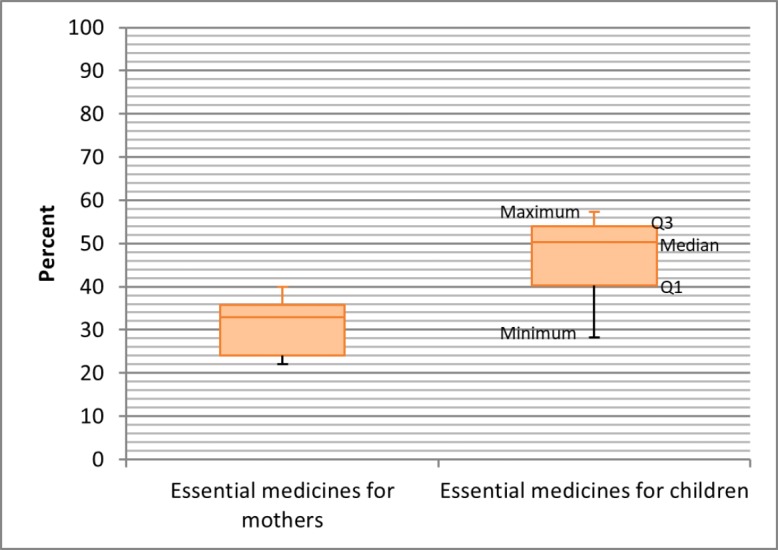
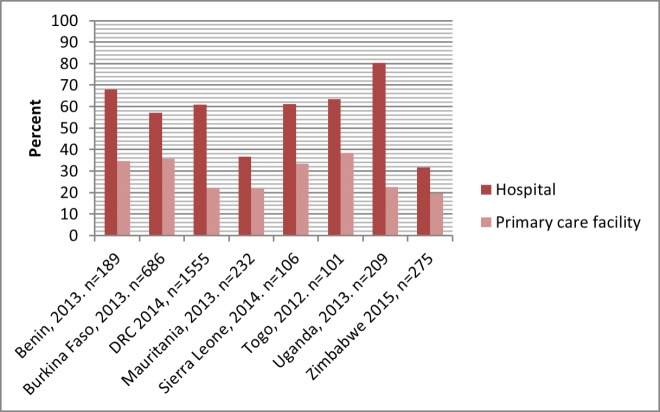
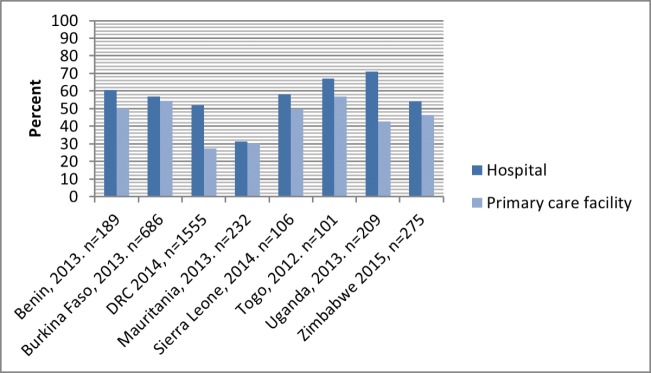
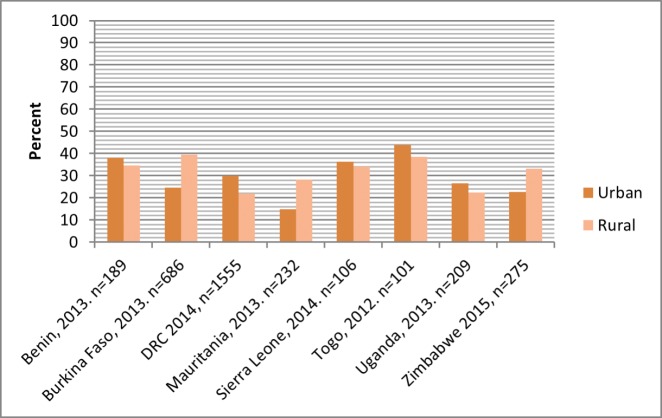
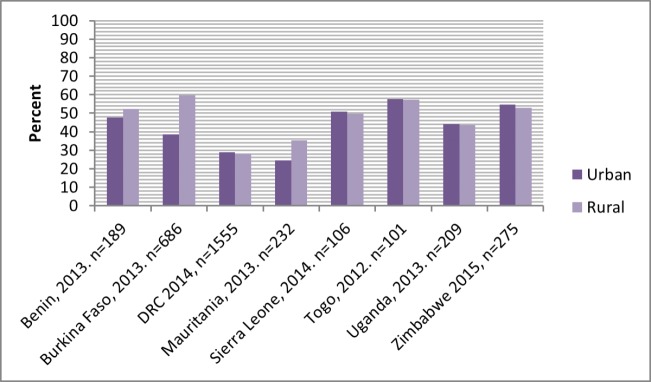
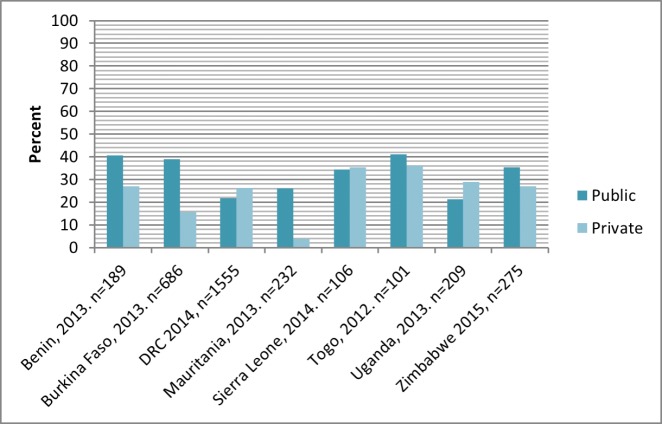
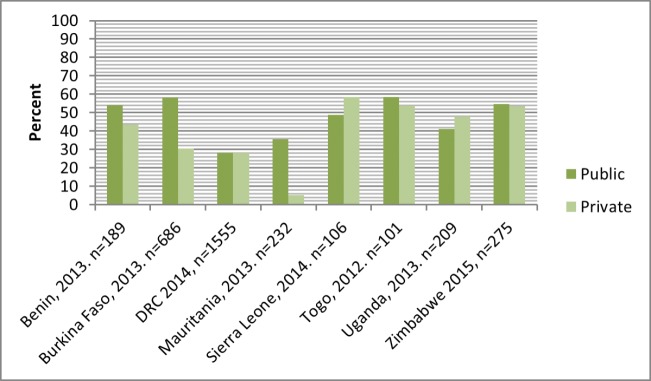
Background: Most maternal and child deaths are preventable or treatable with proven, cost-effective interventions for infectious diseases and maternal and neonatal complications. In 2015 sub-Saharan Africa accounted for up to 66% of global maternal deaths and half of the under-five deaths. Access to essential medicines and commodities and trained healthcare workers to provide life-saving maternal, newborn and post-natal care are central to further reductions in maternal and child mortality. Methods: Available data for 24 priority medicines for women and children were extracted from WHO service availability and readiness assessments conducted between 2012 and 2015 for eight countries in sub-Saharan Africa. The mean availability of medicines in facilities stating they provide services for women or children and differences by facility type, ownership and location are reported. Results: The mean availability of 12 priority essential medicines for women ranged from 22% to 40% (median 33%; IQR 12%) and 12 priority medicines for children ranged from 28% to 57% (median 50%; IQR 14%). Few facilities (<1%) had all nominated medicines available. There was higher availability of priority medicines for women in hospitals than in primary care facilities: range 32%–80% (median 61%) versus 20%–39% (median 23%) and for children’s medicines 31%–71% (median 58%) versus 27%–57% (median 48%). Availability was higher in public than private facilities: for women’s medicines, range 21%–41% (median 34%) versus 4%–36% (median 27%) and for children’s medicines 28%–58% (median 51%) versus 5%–58% (median 46%). Patterns were mixed for rural and urban location for the priority medicines for women, but similar for children’s medicines. Conclusions: The survey results show unacceptably low availability of priority medicines for women and children in the eight countries. Governments should ensure the availability of medicines for mothers and children if they are to achieve the health sustainable development goals.
Overview
The claims and statistics of this paper haven’t been checked yet.
Free: it reads the open-access text and checks the first 5 claims that cite a source we can check. Create a free account to check every claim.
Integrity signals
Registry
Cites
Statistics
Figures
Verification
Claims the paper makes
The claims and statistics of this paper haven’t been checked yet.
Free: it reads the open-access text and checks the first 5 claims that cite a source we can check. Create a free account to check every claim.
Claims other papers make about this one
Each is checked against this paper’s own text: does it say what the citing paper says it does?
The check wasn’t confident either way, so it gives no verdict — never disputed.
In the citing paper
“Low investment in essential medicines for health, a lack of comprehensive health financing policies and strategic plans, extensive out-of-pocket payments, a lack of social safety nets to protect the poor, poor financial management, inefficient resource allocation and use, and weak mechanisms for coordinating partner support constrain health financing in the African region.30,41”
From Challenges to the Availability and Affordability of Essential Medicines in African Countries: A Scoping Review (2023) · cites this paper as [30]
Experimental — accuracy not yet measuredIn the citing paper
“Low investment in essential medicines for health, a lack of comprehensive health financing policies and strategic plans, extensive out-of-pocket payments, a lack of social safety nets to protect the poor, poor financial management, inefficient resource allocation and use, and weak mechanisms for coordinating partner support constrain health financing in the African region.30,41”
From Challenges to the Availability and Affordability of Essential Medicines in African Countries: A Scoping Review (2023) · cites this paper as [30]
In the citing paper
“Low investment in essential medicines for health, a lack of comprehensive health financing policies and strategic plans, extensive out-of-pocket payments, a lack of social safety nets to protect the poor, poor financial management, inefficient resource allocation and use, and weak mechanisms for coordinating partner support constrain health financing in the African region.30,41”
From Challenges to the Availability and Affordability of Essential Medicines in African Countries: A Scoping Review (2023) · cites this paper as [30]
In the citing paper
“When, where, where from, which one, how much, and how many times; in short, the fundamental parameters required for a successful supply chain setup are highly uncertain.30,39”
From Challenges to the Availability and Affordability of Essential Medicines in African Countries: A Scoping Review (2023) · cites this paper as [30]
In the citing paper
“Low investment in essential medicines for health, a lack of comprehensive health financing policies and strategic plans, extensive out-of-pocket payments, a lack of social safety nets to protect the poor, poor financial management, inefficient resource allocation and use, and weak mechanisms for coordinating partner support constrain health financing in the African region.30,41”
From Challenges to the Availability and Affordability of Essential Medicines in African Countries: A Scoping Review (2023) · cites this paper as [30]
4 more claims about this paper
Create a free account to see every claim other papers make about this one.
Self-check
Percentages, sums and reported differences re-computed from the paper’s own numbers.
The self-check needs the paper’s full text.
Citations
Cites
Global causes of maternal death: a WHO systematic analysis
Say, L., Chou, D., Gemmill, A., Tunçalp, Ö., Moller, A.-B., Daniels, J., Gülmezoglu, A. M., Temmerman, M., & Alkema, L. (2014) · The Lancet Global Health · doi:10.1016/s2214-109x(14)70227-x · Cited by 6,582 · cited 2×
“1 Postpartum haemorrhage was the leading cause of maternal death in low-income countries, with death rates around 150 per 100 000 deliveries in sub-Saharan Africa compared with 0.4 per 100 000 in the UK.”
InfluentialLevels and trends in child mortality, 1990–2009
You, D., Jones, G., Hill, K., Wardlaw, T., & Chopra, M. (2010) · The Lancet · doi:10.1016/s0140-6736(10)61429-8 · Cited by 790
Suzuki, E., Mathers, C. D., Moller, A., Alkema, L., Say, L., Gemmill, A., Mills, S. L., Chou, D., & Hogan, D. R. (2014) · Cited by 680
Every Newborn: An Action plan to end preventable deaths
New, K. (2013) · Cited by 585
Cleary, J. F., Radbruch, L., Torode, J., & Cherny, N. I. (2013) · Annals of Oncology · doi:10.1093/annonc/mdt500 · Cited by 135
Torloni, M., Gomes Freitas, C., Kartoglu, U., Metin Gülmezoglu, A., & Widmer, M. (2016) · BJOG: An International Journal of Obstetrics & Gynaecology · doi:10.1111/1471-0528.13998 · Cited by 133 · cited 1×
“oxytocin in circulation that may relate to inadequate storage and transportation and/or low manufacturing quality.(23) 24”
Bedford, K. J. A., & Sharkey, A. (2014) · PLoS ONE · doi:10.1371/journal.pone.0100038 · Cited by 124
Cleary, J. F., Powell, R. A., Munene, G., Mwangi-Powell, F. N., Luyirika, E. B. K., Kiyange, F., Merriman, A., Scholten, W. K., Radbruch, L., Torode, J., et al. (2013) · Annals of Oncology · doi:10.1093/annonc/mdt499 · Cited by 87 · cited 1×
“34 The strengths of this study are the large numbers and representative sample of facilities surveyed in each country.”
Anyakora, C., Oni, Y., Ezedinachi, U., Adekoya, A., Ali, I., Nwachukwu, C. U., Esimone, C. O., Abiola, V. O., & Nwokike, J. (2018) · BMC Pregnancy and Childbirth · doi:10.1186/s12884-018-1671-y · Cited by 79
Medicines availability for non-communicable diseases: the case for standardized monitoring
Robertson, J., Macé, C., Forte, G. B., de Joncheere, K., & Beran, D. (2015) · Globalization and Health · doi:10.1186/s12992-015-0105-0 · Cited by 61 · cited 1×
“Differences in estimates of medicines availability can relate to study methods, facility selection and definitions of products surveyed.(35) However reliable quantification is critical in order to assess problems, determine causes, institute remedies to improve the availability of critical medicines and monitor change…”
Self-citation
Research works printed but not linked: 2
- World Health Organization Who recommendations for the prevention and treatment of postpartum haemorrhage. Geneva: World Health Organization, 2012 (Accessed 24 Aug 2017). 23586122
- World Health Organization Who recommendations for the prevention and treatment of pre-eclampsia and eclampsia. Geneva: World Health Organization, 2011 (Accessed on 17 June 2019). 23741776
Cited by
Sustainable Development Goals relevant to kidney health: an update on progress
Luyckx, V. A., Al-Aly, Z., Bello, A. K., Bellorin-Font, E., Carlini, R. G., Fabian, J., Garcia-Garcia, G., Iyengar, A., Sekkarie, M., van Biesen, W., et al. (2021) · Nature Reviews Nephrology · doi:10.1038/s41581-020-00363-6 · Cited by 221
Yenet, A., Nibret, G., & Tegegne, B. A. (2023) · ClinicoEconomics and Outcomes Research · doi:10.2147/ceor.s413546 · Cited by 202
“30,39 A workshop by WHO (2006) outlines the difficulties of the medicine supply in African countries; the main barriers are poor information, communication, and consumption data, inadequate storage facilities and temperature control systems, and a lack of quality assurance procedures.”
InfluentialOoms, G. I., Kibira, D., Reed, T., van den Ham, H. A., Mantel-Teeuwisse, A. K., & Buckland‐Merrett, G. (2020) · BMC Public Health · doi:10.1186/s12889-020-09155-w · Cited by 68
Deressa, M. B., Beressa, T. B., & Jemal, A. (2022) · Integrated Pharmacy Research and Practice · doi:10.2147/iprp.s354810 · Cited by 46
“A study conducted in eight sub-Saharan African countries indicated that the availability of 12 priority essential medicines for women is ranged from 22% to 40% and for children it ranged from 28% to 57%.(16) Another study conducted on ten tracer drugs in 15 health centers (HC) of Rwanda showed that 73% of the faciliti…”
BackgroundPiggott, T., Nowak, A. J., Brignardello‐Petersen, R., Cooke, G., Huttner, B. D., Schünemann, H. J., Persaud, N., Magrini, N., & Moja, L. (2022) · BMJ Open · doi:10.1136/bmjopen-2021-053349 · Cited by 44
Bilal, A. I., Bititci, U., & Fenta, T. G. (2024) · Pharmacy · doi:10.3390/pharmacy12050132 · Cited by 42
“Many nations, particularly in Africa and Asia, struggle with access due to unaffordability and supply chain inefficiencies [3,4].”
BackgroundNkamba, D. M., Vangu, R. V., Elongi, M., Magee, L. A., Wembodinga, G. U., Bernard, P., Ditekemena, J., & Robert, A. R. (2020) · BMC Health Services Research · doi:10.1186/s12913-020-05795-1 · Cited by 27
“or are forced to attend private facilities as the latter represent more than 60% of all facilities [49].”
BackgroundSsetaala, A., Nabawanuka, J., Matovu, G., Nakiragga, N., Namugga, J., Nalubega, P., Kaluuma, H. L., Chinyenze, K., Perehudoff, K. S., Michielsen, K., et al. (2020) · BMC Health Services Research · doi:10.1186/s12913-020-05739-9 · Cited by 25
Resilient health systems for attaining universal health coverage
Tumusiime, P., Nabyonga‐Orem, J., Karamagi, H. C., Lehmann, U., Elongo, T., Nikiéma, J.-B., Kabaniha, G. A., & Okeibunor, J. (2019) · BMJ Global Health · doi:10.1136/bmjgh-2019-002006 · Cited by 21
Richards, G. C., Aronson, J. K., Heneghan, C. J., Mahtani, K. R., Koshiaris, C., & Persaud, N. (2020) · BMJ Global Health · doi:10.1136/bmjgh-2020-003563 · Cited by 19
Availability, pricing, and affordability of essential medicines for pediatric population in Malawi
Chiumia, F. K., Chithope-Mwale, C., Abikoloni, F., Matchaya, V., Gaviyawo, T., & Khuluza, F. (2024) · Frontiers in Pharmacology · doi:10.3389/fphar.2024.1379250 · Cited by 14
Adejumo, O. A., Ogundele, O. A., Mamven, M., Oyedepo, D. S., Ntaji, M. I., Mohammed, A., Lawal, A. T. B., Onyebuchi, O. S., Akakuru, O. K., Lawal, O. M., et al. (2023) · BMJ Open · doi:10.1136/bmjopen-2023-073833 · Cited by 16
Mbonane, H., Sibanda, M., Godman, B., Meyer, J. C., & Matlala, M. (2023) · Exploratory Research in Clinical and Social Pharmacy · doi:10.1016/j.rcsop.2023.100233 · Cited by 13
“Stock-outs of essential medicines, particularly at primary healthcare (PHC) level, is an important and widely acknowledged public health problem across sub-Saharan Africa, with a recognized negative impact on morbidity andmortality.(17) This is especially important given rising rates of NCDs across sub-Saharan Africa,…”
BackgroundBoche, B., Mulugeta, T., & Gudeta, T. (2022) · INQUIRY The Journal of Health Care Organization Provision and Financing · doi:10.1177/00469580221078514 · Cited by 12
“A survey from 8 countries in subSaharan Africa shows that the mean availability of priority essential medicines for women and children ranged from 22% to 57%.(19) Ethiopia is the sub-Saharan African countries and the second highly populated next to Nigeria, with a population size of 112.”
BackgroundLohmann, J., Brenner, S., Koulidiati, J., SOMDA, S. M. A., Robyn, P. J., & Allegri, M. D. (2022) · PLOS Global Public Health · doi:10.1371/journal.pgph.0000212 · Cited by 14
“A study based on the same SARA data set, but focusing on the availability of essential medicines for women and children specifically, found that on average across health facilities, between 4 and 5 out of 12 EMs for maternal health services and between 6 and 7 out of 12 EMs for child health services were available [19…”
MethodEzezew, M., Yehualaw, A., & Demsie, D. G. (2023) · BMC Pediatrics · doi:10.1186/s12887-023-04216-6 · Cited by 12
“The medicines listed as priority life-saving medicines are included in the WHO model list of essential medicines (EML), the WHO EML for Children (with the exception of dexamethasone and betamethasone) and WHO treat-ment guidelines [13–15].”
BackgroundDeng, J., Mayai, A. T., Kayitare, E., Ntakirutimana, T., Swallehe, O., & Bizimana, T. (2023) · Journal of Pharmaceutical Policy and Practice · doi:10.1186/s40545-023-00675-5 · Cited by 11
“A study done in eight sub-Saharan African countries showed that the availability of life-saving medications for women and children was unacceptably low [19].”
BackgroundDinkashe, F. T., Haile, K., & Mohammed, F. (2022) · BMC Health Services Research · doi:10.1186/s12913-022-07793-x · Cited by 14
“Background Most maternal deaths are preventable or treatable with verified, cost-effective interventions for infectious diseases and maternal complications [1].”
BackgroundBekele, A., Kumsa, W., & Ayalew, M. (2022) · Integrated Pharmacy Research and Practice · doi:10.2147/iprp.s378340 · Cited by 12
“Yet, there are persistent disparities in the availability and accessibility of life-saving drugs due to the costly and complex nature of pharmaceutical supply chain management.(7) A fragile drug supply management system and inappropriate ways of managing inventories results in wastage, over- or under-stocking, loss, i…”
BackgroundShi, Y., Chen, Z., Zou, K., Zhang, M., Liu, Z., Liu, D., Zeng, L., Li, H., Jia, Z., Cheng, G., et al. (2023) · BMC Public Health · doi:10.1186/s12889-023-15820-7 · Cited by 11
“[15, 19, 23, 24] It is unclear that if the sample size was adequate in nineteen studies (86.”
BackgroundSieleunou, I., Allegri, M. D., Bonong, P. R. E., Ouédraogo, S., & Ridde, V. (2020) · Tropical Medicine & International Health · doi:10.1111/tmi.13447 · Cited by 13
“Africa do not have access to the EMs they need [5] due to inappropriate drug financing strategies.”
BackgroundJacobs, T. G., Okemo, D., Ssebagereka, A., Mwehonge, K., Njuguna, E. M., Burger, D. M., Colbers, A. P. H., Suleman, F., Mantel-Teeuwisse, A. K., & Ooms, G. I. (2024) · HIV Medicine · doi:10.1111/hiv.13635 · Cited by 11
“Availability of essential medications for children is often low in sub-Saharan Africa [26].”
BackgroundQuality of antenatal care in primary health care in Brazil: a latent class analysis
Ortelan, N., Flores-Quispe, M. D. P., da Luz, L. A., Martufi, V., dos Anjos, E. F., de Lima, A. M. P., de Almeida, J. R., dos Passos, M. P. V., Santos, Y. H. D. S., Amorim, L. D. A. F., et al. (2023) · IJQHC Communications · doi:10.1093/ijcoms/lyad014 · Cited by 11
“Such initiatives can contribute to ensuring that expectant mothers receive the highest standard of ANC, leading to better health outcomes for both mothers and babies.”
BackgroundMayunga, C., Msaki, E. B., Katabalo, D. M., & Mwita, S. M. (2025) · The Journal of Medicine Access · doi:10.1177/27550834251371865 · Cited by 8
Spatiotemporal distributions of under-five mortality in Ethiopia between 2000 and 2019
Atalell, K. A., & Alene, K. A. (2023) · PLOS Global Public Health · doi:10.1371/journal.pgph.0001504 · Cited by 9
Masresha, R., Habte, F., Feyissa, M., Baye, A. M., Kassaw, C., & Beyene, M. G. (2024) · Scientific Reports · doi:10.1038/s41598-024-82919-1 · Cited by 9
Improving access to essential medicines via decision-aware machine learning
Chung, A. T.-H., Abdulai, J., Bayoh, P., Sandi, L., Smart, F., Bastani, H., & Bastani, O. (2026) · Nature · doi:10.1038/s41586-026-10433-7 · Cited by 10
Inequity in access to medications among communities in Eastern Ethiopia: a decomposition analysis
Edessa, D., Kumsa, F. A., Dinsa, G. D., & Oljira, L. (2025) · BMC Health Services Research · doi:10.1186/s12913-025-12963-8 · Cited by 7
Evaluation of rational prescribing in paediatrics
Choonara, I. (2021) · BMJ Paediatrics Open · doi:10.1136/bmjpo-2021-001045 · Cited by 6
Bekele, Y. A., Gallagher, C., Vicendese, D., Buultjens, M., Batra, M., & Erbas, B. (2024) · International Journal of Environmental Research and Public Health · doi:10.3390/ijerph21070856 · Cited by 6
“…service utilisation [10,11], financial hardships [11], health illiteracy [12], weak healthcare systems [12], limited access to and availability of services [12,13], and poor quality of maternal healthcare services [14] are major obstacles hindering the achievement of SDG in the Sub-Saharan region.”
BackgroundJoosse, I. R., Mantel-Teeuwisse, A. K., Suleman, F., & van den Ham, H. A. (2023) · BMJ Open · doi:10.1136/bmjopen-2022-065929 · Cited by 5
The missing puzzle piece: contextual insights for enhanced pharmaceutical supply chain forecasting
Bilal, A. I., Rostami-Tabar, B., Hewage, H. H., Bititci, U., & Fenta, T. G. (2025) · International Journal of Production Research · doi:10.1080/00207543.2025.2546028 · Cited by 4
“The average availability of women’s priority medicines ranged from just 22% to 40%, while children’s medicines were only slightly more accessible, with availability ranging from 28% to 57% (Droti et al. 2019).”
Equity in Access to and Quality Use of Medicines in Low- and Middle-Income Countries
Holloway, K., & Everard, M. (2023) · Springer eBooks · doi:10.1007/978-3-030-64477-2_135 · Cited by 4
Geographic equity in essential newborn care practices in Ethiopia: a cross-sectional study
Delele, T. G., Persson, L. Å., Schellenberg, J., Berhanu, D., Lemma, S., Defar, A., Getachew, T., Taye, G., Shiferaw, S., Denu, Z. A., et al. (2025) · BMC Pediatrics · doi:10.1186/s12887-025-05645-1 · Cited by 3
“Essential newborn care is needed for reaching the SDG 3.2 target to reduce the global neonatal mortality to 12/1000 live births or less [5].”
InfluentialRagomzingba, F. E. Z., Haroun, S. H., Ngabéré, C., Borgnol, A., Yoyammel, M., Kadai, A. O., Efobi, J. E., Tamuzi, J. L., Katoto, P. D., Wiysonge, C. S., et al. (2025) · PubMed Central · doi:10.11604/pamj.2025.51.72.47698 · Cited by 4
“It is well documented that the use of generics, although often more economical, is not systematically adopted due to perceptions about their effectiveness and quality [18].”
Woldeyohanins, A. E., Kasahun, A. E., Demeke, C. A., & Kifle, Z. D. (2021) · Pediatric Health Medicine and Therapeutics · doi:10.2147/phmt.s323809 · Cited by 3
Ntoimo, L. F. C., Ogungbangbe, J., Imongan, W., Yaya, S., & Okonofua, F. E. (2021) · PubMed Central · doi:10.11604/pamj.2021.40.151.25976 · Cited by 3
“These results are consistent with studies that have observed low availability of personnel and essential medicines and equipment in primary and secondary health care facilities in Nigeria and other sub-Saharan African countries [17,21,27-30].”
ResultModutlwa, N. (2024) · International Journal of Innovation in Management Economics and Social Sciences · doi:10.59615/ijimes.4.2.14 · Cited by 5
“Many African countries, among others, struggle with access to essential medicines due to affordability and supply chain challenges [3].”
BackgroundOnoja, A. J., Sanni, F. O., Akogu, S. P. O., & Onoja, S. I. (2022) · International Journal of Health & Allied Sciences · doi:10.55691/2278-344x.1053 · Cited by 2
“This agrees with a study that reported low availability of 12 priority essential medicines for both children and women in eight sub-Sahara African countries though Nigeria was not included [14].”
BackgroundMakama, F. T., Makama, E. F., & Waziri, P. M. (2024) · African Journal of Social Issues · doi:10.4314/ajosi.v7i1.10 · Cited by 2
“SDG 3 : Good health and Wellbeing (Bora and Saikia, 2018; Droti, O’Neill, Dovlo & Robertson, 2019; Khetrapal and Bhatia, 2020).”
BackgroundWhat Primary Care mechanisms impact mortality in children under five?Preprint
de Oliveira, C., dos Anjos, E. F., Martufi, V., de Lima, A. M. P., Flores-Quispe, M. D. P., dos Santos, H. P. G., da Luz, L. A., Vieira‐Meyer, A. P. G. F., Aquino, R., Ichihara, M. Y., et al. (2023) · Research Square · doi:10.21203/rs.3.rs-2944197/v1 · Cited by 2
Belew, S., Mekasha, Y. T., Kosgei, A., Spiegeleer, A. D., Wynendaele, E., Spiegeleer, B. D., & Suleman, S. (2026) · Conflict and Health · doi:10.1186/s13031-026-00815-z · Cited by 1
“Since low and middle income countries are facing relatively low access and availability to essential medicines [3, 5, 213, 215, 216], various disease conditions requiring pharmacological interventions might not be managed.”
The health care provider's needs in the pediatric drug development process
Dossche, L., Samardžić, J., Tack, B., García‐Bournissen, F., van den Anker, J. N., & Schrier, L. (2024) · Elsevier eBooks · doi:10.1016/b978-0-323-88459-4.00007-9 · Cited by 1
Access to sexual and reproductive health medicines and supplies in Sub-Saharan Africa
Kibira, D. (2021) · Utrecht University Repository (Utrecht University) · doi:10.33540/986 · Cited by 3
Mwashala, W., Grant, J. M., Saikia, U., & Chamberlain, D. J. (2021) · Research Square · doi:10.21203/rs.3.rs-805951/v1 · Cited by 1
The Sustainable Development Goals: A Way Forward for Pakistan
Afzal, S., & Junaid, K. (2022) · Annals of King Edward Medical University · doi:10.21649/akemu.v28i2.5079 · Cited by 1
Equity in Access to and Quality Use of Medicines in Low- and Middle-Income Countries
Holloway, K., & Everard, M. (2023) · Springer eBooks · doi:10.1007/978-3-030-50247-8_135-1 · Cited by 1
Abuka, K., Oluka, M. N., Guantai, E. M., Okalebo, F., & Okumu, M. O. (2023) · Qeios · doi:10.32388/a7vavw · Cited by 1
“A study on the availability of essential medicines in some hospitals in Benin, Sierra Leone, Burkina Faso, Uganda, DRC, Mauritania, Togo, and Zimbabwe reported unacceptably low numbers of essential medicines [4].”
Martufi, V., de Almeida, J. R., dos Passos, M. P. V., Flores-Quispe, M. D. P., da Luz, L. A., de Lima, A. M. P., dos Anjos, E. F., dos Santos, H. P. G., de Oliveira, C. C. M., Amorim, L. D. A. F., et al. (2025) · Research Square · doi:10.21203/rs.3.rs-6466156/v1 · Cited by 1
Dogbey, J. (2023) · Ghana Pharmaceutical Journal · doi:10.38159/gpj.2023101
Abuka, K., Oluka, M. N., Guantai, E. M., Okalebo, F., & Okumu, M. O. (2023) · Qeios · doi:10.32388/a7vavw.2
Shi, Y., Chen, Z., Zou, K., Zhang, M., Liu, Z., Liu, D., Zeng, L., Li, H., Jia, Z.-J., Cheng, G., et al. (2024) · Figshare · doi:10.6084/m9.figshare.26598470
Degebo, A. S., & Tilahun, G. N. (2026) · Health Science Reports · doi:10.1002/hsr2.72222
“Poor inventory management in public facilities leads to a significant waste of valuable financial resources [30].”
Ogbodu, O. M. (2026) · Health Open Research · doi:10.12688/healthopenres.14031.1
Strengthening Health Systems for Improvements in Maternal and Child Health
Morgan, J., Banke-Thomas, A. O., & Shumba, C. S. (2026) · Springer eBooks · doi:10.1007/978-1-0716-5428-6_4 · Cited by 1
Tesha, A., Nsimbila, P. M., Cheikhrouhou, N., & Mrope, N. (2026) · Research Journal of Business and Finance · doi:10.58721/nzs72v94
Mabina, J. T. (2026) · Boloka Institutional Repository (North-west University)
Metadata
- Authors
- Droti, B., O’Neill, K. P., Mathai, M., Yao Tsidi Dovlo, D., & Robertson, J.
- Affiliations
- World Health Organization (CH)
- World Health Organization - Denmark (DK)
- Health Systems and Services Cluster, World Health Organization, Regional Office for Africa, Brazzaville, Congo
- World Health Organization Regional Office for Europe (DK)
- Corresponding author
- Droti, Benson
- Venue
- BMJ Global Health
- Publisher
- BMJ
- Published
- 2019-10
- Volume
- 4
- Issue
- Suppl 9
- Pages
- e001306
- ISSN
- 2059-7908 (ISSN-L)
- PMC
- PMC6797404
- OpenAlex
- W2978939006
- Semantic Scholar
- 46c5cfbdb7e34c240df36cc96c8aecd1416882ed
- Cited by
- 51
- References
- 21
- Citations by year
- 2026: 3 · 2025: 5 · 2024: 8 · 2023: 15 · 2022: 8 · 2021: 5 · 2020: 6 · 2019: 1
- Type
- conference abstract
- Language
- en
- Open access
- gold
- doi.org
- Licence
- cc-by-nc
- Locations
- BMJ Global Health (publishedVersion, cc-by-nc)
- Europe PMC (PubMed Central) (publishedVersion, cc-by-nc)
- PubMed Central (publishedVersion, cc-by-nc)
- PubMed (publishedVersion)
- NOVA (University of Newcastle Australia) (submittedVersion)
- Funders
- World Health Organization
- Topics
- Health Sciences › Medicine › Pediatrics, Perinatology and Child Health › Global Maternal and Child Health
- Social Sciences › Economics, Econometrics and Finance › Economics and Econometrics › Pharmaceutical Economics and Policy
- Health Sciences › Medicine › Public Health, Environmental and Occupational Health › Pharmaceutical Quality and Counterfeiting
- Keywords
- essential medicines availability, maternal health, child health, maternal mortality, under-five mortality, Sustainable Development Goal 3, sub-Saharan Africa, healthcare facilities, primary care, hospitals, urban-rural differences
About these checks
Registry, retraction, Cites and statistics results are computed, not judged, with one exception: a printed reference that no index lists is read once by a model before it counts as a citation error. Claims are extracted by a model and kept only when their quote appears verbatim in the text; each cited source is then checked, with a model’s help, for whether it says what the claim relies on. Those verdicts can be wrong — read the claim’s quote and the cited source before relying on one.
Statistics and arithmetic are recomputed, not judged.
Confidence bands are shown only for fields calibrated on our annotated test set. None is calibrated yet, so no band is shown.
What counts as a claim ›How we measure confidence ›How we check this ›
Are you an author, or do you see a problem with this page? Request a review
Data sources
Bibliographic data: Semantic Scholar, OpenAlex, Crossref.
Contains information from the Semantic Scholar Academic Graph Datasets, made available under the ODC Attribution License (ODC-BY 1.0).
Semantic Scholar’s data is described in: Kinney, R., et al. (2023). The Semantic Scholar Open Data Platform. arXiv:2301.10140.
