

Antibiotic overuse in the primary health care setting: a secondary data analysis of standardised patient studies from India, China and Kenya
Open accessThe DOI matches its Crossref record; 33 of the 34 references it cites were found in a registry or an index.
Abstract
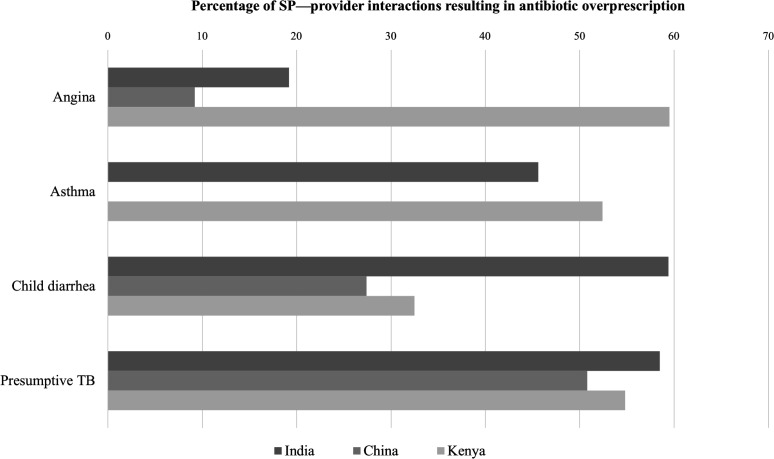
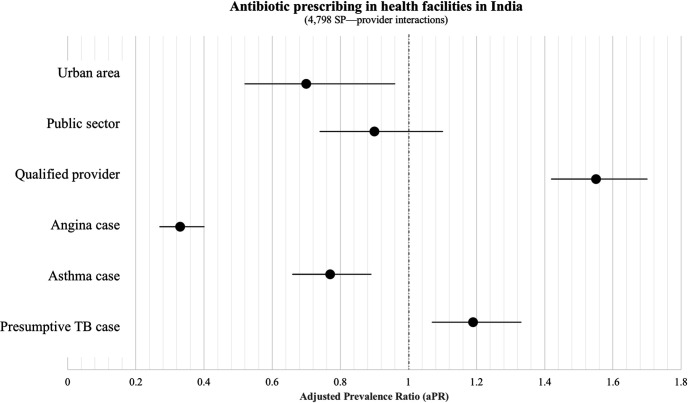
Introduction: Determining whether antibiotic prescriptions are inappropriate requires knowledge of patients’ underlying conditions. In low-income and middle-income countries (LMICs), where misdiagnoses are frequent, this is challenging. Additionally, such details are often unavailable for prescription audits. Recent studies using standardised patients (SPs) offer a unique opportunity to generate unbiased prevalence estimates of antibiotic overuse, as the research design involves patients with predefined conditions. Methods: Secondary analyses of data from nine SP studies were performed to estimate the proportion of SP–provider interactions resulting in inappropriate antibiotic prescribing across primary care settings in three LMICs (China, India and Kenya). In all studies, SPs portrayed conditions for which antibiotics are unnecessary (watery diarrhoea, presumptive tuberculosis (TB), angina and asthma). We conducted descriptive analyses reporting overall prevalence of antibiotic overprescribing by healthcare sector, location, provider qualification and case. The WHO Access–Watch–Reserve framework was used to categorise antibiotics based on their potential for selecting resistance. As richer data were available from India, we examined factors associated with antibiotic overuse in that country through hierarchical Poisson models. Results: Across health facilities, antibiotics were given inappropriately in 2392/4798 (49.9%, 95% CI 40.8% to 54.5%) interactions in India, 83/166 (50.0%, 95% CI 42.2% to 57.8%) in Kenya and 259/899 (28.8%, 95% CI 17.8% to 50.8%) in China. Prevalence ratios of antibiotic overuse in India were significantly lower in urban versus rural areas (adjusted prevalence ratio (aPR) 0.70, 95% CI 0.52 to 0.96) and higher for qualified versus non-qualified providers (aPR 1.55, 95% CI 1.42 to 1.70), and for presumptive TB cases versus other conditions (aPR 1.19, 95% CI 1.07 to 1.33). Access antibiotics were predominantly used in Kenya (85%), but Watch antibiotics (mainly quinolones and cephalosporins) were highly prescribed in India (47.6%) and China (32.9%). Conclusion: Good-quality SP data indicate alarmingly high levels of antibiotic overprescription for key conditions across primary care settings in India, China and Kenya, with broad-spectrum agents being excessively used in India and China.
Overview
The claims and statistics of this paper haven’t been checked yet.
Free: it reads the open-access text and checks the first 5 claims that cite a source we can check. Create a free account to check every claim.
Integrity signals
Registry
Cites
Statistics
Figures
Verification
Claims the paper makes
The claims and statistics of this paper haven’t been checked yet.
Free: it reads the open-access text and checks the first 5 claims that cite a source we can check. Create a free account to check every claim.
Claims other papers make about this one
Each is checked against this paper’s own text: does it say what the citing paper says it does?
The source backs part of the claim, not all of it — or backs it for a different population, condition or comparison.
In the citing paper
“In India, Despite Schedule H regulations, antibiotics are available in community pharmacies without a prescription, leading to inappropriate use and contributing to the rise of antibiotic resistance.”
From Evaluation of antibiotic dispensing without prescription by community pharmacies: a simulated patient study (2025) · cites this paper as [8]
Experimental — accuracy not yet measured
Self-check
Percentages, sums and reported differences re-computed from the paper’s own numbers.
The self-check needs the paper’s full text.
Citations
Cites
Bootstrap confidence intervals
DiCiccio, T. J., & Efron, B. (1996) · Statistical Science · doi:10.1214/ss/1032280214 · Cited by 2,286
Prevalence of inappropriate antibiotic prescriptions among US ambulatory care visits, 2010-2011
Fleming-Dutra, K. E., Hersh, A. L., Shapiro, D. J., Bartoces, M., Enns, E. A., File, T. M., Finkelstein, J. A., Gerber, J. S., Hyun, D. Y., Linder, J. A., et al. (2016) · JAMA · doi:10.1001/jama.2016.4151 · Cited by 1,740
Klein, E. Y., Milkowska-Shibata, M., Tseng, K. K., Sharland, M., Gandra, S., Pulcini, C., & Laxminarayan, R. (2021) · The Lancet Infectious Diseases · doi:10.1016/s1473-3099(20)30332-7 · Cited by 500
Self-citationDas, J., Holla, A., Das, V., Mohanan, M., Tabak, D., & Chan, B. (2012) · Health Affairs · doi:10.1377/hlthaff.2011.1356 · Cited by 424
Self-citationCOVID-19: don't neglect antimicrobial stewardship principles!
Huttner, B. D., Catho, G., Pano-Pardo, J. R., Pulcini, C., & Schouten, J. (2020) · Clinical Microbiology and Infection · doi:10.1016/j.cmi.2020.04.024 · Cited by 388
Sulis, G., Adam, P., Nafade, V., Gore, G., Daniels, B., Daftary, A., Das, J., Gandra, S., & Pai, M. (2020) · PLOS Medicine · doi:10.1371/journal.pmed.1003139 · Cited by 297
Self-citationMackintosh, M., Channon, A., Karan, A., Selvaraj, S., Cavagnero, E., & Zhao, H. (2016) · The Lancet · doi:10.1016/s0140-6736(16)00342-1 · Cited by 278
Getnet, F., Demissie, M., Assefa, N., Mengistie, B., & Worku, A. (2017) · BMC Pulmonary Medicine · doi:10.1186/s12890-017-0551-y · Cited by 272
Sharland, M., Gandra, S., Huttner, B., Moja, L., Pulcini, C., Zeng, M., Mendelson, M., Cappello, B., Cooke, G., Magrini, N., et al. (2019) · The Lancet Infectious Diseases · doi:10.1016/s1473-3099(19)30532-8 · Cited by 238
Self-citationUse of standardised patients to assess quality of tuberculosis care: a pilot, cross-sectional study
Das, J., Kwan, A., Daniels, B., Satyanarayana, S., Subbaraman, R., Bergkvist, S., Das, R. K., Das, V., & Pai, M. (2015) · The Lancet Infectious Diseases · doi:10.1016/s1473-3099(15)00077-8 · Cited by 237
Self-citation
Cited by
Antibiotic resistance in microbes: History, mechanisms, therapeutic strategies and future prospects
Uddin, T. M., Chakraborty, A. J., Khusro, A., Zidan, B. R. M., Mitra, S., Emran, T. B., Dhama, K., Ripon, M. K. H., Gajdács, M., Sahibzada, M. U. K., et al. (2021) · Journal of Infection and Public Health · doi:10.1016/j.jiph.2021.10.020 · Cited by 1,311
The Lancet Commission on diagnostics: transforming access to diagnostics
Fleming, K. A., Horton, S., Wilson, M. L., Atun, R., DeStigter, K., Flanigan, J., Sayed, S., Adam, P., Aguilar, B., Andronikou, S., et al. (2021) · The Lancet · doi:10.1016/s0140-6736(21)00673-5 · Cited by 471
Self-citationAntimicrobial resistance in low- and middle-income countries: current status and future directions
Sulis, G., Sayood, S., & Gandra, S. (2022) · Expert Review of Anti-infective Therapy · doi:10.1080/14787210.2021.1951705 · Cited by 379
“even among qualified practitioners [37,51,103], stewardship programs, laboratory strengthening, and increased access to proper diagnostic tools remain necessary.”
BackgroundSelf-citationEndale, H., Mathewos, M., & Abdeta, D. (2023) · Infection and Drug Resistance · doi:10.2147/idr.s428837 · Cited by 296
“20 According to 21 the overprescribing of antibiotics is a significant issue, particularly in primary care settings mainly for infections caused by viruses.”
BackgroundGodman, B., Egwuenu, A. J., Wesangula, E., Schellack, N., Kalungia, A. C., Tiroyakgosi, C., Kgatlwane, J., Mwita, J. C., Okwen, P., Niba, L. L., et al. (2022) · Expert Opinion on Drug Safety · doi:10.1080/14740338.2022.2106368 · Cited by 164
“Kenya [103,104,164,212-231] ● The Ministry of Health and Ministry of Agriculture, Livestock, Fisheries and Cooperatives, and other key stakeholders, launched the Kenyan NAP in 2017 with strategic objectives in line with the WHO NAP (Box 1) with implementation over a number of years including dissemination of AMR data…”
BackgroundGlobal Strategies to Combat Antimicrobial Resistance: A One Health Perspective
Mudenda, S., Chabalenge, B., Daka, V., Mfune, R. L., Salachi, K. I., Mohamed, S., Mufwambi, W., Kasanga, M., & Matafwali, S. K. (2023) · Pharmacology & Pharmacy · doi:10.4236/pp.2023.148020 · Cited by 150
Sulis, G., Batomen, B., Kotwani, A., Pai, M., & Gandra, S. (2021) · PLoS Medicine · doi:10.1371/journal.pmed.1003682 · Cited by 117
“Antimicrobial stewardship interventions have never been so critical, and mass media awareness campaigns targeting prescribers and the general public to discourage the routine use of antibiotics for COVID-19 need to be rapidly implemented in India and other LMICs.”
InfluentialSelf-citationCurrent economic and regulatory challenges in developing antibiotics for Gram-negative bacteria
Gargate, N., Laws, M., & Rahman, K. M. (2025) · npj Antimicrobials and Resistance · doi:10.1038/s44259-025-00123-1 · Cited by 125
Overuse of medications in low- and middle-income countries: a scoping review
Albarqouni, L., Palagama, S., Chai, J., Sivananthajothy, P., Pathirana, T., Bakhit, M., Arab‐Zozani, M., Ranakusuma, R. W., Cardona, M., Scott, A. M., et al. (2023) · Bulletin of the World Health Organization · doi:10.2471/blt.22.288293 · Cited by 91
Adhikari, B., Pokharel, S., Raut, S., Adhikari, J., Thapa, S. S., Paudel, K., Narayan, G., Neupane, S., Neupane, S. R., Yadav, R. K., et al. (2021) · BMJ Global Health · doi:10.1136/bmjgh-2021-005829 · Cited by 91
Saleem, Z., Moore, C. E., Kalungia, A. C., Schellack, N., Ogunleye, O. O., Chigome, A., Chowdhury, K., Kitutu, F. E., Massele, A. Y., Ramdas, N., et al. (2025) · JAC-Antimicrobial Resistance · doi:10.1093/jacamr/dlaf033 · Cited by 73
Saleem, Z., Sheikh, S., Godman, B., Haseeb, A., Afzal, S., Qamar, M. U., Imam, M. T., Abuhussain, S. S. A., & Sharland, M. (2025) · JAC-Antimicrobial Resistance · doi:10.1093/jacamr/dlaf031 · Cited by 73
Gautham, M., Spicer, N., Chatterjee, S., & Goodman, C. A. (2021) · Social Science & Medicine · doi:10.1016/j.socscimed.2021.113813 · Cited by 69
Alshammari, M. K., Ramadan, M., Haif, H., Abdullah, B., Mubarak, J., Ahmad, W., Mari, S., Hassan, S., Eid, R., Hasan, M. Y., et al. (2023) · Antibiotics · doi:10.3390/antibiotics12101504 · Cited by 63
“As a result, the improper utilization of antibiotics is becoming widespread, significantly contributing to the escalation of antimicrobial resistance (AMR) [7,8].”
BackgroundRetractedArdillon, A., Ramblière, L., Kermorvant‐Duchemin, E., Touch, S., Andrianirina, Z. Z., Diouf, J.-B. N., Pring, L., Lach, S., Sarr, F. D., Borand, L., et al. (2023) · PLoS Medicine · doi:10.1371/journal.pmed.1004211 · Cited by 63
“In a secondary data analysis study, Sulis and colleagues estimated the proportion of patient–provider interactions resulting in inappropriate antibiotic prescriptions in 3 LMICs (India, China, and Kenya).”
BackgroundInfluentialOdoyo, E., Matano, D., Tiria, F., Georges, M., Kyanya, C., Wahome, S., Mutai, W., & Musila, L. (2023) · Antimicrobial Resistance & Infection Control · doi:10.1186/s13756-023-01227-x · Cited by 43
“Third-generation cephalosporins are known to induce variants of AmpC beta-lactamases in Enterobacter species, resulting in resistance [46], and their widespread use in Kenyan hospitals [47, 48] could be providing a selective pressure that favors Enterobacter species and the emergence of cephalosporin resistance.”
BackgroundMudenda, S., Chomba, M., Chabalenge, B., Hikaambo, C. N., Banda, M., Daka, V., Zulu, A., Mukesela, A., Kasonde, M., Lukonde, P., et al. (2022) · Pharmacology & Pharmacy · doi:10.4236/pp.2022.1310029 · Cited by 43
Lagarde, M., & Blaauw, D. (2023) · BMJ Global Health · doi:10.1136/bmjgh-2023-012374 · Cited by 55
Chigome, A., Ramdas, N., Skosana, P., Cook, A., Schellack, N., Campbell, S., Lorenzetti, G., Saleem, Z., Godman, B., & Meyer, J. C. (2023) · Antibiotics · doi:10.3390/antibiotics12101540 · Cited by 47
Saleem, Z., Mekonnen, B. A., Orubu, E. S. F., Islam, M. A., Phuong, T. N. T., Ubaka, C. M., Buma, D. C., Do, N. T. T., Sant, Y., Sono, T. M., et al. (2025) · Expert Review of Anti-infective Therapy · doi:10.1080/14787210.2025.2477198 · Cited by 46
Moitra, S., Mahesh, P. A., & Moitra, S. (2023) · Clinical & Experimental Allergy · doi:10.1111/cea.14295 · Cited by 47
Deb, L. C., McGrath, R., Schlosser, L., Hewitt, A. J., Schweitzer, C., Rotar, J., Leedahl, N. D., Crosby, R. D., & Carson, P. J. (2022) · Open Forum Infectious Diseases · doi:10.1093/ofid/ofac302 · Cited by 39
“In addition, providers in rural settings compared with urban settings were more likely to provide unnecessary antibiotic prescriptions, as seen in studies conducted in different geographic regions [37, 38].”
BackgroundMeng, C., Feng, S., Hao, Z., Dong, C., & Liu, H. (2021) · Psychoneuroendocrinology · doi:10.1016/j.psyneuen.2021.105620 · Cited by 39
Yamba, K., Lukwesa‐Musyani, C., Samutela, M., Kapesa, C., Hang’ombe, M. B., Mpabalwani, E. M., Hachaambwa, L., Fwoloshi, S., Chanda, R., Mpundu, M. M., et al. (2023) · PLOS Global Public Health · doi:10.1371/journal.pgph.0001414 · Cited by 40
“Thus, this study aimed to determine the epidemiological, clinical and microbiological features and the effects of antimicrobial resistance on the outcomes of BSIs at a referral hospital in Lusaka, Zambia.”
BackgroundResultInfluentialLow-Value Surgical Procedures in Low- and Middle-Income Countries: A Systematic Scoping Review
Albarqouni, L., Abukmail, E., MohammedAli, M., Elejla, S., Abuelazm, M. T., Shaikhkhalil, H. W., Pathirana, T., Palagama, S., Effa, E., Ochodo, E., et al. (2023) · JAMA Network Open · doi:10.1001/jamanetworkopen.2023.42215 · Cited by 32
Daniels, B., Shah, D., Kwan, A. T., Das, R., Das, V., Puri, V., Tipre, P., Waghmare, U., Gomare, M., Keskar, P., et al. (2022) · BMJ Global Health · doi:10.1136/bmjgh-2022-009657 · Cited by 34
Self-citationJamil, E., Saleem, Z., Godman, B., Ullah, M., Amir, A., Haseeb, A., Meyer, J. C., Qamar, M. U., & Abuhussain, S. S. A. (2025) · Frontiers in Pharmacology · doi:10.3389/fphar.2025.1600787 · Cited by 33
Antimicrobial prescription patterns in East Africa: a systematic review
Acam, J., Kuodi, P., Medhin, G., & Makonnen, E. (2023) · Systematic Reviews · doi:10.1186/s13643-022-02152-7 · Cited by 28
“The high frequency of patient encounter with antimicrobial agents could be due to the clinicians practice of prescribing antimicrobial agents without culture and sensitivity tests, symptomatic management, empirical treatment, inadequate use of available country-specific treatment guidelines, and insufficient knowledge…”
BackgroundMachongo, R. B., & Mipando, A. L. N. (2022) · BMC Pediatrics · doi:10.1186/s12887-022-03528-3 · Cited by 29
“The use of left-over antibiotics to give to their children at home as reported in this study was reported earlier [6, 30] and parents stated that they were influenced by their social contacts in obtaining medicines, sharing antibiotics, or information on antibiotic use [13, 38].”
BackgroundTailor-made biochar-based nanocomposite for enhancing aqueous phase antibiotic removal
Shaikh, W. A., Chakraborty, S., Kumar, A., Biswas, J. K., Jha, A. K., Bhattacharya, T., Vithanage, M. S., Ansar, S., & Hossain, N. (2023) · Journal of Water Process Engineering · doi:10.1016/j.jwpe.2023.104215 · Cited by 27
How can we tackle the overuse of antibiotics in low- and middle-income countries?
Sulis, G., Sayood, S. J., & Gandra, S. (2023) · Expert Review of Anti-infective Therapy · doi:10.1080/14787210.2023.2263643 · Cited by 34
“…on cases where antibiotics are not recommended (i.e. acute watery diarrhea, upper respiratory tract infection, presumptive pulmonary tuberculosis, angina, asthma) revealed that 30–50% of patient-provider encounters resulted in the prescription or direct dispensation of one or more antibiotics [4].”
BackgroundInfluentialSelf-citationMassele, A. Y., Rogers, A. M., Gabriel, D., Mayanda, A., Magoma, S., Cook, A., Chigome, A., Lorenzetti, G., Meyer, J. C., Moore, C. E., et al. (2023) · Medicina · doi:10.3390/medicina59122195 · Cited by 29
“We have seen high rates of ‘Watch’ antibiotics being dispensed or prescribed in ambulatory care in other LMICs, which needs to be avoided where possible in Tanzania alongside reducing any prescriptions of azithromycin where pertinent [73,174–176].”
BackgroundKotwani, A., Bhanot, A., Singal, G. L., & Gandra, S. (2022) · Antibiotics · doi:10.3390/antibiotics11010095 · Cited by 25
Self-citationElkady, H., Salman, I. N., & Khalifa, M. M. (2025) · RSC Advances · doi:10.1039/d5ra04047g · Cited by 26
Zhao, H.-Y., Wang, S., Meng, R., Liu, G., Hu, J., Zhang, H., Yan, S., & Zhan, S. (2022) · Frontiers in Pharmacology · doi:10.3389/fphar.2022.861782 · Cited by 24
Yamba, K., Mudenda, S., Mpabalwani, E. M., Mainda, G., Mukuma, M., Samutela, M., Lukwesa, C., Chizimu, J. Y., Kaluba, C. K., Mutalange, M., et al. (2024) · JAC-Antimicrobial Resistance · doi:10.1093/jacamr/dlae027 · Cited by 23
Mudenda, S., Mufwambi, W., & Mohamed, S. (2024) · Pharmacology & Pharmacy · doi:10.4236/pp.2024.1512024 · Cited by 20
Evolution of community health workers: the fourth stage
Mor, N., Ananth, B., Ambalam, V., Edassery, A., Meher, A., Tiwari, P., Sonawane, V., Mahajani, A. A., Mathur, K., Parekh, A., et al. (2023) · Frontiers in Public Health · doi:10.3389/fpubh.2023.1209673 · Cited by 18
King, J., Powell‐Jackson, T., Makungu, C., Hargreaves, J., & Goodman, C. A. (2021) · Health Policy and Planning · doi:10.1093/heapol/czab039 · Cited by 16
Pereira, B., & Kulkarni, S. (2022) · International Journal of Risk & Safety in Medicine · doi:10.3233/jrs-210020 · Cited by 17
“The second practice reported was the tendency to save antibiotics for the future use and was an important contributing factor to the use of antibiotics without prescription [19].”
InfluentialShi, Q., Mao, D., Zhang, Z., Qudsi, A. I., Wei, M., Cheng, Z., Zhang, Y., Wang, Z., Chen, K., Xu, X., et al. (2025) · Microorganisms · doi:10.3390/microorganisms13030670 · Cited by 16
“The widespread use of systemic fluoroquinolones for respiratory infections—despite their ineffectiveness against SARS-CoV-2—may have contributed to increased elective pressure on ocular pathogens [34].”
Kwan, A. T., Boone, C. E., Sulis, G., & Gertler, P. (2022) · BMJ Open · doi:10.1136/bmjopen-2021-058746 · Cited by 24
Self-citationDose optimization of β-lactams antibiotics in pediatrics and adults: A systematic review
Haseeb, A., Faidah, H. S., Alghamdi, S., Alotaibi, A. M. F., Elrggal, M. E., Mahrous, A. J., Abuhussain, S. S. A., Obaid, N. A., Algethamy, M., AlQarni, A., et al. (2022) · Frontiers in Pharmacology · doi:10.3389/fphar.2022.964005 · Cited by 17
Khare, S., Pathak, A., Lundborg, C. S., Diwan, V., & Atkins, S. A. (2022) · Antibiotics · doi:10.3390/antibiotics11040459 · Cited by 19
“Another study reported that the antibiotic prescribing by formal healthcare providers was 55% greater than that of IHCPs [37]; therefore, such guidance by formal providers may be a major factor in this antibiotic misprescription.”
BackgroundMufwambi, W., Musuku, K., Hangoma, J. M., Muzondo, N. V., Mweetwa, L. L., & Mudenda, S. (2024) · JAC-Antimicrobial Resistance · doi:10.1093/jacamr/dlae176 · Cited by 16
Sheikh, S., Saleem, Z., Afzal, S., Qamar, M. U., Raza, A. A., Naqvi, S. Z. H., Al‐Rawi, M. B. A., & Godman, B. (2025) · Frontiers in Pediatrics · doi:10.3389/fped.2024.1469766 · Cited by 20
Quantifying the Financial Impact of Overuse in Primary Care in China
Si, Y., Bateman, H., Chen, S., Hanewald, K., Li, B., Su, M., & Zhou, Z. (2022) · Social Science & Medicine · doi:10.1016/j.socscimed.2023.115670 · Cited by 17
Process analysis of aqueous ciprofloxacin adsorption by biochar–magnetite nanocomposites
Sharma, M., Sharma, K., Kumar, D., Gill, F. S., Ichikawa, T., Jain, A., & Shrivastava, K. (2025) · Discover Applied Sciences · doi:10.1007/s42452-025-07785-6 · Cited by 14
“In India, the use of antibiotics surged significantly, with a 47.4% increase in antibiotic consumption reported between 2010 and 2020, according to the Washington-based CDDEP (Centre for Disease Dynamics, Economics & Policy) [7].”
InfluentialAbdullah, S., Saleem, Z., Godman, B., Hashmi, F. K., Haseeb, A., Al‐Rawi, M. B. A., Qamar, M. U., & Sharland, M. (2025) · Expert Review of Anti-infective Therapy · doi:10.1080/14787210.2025.2511958 · Cited by 18
“The widespread misuse of broad spectrum antibiotics, particularly those in the WHO Watch list, are a particular concern in LMICs driving the increase in AMR [6,22–24].”
Compliance to antibiotic therapy at paediatric out-patient clinic
Patel, D. V., Acharya, U. K., Shinde, M. K., & Nimbalkar, S. M. (2022) · Journal of Family Medicine and Primary Care · doi:10.4103/jfmpc.jfmpc_1234_21 · Cited by 14
“Its use is alarmingly high in primary care settings in India.[35] In addition to rational use of antibiotics, appropriate understanding of factors which improve compliance would change the pattern of antibiotic prescribing.”
BackgroundInfluentialA comparison between antibiotic utilisation in public and private community healthcare in Malaysia
Lim, A. H., Rahman, N. A., Nasarudin, S. N. S., Velvanathan, T., Fong, M. C. F., Yahaya, A. H. M., & Sivasampu, S. (2024) · BMC Public Health · doi:10.1186/s12889-023-17579-3 · Cited by 13
“Antibiotics are the most commonly prescribed drugs worldwide [1, 2].”
BackgroundLilford, R. J., Daniels, B., McPake, B., Bhutta, Z. A., Mash, R. J., Griffiths, F. E., Omigbodun, A. O., Pinto, E. P., Jain, R., Asiki, G., et al. (2025) · The Lancet Global Health · doi:10.1016/s2214-109x(24)00535-7 · Cited by 19
Self-citationSalomon, A., Boffa, J., Moyo, S., Chikovore, J., Sulis, G., Daniels, B., Kwan, A. T., Mkhombo, T., Wu, S., Pai, M., et al. (2022) · BMJ Global Health · doi:10.1136/bmjgh-2021-007456 · Cited by 14
Self-citationBaseline study for improving diagnostic stewardship at secondary health care facilities in Nigeria
Egwuenu, A. J., Ejikeme, A., Tomczyk, S. M., von Laer, A., Ayobami, O., Odebajo, O., Akhibi, S., Agulanna, C., Osagie, O., Inweregbu, S., et al. (2022) · Antimicrobial Resistance and Infection Control · doi:10.1186/s13756-022-01080-4 · Cited by 13
Li, C., Cui, Z., Wei, D., Zhang, Q., Yang, J., Wang, W., Luo, X., & Chang, Y. (2023) · Infection and Drug Resistance · doi:10.2147/idr.s425787 · Cited by 12
“Similarly, studies conducted in India and Ethiopia revealed that approximately half of all antibiotic prescriptions were also used inappropriately.(17,23) In China, half a billion of the 1.”
BackgroundResultAntimicrobial resistance surge in the context of pollution, war, and pandemic
Silori, R., Shrivastava, V., Mazumder, P., & Kumar, M. (2023) · Current Opinion in Environmental Science & Health · doi:10.1016/j.coesh.2023.100479 · Cited by 14
Daniels, B., Chang, A. Y., Gatti, R. V., & Das, J. (2024) · Health Affairs Scholar · doi:10.1093/haschl/qxae066 · Cited by 14
Self-citationThe Lancet Commission on a citizen-centred health system for India
Patel, V. H., Kalita, A., Furtado, K. M., Mor, N., Bhadada, S., Albert, S., Ashraf, H., Balsari, S., Bhushan, I., Chandru, V., et al. (2026) · The Lancet · doi:10.1016/s0140-6736(25)02169-5 · Cited by 11
Nayak, P. R., Oswal, K. C., Pramesh, C. S., Ranganathan, P., Caduff, C., Sullivan, R. J., Advani, S., Kataria, I., Kalkonde, Y. V., Mohan, P., et al. (2022) · JCO Global Oncology · doi:10.1200/go.22.00260 · Cited by 11
“This leads to a curious effect of over prescription for financial gain in the private sector and over prescription in lieu of care in the public sector.(31)”
BackgroundPushy Patients Or Pushy Providers? Effect Of Patient Knowledge On Antibiotic Prescribing In Tanzania
King, J., Powell‐Jackson, T., Hargreaves, J., Makungu, C., & Goodman, C. A. (2022) · Health Affairs · doi:10.1377/hlthaff.2021.01782 · Cited by 15
Bu-Khamsin, A. Y., Fabella, E. L., Abdullah, A. H. A., Albather, M. R., Al-Hassan, Y. T., Alramadan, H. A., Moweshy, A. A. A., Abdullah, A. J. A., & Hassan, H. I. A. (2021) · The Open Public Health Journal · doi:10.2174/1874944502114010545 · Cited by 10
Svadzian, A., Daniels, B., Sulis, G., Das, J., Daftary, A., Kwan, A. T., Das, V., Das, R., & Pai, M. (2022) · The Lancet Regional Health - Southeast Asia · doi:10.1016/j.lansea.2023.100152 · Cited by 10
Self-citationAntibiotic Prescribing Practices in Primary Care Settings Using 2019 WHO AWaRe Framework
Pasupulati, H., Avadhanula, V., Mamilla, A., Bamini, M., & Padi, S. S. V. (2021) · Journal of Pharmaceutical Research International · doi:10.9734/jpri/2021/v33i37a31980 · Cited by 14
“antibiotics based on WHO AWaRe classification [19,34-37].”
BackgroundInfluentialKing, J., Powell‐Jackson, T., Hargreaves, J., Makungu, C., & Goodman, C. A. (2023) · BMC Health Services Research · doi:10.1186/s12913-023-09149-5 · Cited by 9
Holloway, B., Chandrasekar, H., Purohit, M. R., Sharma, A., Mathur, A., Ashish, K. C., Fernandez-Carballo, L., Dittrich, S., Hildenwall, H., & Bergström, A. (2022) · Antibiotics · doi:10.3390/antibiotics11050574 · Cited by 8
“Its low cost and once daily oral formulation makes it one of the most frequently prescribed antibiotics for outpatients in India [31].”
BackgroundChoudhary, R. P., & Siddalingegowda, S. M. (2024) · Frontiers in Health Services · doi:10.3389/frhs.2024.1399621 · Cited by 10
Lestari, B. W., Hadisoemarto, P. F., Afifah, N., McAllister, S. M., Fattah, D., Salindri, A. D., van Crevel, R., Murray, M. B., Hill, P. C., & Alisjahbana, B. (2024) · PLOS Global Public Health · doi:10.1371/journal.pgph.0003311 · Cited by 8
Kulinkina, A. V., Rwandarwacu, V. P., Habakurama, J., Cobuccio, L. G., Norris, M., Kalisa, E., Havugimana, C., Ingabire, A., Levine, G. A., Tan, R., et al. (2026) · PLoS Medicine · doi:10.1371/journal.pmed.1004692 · Cited by 8
“Over 60% of pediatric outpatient consultations in SSA result in antibiotic use [10], often unnecessarily [11].”
Mucormycosis and Its Upsurge During COVID-19 Epidemic: An Updated Review
Sharma, B., & Nonzom, S. (2023) · Current Microbiology · doi:10.1007/s00284-023-03430-w · Cited by 8
“India is the top consumer of antibiotics worldwide [81].”
BackgroundLotto, T. D., Renggli, S., Kaale, E. A., Masanja, H., Ternon, B., Decosterd, L. A., D’Acremont, V., Genton, B., & Kulinkina, A. V. (2024) · Clinical Microbiology and Infection · doi:10.1016/j.cmi.2024.05.004 · Cited by 7
Mittal, N., Tayal, A., Kumar, S., Dhawan, R., Goel, N., & Mittal, R. (2024) · Antibiotics · doi:10.3390/antibiotics13070673 · Cited by 11
“Between 2000 and 2015, antibiotic consumption in India increased at a growth rate of 103 percent [11].”
BackgroundHaakenstad, A., Kalita, A., Bose, B., Chakraborty, A., Gupta, K., Tsuei, S. H., Woskie, L., & Yip, W. C.-M. (2025) · BMJ Global Health · doi:10.1136/bmjgh-2024-017788 · Cited by 7
Patient Beliefs on Antibiotic Prescribing in Primary Care: A Cross-Sectional Survey in Saudi Arabia
Fallatah, M. S., Alzahrani, A. A., Alghamdi, G. S., Sadagah, M. M., & Alkharji, T. M. (2023) · Cureus · doi:10.7759/cureus.38254 · Cited by 7
“In primary care settings, antibiotics are frequently prescribed for respiratory tract infections, despite most of these infections being viral and not requiring antibiotics [2].”
BackgroundInfluentialMakiko, F., Kalungia, A. C., Kampamba, M., Mudenda, S., Schellack, N., Meyer, J. C., Bumbangi, F. N., Okorie, M., Banda, D. C., Munkombwe, D., et al. (2025) · JAC-Antimicrobial Resistance · doi:10.1093/jacamr/dlaf085 · Cited by 8
Chalotra, R., Khajuria, N., Zaffer, I., & Singh, J. P. (2025) · Cureus · doi:10.7759/cureus.93812 · Cited by 9
“…southern states such as Kerala, Tamil Nadu, and Puducherry revealed rates of prescribing of 36.7% to 79.2% and yielded a pooled estimate of 62% [12], but northern and central states such as Uttar Pradesh, Madhya Pradesh, and Punjab yielded consistently high rates, totaling 72% [4,5,10,11,15,16].”
InfluentialPalanisamy, P. R. (2023) · Journal of Family Medicine and Primary Care · doi:10.4103/jfmpc.jfmpc_296_23 · Cited by 7
“[9] In the South Indian Union territory, a prescription auditing study was conducted in nine primary health care centres and one tertiary care centre, and the study investigator found that upper respiratory infections were treated with antibiotics due to viral infections.”
BackgroundMudenda, S., Simbaya, R., Moonga, G., Mwaba, F., Zulu, M., Tembo, R., Chiyangi, H. K., Vlahakis, P. A., Mohamed, S., Lubanga, A. F., et al. (2025) · Pharmacology & Pharmacy · doi:10.4236/pp.2025.161001 · Cited by 6
Kubai, D. K., Adome, R. O., Munanura, E. I., Ashiru-Oredope, D. A. I., & Moriasi, G. A. (2025) · PLOS Global Public Health · doi:10.1371/journal.pgph.0004333 · Cited by 8
Chakaya, J. M., Mecha, J. O., & Beekman, M. J. H. I. (2023) · BMC Family Practice · doi:10.1186/s12875-023-02030-8 · Cited by 6
“While this may be explained in part by a lack of familiarity with asthma guidelines, it may also reflect prescribing practices in Kenya, where considerable antibiotic prescriptions for numerous conditions have been reported [49], resulting in high rates of antimicrobial resistance [50] and culminating in recent resear…”
BackgroundAdaptive trade-offs between bacteriophage and antibiotic resistance in Salmonella Typhimurium
Zhang, S., & Ahn, J. (2025) · Microbial Pathogenesis · doi:10.1016/j.micpath.2025.107886 · Cited by 5
Investigating the know-do gap in antibiotics prescribing: Experimental evidence from India
Wagner, Z., Mohanan, M., Mukherji, A., Zutshi, R., Patil, S. R., Krishnappa, J., Banerjee, S., & Sood, N. (2025) · Science Advances · doi:10.1126/sciadv.ady9868 · Cited by 5
“Several studies demonstrate that about 70 % of diarrhea cases in India are prescribed antibiotics, even with no evidence of bacterial infection ( 5 – 9 ).”
Ghimire, M., Risal, U. P., & Bhandari, R. (2024) · Journal of Nepal Medical Association · doi:10.31729/jnma.8401 · Cited by 5
“12 The reason for such a high rate of antibiotic use in our study could be because of easy access to pharmacies, the widespread assumption among pharmacists and the general public that every case of fever needs antibiotics and the lack of proper policy regarding antibiotic use.”
BackgroundThe Essential Role of Altruism in Medical Decision Making
Gertler, P., & Kwan, A. T. (2024) · National Bureau of Economic Research · doi:10.3386/w32151 · Cited by 5
Self-citationTran, N. P., Nguyen, T. N. T., Tran, N. T. K., Nguyen, L. T. H., Vu, D. H., Nguyen, H. A., & Trinh, N. T. (2023) · Therapeutic Innovation & Regulatory Science · doi:10.1007/s43441-023-00552-y · Cited by 4
“Antibiotics are commonly used in both outpatient and inpatient settings, especially in LMICs owing to the high prevalence of infectious diseases and antibiotic overuse [10].”
BackgroundZhong, D., Zhang, N., Qin, X., Tan, Y., Yang, Y., Tu, J., & Zhang, L. (2021) · Journal of Pediatric Nursing · doi:10.1016/j.pedn.2021.04.033 · Cited by 4
The potential of 4D’s approach in curbing antimicrobial resistance among bacterial pathogens
Thakur, L., Singh, S., Singh, R., Kumar, A., Angrup, A., & Kumar, N. (2022) · Expert Review of Anti-infective Therapy · doi:10.1080/14787210.2022.2124968 · Cited by 4
“The RDU primarily involves 1) accurate diagnosis, 2) regulated antimicrobial dispensing, and 3) 4D’s (Right Drug, Dose, Duration and De-escalation of therapy) [26].”
MethodKunhikannan, S., Stanton, C. R., Rose, J., Thomas, C. J., Franks, A. E., Neelambike, S. M., Kumar, S., Petrovski, S., & Shindler, A. E. (2023) · Soil Systems · doi:10.3390/soilsystems7020045 · Cited by 3
Mahin, J., Peddireddy, M., Mangalapalli, V., & Padi, S. S. (2021) · International Journal of Life Science and Pharma Research · doi:10.22376/ijpbs/lpr.2021.11.4.p49-57 · Cited by 3
Bello, S. I., Aliyu, F. O., Yusuf, H., & Aliyu, B. J. (2021) · Journal of Pharmacy & Bioresources · doi:10.4314/jpb.v18i3.2 · Cited by 4
Chan, I. H. Y., Gofine, M. L., Arora, S., Shaikh, A., & Balsari, S. (2023) · JMIR Public Health and Surveillance · doi:10.2196/45121 · Cited by 3
“The doctor-patient encounter is cursory, and patients expect to be prescribed medications for their ailments, in concordance with known health-seeking behavior in India [12,13].”
Improving primary healthcare: An evidence-based approach towards informal providers
Das, J., & Chowdhury, A. (2024) · The Indian Journal of Medical Research · doi:10.25259/ijmr_365_24 · Cited by 3
“Further, even though informal providers overuse antibiotics, their use of antibiotics and steroids is lower than among fully trained doctors 11 .”
BackgroundSelf-citationDaniels, B., Boffa, J., Kwan, A. T., & Moyo, S. (2023) · Research Ethics · doi:10.1177/17470161231174734 · Cited by 3
“Even complete administrative data may not be able to determine justifiable variations in antibiotic use because of unobservable population needs, patient mix, and sorting (Sulis et al., 2020).”
BackgroundSelf-citationEsskhayry, S., Benamri, I., Lamzouri, A., Kaissi, O., Fissoune, R., Moussa, A., & Radouani, F. (2025) · BMC Microbiology · doi:10.1186/s12866-025-03860-5 · Cited by 2
Warrier, A. R., Tejaswini, N., Kallarakkal, H., & Sagar, S. (2025) · Antimicrobial Stewardship & Healthcare Epidemiology · doi:10.1017/ash.2025.10088 · Cited by 2
Bhuvaraghan, A., Walley, J. D., King, R., & Aggarwal, V. R. (2025) · Antibiotics · doi:10.3390/antibiotics14100984 · Cited by 3
“As the largest consumer of antibiotics by volume, India is experiencing an escalating challenge in managing antimicrobial resistance [5–7].”
Bridging the diagnostic gap: diagnostic capacity and pediatric quality of care in LMICs
Wang, D., Li, Z., Li, M., Zhou, Z., & Wang, W. (2025) · BMC Medicine · doi:10.1186/s12916-025-04517-w · Cited by 2
“Diagnostic tools used in the classification of anemia or febrile illness may be linked to providers’ ability to select appropriate management strategies [15, 61, 62].”
Leveraging a people-centred approach to combat antimicrobial resistance in Africa
Adebisi, Y. A., Akande‐Sholabi, W., Jimoh, N. D., Lali, H., Adebowale, K. A., Ouachhou, A., Egwu, K. C., Nachibwede, L. V., Shomuyiwa, D. O., Gilbert, A., et al. (2025) · Tropical Medicine and Health · doi:10.1186/s41182-025-00863-w · Cited by 2
“Well-equipped local facilities can provide early diagnosis, appropriate prescribing, and infection prevention, reducing reliance on informal drug markets [58].”
Ramaraj, A., Sanjana, S. N., Kapoor, N., Gupta, R., Jainkuniya, V., & Gulati, S. (2025) · Journal of the Epidemiology Foundation of India · doi:10.56450/jefi.2025.v3i02.006 · Cited by 3
Chigome, A., Meyer, J. C., Brink, A. J., Essack, S. Y., Bronkhorst, E., Dawood, H., Johnson, Y., Coetzee, R., Maphathwana, C., Phaho, M., et al. (2026) · Antibiotics · doi:10.3390/antibiotics15020196 · Cited by 2
Boaitey, K. P., Bakhit, M., Jones, M., & Hoffmann, T. (2024) · BMJ Open · doi:10.1136/bmjopen-2024-090190 · Cited by 2
Metadata
- Authors
- Sulis, G., Daniels, B., Kwan, A., Gandra, S., Daftary, A., Das, J., & Pai, M.
- Affiliations
- McGill University (CA)
- Georgetown University (US)
- University of California, Berkeley (US)
- Washington University in St. Louis (US)
- York University (CA)
- Centre for Policy Research (IN)
- Manipal Academy of Higher Education (IN)
- Corresponding author
- Pai, Madhukar
- Venue
- BMJ Global Health
- Publisher
- BMJ
- Published
- 2020-09
- Volume
- 5
- Issue
- 9
- Pages
- e003393
- ISSN
- 2059-7908 (ISSN-L)
- PMC
- PMC7493125
- OpenAlex
- W3084592217
- Semantic Scholar
- 4434d1965d828c8c9be89e5a802577906310ac93
- Cited by
- 132
- References
- 34
- Citations by year
- 2026: 16 · 2025: 32 · 2024: 15 · 2023: 32 · 2022: 23 · 2021: 14
- FWCI
- 10.27
- Type
- journal article
- Language
- en
- Open access
- gold
- doi.org
- Locations
- BMJ Global Health (publishedVersion, cc-by)
- PubMed Central (publishedVersion, cc-by)
- PubMed (publishedVersion)
- Digital Commons@Becker (Washington University School of Medicine) (submittedVersion, cc-by)
- DOAJ (DOAJ: Directory of Open Access Journals) (submittedVersion, cc-by-sa)
- eScholarship@McGill (McGill) (submittedVersion, cc-by)
- Funders
- Bill and Melinda Gates Foundation (OPP1091843)
- McGill University
- Canadian Institutes of Health Research
- Topics
- Health Sciences › Medicine › Infectious Diseases › Antibiotic Use and Resistance
- Health Sciences › Health Professions › General Health Professions › Healthcare cost, quality, practices
- Health Sciences › Medicine › Geriatrics and Gerontology › Pharmaceutical Practices and Patient Outcomes
- Keywords
- inappropriate antibiotic prescribing, primary care, standardized patients, low- and middle-income countries, presumptive tuberculosis, antimicrobial resistance, provider qualifications, urban-rural disparities, diarrhea, asthma, angina pectoris, India, China, Kenya, quinolones, cephalosporins
- MeSH terms
- Data Analysis, Anti-Bacterial Agents, China, Humans, India, Kenya, Primary Health Care
About these checks
Registry, retraction, Cites and statistics results are computed, not judged, with one exception: a printed reference that no index lists is read once by a model before it counts as a citation error. Claims are extracted by a model and kept only when their quote appears verbatim in the text; each cited source is then checked, with a model’s help, for whether it says what the claim relies on. Those verdicts can be wrong — read the claim’s quote and the cited source before relying on one.
Statistics and arithmetic are recomputed, not judged.
Confidence bands are shown only for fields calibrated on our annotated test set. None is calibrated yet, so no band is shown.
What counts as a claim ›How we measure confidence ›How we check this ›
Are you an author, or do you see a problem with this page? Request a review
Data sources
Bibliographic data: Semantic Scholar, OpenAlex, Crossref.
Contains information from the Semantic Scholar Academic Graph Datasets, made available under the ODC Attribution License (ODC-BY 1.0).
Semantic Scholar’s data is described in: Kinney, R., et al. (2023). The Semantic Scholar Open Data Platform. arXiv:2301.10140.
