

Past, present and future of living systematic review: a bibliometrics analysis
Open accessThe DOI matches its Crossref record; 62 of the 64 references it cites were found in a registry or an index, and 1 are not checked yet.
Abstract
Introduction: In recent years, the concept of living systematic review (LSR) has attracted the attention of many scholars and institutions. A growing number of studies have been conducted based on LSR methodology, but their focus direction is unclear. The objective of this study was to provide a comprehensive review of existing LSR-related studies and to analyse their whole picture and future trends with bibliometrics. Methods: A comprehensive search strategy was used to construct a representative dataset of LSRs up to October 2021. GraphPad V.8.2.1 and Mindmaster Pro presented the basic information of the included studies and the timeline of LSR development, respectively. The author and country cooperation network, hotspot distribution clustering, historical citation network and future development trend prediction related to LSR were visualised by VOSviewer V.1.6.16 and R-Studio V.1.4. Results: A total of 213 studies were eventually included. The concept of LSR was first proposed in 2014, and the number of studies has proliferated since 2020. There was a closer collaboration between author teams and more frequent LSR research development and collaboration in Europe, North America and Australia. Numerous LSR studies have been published in high-impact journals. COVID-19 is the predominant disease of concern at this stage, and the rehabilitation of its patients and virological studies are possible directions of research in LSR for a long time to come. A review of existing studies found that more than half of the LSR series had not yet been updated and that the method needed to be more standardised in practice. Conclusion: Although LSR has a relatively short history, it has received much attention and currently has a high overall acceptance. The LSR methodology was further practised in COVID-19, and we look forward to seeing it applied in more areas.
Overview
The claims and statistics of this paper haven’t been checked yet.
Free: it reads the open-access text and checks the first 5 claims that cite a source we can check. Create a free account to check every claim.
Integrity signals
Registry
Cites
Statistics
Figures
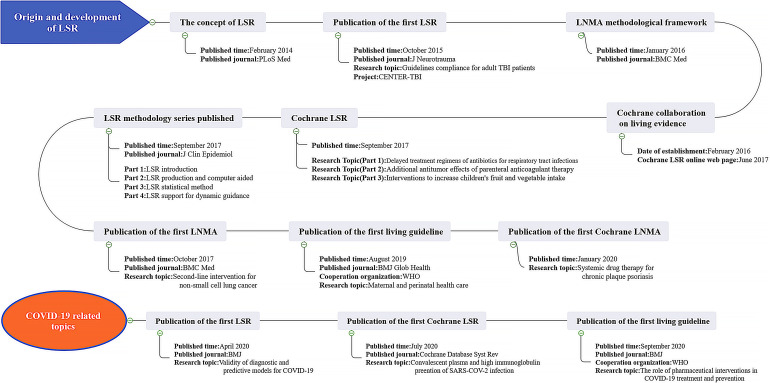
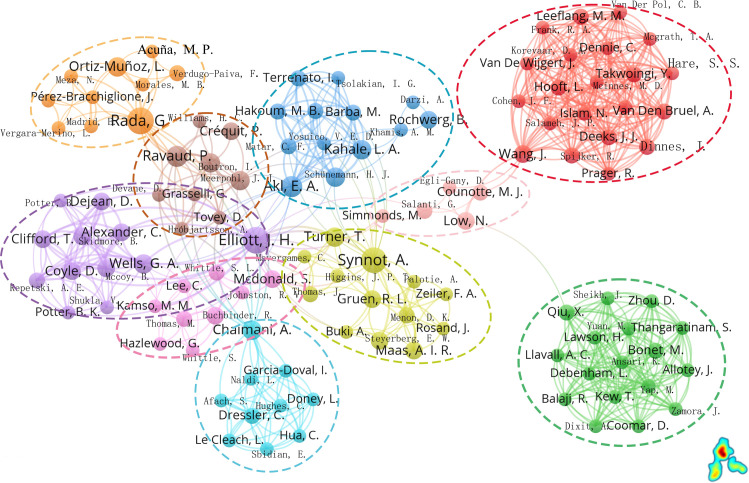
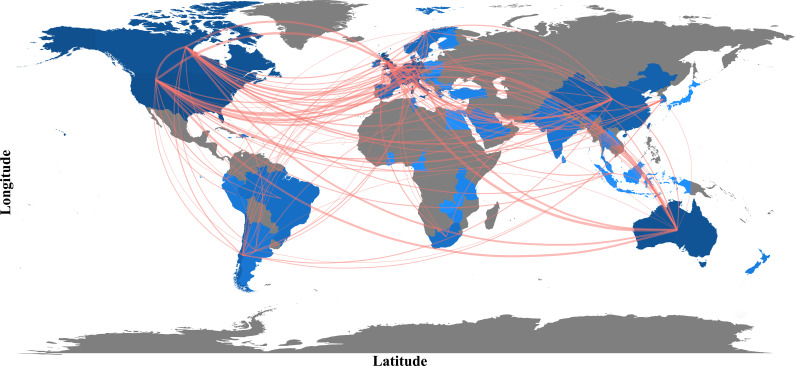
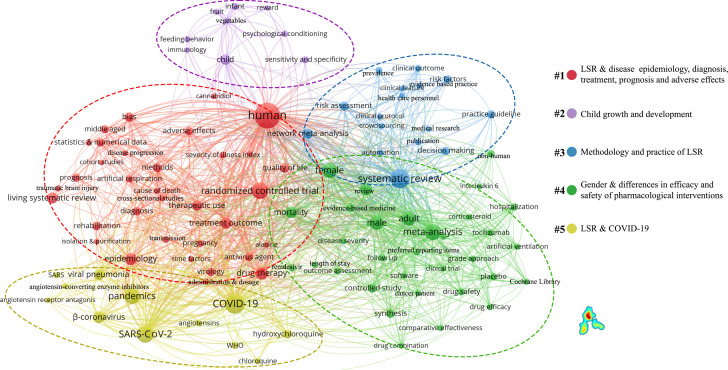
Verification
Claims the paper makes
The claims and statistics of this paper haven’t been checked yet.
Free: it reads the open-access text and checks the first 5 claims that cite a source we can check. Create a free account to check every claim.
Claims other papers make about this one
Each is checked against this paper’s own text: does it say what the citing paper says it does?
The cited source says what the claim attributes to it.
In the citing paper
“Indeed, the total number of LSRs published in 2020 and 2021 exceeded the total number published before 2020. 4”
From Extension of the PRISMA 2020 statement for living systematic reviews (PRISMA-LSR): checklist and explanation (2024) · cites this paper as [4]
The cited source says what the claim attributes to it.
In the citing paper
“The publication rate of LSRs has increased considerably in recent years. 4”
From Extension of the PRISMA 2020 statement for living systematic reviews (PRISMA-LSR): checklist and explanation (2024) · cites this paper as [4]
Self-check
Percentages, sums and reported differences re-computed from the paper’s own numbers.
The self-check needs the paper’s full text.
Citations
Cites
Rayyan-a web and mobile app for systematic reviews.
Ouzzani, M., Hammady, H., Fedorowicz, Z., & Elmagarmid, A. (2016) · Systematic Reviews · doi:10.1186/s13643-016-0384-4 · Cited by 26,092
Dermyshi, E., Wang, Y., Yan, C., Hong, W., Qiu, G., Gong, X., & Zhang, T. (2017) · Neonatology · doi:10.1159/000454668 · Cited by 24,451
bibliometrix: An R-tool for comprehensive science mapping analysis
Aria, M., & Cuccurullo, C. (2017) · Journal of Informetrics · doi:10.1016/j.joi.2017.08.007 · Cited by 23,235
Software survey: VOSviewer, a computer program for bibliometric mapping
van Eck, N. J., & Waltman, L. (2010) · Scientometrics · doi:10.1007/s11192-009-0146-3 · Cited by 21,484
GRADE guidelines: 1. Introduction—GRADE evidence profiles and summary of findings tables
Guyatt, G., Oxman, A. D., Akl, E. A., Kunz, R., Vist, G., Brozek, J., Norris, S., Falck-Ytter, Y., Glasziou, P., & deBeer, H. (2011) · Journal of Clinical Epidemiology · doi:10.1016/j.jclinepi.2010.04.026 · Cited by 10,681
Norderyd, O. M., Koch, G., Papias, A., Köhler, A. A., Helkimo, A. N., Brahm, C., Lindmark, U., Lindfors, N., Mattsson, A., Rolander, B., et al. (2015) · PubMed · Cited by 3,584
Wynants, L., Van Calster, B., Bonten, M. M., Collins, G. S., Debray, T. P., De Vos, M., Haller, M. C., Heinze, G., Moons, K. G., Riley, R. D., et al. (2020) · doi:10.1101/2020.03.24.20041020 · Cited by 3,070
A scoping review of rapid review methods
Tricco, A. C., Antony, J., Zarin, W., Strifler, L., Ghassemi, M., Ivory, J., Perrier, L., Hutton, B., Moher, D., & Straus, S. E. (2015) · BMC Medicine · doi:10.1186/s12916-015-0465-6 · Cited by 1,146
A living WHO guideline on drugs for covid-19 (2020-2023)
Agarwal, A., Hunt, B. J., Stegemann, M., Rochwerg, B., Lamontagne, F., Siemieniuk, R. A., Agoritsas, T., Askie, L., Lytvyn, L., Leo, Y.-S., et al. (2020) · BMJ · doi:10.1136/bmj.m3379 · Cited by 1,041
Electronic cigarettes for smoking cessation
Hartmann-Boyce, J., McRobbie, H., Bullen, C., Begh, R., Stead, L. F., & Hajek, P. (2016) · Cochrane Database of Systematic Reviews · doi:10.1002/14651858.cd010216.pub3 · Cited by 1,002
Research works printed but not linked: 2
- Elliott JH, Turner T, Clavisi O, et al. Living systematic reviews: an emerging opportunity to narrow the evidence-practice gap. PLoS Med 2014; 11: e1001603. 10.1371/journal.pmed.1001603 24558353 PMC3928029 · DOI · Paper page
- Agency for Healthcare Research and Quality (US). Living systematic review on cannabis and other plant-based treatments for chronic pain: interim progress reports. Rockville, MD, 2020. Available: https://www.ncbi.nlm.nih.gov/books/NBK568855/ [Accessed 10 Mar 2022]. 33764719
Cited by
Bond, M., Khosravi, H., De Laat, M., Bergdahl, N., Negrea, V., Oxley, E., Pham, P., Chong, S. W., & Siemens, G. (2024) · International Journal of Educational Technology in Higher Education · doi:10.1186/s41239-023-00436-z · Cited by 852
“Bib-liometric analyses have also emerged as a popular form of evidence synthesis (e.g., Lin-nenluecke et al., 2020; Zheng et al., 2022), which analyse bibliographic data to explore research trends and impact.”
BackgroundAkl, E. A., Khabsa, J., Iannizzi, C., Piechotta, V., Kahale, L. A., Barker, J. M., McKenzie, J. E., Page, M. J., & Skoetz, N. (2024) · BMJ · doi:10.1136/bmj-2024-079183 · Cited by 103
Berkhout, W. E. M., van Wijngaarden, J. J., Workum, J. D., van de Sande, D., Hilling, D. E., Jung, C., Meyfroidt, G., Gommers, D., Buijsman, S. N. R., & van Genderen, M. E. (2025) · JAMA Network Open · doi:10.1001/jamanetworkopen.2025.22866 · Cited by 75
Schmidt, L., Sinyor, M., Webb, R. T., Marshall, C., Knipe, D., Eyles, E. C., John, A., Gunnell, D., & Higgins, J. P. T. (2023) · Zeitschrift für Evidenz, Fortbildung und Qualität im Gesundheitswesen · doi:10.1016/j.zefq.2023.06.007 · Cited by 31
AI-assisted Living Evidence Databases for Conservation SciencePreprint
Jaffer, S., Morgan, W. H., Reynolds, S., Christie, A. P., Madhavapeddy, A., & Sutherland, W. J. (2025) · doi:10.33774/coe-2025-rmsqf · Cited by 33
Luo, J., Chen, Z., Liu, D., Li, H., He, S., Zeng, L., Yang, M., Liu, Z., Xiao, X., & Zhang, L. (2023) · BMC Medical Research Methodology · doi:10.1186/s12874-023-01980-y · Cited by 27
Ngaba, M. J. Y., Yemele, O. M., Hu, B., & Rennenberg, H. (2025) · Biochar · doi:10.1007/s42773-025-00470-2 · Cited by 28
“Bibliometrics, the statistical analysis of publications, serves as a critical tool in this context, offering insights into research activity, citation dynamics, and academic collaboration (Kokol et al. 2021; Zheng et al. 2022).”
Research on music therapy from 2013 to 2022: a bibliometric and visualized study
Liang, Z. C., Hou, D., Hong, Y., Ke, M., Zhang, Q., Wang, Y., & Long, J. (2024) · Frontiers in Psychiatry · doi:10.3389/fpsyt.2024.1323794 · Cited by 26
A Summary on Tuberculosis Vaccine Development—Where to Go?
Jiang, F., Sun, T., Cheng, P., Wang, J., & Gong, W. (2023) · Journal of Personalized Medicine · doi:10.3390/jpm13030408 · Cited by 23
“Bibliometrics analysis software and data visualization technology have been widely used to analyze the target research field qualitatively, provide substantial evidence for the influence of the research direction, and identify emerging research hotspots as well as potential research partners [8].”
BackgroundMethodButler, A. R., Hartmann‐Boyce, J., Livingstone‐Banks, J., Turner, T., & Lindson, N. (2023) · Journal of Clinical Epidemiology · doi:10.1016/j.jclinepi.2023.111231 · Cited by 19
Is it possible to make ‘living’ guidelines? An evaluation of the Australian Living Stroke Guidelines
Wiles, L., Hibbert, P. D., Zurynski, Y. A., Smith, C. L., Arnolda, G., Ellis, L. A., Lake, R., Easpaig, B. N. G., Molloy, C. J., Middleton, S., et al. (2024) · BMC Health Services Research · doi:10.1186/s12913-024-10795-6 · Cited by 16
Bai, J., Johar, S. B., Mohammad, N. B., & Xia, J. (2025) · Sustainable Futures · doi:10.1016/j.sftr.2025.101577 · Cited by 19
Li, T., Su, W., Wang, Z., Wang, X., Ma, X., Cao, Y., & Zhao, R. (2024) · International Journal of Surgery · doi:10.1097/js9.0000000000001319 · Cited by 13
“Additionally, it can provide researchers with a comprehensive literature review, help quantify and evaluate productivity in the fi eld, and identify potential research directions [10,11] .”
BackgroundMethodMansilla, C., Wang, Q., Piggott, T., Bragge, P., Waddell, K., Guyatt, G., Sweetman, A., & Lavis, J. N. (2024) · Implementation Science · doi:10.1186/s13012-024-01396-2 · Cited by 12
Recent Advance in Clinical Practice Guideline Development Methodology
Kim, S. Y. (2022) · Korean Journal of Family Medicine · doi:10.4082/kjfm.22.0178 · Cited by 10
Capturing the influx of living systematic reviews: a systematic methodological survey
Nevill, C. R., Sharifan, A., O’Mahony, A., Tahir, H., Robinson, W., Modha, U., Kahale, L. A., Khamis, A. M., Akl, E. A., Smith, E., et al. (2025) · Journal of Clinical Epidemiology · doi:10.1016/j.jclinepi.2025.111904 · Cited by 7
Zheng, Q., Xu, J., Liu, M., Ji, K., Zhang, Y., Wu, S., Li, T., Yuan, K., Ma, Z., Ma, Z., et al. (2025) · International Journal of Climatology · doi:10.1002/joc.8761 · Cited by 6
Self-citationSilva, K. D., Turner, T., & McDonald, S. J. (2025) · Cochrane Evidence Synthesis and Methods · doi:10.1002/cesm.70024 · Cited by 5
Writing for Pediatric Critical Care Medicine: What is Happening to Systematic Reviews?
Tasker, R. C. (2025) · Pediatric Critical Care Medicine · doi:10.1097/pcc.0000000000003847 · Cited by 4
Corrin, T., & Kennedy, E. B. (2024) · PLoS ONE · doi:10.1371/journal.pone.0314657 · Cited by 5
“Similar to rapid reviews, there is a lack of agreement and practice within the community on standardized methods for continuously adding studies through a living review and when it is appropriate to stop updating [42, 43].”
The Role of AI in Accelerating UN Efforts to Achieve the Sustainable Development Goals
Rezaei, P., Bellini, F., Gorelova, I., & D’Ascenzo, F. (2025) · Proceedings of the ... International Conference on Business Excellence · doi:10.2478/picbe-2025-0007 · Cited by 3
“…research investigations have paid increasing attention to the role of AI in fostering the implementation of global goals; the analyses conducted by Zheng et al. (2022) revealed a significant growth in research exploring AI's contribution to organizational sustainability; therefore, the need for…”
Tuergan, T., Abulaiti, A., Shao, Y., & Aji, T. (2025) · Human Vaccines & Immunotherapeutics · doi:10.1080/21645515.2025.2540143 · Cited by 3
“20, 21 Utilizing bibliometric tools, researchers can acquire profound insights into the academic ecosystem of this domain, identify pivotal research institutions, scholars, and core journals, thereby providing robust support for advancing research on the application and mechanisms of PD-1/PD-L1…”
Implications of living evidence formats for coverage decisions in the German health care system
Conrad, S., Hartwig, J., Jones, L., Lorenz, R. C., & Perleth, M. (2024) · Zeitschrift für Evidenz Fortbildung und Qualität im Gesundheitswesen · doi:10.1016/j.zefq.2024.10.001 · Cited by 3
Silent battles, global insights: anxiety and depression in the world of assisted reproduction
Zhou, Y., Zheng, Q., Xu, C., Li, Y., Li, T., Li, L., Li, W., Tian, J. H., & Xie, G. (2025) · Journal of Assisted Reproduction and Genetics · doi:10.1007/s10815-025-03422-8 · Cited by 3
“The size of each node represents the frequency of occurrence, the thickness of the lines indicates the strength of the connections, and the colors of the nodes signify different clustering relationships [19, 20].”
Self-citationSong, K., Li, S., Liu, J., & Kang, Z. (2025) · Frontiers in Medicine · doi:10.3389/fmed.2025.1526116 · Cited by 3
Nearly four decades of researches on ultrasonic motors: A bibliometric analysis
Li, C., & Lu, C. (2025) · Energy Nexus · doi:10.1016/j.nexus.2025.100498 · Cited by 2
Advocating for trust in and trustworthy AI to transform evidence synthesis
Fletcher, I. (2025) · Environmental Evidence · doi:10.1186/s13750-025-00369-2 · Cited by 3
“This has been particularly useful in areas where policy-demand is high and the evidence base is highly dynamic [65].”
Matilla‐Cabello, G., Remesal-Doblado, Á., Çelebi-Çınar, M., Bodoque-García, A., Metin, F. B., Rezaei, A., Aftab, A. M., Santos‐Fernández, R. L. D. L., Segovia‐Zafra, A., Álvarez‐Álvarez, I., et al. (2026) · Acta Pharmaceutica Sinica B · doi:10.1016/j.apsb.2026.03.030 · Cited by 2
Seeing beyond words: nanotechnology in hepatocellular carcinoma - a bibliometric study
Tuergan, T., Abulaiti, A., Tulahong, A., Zhang, R., Yuan, Z., Lin, Y., Shao, Y., & Aji, T. (2025) · Frontiers in Oncology · doi:10.3389/fonc.2024.1487198 · Cited by 2
“Bibliometrics, a quantitative method for analyzing scienti fi c literature, can ef fi ciently assess and consolidate a vast array of research fi ndings, elucidating trends and patterns in the fi eld of study (16, 17).”
Digital adaptive intervention in the medical field: a bibliometric analysis
Ma, C., Wang, X., He, X., Li, Y., Yang, M., Qian, Q., & Ma, Y. (2025) · Translational Behavioral Medicine · doi:10.1093/tbm/ibaf037 · Cited by 1
Digital Innovations in Patient-Centered Care: The Emerging Role of Natural Language Processing
Putra, B. A., Arini, M., & Tamaranny, Y. K. T. (2025) · Indonesian Journal of Electronics Electromedical Engineering and Medical Informatics · doi:10.35882/ijeeemi.v7i4.115 · Cited by 2
“These kinds of temporal citation patterns are common in bibliometric analysis, whereby publications published later tend to experience a time-lag before demonstrating their scholarly impact [52,53].”
Global trends in oncology shared decision-making and advance care planning: bibliometric study
Paiva, B. S. R., Campolino, L. M., Silva, A. T. F., Catib, G. D. A., & Paiva, C. E. (2025) · BMJ Supportive & Palliative Care · doi:10.1136/spcare-2025-005735 · Cited by 1
Generative artificial intelligence in healthcare: a bibliometric analysis
Tian, X., Meng, F., Guo, H., Li, Z., Jia, S., Wang, Z., & Cheng, P. (2026) · International Journal of Surgery · doi:10.1097/js9.0000000000004041 · Cited by 1
Vidor, P. R., Casiraghi, Y., de Souza, A. M., & Schmidt, M. I. (2026) · Scientific Reports · doi:10.1038/s41598-026-44303-z · Cited by 1
Zheng, Q., Zhou, Z., Li, T., Xu, J., Zhou, Y., Cui, Y., Wang, K., Wang, N., Li, M., Zhou, L., et al. (2026) · Nutrition Research Reviews · doi:10.1017/s0954422426100389 · Cited by 2
“This R-based tool provided robust capabilities for analysing the conceptual, intellectual, and social structures of the research field through techniques such as co-word analysis, co-citation analysis, and bibliographic coupling (21,27) .”
Self-citationZheng, W., Wu, Y., Zhu, G., Huang, W., & Kang, Y. (2026) · Translational Pediatrics · doi:10.21037/tp-2026-0334 · Cited by 1
Huang, H., Wang, Q., Jia, R., Chung, Y. F., Tao, L., & Qiu, Y. (2023) · Research Square · doi:10.21203/rs.3.rs-3092982/v1
Self-citationZhou, L. N., Li, T., Zheng, Q., Xu, J., Xu, C., Zhang, B., Wang, Z., & Wang, J. (2025) · International Archives of Allergy and Immunology · doi:10.1159/000545367
“Biblioshiny is a scienti fi c bibliometric visualization tool based on R Studio, offering scientometric and visualization analysis functions through an interactive interface [16].”
Self-citationRESEARCH TRENDS AND LITERATURE REVIEW OF SCIENCE TECHNOLOGY SOCIETY IN SCIENCE LEARNING
Nawahdani, A. M., Asrial, A., & Nazarudin, N. (2025) · EduFisika Jurnal Pendidikan Fisika · doi:10.59052/edufisika.v10i1.43463
Bibliometric Analysis of All Theses on Echinococcosis in Türkiye
Davarcı, İ., & Güdücüoğlu, H. (2025) · Turkish Journal of Parasitology · doi:10.4274/tpd.galenos.2025.09225
Siemens, W., Breuer, C., & Meerpohl, J. J. (2025) · Zeitschrift für Evidenz Fortbildung und Qualität im Gesundheitswesen · doi:10.1016/j.zefq.2025.06.006
دور المكتبات العامة في تعزيز جودة الحياة العامة (دراسة تطبيقية)
السعودية, أ. م. ج. ا. س. ا. ا. ا., متولي, ا. أ., البقمي, ا. ف., السعودية, ط. د. ج. ا. ع. ا. ج. ا. ا., القحطاني, ا. أ., السعودية, ط. د. ج. ا. ع. ا. ا. ا. ا., الربيع, ا. م., & السعودية, ط. د. ج. ا. ن. ب. ع. ا. ا. ا. ا. (2025) · International Journal of Research and Studies Publishing · doi:10.52133/ijrsp.v6.71.8
Zheng, Q., Li, M., Zhou, Y., Xu, J., Liu, M., Cui, Y., Wang, J., & Tian, J. H. (2025) · Pediatric Cardiology · doi:10.1007/s00246-025-04102-1
“A quantitative, bibliometric approach, in contrast, offers a reproducible, bird’s-eye view of the entire domain, capable of objectively identifying its key contributors, thematic structure, and emerging trends [ 9, 10].”
InfluentialSelf-citationWiles, L., Hibbert, P. D., Zurynski, Y. A., Smith, C. L., Arnolda, G., Ellis, L. A., Lake, R., Easpaig, B. N. G., Molloy, C., Middleton, S., et al. (2024) · Figshare · doi:10.6084/m9.figshare.26701732
Wiles, L., Hibbert, P. D., Zurynski, Y. A., Smith, C. L., Arnolda, G., Ellis, L. A., Lake, R., Easpaig, B. N. G., Molloy, C. J., Middleton, S., et al. (2024) · Figshare · doi:10.6084/m9.figshare.25538547
Wiles, L., Hibbert, P. D., Zurynski, Y. A., Smith, C. L., Arnolda, G., Ellis, L. A., Lake, R., Easpaig, B. N. G., Molloy, C., Middleton, S., et al. (2024) · Figshare · doi:10.6084/m9.figshare.26701729
Luo, J., Chen, Z., Liu, D., Li, H., He, S., Zeng, L., Yang, M., Liu, Z., Xiao, X., & Zhang, L. (2023) · Figshare · doi:10.6084/m9.figshare.23812451
Wiles, L., Hibbert, P. D., Zurynski, Y. A., Smith, C. L., Arnolda, G., Ellis, L. A., Lake, R., Easpaig, B. N. G., Molloy, C., Middleton, S., et al. (2024) · Figshare · doi:10.6084/m9.figshare.26701726
Wiles, L., Hibbert, P. D., Zurynski, Y. A., Smith, C. L., Arnolda, G., Ellis, L. A., Lake, R., Easpaig, B. N. G., Molloy, C., Middleton, S., et al. (2024) · Figshare · doi:10.6084/m9.figshare.25538627
Nimphius, S., Heussen, N., Steele, J., Weston, M., Shrier, I., Binney, Z., Bon, J. J., & Borg, D. (2026) · Science and medicine in football · doi:10.1080/24733938.2026.2624922
“This aligns to the evolving nature of scientific publication, with a shift towards leveraging existing information and building on prior research, as seen with living systematic reviews (Elliott et al. 2014; Zheng et al. 2022).”
Maia, J. L. Z., Nobre, F. X., & Oliveira, L. A. D. (2026) · Revista de Geopolítica · doi:10.56238/revgeov17n2-039
“…to curauá in the Scopus database, using bibliometric analysis, which consists of a quantitative method used to evaluate scientific production through the statistical treatment of publications, citations, authors, journals, keywords and collaboration networks (DING et al., 2023; ZHENG et al., 2022).”
Integration of various types of information in living systematic reviews
Davidson, M. (2024) · theses.fr (ABES) · doi:10.70675/a60f5802z1fb9z4866z9e22z7be74c96be25
Golob, M. M., Leinberger‐Jabari, A., Loufek, B. T., Livingstone‐Banks, J., Roberts, N. W., & Nunan, D. (2026) · Systematic Reviews · doi:10.1186/s13643-026-03209-7
“There have been multiple studies examining LSR methods [77–80].”
Natarajan, C., Harshini, G., Priyadharsini, G. T., Maheswaran, T., Naveenraj, N. S., & Venkat, M. (2026) · Cureus · doi:10.7759/cureus.112631
“Despite this growth, more than half of the identified LSR series had not been updated at the time of assessment, and bibliometric evidence points to a pressing need for methodological standardization across the expanding literature [2].”
InfluentialXu, J., Zheng, Q., Li, T., Liu, M., Tian, M., Zhu, Y., Yingying, K., Tian, J., & Chen, P. (2026) · Frontiers in Nutrition · doi:10.3389/fnut.2026.1937261
“To ensure the timeliness of the evidence base and minimize the gap between search and final synthesis (27), the initial search (conducted in August 2025) was updated in June 2026 prior to manuscript submission.”
Self-citationChettouh, S. (2026) · Fire Technology · doi:10.1007/s10694-026-02019-6
Metadata
- Authors
- Zheng, Q., Xu, J., Gao, Y., Liu, M., Cheng, L., Xiong, L., Cheng, J., Yuan, M., OuYang, G., Huang, H., Wu, J., Zhang, J., & Tian, J.
- Affiliations
- Lanzhou University (CN)
- Zigong First People's Hospital (CN)
- Beijing University of Chinese Medicine (CN)
- Tianjin University of Traditional Chinese Medicine (CN)
- Corresponding author
- Zhang, Junhua
- Tian, Jinhui
- ORCID
- Venue
- BMJ Global Health
- Publisher
- BMJ
- Published
- 2022-10
- Volume
- 7
- Issue
- 10
- Pages
- e009378
- ISSN
- 2059-7908 (ISSN-L)
- PMC
- PMC9558789
- OpenAlex
- W4304202792
- Semantic Scholar
- 66b538c41843727767675d2ba26a2a6255c167f1
- Cited by
- 51
- References
- 64
- Citations by year
- 2026: 9 · 2025: 20 · 2024: 14 · 2023: 7 · 2022: 1
- FWCI
- 3.45
- Type
- journal article
- Language
- en
- Open access
- gold
- doi.org
- Licence
- Locations
- BMJ Global Health (publishedVersion, cc-by-nc)
- PubMed Central (publishedVersion, cc-by-nc)
- PubMed (publishedVersion)
- DOAJ (DOAJ: Directory of Open Access Journals) (submittedVersion, cc-by-sa)
- Funders
- Gansu Province Science and Technology Plan Funded Project (20CX4ZA027, 20CX9ZA112)
- Topics
- Social Sciences › Decision Sciences › Statistics, Probability and Uncertainty › Meta-analysis and systematic reviews
- Social Sciences › Library and Information Sciences › scientometrics and bibliometrics research
- Social Sciences › Psychology › Experimental and Cognitive Psychology › Psychology Research and Bibliometrics
- Keywords
- living systematic review, research trends, co-authorship networks, citation networks, COVID-19 research
- MeSH terms
- COVID-19, Europe, Humans, North America, Research Design, Bibliometrics
About these checks
Registry, retraction, Cites and statistics results are computed, not judged, with one exception: a printed reference that no index lists is read once by a model before it counts as a citation error. Claims are extracted by a model and kept only when their quote appears verbatim in the text; each cited source is then checked, with a model’s help, for whether it says what the claim relies on. Those verdicts can be wrong — read the claim’s quote and the cited source before relying on one.
Statistics and arithmetic are recomputed, not judged.
Confidence bands are shown only for fields calibrated on our annotated test set. None is calibrated yet, so no band is shown.
What counts as a claim ›How we measure confidence ›How we check this ›
Are you an author, or do you see a problem with this page? Request a review
Data sources
Bibliographic data: Semantic Scholar, OpenAlex, Crossref.
Contains information from the Semantic Scholar Academic Graph Datasets, made available under the ODC Attribution License (ODC-BY 1.0).
Semantic Scholar’s data is described in: Kinney, R., et al. (2023). The Semantic Scholar Open Data Platform. arXiv:2301.10140.
