

Synthetic data in medical research
Open accessThe DOI matches its Crossref record; 19 of the 19 references it cites were found in a registry or an index.
Abstract
### Key messages > Synthetic data have the potential to improve medical research while minimising the need to access personal data; Theodora Kokosi and Katie Harron explain what they are and how they are used. Demand to access high quality data at the individual level for medical and healthcare
Overview
The claims and statistics of this paper haven’t been checked yet.
Free: it reads the open-access text and checks the first 5 claims that cite a source we can check. Create a free account to check every claim.
Integrity signals
Registry
Cites
Statistics
Figures
Verification
Claims the paper makes
The claims and statistics of this paper haven’t been checked yet.
Free: it reads the open-access text and checks the first 5 claims that cite a source we can check. Create a free account to check every claim.
Claims other papers make about this one
Each is checked against this paper’s own text: does it say what the citing paper says it does?
The source backs part of the claim, not all of it — or backs it for a different population, condition or comparison.
In the citing paper
“Additionally, we demonstrate the utility of pretraining with synthetic fine-grained morphological descriptions, suggesting the scaling potential of TITAN pretraining with synthetic data89–91.”
From A multimodal whole-slide foundation model for pathology (2025) · cites this paper as [90]
Experimental — accuracy not yet measured
Self-check
Percentages, sums and reported differences re-computed from the paper’s own numbers.
The self-check needs the paper’s full text.
Citations
Cites
Multitask learning and benchmarking with clinical time series data
Harutyunyan, H., Khachatrian, H., Kale, D. C., Ver Steeg, G., & Galstyan, A. (2019) · Scientific Data · doi:10.1038/s41597-019-0103-9 · Cited by 958
Data synthesis based on generative adversarial networks
Park, N., Mohammadi, M., Gorde, K., Jajodia, S., Park, H., & Kim, Y. (2018) · Proceedings of the VLDB Endowment · doi:10.14778/3231751.3231757 · Cited by 531
Generation and evaluation of synthetic patient data
Goncalves, A., Ray, P., Soper, B., Stevens, J., Coyle, L., & Sales, A. P. (2020) · BMC Medical Research Methodology · doi:10.1186/s12874-020-00977-1 · Cited by 388
van den Goorbergh, R., van Smeden, M., Timmerman, D., & Van Calster, B. (2022) · Journal of the American Medical Informatics Association · doi:10.1093/jamia/ocac093 · Cited by 362
Anonymization Through Data Synthesis Using Generative Adversarial Networks (ADS-GAN)
Yoon, J., Drumright, L. N., & van der Schaar, M. (2020) · IEEE Journal of Biomedical and Health Informatics · doi:10.1109/jbhi.2020.2980262 · Cited by 281
Generating high-fidelity synthetic patient data for assessing machine learning healthcare software
Tucker, A., Wang, Z., Rotalinti, Y., & Myles, P. (2020) · npj Digital Medicine · doi:10.1038/s41746-020-00353-9 · Cited by 228
Privacy Preserving Synthetic Data Release Using Deep Learning
Abay, N. C., Zhou, Y., Kantarcıoğlu, M., Thuraisingham, B., & Sweeney, L. (2019) · Lecture notes in computer science · doi:10.1007/978-3-030-10925-7_31 · Cited by 226
General and Specific Utility Measures for Synthetic Data
Snoke, J., RAAB, G. M., Nowok, B., Dibben, C. J. L., & Slavković, A. (2018) · Journal of the Royal Statistical Society Series A (Statistics in Society) · doi:10.1111/rssa.12358 · Cited by 211
Hazard, D. Y., Kaier, K., von Cube, M., Grodd, M., Bugiera, L., Lambert, J., & Wolkewitz, M. (2020) · BMC Medical Research Methodology · doi:10.1186/s12874-020-01082-z · Cited by 110
Public perceptions on data sharing: key insights from the UK and the USA
Ghafur, S., Van Dael, J., Leis, M., Darzi, A., & Sheikh, A. (2020) · The Lancet Digital Health · doi:10.1016/s2589-7500(20)30161-8 · Cited by 105
Research works printed but not linked: 2
- Azizi Z, Zheng C, Mosquera L, et al. Can synthetic data be a proxy for real clinical trial data? A validation study. BMJ Open 2021; 11: e043497. 10.1136/bmjopen-2020-043497 PMC8055130 33863713 · DOI · Paper page
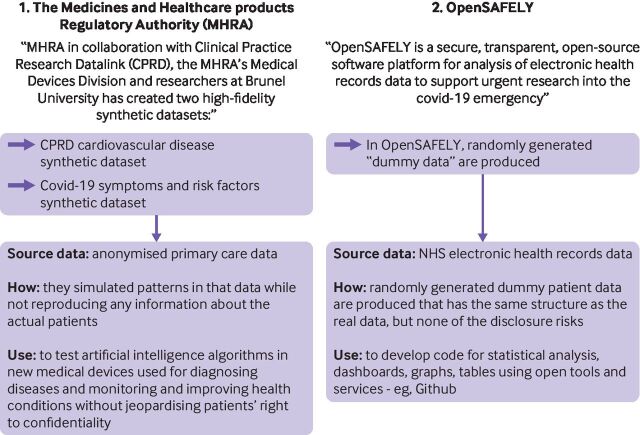
- University of Oxford. OpenSAFELY, 2022. Available: https://www.opensafely.org/about/#:~:text=In%20OpenSAFELY%2C%20the%20data%20management,none%20of%20the%20disclosive%20risks
Cited by
A multimodal whole-slide foundation model for pathology
Ding, T., Wagner, S. J., Song, A. H., Chen, R. J., Lu, M. Y., Zhang, A., Vaidya, A. J., Jaume, G., Shaban, M., Kim, A., et al. (2025) · Nature Medicine · doi:10.1038/s41591-025-03982-3 · Cited by 171
“We next evaluate TITAN on a range of clinically relevant tasks that span morphological classification (14 tasks), grading (3 tasks), molecular classification (39 tasks) and survival prediction (6 tasks; Supplementary Tables 17–21).”
InfluentialNaik, K., Goyal, R. K., Foschini, L., Chak, C. M., Thielscher, C., Zhu, H., Lu, J. J.-Q., Lehár, J., Pacanoswki, M. A., Terranova, N., et al. (2024) · Clinical Pharmacology & Therapeutics · doi:10.1002/cpt.3152 · Cited by 105
“60,61,72 These challenges are being carefully addressed by development of regulatory policies around using these data for improving patient outcomes.”
BackgroundSynthetic data for privacy-preserving clinical risk prediction
Qian, Z., Callender, T., Cebere, B., Janes, S. M., Navani, N., & van der Schaar, M. (2024) · Scientific Reports · doi:10.1038/s41598-024-72894-y · Cited by 62
“Synthetic data have been shown capable of capturing the high-level marginal distributions and pairwise correlations between features 22–26 , as well as in training predictive models 27–30 .”
BackgroundPammi, M., Shah, P. S., Yang, L. K., Hagan, J., Aghaeepour, N., & Neu, J. (2025) · The Lancet Digital Health · doi:10.1016/j.landig.2025.01.007 · Cited by 60
“18,22 Generative machine learning models may be first trained on synthetic datasets and allowed to learn the essential characteristics before being applied to the real patient dataset, thereby decreasing data privacy concerns and saving time.”
Opportunities and Challenges of Synthetic Data Generation in Oncology
Jacobs, F., D’Amico, S., Benvenuti, C., Gaudio, M., Saltalamacchia, G., Miggiano, C., Sanctis, R. D., Porta, M. G. D., Santoro, A., & Zambelli, A. (2023) · JCO Clinical Cancer Informatics · doi:10.1200/cci.23.00045 · Cited by 50
Generating Synthetic Health Sensor Data for Privacy-Preserving Wearable Stress Detection
Lange, L., Wenzlitschke, N., & Rahm, E. (2024) · Sensors · doi:10.3390/s24103052 · Cited by 41
“These threats ultimately lead to complex ethical and privacy requirements, complicating the collection and access to sufficient patient data for real-world research [14,15].”
BackgroundTrotsyuk, A. A., Waeiss, Q., Bhatia, R. T., Aponte, B. J., Heffernan, I. M. L., Madgavkar, D., Felder, R. M., Lehmann, L. S., Palmer, M. J., Greely, H. T., et al. (2024) · Nature Machine Intelligence · doi:10.1038/s42256-024-00926-3 · Cited by 37
“This approach not only reduces barriers to accessing restricted real data 30 , but also retains the statistical properties of the underlying population 32 .”
Differences in technical and clinical perspectives on AI validation in cancer imaging: mind the gap!
Chouvarda, I., Colantonio, S., Verde, A. S. C., Jiménez-Pastor, A., Cerdá-Alberich, L., Metz, Y., Zacharias, L., Nabhani‐Gebara, S., Bobowicz, M., Tsakou, G., et al. (2025) · European Radiology Experimental · doi:10.1186/s41747-024-00543-0 · Cited by 24
Application of Machine Learning Based on Structured Medical Data in Gastroenterology
Kim, H., Gong, E. J., & Bang, C. S. (2023) · Biomimetics · doi:10.3390/biomimetics8070512 · Cited by 21
“While we may not have an exact explanation for this phenomenon, it is likely attributed to AI’s enhanced reasoning capabilities as it learns from larger languages and codes.”
Majeed, A., & Zhang, X. (2023) · COVID · doi:10.3390/covid3010006 · Cited by 18
“Further information related to SD in medical research can be obtained from a recent study [258].”
BackgroundAustin, J. A., Lobo, E. H., Samadbeik, M., Engstrom, T., Philip, R., Pole, J. D., & Sullivan, C. M. (2024) · Journal of Medical Internet Research · doi:10.2196/58637 · Cited by 20
“The reason for this conundrum is the lack of a clear understanding as to whether such a dataset can be used for decision-making or whether the final analysis would require original data [108].”
Romano, A. (2024) · Digital Geography and Society · doi:10.1016/j.diggeo.2024.100108 · Cited by 21
New Approach for Generating Synthetic Medical Data to Predict Type 2 Diabetes
Tagmatova, Z., Abdusalomov, A. B., Nasimov, R., Nasimova, N., Dogru, A. H., & Cho, Y. I. (2023) · Bioengineering · doi:10.3390/bioengineering10091031 · Cited by 13
Synthetic Data for Sharing and Exploration in High-Performance Sport: Considerations for Application
Warmenhoven, J., Impellizzeri, F. M., Shrier, I., Vigotsky, A. D., Lolli, L., Menaspà, P., Coutts, A. J., Fanchini, M., & Hooker, G. (2025) · Sports Medicine · doi:10.1007/s40279-025-02221-6 · Cited by 15
“These data-driven synthetic datasets can be implemented using a range of software packages (e.g., for R and Python) [8–10].”
Health Synthetic Data to Enable Health Learning System and Innovation: A Scoping Review
Tsao, S., Sharma, K., Noor, H., Forster, A. J., & Chen, H. (2023) · Studies in health technology and informatics · doi:10.3233/shti230063 · Cited by 12
“Health data, especially electronic medical records (EMRs), are often stored in disparate systems and formats, rendering integration and standardization difficult [1-2].”
BackgroundBottacin, W. E., de Souza, T. T., Melchiors, A. C., & Reis, W. C. T. (2025) · International Journal of Clinical Pharmacy · doi:10.1007/s11096-025-01906-2 · Cited by 10
“Real-world data originates from clinical environments, while synthetic data is generated to simulate real conditions without involving actual patients [55–58].”
Telehealth’s Role Enabling Sustainable Innovation and Circular Economies in Health
Kalogeropoulos, D. (2023) · Telehealth and Medicine Today · doi:10.30953/thmt.v8.409 · Cited by 7
Impact of a Synthetic Data Vault for Imbalanced Class in Cross-Project Defect Prediction
Nabella, P., Herteno, R., Saputro, S. W., Faisal, M. R., & Abadi, F. (2024) · Journal of Electronics Electromedical Engineering and Medical Informatics · doi:10.35882/jeeemi.v6i2.409 · Cited by 8
“…sequential data tailored for tabular datasets [43], will be utilized to create minority data and address the CI problem in CPDP. Constructed with precision, these models aim to capture and estimate the correlations and distributions among different variables found within the original dataset [44].”
MethodTaxonomy-based prompt engineering to generate synthetic drug-related patient portal messages
Wang, N., Treewaree, S., Zirikly, A., Lu, Y. L., Nguyen, M. H., Agarwal, B., Shah, J., Stevenson, J. M., & Taylor, C. O. (2024) · Journal of Biomedical Informatics · doi:10.1016/j.jbi.2024.104752 · Cited by 5
Alahmadi, A. Y., Alansari, A., Alsheikh, N., Alshammasi, S., Alshamery, M., Al-abdulmohsin, R., Rabia, L. H. A., Nass, F. A., Alghamdi, M., Almustafa, S. S., et al. (2023) · Informatics in Medicine Unlocked · doi:10.1016/j.imu.2023.101341 · Cited by 5
MetaAcuPoint: MetaHuman-Generated Synthetic Data for Hand Acupoint Localization
Guruge, K., Padmanabha, P., Herath, H. M. K. K. M. B., Madusanka, N., Park, H., Na, C.-S., Yi, M., & Lee, B.-I. (2025) · Healthcare · doi:10.3390/healthcare13233093 · Cited by 4
“Furthermore, Rujas et al. [27] and Lee et al. [28] emphasize the role of synthetic data in accelerating biomedical research and overcoming regulatory hurdles, such as IRB approval [29], making it an attractive option for the development of clinical AI.”
Nicolò, V. D., Frasca, M., Graziosi, A., Gazzaniga, G., Torre, D. L., & Pani, A. (2025) · Discover Artificial Intelligence · doi:10.1007/s44163-025-00384-9 · Cited by 5
“Furthermore, SD enables the testing and training of machine learning algorithms, which are becoming increasingly pivotal in modern oncology for tasks ranging from predictive modelling to decision support [12, 17].”
Yang, A. C., Pan, M.-L., Lu, H. H., Lien, C.-Y., Wang, D.-W., Chen, C., Tarng, D., Niu, D., Chiou, S.-H., Wu, C.-Y., et al. (2026) · Journal of Medical Internet Research · doi:10.2196/58954 · Cited by 4
“These technologies have been applied in various use cases, including clinical risk prediction [63] and medical research [64].”
Kamruzzaman, M., Heavey, J., Song, A., Bielskas, M., Bhattacharya, P., Madden, G. R., Klein, E. Y., Deng, X., & Vullikanti, A. K. S. (2024) · JMIR AI · doi:10.2196/48067 · Cited by 11
“Azizi et al [32] and Kokosi and Harron [33] note that (1) the use of synthetic data in the decision-making process and (2) the problem of attribute disclosure are other limitations of using synthetic data.”
BackgroundTrader, E. A., & Gurupur, V. P. (2025) · IEEE Access · doi:10.1109/access.2025.3573931 · Cited by 3
LLM-Powered Synthetic Data Modeling for Self-Emulsifying Drug Delivery Systems
Niloy, S. I., Khan, M. R. K., Mostafa, N., Ashour, E. A., & Khalil, K. (2025) · International Conference on Artificial Intelligence, Blockchain, and Internet of Things (AIBThings) · doi:10.1109/aibthings66987.2025.11296223 · Cited by 3
“The work aligns with emerging trends in computational pharmaceutics that leverage artificial intelligence to accelerate development timelines and improve prediction accuracy [23], offering a scalable solution for rational SEDDS design in an era of increasing demand for personalized medicines.”
Inteligência artificial generativa e integridade científica
Nunes, R., & Nunes, S. B. (2026) · Revista Bioética · doi:10.1590/1983-803420264063pt · Cited by 5
MITIGATING DEEPFAKE-BASED IMPERSONATION AND SYNTHETIC DATA RISKS IN REMOTE HEALTHCARE SYSTEMS
Mashinge, R., Muhwati, K. B., Magora, K., & Awoleye, J. (2025) · International Journal of Computer Applications · doi:10.5120/ijca2025925724 · Cited by 3
Systematic Review and Evidence Synthesis in Public Health
Quan, N. K., & Liamputtong, P. (2023) · Springer eBooks · doi:10.1007/978-3-031-25110-8_143 · Cited by 3
Synthetic data and health equity: accounting for racism and sexism in health care delivery
Teeple, S., Muñoz, L. E., & Aysola, J. (2025) · Health Affairs Scholar · doi:10.1093/haschl/qxaf165 · Cited by 2
“6 Sex-based, racial, and ethnic health care disparities or unequal treatment in medicine is well-established and attributed to structural racism and sexism, discrimination, and biases.”
Inteligência artificial: uma ponte para o futuro da medicina
Nunes, R., & Nunes, S. B. (2025) · Revista Bioética · doi:10.1590/1983-803420254115pt · Cited by 9
Warmenhoven, J., Shrier, I., Bullock, G. S., Holcombe, A. O., Nimphius, S., Menaspà, P., Coutts, A. J., & Impellizzeri, F. M. (2026) · Sports Medicine · doi:10.1007/s40279-026-02394-8 · Cited by 2
“For example, the synthetic dataset should be similar in sample size, number of rows for each participant and columns for each variable and data characteristics (e.g. missing values, multivariate patterns) [78].”
Systematic Review and Evidence Synthesis in Public Health
Quan, N. K., & Liamputtong, P. (2023) · Springer eBooks · doi:10.1007/978-3-030-96778-9_143-1 · Cited by 2
ParcoursVis: Visualization of Electronic Health Record Sequences at ScalePreprint
Assor, A., Sereno, M., & Fekete, J. (2025) · arXiv (Cornell University) · doi:10.48550/arxiv.2508.10700 · Cited by 2
Enhancing Data Accessibility in COVID Research - A Synthetic Data Generator for the RADx Data Hub
Ahmad, A., Roupe, G., Samsa, L. A., Krishnamurthy, A. K., & Hubal, R. C. (2024) · IEEE International Conference on Artificial Intelligence for Medicine, Health and Care (AIMHC) · doi:10.1109/aimhc59811.2024.00015 · Cited by 1
“Synthetic data can also be used to improve the reproducibility of research because such datasets can readily be shared with other researchers or third parties to verify models and analysis strategies [2].”
BackgroundCan Synthetic Data Allow for Smaller Sample Sizes in Chronic Urticaria Research?
Gutsche, A., Salameh, P., Jahandideh, S. S., Roodsaz, M., Kutan, S., Salehzadeh‐Yazdi, A., Kocatürk, E., Gregoriou, S., Thomsen, S. F., Kulthanan, K., et al. (2025) · Clinical and Translational Allergy · doi:10.1002/clt2.70087 · Cited by 1
Subaramaniam, K., Palaniappan, S., Logeswaran, R., Baker, O. F., & Bui, N. D. (2026) · Journal of Informatics and Web Engineering · doi:10.33093/jiwe.2026.5.2.1 · Cited by 1
Real-Time Tracking of Misdiagnosis in Electronic Health Records for Improved Predictive Modeling
Trader, E. A., & Gurupur, V. P. (2024) · IEEE SoutheastCon · doi:10.1109/southeastcon52093.2024.10500025 · Cited by 1
“Synthetic datasets from other sources are meticulously complete and do not accurately capture real-world scenarios involving erroneous or absent information [11].”
BackgroundSynthetic Data Generation in Hematology – Paving the Way for OMOP and FHIR Integration
Hahn, W., Ahmadi, N., Hoffmann, K., Eckardt, J., Sedlmayr, M., & Wolfien, M. (2024) · Studies in health technology and informatics · doi:10.3233/shti240692 · Cited by 1
How reliable are ICD codes for venous thromboembolism?
Norris, L., & Papadakis, E. S. (2024) · Thrombosis Update · doi:10.1016/j.tru.2024.100166
The Compliance Catalyst: How Synthetic Data Shapes High-Risk AI Governance in the EUPreprint
Michieka, J. (2025) · SSRN Electronic Journal · doi:10.2139/ssrn.5277990
Artificial intelligence: a bridge to the future of medicine
Nunes, R., & Nunes, S. B. (2025) · Revista Bioética · doi:10.1590/1983-803420254115en · Cited by 2
Inteligencia artificial: un puente hacia el futuro de la medicina
Nunes, R., & Nunes, S. B. (2025) · Revista Bioética · doi:10.1590/1983-803420254115es · Cited by 1
Generative Adversarial Networks in Feature Engineering: An Unsupervised Approach
Tarade, R. V., Shirke, S. A., Dehankar, P., & Das, S. (2025) · Advances in computational intelligence and robotics book series · doi:10.4018/979-8-3373-5616-7.ch004
Nollett, C. L., Lugg-Widger, F. V., Stock, J., Brookes‐Howell, L., Fitzgibbon, J., Johnson, S. J., Munnery, K., Robling, M. R., Yameen, F., & Trubey, R. (2025) · International Journal for Population Data Science · doi:10.23889/ijpds.v10i1.2962
“It is an emerging tool for health and social care researchers in the UK and globally [1–3].”
Artificial research participants in behavioral science
Medina, V. A., & Mohan, M. (2025) · Journal of Ethics in Entrepreneurship and Technology · doi:10.1108/jeet-03-2025-0014
van der Wel, I. (. (2024) · Research Repository (Delft University of Technology)
Official outcome of the UN IGF Data and Artificial Intelligence Governance Coalition
Belli, L., & Gaspar, W. B. (2024) · LA Referencia (Red Federada de Repositorios Institucionales de Publicaciones Científicas) · Cited by 1
Predicting Drug Responses Using Synthetic Populations and Machine Learning
Saran, S. L., Manaseswaran, S., Gowri, R., Kandavel, N., Palaniappan, K., & Saraswathi, V. (2025) · International Conference on Smart Structures and Systems (ICSSS) · doi:10.1109/icsss66939.2025.11346350
“Techniques like Generative Adversarial Networks (GANs) or customized models for overcoming issues such as imbalances in patient data exist, but the greater potential of the technology remains untested with respect to cost efficiency, reliability and application in critical decision making [6].”
Wong, D., Kumar, A. J. S., Chong, R. S., Nongpiur, M. E., Husain, R., Wong, T. T., Perera, S., Aung, T., Tan, B., Cheng, C., et al. (2026) · Scientific Data · doi:10.1038/s41597-026-06946-5 · Cited by 1
“Several studies have evaluated the potential of tabular synthetic data, including their use as a proxy for real data in clinical trials 9,10 .”
Zhang, Y., & Muller, S. (2026) · Journal of Statistical Computation and Simulation · doi:10.1080/00949655.2026.2653039
“To generate synthetic data that resembles real data, the real data structure needs to be first learned correctly and then reproduced in the synthetic data [13].”
Addressing Gender Data Gaps in the Global Majority: Opportunities and Challenges of Synthetic Data
Musizvingoza, R. (2026) · Springer eBooks · doi:10.1007/978-3-032-07830-8_25
Qiao-Franco, G., & Javadi, M. (2026) · Springer eBooks · doi:10.1007/978-3-032-07830-8_16
GenAI-powered synthetic data toolbox for health science
Ranta, J. (2025) · Tampere University Institutional Repository (Tampere University)
Generative artificial intelligence and scientific integrity
Nunes, R., & Nunes, S. B. (2026) · Revista Bioética · doi:10.1590/1983-803420264063en · Cited by 1
Inteligencia artificial generativa y integridade científica
Nunes, R., & Nunes, S. B. (2026) · Revista Bioética · doi:10.1590/1983-803420264063es
A Machine Learning Framework for Autonomous Bilge Water Management
Dutt, S., & Kanungo, S. (2026) · Lecture notes in networks and systems · doi:10.1007/978-3-032-18132-9_5
Destère, A., Lombardi, R., Labriffe, M., Benoist, C., Marquet, P., Lavrut, T., Gérard, A. O., Bouveyron, C., & Woillard, J. (2026) · medRxiv · doi:10.64898/2026.05.30.26354512
Addressing the Challenges in Using Synthetic Data for Health Research: Application to Cardiology
Baschet, L., Marque, S., Locret, S., Jensen, J., Barbet, V., & Patrick Jourdain, M. (2026) · JMIR Cardio · doi:10.2196/92930
Challenges of analyzing synthetic tabular data generated from 115 phase 3 oncology trials
Decruyenaere, A., Polet, C., Decruyenaere, J. M. A., Dehaene, H., Rabaey, P., Demeester, T., Vansteelandt, S., & Rottey, S. (2026) · Scientific Reports · doi:10.1038/s41598-026-62212-z
Orobor, I. A., Doctor, F., Hammady, R., & Kennedy, M. R. (2026) · IEEE Smart World Congress (SWC) · doi:10.1109/swc69865.2026.11764087
Nada, A., Ahmed, Y., Khadro, N., Diab, N., Mazo, A., Martorell-Bendezu, L., Kraus, N., Ngo, L., Adie, M., Baig, S., et al. (2026) · Research Square · doi:10.21203/rs.3.rs-10733049/v1
Leveraging Synthetic Clinical Data for Validation and Operational Readiness in Clinical Trials
Musik, S., Zalewski, J., Jurkowska, J., Pędzimąż, W., Sasin-Kurowska, J., & Pańczyk, M. (2026) · Healthcare · doi:10.3390/healthcare14172870
“…produced high-fidelity images and tabular datasets, but they also present challenges, including vulnerability to privacy attacks, variable fidelity and diversity across subgroups, and the need for rigorous quality assessment to avoid amplifying bias or generating implausible outliers [1,4,6–8].”
AI, synthetic data, and the tensions of the generative gap
Jacobsen, B. N. (2026) · The Information Society · doi:10.1080/01972243.2026.2725355
Hübner, J., Johne, J., Heil, M., & Barnes, B. (2026) · Bundesgesundheitsblatt - Gesundheitsforschung - Gesundheitsschutz · doi:10.1007/s00103-026-04305-8
Fatima, I., Liaqat, N., & Saeed, M. (2026) · Policy Research Journal
Alamir, S., Tufaro, V., Bourantas, C. V., Baumbach, A., Zhang, Q., Jacob, J., & Torii, R. (2026) · Computer Methods and Programs in Biomedicine · doi:10.1016/j.cmpb.2026.109694
Uso secundario de datos de salud y sus implicaciones éticas en la investigación en Panamá
Solis, M. M. M., León, D. D., & Hernández, M. (2026) · Revista Semilla Científica · doi:10.37594/sc.v1i9.2144
Desh, S. S., G, P. A. M., & Nayak, S. (2026) · Clinica Chimica Acta · doi:10.1016/j.cca.2026.121626
Sino, M., & Kamberaj, H. (2026) · European Scientific Journal ESJ · doi:10.19044/esj.2026.v22n30p22
Metadata
- Authors
- Kokosi, T., & Harron, K.
- Affiliations
- University College London (GB)
- Corresponding author
- Kokosi, Theodora
- Venue
- BMJ Medicine
- Publisher
- BMJ
- Published
- 2022-09
- Volume
- 1
- Issue
- 1
- Pages
- e000167
- ISSN
- 2754-0413 (ISSN-L)
- PMC
- PMC9951365
- OpenAlex
- W4297369397
- Semantic Scholar
- 76b1114eec172f17af7bf41be854b580d17703fb
- Cited by
- 60
- References
- 19
- Citations by year
- 2026: 18 · 2025: 18 · 2024: 14 · 2023: 10
- FWCI
- 3.16
- Type
- journal article
- Language
- en
- Open access
- gold
- doi.org
- Locations
- BMJ Medicine (publishedVersion, cc-by)
- PubMed Central (publishedVersion, cc-by)
- PubMed (publishedVersion)
- DOAJ (DOAJ: Directory of Open Access Journals) (submittedVersion)
- UCL Discovery (University College London) (submittedVersion)
- Funders
- Economic and Social Research Council (ES/V005448/1)
- Topics
- Health Sciences › Medicine › Health Informatics › Artificial Intelligence in Healthcare and Education
- Physical Sciences › Computer Science › Artificial Intelligence › Privacy-Preserving Technologies in Data
- Social Sciences › Geography, Planning and Development › demographic modeling and climate adaptation
- Keywords
- synthetic data, data privacy, data sharing, synthetic data generation, health research data
About these checks
Registry, retraction, Cites and statistics results are computed, not judged, with one exception: a printed reference that no index lists is read once by a model before it counts as a citation error. Claims are extracted by a model and kept only when their quote appears verbatim in the text; each cited source is then checked, with a model’s help, for whether it says what the claim relies on. Those verdicts can be wrong — read the claim’s quote and the cited source before relying on one.
Statistics and arithmetic are recomputed, not judged.
Confidence bands are shown only for fields calibrated on our annotated test set. None is calibrated yet, so no band is shown.
What counts as a claim ›How we measure confidence ›How we check this ›
Are you an author, or do you see a problem with this page? Request a review
Data sources
Bibliographic data: Semantic Scholar, OpenAlex, Crossref.
Contains information from the Semantic Scholar Academic Graph Datasets, made available under the ODC Attribution License (ODC-BY 1.0).
Semantic Scholar’s data is described in: Kinney, R., et al. (2023). The Semantic Scholar Open Data Platform. arXiv:2301.10140.
