

Comparative efficacy and acceptability of antidepressants in the long-term treatment of major depression: protocol for a systematic review and networkmeta-analysis
Open accessThe DOI matches its Crossref record; 48 of the 48 references it cites were found in a registry or an index.
Abstract
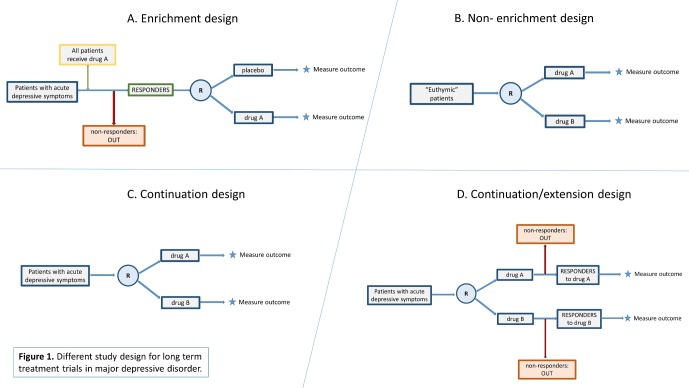
Introduction: Pharmacotherapy plays an important role in the treatment of major depression. At the initiation of antidepressant treatment, both improvement of symptoms in the short term and relapse prevention in the long term should be taken into account. However, there is insufficient evidence regarding the efficacy and the acceptability of continuation/maintenance treatments and the relative efficacy/acceptability of antidepressants. Objective: We will conduct a pairwise meta-analysis and a network meta-analysis (NMA) to examine the relative efficacy, tolerability and acceptability of antidepressants in the long-term treatment of major depression. Methods and analysis: We will include double-blind randomised controlled trials comparing any of the following antidepressants, which we included in our previous NMA of the acute treatment for major depression, with placebo or with another active drug for long-term treatment of major depression: agomelatine, amitriptyline, bupropion, citalopram, clomipramine, desvenlafaxine, duloxetine, escitalopram, fluoxetine, fluvoxamine, levomilnacipran, milnacipran, mirtazapine, nefazodone, paroxetine, reboxetine, sertraline, trazodone, venlafaxine, vilazodone and vortioxetine. Our primary outcomes will be sustained response and all-cause dropouts. We will include four types of designs that are used to investigate long-term treatment. We will conduct two main analyses. First, we will conduct a pairwise meta-analysis comparing all antidepressants versus placebo to investigate whether continuing antidepressants after achieving a positive response in the acute-phase treatment is beneficial and/or safe. Second, we will conduct an NMA to examine the comparative efficacy and acceptability of the drugs. We will use a novel approach that will combine the results of acute-phase treatment NMA with long-term treatment studies to include all related designs in the NMA. We will ensure the validity of combining different designs and our new approach by checking the distribution of important effect modifiers and consistency of network. Ethics and dissemination: This study did not require ethical approval. We will disseminate our findings by publishing results in a peer-reviewed journal. PROSPERO registration number: CRD42018114561; Pre-results.
Overview
The claims and statistics of this paper haven’t been checked yet.
Free: it reads the open-access text and checks the first 5 claims that cite a source we can check. Create a free account to check every claim.
Integrity signals
Registry
Cites
Statistics
Figures
Verification
Claims the paper makes
The claims and statistics of this paper haven’t been checked yet.
Free: it reads the open-access text and checks the first 5 claims that cite a source we can check. Create a free account to check every claim.
Self-check
Percentages, sums and reported differences re-computed from the paper’s own numbers.
The self-check needs the paper’s full text.
Citations
Cites
Measuring inconsistency in meta-analyses
Higgins, J. P. T., Thompson, S. G., Deeks, J. J., & Altman, D. G. (2003) · BMJ · doi:10.1136/bmj.327.7414.557 · Cited by 63,139
Shamseer, L., Moher, D., Clarke, M., Ghersi, D., Liberati, A., Petticrew, M., Shekelle, P., Stewart, L. A., & the PRISMA-P Group (2015) · BMJ · doi:10.1136/bmj.g7647 · Cited by 13,120 · cited 1×
“MEthOds We used the Preferred Reporting Items for Systematic Reviews and Meta-Analysis Protocols (PRISMA-P).(16)”
Cochrane Handbook for Systematic Reviews of Interventions Version 5.0.1. The Cochrane Collaboration
Higgins, J. P. T., Green, S. R., & Higgins, J. P. T. (2008) · Cited by 7,259
Cipriani, A., Furukawa, T. A., Salanti, G., Chaimani, A., Atkinson, L. Z., Ogawa, Y., Leucht, S., Ruhe, H. G., Turner, E. H., Higgins, J. P. T., et al. (2018) · The Lancet · doi:10.1016/s0140-6736(17)32802-7 · Cited by 3,541 · cited 5×
“We will include the 21 antidepressants, which showed greater efficacy than placebo in the acute treatment of major depression in our previous review.(5) In this last, all antidepressants currently marketed in the USA, Europe or Japan were included: agomelatine, bupropion, citalopram, desvenlafaxine, duloxetine, escita…”
InfluentialSelf-citationFerrari, A. J., Charlson, F. J., Norman, R. E., Patten, S. B., Freedman, G., Murray, C. J. L., Vos, T., & Whiteford, H. A. (2013) · PLoS Medicine · doi:10.1371/journal.pmed.1001547 · Cited by 3,115 · cited 1×
“as more people live to the age where they can experience depressive disorders.(3) 4 Pharmacotherapy plays an important role in the treatment of depression.”
BackgroundThe Epidemiology of Depression Across Cultures
Kessler, R. C., & Bromet, E. J. (2013) · Annual Review of Public Health · doi:10.1146/annurev-publhealth-031912-114409 · Cited by 2,657 · cited 1×
“It runs a chronic-recurrent course as 30%–40% of cases experience recurrent episodes within a year.(2) Studies show that the years of life lived with disability due to depressive disorders increased by 37.”
BackgroundGraphical tools for network meta-analysis in STATA
Chaimani, A., Higgins, J. P. T., Mavridis, D., Spyridonos, P., & Salanti, G. (2013) · PLoS ONE · doi:10.1371/journal.pone.0076654 · Cited by 2,473 · cited 1×
“For NMA 1, we will use comparison-adjusted funnel plots, after assuming that newer treatments are favoured.(41) We will also evaluate the influence of publication bias by performing subgroup analyses of published versus unpublished data.”
MethodComparison of two methods to detect publication bias in meta-analysis.
Peters, J. L. (2006) · JAMA · doi:10.1001/jama.295.6.676 · Cited by 2,278 · cited 1×
“Assessment of publication bias and small study effect In order to assess whether small studies report higher effect estimates than larger studies (due to publication bias/small study effect) in the pairwise meta-analysis, we will visually examine the contour-enhanced funnel plots and perform the Peters test.(40) For N…”
MethodConsistency and inconsistency in network meta-analysis: concepts and models for multi-arm studies
Higgins, J. P. T., Jackson, D., Barrett, J. K., Lu, G., Ades, A. E., & White, I. R. (2012) · Research Synthesis Methods · doi:10.1002/jrsm.1044 · Cited by 2,098 · cited 1×
“by-treatment test to assess the global inconsistency in the network.(39) In case we identify important inconsistency, we”
BackgroundKennedy, S. H., Lam, R. W., McIntyre, R. S., Tourjman, S. V., Bhat, V., Blier, P., Hasnain, M., Jollant, F., Levitt, A. J., MacQueen, G. M., et al. (2016) · The Canadian Journal of Psychiatry · doi:10.1177/0706743716659417 · Cited by 1,181
Cited by
Kato, M., Hori, H., Inoue, T., Iga, J., Iwata, M., Inagaki, T., Shinohara, K., Imai, H., Murata, A., Mishima, K., et al. (2021) · Molecular Psychiatry · doi:10.1038/s41380-020-0843-0 · Cited by 152
Self-citationFurukawa, T. A., Shinohara, K., Sahker, E., Karyotaki, E., Miguel, C., Ciharova, M., Bockting, C. L. H., Breedvelt, J. J. F., Tajika, A., Imai, H., et al. (2021) · World Psychiatry · doi:10.1002/wps.20906 · Cited by 126
Self-citationVitamin D Supplementation Ameliorates Severity of Major Depressive Disorder
AlGhamdi, S. A., Alsulami, N., Khoja, S., Alsufiani, H. M., Tayeb, H. O., & Tarazi, F. I. (2019) · Journal of Molecular Neuroscience · doi:10.1007/s12031-019-01461-2 · Cited by 75
Martens, M., Filippini, N., Harmer, C. J., & Godlewska, B. R. (2021) · Psychopharmacology · doi:10.1007/s00213-021-05915-7 · Cited by 48
“Currently, finding such treatment follows a ‘trial and error’ process, based on guidelines derived from the knowledge of populational efficacy of drugs; this process however does not necessarily work for a particular individual (Cipriani et al. 2018; Shinohara et al. 2019).”
BackgroundPain pathways and potential new targets for pain relief
Wang, M., & Thyagarajan, B. (2020) · Biotechnology and Applied Biochemistry · doi:10.1002/bab.2086 · Cited by 45
Brymer, K. J., Johnston, J. N., Botterill, J. J., Romay-Tallón, R., Mitchell, M. A., Allen, J., Pinna, G., Caruncho, H. J., & Kalynchuk, L. E. (2020) · Neuropsychopharmacology · doi:10.1038/s41386-020-0609-z · Cited by 42
The preclinical discovery and development of agomelatine for the treatment of depression
Konstantakopoulos, G., Dimitrakopoulos, S., & Michalopoulou, P. G. (2020) · Expert Opinion on Drug Discovery · doi:10.1080/17460441.2020.1781087 · Cited by 41
Predicting treatment effects in unipolar depression: A meta-review
Gillett, G., Tomlinson, A., Efthimiou, O., & Cipriani, A. (2020) · Pharmacology & Therapeutics · doi:10.1016/j.pharmthera.2020.107557 · Cited by 36
Self-citationSevere, J., Greden, J. F., & Reddy, P. (2020) · FOCUS The Journal of Lifelong Learning in Psychiatry · doi:10.1176/appi.focus.20200008 · Cited by 30
Yang, J. Z., Kang, C. Y., Yuan, J., Zhang, Y., Wei, Y. J., Xu, L., Zhou, F., & Fan, X. (2021) · Psychoneuroendocrinology · doi:10.1016/j.psyneuen.2021.105432 · Cited by 29
Johnston, J. N., Thacker, J. S., Desjardins, C., Kulyk, B. D., Romay-Tallón, R., Kalynchuk, L. E., & Caruncho, H. J. (2020) · Frontiers in Pharmacology · doi:10.3389/fphar.2020.559627 · Cited by 27
“However, it is now clear from the widespread use of these therapies that a large portion of the patient population are non-responsive and require extended periods to achieve therapeutic effects, raising concerns that the delay in tangible improvement may increase risk of suicide (McCormack and Korownyk, 2018; Shinohar…”
BackgroundMaoz, H., Grossman‐Giron, A., Sedoff, O., Nitzan, U., Kashua, H., Yarmishin, M., Arad, O., & Bitan, D. T. (2023) · Journal of Affective Disorders · doi:10.1016/j.jad.2023.11.053 · Cited by 17
Kessing, L. V., Ziersen, S. C., Andersen, F. M., Gerds, T. A., & Budtz–Jørgensen, E. (2024) · Acta Psychiatrica Scandinavica · doi:10.1111/acps.13673 · Cited by 16
Zhao, G., Zhang, Q., Wu, F., Yin, S., Xie, Y., & Liu, H. (2022) · Expert Review of Clinical Pharmacology · doi:10.1080/17512433.2022.2117152 · Cited by 16
“We used the Cochrane risk of bias tool to evaluate the risk of bias in the included literature [7], and the Grading of Recommendations, Assessment, Development, and Evaluation (GRADE) method to evaluate the quality of evidence of network meta-analyses [8].”
Method(2024) · doi:10.1016/j.psychres.2024.115926 · Cited by 15
Genotoxic and oxidative effect of duloxetine on mouse brain and liver tissues
Álvarez‐González, I., Camacho-Cantera, S., Gómez-González, P., Rendón-Barrón, M. J., Morales‐González, J. A., Madrigal‐Santillán, E., Paniagua‐Pérez, R., & Madrigal‐Bujaidar, E. (2021) · Scientific Reports · doi:10.1038/s41598-021-86366-0 · Cited by 14
Meta-analysis of sleep deprivation effects on depression in rodents
Hu, B., Liu, C., Lv, T., Luo, F., Qian, C., Zhang, J., Ye, M., & Liu, Z. (2022) · Brain Research · doi:10.1016/j.brainres.2022.147841 · Cited by 12
Platona, R. I., Voiţă-Mekereş, F., Tudoran, C., Tudoran, M., & ENĂTESCU, V. R. (2024) · Clinics and Practice · doi:10.3390/clinpract14030056 · Cited by 5
“…(MDD), with its large spectrum of clinical manifestations, represents an important public health concern due to its increased prevalence and high recurrence tendency, resulting in disability and a reduced quality of life (QoL), in addition to its subsequent elevated socioeconomic costs [1,2].”
BackgroundJohnston, J. N., Yuan, P., Kadriu, B., Akula, N., Quintanilla, B., Peng, S., Jones, G. H., Schulmann, A., Yavi, M., Henter, I. D., et al. (2025) · Translational Psychiatry · doi:10.1038/s41398-025-03724-6 · Cited by 4
“…respond to multiple classes of antidepressants, or show only a partial response, often face additional challenges, including functional impairment, lower quality of life, high relapse rates, and increased risk of suicidality — all core factors that are not well replicated by animal models [1 – 3].”
Lees, S., Dicker, M., Ku, J. E., Chaganti, V., Mew-Sum, M., Wang, N., Smith, A., Oldmeadow, C. J., Goon, W. L., Bevan, M., et al. (2021) · BMJ Open · doi:10.1136/bmjopen-2021-051509 · Cited by 4
“15,43,44 The following databases will be searched: Cochrane Central Register of Controlled Trials, Embase, and MEDLINE.”
Hasan, F., Ikram, R., Sımjee, S. U., Iftakhar, K., & Asadullah, K. (2019) · Pakistan Journal of Pharmaceutical Sciences · doi:10.36721/pjps/32/4(sup)/01.07.2019/1198/1855-1860 · Cited by 4
“Amitriptyline is universally available old drug used to treat several disorders including depression (Shinohara et al., 2019), obsessive compulsive disorder (Feighner, 1999), social anxiety disorder (Feighner, 1999), bulimia nervosa (Bacaltchuk and Hay, 2003) and many others (Kim et al., 2013).”
BackgroundMeta-analysis of the effects of sleep deprivation on depression in patients and animalsPreprint
Hu, B., Ye, M., Feng, D., Ying, J., Mou, T., Luo, F., Lv, T., Jiang, L., Qian, C., Ding, Z., et al. (2020) · bioRxiv (Cold Spring Harbor Laboratory) · doi:10.1101/2020.03.02.971689 · Cited by 4
“antidepressants [5, 6].”
Ross, V., Brijs, K., Dirix, H., Wets, G., Neven, A., Vanrompay, Y., Claes, N., & Jacobs, N. (2023) · Journal of Evidence-Based Psychotherapies · doi:10.24193/jebp.2023.1.5 · Cited by 3
Peng, X., & Liu, J. (2025) · Frontiers in Medicine · doi:10.3389/fmed.2025.1539880 · Cited by 2
Impact of Antidepressant Prescriptions on Suicidal Behavior in Times of Severe Financial Strain
Sacchi, V., Mattei, G., Musetti, L., & Galeazzi, G. M. (2021) · The Journal of Nervous and Mental Disease · doi:10.1097/nmd.0000000000001336 · Cited by 3
van Haaren, P. C. F., van Gaalen, J., Ostinelli, E. G., Shinohara, K., Tajika, A., Aronica, R., Aoki, N., Batista, E., Ligthart, S. A., Vinkers, C. H., et al. (2026) · The Lancet Psychiatry · doi:10.1016/s2215-0366(26)00326-3 · Cited by 1
Self-citationОСОБЛИВОСТІ ВИВЧЕННЯ ЕФЕКТИВНОСТІ АНТИДЕПРЕСАНТІВ НА ОСНОВІ МЕТА-АНАЛІЗІВ
Венгер, О. П., & Grinko, N. (2022) · Вісник соціальної гігієни та організації охорони здоров я України · doi:10.11603/1681-2786.2021.4.12862
Rasheed, R. A., provided, S. N., kishore, K., Dr, S., Raja, T. A. R., Senthil, G., Dr, P., Reddy, D., & P, S. R. (2025) · doi:10.17504/protocols.io.dm6gp9q21vzp/v1
Neural Timescale of Adolescents Major Depressive DisorderPreprint
Gao, Y., Wang, S., Wei, H., He, J., Liu, G., Liu, L., Liu, X., Li, X., Guo, X., & Liu, X. (2025) · bioRxiv (Cold Spring Harbor Laboratory) · doi:10.1101/2025.07.01.662431
Kaplan‐Arabaci, O., Zosen, D., Domańska, D., Bjørnstad, S., Santini, S., Karaca, U., Haeckel, J. A., Dolva, K., Dančišinová, Z., Haugen, F., et al. (2025) · Neurochemistry International · doi:10.1016/j.neuint.2025.106056
Η επιβάρυνση των άτυπων φροντιστών σε ασθενείς με άνοια
Σμυρνή, Ι. Δ. (2023) · University of Thessaly Institutional Repository (University of Thessaly) · doi:10.26253/heal.uth.39285
ZUSE, S. P. (2024) · LA Referencia (Red Federada de Repositorios Institucionales de Publicaciones Científicas)
Neural Timescale of Adolescents Major Depressive DisorderPreprint
Liu, X. Y., Fan, T., Han, Y., Wang, S., Yu, Q., Wei, H., Gao, Y., Liu, G., Guo, X., Liu, L., et al. (2026) · Research Square · doi:10.21203/rs.3.rs-9807065/v1
Metadata
- Authors
- Shinohara, K., Efthimiou, O., Ostinelli, E. G., Tomlinson, A., Geddes, J. R., Nierenberg, A. A., Ruhe, H. G., Furukawa, T. A., & Cipriani, A.
- Affiliations
- Kyoto University (JP)
- University of Bern (CH)
- University of Milan (IT)
- University of Oxford (GB)
- Oxford Health NHS Foundation Trust (GB)
- Massachusetts General Hospital (US)
- Department of Psychiatry, Radboud University, Nijmegen, the Netherlands
- Corresponding author
- Shinohara, Kiyomi
- ORCID
- Venue
- BMJ Open
- Publisher
- BMJ
- Published
- 2019-05-17
- Volume
- 9
- Issue
- 5
- Pages
- e027574
- ISSN
- 2044-6055 (ISSN-L)
- PMC
- PMC6530313
- OpenAlex
- W2944979889
- Cited by
- 27
- References
- 47
- Citations by year
- 2025: 4 · 2024: 3 · 2023: 2 · 2022: 3 · 2021: 6 · 2020: 8 · 2019: 1
- FWCI
- 0.58
- Type
- journal article
- Language
- en
- Open access
- gold
- doi.org
- Licence
- cc-by-nc
- Locations
- BMJ Open (publishedVersion, cc-by-nc)
- PubMed Central (publishedVersion, cc-by-nc)
- PubMed (publishedVersion)
- HighWire Press Open Archive (acceptedVersion)
- Institutional Repositories DataBase (IRDB) (submittedVersion, cc-by-nc)
- Radboud Repository (Radboud University) (submittedVersion, cc-by-nc-sa)
- BORIS (University Library Bern) (submittedVersion, cc-by-nc)
- Kyoto University Research Information Repository (Kyoto University) (submittedVersion, cc-by-nc)
- Radboud Repository (Radboud University) (submittedVersion)
- Open Access CRIS of the University of Bern
- Funders
- National Institute for Health Research (NIHR) Oxford Health Biomedical Research Centre
- NIHR Research Professorship
- Topics
- Health Sciences › Medicine › Pharmacology (medical) › Treatment of Major Depression
- Health Sciences › Medicine › Psychiatry and Mental health › Mental Health Treatment and Access
- Social Sciences › Psychology › Clinical Psychology › Psychotherapy Techniques and Applications
- Keywords
- major depressive disorder, antidepressants, long-term maintenance therapy, continuation treatment, relapse prevention, sustained response, treatment discontinuation, tolerability, acceptability, drug efficacy comparison, network meta-analysis
- MeSH terms
- Network Meta-Analysis as Topic, Systematic Reviews as Topic, Antidepressive Agents, Major Depressive Disorder, Humans, Research Design
About these checks
Registry, retraction, Cites and statistics results are computed, not judged, with one exception: a printed reference that no index lists is read once by a model before it counts as a citation error. Claims are extracted by a model and kept only when their quote appears verbatim in the text; each cited source is then checked, with a model’s help, for whether it says what the claim relies on. Those verdicts can be wrong — read the claim’s quote and the cited source before relying on one.
Statistics and arithmetic are recomputed, not judged.
Confidence bands are shown only for fields calibrated on our annotated test set. None is calibrated yet, so no band is shown.
What counts as a claim ›How we measure confidence ›How we check this ›
Are you an author, or do you see a problem with this page? Request a review
Data sources
Bibliographic data: Semantic Scholar, OpenAlex, Crossref.
Contains information from the Semantic Scholar Academic Graph Datasets, made available under the ODC Attribution License (ODC-BY 1.0).
Semantic Scholar’s data is described in: Kinney, R., et al. (2023). The Semantic Scholar Open Data Platform. arXiv:2301.10140.
