

Electronic medical record-related burnout in healthcare providers: a scoping review of outcomes and interventions
Open accessThe DOI matches its Crossref record; 37 of the 37 references it cites were found in a registry or an index.
Abstract
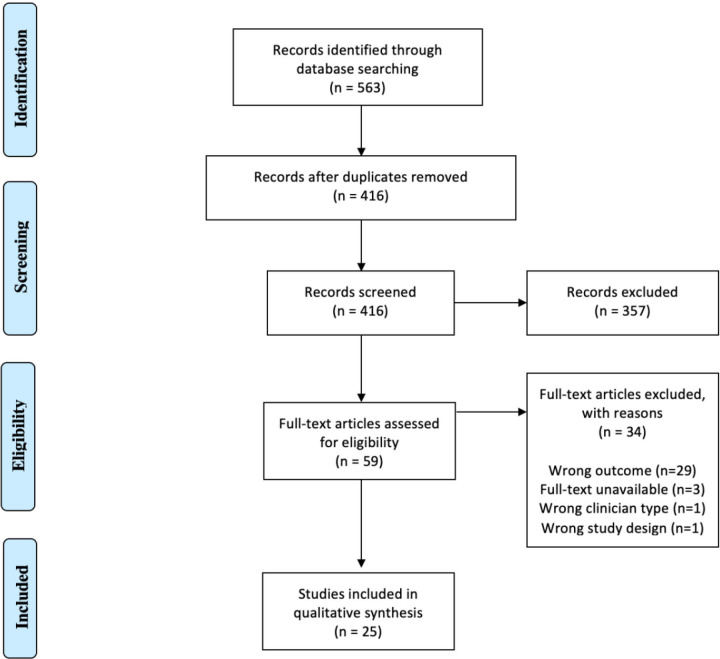
OBJECTIVE: Healthcare provider (HCP) burnout is on the rise with electronic medical record (EMR) use being cited as a factor, particularly with the rise of the COVID-19 pandemic. Burnout in HCPs is associated with negative patient outcomes, and, therefore, it is crucial to understand and address each factor that affects HCP burnout. This study aims to (a) assess the relationship between EMR use and burnout and (b) explore interventions to reduce EMR-related burnout. METHODS: We searched MEDLINE (Ovid), CINAHL and SCOPUS on 29 July 2021. We selected all studies in English from any publication year and country that discussed burnout in HCPs (physicians, nurse practitioners and registered nurses) related to EMR use. Studies must have reported a quantitative relationship to be included. Studies that implemented an intervention to address this burnout were also included. All titles and abstracts were screened by two reviewers, and all full-text articles were reviewed by two reviewers. Any conflicts were addressed with a third reviewer and resolved through discussion. Quality of evidence of all included articles was assessed using the Quality Rating Scheme for Studies and Other Evidence. FINDINGS: The search identified 563 citations with 416 citations remaining after duplicate removal. A review of abstracts led to 59 studies available for full-text assessment, resulting in 25 studies included in the scoping review. Commonly identified associations between EMR-related burnout in HCPs included: message and alert load, time spent on EMRs, organisational support, EMR functionality and usability and general use of EMRs. Two articles employed team-based interventions to improve burnout symptoms without significant improvement in burnout scores. CONCLUSIONS AND RELEVANCE: Current literature supports an association between EMR use and provider burnout. Very limited evidence exists for burnout-reducing interventions that address factors such as time spent on EMRs, organisational support or EMR design.
Overview
The claims and statistics of this paper haven’t been checked yet.
Free: it reads the open-access text and checks the first 5 claims that cite a source we can check. Create a free account to check every claim.
Integrity signals
Registry
Cites
Statistics
Figures
Verification
Claims the paper makes
The claims and statistics of this paper haven’t been checked yet.
Free: it reads the open-access text and checks the first 5 claims that cite a source we can check. Create a free account to check every claim.
Self-check
Percentages, sums and reported differences re-computed from the paper’s own numbers.
The self-check needs the paper’s full text.
Citations
Cites
Perceived organizational support: a review of the literature.
Rhoades, L., & Eisenberger, R. (2002) · Journal of Applied Psychology · doi:10.1037/0021-9010.87.4.698 · Cited by 7,592 · cited 1×
“AS reviewed and edited the manuscript and serves as the guarantor accepts full responsibility for the work and/or the conduct of the study, had access to the data, and controlled the decision to publish.”
BackgroundInterventions to prevent and reduce physician burnout: a systematic review and meta-analysis
West, C. P., Dyrbye, L. N., Erwin, P. J., & Shanafelt, T. D. (2016) · The Lancet · doi:10.1016/s0140-6736(16)31279-x · Cited by 2,362
Mann, C. J. (2003) · Emergency Medicine Journal · doi:10.1136/emj.20.1.54 · Cited by 1,558 · cited 3×
“⇒ Quality of evidence was assessed using the Quality Rating Scheme for Studies and Other Evidence.”
MethodInfluentialShanafelt, T. D., Dyrbye, L. N., Sinsky, C., Hasan, O., Satele, D., Sloan, J., & West, C. P. (2016) · Mayo Clinic Proceedings · doi:10.1016/j.mayocp.2016.05.007 · Cited by 1,086
on the clinical validity of the maslach burnout inventory and the burnout measure
Schaufeli, W. B., Bakker, A. B., Hoogduin, K., Schaap, C., & Kladler, A. (2001) · Psychology & Health · doi:10.1080/08870440108405527 · Cited by 794
Prevalence of and Factors Associated With Nurse Burnout in the US
Shah, M. K., Gandrakota, N., Cimiotti, J. P., Ghose, N., Moore, M., & Ali, M. K. (2021) · JAMA Network Open · doi:10.1001/jamanetworkopen.2020.36469 · Cited by 671
Physician stress and burnout: the impact of health information technology
Gardner, R. L., Cooper, E., Haskell, J., Harris, D. A., Poplau, S., Kroth, P. J., & Linzer, M. (2019) · Journal of the American Medical Informatics Association · doi:10.1093/jamia/ocy145 · Cited by 566
Halbesleben, J. R. B., & Rathert, C. (2008) · Health Care Management Review · doi:10.1097/01.hmr.0000304493.87898.72 · Cited by 519
Melnick, E. R., Dyrbye, L. N., Sinsky, C. A., Trockel, M., West, C. P., Nedelec, L., Tutty, M. A., & Shanafelt, T. (2020) · Mayo Clinic Proceedings · doi:10.1016/j.mayocp.2019.09.024 · Cited by 413
Electronic medical records and physician stress in primary care: results from the MEMO Study
Babbott, S., Manwell, L. B., Brown, R., Montague, E., Williams, E., Schwartz, M., Hess, E., & Linzer, M. (2014) · Journal of the American Medical Informatics Association · doi:10.1136/amiajnl-2013-001875 · Cited by 366
Research works printed but not linked: 1
- Wong L. A rapid review of physician burnout secondary to electronic health records use in the United States from 2015 to 2020. Public Heal MPH Theses DrPH Diss 2020; 276.
Cited by
Use of ambient AI scribes to reduce administrative burden and professional burnout
Olson, K. D., Meeker, D., Troup, M., Barker, T. D., Nguyen, V. H., Manders, J. B., Stults, C. D., Jones, V. G., Shah, S. D., Shah, T., et al. (2025) · JAMA Network Open · doi:10.1001/jamanetworkopen.2025.34976 · Cited by 243
Shah, S. J., Devon-Sand, A., Ma, S. P., Jeong, Y., Crowell, T., Smith, M., Liang, A. S., Delahaie, C., Hsia, C., Shanafelt, T., et al. (2025) · Journal of the American Medical Informatics Association · doi:10.1093/jamia/ocae295 · Cited by 224
Physician Perspectives on Ambient AI Scribes
Shah, S. J., Crowell, T., Jeong, Y., Devon-Sand, A., Smith, M., Yang, B., Ma, S. P., Liang, A. S., Delahaie, C., Hsia, C., et al. (2025) · JAMA Network Open · doi:10.1001/jamanetworkopen.2025.1904 · Cited by 147
Wosny, M., Strasser, L. M., & Hastings, J. (2023) · JMIR Human Factors · doi:10.2196/50357 · Cited by 110
“Similar findings, including the association of EHR design and use factors with clinicians’stress and burnout, have been reported [20,21].”
BackgroundResultAmbient artificial intelligence scribes: utilization and impact on documentation time
Ma, S. P., Liang, A. S., Shah, S. J., Smith, M., Jeong, Y., Devon-Sand, A., Crowell, T., Delahaie, C., Hsia, C., Lin, S., et al. (2025) · Journal of the American Medical Informatics Association · doi:10.1093/jamia/ocae304 · Cited by 155
Olakotan, O. O., Samuriwo, R., Ismaila, H., & Atiku, S. O. (2025) · Journal of Evaluation in Clinical Practice · doi:10.1111/jep.70189 · Cited by 157
Wu, Y., Wu, M., Wang, C., Lin, J., Liu, J., & Liu, S. (2024) · JMIR Medical Informatics · doi:10.2196/54811 · Cited by 87
“Some studies have reported an average burnout prevalence of 44% [2], with rates exceeding 80% in some specific settings and departments [4,5] such as primary care and emergency departments.”
BackgroundClosing the Chasm: Understanding and Addressing the Anesthesia Workforce Supply and Demand Imbalance
Abouleish, A. E., Pomerantz, P., Peterson, M. D., Cannesson, M. P., Akeju, O., Miller, T. R., Rathmell, J. P., & Cole, D. J. (2024) · Anesthesiology · doi:10.1097/aln.0000000000005052 · Cited by 68
“40 It has also been linked to new risks that may affect patient safety.”
Steffey, M. A., Griffon, D. J., Risselada, M., Buote, N. J., Scharf, V. F., Zamprogno, H., & Winter, A. L. (2023) · Frontiers in Veterinary Science · doi:10.3389/fvets.2023.1184525 · Cited by 73
Development, Implementation, and Evaluation Methods for Dashboards in Health Care: Scoping Review
Helminski, D., Sussman, J. B., Pfeiffer, P. N., Kokaly, A. N., Ranusch, A., Renji, A. D., Damschroder, L. J., Landis‐Lewis, Z., & Kurlander, J. E. (2024) · JMIR Medical Informatics · doi:10.2196/59828 · Cited by 63
“When developing dashboards for clinicians, who are often overworked and burned out, usability testing will be crucial to making dashboard use as efficient and palatable as possible [140,141].”
Use of an AI scribe and electronic health record efficiency
Pearlman, K., Wan, W., Shah, S., & Laiteerapong, N. (2025) · JAMA Network Open · doi:10.1001/jamanetworkopen.2025.37000 · Cited by 45
Guo, Y., Wang, J., Hu, D., Tam, S., Gilman, C., Chow, E., Perret, D., Pandita, D., & Zheng, K. (2026) · Journal of the American Medical Informatics Association · doi:10.1093/jamia/ocaf180 · Cited by 43
Pelletier, J. H., Watson, K. L., Michel, J., McGregor, R. S., & Rush, S. Z. (2025) · JAMIA Open · doi:10.1093/jamiaopen/ooaf068 · Cited by 47
AI-guided precision parenteral nutrition for neonatal intensive care units
Phongpreecha, T., Ghanem, M., Reiss, J. D., Oskotsky, T., Mataraso, S. J., Francesco, D. D., Reincke, S. M., Espinosa, C. A., Chung, P., Ng, T., et al. (2025) · Nature Medicine · doi:10.1038/s41591-025-03601-1 · Cited by 39
“In the current healthcare environment where the care team has to balance patient care with information overload and alarm fatigue, AI models need to focus on actionability, not just predictive modeling 58,59 .”
Yosep, I., Hikmat, R., & Mardhiyah, A. (2023) · Journal of Multidisciplinary Healthcare · doi:10.2147/jmdh.s406688 · Cited by 35
“This application also provides a group as a means of support system and is accompanied by a facilitator, namely a nurse.(28) The support system in the application is an effort to reduce depressive symptoms in students.”
BackgroundAndino, J. J., Eyrich, N. W., & Boxer, R. J. (2023) · mHealth · doi:10.21037/mhealth-23-15 · Cited by 35
“As part of the evaluation of physician burnout, researchers have found that increased messages and alerts as well as time spent on the EMR is associated with burnout (58).”
BackgroundInvolving Health Care Professionals in the Development of Electronic Health Records: Scoping Review
Busse, T. S., Jux, C., Laser, J., Rasche, P., Vollmar, H. C., Ehlers, J. P., & Kernebeck, S. (2023) · JMIR Human Factors · doi:10.2196/45598 · Cited by 35
Guo, Y., Hu, D., Wang, J., Zheng, K., Perret, D., Pandita, D., & Tam, S. P. (2025) · Studies in health technology and informatics · doi:10.3233/shti250921 · Cited by 31
“The Health Information Technology for Economic and Clinical Health (HITECH) Act drove widespread Electronic Health Records (EHRs), which has increased documentation burden and contributed to clinician burnout 1,2 .”
Ambient Artificial Intelligence Scribes in Pediatric Primary Care: A Mixed Methods Study
Rabbani, N., Ray, M., Verhagen, E., Hatoun, J., Patane, L. B., & Vernacchio, L. (2025) · Applied Clinical Informatics · doi:10.1055/a-2625-0750 · Cited by 29
Workforce research priorities for resilience to future health shocks—and the workforce crisis
Walshe, K., Smith, J., Lamont, T., & Leary, A. (2024) · BMJ · doi:10.1136/bmj-2023-078997 · Cited by 18
LGBTQ+ Identity and Ophthalmologist Burnout
Chang, T. C., Rafael, A., Candelario, R. A. C., Berrocal, A. M., Briceño, C. A., Chen, J. Y., Shoham-Hazon, N., Berco, E., Valle, D. S.-D., & Vanner, E. A. (2022) · American Journal of Ophthalmology · doi:10.1016/j.ajo.2022.10.002 · Cited by 13
Challenges and Potential of Artificial Intelligence in Neuroradiology
Winder, A. J., Stanley, E. A. M., Fiehler, J., & Forkert, N. D. (2024) · Clinical Neuroradiology · doi:10.1007/s00062-024-01382-7 · Cited by 13
“These problems, according to some clinicians, are exacerbated by the implementation of medical AI products; many clinicians already feel that too much of their time is spent interacting with computerized systems rather than directly with patients [39].”
Hadeed, N. N., Ameling, J. M., Henderson, J., Bucala, M. D., Salamey, Y., & Meddings, J. A. (2025) · Journal of General Internal Medicine · doi:10.1007/s11606-025-09478-7 · Cited by 12
Improving health care efficiency one click at a time
Bacchi, S., Kovoor, J. G., Gupta, A. K., Tan, S., Sherbon, T., Bersten, A. D., O’Callaghan, P. G., & Chan, W. O. (2023) · Internal Medicine Journal · doi:10.1111/imj.16160 · Cited by 12
The role of information systems in emergency department decision-making—a literature review
Born, C., Schwarz, R., Böttcher, T. P., Hein, A., & Krcmar, H. (2024) · Journal of the American Medical Informatics Association · doi:10.1093/jamia/ocae096 · Cited by 13
Vohra-Gupta, S., Petruzzi, L. J., Cherian, A., Chow, C., Unzueta, M., & Joachimi, R. (2025) · Healthcare · doi:10.3390/healthcare13101097 · Cited by 12
“We also know that healthcare professionals burnout and are overwhelmed by documentation requirements, so it can be complicated to add another screening to their workflow, especially one that requires additional follow-up [54].”
Artificial intelligence–enabled penicillin allergy delabelling: an implementation study
Stretton, B., Jiang, M., Kovoor, J. G., Inglis, J. M., Lam, L., Tan, S., Yuson, C., Smith, W., Shakib, S., & Bacchi, S. (2023) · Internal Medicine Journal · doi:10.1111/imj.16266 · Cited by 10
DAX Copilot: ambient AI scribe may help reduce surgical resident clinical documentation burden
Ghanem, Y. K., Nation, R. J., Sofield, H., Rouhi, A. D., Gandhi, S., Sier, R., Saleh, Z., Joshi, A. R. T., & Patel, R. (2025) · Surgical Endoscopy · doi:10.1007/s00464-025-12404-x · Cited by 8
“Healthcare provider burnout has been directly linked to electronic medical record (EMR) use, with multiple studies identifying time spent on EMRs and functionality issues as contributing factors [5].”
Torkman, R., Ghapanchi, A. H., & Ghanbarzadeh, R. (2024) · Informatics · doi:10.3390/informatics11030044 · Cited by 8
“Studies have highlighted the importance of continuous professional development and training in ensuring the long-term success of EMR systems in healthcare settings [13,14].”
BackgroundChaisurin, P., & Yodchai, N. (2024) · SAGE Open Nursing · doi:10.1177/23779608241272571 · Cited by 9
“Four studies show that health-care workers had an elevated risk of burnout during the COVID-19 outbreak (Howell, 2021; Li et al., 2022; Özçevik Subas ̧ i et al., 2021; Zhang et al., 2021), and this has continued to occur after the pandemic (Howell, 2021).”
BackgroundResultKheirkhah, H., Hartfeld, N. M. S., Widdifield, J., Kulhawy-Wibe, S., Roberts, J., Yacyshyn, E., Lee, J. J. Y., Jilkine, K., Jerome, D., Kwok, T. S. H., et al. (2023) · The Journal of Rheumatology · doi:10.3899/jrheum.2023-0437 · Cited by 9
“52 Further research on ways to reduce EHR-related burnout are urgently needed.”
BackgroundRamesh, S. H., Ouskine, A., Khorasani, E., Ebrahimipour, M., Finestone, H., Chan, A. D. C., & Rajabiyazdi, F. (2024) · Graphics Interface · doi:10.1145/3670947.3670978 · Cited by 7
“However, due to health data’s vast quantity and complexity, it can be difficult for healthcare providers and patients to analyze and comprehend the information in a short clinical visit [30, 71].”
Chiang, Y.-L., Yang, K.-F., Su, P.-Y., Tsai, S., & Liang, K.-L. (2025) · Applied Clinical Informatics · doi:10.1055/a-2707-2959 · Cited by 7
Crossover Evaluation of Two Ambient AI Scribe Tools in the Emergency Department
Webb, J., Chu, L., Turer, R. W., Chen, C., Rousseau, J. F., Salter, A. R., Courtney, D. M., Higashi, R. T., Guzman, N., Chapman, W. W., et al. (2026) · Applied Clinical Informatics · doi:10.1055/a-2818-1706 · Cited by 8
Enhancing data practices for Whole Health: Strategies for a transformative future
Guo, L., Reddy, K. P., Iseghem, T. V., & Pierce, W. (2024) · Learning Health Systems · doi:10.1002/lrh2.10426 · Cited by 7
“These issues become evident as clinicians strive to align data processes with the fundamental principles that define WHS. Understanding how data intricacies impact various facets of healthcare delivery is crucial in addressing these challenges and optimizing the quality of care provided within the WHS context.”
BackgroundInfluentialMoloney, G. (2010) · Cross Connect (Southern Cross University) · Cited by 37
From Couch to Click: Opportunities and Challenges of Hybrid Work Models in Mental Health Care
Steidtmann, D. K., McBride, S., Mishkind, M. C., & Shore, J. (2025) · Current Psychiatry Reports · doi:10.1007/s11920-025-01607-7 · Cited by 6
Fuhrmann, L., & Schargus, M. (2023) · Graefe s Archive for Clinical and Experimental Ophthalmology · doi:10.1007/s00417-023-06139-5 · Cited by 6
Gill, K. S., Cacciamani, G. E., Nabhani, J. A., Corb, J., Buchanan, T., Park, D., Bhardwaj, V., Marwah, O., Kim, M., Kapoor, D. A., et al. (2023) · medRxiv · doi:10.1101/2023.06.26.23291879 · Cited by 7
“physicians report burnout, directly attributed to EHR usage [11-14] 121 Provider burnout is linked to various aspects of EHR use, including time spent on EHR, 122 level of organizational support, and system usability [15].”
BackgroundArizmendi, B. J., Craven, M. R. A., Martínez‐Camblor, P., Tormey, L. K., & Salwen‐Deremer, J. K. (2024) · Digestive Diseases and Sciences · doi:10.1007/s10620-024-08428-3 · Cited by 6
“The burgeoning demand for non-clinic tasks is associated with increased risk of burnout and lower professional satisfaction [8–10], which in turn have been associated with poorer quality of care and patient dissatisfaction [11].”
Curbera, G. A.-J., Rodríguez, M. I. G.-R., de Castro, B. A., Díaz, S. S., Vázquez, I. P., Gratal, P., López‐López, R., & García-Campelo, R. (2024) · BMJ Open Quality · doi:10.1136/bmjoq-2023-002732 · Cited by 5
“With the intervention we implemented, we surpassed the threshold for quality defined by ASCO in QOPI round 1 2022, and we are now in the process of aiming to become QOPI certified in 2024.”
MethodA critical review of clinician-directed nudges
Last, B. S., Beidas, R. S., Hoskins, K., Waller, C. R., & Khazanov, G. K. (2024) · Current Opinion in Psychology · doi:10.1016/j.copsyc.2024.101856 · Cited by 5
Navigating AI: A Quick Start Guide for Healthcare Professionals
Mathur, P., Arshad, H., Grasfield, R. H., Khatib, R., Aggarwal, A., Aurón, M., & Khare, A. (2024) · Cureus · doi:10.7759/cureus.72501 · Cited by 5
Woods, L. S., Haines, M., Arabi, S., Boyd, J., Butler-Henderson, K. A., Gray, K. M., Gruen, R. L., Guinea, S., Bennett, C. C., & Sullivan, C. M. (2025) · Australian Health Review · doi:10.1071/ah25039 · Cited by 4
McMillan, B., Davidge, G., Nadeem, F., Dowding, D., Wilson, K., & Davies, A. C. (2023) · BMJ Health & Care Informatics · doi:10.1136/bmjhci-2022-100722 · Cited by 4
Oxford, M. A., McLaughlin, C., McLaughlin, C. J., Johnson, T. S., & ROBERTS, J. M. (2024) · Annals of Plastic Surgery · doi:10.1097/sap.0000000000003863 · Cited by 4
Anderson, B. D., Lyon, L. L., Lee, M. H.-Y., Kumar, D., Neeman, E., Duffens, A. M., Kotak Dinesh, M., Sun, H., Reed, M., & Liu, R. (2024) · Journal of the National Comprehensive Cancer Network · doi:10.6004/jnccn.2024.7055 · Cited by 4
Butler, G. H., Satkumaran, S., Shanks, J., Segal, A., Kausman, J., Wilkins, E. J., Elbaum, Y., Buttery, J. P., & Quinlan, C. (2025) · Pediatric Nephrology · doi:10.1007/s00467-025-06702-8 · Cited by 4
Adoption of AI-Based Scribes in Telemedicine: Provider Attitudes and Insights
Kuiper, L. B., Watson, A. J., Eckerson, A. C., Lima, F., Lin, Y.-Y., Davis, T. C., Trammell, V., Nahar, V. K., & Chandra, S. (2026) · Telemedicine Journal and e-Health · doi:10.1177/15305627261424693 · Cited by 3
A new era of efficiency: artificial intelligence scribes and the future of ophthalmology
Wang, A., & Almeida, V. F. A. (2026) · Eye · doi:10.1038/s41433-026-04346-y · Cited by 3
Ethics of ambient documentation
Chambers, S., Gangal, A., & Stoff, B. K. (2025) · Journal of the American Academy of Dermatology · doi:10.1016/j.jaad.2025.03.007 · Cited by 3
Lees, A. F., White, A. A., Leu, M. G., Robinson, J., Hall, M. K., & Doerning, R. C. (2025) · Applied Clinical Informatics · doi:10.1055/a-2635-3820 · Cited by 3
Connor, S. J., Alamri, Y., Cross, N., & Tan‐Smith, C. (2023) · New Zealand Medical Journal · doi:10.26635/6965.5989 · Cited by 3
Kapadi, A., Price, G. J., Finn, C. F., Holley, R. J., Wicks, K., Banfill, K., Webster, G., Franks, K., McDonald, F., Johnson, D. P., et al. (2024) · BMJ Oncology · doi:10.1136/bmjonc-2023-000226 · Cited by 3
Artificial Intelligence in Oncology: Fulfilling Its Promise While Avoiding Its Peril
Shah, C., & Karlovits, S. (2025) · JCO Oncology Practice · doi:10.1200/op-25-00079 · Cited by 3
A Phased Competency Model for Electronic Health Record Usability
Kobeissi, M. M., Ross, A., Ramirez, E. G., Maria, D. S., Rutherford, A., Jacob, A., & McBride, M. (2025) · CIN Computers Informatics Nursing · doi:10.1097/cin.0000000000001260 · Cited by 3
ICU Provider Perspectives on EHR Usability
Khairat, S., Morelli, J., Herasevich, V., Strechen, I., & Pickering, B. W. (2025) · Studies in health technology and informatics · doi:10.3233/shti250075 · Cited by 2
“Poorly designed EHR systems can decrease efficiency, resulting in longer patient wait times and higher costs for healthcare organizations [2].”
Wojda, T. R., Savio, F. V. D., Hochheiser, H., Amaravathi, A., Bharat, K. T., & Fischer, G. M. (2025) · Artificial intelligence · doi:10.5772/intechopen.1011340 · Cited by 4
Behzad, S., Boucher, J. O., Alavijeh, N. S., Ravi, K., & Gholamrezanezhad, A. (2025) · Academic Radiology · doi:10.1016/j.acra.2025.07.057 · Cited by 2
Scholes, A. K., Elma, A., Cernat, A., Dawe, R. E., Grierson, L., Hamza, D. M., O’Toole, D., Scott, I. M., Shen, K., Shuldiner, J., et al. (2025) · Family Practice · doi:10.1093/fampra/cmaf092 · Cited by 4
“This burden has led to increased stress, fatigue, and burnout among physicians [7–9].”
Pauly, R. P., Stafinski, T., Koosha, H., Avdagovska, M., Hadizadeh, M., Bigam, D. L., Graham, T. A. D., Kuziemsky, C. E., Kassam, N., & Menon, D. (2026) · Journal of Medical Internet Research · doi:10.2196/76872 · Cited by 2
“In fact, there is an increasing body of evidence that links the excessive burden of EHR use directly with burnout and other measures of clinician dissatisfaction [13-16].”
Multilevel Stewardship Intervention for Use of Anticoagulation-Antiplatelet Therapy
Kurlander, J. E., Parra, D., Moore, V. R., Holleman, R. G., Burns, J., Midboe, A. M., Garlick, B., Domlyn, A. M., Chia, L., Barnes, G. D., et al. (2026) · JAMA Internal Medicine · doi:10.1001/jamainternmed.2026.2036 · Cited by 2
Primary Care Physician Preferences Regarding Communication from Orthopaedic Surgeons
Chiodo, C. P., Striano, B. M., Parker, E. B., Smith, J. T., Bluman, E. M., Martin, E. A., Greco, J. M., & Healey, M. J. (2024) · Journal of Bone and Joint Surgery · doi:10.2106/jbjs.23.00836 · Cited by 2
Sheehan, K. N., Cioci, A., Lucioni, T., & Hernandez, S. (2024) · Applied Clinical Informatics · doi:10.1055/s-0044-1786682 · Cited by 1
Proactively Designing Generative Artificial Intelligence for Primary Care
Navarro, D. F., & Lehman, R. (2024) · JAMA Internal Medicine · doi:10.1001/jamainternmed.2024.2584 · Cited by 1
Stern, S., Lippert, W. C., Rigdon, J., Obermiller, C. S., Witek, L., Anderson, M. B., Chebrolu, S., Moses, A., Xiao, T. G., Dharod, A., et al. (2024) · Applied Clinical Informatics · doi:10.1055/a-2480-4725 · Cited by 1
“Time spent in the EHR, especially time spent in the EHR after hours, has been more closely associated with burn-out, 20 – 22 making it a more meaningful endpoint than character length.”
Describing atopic dermatitis in real-world clinical practice: a retrospective health system analysis
Polaskey, M. T., & Chovatiya, R. (2025) · Archives of Dermatological Research · doi:10.1007/s00403-025-03892-x · Cited by 1
“Furthermore, a number of recent studies have explored the role of electronic health records (EHRs) in physician burn - out [ 27– 29 ].”
Hancin, E., Thange, L., & Goldenberg-Sandau, A. (2025) · Current Trauma Reports · doi:10.1007/s40719-025-00290-6 · Cited by 1
“Surgeons generally prefer spending more time operating and caring for patients, and the addition of administrative or clerical tasks can exacerbate stress [9 , 10].”
Electronic Health Record Burnout in Surgery and Strategies to Improve Burnout: A Narrative Review
Karwoski, A. S., Hricz, N. W., Schlidt, K., & Rasko, Y. M. (2025) · Cureus · doi:10.7759/cureus.98469 · Cited by 1
“Surgeons have elevated risk and consequences, including substance misuse, attrition, interpersonal strain, suicidal ideation, depression, and potential impacts on patient outcomes [16-19].”
The Use of Electronic Health Records in Physiotherapy Practice: Protocol for a Scoping Review
Fernandes, M. G., Souto‐Miranda, S., Pires, D., Jácome, C. I. O., Ribeiro, F., Cordeiro, N., & Cruz, E. B. (2025) · Journal of Evaluation in Clinical Practice · doi:10.1111/jep.70324 · Cited by 1
“Concerns about usability, ethics, and data security have been raised, which can weaken trust in these systems [18, 19].”
Recent trends in health care provider well-being research
(2026) · Health Care Management Review · doi:10.1097/hmr.0000000000000473 · Cited by 1
Clinics and Clicks: Optimizing Hematology Care Delivery and Workflows in the Digital Era
Marar, R. I., Liddell, S. S., Toumeh, N., Bentz, C. C., Paulson, D. J., Stegemann, H., Hogan, W. J., Al‐Kali, A., Paludo, J., Go, R. S., et al. (2026) · JCO Oncology Practice · doi:10.1200/op-26-00392 · Cited by 1
Pruitt, Z. M., Johnson, T., & Kazi, S. (2023) · Proceedings of the Human Factors and Ergonomics Society Annual Meeting · doi:10.1177/21695067231192454 · Cited by 1
“Additionally, nurses feel dissatisfied and burnt out by poorly designed technologies, which may impact their decision to remain in the profession (Gesner et al., 2022; Li et al., 2022; Melnick et al., 2021).”
BackgroundOptimizing Electronic Health Record Use in the Busy Gastroenterology Practice
Kim, M. K., Durkin, S., & Rouphael, C. (2023) · Clinical Gastroenterology and Hepatology · doi:10.1016/j.cgh.2023.12.002 · Cited by 1
Of Hearth and Home: Professional Wellness After Hours
Ainger, T. J., Bensalem‐Owen, M., Fong-Isariyawongse, J. S., & Luedke, M. W. (2024) · Epiliepsy currents/Epilepsy currents · doi:10.1177/15357597241237375 · Cited by 1
Davalos, R. A., Aden, J. K., Pluta, N. A., Blasini, R., Schroeder, P., & Cognetti, D. J. (2024) · Journal of surgical education · doi:10.1016/j.jsurg.2024.07.014 · Cited by 1
Phomakay, V., Gupta, S., Swims, M. P., & Pattanaik, D. (2025) · Military Medicine · doi:10.1093/milmed/usaf009 · Cited by 1
Typing Proficiency among Physicians in Internal Medicine: A Pilot Study of Speed and Performance
Bastardot, F., Kraege, V., Castioni, J., Petter, A., Bates, D. W., & Garnier, A. (2025) · Applied Clinical Informatics · doi:10.1055/a-2620-3147 · Cited by 1
Mangelsdorf, K., Finsel, E., Liebner, S., & Wagner, D. (2007) · Helmholtz-Zentrum für Polar-und Meeresforschung (Alfred-Wegener-Institut)
Uchino, S., Morimoto, T., Hirata, H., & Mawatari, M. (2024) · Journal of Neurosurgery Spine · doi:10.3171/2023.9.spine231068
Pengalaman Perawat dalam Memonitor Pasien Covid-19
Masela, V. C., Kosasih, C. E., & Emaliyawati, E. (2023) · Journal of Telenursing (JOTING) · doi:10.31539/joting.v5i2.7809
“Stres yang terlalu berlebihan dapat juga mengancam kemampuan seseorang untuk mampu menghadapi lingkungan dan akhirnya akan sangat mengganggu aktivitas maupun pekerjaanya (Li et al., 2022; Xu et al., 2022).”
BackgroundSupporting the healthcare professionals' work and data quality through e-Health standards
Andersson, M., Hernandez, M. M., & Mykkänen, J. (2024) · TemaNord · doi:10.6027/temanord2024-514
Síndrome de Burnout em médicos residentes de anestesiologia: revisão da literatura
Chakra, H. K. A., & Palotti, A. M. (2024) · Brazilian Journal of Health Review · doi:10.34119/bjhrv7n1-284
Electronic Health Record Burnout in Surgery (Preprint)Preprint
Hricz, N. W., Schlidt, K., & Rasko, Y. M. (2024) · doi:10.2196/preprints.65112
Melchior, A., Schongen, S., & Pollak, R. (2024) · Springer eBooks · doi:10.1007/978-3-658-44458-7_24 · Cited by 1
Wrzosek, M. I. (2024) · Academic Psychiatry · doi:10.1007/s40596-024-02054-x
Building an Effective and Sustainable Alert Reduction Program
Bolen, K. L., Denn, M., Duckworth, K., Woodward, J., & Dennis, C. R. (2025) · CIN Computers Informatics Nursing · doi:10.1097/cin.0000000000001299
Hazzard, S. M., Lonati, D., Lampron, M., Blake, R., Thompson, C., & Asnis, P. D. (2025) · JBJS Journal of Orthopaedics for Physician Assistants · doi:10.2106/jbjs.jopa.25.00003
Rouse, M., Jones, M., Pareek, A., Gibson, C., May, R., Ekilah, T., Struempler, M., Chambers, B., Soni, D., & Zogleman, B. (2025) · Discover Health Systems · doi:10.1007/s44250-025-00226-6
National Trends in Electronic Messaging Utilization in Veterans Health Administration Primary Care
Hagan, S. L., Gunnink, E. J., Staloff, J. A., Nelson, K. N., Pawlikowski, S., & Reddy, A. (2025) · Journal of General Internal Medicine · doi:10.1007/s11606-025-09924-6
Zahra, F. T., Sohail, A., Li, Z., & Sharaf, M. A. F. (2025) · Computational and Applied Mathematics · doi:10.1007/s40314-025-03519-x
“Thecrisisisevenmorepronouncedinthehealthcaresector,wherenearly46%ofhealthcare professionals are affected each year (Li et al. 2022).”
The implementation of the South African Orthopaedic Registry (SAOR): factors that improve usage
Bussio, H., Swart, X., O'Connor, M., Koch, O., & Khanyile, S. M. (2026) · The South African Orthopaedic Journal (SAOJ) · doi:10.17159/2309-8309/2024/v23n2a7
Müller, D., Nieporte, T., & Graf von Stillfried, D. (2024) · German Medical Science (German Research Foundation) · doi:10.3205/mibe000269
USER PERCEPTIONS AND SATISFACTION OF A CUSTOMIZABLE EMR HOMEPAGE
Tamber, S. (2024) · MacSphere (McMaster University) · doi:10.71548/20746
Listening Between the Lines: AI Scribe Technology Advancing NP Care
Eikenhorst, A., & Allred, M. (2026) · The Journal for Nurse Practitioners · doi:10.1016/j.nurpra.2025.105613
Alamri, M. M. A., AlBattal, S. M., Kofi, M. A., Alsahabi, B. M. A., Alamri, N. M., Alamri, K. A., Alghamdi, M. A., Alamri, L. A., & Alanizy, B. (2026) · EJSMT · doi:10.59324/ejsmt.2026.2(1).14
Wright, A. P., Choi, L., Nairon, K. G., Gatto, C. L., Dear, M. L., Winkle, G. V., Lagalante, S., Neal, E. B., Wright, A., & Rice, T. W. (2026) · BMJ Open · doi:10.1136/bmjopen-2025-108123
“10 At our institution, non-interruptive alerts, which clinicians must access proactively, are often proposed during governance review of interruptive CDS alerts as an alternative”
Jiang, H., Bannon, J. E., Maechling, C. R., Musci, A., An, L. C., & McHugh, M. (2026) · Journal of Workplace Behavioral Health · doi:10.1080/15555240.2025.2609827
“Prior literature has consistently shown associations between burnout symptoms among health care professionals and time spent on electronic health records, as well as the functionality and usability of these systems (Li et al., 2022; Melnick et al., 2021).”
Weeks, B., Karlsen, M. C., Sundermeir, S. M., Staffier, K. L., Ames, M. L., Hemmingson, T. A., Durrwachter, N., Reznar, M. M., & Gittelsohn, J. (2026) · BMC Health Services Research · doi:10.1186/s12913-025-13885-1
“Organizational factors include large caseloads [12, 13], excessive time spent using the electronic health record [14, 15], hours worked and on call [16], and insufficient support staff [17, 18].”
Ritter, C. A. D., Pérez, L. M. H., González, D. M. F., & Velandia-Puerto, S. M. (2024) · Repositorio Digital de la Fundación Universitaria de Ciencias de la Salud (FUCSALUD)
Metadata
- Authors
- Li, C., Parpia, C., Sriharan, A., & Keefe, D. T.
- Affiliations
- University of Toronto (CA)
- Dalhousie University (CA)
- Corresponding author
- Sriharan, Abi
- Venue
- BMJ Open
- Publisher
- BMJ
- Published
- 2022-08
- Volume
- 12
- Issue
- 8
- Pages
- e060865
- ISSN
- 2044-6055 (ISSN-L)
- PMC
- PMC9396159
- OpenAlex
- W4292379712
- Cited by
- 106
- References
- 37
- Citations by year
- 2026: 23 · 2025: 33 · 2024: 31 · 2023: 16 · 2022: 1
- FWCI
- 2.95
- Type
- journal article
- Language
- en
- Open access
- gold
- doi.org
- Licence
- Locations
- BMJ Open (publishedVersion, cc-by-nc)
- PubMed Central (publishedVersion, cc-by-nc)
- PubMed (publishedVersion)
- DOAJ (DOAJ: Directory of Open Access Journals) (submittedVersion, cc-by-sa)
- Funders
- Canadian Institute for Health Research
- Associated Medical Services
- Topics
- Health Sciences › Health Professions › Health Information Management › Electronic Health Records Systems
- Health Sciences › Health Professions › General Health Professions › Healthcare professionals’ stress and burnout
- Social Sciences › Psychology › Social Psychology › Technostress in Professional Settings
- Keywords
- electronic health records, EMR usability, organizational support, burnout intervention, team-based intervention, physicians, nurses, nurse practitioners, COVID-19 pandemic
- MeSH terms
- COVID-19, Burnout, Professional, Health Personnel, Humans, Electronic Health Records, Pandemics
About these checks
Registry, retraction, Cites and statistics results are computed, not judged, with one exception: a printed reference that no index lists is read once by a model before it counts as a citation error. Claims are extracted by a model and kept only when their quote appears verbatim in the text; each cited source is then checked, with a model’s help, for whether it says what the claim relies on. Those verdicts can be wrong — read the claim’s quote and the cited source before relying on one.
Statistics and arithmetic are recomputed, not judged.
Confidence bands are shown only for fields calibrated on our annotated test set. None is calibrated yet, so no band is shown.
What counts as a claim ›How we measure confidence ›How we check this ›
Are you an author, or do you see a problem with this page? Request a review
Data sources
Bibliographic data: Semantic Scholar, OpenAlex, Crossref.
Contains information from the Semantic Scholar Academic Graph Datasets, made available under the ODC Attribution License (ODC-BY 1.0).
Semantic Scholar’s data is described in: Kinney, R., et al. (2023). The Semantic Scholar Open Data Platform. arXiv:2301.10140.
