

Diagnostic reliability in teledermatology: a systematic review and a meta-analysis
Open accessThe DOI matches its Crossref record; 61 of the 61 references it cites were found in a registry or an index; 11 of the 21 sources its claims cite were checked for support.
Abstract
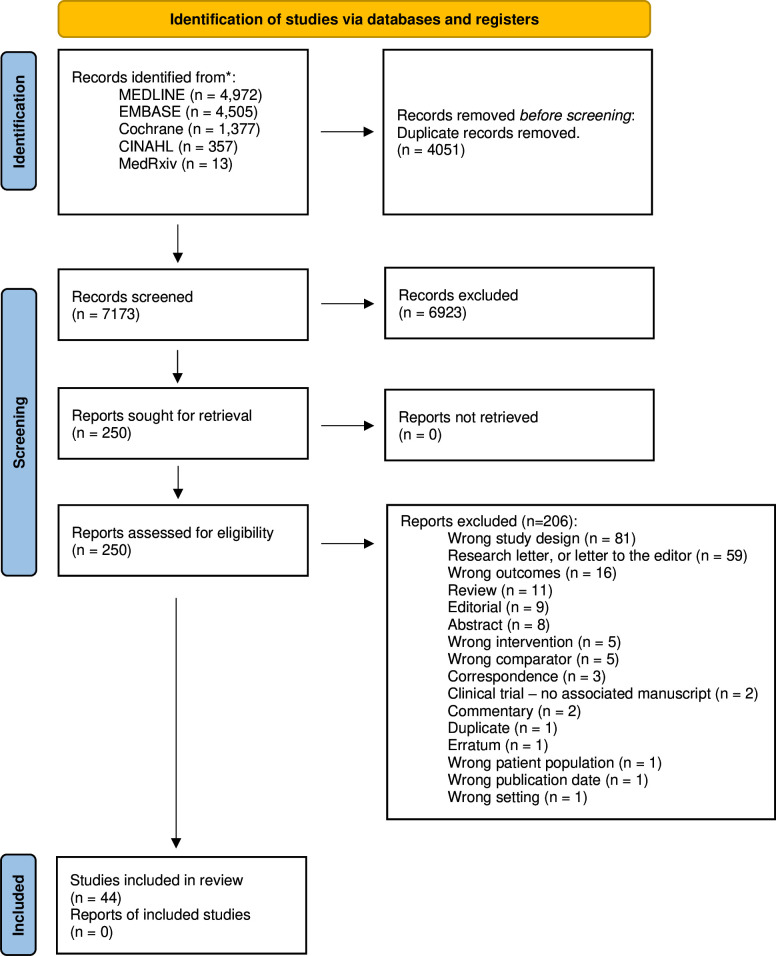
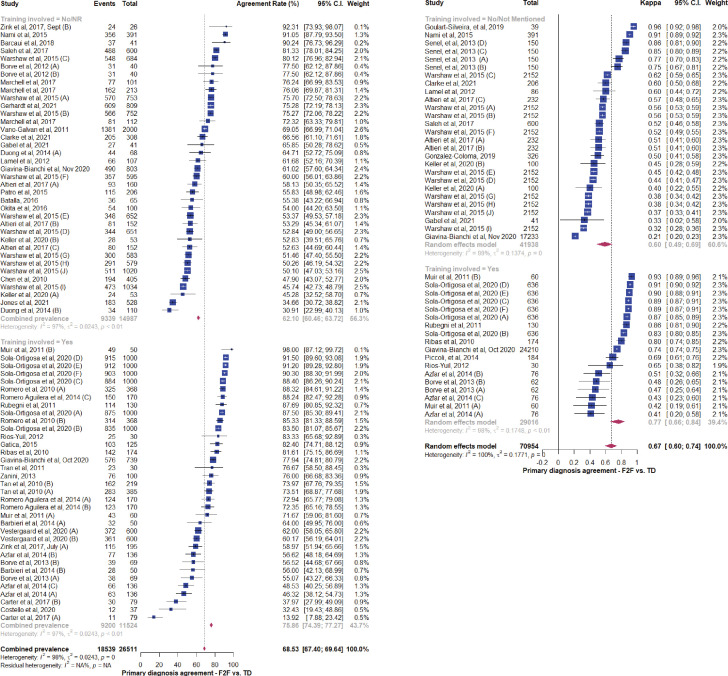
OBJECTIVES: To compare teledermatology and face-to-face (F2F) agreement in primary diagnoses of dermatological conditions. DESIGN: Systematic review and meta-analysis METHODS: MEDLINE, Embase, Cochrane Library (Wiley), CINAHL and medRxiv were searched between January 2010 and May 2022. Observational studies and randomised clinical trials that reported percentage agreement or kappa concordance for primary diagnoses between teledermatology and F2F physicians were included. Titles, abstracts and full-text articles were screened in duplicate. From 7173 citations, 44 articles were included. A random-effects meta-analysis was conducted to estimate pooled estimates. Primary outcome measures were mean percentage and kappa concordance for assessing diagnostic matches between teledermatology and F2F physicians. Secondary outcome measures included the agreement between teledermatologists, F2F dermatologists, and teledermatology and histopathology results. RESULTS: 44 studies were extracted and reviewed. The pooled agreement rate was 68.9%, and kappa concordance was 0.67. When dermatologists conducted F2F and teledermatology consults, the overall diagnostic agreement was significantly higher at 71% compared with 44% for non-specialists. Kappa concordance was 0.69 for teledermatologist versus specialist and 0.52 for non-specialists. Higher diagnostic agreements were also noted with image acquisition training and digital photography. The agreement rate was 76.4% between teledermatologists, 82.4% between F2F physicians and 55.7% between teledermatology and histopathology. CONCLUSIONS AND RELEVANCE: Teledermatology can be an attractive option particularly in resource-poor settings. Future efforts should be placed on incorporating image acquisition training and access to high-quality imaging technologies. TRIAL REGISTRATION NUMBER: 10.17605/OSF.IO/FJDVG.
Overview
CoChat Summary
## TL;DR
This systematic review and meta-analysis found that teledermatology had moderate-to-substantial diagnostic agreement with face-to-face (F2F) assessment, with a pooled agreement rate of 68.9% and pooled kappa of 0.67 across 44 studies. Agreement was higher when dermatologists were involved, when image-acquisition training was provided, and when digital cameras were used.
## Key findings
- Across 44 included studies, the pooled agreement rate between teledermatology and F2F diagnosis was 68.9% and pooled kappa was 0.67.
- Agreement was higher when dermatologists performed the F2F comparison: 70.96% for teledermatologists vs F2F dermatologists, compared with 44.1% for non-specialists (p<0.001); kappa was 0.69 vs 0.52.
- When image-acquisition training was provided, mean agreement was 75.9% versus 62.1% without training (p=0.033); concordance was 0.77 versus 0.60 (p=0.01).
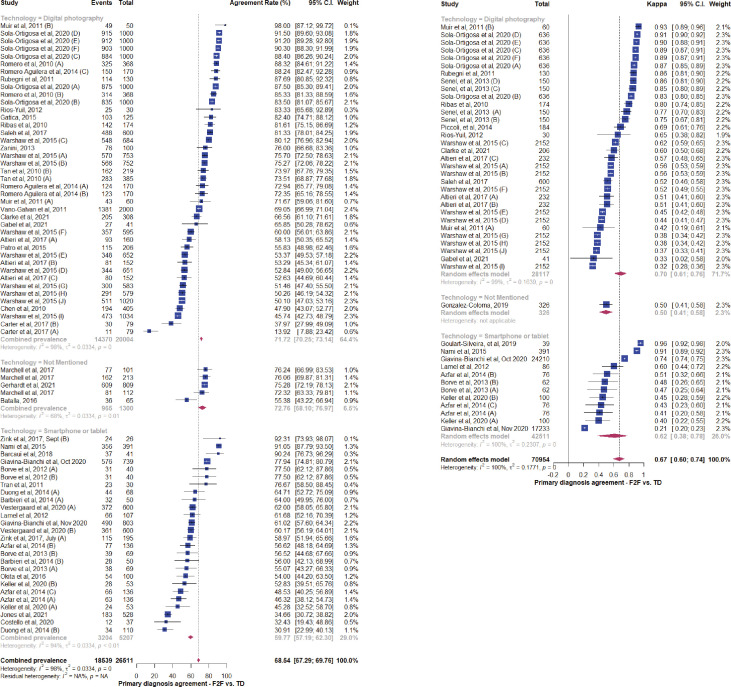
- Digital cameras outperformed smartphones/tablets: mean agreement 71.7% vs 59.8% (p=0.029), and concordance 0.70 vs 0.62 (p=0.003). Agreement between teledermatology and histopathology was 55.7%.
## Methods
- Systematic review and meta-analysis following PRISMA; protocol registered on OSF.
- Searched MEDLINE, Embase, Cochrane Library, CINAHL, and medRxiv for studies from January 2010 to May 2022; no language restrictions.
- Included observational studies and randomized clinical trials reporting percentage agreement or kappa for primary diagnoses between teledermatology and F2F physician diagnosis; 44 studies were included from 7173 citations.
- Used random-effects meta-analysis, with subgroup analyses and meta-regression to explore heterogeneity; risk of bias assessed with RoB 2 and QUADAS-2.
## Limitations
- The paper states that heterogeneity was considerable, which limited meta-analysis and synthesis of predictors even after subgrouping.
- It also states that there were a limited number of randomized controlled trials and a limited number of live video conferencing studies, restricting comparisons across study designs and modalities.
- Evident from the text: the review only searched published literature and may have missed grey literature and reports from low-income and middle-income countries; it also did not incorporate AI effects, which the authors note are outside scope.
Model-written summary. Check it against the paper before relying on it.
Integrity signals
Registry
Cites
Statistics
Figures
Verification
Claims the paper makes
7 Valid · 0 Not valid · 7 Not checked · 30 Own results and interpretations
Every source the paper cites for this claim was checked and supports it.
In the paper
“There is valid concern over the reliability of teledermatology given the significant variability in diagnostic accuracy predicted across pre-pandemic research.6”
§ Diagnostic reliability in teledermatology: a systematic review and a meta-analysis > Introduction
What the sources say
- Supportedcites [6] Finnane A, Dallest K, Janda M, et al. Teledermatology for the diagnosis and management of skin cancer: a systematic review. JAMA Dermatol 2017; 153: 319– 27. 10.1001/jamadermatol.2016.4361 27926766 source
In 'Aim 1: Accuracy of teledermatology diagnosis compared to face to face diagnosis,' the review says studies reported variable results, with agreement between telediagnosis and reference standards ranging from 51% to 100%. The 'Quality of diagnostic accuracy and diagnostic concordance studies' section explicitly describes wide variation in results. Our copy provides section labels but no page numbers. (LLM, conf=0.93)
hedged- Asserted: passes — The authors put it forward as true.
- Checkable: passes — It can be checked against evidence.
- Load-bearing: passes — The paper’s conclusions depend on it.
- Based: passes — The paper gives a reason why it holds.
- Supported
A result the paper reports from its own data — it cites no other source for it, so there is none to check. The quote shows it is in the paper.
In the paper
“While our attempts to filter biased studies did not yield significant improvements to our meta-analysis model, we are mindful of the potential risk of publication bias in our review.”
§ Diagnostic reliability in teledermatology: a systematic review and a meta-analysis > Discussion
plain- Asserted: passes — The authors put it forward as true.
- Checkable: passes — It can be checked against evidence.
- Load-bearing: unclear — It is unclear whether the paper’s conclusions depend on it.
- Based: passes — The paper gives a reason why it holds.
A result the paper reports from its own data — it cites no other source for it, so there is none to check. The quote shows it is in the paper.
In the paper
“The concordance values for digital photography were reported for 12 studies with a mean of 0.70 (CI 0.61 to 0.76). Concordance values for smartphone or tablet technologies were reported for eight studies with a mean of 0.62 (CI 0.38 to 0.78). The higher concordance with digital photography was statistically significant (p=0.003, heterogeneity: Iˆ2=100%).”
§ Diagnostic reliability in teledermatology: a systematic review and a meta-analysis > Sub-group analyses > Diagnostic reliability of teledermatology versus F2F by type of technology used for image acquisition
plainstates an association- Asserted: passes — The authors put it forward as true.
- Checkable: passes — It can be checked against evidence.
- Load-bearing: unclear — It is unclear whether the paper’s conclusions depend on it.
- Based: passes — The paper gives a reason why it holds.
- Rests on an assumption not shown here.
A result the paper reports from its own data — it cites no other source for it, so there is none to check. The quote shows it is in the paper.
In the paper
“The agreement rate was 76.4% between teledermatologists, 82.4% between F2F physicians and 55.7% between teledermatology and histopathology.”
§ Diagnostic reliability in teledermatology: a systematic review and a meta-analysis > Abstract > Results
plain- Asserted: passes — The authors put it forward as true.
- Checkable: passes — It can be checked against evidence.
- Load-bearing: unclear — It is unclear whether the paper’s conclusions depend on it.
- Based: passes — The paper gives a reason why it holds.
- Rests on an assumption not shown here.
A result the paper reports from its own data — it cites no other source for it, so there is none to check. The quote shows it is in the paper.
In the paper
“Concordance values were also higher when training was provided (mean 0.77, CI 0.66 to 0.84) compared with when no training was provided (mean 0.60, CI 0.49 to 0.69) (p=0.01, Iˆ2=98%).”
§ Diagnostic reliability in teledermatology: a systematic review and a meta-analysis > Sub-group analyses > Diagnostic reliability of teledermatology versus F2F by training provided for image acquisition
plainstates an association- Asserted: passes — The authors put it forward as true.
- Checkable: passes — It can be checked against evidence.
- Load-bearing: passes — The paper’s conclusions depend on it.
- Based: passes — The paper gives a reason why it holds.
- Rests on an assumption not shown here.
14 more claims
Create a free account to see all 44 claims and every source verdict.
- Probably not a substantial claim. 13
- It may state two separate claims as one. 16
Claims other papers make about this one
Each is checked against this paper’s own text: does it say what the citing paper says it does?
The cited source doesn’t support the claim as written.
In the citing paper
“however, the analysis was restricted to studies in which diagnoses were established by dermatologists, thereby providing a clinically more relevant assessment (177).”
From Diagnostic accuracy of teledermatology for skin diseases: a systematic review and meta-analysis (2026) · cites this paper as [177]
Checked by a reasoning model — may be wrong.
Experimental — accuracy not yet measured
Citations
Cites
RoB 2: a revised tool for assessing risk of bias in randomised trials
Sterne, J. A. C., Savović, J., Page, M. J., Elbers, R. G., Blencowe, N. S., Boutron, I., Cates, C. J., Cheng, H.-Y., Corbett, M. S., Eldridge, S. M., et al. (2019) · BMJ · doi:10.1136/bmj.l4898 · Cited by 34,787
PRISMA-P Group, Moher, D., Shamseer, L., Clarke, M., Ghersi, D., Liberati, A., Petticrew, M., Shekelle, P., & Stewart, L. A. (2015) · Systematic Reviews · doi:10.1186/2046-4053-4-1 · Cited by 26,223
Teledermatology for the Diagnosis and Management of Skin Cancer: A Systematic Review
Finnane, A., Dallest, K., Janda, M., & Soyer, H. P. (2017) · JAMA Dermatology · doi:10.1001/jamadermatol.2016.4361 · Cited by 257
Teledermatology: a review and update
Lee, J. J., & English, J. C. (2018) · American Journal of Clinical Dermatology · doi:10.1007/s40257-017-0317-6 · Cited by 238 · cited 1×
“56 This suggests that our greater sample size introduces more studies with poor agreement, which may better reflect the reality of adopting teledermatology at a larger scale and signal risk from a lack of standardisation.”
Mohammed, H. T., Hyseni, L., Bui, V., Gerritsen, B., Fuller, K., Sung, J., & Alarakhia, M. (2021) · PLoS ONE · doi:10.1371/journal.pone.0253665 · Cited by 143
Wang, R. H., Barbieri, J. S., Nguyen, H. P., Stavert, R., Forman, H. P., Bolognia, J. L., & Kovarik, C. L. (2020) · Journal of the American Academy of Dermatology · doi:10.1016/j.jaad.2020.01.065 · Cited by 127
Application of mobile teledermatology for skin cancer screening
Lamel, S. A., Haldeman, K. M., Ely, H., Kovarik, C. L., Pak, H., & Armstrong, A. W. (2012) · Journal of the American Academy of Dermatology · doi:10.1016/j.jaad.2011.11.957 · Cited by 125
Mobile applications in dermatology
Brewer, A. C., Endly, D. C., Henley, J., Amir, M., Sampson, B. P., Moreau, J. F., & Dellavalle, R. P. (2013) · JAMA Dermatology · doi:10.1001/jamadermatol.2013.5517 · Cited by 121
Tan, E., Yung, A., Jameson, M., Oakley, A., & Rademaker, M. (2010) · British Journal of Dermatology · doi:10.1111/j.1365-2133.2010.09673.x · Cited by 116
Tran, K., Ayad, M., Weinberg, J., Cherng, A., Chowdhury, M., Monir, S., El Hariri, M., & Kovarik, C. (2011) · Journal of the American Academy of Dermatology · doi:10.1016/j.jaad.2010.01.010 · Cited by 111
Research works printed but not linked: 1
- Zanini M. Analyze of diagnostic concordance between face-to-face and teledermatology diagnosis. Med Cutan Ibero Lat Am 2013; 41: 60– 2.
Cited by
The impact of tele-expertise in oncology: current state and future perspectives
Heudel, P., Amini‐Adlé, M., Anriot, J., Vaz, G., Lainé, C., Desoutter, A., & Crochet, H. (2025) · Frontiers in Digital Health · doi:10.3389/fdgth.2025.1552182 · Cited by 6
“Bourkas et al., through a systematic review and meta-analysis, found a high concordance between remote and in-person consultations, af fi rming teledermatology ’ s diagnostic reliability, particularly in regions with limited access to specialists (11).”
Lin, V., Callado, G. Y., Pardo, I., Gutfreund, M. C., Hsieh, M. K., Pereira, A. M. R., Kwong, B. Y., Aleshin, M. A., Holubar, M. K., Salinas, J. L., et al. (2024) · Archives of Dermatological Research · doi:10.1007/s00403-024-03515-x · Cited by 5
López-Villegas, A., Bautista-Mesa, R. J., López‐Liria, R., Pérez-Heredia, M., Hernandez‐Montoya, C., Gutierrez‐Maldonado, M. G., Leal‐Costa, C., & Peiró, S. (2024) · Public Health Nursing · doi:10.1111/phn.13438 · Cited by 7
Using deep learning systems for diagnosing common skin lesions in sexual health
Soe, N. N., Latt, P. M., Lee, D. M., Yu, Z., Schmidt, M., Bissessor, M., Aung, E. T., Ge, Z., Rahman, R., Chow, E. P. F., et al. (2025) · Communications Medicine · doi:10.1038/s43856-025-01144-7 · Cited by 7
“In dermatology practice, healthcare providers adopted a teledermatology approach to improve service ef fi cacy and expand access to specialists 6 .”
Ashour, A., & Elkhawaga, G. (2026) · Journal of the Egyptian Public Health Association · doi:10.1186/s42506-025-00203-0 · Cited by 6
“However, the evidence is constrained by heterogeneity across studies, modest agreement with histopathology (55.7%), limited lesion-specific data, and variable methodological quality, which together limit the generalizability of findings [11].”
Influentialvan Sinderen, F., Langermans, A. P., Kushniruk, A. W., Borycki, E. M., Jaspers, M., & Peute, L. (2024) · JMIR Dermatology · doi:10.2196/60346 · Cited by 5
“This is also reflected in the teledermatology systematic review of Bourkas et al [73], where results showed that nonspecialists showed significantly lower agreement among nonspecialists compared with teledermatologists.”
ResultDiagnostic accuracy of teledermatology for skin diseases: a systematic review and meta-analysis
Martyin, K., Meznerics, F. A., Bokor, L. A., Szabó, B., Hegyi, P., Kiss, N., & Bánvölgyi, A. (2026) · Frontiers in Medicine · doi:10.3389/fmed.2026.1739592 · Cited by 4
“Contrary to previous findings, our results showed that images taken by patients with smartphones, without previous training for image acquisition, are not associated with lower diagnostic concordance, possibly due to the larger number of studies included in our analysis (177, 178, 182).”
InfluentialMederle, A. L., Fericean, R. M., Grigore, R., Badea, M., Bara, M. A., & Ilie, A. C. (2025) · Diagnostics · doi:10.3390/diagnostics15233003 · Cited by 4
“…updates continue to report acceptable accuracy for pigmented lesion triage with store-and-forward and hybrid models, though reliability varies by image quality, lesion selection, and workflow integration—reinforcing the need for robust implementation studies and standardized reporting [11,12].”
Mahé, E., Carton, B., Marcu-Marin, M., Müller, S., Desjardins, F., Beizig, S., Hentgen, V., Dommergues, M., Zerdani, Y., Hajj, C., et al. (2024) · Archives de Pédiatrie · doi:10.1016/j.arcped.2024.08.001 · Cited by 3
Developing and evaluating a mobile-based teledermatology system for skin lesion diagnosis in Iran
Shajirat, Z., Parandeh, R., Pazyar, N., & Azizi, A. (2024) · Scientific Reports · doi:10.1038/s41598-024-71340-3 · Cited by 7
“A recent systematic review reported a pooled diagnostic agreement rate of 68.9% between teledermatologists and in-person dermatologists, with a kappa value of 0.67 22 .”
BackgroundInfluentialMeasurements of surface textures in dermatology − A review
Pawlus, Z., Kruczek, W., Reizer, R., Dzierwa, A., Frątczak, A., & Bergler-Czop, B. S. (2025) · Measurement · doi:10.1016/j.measurement.2025.118943 · Cited by 3
Sahin, C., Carlsson, M., Ehrlington, F. M., Micu, E., & Falk, M. (2024) · Acta Dermato Venereologica · doi:10.2340/actadv.v104.40890 · Cited by 3
“Previous studies were based on the full spectrum of teledermato-logical referrals and not just on skin neoplasms, and most compared a dermatologist undertaking a teledermatology assessment with a face-to-face visit (6, 17).”
Almeida, E. C., Rocha-Neves, J. P., Pedrosa, A. F., & Andrade, J. P. (2025) · Diagnostics · doi:10.3390/diagnostics15121518 · Cited by 2
MCR-SL: A Multimodal, Context-Rich Skin Lesion Dataset for Skin Cancer Diagnosis
Castro-Fernández, M., Schopf, T. R., Castaño-González, I., Quintana, B. R., Kirchesch, H. M., Ortega, S., Fabelo, H. A., Godtliebsen, F., Granja, C., & Callicó, G. M. (2025) · Data · doi:10.3390/data10100166 · Cited by 3
Implementation and Impact of a Dermoscopy-Enabled Dermatology eConsult Application in Primary Care
Bifulco, L., Anderson, D., Ternov, N. K., & Seiverling, E. V. (2025) · Journal of Primary Care & Community Health · doi:10.1177/21501319251403076 · Cited by 2
“15,16 In an effort to help address this gap, a 2022 consensus statement established standards for PCP education on use of dermoscopy (microscopy of the skin surface) to improve the diagnosis of benign and malignant skin growths.”
Truong, K., Luu, W., & Fernández‐Peñas, P. (2025) · Australasian Journal of Dermatology · doi:10.1111/ajd.14616 · Cited by 2
“To address this, future research should utilise standardised full body photography systems, which may help mitigate variances in image quality [6].”
European Expert Consensus on Essential Variables for Teledermatological Assessment of Skin Tumours
Detlefsen, A., Vestergaard, T., Ternov, N. K., Konge, L., Ingvar, Å., Nielsen, K., & Assersen, K. B. (2026) · Acta Dermato Venereologica · doi:10.2340/actadv.v106.adv-2026-0512 · Cited by 1
“Clinically, high-quality images and documented lesion information support accurate triage and reduce delayed diagnosis risks (7, 15, 17, 18 ).”
Balamurugan, S., Zarrighalam, P., Beak, P., & Mahapatra, P. (2024) · Preprints.org · doi:10.20944/preprints202405.1527.v2
Tseng, H., Wu, C.-Y., Lai, P., Lin, C., & Lee, C. (2026) · Dermatologic Therapy · doi:10.1155/dth/9987886
Székely, O., & Kádár, M. (2025) · IME - Az egészségügyi vezetők szaklapja · doi:10.53020/ime-2025-104
“…ő en, hogy alacsonyabb költség mellett való-sítható meg, mint a valós idej ű teledermatológia, amely több er ő forrást és összetettebb koordinációt igényel [15], a hagyo-mányos, személyes jelenléten alapuló diagnosztika folyama-tához képest pedig akár 5-10-szeresével is gyorsabb lehet [16].”
Lin, V., Callado, G. Y., Pardo, I., Gutfreud, M., Hsieh, M. K., Pereira, A. M. R., Kwong, B. Y., Aleshin, M. A., Holubar, M. K., Salinas, J. L., et al. (2024) · Research Square · doi:10.21203/rs.3.rs-4763408/v1
Turan, Ç., Manavlı, E. K., Bozkurt, F., Değirmenci, M. S., Özyörük, T. N., Özdemir, N., Süncak, B., Erik, Ö., Kalınbaçoğlu, N. G., Eşki, E. K., et al. (2026) · Health Sciences Quarterly · doi:10.26900/hsq.3038
Digital Innovations in Hidradenitis Suppurativa: A Narrative Review
Seivright, J. R., Wongvibulsin, S., Ghanshani, R., & Lee, K. (2025) · Current Dermatology Reports · doi:10.1007/s13671-025-00477-9 · Cited by 1
“Data regarding diagnostic accuracy is promising, with a recent systematic review of 44 studies showing overall diagnostic agreement to be 71% for dermatologists between telehealth and face-to-face visits for evaluation of both neoplastic and non-neoplastic lesions [12 ].”
Kim, J., Sydorchuk, O., & Yi, K. (2025) · JPRAS Open · doi:10.1016/j.jpra.2025.10.003
Unraveling the Conundrum: A Comparative Study of Teledermatology and Face-to-face Consultations
Garg, P., Shivhare, S., Saxena, A., Dey, V. K., & Tuteja, A. (2026) · Medical Journal of Dr D Y Patil Vidyapeeth · doi:10.4103/mjdrdypu.mjdrdypu_187_25
Rosendo, F. A. G., de la Torre, C. A. R., Patiño, J. C., et al. (2026) · Estudios y Perspectivas Revista Científica y Académica · doi:10.61384/r.c.a..v5i4.1615
Viswanath, A., Gupta, D., Srinivasa, M., Jose, T. G., Jibins, S., Mendith, C., Munnoli, U., Jubba, A., Baraka, G., & Hiremagalore, R. (2026) · Frontiers in Digital Health · doi:10.3389/fdgth.2026.1848667
“The evidence consistently supports its diagnostic reliability, acceptance by patients, and support of its use in LMICs (12, 14).”
Chung, J. G., Bali, R., Thomas, L., & Denny, J. (2025) · Clinical and Experimental Dermatology · doi:10.1093/ced/llaf129
Stragytė, D., Mikalauskas, G., Tiskeviciute, U., Gaidulevič, K., Paukštaitienė, R., Stašaitis, K., & Valiukevičienė, S. (2026) · Diagnostics · doi:10.3390/diagnostics16172883
“These findings are consistent with the broader evidence supporting the diagnostic reliability of TD compared with in-person assessment [1,10].”
InfluentialTeledermatology to Support Preventive Care and Healthy Aging in Primary Care
Frazier, W. T., & Kistler, C. E. (2026) · Current Geriatrics Reports · doi:10.1007/s13670-026-00465-2
The Role of Teledermatology in the COVID-19 Pandemic
Swathi, N. L., & AlEdani, E. M. (2025) · Updates in clinical dermatology · doi:10.1007/978-3-031-87791-9_11
Recent Update on Teledermatology
Babaei, M., Gholizadeh, N., & Rokni, G. R. (2025) · Dermatological Reviews · doi:10.1002/der2.256 · Cited by 1
Automated acne lesion counting from subpar images via memory classifiers
Yang, Y., Dutta, S., Gudobba, C., Yarna, N., Liu, F., Yan, A. C., Lee, I., & Bernardis, E. (2026) · Archives of Dermatological Research · doi:10.1007/s00403-026-04523-9
Wiśniewska, M., Strugała, N., Bulenda, M., et al. (2026) · International Journal of Innovative Technologies in Social Science · doi:10.31435/ijitss.3(51).2026.6002
Gupta, P., Pandhi, D., Grover, C., & Kumar, R. (2026) · Indian Dermatology Online Journal · doi:10.4103/idoj.idoj_222_25
Patient‐Centered Teledermatology: Bridging Pharmacies and Dermatologists
Perez‐Cullell, N., Buresi, V., Homehr, N., Brutin, J.-L., & Fraysse, J. (2026) · International Journal of Telemedicine and Applications · doi:10.1155/ijta/9409013
“This situation compromises equitable access to care and delays the diagnosis of critical conditions such as skin cancers [4].”
Should Dermatologists Recommend Direct‐to‐Consumer App‐Based Remote Diagnostics? An Ethical Analysis
Mathes, S., Seurig, S., Willem, T., Dechant, M., Traidl, S., Kang, M., Pinto, P. M., Binder, A., Biedermann, T., & Darsow, U. (2026) · JEADV Clinical Practice · doi:10.1002/jvc2.70287
Betancur, S. V., Gómez, J. P. V., Vidal, J. C. T., & Borrero, D. F. F. (2026) · Piel · doi:10.1016/j.piel.2026.07.006
Koshy, R. R., Regie, R., Weerasekara, R. A. D. K. N., Fathima, M., Uddin, Z., & Begum, A. (2026) · Cosmoderma · doi:10.25259/csdm_186_2025
Asynchronous Teledermatology for Non-Scarring Alopecia: A Retrospective Study
Afolabi, A., Brown, E., Ha, E. K., & English, J. C. (2025) · Telemedicine Reports · doi:10.1177/26924366251366793
Grigore, R., Mederle, A. L., Fericean, R. M., Ilie, A. C., Huţ, E. F., & Badea, M.-A. (2026) · Journal of Clinical Medicine · doi:10.3390/jcm15103970
Qin, L., Xu, Z., Feng, Y., Wei, J., Zhang, Y., & Huang, H. (2026) · Clinical Cosmetic and Investigational Dermatology · doi:10.2147/ccid.s586589
“29,30 Given earlier peaks in women and the late-elderly predominance, programs should prioritize the oldest-old and women in resource-constrained settings, and include LTC quality indicators for itch assessment and skin-care provision.”
Arias, E. Y. Z., Olivera, A. I. L., Jaramillo, E. V. M., & Pardillo, T. B. (2025) · ASCE MAGAZINE · doi:10.70577/asce.v4i4.564
Parvar, S. Y., Khosravi, F., Roozbehi, K., Amirian, A., Aghazadeh, N., & Maïbach, H. I. (2026) · Dermatologic Therapy · doi:10.1155/dth/5170301
A Review on Teledermatology in Saudi Arabia: Framework, Barriers, and Opportunities
Alzamil, F. M., Sheerah, H. A., Arafa, A., AlBassam, D. M., Alsarari, A. A., Alahdal, A. Y., Alghamdi, E. A., ALBASSAM, A. M., Rajeh, D. A., Bensaeed, A. A., et al. (2026) · INQUIRY The Journal of Health Care Organization Provision and Financing · doi:10.1177/00469580251405998 · Cited by 1
Gladhill, G., Schwei, R. J., Griffin, M., Glinert, R., Haleem, A., Hess, J., Keenan, T. D., McBride, J. A., Redwood, R., & Pulia, M. S. (2026) · Journal of Emergency Medicine · doi:10.1016/j.jemermed.2026.03.023 · Cited by 1
Assefa, G. T., Degu, S. A., & Koster, A. C. (2026) · doi:10.2196/preprints.100514
Lunsford, S., Weaver, J., Barney, T., Storts, N., Vinczi, S., Chambal, M., Manger, J., & Vossler, J. (2026) · Telemedicine Journal and e-Health · doi:10.1177/15305627261489008
Metadata
- Authors
- Bourkas, A. N., Barone, N., Bourkas, M. E. C., Mannarino, M., Fraser, R. D. J., Lorincz, A., Wang, S. C., & Ramirez-GarciaLuna, J. L.
- Affiliations
- Queen's University (CA)
- McGill University (CA)
- University of Toronto (CA)
- Western University (CA)
- Independent Researcher, Montreal, Qubec, Canada
- Department of Surgery, McGill University, Montreal, Qubec, Canada
- Venue
- BMJ Open
- Publisher
- BMJ
- Published
- 2023-08
- Volume
- 13
- Issue
- 8
- Pages
- e068207
- ISSN
- 2044-6055 (ISSN-L)
- PMC
- PMC10423833
- OpenAlex
- W4385769600
- Cited by
- 51
- References
- 61
- Citations by year
- 2026: 27 · 2025: 16 · 2024: 8
- FWCI
- 2.52
- Type
- journal article
- Language
- en
- Open access
- gold
- doi.org
- Licence
- Locations
- BMJ Open (publishedVersion, cc-by-nc)
- PubMed Central (publishedVersion, cc-by-nc)
- PubMed (publishedVersion)
- DOAJ (DOAJ: Directory of Open Access Journals) (submittedVersion, cc-by-sa)
- Funders
- Canadian Digital Technology Supercluster (Telewound Care Canada)
- Topics
- Health Sciences › Medicine › Public Health, Environmental and Occupational Health › Telemedicine and Telehealth Implementation
- Health Sciences › Medicine › Oncology › Cutaneous Melanoma Detection and Management
- Health Sciences › Medicine › Radiology, Nuclear Medicine and Imaging › Digital Imaging in Medicine
- Keywords
- teledermatology, diagnostic agreement, face-to-face consultation, dermatological diagnosis, kappa concordance, histopathology, digital photography, telemedicine, resource-limited settings
- MeSH terms
- Dermatology, Humans, Physicians, Referral and Consultation, Skin Diseases, Reproducibility of Results, Telemedicine
About these checks
Registry, retraction, Cites and statistics results are computed, not judged, with one exception: a printed reference that no index lists is read once by a model before it counts as a citation error. Claims are extracted by a model and kept only when their quote appears verbatim in the text; each cited source is then checked, with a model’s help, for whether it says what the claim relies on. Those verdicts can be wrong — read the claim’s quote and the cited source before relying on one.
The claim verdicts this report counts are experimental: their accuracy is not yet measured.
A language model drew the claims from the paper on 2026-09-29, under version 3 of the claim definition (model deepseek-v4.1-flash, prompt extract-v3).
A second model labelled each claim on 2026-09-29 (model jev-1.13-20260917, definition revision gold-guideline-v0.2).
Cited sources are checked with a language model’s help (gpt-6-sol).
Statistics and arithmetic are recomputed, not judged.
Confidence bands are shown only for fields calibrated on our annotated test set. None is calibrated yet, so no band is shown.
What counts as a claim ›How we measure confidence ›How we check this ›
Are you an author, or do you see a problem with this page? Request a review
Data sources
Bibliographic data: Semantic Scholar, OpenAlex, Crossref.
Contains information from the Semantic Scholar Academic Graph Datasets, made available under the ODC Attribution License (ODC-BY 1.0).
Semantic Scholar’s data is described in: Kinney, R., et al. (2023). The Semantic Scholar Open Data Platform. arXiv:2301.10140.
