

The DOI matches its Crossref record; 32 of the 33 references it cites were found in a registry or an index, and 1 are not checked yet.
Quantitation of faecal Fusobacterium improves faecal immunochemical test in detecting advanced colorectal neoplasia
Open accessAbstract
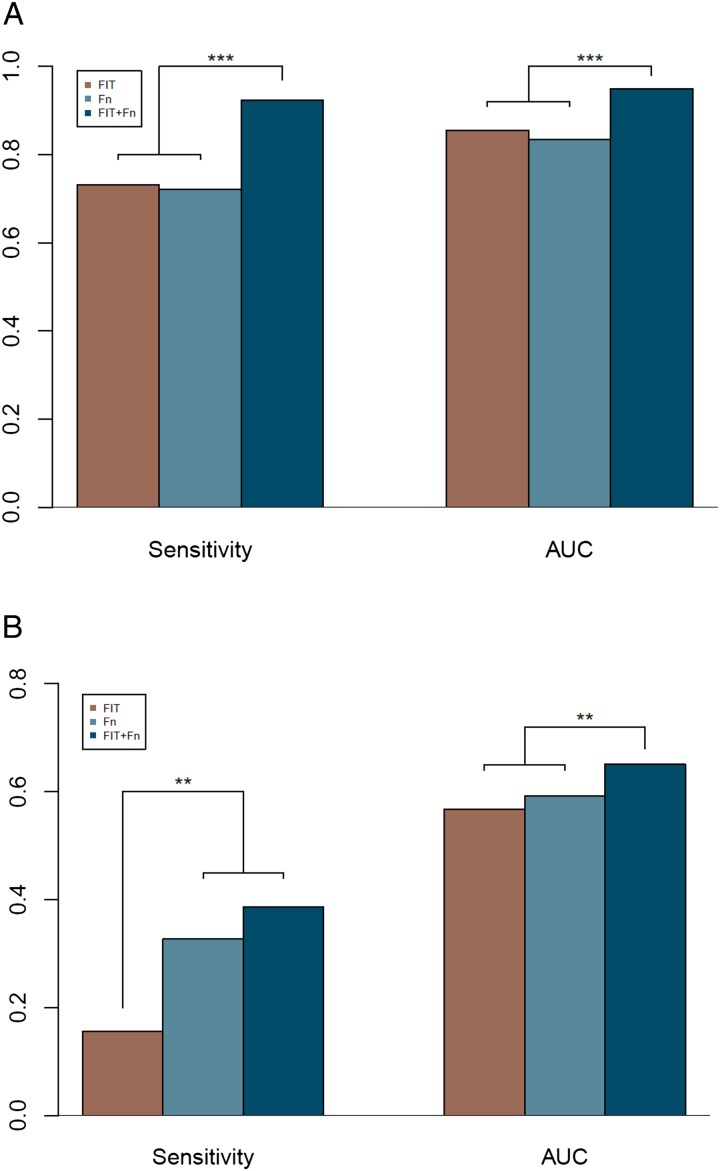
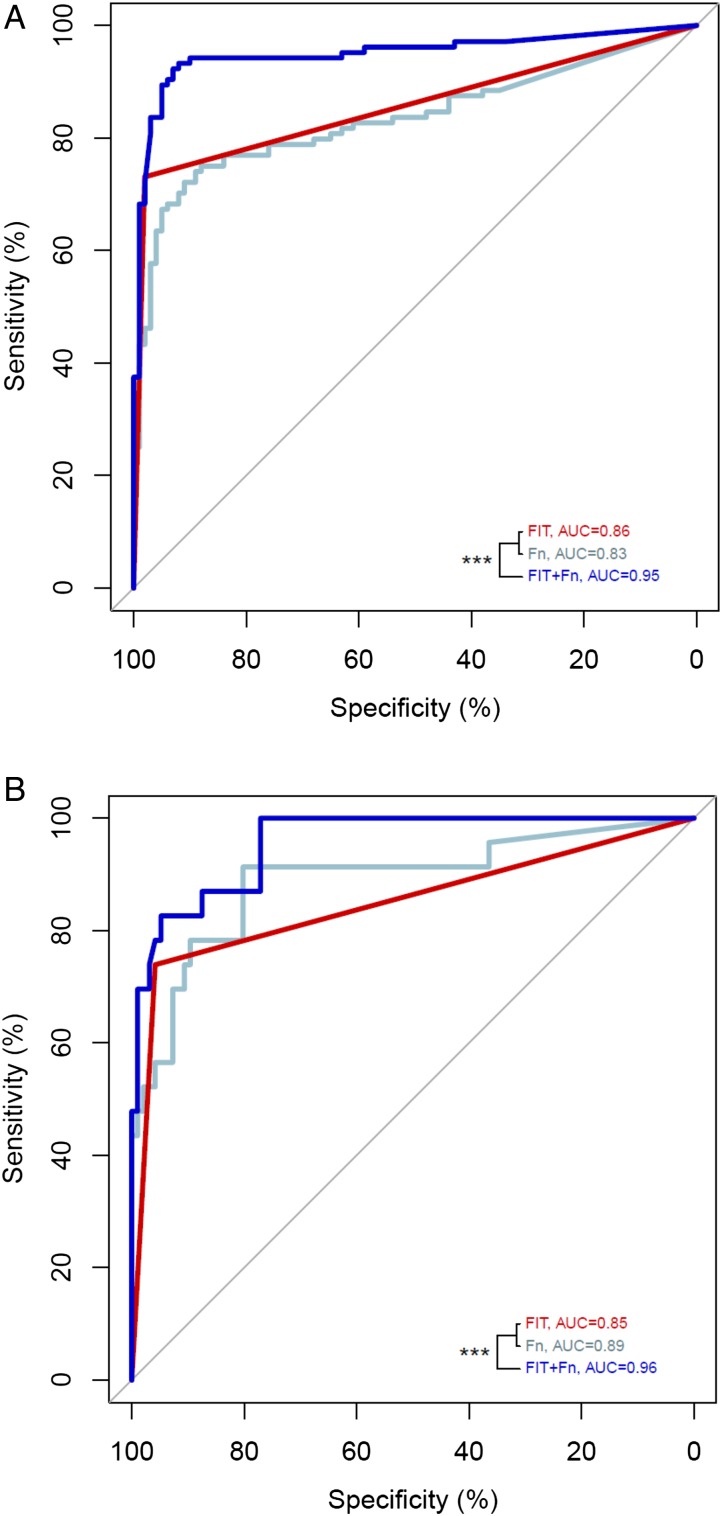
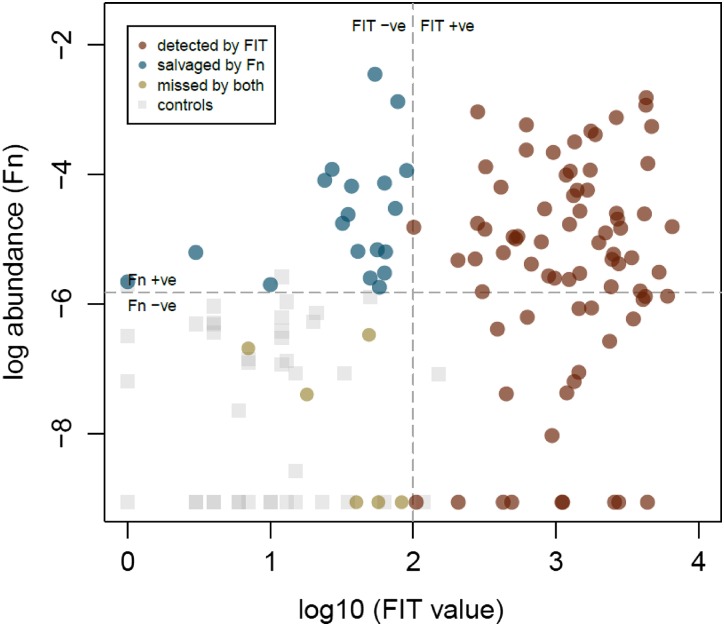
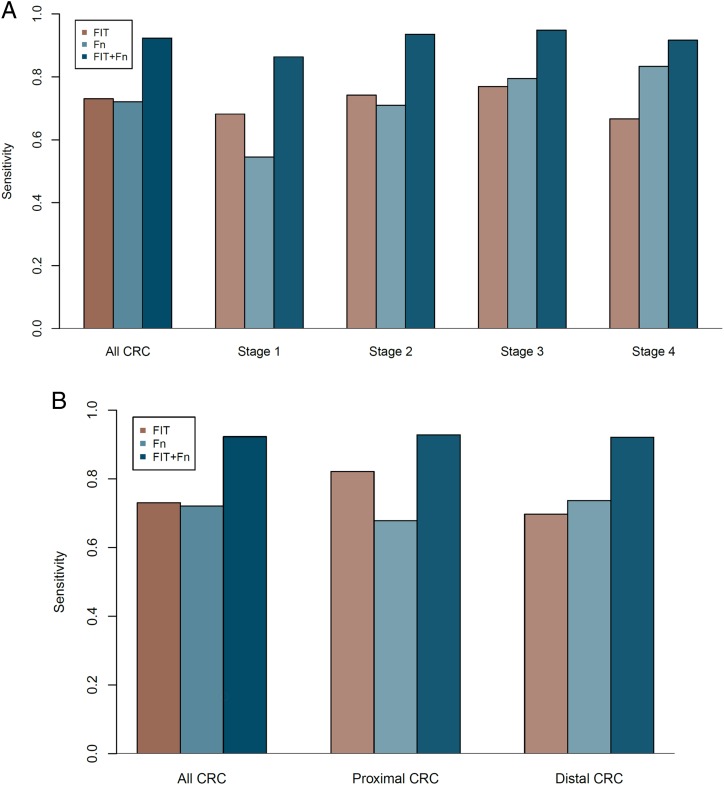
Objective There is a need for an improved biomarker for colorectal cancer (CRC) and advanced adenoma. We evaluated faecal microbial markers for clinical use in detecting CRC and advanced adenoma. Design We measured relative abundance of Fusobacterium nucleatum (Fn), Peptostreptococcus anaerobius (Pa) and Parvimonas micra (Pm) by quantitative PCR in 309 subjects, including 104 patients with CRC, 103 patients with advanced adenoma and 102 controls. We evaluated the diagnostic performance of these biomarkers with respect to faecal immunochemical test (FIT), and validated the results in an independent cohort of 181 subjects. Results The abundance was higher for all three individual markers in patients with CRC than controls (p<0.001), and for marker Fn in patients with advanced adenoma than controls (p=0.022). The marker Fn, when combined with FIT, showed superior sensitivity (92.3% vs 73.1%, p<0.001) and area under the receiver-operating characteristic curve (AUC) (0.95 vs 0.86, p<0.001) than stand-alone FIT in detecting CRC in the same patient cohort. This combined test also increased the sensitivity (38.6% vs 15.5%, p<0.001) and AUC (0.65 vs 0.57, p=0.007) for detecting advanced adenoma. The performance gain for both CRC and advanced adenoma was confirmed in the validation cohort (p=0.0014 and p=0.031, respectively). Conclusions This study identified marker Fn as a valuable marker to improve diagnostic performance of FIT, providing a complementary role to detect lesions missed by FIT alone. This simple approach may improve the clinical utility of the current FIT, and takes one step further towards a non-invasive, potentially more accurate and affordable diagnosis of advanced colorectal neoplasia.
Overview
The claims and statistics of this paper haven’t been checked yet.
Run the check — free, no account needed. It reads the open-access text and checks the sources it cites.
Integrity signals
Registry
Cites
Statistics
Figures
Verification
Claims the paper makes
The claims and statistics of this paper haven’t been checked yet.
Run the check — free, no account needed. It reads the open-access text and checks the sources it cites.
Claims other papers make about this one
Each is checked against this paper’s own text: does it say what the citing paper says it does?
In the citing paper
“Combining the fecal microbiome data with scores from risk factor-based models or results of screening tests (such as fecal occult blood test and fecal immunochemical test) increases the accuracy of detection for advanced adenomas.35, 186, 187”
From Influence of the Gut Microbiome, Diet, and Environment on Risk of Colorectal Cancer (2020) · cites this paper as [186]
Self-check
Percentages, sums and reported differences re-computed from the paper’s own numbers.
The self-check needs the paper’s full text.
Citations
Cites
Estimates of worldwide burden of cancer in 2008: GLOBOCAN 2008
Ferlay, J., Shin, H., Bray, F., Forman, D., Mathers, C. D., & Parkin, D. M. (2010) · International Journal of Cancer · doi:10.1002/ijc.25516 · Cited by 21,468
Kostic, A. D., Chun, E., Robertson, L., Glickman, J. N., Gallini, C. A., Michaud, M., Clancy, T. E., Chung, D. C., Lochhead, P., Hold, G. L., et al. (2013) · Cell Host & Microbe · doi:10.1016/j.chom.2013.07.007 · Cited by 2,718
Rubinstein, M. R., Wang, X., Liu, W., Hao, Y., Cai, G., & Han, Y. W. (2013) · Cell Host & Microbe · doi:10.1016/j.chom.2013.07.012 · Cited by 2,476
Fusobacterium nucleatum infection is prevalent in human colorectal carcinoma
Castellarin, M., Warren, R. L., Freeman, J. D., Dreolini, L., Krzywinski, M., Strauss, J., Barnes, R., Watson, P., Allen-Vercoe, E., Moore, R. A., et al. (2012) · Genome Research · doi:10.1101/gr.126516.111 · Cited by 2,043
Multitarget Stool DNA Testing for Colorectal-Cancer Screening
Imperiale, T. F., Ransohoff, D. F., Itzkowitz, S. H., Levin, T. R., Lavin, P., Lidgard, G. P., Ahlquist, D. A., & Berger, B. M. (2014) · New England Journal of Medicine · doi:10.1056/nejmoa1311194 · Cited by 1,900
Quality indicators for colonoscopy
Rex, D. K., Schoenfeld, P. S., Cohen, J., Pike, I. M., Adler, D. G., Fennerty, M. B., Lieb, J. G., Park, W. G., Rizk, M. K., Sawhney, M. S., et al. (2015) · Gastrointestinal Endoscopy · doi:10.1016/j.gie.2014.07.058 · Cited by 1,764
Atkin, W. S., Edwards, R., Kralj‐Hans, I., Wooldrage, K., Hart, A. R., Northover, J. M. A., Parkin, D. M., Wardle, J., Duffy, S. W., & Cuzick, J. M. (2010) · The Lancet · doi:10.1016/s0140-6736(10)60551-x · Cited by 1,618
Gut microbiome development along the colorectal adenoma-carcinoma sequence
Feng, Q., Liang, S., Jia, H., Stadlmayr, A., Tang, L., Lan, Z., Zhang, D., Xia, H., Xu, X., Jie, Z., et al. (2015) · Nature Communications · doi:10.1038/ncomms7528 · Cited by 1,506
American College of Gastroenterology Guidelines for Colorectal Cancer Screening 2008
Rex, D. K., Johnson, D. A., Anderson, J. C., Schoenfeld, P. S., Burke, C. A., & Inadomi, J. M. (2009) · The American Journal of Gastroenterology · doi:10.1038/ajg.2009.104 · Cited by 1,397
Potential of fecal microbiota for early-stage detection of colorectal cancer
Zeller, G., Tap, J., Voigt, A. Y., Sunagawa, S., Kultima, J. R., Costea, P. I., Amiot, A., Böhm, J., Brunetti, F., Habermann, N., et al. (2014) · Molecular Systems Biology · doi:10.15252/msb.20145645 · Cited by 1,375
Cited by
Sorted by citations
Gut microbiota in colorectal cancer: mechanisms of action and clinical applications
Wong, S. H., & Yu, J. (2019) · Nature Reviews Gastroenterology & Hepatology · doi:10.1038/s41575-019-0209-8 · Cited by 1,392
Self-citationSawicki, T., Ruszkowska, M., Danielewicz, A., Niedźwiedzka, E., Arłukowicz, T., & Przybyłowicz, K. E. (2021) · Cancers · doi:10.3390/cancers13092025 · Cited by 1,018
Influence of the Gut Microbiome, Diet, and Environment on Risk of Colorectal Cancer
Song, M., Chan, A. T., & Sun, J. (2020) · Gastroenterology · doi:10.1053/j.gastro.2019.06.048 · Cited by 752
Gut microbiota in colorectal cancer development and therapy
Wong, C. C., & Yu, J. (2023) · Nature Reviews Clinical Oncology · doi:10.1038/s41571-023-00766-x · Cited by 779
Self-citationThe Intestinal Microbiota and Colorectal Cancer
Cheng, Y., Ling, Z., & Li, L. (2020) · Frontiers in Immunology · doi:10.3389/fimmu.2020.615056 · Cited by 609
Metadata
- Authors
- Wong, S. H., Kwong, T. N. Y., Chow, T.-C., Luk, A. K. C., Dai, R. Z. W., Nakatsu, G., Lam, T. Y. T., Zhang, L., Wu, J. C. Y., Chan, F. K. L., Ng, S. S. M., Wong, M. C. S., Ng, S. C., Wu, W. K. K., Yu, J., & Sung, J. J. Y.
- Affiliations
- Chinese University of Hong Kong (HK)
- Corresponding author
- Sung, Joseph J Y
- ORCID
- Venue
- Gut
- Publisher
- BMJ
- Published
- 2016-10-24
- Volume
- 66
- Issue
- 8
- Pages
- 1441-1448
- ISSN
- 0017-5749 (ISSN-L)
- 1468-3288
- PMC
- PMC5530471
- OpenAlex
- W2537258608
- Cited by
- 310
- References
- 32
- Citations by year
- 2026: 28 · 2025: 32 · 2024: 41 · 2023: 40 · 2022: 40 · 2021: 36 · 2020: 34 · 2019: 22 · 2018: 24 · 2017: 13
- FWCI
- 10.61
- Type
- journal article
- Language
- en
- Open access
- hybrid
- doi.org
- Licence
- cc-by-nc
- Locations
- Gut (publishedVersion, cc-by-nc)
- PubMed Central (publishedVersion, cc-by-nc)
- PubMed (publishedVersion)
- HighWire Press Open Archive (submittedVersion)
- Funders
- Croucher Foundation
- Shenzhen Virtual University Park
- National Key Research and Development Program of China (2013CB531401)
- Topics
- Health Sciences › Medicine › Oncology › Colorectal Cancer Screening and Detection
- Life Sciences › Biochemistry, Genetics and Molecular Biology › Molecular Biology › Gut microbiota and health
- Health Sciences › Medicine › Pathology and Forensic Medicine › Genetic factors in colorectal cancer
- Keywords
- Fusobacterium nucleatum, Peptostreptococcus anaerobius, Parvimonas micra, fecal immunochemical test, colorectal cancer, advanced adenoma, colorectal neoplasia detection, diagnostic sensitivity, non-invasive diagnosis
- MeSH terms
- Adenocarcinoma, Adenoma, DNA, Bacterial, Feces, Female, Humans, Male, Middle Aged, Occult Blood, Peptostreptococcus, ROC Curve, Biomarkers, Tumor, Colorectal Neoplasms, Fusobacterium nucleatum, Area Under Curve
About these checks
Registry, retraction, Cites and statistics results are computed, not judged, with one exception: a printed reference that no index lists is read once by a model before it counts as a citation error. Claims are extracted by a model and kept only when their quote appears verbatim in the text; each cited source is then checked, with a model’s help, for whether it says what the claim relies on. Those verdicts can be wrong — read the claim’s quote and the cited source before relying on one.
Statistics and arithmetic are recomputed, not judged.
Confidence bands are shown only for fields calibrated on our annotated test set. None is calibrated yet, so no band is shown.
What counts as a claim ›How we measure confidence ›How we check this ›
Are you an author, or do you see a problem with this page? Request a review
