

The DOI matches its Crossref record; 48 of the 48 references it cites were found in a registry or an index.
Enrichment of oral microbiota in early cystic precursors to invasive pancreatic cancer
Open accessAbstract
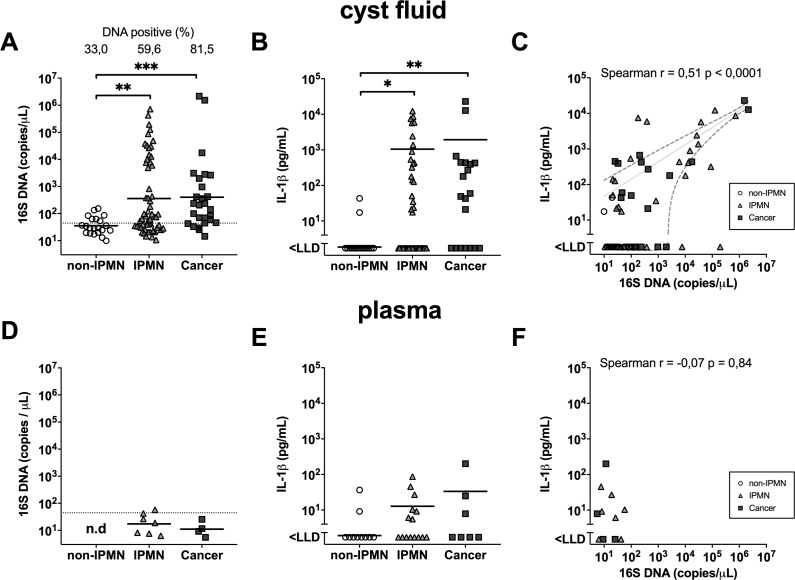
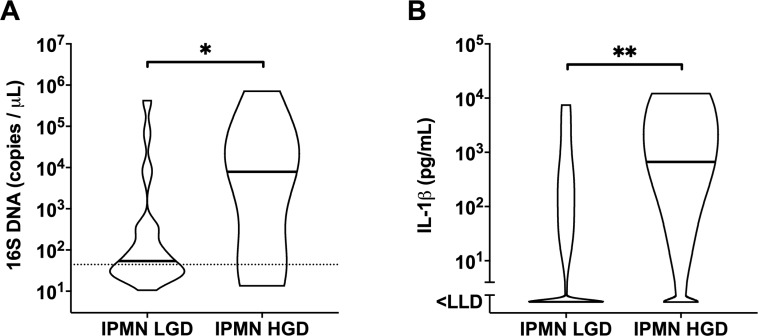
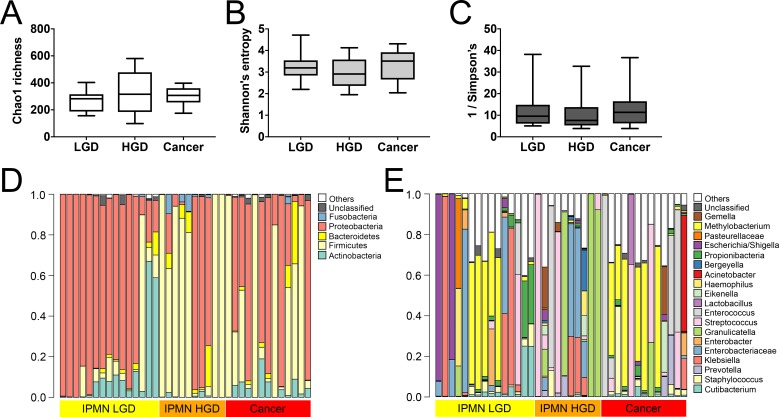
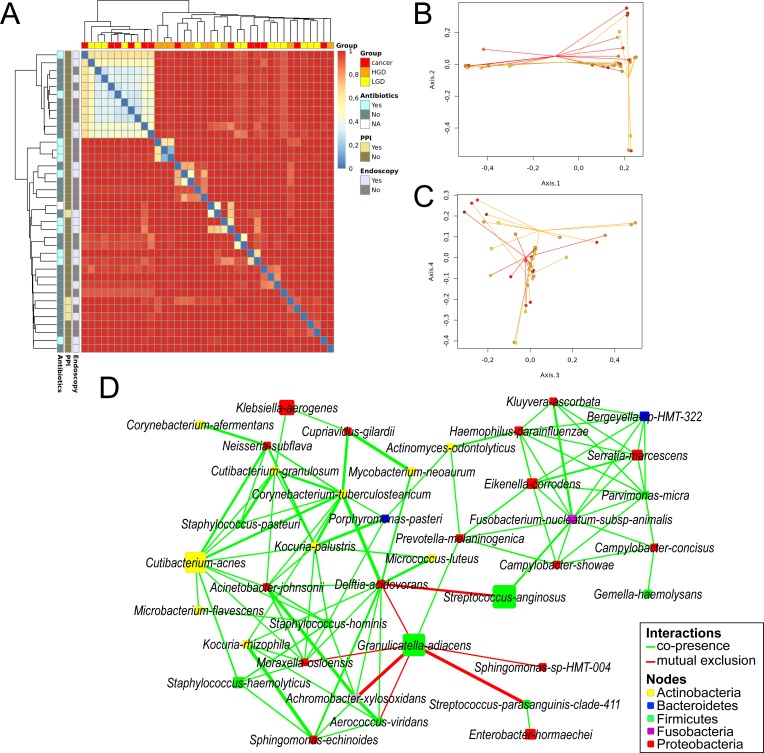
Objectives: Intraductal papillary mucinous neoplasms (IPMNs) are pancreatic cysts that can progress to invasive pancreatic cancer. Associations between oncogenesis and oral microbiome alterations have been reported. This study aims to investigate a potential intracystic pancreatic microbiome in a pancreatic cystic neoplasm (PCN) surgery patient cohort. Design: Paired cyst fluid and plasma were collected at pancreatic surgery from patients with suspected PCN (n=105). Quantitative and qualitative assessment of bacterial DNA by qPCR, PacBio sequencing (n=35), and interleukin (IL)-1β quantification was performed. The data were correlated to diagnosis, lesion severity and clinical and laboratory profile, including proton-pump inhibitor (PPI) usage and history of invasive endoscopy procedures. Results: Intracystic bacterial 16S DNA copy number and IL-1β protein quantity were significantly higher in IPMN with high-grade dysplasia and IPMN with cancer compared with non-IPMN PCNs. Despite high interpersonal variation of intracystic microbiota composition, bacterial network and linear discriminant analysis effect size analyses demonstrated co-occurrence and enrichment of oral bacterial taxa including Fusobacterium nucleatum and Granulicatella adiacens in cyst fluid from IPMN with high-grade dysplasia. The elevated intracystic bacterial DNA is associated with, but not limited to, prior exposure to invasive endoscopic procedures, and is independent from use of PPI and antibiotics. Conclusions: Collectively, these findings warrant further investigation into the role of oral bacteria in cystic precursors to pancreatic cancer and have added values on the aetiopathology as well as the management of pancreatic cysts.
Overview
The claims and statistics of this paper haven’t been checked yet.
Run the check — free, no account needed. It reads the open-access text and checks the sources it cites.
Integrity signals
Registry
Cites
Statistics
Figures
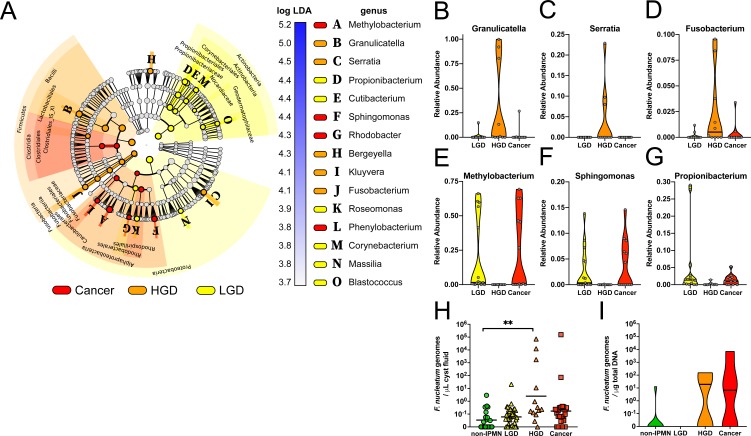
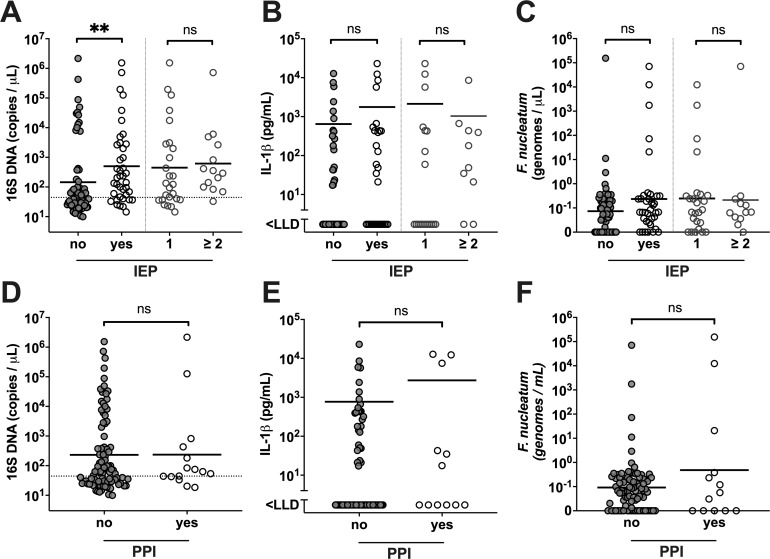
Verification
Claims the paper makes
The claims and statistics of this paper haven’t been checked yet.
Run the check — free, no account needed. It reads the open-access text and checks the sources it cites.
Claims other papers make about this one
Each is checked against this paper’s own text: does it say what the citing paper says it does?
In the citing paper
“This is demonstrated by the association of various disease states with the oral microbiome, including not only caries and periodontal disease but also oral, esophageal, pancreatic, and colorectal cancers, cardiovascular disease, and inflammatory bowel disease.147, 148, 149, 150, 151, 152, 153”
From The oral microbiome: Role of key organisms and complex networks in oral health and disease (2021) · cites this paper as [151]
Self-check
Percentages, sums and reported differences re-computed from the paper’s own numbers.
The self-check needs the paper’s full text.
Citations
Cites
R: A Language and Environment for Statistical Computing
R Core Team (2000) · doi:10.32614/r.manuals · Cited by 355,893
vegan: Community Ecology Package
Oksanen, J., Simpson, G. L., Blanchet, F. G., Kindt, R., Legendre, P., Minchin, P. R., O’Hara, R. B., Sólymos, P., Stevens, M. H. H., Szöcs, E., et al. (2001) · doi:10.32614/cran.package.vegan · Cited by 27,099
Metagenomic biomarker discovery and explanation
Segata, N., Izard, J., Waldron, L., Gevers, D., Miropolsky, L., Garrett, W. S., & Huttenhower, C. (2011) · Genome Biology · doi:10.1186/gb-2011-12-6-r60 · Cited by 16,192
UCHIME improves sensitivity and speed of chimera detection
Edgar, R. C., Haas, B. J., Clemente, J. C., Quince, C., & Knight, R. (2011) · Bioinformatics · doi:10.1093/bioinformatics/btr381 · Cited by 15,114
A Toll-like receptor recognizes bacterial DNA
Hemmi, H., Takeuchi, O., Kawai, T., Kaisho, T., Sato, S., Sanjo, H., Matsumoto, M., Hoshino, K., Wagner, H., Takeda, K., et al. (2000) · Nature · doi:10.1038/35047123 · Cited by 6,491
Ribosomal Database Project: data and tools for high throughput rRNA analysis
Cole, J. R., Wang, Q., Fish, J. A., Chai, B., McGarrell, D. M., Sun, Y., Brown, C. T., Porras‐Alfaro, A., Kuske, C. R., & Tiedje, J. M. (2013) · Nucleic Acids Research · doi:10.1093/nar/gkt1244 · Cited by 4,480
Reagent and laboratory contamination can critically impact sequence-based microbiome analyses
Salter, S. J., Cox, M. J., Turek, E. M., Calus, S. T., Cookson, W. O., Moffatt, M. F., Turner, P., Parkhill, J., Loman, N. J., & Walker, A. W. (2014) · BMC Biology · doi:10.1186/s12915-014-0087-z · Cited by 3,463
Geller, L. T., Barzily-Rokni, M., Danino, T., Jonas, O. H., Shental, N., Nejman, D., Gavert, N., Zwang, Y., Cooper, Z. A., Shee, K., et al. (2017) · Science · doi:10.1126/science.aah5043 · Cited by 1,817
Revisions of international consensus Fukuoka guidelines for the management of IPMN of the pancreas
Tanaka, M., Fernández-del Castillo, C., Kamisawa, T., Jang, J. Y., Levy, P., Ohtsuka, T., Salvia, R., Shimizu, Y., Tada, M., & Wolfgang, C. L. (2017) · Pancreatology · doi:10.1016/j.pan.2017.07.007 · Cited by 1,797
Gur, C., Ibrahim, Y., Isaacson, B., Yamin, R., Abed, J., Gamliel, M., Enk, J., Bar-On, Y., Stanietsky-Kaynan, N., Coppenhagen-Glazer, S., et al. (2015) · Immunity · doi:10.1016/j.immuni.2015.01.010 · Cited by 1,490
Cited by
Sorted by citations
Items 101–200 of 226
The Human Microbiomes in Pancreatic Cancer: Towards Evidence-Based Manipulation Strategies?
Brandi, G., Turroni, S., McAllister, F. M., & Frega, G. (2021) · International Journal of Molecular Sciences · doi:10.3390/ijms22189914 · Cited by 19
Intratumoral Fusobacterium nucleatum in Pancreatic Cancer: Current and Future Perspectives
D’Antonio, D. L., Zenoniani, A., Umme, S., Piattelli, A., & Curia, M. C. (2024) · Pathogens · doi:10.3390/pathogens14010002 · Cited by 21
Søreide, K., Roalsø, M. T. T., & Aunan, J. R. (2020) · Journal of Pancreatic Cancer · doi:10.1089/pancan.2019.0014 · Cited by 17
Commensal microbes and p53 in cancer progression
Celardo, I., Melino, G., & Amelio, I. (2020) · Biology Direct · doi:10.1186/s13062-020-00281-4 · Cited by 17
The microbiota and aging microenvironment in pancreatic cancer: Cell origin and fate
Chen, Z., Wang, Z., Du, Y., Shi, H., & Zhou, W. (2022) · Biochimica et Biophysica Acta (BBA) - Reviews on Cancer · doi:10.1016/j.bbcan.2022.188826 · Cited by 17
Pancreatic Cancer Resistance to Treatment: The Role of Microbiota
Nista, E. C., GAUDIO, A. D., Vecchio, L. E. D., Mezza, T., Pignataro, G., Piccioni, A., Gasbarrini, A., Franceschi, F., & Candelli, M. (2023) · Biomedicines · doi:10.3390/biomedicines11010157 · Cited by 17
Absence of a pancreatic microbiome in intraductal papillary mucinous neoplasm
Pust, M., Castellanos, D. M. R., Rzasa, K. M., Dame, A., Pishchany, G., Assawasirisin, C., Liss, A. S., Castillo, C. F. F.-D., & Xavier, R. J. (2024) · Gut · doi:10.1136/gutjnl-2023-331012 · Cited by 16
Advancements in understanding tumor‑resident bacteria and their application in cancer therapy
Luo, Y., Huang, X., Wang, R., Lin, Y., Sun, J., Li, K., Wang, D. Y., Yan, Y., & Qiao, Y. (2025) · Military Medical Research · doi:10.1186/s40779-025-00623-1 · Cited by 16
Classic versus innovative strategies for immuno-therapy in pancreatic cancer
Formelli, M. G., Palloni, A., Tavolari, S., Deiana, C., Andrini, E., Marco, M. D., Campana, D., Lamberti, G., & Brandi, G. (2025) · Advanced Drug Delivery Reviews · doi:10.1016/j.addr.2025.115671 · Cited by 16
The Microbiome in PDAC—Vantage Point for Future Therapies?
Pfisterer, N., Lingens, C., Heuer, C., Dang, L., Neeße, A., & Ammer‐Herrmenau, C. (2022) · Cancers · doi:10.3390/cancers14235974 · Cited by 15
Merali, N., Chouari, T. A. M., Sweeney, C., Halle-Smith, J. M., Jessel, M.-D., Wang, B., Brien, J. O., Suyama, S., Jiménez, J. I., Roberts, K. J., et al. (2024) · International Journal of Surgery · doi:10.1097/js9.0000000000001762 · Cited by 15
Gastrointestinal disorders and intestinal bacteria: Advances in research and applications in therapy
Ohkusa, T., Nishikawa, Y., & Sato, N. (2023) · Frontiers in Medicine · doi:10.3389/fmed.2022.935676 · Cited by 16
Asili, P., Mirahmad, M., Rezaei, P., Mahdavi, M. R., Larijani, B. A., & Tavangar, S. M. (2023) · Journal of Gastrointestinal Cancer · doi:10.1007/s12029-022-00901-4 · Cited by 14
Molecular Pathology of Pancreatic Cystic Lesions with a Focus on Malignant Progression
Hu, Y., Jones, D. M., Esnakula, A. K., Krishna, S. G., & Chen, W. (2024) · Cancers · doi:10.3390/cancers16061183 · Cited by 15
Masi, A. C., Oppong, Y. E. A., Haugk, B., Lamb, C. A., Sharp, L., Shaw, J., Stewart, C. J., & Oppong, K. W. (2020) · Gut · doi:10.1136/gutjnl-2020-322457 · Cited by 13
Visualized analysis of trends and hotspots in global oral microbiome research: A bibliometric study
Liao, G., Wu, J., Peng, X., Li, Y., Tang, L., Xu, X., Deng, D., & Zhou, X. (2020) · MedComm · doi:10.1002/mco2.47 · Cited by 15
Pathology of intraductal papillary mucinous neoplasms
Assarzadegan, N., Thompson, E. D., Salimian, K. J., Gaida, M. M., Brosens, L. A. A., Wood, L. D., Ali, S. Z., & Hruban, R. H. (2021) · Langenbeck s Archives of Surgery · doi:10.1007/s00423-021-02201-0 · Cited by 15
The Unique Microbiome and Immunity in Pancreatic Cancer
Wei, X., Mei, C., Li, X., & Xie, Y. (2021) · Pancreas · doi:10.1097/mpa.0000000000001744 · Cited by 14
Oral pathogens meet the gut microbiome: new mechanistic insights on systemic disease
Gan, G., Chen, R., Zheng, P., Long, K., Ma, K. K., Sulaiman, J. E., & Huang, X. (2026) · Frontiers in Cellular and Infection Microbiology · doi:10.3389/fcimb.2025.1673512 · Cited by 16
Walker, G. T., Yang, G., Tsai, J. Y., Rodriguez, J. L., English, B. C., Faber, F., Souvannaseng, L., Butler, B. P., & Tsolis, R. M. (2021) · Science Advances · doi:10.1126/sciadv.abd6232 · Cited by 12
Li, P., Zhang, H., & Dai, M. (2024) · Cancer Letters · doi:10.1016/j.canlet.2024.217274 · Cited by 14
The oral-gut microbiome axis in breast cancer: from basic research to therapeutic applications
Huang, L., Jiang, C., Yan, M., Wan, W., Li, S., Xiang, Z., & Wu, J. (2024) · Frontiers in Cellular and Infection Microbiology · doi:10.3389/fcimb.2024.1413266 · Cited by 13
pH-taxis drives aerobic bacteria in duodenum to migrate into the pancreas with tumors
Shirai, H., Ito, C., & Tsukada, K. (2022) · Scientific Reports · doi:10.1038/s41598-022-05554-8 · Cited by 13
Unveiling the intratumor microbiome in liver cancer: Current insights and prospective applications
Ke, X., Jiang, S., Wei, Q., Sun, M., Sun, H., Pang, M., Liu, M., Sun, L., Yang, H., & Mao, Y. (2025) · Clinical and Molecular Hepatology · doi:10.3350/cmh.2024.1039 · Cited by 13
Kaune, T., Griesmann, H., Theuerkorn, K., Hämmerle, M., Laumen, H., Krug, S., Plumeier, I., Kahl, S., Junca, H., Borges, L. G. D. A., et al. (2022) · iScience · doi:10.1016/j.isci.2023.106841 · Cited by 12
Oral Mucosa in Cancer Patients—Putting the Pieces Together: A Narrative Review and New Perspectives
Reuss, J. M., Alonso-Gamo, L., Garcia-Aranda, M., Reuss, D., Albi, M., Albi, B., Vilaboa, D. R., & Rodríguez-Vilaboa, B. (2023) · Cancers · doi:10.3390/cancers15133295 · Cited by 11
The dual role of gut microbiota in pancreatic cancer: new insights into onset and treatment
Cheng, H., Guo, H., Wen, C., Sun, G., Tang, F., & Li, Y. (2025) · Therapeutic Advances in Medical Oncology · doi:10.1177/17588359251324882 · Cited by 11
Hesami, Z., Sabzehali, F., Khorsand, B., Alipour, S., Sadeghi, A., Asri, N., Pazienza, V., & Houri, H. (2025) · iScience · doi:10.1016/j.isci.2025.112314 · Cited by 10
Hozaka, Y., Oi, H., Satake, S., Uchino, Y., Goto, Y., Idichi, T., Tanoue, K., Yamasaki, Y., Kawasaki, Y., Mataki, Y., et al. (2022) · Surgery · doi:10.1016/j.surg.2022.10.003 · Cited by 10
Basu, M., Philipp, L.-M., Baines, J. F., & Sebens, S. (2021) · Frontiers in Oncology · doi:10.3389/fonc.2021.740606 · Cited by 10
Takaori, A., Hashimoto, D., Ikeura, T., Ito, T., Nakamaru, K., Masuda, M., Nakayama, S., Yamaki, S., Yamamoto, T., Fujimoto, K., et al. (2023) · Pancreatology · doi:10.1016/j.pan.2023.04.001 · Cited by 10
Oral microbiome as a new research-target for supportive care and precision oncology
Bruno, J. S., & Fregnani, E. R. (2023) · Current Opinion in Oncology · doi:10.1097/cco.0000000000000947 · Cited by 11
Could there be an interplay between periodontal changes and pancreatic malignancies?
Ungureanu, B. S., Gheorghe, D. N., Nicolae, F. M., Râmboiu, S., Radu, P. A., Şurlin, V., Strâmbu, V., Gheonea, D. I., Roman, A., & Șurlin, P. (2023) · World Journal of Clinical Cases · doi:10.12998/wjcc.v11.i3.545 · Cited by 11
Metagenomic analysis reveals altered gut virome and diagnostic potential in pancreatic cancer
Zhang, P., Shi, H., Guo, R., Li, L., Guo, X., Yang, H., Chang, D., Cheng, Y., Zhao, G., Li, S., et al. (2024) · Journal of Medical Virology · doi:10.1002/jmv.29809 · Cited by 9
Lou, F., Li, M., Chu, T., Duan, H., Liu, H., Zhang, J., Duan, K., Liu, H., & Feng, W. Q. (2024) · Scientific Reports · doi:10.1038/s41598-024-68067-6 · Cited by 9
Kabwe, M., Ayelign, B., Afshar‐Sterle, S., Büchert, M., & Tucci, J. (2026) · Frontiers in Cellular and Infection Microbiology · doi:10.3389/fcimb.2025.1721411 · Cited by 10
Microbiome—Friend or Foe of Pancreatic Cancer?
Daniluk, J., Daniluk, U., Rogalski, P., Dâbrowski, A., & Swidnicka-Siergiejko, A. K. (2021) · Journal of Clinical Medicine · doi:10.3390/jcm10235624 · Cited by 9
Sivam, H. G. P., Chin, B. Y., Gan, S. Y., Ng, J. H., Gwenhure, A., & Chan, E. W. L. (2023) · Cancer Biology & Therapy · doi:10.1080/15384047.2023.2284857 · Cited by 10
Yu, D. S., Wang, T., Liang, D., Mei, Y., Zou, W., & Guo, S. (2021) · Frontiers in Oncology · doi:10.3389/fonc.2021.651350 · Cited by 9
The role of Fusobacterium nucleatum in cancer and its implications for clinical applications
Luo, W., Han, J., Peng, X., Zhou, X., Gong, T., & Zheng, X. M. (2024) · Molecular Oral Microbiology · doi:10.1111/omi.12475 · Cited by 8
Exploring the Interplay: Oral–Gut Microbiome Connection and the Impact of Diet and Nutrition
Parveen, S., Alqahtani, A. S., Aljabri, M. Y., Dawood, T., Khan, S. S., Gupta, B., Vempalli, S., Hassan, A. A.-H. A.-A., & Elamin, N. M. H. (2024) · European Journal of General Dentistry · doi:10.1055/s-0044-1786154 · Cited by 11
Tavano, F., Napoli, A., Gioffreda, D., Palmieri, O., Latiano, T. P., Tardio, M., di Mola, F. F., Grottola, T., Büchler, M. W., Gentile, M., et al. (2025) · Microorganisms · doi:10.3390/microorganisms13020452 · Cited by 8
Tavanaeian, S., Feizabadi, M. M., Falsafi, S., Aghdaei, H. A., & Houri, H. (2025) · BMC Microbiology · doi:10.1186/s12866-025-04344-2 · Cited by 8
Association of oral microbiome and pancreatic cancer: a systematic review and meta-analysis
Yuan, M., Xu, Y. H., & Guo, Z. (2022) · Therapeutic Advances in Gastroenterology · doi:10.1177/17562848221123980 · Cited by 8
Application of EUS-based techniques in the evaluation of pancreatic cystic neoplasms
Jin, Z., Sun, L., & Huang, H. (2021) · Endoscopic Ultrasound · doi:10.4103/eus-d-20-00216 · Cited by 8
Characterization of Bacterial Differences Induced by Cleft-Palate-Related Spatial Heterogeneity
Zhou, F., Su, Z., Li, Q., Wang, R., Liao, Y., Zhang, M., & Li, J. (2022) · Pathogens · doi:10.3390/pathogens11070771 · Cited by 10
From Microbiome to Malignancy: Unveiling the Gut Microbiome Dynamics in Pancreatic Carcinogenesis
Dhanisha, S. S., Jain, T., Dudeja, V., Iyer, S., & Dudeja, V. (2025) · International Journal of Molecular Sciences · doi:10.3390/ijms26073112 · Cited by 8
Liu, C., Zhang, H., Li, T., Jiang, Z., Yuan, Y., & Chen, X. (2023) · Infection and Immunity · doi:10.1128/iai.00102-23 · Cited by 9
Intestinal Flora in Chemotherapy Resistance of Biliary Pancreatic Cancer
Bai, L., Yan, X.-D., Lv, J., Qi, P., Song, X., & Zhang, L. (2023) · Biology · doi:10.3390/biology12081151 · Cited by 7
Zou, L., Mo, S., Jia, C., Pang, J., Chang, X., & Chen, J. (2023) · Journal of Gastroenterology and Hepatology · doi:10.1111/jgh.16437 · Cited by 7
Intratumoral Microbiota: Insights from Anatomical, Molecular, and Clinical Perspectives
Lombardo, C., Fazio, R., Sinagra, M., Gattuso, G., Longo, F., Lombardo, C., Salmeri, M., Zanghì, G., & Loreto, C. (2024) · Journal of Personalized Medicine · doi:10.3390/jpm14111083 · Cited by 7
The huge clinical potential of microbiota in the treatment of pancreatic cancer: The next frontier
Zhang, Z., & Tang, D. (2022) · Biochimica et Biophysica Acta (BBA) - Reviews on Cancer · doi:10.1016/j.bbcan.2022.188733 · Cited by 9
Guan, Z., Qi, H., & Feng, Q. (2025) · Open Research (University of Surrey) · doi:10.1002/viw.20240153 · Cited by 6
Tajpara, P., Sobkowiak, M. J., Healy, K., Naud, S., Gündel, B., Halimi, A., Khan, Z. A., Gabarrini, G., Guyader, S. L., Imreh, G., et al. (2025) · Frontiers in Immunology · doi:10.3389/fimmu.2025.1553034 · Cited by 8
Self-citationBacteria-assisted metal antitumor immunotherapy
Guo, J., Liang, J., Chen, Z., Pan, Y., He, Y., & Chao, H. (2025) · Coordination Chemistry Reviews · doi:10.1016/j.ccr.2025.216938 · Cited by 6
Multifaceted effects of the microbiome in pancreatic cancer: from association to modulation
Thomas, R. M. (2025) · Nature Reviews Gastroenterology & Hepatology · doi:10.1038/s41575-025-01119-y · Cited by 6
Yang, X., Ning, T., Zhang, W., Hou, S., Su, J., Li, W., & Wu, J. (2025) · Cell Communication and Signaling · doi:10.1186/s12964-025-02561-w · Cited by 6
The hallmarks of pancreatic cancer
Kane, L. E., Hackett, D., Lyons, R. G., Ryan, B. M., & Maher, S. G. (2026) · Cancer Letters · doi:10.1016/j.canlet.2026.218437 · Cited by 8
Human microbiota colonization and pancreatic ductal carcinoma
Yuan, F., Yang, G., Yang, J., Ren, J., You, L., & Zhao, Y. (2022) · Critical Reviews in Microbiology · doi:10.1080/1040841x.2022.2080526 · Cited by 6
Research Progress in Intestinal Microecology in Pancreatic Cancer Diagnosis and Treatment
Han, Z., Zhang, H., Lu, L., Li, X., Zhang, C., Zhu, J., Li, C., Wang, Q., & Chen, K. (2022) · Journal of Oncology · doi:10.1155/2022/6069403 · Cited by 6
Self-citationThe Oral Microbiome of Healthy Japanese People at the Age of 90
Nomura, Y., Kakuta, E., Kaneko, N., Nohno, K., Yoshihara, A., & Hanada, N. (2020) · Applied Sciences · doi:10.3390/app10186450 · Cited by 6
Zaura, E. (2022) · Dentistry Journal · doi:10.3390/dj10090156 · Cited by 6
Survival mechanism of pancreatic tumor bacteria and their ability to metabolize chemotherapy drugs
Khan, Z. A., Sobkowiak, M. J., Ghorbani, M., Tajpara, P., Al‐Manei, K., Halimi, A., Ateeb, Z., Özenci, V., Heuchel, R. L., Löhr, M. J., et al. (2025) · Microbiology Spectrum · doi:10.1128/spectrum.01820-25 · Cited by 6
Self-citationDai, H., Chen, X., Yang, J., Wang, Y., Loiola, R. A., Lü, A., & Cheung, K. C. P. (2024) · Frontiers in Cell and Developmental Biology · doi:10.3389/fcell.2024.1460544 · Cited by 5
Gut microbiome and pancreatic cancer
Eid, M., Martínek, A., Dolina, J., Uvírová, M., & Dítě, P. (2024) · Klinicka onkologie · doi:10.48095/ccko202420 · Cited by 5
van Eijck, C. W. F., Ju, J., Land, F. R. V. ‘., Verheij, M., Li, Y., Stubbs, A., Doukas, M., Lila, K. A., Heij, L. R., Wiltberger, G. J., et al. (2024) · Pancreatology · doi:10.1016/j.pan.2024.08.014 · Cited by 4
[Oral Microbiome and Systemic Diseases].
Zhou, L.-J., Chen, B., Li, Y., & Duan, S. (2023) · 四川大学学报:医学版 · doi:10.12182/20230160504 · Cited by 4
Establishment and improvement of genetic manipulation tools for Fusobacterium nucleatum
Guan, Z., Wang, H., & Feng, Q. (2025) · Engineering Microbiology · doi:10.1016/j.engmic.2025.100192 · Cited by 4
Németh, K., Mezei, E., Vörös, J., Borka, K., Pesti, A., Kenessey, I., Kiss, A., & Budai, A. (2025) · The Journal of Pathology Clinical Research · doi:10.1002/2056-4538.70019 · Cited by 4
Dysbiosis of the duodenal microbiota as a diagnostic marker for pancreaticobiliary cancer
Sugimoto, M., Abe, K., Takagi, T. J., Suzuki, R., Konno, N., Asama, H., Sato, Y., Irie, H., Watanabe, K., Nakamura, J., et al. (2021) · World Journal of Gastrointestinal Oncology · doi:10.4251/wjgo.v13.i12.2088 · Cited by 4
Differences in the Fecal Metabolome of Autoimmune Pancreatitis Patients
Dovhalyuk, V., Fan, Y., Nikolić, S., Vujasinović, M., Löhr, M. J., & Globisch, D. (2025) · United European Gastroenterology Journal · doi:10.1002/ueg2.70025 · Cited by 3
Makino, Y., Oyama, K., Sagara, A., Thege, F. I., & Maitra, A. (2025) · Journal of Gastroenterology · doi:10.1007/s00535-025-02328-7 · Cited by 4
Zhao, F., An, R., Yu, S., Ma, Y., Liu, W., 盛彩霞, Xie, X., & Zhang, J. (2026) · Clinical and Translational Medicine · doi:10.1002/ctm2.70704 · Cited by 3
Oral health and gastrointestinal neoplasia: Narrative review
Noguera, E., Sorribas, M., Admella, V., & Biondo, S. (2021) · Cirugía Española (English Edition) · doi:10.1016/j.cireng.2021.11.002 · Cited by 3
Fusobacterium nucleatum and Malignant Tumors of the Digestive Tract: A Mechanistic Overview
Lai, Y., Mi, J., & Feng, Q. (2022) · Bioengineering · doi:10.3390/bioengineering9070285 · Cited by 3
de Paredes, A. G. G., Gleeson, F. C., Rajan, E., & Vázquez-Sequeiros, E. (2021) · Revista Española de Enfermedades Digestivas · doi:10.17235/reed.2021.7948/2021 · Cited by 3
Charalambous, M., Efstathiou, G., Lambrou, P., Irakleous, I., & Papastavrou, E. (2020) · doi:10.21203/rs.3.rs-21950/v1 · Cited by 3
Mi, S., Cai, S., Lou, G., & Xue, M. (2024) · Postgraduate Medical Journal · doi:10.1093/postmj/qgae069 · Cited by 2
Yang, S., Hu, Y., Cui, M., Xu, Q., Han, X., Chang, X., Zheng, Q., Xiao, J., Chen, T., Li, P., et al. (2025) · Cancer Letters · doi:10.1016/j.canlet.2025.217730 · Cited by 2
Fusobacterium nucleatum in cancer: from bystander to driver
Zhong, Z.-W., Lu, Y.-Q., Duan, Y., Ma, J. Y., & Liu, N. (2026) · Gut · doi:10.1136/gutjnl-2025-338000 · Cited by 2
Structural insight into the role of thiolase from Fusobacterium nucleatum
He, S., Bai, X., & Xu, Y. (2023) · Biochemical and Biophysical Research Communications · doi:10.1016/j.bbrc.2023.149151 · Cited by 2
VTwins: inferring causative microbial features from metagenomic data of limited samples
Meng, Q., Zhou, Q., Shi, S., Xiao, J., Ma, Q., Yu, J., Chen, J., & Kang, Y. (2023) · 中国科学通报:英文版 · doi:10.1016/j.scib.2023.10.024 · Cited by 2
Hunter, C., Dia, K., Boykins, J., Perry, K., Banerjee, N., Cuffee, J., Armstrong, E., Morgan, G., Banerjee, H. N., Banerjee, A., et al. (2024) · Journal of Solid Tumors · doi:10.5430/jst.v14n1p1 · Cited by 2
The microbiome and lung cancer: microbial effects on host immune responses and treatment outcomes
Bailey, A., Leuther, K. K., & Robinson, L. A. (2025) · Frontiers in Microbiomes · doi:10.3389/frmbi.2025.1606551 · Cited by 3
Russo, E., Boem, F., Curini, L., & Amedei, A. (2022) · Interdisciplinary cancer research · doi:10.1007/16833_2022_6 · Cited by 2
Microfluidics in Microbiome and Cancer Research
Udayasuryan, B., Slade, D. J., & Verbridge, S. S. (2019) · doi:10.1002/9783527818341.ch9 · Cited by 2
Udayasuryan, B., Nguyen, T. T. D., Umaña, A., Ahmad, R. N., Roberts, L. M., Sobol, P., Jones, S. D., Munson, J. M., Slade, D. J., & Verbridge, S. S. (2021) · bioRxiv (Cold Spring Harbor Laboratory) · doi:10.1101/2021.11.19.469245 · Cited by 2
Duan, W., Wang, Z., Qian, W., Qi, D., Ma, Q., & Wu, E. (2022) · Frontiers in Oncology · doi:10.3389/fonc.2022.923982 · Cited by 2
Pianka, M.-L., Werba, A., Zimmermann, S., Vey, J. A., Kalkum, E., Tenckoff, S., Tony-Odigie, A., Michalski, C. W., & Pianka, F. (2025) · Systematic Reviews · doi:10.1186/s13643-025-02910-3 · Cited by 1
Shen, T., Liang, J., Li, X., Xu, X., Li, L., Xu, Y., Zeng, S., Li, B. H., Li, H., Hu, M., et al. (2025) · Microbial Biotechnology · doi:10.1111/1751-7915.70292 · Cited by 1
Microbiota in pancreatic ductal adenocarcinoma progression and therapy: The hidden players
Hu, X., Kong, F., Chen, J., Li, Z., Cai, Z., & Kong, X. (2026) · Chinese Medical Journal · doi:10.1097/cm9.0000000000003986 · Cited by 1
Cueva, K. A. S., Velásquez, A. C. B., Martínez, C. A. G., Chauca-Bajaña, L., Suárez, L. S., Ron, B. V., Cuevas‐Suárez, C. E., Flores‐Ledesma, A., Lorenzo‐Pouso, A. I., & Balladares, A. D. O. (2026) · Journal of Clinical Medicine · doi:10.3390/jcm15083154 · Cited by 1
Risk Factors for Pancreatic Cancer
Franklin, O., & Sund, M. (2021) · Springer eBooks · doi:10.1007/978-3-030-53786-9_1 · Cited by 1
Salud oral y neoplasia gastrointestinal. Revisión narrativa
Noguera, E., Sorribas, M., Admella, V., & Biondo, S. (2021) · Cirugía Española · doi:10.1016/j.ciresp.2021.05.002 · Cited by 1
Understanding bacterial infiltration of the pancreas through a deformable pancreatic duct
Shirai, H., & Tsukada, K. (2023) · Journal of Biomechanics · doi:10.1016/j.jbiomech.2023.111883 · Cited by 1
Bactérias orais e sua utilização como biomarcadores de tumores pancreáticos: um estudo de revisão
Lima, F. L. O., Gomes, L. N. L., Freitas, C. A. D. O., de Oliveira, A. C. S., Silva, A. R., Oliveira, M. A. D. S., Martinelli, P. P., & Pimenta, R. M. C. (2020) · Research Society and Development · doi:10.33448/rsd-v9i10.8953 · Cited by 1
Editorial: Deciphering the Microbiome-Immunity-Cancer Axis
Chen, X., Jin, C., Facciabene, A., Guo, X., & Zhang, Y. (2022) · Frontiers in Immunology · doi:10.3389/fimmu.2022.897811 · Cited by 1
Human Gut Microbiota: Friend or Foe?
Pliszka, M., & Szablewski, L. (2020) · OBM Hepatology and Gastroenterology · doi:10.21926/obm.hg.2003050
VTwins: Identifying Robust Associations from High-dimensional Data of Limited SamplesPreprint
Meng, Q., Zhou, Q., Ma, Q., Yu, J. Y., Chen, J., & Kang, Y. (2021) · Research Square · doi:10.21203/rs.3.rs-116301/v1
Onkobiózis és mikrobiális metabolikus jelátvitel pancreas-adenocarcinomában
Kiss, B., Mikó, E., Sebő, É., Tóth, J., Ujlaki, G., Szabó, J., Uray, K., Bai, P., & Árkosy, P. (2021) · Central European Journal of Gastroenterology and Hepatology · doi:10.33570/ceujgh.7.2.57
Metadata
- Authors
- Gaiser, R. A., Halimi, A., Alkharaan, H., Lu, L., Davanian, H., Healy, K., Hugerth, L. W., Ateeb, Z., Valente, R., Fernández Moro, C., Del Chiaro, M., & Sällberg Chen, M.
- Affiliations
- Karolinska Institutet (SE)
- Karolinska University Hospital (SE)
- Tongji University (CN)
- Science for Life Laboratory (SE)
- Division of Pathology, Department of Laboratory Medicine (LABMED), Karolinska Institutet, Huddinge, Sweden
- Pancreatic Surgery Unit, Division of Surgery, Department of Clinical Science, Intervention and Technology (CLINTEC), Karolinska Universitetsjukhuset i Huddinge, Huddinge, Sweden
- Department of Dental Medicine, Karolinska Institutet, Huddinge, Sweden
- ORCID
- Venue
- Gut
- Publisher
- BMJ
- Published
- 2019-03-14
- Volume
- 68
- Issue
- 12
- Pages
- 2186-2194
- ISSN
- 0017-5749 (ISSN-L)
- 1468-3288
- PMC
- PMC6872446
- OpenAlex
- W2921125196
- Cited by
- 227
- References
- 48
- Citations by year
- 2026: 15 · 2025: 31 · 2024: 29 · 2023: 28 · 2022: 42 · 2021: 47 · 2020: 28 · 2019: 6
- FWCI
- 12.85
- Type
- journal article
- Language
- en
- Open access
- hybrid
- doi.org
- Licence
- cc-by-nc
- Locations
- Gut (publishedVersion, cc-by-nc)
- PubMed Central (publishedVersion, cc-by-nc)
- PubMed (publishedVersion)
- HighWire Press Open Archive (submittedVersion)
- Funders
- Ruth och Richard Julins funds
- Karolinska Institutet funds
- ALF
- Cancerfonden
- SOF Strategic Odontological Research
- Topics
- Health Sciences › Medicine › Oncology › Pancreatic and Hepatic Oncology Research
- Life Sciences › Biochemistry, Genetics and Molecular Biology › Molecular Biology › Gut microbiota and health
- Health Sciences › Dentistry › Periodontics › Oral microbiology and periodontitis research
- Keywords
- intraductal papillary mucinous neoplasm, pancreatic cysts, oral microbiota, Fusobacterium nucleatum, Granulicatella adiacens, IL-1β, high-grade dysplasia, cyst fluid, bacterial DNA, endoscopy, proton pump inhibitors, pancreatic cancer precursors
- MeSH terms
- Adult, Aged, Aged, 80 and over, Biopsy, DNA, Bacterial, Female, Humans, Male, Middle Aged, Mouth, Neoplasm Invasiveness, Pancreatectomy, Pancreatic Ducts, Pancreatic Neoplasms, Retrospective Studies, Carcinoma, Pancreatic Ductal, Microbiota
About these checks
Registry, retraction, Cites and statistics results are computed, not judged, with one exception: a printed reference that no index lists is read once by a model before it counts as a citation error. Claims are extracted by a model and kept only when their quote appears verbatim in the text; each cited source is then checked, with a model’s help, for whether it says what the claim relies on. Those verdicts can be wrong — read the claim’s quote and the cited source before relying on one.
Statistics and arithmetic are recomputed, not judged.
Confidence bands are shown only for fields calibrated on our annotated test set. None is calibrated yet, so no band is shown.
What counts as a claim ›How we measure confidence ›How we check this ›
Are you an author, or do you see a problem with this page? Request a review
