

Calprotectin: from biomarker to biological function
Open accessThe DOI matches its Crossref record; 203 of the 205 references it cites were found in a registry or an index.
Abstract
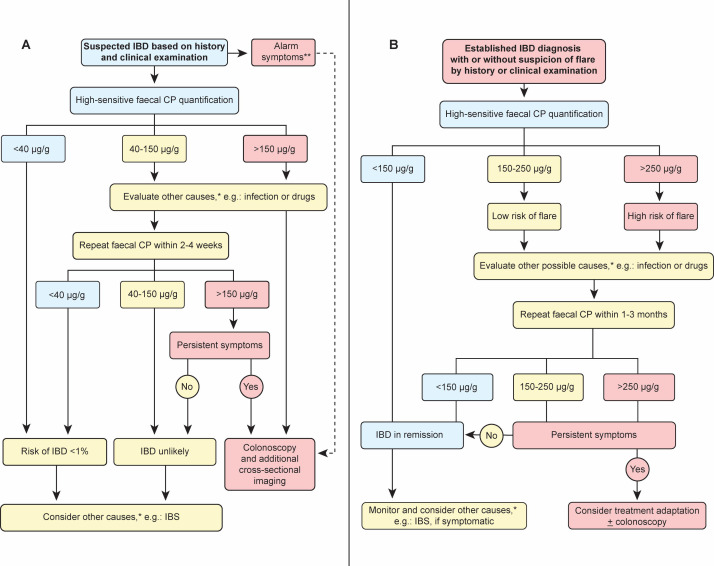
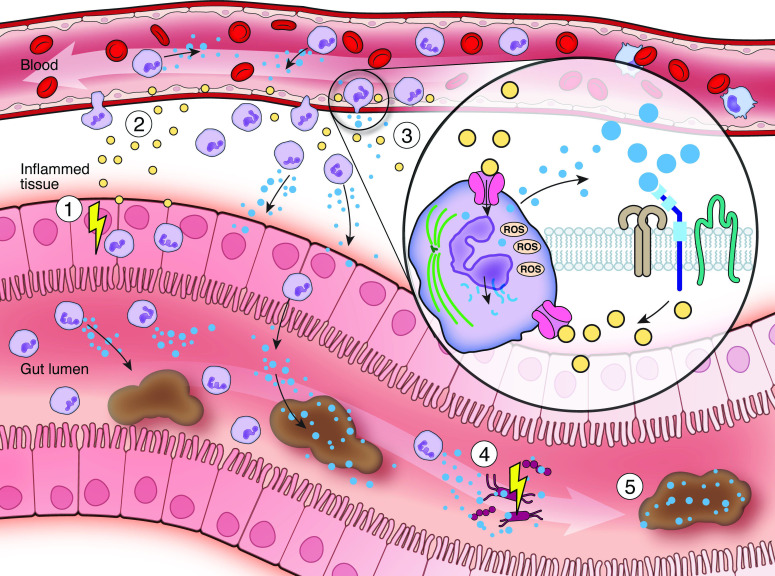
The incidence of inflammatory bowel diseases (IBD) emerged with Westernisation of dietary habits worldwide. Crohn’s disease and ulcerative colitis are chronic debilitating conditions that afflict individuals with substantial morbidity and challenge healthcare systems across the globe. Since identification and characterisation of calprotectin (CP) in the 1980s, faecal CP emerged as significantly validated, non-invasive biomarker that allows evaluation of gut inflammation. Faecal CP discriminates between inflammatory and non-inflammatory diseases of the gut and portraits the disease course of human IBD. Recent studies revealed insights into biological functions of the CP subunits S100A8 and S100A9 during orchestration of an inflammatory response at mucosal surfaces across organ systems. In this review, we summarise longitudinal evidence for the evolution of CP from biomarker to rheostat of mucosal inflammation and suggest an algorithm for the interpretation of faecal CP in daily clinical practice. We propose that mechanistic insights into the biological function of CP in the gut and beyond may facilitate interpretation of current assays and guide patient-tailored medical therapy in IBD, a concept warranting controlled clinical trials.
Overview
The claims and statistics of this paper haven’t been checked yet.
Free: it reads the open-access text and checks the first 5 claims that cite a source we can check. Create a free account to check every claim.
Integrity signals
Registry
Cites
Statistics
Figures
Verification
Claims the paper makes
The claims and statistics of this paper haven’t been checked yet.
Free: it reads the open-access text and checks the first 5 claims that cite a source we can check. Create a free account to check every claim.
Claims other papers make about this one
Each is checked against this paper’s own text: does it say what the citing paper says it does?
In the citing paper
“One classical example is fecal calprotectin, a calcium-binding heterodimer (S100A8/S100A9) from neutrophils that is elevated in the stool during gut inflammation (Fig. 2).119,120”
From Gut dysbiosis in oncology: a risk factor for immunoresistance (2026) · doi:10.1038/s41422-025-01212-6 · cites this paper as [119]
In the citing paper
“It is an established, sensitive marker used to monitor IBD activity and, by extension, reflects microbiota-driven mucosal inflammation.119,121,122”
From Gut dysbiosis in oncology: a risk factor for immunoresistance (2026) · doi:10.1038/s41422-025-01212-6 · cites this paper as [119]
Self-check
Percentages, sums and reported differences re-computed from the paper’s own numbers.
The self-check needs the paper’s full text.
Citations
Cites
2 retracted
Wu, D., Wang, S., Shen, M., Wang, Y., Zhang, B., Wu, Z., Lu, J., & Zheng, Y. (2018) · Journal of Cellular and Molecular Medicine · doi:10.1111/jcmm.13532 · Cited by 14
RetractedQian, M., & Song, N.-J. (2018) · PubMed · doi:10.26355/eurrev_201807_15426 · Cited by 12
RetractedTraffic signals for lymphocyte recirculation and leukocyte emigration: The multistep paradigm
Springer, T. A. (1994) · Cell · doi:10.1016/0092-8674(94)90337-9 · Cited by 6,929
Park, J.-H., Adoro, S., Guinter, T., Erman, B., Alag, A. S., Catalfamo, M., Kimura, M. Y., Cui, Y., Lucas, P. J., Gress, R. E., et al. (2010) · Nature Immunology · doi:10.1038/ni.1840 · Cited by 5,835
Sakaguchi, S., Sakaguchi, N., Asano, M., Itoh, M., & Toda, M. (1995) · The Journal of Immunology · doi:10.4049/jimmunol.155.3.1151 · Cited by 5,608
Turner, D., Ricciuto, A., Lewis, A., D’Amico, F., Dhaliwal, J., Griffiths, A. M., Bettenworth, D., Sandborn, W. J., Sands, B. E., Reinisch, W., et al. (2021) · Gastroenterology · doi:10.1053/j.gastro.2020.12.031 · Cited by 2,911
Alatab, S., Sepanlou, S. G., Ikuta, K., Vahedi, H., Bisignano, C., Safiri, S., Sadeghi, A., Nixon, M. R., Abdoli, A., Abolhassani, H., et al. (2020) · The Lancet Gastroenterology & Hepatology · doi:10.1016/s2468-1253(19)30333-4 · Cited by 2,313
Dietary emulsifiers impact the mouse gut microbiota promoting colitis and metabolic syndrome
Chassaing, B., Koren, O., Goodrich, J. K., Poole, A. C., Srinivasan, S., Ley, R. E., & Gewirtz, A. T. (2015) · Nature · doi:10.1038/nature14232 · Cited by 2,055
Dietary-fat-induced taurocholic acid promotes pathobiont expansion and colitis in Il10-/- mice
Devkota, S., Wang, Y., Musch, M. W., Leone, V., Fehlner-Peach, H., Nadimpalli, A., Antonopoulos, D. A., Jabri, B., & Chang, E. B. (2012) · Nature · doi:10.1038/nature11225 · Cited by 1,904
Maaser, C., Sturm, A., Vavricka, S. R., Kucharzik, T., Fiorino, G., Annese, V., Calabrese, E., Baumgart, D. C., Bettenworth, D., Borralho Nunes, P., et al. (2019) · Journal of Crohn's and Colitis · doi:10.1093/ecco-jcc/jjy113 · Cited by 1,823
Cited by
Items 201–300 of 551
Rizzi, A., Gioacchino, M. D., Gammeri, L., Inchingolo, R., Chini, R., Santilli, F., Nucera, E., & Gangemi, S. (2023) · Cells · doi:10.3390/cells12141910 · Cited by 8
“It is constitutively expressed in neutrophils, monocytes, dendritic cells, and activated macrophages; its expression can also be induced by inflammatory processes [66].”
BackgroundXie, J., Xiong, S., Yu, J., Ma, X., Xiang, F., Chen, Y., Xia, B., Li, Y., Zhang, Z., Liao, D., et al. (2025) · Phytomedicine · doi:10.1016/j.phymed.2025.156675 · Cited by 7
Yi, E., Wang, X., Liu, Y., Wang, Z., Bai, G., Mei, X., Wu, F., Xie, C., Li, Q., Cao, W., et al. (2025) · MedComm · doi:10.1002/mco2.70204 · Cited by 8
“S100A9, commonly known as calprotectin, a calcium-binding protein primarily produced by neutrophils and circulating macrophages under normal physiological conditions [42].”
Galectin-3—Insights from Inflammatory Bowel Disease and Primary Sclerosing Cholangitis
Grewal, T., Tews, H. C., & Buechler, C. (2025) · International Journal of Molecular Sciences · doi:10.3390/ijms26136101 · Cited by 7
“Moreover, fecal calprotectin has emerged as a valuable diagnostic tool to monitor gut inflammation in CD and UC, illustrating a central role for neutrophil activation in both disease entities [134].”
ZongLi, C., KeYong, L., & Liang, J. (2025) · Frontiers in Pediatrics · doi:10.3389/fped.2025.1598448 · Cited by 7
Ou, J., Li, L., Zhi, F., Huang, B., & Zhao, X. (2025) · Frontiers in Immunology · doi:10.3389/fimmu.2025.1530508 · Cited by 7
“Similarly, fecal S100A8/A9 levels are well-established, noninvasive biomarkers for monitoring intestinal in fl ammation in UC (36).”
Karpiuk, K. R., Młynarczyk, G., Matowicka-Karna, J., & Darewicz, J. (2025) · International Journal of Molecular Sciences · doi:10.3390/ijms26189130 · Cited by 8
“…leukocyte proteins family, which can be secreted by immune cells, such as monocytes, neutrophils, dendritic cells, and activated macrophages, especially during damaging processes and inflammation, whereas in healthy circumstances, the levels of such proteins are persisting at lower levels [74,75].”
Zhu, T., Yu, H., Wang, W., Sun, Y., Wang, S., Ma, D., & Yao, Y. (2025) · Frontiers in Immunology · doi:10.3389/fimmu.2025.1672538 · Cited by 7
“Notably, S100A8 and S100A9, members of the S100 family, are particularly abundant in neutrophils (24).”
Liao, L., Li, J., Xu, W., Yin, Y., Wang, Z., Li, C. C., li, Y., Zhou, X., Deng, M., & Hou, G. (2026) · Journal of Cachexia Sarcopenia and Muscle · doi:10.1002/jcsm.70196 · Cited by 8
Newman, K. L., & Higgins, P. (2023) · Journal of Clinical Microbiology · doi:10.1128/jcm.00946-23 · Cited by 7
“It does not distinguish well between with different types of bacteria, but some studies have found a trend toward higher FCP for bacterial etiologies compared to viruses (1, 5).”
BackgroundS100A9 as a promising therapeutic target for diabetic foot ulcers
Wan, R., Fang, S., Zhang, X., Zhou, W., Bi, X., Yuan, L., Lv, Q., Song, Y. H., Tang, W., Shi, Y., et al. (2025) · Chinese Medical Journal · doi:10.1097/cm9.0000000000003543 · Cited by 7
“[18] S100A9 is linked closely to the inflammatory response, [19–21] playing dual roles in pro-inflammatory and anti-inflammatory processes .”
Li, J., Hu, R., Liu, X., Peng, L., Yi, J., Zhong, X., Huang, Q., Sun, J., Feng, W., Ma, W., et al. (2025) · Journal of Ethnopharmacology · doi:10.1016/j.jep.2025.119887 · Cited by 7
Brizzi, E. V. D., Rocco, A., Babino, G., Buononato, D., Argenziano, G., & Balato, A. (2022) · Biomedicines · doi:10.3390/biomedicines10112968 · Cited by 7
Bolasco, P., Aquilani, R., Maestri, R., Esposito, M. P., Deiana, M. L., Cadeddu, M., Secci, R., Casu, B., Serra, A., Iadarola, P., et al. (2023) · Clinical Nutrition ESPEN · doi:10.1016/j.clnesp.2023.02.026 · Cited by 7
Hirayama, D., Motoya, S., Ashida, T., Ando, K., Fujiya, M., Ito, T., Furukawa, S., Maemoto, A., Katsurada, T., Hinotsu, S., et al. (2023) · Inflammatory Intestinal Diseases · doi:10.1159/000533871 · Cited by 7
“Biomarkers are important in the future management of IBD; therefore, it would be better to follow up on fecal calprotectin values during GLM treatment [41, 42].”
BackgroundLv, J., Wang, Z.-Q., Wang, B., Deng, C., Wang, W., & Sun, L. (2024) · Molecular Neurobiology · doi:10.1007/s12035-024-03920-3 · Cited by 6
Xu, B., Wen, Y., Xu, J. Y., Rong, Y., Wang, X., & Liu, T. (2024) · Bioorganic Chemistry · doi:10.1016/j.bioorg.2024.107579 · Cited by 7
Meconium Proteins Involved in Iron Metabolism
Skarżyńska, E., Jakimiuk, A. J., Issat, T., & Lisowska‐Myjak, B. (2024) · International Journal of Molecular Sciences · doi:10.3390/ijms25136948 · Cited by 7
Chen, R., Li, C., Chao, K., Tie, Y., Zheng, J., Guo, H., Zeng, Z., Li, L., Chen, M., & Zhang, S. (2023) · Therapeutic Advances in Gastroenterology · doi:10.1177/17562848231165129 · Cited by 7
Fecal calprotectin in patients with liver cirrhosis
Jothimani, D. K., Paramasivam, R., Manoharan, M., Ramachandran, H., Muthusamy, S., Simon, E. B., Ravichandran, J., & Rela, M. (2023) · Indian Journal of Gastroenterology · doi:10.1007/s12664-023-01450-9 · Cited by 7
“Elevated fecal calprotectin (FCAL) has been observed in a number of inflammatory conditions affecting GI system and extensively studied in the setting of inflammatory bowel disease (IBD) [9].”
Comparative Value of CRP and FCP for Endoscopic and Histologic Remissions in Ulcerative Colitis
Bakkaloğlu, O. K., Sen, G., Kepil, N., Eşkazan, T., Kurt, E. A., Onal, U., Candan, S., Balamir, M., Hatemı, İ., Erzin, Y. Z., et al. (2024) · Diagnostics · doi:10.3390/diagnostics14202283 · Cited by 8
“FCP may be used as an assessment tool for any bowel inflammation both for diagnosis and follow-up [22,23].”
MethodInflammatory biomarkers in the pathogenesis of pancreatic cancer: A literature review
Aslam, A., Hamid, H., Fatima, E., Pervaiz, S., Arif, M., Irshad, H., Shafqat, A., Khan, S., Khurshid, H., & Rafaqat, S. (2025) · World Journal of Clinical Oncology · doi:10.5306/wjco.v16.i10.109385 · Cited by 6
Jukic, A., Hilbe, R., Zundel, L., Willeit, P., Faserl, K., Plattner, C., Zollner, A., Meyer, M., Siegmund, K., Klepsch, V., et al. (2025) · Gastroenterology · doi:10.1053/j.gastro.2025.08.040 · Cited by 6
“5,6 6–9 CP is an evolutionary conserved protein complex with ion-chelating properties.”
InfluentialSelf-citationHarrison, L. C., Allnutt, T. R., Hanieh, S., Roth‐Schulze, A. J., Ngui, K., Stone, N. L., Bandala‐Sanchez, E., Backshell, L., Gurruwiwi, G. G., Gondarra, V., et al. (2025) · Nature Communications · doi:10.1038/s41467-025-65758-0 · Cited by 6
“Increased fecal calprotectin has been associated with gut bacteria that promote in fl ammation 20 , but these were not present in the Indigenous infants.”
Mechanisms and Therapeutic Potential of Nutritional Immunity
Ugwu, C. E., Akinsulie, O. C., Ayandokun, T. F., Ajibade, F. A., Shahzad, S., Aliyu, V. A., Oladoye, M. J., Idris, I., Obasi, K. O., Edeh, J. K., et al. (2026) · Pathogens · doi:10.3390/pathogens15020176 · Cited by 7
S100A8/A9: key regulatory factors in programmed cell death networks and disease progression
Chen, J., Zheng, J., Li, Y., Liu, X., Wang, J., Jiang, J., Ouyang, S., & Zhang, J. (2026) · Biochemical Pharmacology · doi:10.1016/j.bcp.2026.117914 · Cited by 6
S100A8/A9 as a central hub in inflammaging: Cross-system mechanisms
Wang, S., Ni, Y., Feng, J., Zhang, W., Zhou, M., & Zhao, C. (2026) · Ageing Research Reviews · doi:10.1016/j.arr.2026.103108 · Cited by 7
Calprotectin Is Associated with HETE and HODE Acids in Inflammatory Bowel Diseases
Szczuko, M., Komisarska, P., Kikut, J., Drozd, A., & Sochaczewska, D. (2023) · Journal of Clinical Medicine · doi:10.3390/jcm12247584 · Cited by 6
“The primary diagnostic method is endoscopy, coupled with histopathological examinations of intestinal fragments [10,11].”
MethodFrancavilla, B., Velletrani, G., Fiorelli, D., Maurantonio, S., Passàli, F. M., Schirinzi, T., Bernardini, S., Girolamo, S. D., & Nuccetelli, M. (2024) · Cytokine · doi:10.1016/j.cyto.2024.156688 · Cited by 9
Calprotectin is regulated by IL-17A and induces steroid hyporesponsiveness in asthma
Sharif‐Askari, N. S., Mdkhana, B., Hafezi, S., Khalil, B. A., Al-Sheakly, B. K. S., Halwani, H., Sharif‐Askari, F. S., & Halwani, R. (2024) · Inflammation Research · doi:10.1007/s00011-024-01937-x · Cited by 6
“Calprotectin is composed of two S100 proteins, S100A8 and S100A9, which form stable complexes [1].”
Research progress on the diagnostic value of fecal calprotectin in colorectal tumors
Jing, W., Sun, J., Wu, Q., & Zhang, X. (2025) · Frontiers in Medicine · doi:10.3389/fmed.2025.1626197 · Cited by 6
“Most researchers define the normal FC value as 50 μ g/g (21), while others consider it to be 200 μ g/g (10).”
Kasapoglu, M., Yadavalli, R., Nawaz, S., Althwanay, A. M., AlEdani, E. M., Kaur, H., & Butt, S. R. (2024) · Cureus · doi:10.7759/cureus.60786 · Cited by 6
“Patients could be screened for potential biomarkers, such as fecal calprotectin or microbiome profiles, to determine suitability [54].”
Chia, S., Guo, T., Goldys, E. M., Payne, S. C., Duan, W., Lovell, N. H., Shivdasani, M. N., & Deng, F. (2024) · Bioengineering & Translational Medicine · doi:10.1002/btm2.10725 · Cited by 6
“35 In addition, the fluorescent assay was successful in monitoring the CP concentration in a rat acute colitis model.”
de Guadiana‐Romualdo, L. G., Albert-Botella, L., Rojas, C. R., Candel, Á. P., Sánchez, R. J., Conesa‐Zamora, P., Albaladejo-Otón, M. D., & Allegue-Gallego, J. M. (2024) · Medicina Intensiva · doi:10.1016/j.medin.2024.05.004 · Cited by 9
Yunusbayev, B., Bogdanova, A. A., Nadyrchenko, N., Danilov, L. G., Bogdanov, V. P., Sergeev, G., Altinbaev, R., Bilalov, F. S., & Yunusbaeva, M. M. (2024) · Microbiology Spectrum · doi:10.1128/spectrum.01382-24 · Cited by 6
“On the other hand, this threshold intersects the upper range of normal variation (~10–50 mcg/g) among healthy individuals (32).”
Pauwels, R. W. M., Huinink, S. T. B., van der Woude, C. J., Doukas, M., Oudijk, L., & de Vries, A. C. (2023) · Scandinavian Journal of Gastroenterology · doi:10.1080/00365521.2023.2194009 · Cited by 6
Dolinger, M. T. (2023) · Gastroenterology Clinics of North America · doi:10.1016/j.gtc.2023.05.003 · Cited by 6
Ciurea, A., Stanomir, A., Șurlin, P., Micu, I. C., Pamfil, C. A. M., Leucuta, D., Rednic, S., Rasperini, G., Șoancă, A., Țigu, A. B., et al. (2024) · Diagnostics · doi:10.3390/diagnostics14050540 · Cited by 6
“Increased levels of calprotectin have been shown to be associated with certain inflammatory conditions [25,30].”
BackgroundCmtm4 deficiency exacerbates colitis by inducing gut dysbiosis and S100a8/9 expression
Qiao, M., Ning, J., Lu, J., Zhang, J., Zu, M., Zhang, J., Han, X., Zheng, H., Gong, Y., Hao, X., et al. (2024) · Journal of genetics and genomics/Journal of Genetics and Genomics · doi:10.1016/j.jgg.2024.03.009 · Cited by 6
Seo, J., Song, S., Shin, S. H., Park, S. H., Hong, S. W., Park, S. H., Yang, D., Ye, B. D., Byeon, J., Myung, S., et al. (2024) · Diagnostics · doi:10.3390/diagnostics14080854 · Cited by 6
“While recent guidelines have suggested cut-off values of FC between 100 µ g/g and 150 µ g/g based on these studies, their limitation of incorporating only IC data, rather than including cross-sectional imaging to evaluate SB lesions, may have confounded the appropriate cut-off values for FC [13,14].”
BackgroundBohra, A., Batt, N., Dutt, K., Lewis, D., Segal, J. P., Newiadomski, O., Vasudevan, A., & van Langenberg, D. R. (2024) · Therapeutic Advances in Gastroenterology · doi:10.1177/17562848241237895 · Cited by 5
“11,12 15 By contrast, faecal immuno-chemical testing (FIT) provides quantitative measurement of haemoglobin in faeces.”
Background3D printed rectal swabs for assessing the gut microbiome, metabolome and inflammation
Perry, R. W., Mullish, B. H., Alexander, J. L., Shah, R., Danckert, N. P., Blanco, J. M., Roberts, L. A., Liu, Z., Chrysostomou, D., Radhakrishnan, S. T., et al. (2024) · Scientific Reports · doi:10.1038/s41598-024-67457-0 · Cited by 5
Ondriš, J., Husťák, R., Ďurina, J., Jurkova, E. M., & Bošák, V. (2024) · Folia Biologica · doi:10.14712/fb2024070050248 · Cited by 5
The role of calprotectin in vascular calcification
Amaya-Garrido, A., & Klein, J. (2025) · Current Opinion in Nephrology & Hypertension · doi:10.1097/mnh.0000000000001075 · Cited by 5
Critchlow, J. M., Rocchio, J. S., McKell, M. C., Campbell, C. J., Barraza, J. P., Krystofiak, E., Green, E. R., Akizuki, T., Chazin, W., VanNieuwenhze, M. S., et al. (2025) · PLoS Pathogens · doi:10.1371/journal.ppat.1013209 · Cited by 5
Kaur, G., Kumari, P., Devi, P., Swaminathan, A., Kumar, A., Dutta, U., Khanna, P., Sharma, D., Ray, P., Darra, A., et al. (2025) · Journal of Neuroimmunology · doi:10.1016/j.jneuroim.2025.578696 · Cited by 5
Joglekar, M. M., Sand, J. M. B., Borghuis, T., Leeming, D. J., Karsdal, M. A., Klont, F., Bowler, R. P., Melgert, B. N., Burgess, J. K., & Pouwels, S. D. (2025) · Cells · doi:10.3390/cells14151155 · Cited by 5
“Calprotectin belongs to the calcium and zinc-binding S100 protein family and is a heterodimer of S100A8 and S100A9, which can act as damage-associated molecular patterns (DAMPs) upon release into the extracellular space [5].”
Pro-inflammatory S100A9 contributes to retinal ganglion cell degeneration in glaucoma
Wang, Z., Yang, C., Wang, J., Xiu, W., Zhang, G., Gao, Y., An, L. G., Long, P., Deng, B., He, C., et al. (2025) · Frontiers in Immunology · doi:10.3389/fimmu.2025.1667097 · Cited by 6
“In the circulation, it is mainly derived from neutrophils and monocytes/macrophages (25).”
Biomarker Quantification of Gut Dysbiosis-Derived Inflammation: A Review
Lin, L., George, J., & Liu, G. (2025) · Journal of Inflammation Research · doi:10.2147/jir.s539155 · Cited by 5
“61 Moreover, it is reported that individuals with a higher level of fecal calprotectin have an increased abundance of gram-negative bacteria and a decreased abundance of SCFA-producing genera.”
Indirect Markers of Intestinal Damage in IgA Nephropathy
Pohjonen, J., Kaukinen, K., Huhtala, H., Pörsti, I. H., Lindfors, K., Mustonen, J. T., & Mäkelä, S. (2024) · The Nephron journals/Nephron journals · doi:10.1159/000538242 · Cited by 5
“Fecal calprotectin (F-Calpro) is a sensitive biomarker to detect gut in fl ammation in IBD [24].”
Fecal Calprotectin as an Intestinal Inflammation Marker is Elevated in Glaucoma
Wang, Z., Yuan, H., Zhu, X., Wang, J., Xiu, W., Chen, Y., Zhang, G., Fu, J., Peng, K., Li, A., et al. (2023) · Biomarkers in Medicine · doi:10.2217/bmm-2023-0352 · Cited by 5
Systematic analysis and characterization of long non-coding RNA genes in inflammatory bowel disease
Velissari, R., Ilieva, M. S., Dao, J., Miller, H. E., Madsen, J. H., Gorodkin, J., Aikawa, M., Ishii, H., & Uchida, S. (2023) · Briefings in Functional Genomics · doi:10.1093/bfgp/elad044 · Cited by 5
Chen, J., Zhang, Y., Guo, Q., Ren, T., Tang, N., Chen, H., & Zhang, H. (2023) · Expert Review of Gastroenterology & Hepatology · doi:10.1080/17474124.2023.2279737 · Cited by 5
“Such patients are more likely to have less severe disease, and fecal calprotectin levels has been considered to be correlated significantly with clinical or endoscopic disease activity in inflammatory bowel diseases [26].”
BackgroundMcMahan, R. H., Boe, D. M., Giesy, L. E., Najarro, K. M., Khair, S., Walrath, T., Frank, D. N., & Kovacs, E. J. (2024) · Journal of Burn Care & Research · doi:10.1093/jbcr/irae101 · Cited by 5
Kivelä, L., Lindfors, K., Lundin, K. E. A., & Størdal, K. (2024) · Alimentary Pharmacology & Therapeutics · doi:10.1111/apt.18234 · Cited by 5
“83 Largely due to its stability at room temperature for several days, faecal calprotectin is widely used in clinical practice to evaluate intestinal inflammation and neutrophil exudation, for example, in inflammatory bowel diseases and to differentiate this from non-inflammatory conditions such as…”
Zebrafish do not have a calprotectin ortholog
Orlandi, K. N., & Harms, M. J. (2025) · PLoS ONE · doi:10.1371/journal.pone.0322649 · Cited by 5
“Because of its high concentration and many roles in innate immunity, calprotectin has become a well-validated, non-invasive biomarker of inflammation [22].”
Lawrence, A.-L. E., Berger, R. P., Hill, D. R., Huang, S., Yadagiri, V. K., Bons, B., Fields, C., Knight, J. S., Wobus, C. E., Spence, J. R., et al. (2024) · mSphere · doi:10.1128/msphere.00693-24 · Cited by 5
“…these effectors are likely produced by PMNs such as calprotectin (encoded by S100A8/9), which is known to be highly produced in PMNs, other effectors such as beta-defensins (encoded by DEFB4A/B) or elafin (encoded by PI3) are antimicrobial effectors known to be secreted by epithelial cells (34–36).”
A comparative study of serum and fecal calprotectin levels in necrotizing enterocolitis
Erol, S., Tayman, C., Korkut, S., Çakır, U., Kurt, A., & Koyuncu, İ. (2025) · Jornal de Pediatria · doi:10.1016/j.jped.2025.101428 · Cited by 4
Parra-Izquierdo, V., Ávila, J. D., Gómez, O., Barrero, N., Duarte, M., & Romero‐Sánchez, C. (2025) · International Journal of Molecular Sciences · doi:10.3390/ijms26178129 · Cited by 4
“Calprotectin modulates cytoskeletal rearrangements to allow leucocyte recruitment and facilitates the transport of arachidonic acid to sites of inflammation [9].”
Gürer, E. E., Meedt, E., Feicht, J., Cao, K., Hiergeist, A., Mamilos, A., Hirsch, D. D., Hoepting, M., Kattner, A.-S., Matos, C., et al. (2025) · Blood · doi:10.1182/blood.2025029402 · Cited by 4
Engineered microbial sensors: providing a new paradigm for disease detection
Shi, X.-R., Zhang, Y., Zhou, Y. Q., Zou, Z., & Ye, B. (2025) · Journal of Materials Chemistry B · doi:10.1039/d5tb01468a · Cited by 4
Bergmann, K., Stefańska, A., Kuligowska-Prusińska, M., & Krintus, M. (2025) · Metabolites · doi:10.3390/metabo15120756 · Cited by 4
“It may also exhibit antibacterial activity—by chelating metal ions, it prevents bacteria from utilizing them and inhibits their growth [5].”
Du, X., Liu, L., Zhang, Y., Zhang, B., Yang, L., Chu, M., Zhou, L., Li, Y., Zhu, J., Dong, K., et al. (2026) · Phytomedicine · doi:10.1016/j.phymed.2026.157774 · Cited by 4
Kido, J.-I., Kido, R., Ando, S., Shinozaki, A., Bando, M., Inagaki, Y., Seki, Y., Ohiro, Y., & Yumoto, H. (2026) · BMC Oral Health · doi:10.1186/s12903-025-07622-7 · Cited by 4
“Calprotectin levels increase in some inflammatory diseases including inflammatory bowel disease (IBD), cystic fibrosis, pneumonia, and rheumatoid arthritis (RA) [21, 22].”
Salo, T. E., Hakola, L., Niinistö, S., Takkinen, H., Ahonen, S., Puustinen, L., Ilonen, J., Toppari, J., Veijola, R., Hyöty, H., et al. (2024) · Journal of Nutrition · doi:10.1016/j.tjnut.2024.05.015 · Cited by 4
“Calprotectin, a leucocyte protein upregulated in the presence of neutrophil migration and activation, has been established in diagnostics and monitoring of in fl ammatory bowel disease [9].”
BackgroundResultDean, A. D., Childs, D. Z., Corripio‐Miyar, Y., Evans, M., Hayward, A. D., Kenyon, F., McNally, L., McNeilly, T. N., Pakeman, R. J., Sweeny, A. R., et al. (2024) · Ecology and Evolution · doi:10.1002/ece3.11310 · Cited by 4
Fecal, Blood, and Urinary Biomarkers in Inflammatory Bowel Diseases
Bencardino, S., D’Amico, F., Zilli, A., Parigi, T. L., Allocca, M., Fiorino, G., Danese, S., & Furfaro, F. (2024) · Journal of Translational Gastroenterology · doi:10.14218/jtg.2024.00001 · Cited by 6
“17 FC is a stable protein, capable of persisting in a fecal sample at room temperature for one week 18 due to its calcium-binding capacity, which confers resistance to proteolysis.”
Haybar, H., Ramezani, B., Assareh, A., Kardooni, A., & Azizidoost, S. (2024) · Advanced Biomedical Research · doi:10.4103/abr.abr_438_23 · Cited by 4
Shahub, S., Ramasubramanya, A. H., Singh, P., Kumar, R. M., Lin, K., Muthukumar, S., & Prasad, S. (2025) · Biosensors and Bioelectronics X · doi:10.1016/j.biosx.2025.100622 · Cited by 13
Xiong, Z., Liu, J., Chen, L., Yang, Y., & Zhao, S. (2025) · International Journal of Surgery · doi:10.1097/js9.0000000000002891 · Cited by 4
“Calprotectin (CLP) is a well-studied (both systemic and fecal) inflammatory biomarker [64] .”
Losa, M., Schwarzfischer, M., Emmenegger, M., Spalinger, M. R., Rogler, G., & Scharl, M. M. (2025) · International Journal of Molecular Sciences · doi:10.3390/ijms26168042 · Cited by 4
Frühauf, P. (2022) · Pediatrie pro praxi · doi:10.36290/ped.2022.051 · Cited by 4
Pan, Y., Huang, X., Zhou, Z., Yang, X., Li, L., Gao, C., Zhang, Y., & Zhang, Y. (2023) · Scandinavian Journal of Gastroenterology · doi:10.1080/00365521.2023.2175181 · Cited by 4
“Recently, the role of UA levels in IBD have attracted attention.”
BackgroundInfluentialGudi, R. R., Johnson, B. M., Gaudreau, M., Sun, W., Ball, L. E., & Vasu, C. (2023) · Immunology · doi:10.1111/imm.13713 · Cited by 4
“On the other hand, since inflammatory events can cause an increase in gut permeability [54 – 57], it is possible that proinflammatory immune response pre-cedes higher gut permeability associated events.”
BackgroundChoudhury, K., Khadanga, A., & Purty, R. S. (2024) · In Silico Pharmacology · doi:10.1007/s40203-024-00204-5 · Cited by 4
“Tasquinimod (ABR-215,050) is another (Calprotectin, S100A8/A9) or individually as Calgranulin A, S100A8 plays a role in leucocyte arachidonic acid trafficking, neutrophilic-NADPH oxidase activation, and cyto - skeleton modulation during phagocyte migration (Jukic et al. 2021).”
Urinary Hydroxyproline as an Inflammation-Independent Biomarker of Inflammatory Bowel Disease
Huss, M., Elger, T., Loibl, J., Kandulski, A., Binder, B., Stöckert, P., Mester, P., Müller, M., Buechler, C., & Tews, H. C. (2024) · Gastroenterology Insights · doi:10.3390/gastroent15020035 · Cited by 4
“In our IBD cohort, we found no associations between urinary hydroxyproline and fecal calprotectin levels or serum CRP, both of which are markers of disease severity [48–50].”
BackgroundGu, J., Zhao, M., Zhu, J. W., Tao, H.-W., Shao, X.-P., Qin, L., Ge, Y., & Chen, G. (2025) · Nutrition & Metabolism · doi:10.1186/s12986-025-00934-z · Cited by 4
“The mechanism by which inflammatory dietary patterns influence the onset of CD may be related to a combination of increased intake of pro-inflammatory dietary components and/or decreased intake of anti-inflammatory dietary components [39, 40].”
Comparison of fecal calprotectin and pancreatic elastase assays based on proficiency testing results
Johnson, L. M., Spannagl, M., Wojtalewicz, N., & Durner, J. (2022) · Clinical Biochemistry · doi:10.1016/j.clinbiochem.2022.05.002 · Cited by 4
Candida makes a lasting impression in COVID-19
Lagree, K., & Chen, P. (2023) · Nature Immunology · doi:10.1038/s41590-023-01648-1 · Cited by 5
Serum Calprotectin Levels in Vitiligo Patients and Disease Relation
Atak, T., Kartal, S. P., Gungor, E. B., & Uçar, F. (2024) · Dermatology Practical & Conceptual · doi:10.5826/dpc.1403a184 · Cited by 3
“Calprotectin’s effect on cytokine receptor regulation and its role in the production of reactive oxygen radicals are important in chronic inflammatory diseases [8].”
BackgroundEvaluation of neutrophil activation marker in patients with vitiligo
Elsadek, H. M., Elmadbouly, A. A. E., & Risha, B. E.-S. M. (2024) · Irish Journal of Medical Science (1971 -) · doi:10.1007/s11845-024-03777-4 · Cited by 3
“CLP promotes leucocyte recruitment by modifying cytoskeletal rearrangements and makes it easier for arachidonic acid to reach inflammatory areas [15].”
Polak, K., Muszyński, T., Frątczak, A., Miziołek, B., & Bergler-Czop, B. S. (2024) · Advances in Dermatology and Allergology · doi:10.5114/ada.2024.142576 · Cited by 3
Fecal glycoprotein 2 is a marker of gut microbiota dysbiosis and systemic inflammation
Frost, F., Weiß, S., Hertel, J., Rühlemann, M. C., Bang, C., Franke, A., Nauck, M. A., Dörr, M., Völzke, H., Roggenbuck, D., et al. (2024) · Gut Pathogens · doi:10.1186/s13099-024-00657-1 · Cited by 3
“Cal-protectin is an established non-specific biomarker for detection of intestinal inflammation [32].”
BackgroundExhaled breath protein composition in patients hospitalised during the first wave of COVID-19
Gade, I. L., Bodilsen, J., Mariager, T., Hertz, S., Duerlund, L. S., Holm, C. K., Madsen, P. H., Bennike, T. B., & Honoré, B. (2025) · Journal of Breath Research · doi:10.1088/1752-7163/add617 · Cited by 3
“…alarmins form the inflammatory protein complex calprotectin, which trigger inflammation and exacerbate immune-driven damage in infectious diseases [42, 43], and in several inflammatory diseases including inflammatory bowel disease [44], and they both decreased from admission to discharge (log 2…”
Activation status of circulating neutrophils in gout patients
Davidsson, L., Christenson, K., Björkman, L. I., & Bylund, J. (2025) · Scandinavian Journal of Rheumatology · doi:10.1080/03009742.2025.2494378 · Cited by 3
“Calprotectin is a major neutrophil and monocyte protein (41) released during cell activation and turnover, and a candidate biomarker in inflammatory diseases, already being routinely measured in stools of patients with inflammatory bowel diseases (42).”
Vallejo-Mateo, P. J., Contreras-Aguilar, M. D., Maslov, D. R., Rubić, I., Mrljak, V., Cerón, J. M. C., Tvarijonaviciute, A., Muñoz-Prieto, A., & Franco‐Martínez, L. (2025) · The Veterinary Journal · doi:10.1016/j.tvjl.2025.106413 · Cited by 3
Drymel, B., Tomela, K., Galus, Ł., Olejnik‐Schmidt, A., Mackiewicz, J., Kaczmarek, M., Mackiewicz, A. A., & SCHMIDT, M. T. (2025) · International Journal of Molecular Sciences · doi:10.3390/ijms26168063 · Cited by 3
“Secondly, elevated concentrations of investigated biomarkers may not only be associated with tumors, but also with coexisting diseases, such as autoimmune, infective, or metabolic diseases [10,12,38].”
Xiao, J.-H., Wei, J.-X., Bi, Z.-T., Huang, L., Dai, Y., & Zhang, Y.-S. (2025) · Frontiers in Physiology · doi:10.3389/fphys.2025.1671629 · Cited by 3
Morikawa, R., Fujii, T., Tamura, A., Kawamoto, A., Hibiya, S., Takenaka, K., Shimizu, H., Kano, Y., Suenaga, M., Hamamoto, Y., et al. (2025) · Digestion · doi:10.1159/000549888 · Cited by 3
do Prado, S. B. R., Kamm, A., Dannenberg, K., Keidel, I., Castro‐Alves, V., Hyötyläinen, T., Lentjes, M. A. H., Repsilber, D., Marques, T. M., & Brummer, R. J. (2026) · Food & Function · doi:10.1039/d5fo02653a · Cited by 3
Han, M., Xu, F., Dong, Y., Zhu, J., Fang, S., & Zhao, L. (2026) · Clinical Nutrition · doi:10.1016/j.clnu.2026.106582 · Cited by 3
Święch, M., Lorenc-Góra, J., Muc‐Wierzgoń, M., Świętochowska, E., Kowalczyk, P., Czuba, Z. P., & Waniczek, D. (2026) · International Journal of Molecular Sciences · doi:10.3390/ijms27052156 · Cited by 3
“Calpro-tectin values were incorporated into the statistical analysis and specifically correlated with PCA-derived cytokine factors to explore associations between systemic cytokine signatures and local intestinal inflammation [19–32”
Yu, H., Tonog, G., Kakooza, D., Jeong, J., Lee, S., Park, S. Y., Moon, S.-K., & Kim, H. (2026) · International Journal of Biological Macromolecules · doi:10.1016/j.ijbiomac.2026.151368 · Cited by 3
Okegunna, Y., Sekar, M., Adriaans, G. M. C., Cloots, M., Zhang, J., Aliu, A., Hendrix, E. M. B., Romberg-Camps, M. J. L., Ardabili, A. R., Mujagic, Z., et al. (2026) · Digestive Diseases and Sciences · doi:10.1007/s10620-026-09750-8 · Cited by 3
Mairal, A., Tariq, U., Mehrotra, S., Matheshwaran, S., Marsal, J., & Kumar, A. (2026) · Advanced Science · doi:10.1002/advs.76585 · Cited by 3
“Calprotectin, a calcium-binding protein found in neutrophils, serves as a biomarker for intestinal inflammation and is elevated in IBD-like conditions [ 55 ].”
Faecal zonulin, calprotectin and the infant microbiome in early life
Bacorn, M., Subramanian, P., Levy, S., Chen, Q., Maxwell, G. L., & Hourigan, S. K. (2024) · Clinical and Translational Medicine · doi:10.1002/ctm2.1695 · Cited by 3
MiR-24 regulates obstructive pulmonary disease in rats via S100A8
Guo, S., Liu, Q., Tan, T., & Chen, X. (2024) · Experimental Lung Research · doi:10.1080/01902148.2024.2411852 · Cited by 3
Pang, J., Huang, J., Yu, J., Li, B., Wei, S., Cen, W., Xuan, Y., Yang, J., Yu, Y., Mo, J., et al. (2025) · Scientific Reports · doi:10.1038/s41598-025-91439-5 · Cited by 3
Zhang, Z., Wang, H., Xu, Z.-X., Luan, W.-Y., Lin, S.-X., & Miao, Y. (2025) · World Journal of Gastrointestinal Oncology · doi:10.4251/wjgo.v17.i6.107382 · Cited by 3
“Regarding fecal markers, calreticulin released by neutrophils is the current gold standard for sensitive identification of endoscopically active lesions[137].”
Using a zebrafish model to understand adherent-invasive Escherichia coli infection
Nag, D., Farr, D. A., Raychaudhuri, S., & Withey, J. H. (2022) · STAR Protocols · doi:10.1016/j.xpro.2022.101810 · Cited by 3
Metadata
- Authors
- Jukic, A., Bakiri, L., Wagner, E. F., Tilg, H., & Adolph, T. E.
- Affiliations
- Innsbruck Medical University (AT)
- Medical University of Vienna (AT)
- Corresponding author
- Adolph, Timon E.
- Venue
- Gut
- Publisher
- BMJ
- Published
- 2021-06-18
- Volume
- 70
- Issue
- 10
- Pages
- 1978-1988
- ISSN
- 0017-5749 (ISSN-L)
- 1468-3288
- PMC
- PMC8458070
- OpenAlex
- W3173062350
- Cited by
- 500
- References
- 205
- Citations by year
- 2026: 91 · 2025: 114 · 2024: 132 · 2023: 103 · 2022: 54 · 2021: 5
- FWCI
- 10.90
- Type
- journal article
- Language
- en
- Open access
- hybrid
- doi.org
- Licence
- Locations
- Gut (publishedVersion, cc-by-nc)
- Europe PMC (PubMed Central) (publishedVersion, other-oa)
- PubMed Central (publishedVersion, cc-by-nc)
- PubMed (publishedVersion)
- Funders
- Austrian Science Fund (FWF P33070)
- Topics
- Health Sciences › Medicine › Gastroenterology › Inflammatory Bowel Disease
- Life Sciences › Biochemistry, Genetics and Molecular Biology › Molecular Biology › S100 Proteins and Annexins
- Life Sciences › Biochemistry, Genetics and Molecular Biology › Cell Biology › Calpain Protease Function and Regulation
- Keywords
- calprotectin, fecal calprotectin, inflammatory bowel disease, Crohn's disease, ulcerative colitis, S100A8, S100A9, mucosal inflammation, non-invasive biomarkers, disease activity monitoring, personalized treatment
- MeSH terms
- Algorithms, Feces, Humans, Predictive Value of Tests, Sensitivity and Specificity, Inflammatory Bowel Diseases, Biomarkers, Leukocyte L1 Antigen Complex
About these checks
Registry, retraction, Cites and statistics results are computed, not judged, with one exception: a printed reference that no index lists is read once by a model before it counts as a citation error. Claims are extracted by a model and kept only when their quote appears verbatim in the text; each cited source is then checked, with a model’s help, for whether it says what the claim relies on. Those verdicts can be wrong — read the claim’s quote and the cited source before relying on one.
Statistics and arithmetic are recomputed, not judged.
Confidence bands are shown only for fields calibrated on our annotated test set. None is calibrated yet, so no band is shown.
What counts as a claim ›How we measure confidence ›How we check this ›
Are you an author, or do you see a problem with this page? Request a review
Data sources
Bibliographic data: Semantic Scholar, OpenAlex, Crossref.
Contains information from the Semantic Scholar Academic Graph Datasets, made available under the ODC Attribution License (ODC-BY 1.0).
Semantic Scholar’s data is described in: Kinney, R., et al. (2023). The Semantic Scholar Open Data Platform. arXiv:2301.10140.
