

The DOI matches its Crossref record; 29 of the 30 references it cites were found in a registry or an index.
Early plasma circulating tumor DNA (ctDNA) changes predict response to first-line pembrolizumab-based therapy in non–small cell lung cancer (NSCLC)
Open accessAbstract
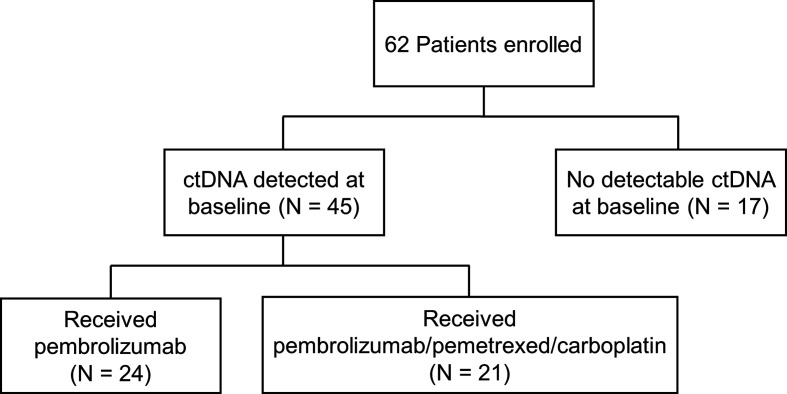
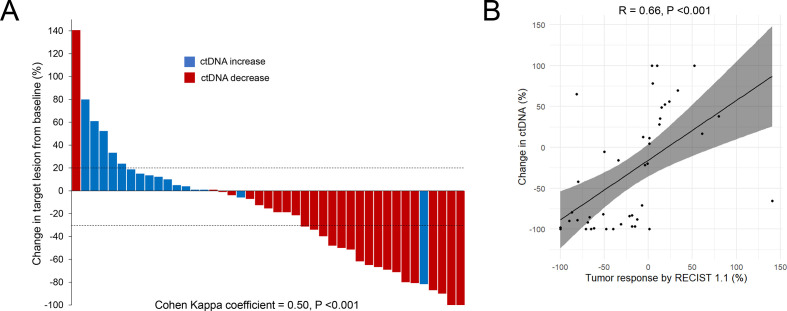
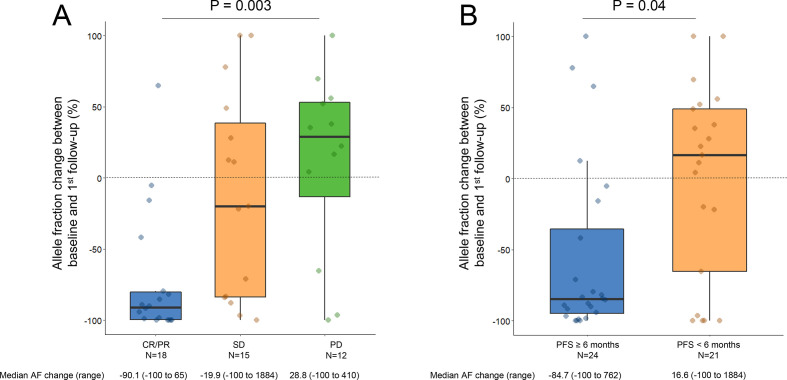
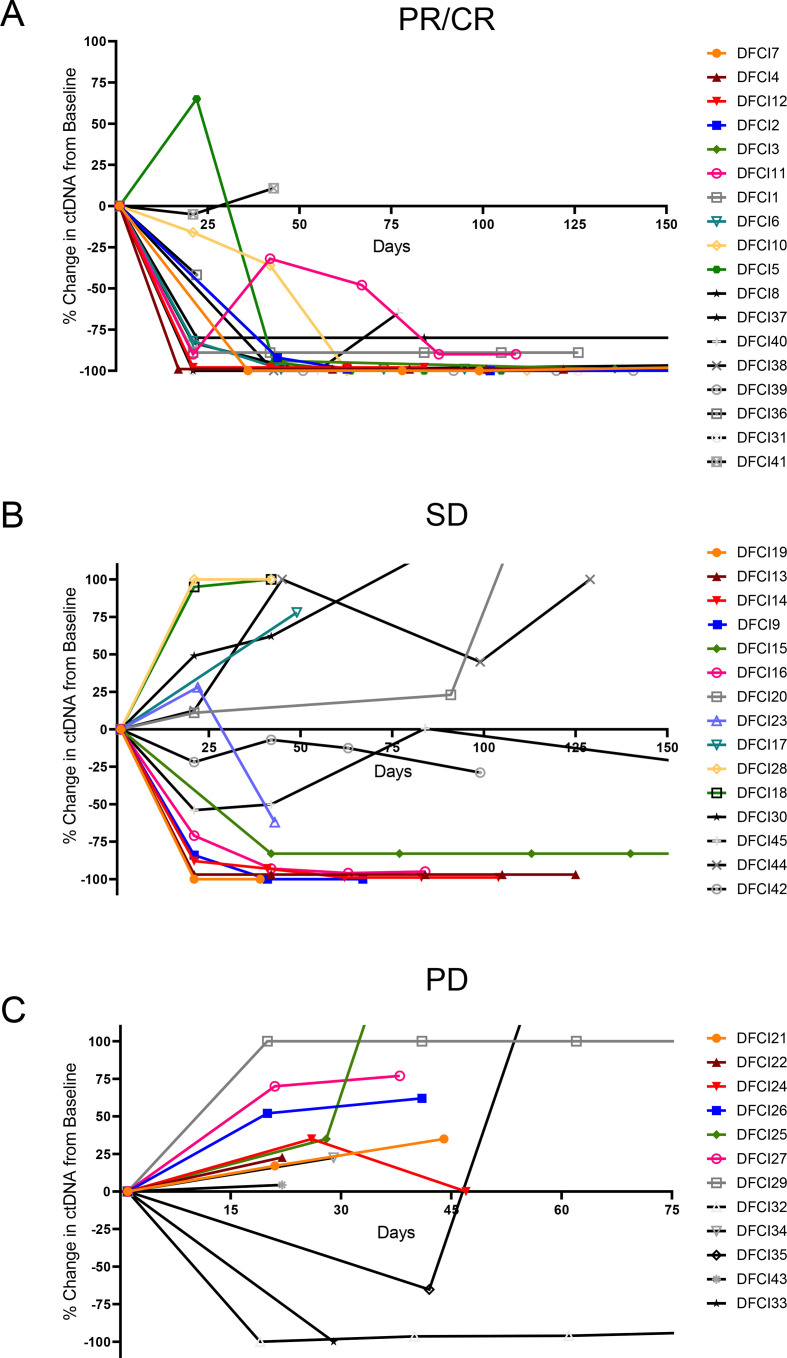
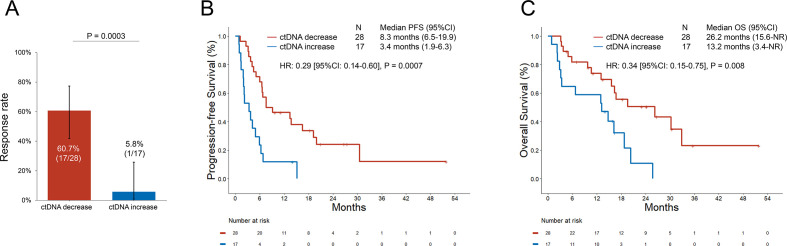
Background: Currently available biomarkers are imperfect in their ability to predict responses to the multiple first-line treatment options available for patients with advanced non-small cell lung cancer (NSCLC). Having an early pharmacodynamic marker of treatment resistance may help redirect patients onto more effective alternative therapies. We sought to determine if changes in circulating tumor DNA (ctDNA) levels after initiation of first-line pembrolizumab±chemotherapy in NSCLC would enable early prediction of response prior to radiological assessment. Methods: Plasma collected from patients with advanced NSCLC prior to and serially after starting first-line pembrolizumab±platinum doublet chemotherapy was analyzed by next-generation sequencing using enhanced tagged-amplicon sequencing of hotspots and coding regions from 36 genes. Early change in ctDNA allele fraction (AF) was correlated with radiographic responses and long-term clinical outcomes. Results: Among 62 patients who received first-line pembrolizumab±platinum/pemetrexed and underwent ctDNA assessment, 45 had detectable ctDNA alterations at baseline. The median change in AF at the first follow-up (at a median of 21 days after treatment initiation) was −90.1% (range −100% to +65%) among patients who subsequently had a radiologic response (n=18), –19.9% (range: −100% to +1884%) among stable disease cases (n=15), and +28.8% (range: −100% to +410%) among progressive disease cases (n=12); p=0.003. In addition, there was a significant correlation between the percent change in ctDNA at the first follow-up and the percent change in tumor target lesions from baseline (R=0.66, p<0.001). AF decrease between the pretreatment and first on-treatment blood draw was associated with significantly higher response rate (60.7% vs 5.8%, p=0.0003), and significantly longer median progression-free survival (8.3 vs 3.4 months, HR: 0.29 (95% CI: 0.14 to 0.60), p=0.0007) and median overall survival (26.2 vs 13.2 months, HR: 0.34 (95% CI: 0.15 to 0.75), p=0.008) compared with cases with an AF increase. Conclusion: In patients with advanced NSCLC, rapid decreases in ctDNA prior to radiological assessment correlated with clinical benefit. These results suggest a potential role for ctDNA as an early pharmacodynamic biomarker of response or resistance to immunotherapies.
Overview
The claims and statistics of this paper haven’t been checked yet.
Run the check — free, no account needed. It reads the open-access text and checks the sources it cites.
Integrity signals
Registry
Cites
Statistics
Figures
Verification
Claims the paper makes
The claims and statistics of this paper haven’t been checked yet.
Run the check — free, no account needed. It reads the open-access text and checks the sources it cites.
Claims other papers make about this one
Each is checked against this paper’s own text: does it say what the citing paper says it does?
In the citing paper
“recent data suggests that serial analyses may have clinical value as clearance of ctDNA among patients undergoing systemic chemo- or immunotherapy correlate with progression-free and overall survival.13–17”
From Early Changes in Circulating Cell-Free KRAS G12C Predict Response to Adagrasib in KRAS Mutant Non–Small Cell Lung Cancer Patients (2023) · cites this paper as [15]
Self-check
Percentages, sums and reported differences re-computed from the paper’s own numbers.
The self-check needs the paper’s full text.
Citations
Cites
PD-1 and PD-L1 Immune Checkpoint Blockade to Treat Breast Cancer
Hartkopf, A. D., Taran, F., Wallwiener, M., Walter, C. B., Krämer, B., Grischke, E., & Brucker, S. Y. (2016) · Breast Care · doi:10.1159/000453569 · Cited by 30,989
Adverse Renal Effects of Immune Checkpoint Inhibitors: A Narrative Review
Wanchoo, R., Karam, S., Uppal, N. N., Barta, V. S., Deray, G., Devoe, C., Launay‐Vacher, V., Jhaveri, K. D., & on behalf of Cancer and Kidney International Network Workgroup on Immune Checkpoint Inhibitors (2017) · American Journal of Nephrology · doi:10.1159/000455014 · Cited by 15,320
Pembrolizumab versus Chemotherapy for PD-L1-Positive Non-Small-Cell Lung Cancer
Reck, M., Rodríguez-Abreu, D., Robinson, A. G., Hui, R., Csőszi, T., Fülöp, A., Gottfried, M., Peled, N., Tafreshi, A., Cuffe, S., et al. (2016) · New England Journal of Medicine · doi:10.1056/nejmoa1606774 · Cited by 10,089
Combined Nivolumab and Ipilimumab or Monotherapy in Untreated Melanoma
Larkin, J., Chiarion-Sileni, V., Gonzalez, R., Grob, J. J., Cowey, C. L., Lao, C. D., Schadendorf, D., Dummer, R., Smylie, M., Rutkowski, P., et al. (2015) · New England Journal of Medicine · doi:10.1056/nejmoa1504030 · Cited by 8,157
Mutational landscape determines sensitivity to PD-1 blockade in non–small cell lung cancer
Rizvi, N. A., Hellmann, M. D., Snyder, A., Kvistborg, P., Makarov, V., Havel, J. J., Lee, W., Yuan, J., Wong, P., Ho, T. S., et al. (2015) · Science · doi:10.1126/science.aaa1348 · Cited by 7,802
Pembrolizumab plus chemotherapy in metastatic non–small-cell lung cancer
Gandhi, L., Rodríguez-Abreu, D., Gadgeel, S., Esteban, E., Felip, E., De Angelis, F., Domine, M., Clingan, P., Hochmair, M. J., Powell, S. F., et al. (2018) · New England Journal of Medicine · doi:10.1056/nejmoa1801005 · Cited by 6,607
Overall Survival with Combined Nivolumab and Ipilimumab in Advanced Melanoma
Wolchok, J. D., Chiarion-Sileni, V., Gonzalez, R., Rutkowski, P., Grob, J.-J., Cowey, C. L., Lao, C. D., Wagstaff, J., Schadendorf, D., Ferrucci, P. F., et al. (2017) · New England Journal of Medicine · doi:10.1056/nejmoa1709684 · Cited by 5,357
Five-Year Survival with Combined Nivolumab and Ipilimumab in Advanced Melanoma
Larkin, J., Chiarion-Sileni, V., Gonzalez, R., Grob, J.-J., Rutkowski, P., Lao, C. D., Cowey, C. L., Schadendorf, D., Wagstaff, J., Dummer, R., et al. (2019) · New England Journal of Medicine · doi:10.1056/nejmoa1910836 · Cited by 3,723
Mok, T. S. K., Wu, Y.-L. L. C., Kudaba, I., Kowalski, D. M., Cho, B. C., Turna, H. Z., de Castro, G., Srimuninnimit, V., Лактионов, К. К., Bondarenko, I., et al. (2019) · The Lancet · doi:10.1016/s0140-6736(18)32409-7 · Cited by 3,357
Nivolumab plus ipilimumab in lung cancer with a high tumor mutational burden
Hellmann, M. D., Ciuleanu, T.-E., Pluzanski, A., Lee, J. S., Otterson, G. A., Audigier-Valette, C., Minenza, E., Linardou, H., Burgers, S., Salman, P., et al. (2018) · New England Journal of Medicine · doi:10.1056/nejmoa1801946 · Cited by 3,063
Cited by
Sorted by citations
Items 101–161 of 161
What is the ideal endpoint in early-stage immunotherapy neoadjuvant trials in lung cancer?
Cameron, R. B., Hines, J. B., Torri, V., Porcu, L., Donington, J. S., Bestvina, C. M., Vokes, E. E., Dolezal, J. M., Esposito, A., & Garassino, M. C. (2023) · Therapeutic Advances in Medical Oncology · doi:10.1177/17588359231198446 · Cited by 6
Wang, K. (2024) · American Journal of Cancer Research · doi:10.62347/ifrh7248 · Cited by 5
Monette, A., Aguilar‐Mahecha, A., Altınmakas, E., Angelos, M. G., Assad, N., Batist, G., Bommareddy, P. K., Bonilla, D. L., Borchers, C. H., Church, S., et al. (2025) · Clinical Cancer Research · doi:10.1158/1078-0432.ccr-24-3791 · Cited by 7
Kashyap, S., Shukla, A. K., Naim, I., & Pal, S. (2025) · Biomedical Materials & Devices · doi:10.1007/s44174-025-00335-z · Cited by 5
The histone-modified landscape: Core mechanisms of osimertinib resistance in EGFR-mutant lung cancer
Yang, J., Zhang, M., Gao, C., Yao, X., Sun, C., & Zhuang, J. (2026) · Cancer Letters · doi:10.1016/j.canlet.2026.218321 · Cited by 7
Soleymani, S., Naghib, S. M., & Mozafari, M. R. (2024) · Current Pharmaceutical Design · doi:10.2174/0113816128328459241009191933 · Cited by 5
Lupini, L., Roncarati, R., Belluomini, L., Lancia, F., Bassi, C., D’Abundo, L., Michilli, A., Guerriero, P., Fasano, A., Tiberi, E., et al. (2022) · International Journal of Molecular Sciences · doi:10.3390/ijms23158546 · Cited by 5
Emerging Biomarkers in Immune Oncology to Guide Lung Cancer Management
Safa, H., Rous, F. A., Belani, N., Borghaei, H., Gadgeel, S. M., & Halmos, B. (2022) · Targeted Oncology · doi:10.1007/s11523-022-00937-3 · Cited by 6
Liu, S. M., Sun, H., Zhou, J., Zhang, J., Yin, K., Chen, Z., Su, J., Zhang, X., Yang, J., Zhou, Q. H., et al. (2021) · Translational Oncology · doi:10.1016/j.tranon.2021.101254 · Cited by 5
Liu, J., Ren, Q., Cai, Y., Chen, D., Wu, X., & Xu, W. (2025) · Frontiers in Immunology · doi:10.3389/fimmu.2025.1704226 · Cited by 4
Guardamagna, M., Zamorano, E., Albarrán-Artahona, V., Mesas, A., & Benítez, J. C. (2025) · Cancers · doi:10.3390/cancers17132244 · Cited by 5
Cao, P., & Yang, X.-J. (2025) · Cancer Medicine · doi:10.1002/cam4.71251 · Cited by 4
Prognostic impact of early ctDNA dynamics during chemotherapy of metastatic cancer
Faaborg, L., Andersen, R. F., Wen, S. W. C., Thomsen, C. B., Raunkilde, L., Hansen, T. F., Jensen, L. H., Steffensen, K. D., & Jakobsen, A. K. M. (2023) · Future Oncology · doi:10.2217/fon-2023-0111 · Cited by 4
Computational Modeling for Circulating Cell-Free DNA in Clinical Oncology
Phuong, L. N., Salas, S., & Benzekry, S. (2025) · JCO Clinical Cancer Informatics · doi:10.1200/cci-24-00224 · Cited by 4
Gelmini, S., Calabri, A., Mancini, I., Comin, C., Pasini, V., Banini, M., Scotti, V., & Pinzani, P. (2025) · International Journal of Molecular Sciences · doi:10.3390/ijms26020611 · Cited by 4
Ji, J., Zhang, C., Peng, L., & Jiao, W. (2022) · PubMed Central · doi:10.3779/j.issn.1009-3419.2022.101.01 · Cited by 4
Decoding circulating tumor DNA to identify durable benefit from immunotherapy in lung cancer.
Donker, H., Schuuring, E., Heitzer, E., & Groen, H. (2022) · Lung Cancer · doi:10.1016/j.lungcan.2022.05.013 · Cited by 4
Yao, G., Yuan, J., Duan, Q., Tan, Y., Zhang, Q., Chen, D., & Chen, J. (2023) · Investigational New Drugs · doi:10.1007/s10637-023-01406-y · Cited by 4
Using circulating tumor DNA as a novel biomarker of efficacy for dose-finding designs in oncology
Chen, X., Mozgunov, P., Baird, R. D., & Jaki, T. (2025) · Statistical Methods in Medical Research · doi:10.1177/09622802251350457 · Cited by 3
Andersen, M. E., Nyhus, C. H., Szejniuk, W. M., Wahlstrøm, S., Timm, S., Pallisgaard, N., Madsen, M. G., Mikkelsen, M. D., Ahlborn, L. B., Gehl, J., et al. (2026) · BMJ Open · doi:10.1136/bmjopen-2025-100311 · Cited by 3
Circulating Tumor DNA as a Biomarker in Pancreatic Cancer: Clinical Applications and Challenges
Yao, G., Zhang, Y., Li, H., Teng, L., Man, Y., Wang, S., Liu, C., Fan, Y., & Chen, D. (2026) · Clinical and Translational Gastroenterology · doi:10.14309/ctg.0000000000000999 · Cited by 3
Andersen, M. E., Hedegaard, E. M., Wen, S. W. C., Callesen, L. B., Szejniuk, W. M., Ladekarl, M. B., Timm, S., Spindler, K. G., & Frank, M. S. (2026) · Critical Reviews in Oncology/Hematology · doi:10.1016/j.critrevonc.2026.105226 · Cited by 3
Circulating Tumor DNA and [18F]FDG-PET for Early Response Assessment in Patients with Advanced NSCLC
Ryssel, H., Ahlborn, L., Dejanovic, D., Keller, S. H., Pøhl, M., Østrup, O., Loft, A., Fischer, B. M., Langer, S., Kjaer, A., et al. (2025) · Diagnostics · doi:10.3390/diagnostics15030247 · Cited by 3
Giglio, A. D., Zacchini, F., Venturi, G., Federico, A. D., Parisi, C., Dall’Olio, F. G., Ricciotti, I., Favorito, V., Gagliano, A., de Biase, D., et al. (2024) · The Journal of Liquid Biopsy · doi:10.1016/j.jlb.2024.100161 · Cited by 3
Schuurbiers, M. M. F., van Delft, F. A., Koffijberg, H., IJzerman, M. J., Monkhorst, K., Ligtenberg, M. J. L., van den Broek, D., van Rossum, H. H., & van den Heuvel, M. M. (2025) · Tumor Biology · doi:10.1177/14230380251316788 · Cited by 4
Circulating tumor DNA: a biomarker for oncology drug development in phase I clinical trials?
Asnaghi, R., Marsicano, R. M., Fuorivia, V., Malvezzi, G., Etessami, J. D., Izzo, D., Valenza, C., Curigliano, G., & Trapani, D. (2025) · Expert Review of Molecular Diagnostics · doi:10.1080/14737159.2025.2531065 · Cited by 2
Bonato, A., Parisi, C., Cascetta, P., Reni, A., Meyer, M., Riudavets, M., Planchard, D., Besse, B., Remón, J., Facchinetti, F., et al. (2025) · JTO Clinical and Research Reports · doi:10.1016/j.jtocrr.2025.100928 · Cited by 2
Teixeira, M. F., Fahmy, N., & Kasi, P. M. (2026) · Surgical Oncology Clinics of North America · doi:10.1016/j.soc.2025.12.010 · Cited by 2
Zhang, P., Zhao, W., Ma, J., Li, Y., Peng, H., & Jiang, J. (2026) · Frontiers in Immunology · doi:10.3389/fimmu.2026.1787310 · Cited by 2
Kakouri, A. C., Spiliotaki, M., Deltas, C. C., Papagregoriou, G., & Charalambous, H. (2026) · International Journal of Molecular Sciences · doi:10.3390/ijms27125518 · Cited by 2
Longitudinal methylated ctDNA increases predict immunotherapy progression across solid tumors
Anees, M., Wagner, P. L., Omstead, A. N., Grayhack, E. E., Sherry, C., McDaniel, L., Varga, M. G., Hosseiny, S. M. H., LaFramboise, W., Nakayama, J., et al. (2026) · The Journal of Liquid Biopsy · doi:10.1016/j.jlb.2026.100477 · Cited by 2
Strati, A. D., Zavridou, M., Papavassiliou, K. A., & Papavassiliou, A. G. (2025) · International Journal of Molecular Sciences · doi:10.3390/ijms262311304 · Cited by 2
Shih, Y.-J., Chen, J.-H., Yeh, L.-R., Lin, C.-Y., Huang, S., & Yang, C.-Y. (2025) · Medical Oncology · doi:10.1007/s12032-025-03115-3 · Cited by 1
Fei, K., Zhao, J., Xu, J., Duan, J., Li, C., Xie, W., Zhong, J., Wang, G., Xu, Y., Sun, B., et al. (2025) · Advanced Science · doi:10.1002/advs.202506565 · Cited by 1
Felip, E., Kuo, P., Garrido, P., CHOUAID, C., Mountzios, G., Tiseo, M., Daniel, D. B., Zavodovskaya, M., Tang, S., Su-Feher, L., et al. (2026) · Cancer Research Communications · doi:10.1158/2767-9764.crc-26-0070 · Cited by 1
Öner, E., Saini, V. M., Cahill, C., O’Toole, H., Li, J. W., Gately, K. A., & Anagnostou, V. (2026) · Frontiers in Oncology · doi:10.3389/fonc.2026.1806868 · Cited by 1
Remón, J., Lopez, A., Planchard, D., & Besse, B. (2023) · European Journal of Cancer · doi:10.1016/j.ejca.2023.113369 · Cited by 1
Swain, S., Jayasingh, S. K., Patra, K. J., & Tripathy, A. R. (2024) · International Conference on Intelligent Computing and Sustainable Innovations in Technology (IC-SIT) · doi:10.1109/ic-sit63503.2024.10862749 · Cited by 1
Potential of circulating tumor DNA to refine immunotherapy
Lee, R. J., & Luke, J. J. (2023) · Cancer · doi:10.1002/cncr.34714 · Cited by 1
García-Pardo, M., & Garrido, P. (2024) · Translational Lung Cancer Research · doi:10.21037/tlcr-23-838 · Cited by 1
Ruiz‐Torres, D. A., Merkin, R. D., Bryan, M. E., Mendel, J., Efthymiou, V., Roberts, T. J., Patel, M. J., Park, J. C., Chevalier, A., Murray, C., et al. (2025) · medRxiv · doi:10.1101/2025.01.27.25321198 · Cited by 1
Cheng, L., Gao, G., Zhao, C., Wang, H., Yao, C. L., Yu, H., Yao, J., Li, F., Guo, L., Jian, Q., et al. (2022) · Research Square · doi:10.21203/rs.3.rs-2357859/v1
Clinical Potential of Liquid Biopsy
Tada, H., & Chikamatsu, K. (2023) · Nippon Jibiinkoka Tokeibugeka Gakkai Kaiho(Tokyo) · doi:10.3950/jibiinkotokeibu.126.8_1005
Vers une dé-escalade des traitements par immunothérapie des CBNPC avancés : pourquoi, comment ?
Ben-Ammar, I., Remón, J., & Besse, B. (2023) · Revue des Maladies Respiratoires Actualités · doi:10.1016/s1877-1203(23)00148-9
Circulating Tumor DNA Liquid Biopsy in Patients with Non-Small Cell Lung Cancer
Короткевич, П. Е., Смирнов, С. Ю., Медведь, А. В., Пивоварчик, С. Н., Субоч, Е. И., Малькевич, В. Т., & Портянко, А. С. (2023) · Евразийский онкологический журнал · doi:10.34883/pi.2023.11.3.017
[Advances in Pseudoprogression of Immune Checkpoint Inhibitors in Non-small Cell Lung Cancer].
Tong, Y., Long, Y., Zhang, F., & Li, J. (2024) · PubMed Central · doi:10.3779/j.issn.1009-3419.2024.101.10
Li, Q., Vittorio Cristini, C., Gupta, A. K., Achour, I., Barrett, J. C., & Koay, E. J. (2024) · JCO Clinical Cancer Informatics · doi:10.1200/cci.23.00254
THE ROLE OF PROGNOSTIC AND PREDICTIVE MARKERS IN TREATMENT OF NON-SMALL CELL LUNG CANCER
Krasavina, M. A., & Moiseenko, F. V. (2024) · Practical oncology · doi:10.31917/2502145
Pacey, S., Linossi, C., Azizi, A. A., Dayimu, A., Machin, A., Demiris, N., Miremadi, A., O’Donovan, M., Mennea, P. D., Zhou, Z., et al. (2024) · Research Square · doi:10.21203/rs.3.rs-5209969/v1
Mou, Y.-H., Zhang, J., Shen, H., Yu, J., Han, L., Li, H., & Li, Q. (2025) · World Journal of Gastrointestinal Oncology · doi:10.4251/wjgo.v17.i3.102804
KRAS Mutations in Circulating Tumor DNA for Lung Cancer Diagnosis: A Comprehensive Meta-Analysis
Buszka, K., Gąsiorowski, Ł., Dompé, C., Szulta, A., Nowicki, M. P., Kolecka-Bednarczyk, A., & Budna-Tukan, J. (2026) · Cancers · doi:10.3390/cancers18020250
Biomarkers of Immunotherapy Response in Surgical Oncology
Bae, J., & Cohen, S. (2026) · Surgical Oncology Clinics of North America · doi:10.1016/j.soc.2025.12.011
From slides to signatures: pathological determinants of immunotherapy response in lung cancer
Attia, O. M. (2025) · Asia-Pacific Journal of Oncology · doi:10.32948/ajo.2025.11.15
Miller, H. A., Fischer, A. G., Egger, M. E., Yaddanapudi, K., Kong, M., Hall, M. B., & Linder, M. W. (2026) · Molecular Diagnosis & Therapy · doi:10.1007/s40291-026-00840-x
Emerging Technologies and Approaches
Ghosh, S., Kumar, S., & Ghosh, M. K. (2026) · Springer eBooks · doi:10.1007/978-981-95-6845-1_21
Hu, N., Wang, Z., Liu, M., Guo, D., Jiang, C., Chen, Y., Zhang, Z., Bai, M., Cheng, B., Hsu, J. C., et al. (2026) · Frontiers in Immunology · doi:10.3389/fimmu.2026.1780459
Leporati, R., Callegari, V., Ancora, A., Palmieri, M., Riccò, B., Cabitza, E., Trudu, L., Emidio, K. D., Chiavelli, C., Eccher, A., et al. (2026) · Cytopathology · doi:10.1111/cyt.70094
Wang, Y., Wu, S., Wei, Y. L., Fan, S., Xu, Z., Li, D., Teng, Z., & Wang, J. (2026) · Frontiers in Immunology · doi:10.3389/fimmu.2026.1812209
Tan, L., Lu, D., Huang, H., Lin, D., & Zheng, D. (2026) · Frontiers in Molecular Biosciences · doi:10.3389/fmolb.2026.1811387
Li, Y., Lu, G., Song, W., Lu, J., Liu, X., & Cui, J. (2026) · Frontiers in Immunology · doi:10.3389/fimmu.2026.1911583
Liquid biopsy: current applications and future directions
Zhao, Y., Zhang, M., Zhang, Y., Bu, J., Liu, Z., Wang, C., Wang, L., Li, X., Liu, X., Wang, W., et al. (2026) · Molecular Biomedicine · doi:10.1186/s43556-026-00533-1
Metadata
- Authors
- Ricciuti, B., Jones, G., Severgnini, M., Alessi, J. V., Recondo, G., Lawrence, M., Forshew, T., Lydon, C., Nishino, M., Cheng, M., & Awad, M.
- Affiliations
- Dana-Farber Cancer Institute (US)
- Inivata, Research Triangle Park, North Carolina, USA
- Brigham and Women's Hospital (US)
- Corresponding author
- Awad, Mark
- ORCID
- Venue
- Journal for ImmunoTherapy of Cancer
- Publisher
- BMJ
- Published
- 2021-03
- Volume
- 9
- Issue
- 3
- Pages
- e001504
- ISSN
- 2051-1426 (ISSN-L)
- PMC
- PMC7996662
- OpenAlex
- W3139130539
- Cited by
- 161
- References
- 30
- Citations by year
- 2026: 24 · 2025: 33 · 2024: 32 · 2023: 36 · 2022: 27 · 2021: 9
- FWCI
- 16.82
- Type
- journal article
- Language
- en
- Open access
- gold
- doi.org
- Licence
- Locations
- Journal for ImmunoTherapy of Cancer (publishedVersion, cc-by-nc)
- PubMed Central (publishedVersion, cc-by-nc)
- PubMed (publishedVersion)
- DOAJ (DOAJ: Directory of Open Access Journals) (submittedVersion, cc-by-sa)
- Funders
- National Cancer Institute (R01CA203636)
- Topics
- Health Sciences › Medicine › Pulmonary and Respiratory Medicine › Lung Cancer Treatments and Mutations
- Life Sciences › Biochemistry, Genetics and Molecular Biology › Cancer Research › Cancer Genomics and Diagnostics
- Health Sciences › Medicine › Pulmonary and Respiratory Medicine › Lung Cancer Diagnosis and Treatment
- Keywords
- circulating tumor DNA, liquid biopsy, pembrolizumab, non-small cell lung cancer, first-line immunotherapy, predictive biomarkers, pharmacodynamic biomarkers, treatment response prediction, platinum-based chemotherapy, pemetrexed, progression-free survival, overall survival, treatment resistance, immune checkpoint inhibitors, tumor mutational burden, PD-L1
- MeSH terms
- Circulating Tumor DNA, Progression-Free Survival, Immune Checkpoint Inhibitors, Adult, Aged, Aged, 80 and over, Antineoplastic Combined Chemotherapy Protocols, Carcinoma, Non-Small-Cell Lung, Female, Humans, Lung Neoplasms, Male, Middle Aged, Predictive Value of Tests, Retrospective Studies, Time Factors, Biomarkers, Tumor, Disease Progression, Early Diagnosis, Antibodies, Monoclonal, Humanized
About these checks
Registry, retraction, Cites and statistics results are computed, not judged, with one exception: a printed reference that no index lists is read once by a model before it counts as a citation error. Claims are extracted by a model and kept only when their quote appears verbatim in the text; each cited source is then checked, with a model’s help, for whether it says what the claim relies on. Those verdicts can be wrong — read the claim’s quote and the cited source before relying on one.
Statistics and arithmetic are recomputed, not judged.
Confidence bands are shown only for fields calibrated on our annotated test set. None is calibrated yet, so no band is shown.
What counts as a claim ›How we measure confidence ›How we check this ›
Are you an author, or do you see a problem with this page? Request a review
