

Global economic cost of smoking-attributable diseases
Open accessThe DOI matches its Crossref record; 46 of the 46 references it cites were found in a registry or an index.
Abstract
Background: The detrimental impact of smoking on health has been widely documented since the 1960s. Numerous studies have also quantified the economic cost that smoking imposes on society. However, these studies have mostly been in high income countries, with limited documentation from developing countries. The aim of this paper is to measure the economic cost of smoking-attributable diseases in countries throughout the world, including in low- and middle-income settings. Methods: The Cost of Illness approach is used to estimate the economic cost of smoking attributable-diseases in 2012. Under this approach, economic costs are defined as either ‘direct costs' such as hospital fees or ‘indirect costs’ representing the productivity loss from morbidity and mortality. The same method was applied to 152 countries, which had all the necessary data, representing 97% of the world's smokers. Findings: The amount of healthcare expenditure due to smoking-attributable diseases totalled purchasing power parity (PPP) $467 billion (US$422 billion) in 2012, or 5.7% of global health expenditure. The total economic cost of smoking (from health expenditures and productivity losses together) totalled PPP $1852 billion (US$1436 billion) in 2012, equivalent in magnitude to 1.8% of the world's annual gross domestic product (GDP). Almost 40% of this cost occurred in developing countries, highlighting the substantial burden these countries suffer. Conclusions: Smoking imposes a heavy economic burden throughout the world, particularly in Europe and North America, where the tobacco epidemic is most advanced. These findings highlight the urgent need for countries to implement stronger tobacco control measures to address these costs.
Overview
The claims and statistics of this paper haven’t been checked yet.
Free: it reads the open-access text and checks the first 5 claims that cite a source we can check. Create a free account to check every claim.
Integrity signals
Registry
Cites
Statistics
Figures
Verification
Claims the paper makes
The claims and statistics of this paper haven’t been checked yet.
Free: it reads the open-access text and checks the first 5 claims that cite a source we can check. Create a free account to check every claim.
Claims other papers make about this one
Each is checked against this paper’s own text: does it say what the citing paper says it does?
The cited source doesn’t support the claim as written.
In the citing paper
“representing up to 1•5% of the gross domestic product of individual countries”
From The health and economic burden of smoking in 12 Latin American countries and the potential effect of increasing tobacco taxes: an economic modelling study. (2020) · cites this paper as [4]
Checked by a reasoning model — may be wrong.
Experimental — accuracy not yet measuredThe source backs part of the claim, not all of it — or backs it for a different population, condition or comparison.
In the citing paper
“smoking-related diseases cause a substantial economic burden on individuals and health systems, which can be up to US$500 billion globally per year”
From The health and economic burden of smoking in 12 Latin American countries and the potential effect of increasing tobacco taxes: an economic modelling study. (2020) · cites this paper as [4]
Experimental — accuracy not yet measuredThe source backs part of the claim, not all of it — or backs it for a different population, condition or comparison.
In the citing paper
“and up to 15% of all national health expenditures.”
From The health and economic burden of smoking in 12 Latin American countries and the potential effect of increasing tobacco taxes: an economic modelling study. (2020) · cites this paper as [4]
Experimental — accuracy not yet measuredThe source backs part of the claim, not all of it — or backs it for a different population, condition or comparison.
In the citing paper
“Our findings are consistent with previous studies in terms of both the estimation of the overall burden of tobacco and the potential reduction of this burden through taxation.”
From The health and economic burden of smoking in 12 Latin American countries and the potential effect of increasing tobacco taxes: an economic modelling study. (2020) · cites this paper as [4]
Experimental — accuracy not yet measuredThe cited source says what the claim attributes to it.
In the citing paper
“Previous studies have estimated that health-care expenditures due to smokingattributable diseases totalled 5•7% of global health expenditures in 2012.4”
3 more claims about this paper
Create a free account to see every claim other papers make about this one.
Self-check
Percentages, sums and reported differences re-computed from the paper’s own numbers.
The self-check needs the paper’s full text.
Citations
Cites
Transforming Our World: The 2030 Agenda for Sustainable Development
(2018) · A New Era in Global Health · doi:10.1891/9780826190123.ap02 · Cited by 19,351
Murray, C. J., & Lopez, A. D. (1997) · The Lancet · doi:10.1016/s0140-6736(96)07492-2 · Cited by 7,007
The Purchasing Power Parity Puzzle
Rogoff, K. (1996) · Journal of Economic Literature · Cited by 3,767
The value of a statistical life: A critical review of market estimates throughout the world
Viscusi, W. K., & Aldy, J. E. (2003) · Journal of Risk and Uncertainty · doi:10.1023/a:1025598106257 · Cited by 2,135
Öberg, M., Jaakkola, M. S., Woodward, A., Peruga, A., & Prüss-Ustün, A. (2011) · The Lancet · doi:10.1016/s0140-6736(10)61388-8 · Cited by 1,939
Mortality from tobacco in developed countries: indirect estimation from national vital statistics.
Peto, R., Boreham, J., Lopez, A. D., Thun, M., & Heath, C. (1992) · The Lancet · doi:10.1016/0140-6736(92)91600-d · Cited by 1,394
Shibuya, K., Ciecierski, C., Guindon, E., Bettcher, D. W., Evans, D. B., & Murray, C. J. L. (2003) · BMJ · doi:10.1136/bmj.327.7407.154 · Cited by 1,239
The health consequences of smoking. A report to the Surgeon General: 1971.
Welfare., E. (1971) · Cited by 1,195
The friction cost method for measuring indirect costs of disease
Koopmanschap, M. A., Rutten, F. F. H., van Ineveld, B. M., & van Roijen, L. (1995) · Journal of Health Economics · doi:10.1016/0167-6296(94)00044-5 · Cited by 1,137
Research works printed but not linked: 1
- Guindon E , Tobin P , Lim M , et al . The costs attributable to tobacco use: a critical review of the literature. Geneva: World Health Organization, 2007.
Cited by
Items 301–400 of 688
Wang, Y., van Boven, J. F. M., Bos, J., Schuiling‐Veninga, C. C. M., Boezen, H. M., Wilffert, B., & Hak, E. (2021) · Pharmacoepidemiology and Drug Safety · doi:10.1002/pds.5351 · Cited by 5
“Smoking-related health problems are associated with a high burden for both family and society.(3) To help halt this burden, varenicline as a first-line pharmacological smoking cessation treatment (PSCT) was approved by the US Food and Drug Administration (FDA) in 2006.”
BackgroundJiang, X., Jackson, L., Syed, M. A., Avşar, T. S., & Abdali, Z. (2022) · Addiction · doi:10.1111/add.15821 · Cited by 7
González‐Rozada, M., Prieto-Lara, E., & Sandoval, G. A. (2022) · Revista Panamericana de Salud Pública · doi:10.26633/rpsp.2022.146 · Cited by 7
“8% of the world’s annual gross domestic product (GDP) in 2021 (3).”
BackgroundGambaryan, M. G., Васильевна, К. А., & Drapkina, O. M. (2023) · International Journal of Environmental Research and Public Health · doi:10.3390/ijerph20105893 · Cited by 6
“Smoking is known as a risk factor for many cardiovascular and respiratory diseases: active and passive smoking increase morbidity and premature mortality from lung cancer, acute coronary syndrome and respiratory diseases [1,2].”
BackgroundSmoking: an avoidable health disaster explained
Hodson, R. (2023) · Nature · doi:10.1038/d41586-023-01837-w · Cited by 8
Meyer, Z., Unger, J. B., & Zheng, Y. (2024) · Journal of Adolescence · doi:10.1002/jad.12314 · Cited by 6
Adverse childhood experiences and smoking status in children: A systematic review and meta‐analysis
Amiri, S., Taridashti, S., & Khan, M. A. (2024) · Child Abuse Review · doi:10.1002/car.2882 · Cited by 7
Nolan, M. B., Kemper, K. E., Glynn, T. J., Hurt, R. D., & Hays, J. T. (2018) · Journal of Environmental and Public Health · doi:10.1155/2018/8429738 · Cited by 6
Abufarhaneh, M., Ehlers, S. L., Burns, L. J., & Hashmi, S. K. (2019) · Bone Marrow Transplantation · doi:10.1038/s41409-019-0485-5 · Cited by 8
Lewin, N. L., Karlsson, J., Robinsson, D., Fagerberg, M., Kentsson, M., Sayardoust, S., Nilsson, M., Shamoun, L., Andersson, B., Löfgren, S., et al. (2021) · PLoS ONE · doi:10.1371/journal.pone.0243084 · Cited by 7
“It is assumed that about 50% of all tobacco smokers will die from smoking and 60% of all deaths caused by cigarette smoke are in cancer or CAD [7, 8].”
BackgroundSustained decline in tobacco purchasing in Denmark during the COVID-19 pandemic
Fosgaard, T. R., Pizzo, A., & Sadoff, S. (2022) · Communications Medicine · doi:10.1038/s43856-022-00160-1 · Cited by 6
Jones, M., Lowin, J., Sewell, B., Gemine, R. E., Rees, S. E., Lanyon, K., & Lewis, K. E. (2023) · Value in Health · doi:10.1016/j.jval.2023.03.2429 · Cited by 6
Sapunova, I. D., Васильевна, К. А., Myrzamatova, A. О., Mukaneeva, D. K., Khudyakov, M. B., Ipatov, P. V., & Drapkina, O. M. (2019) · CARDIOVASCULAR THERAPY AND PREVENTION · doi:10.15829/1728-8800-2019-6-6-12 · Cited by 6
Moreno, A. C. R., Nai, G. A., Laurindo, C. P., Gregorio, K. C. R., Olean‐Oliveira, T., Teixeira, M. F. S., & Seraphim, P. M. (2020) · PLoS ONE · doi:10.1371/journal.pone.0236988 · Cited by 8
“Smoking is a preventable disease responsible for a large number of deaths worldwide and approximately 6 million deaths per year [1].”
BackgroundPENGARUH STATUS MEROKOK TERHADAP KEMAMPUAN KOGNITIF SESEORANG
Mahardhika, D. W., Cindyagita, Z. I., Akbar, M. T., & Sihaloho, E. D. (2025) · Jurnal Ekonomi dan Pembangunan · doi:10.14203/jep.28.2.2020.117-129 · Cited by 8
Zamagni, G., Concina, F., Pani, P., Gorini, G., Asta, F., Mastrobattista, L., Timelli, L., Spizzichino, L., Carletti, C. V., Ronfani, L., et al. (2025) · European Journal of Public Health · doi:10.1093/eurpub/ckaf126 · Cited by 7
Assessing sustainability effects of tobacco use and control in global supply chains
Yu, B., Pan, Y., Meng, J., Wu, H., Sun, Z., Du, C., Shuai, C., Chen, N., Wang, K., & Xu, Z. (2025) · Nature Communications · doi:10.1038/s41467-025-67755-9 · Cited by 7
“The total economic cost of tobacco use was estimated at US$1436 billion in 2012, equivalent to 1.8% of the global GDP 33 .”
InfluentialKuo, C., Chen, C., Wu, C., Chen, C., Guo, F., & Yang, S. (2022) · Addiction Science & Clinical Practice · doi:10.1186/s13722-022-00310-9 · Cited by 5
“7% of global healthcare expenditures in 2012 [1].”
BackgroundIbrayeva, A., Едигеевич, Ш. М., Aipov, R., Katarbayev, A., Tanabayeva, S. B., & Fakhradiyev, I. R. (2025) · Global Epidemiology · doi:10.1016/j.gloepi.2025.100194 · Cited by 7
“These health implications not only lead to human suffering but also impose a significant economic burden, with the annual costs associated with tobacco use surpassing US$1 trillion [3].”
Zheng, R., Meng, L., He, A., & Hu, X. Y. (2025) · Tobacco Control · doi:10.1136/tc-2024-059099 · Cited by 6
Kamarajah, S. K., Jakaityte, I., Yang, S. O. Z., Kouli, O., El‐Boghdadly, K., Farley, A., Glasbey, J. C., Morton, D. G., Nirantharakumar, K., Pinkney, T. D., et al. (2025) · The Lancet Regional Health - Europe · doi:10.1016/j.lanepe.2025.101282 · Cited by 11
“6,7 As a result, tobacco control is remains cross-cutting policy and public health priority globally, with enormous potential to improve population health.”
Zhang, J., Sun, J., Xu, Y., Jing, H., Zhang, L., & Chen, W. (2025) · BMC Public Health · doi:10.1186/s12889-025-24336-1 · Cited by 6
“Over the past 30 years, tobacco use has contributed to more than 200 million deaths, imposing a great economic burden on the family and society [25, 26].”
Health versus Economic Security: An Ambivalence of Anti-Tobacco Norm Internalisation in Indonesia
Indriastuti, S., Hara, A. E., Patriadi, H. B., Trihartono, A., & Sunarko, B. S. (2022) · Journal of Human Security · doi:10.12924/johs2022.18010005 · Cited by 5
“Several journal articles such as “Tobacco Prevention and Cessation” [45], “Tobacco Control” [46] are purposively published for supporting the campaign of antitobacco control.”
BackgroundInfluentialEstimating the Health Effect of Cigarette Smoking Duration in South Africa
Mukong, A. K. (2022) · International Journal of Environmental Research and Public Health · doi:10.3390/ijerph192013005 · Cited by 6
“Specifically, cigarette smoking costs world economies over USD 1 trillion annually in health care expenditure and productivity losses [12] and kills over 7 million people yearly [13].”
BackgroundGoel, S., Kaur, J., Arora, M., Bhatt, G., Singh, R. J., Jones, A. H., Swasticharan, L., & Gupta, P. C. (2022) · International Journal of Noncommunicable Diseases · doi:10.4103/jncd.jncd_25_22 · Cited by 5
Building On Success in Tobacco Control: A Roadmap Towards Tobacco-Free Oman (Perspective Review)
Al-Kalbani, S. R., & Kavanagh, P. M. (2023) · Journal of Public Health International · doi:10.14302/issn.2641-4538.jphi-23-4635 · Cited by 5
Maspero, S., Delle, S., Kraus, L., Pogarell, O. M., Hoch, E., Bachner, J., & Lochbühler, K. (2024) · BMC Public Health · doi:10.1186/s12889-024-18104-w · Cited by 7
“Beyond its health impact, the economic burden of tobacco-related healthcare expenses and decreased productivity is substantial [7, 8].”
BackgroundHorváth, M., Pittman, B. P., O’Malley, S. S., Grutman, A. J., Khan, N., Gueorguieva, R. V., Brewer, J. A., & Garrison, K. A. (2024) · Annals of Medicine · doi:10.1080/07853890.2024.2352803 · Cited by 9
“…cause of preventable disease, disability and death worldwide and costs over $1.4 trillion annually in direct healthcare costs and lost productivity [1,2]. although 68% of individuals who smoke want to quit, only 7% achieve this annually [3], with less than one third using evidence-based treatments…”
BackgroundInfluentialSáenz-de-Miera, B., Reynales-Shigematsu, L. M., Palacios, A., Bardach, A., Casarini, A., Espínola, N., Cairoli, F. R., Alcaraz, A. O., Augustovski, F., & Pichón-Rivière, A. (2024) · Health Policy and Planning · doi:10.1093/heapol/czae068 · Cited by 7
“In sum, total tobacco-attributable costs reach MX$194.6 billion or 0.8% of GDP, of which 60% corresponds to direct costs and the remaining 40% to indirect costs.”
BackgroundInfluentialLessons learned from fostering tobacco taxes in the Americas and implications for other health taxes
Sandoval, R. C., Malik, S., Roche, M., Belausteguigoitia, I., & Morales-Zamora, G. (2022) · Revista Panamericana de Salud Pública · doi:10.26633/rpsp.2022.188 · Cited by 5
“8% of the world’s annual gross domestic product in 2012 (3).”
BackgroundTobacco use in Haiti: findings from demographic and health survey
Paul, B., Simon, D. J., Tokpovi, V. C. K., Kiragu, A., Balthazard-Accou, K., & Emmanuel, É. (2023) · BMC Public Health · doi:10.1186/s12889-023-17409-6 · Cited by 5
“Tobacco use, smoked and smokeless, is a critical global health problem with devastating consequences and adverse health, social and economic effects [1, 2].”
BackgroundLooming threat of Asian tobacco companies to global health
Lee, K., & Eckhardt, J. (2017) · The Lancet · doi:10.1016/s0140-6736(17)31223-0 · Cited by 5
Pareek, S., Traboulsi, H., Allard, B., de Souza, A. R., Eidelman, D. H., & Baglole, C. J. (2019) · Molecular Immunology · doi:10.1016/j.molimm.2019.08.011 · Cited by 5
Tobacco Taxation Incidence: Evidence From The Russian Federation
Fuchs, A., Matytsin, M., & Obukhova, O. (2018) · World Bank, Washington, DC eBooks · doi:10.1596/1813-9450-8626 · Cited by 5
Khalili, A. F., Razzaghi, S., Motlagh, B. F., Faramarzi, E., & Zeinalzadeh, A. H. (2022) · Middle East African Journal of Ophthalmology · doi:10.4103/meajo.meajo_101_22 · Cited by 4
The experiences of young adults attempting to quit e-cigarettes: A mixed-methods analysis
Merreighn, T., Veilleux, J. C., Schisler, E. D., Tabassum, M., & Dobbs, P. D. (2025) · Tobacco Prevention & Cessation · doi:10.18332/tpc/202831 · Cited by 4
“The point of convergence was at the point of analysis, allowing the themes to organize quantitative findings into meaningful sections.”
Sweis, N. J., Elfessi, Z. Z., Rubinstein, I., & Caskey, R. N. (2025) · Advances in Therapy · doi:10.1007/s12325-025-03318-0 · Cited by 5
“In addition to the well-documented health consequences, smoking imposes a substantial economic burden, not only through direct health care costs but also through lost productivity associated with tobacco-attribut-able morbidity and mortality [3].”
Mehta, V., Pardeshi, A., Rahman, R., Noor, T., & Mathur, A. S. (2026) · Tobacco Use Insights · doi:10.1177/1179173x251372804 · Cited by 4
“4,5 Late adolescence (15-19 years) and youth (15-24 years) represent periods of heightened vulnerability, marked by increased susceptibility to risk-taking behaviors and peer in fl uence, making this developmental window critical for intervention.”
Sharma, N., Nazar, G. P., Chugh, A., Chopra, M., Mdege, N. D., John, R. M., Arora, M., & Karan, A. (2022) · Nicotine & Tobacco Research · doi:10.1093/ntr/ntac230 · Cited by 4
Napirah, M. R., Vidyanto, V., Hotary, D. F., & Erwani, E. (2022) · Open Access Macedonian Journal of Medical Sciences · doi:10.3889/oamjms.2022.8269 · Cited by 4
Sharapova, S. R., Whitney, C. F., Sulentic, R. O., Pan, L., & Ahluwalia, I. B. (2023) · Tobacco Prevention & Cessation · doi:10.18332/tpc/167957 · Cited by 4
Wang, Y., Zhuo, L., Yang, S., Cheng, D., & Hu, X. (2023) · Journal of Public Health · doi:10.1007/s10389-023-02081-2 · Cited by 4
“Smokeless tobacco use and smoking are the major unfavorable factors for lip and oral cavity cancer in India, accounting for 33.2% and 20.9% of oral cancer disability-adjusted life years (DALYs), respectively (Goodchild et al. 2018).”
InfluentialDaba, C., Atamo, A., Debela, S. A., Dagne, M., Desye, B., & Gebrehiwot, M. (2024) · Frontiers in Public Health · doi:10.3389/fpubh.2024.1353033 · Cited by 4
“Beyond mortality and morbidity, the use of tobacco adds a burden to the national economy by increasing global health expenditures by about 6% and other indirect costs (9).”
BackgroundHwang, J., Jo, S., Kang, H., Cheon, E., & Cho, S. (2024) · Tobacco Induced Diseases · doi:10.18332/tid/189952 · Cited by 6
“Hence, smoking causes early death and productivity loss, inducing serious socioeconomic damage worldwide, which was estimated to be over 422 billion US $ 9 .”
BackgroundThe Economic Costs of Tobacco Related Illnesses in Kenya
Mwai, D., Gathecha, G. K., Njuguna, D., Ong’ang’o, J. R., Mwenda, V., Kiptui, D., Kendagor, A., Cheburet, S., Mohamed, S. F., Jaguga, F., et al. (2024) · Tobacco Use Insights · doi:10.1177/1179173x241272385 · Cited by 4
Ackary, S., Cabrera, P. J., Santiago, A. J., & Amul, G. G. H. (2024) · Globalization and Health · doi:10.1186/s12992-024-01072-6 · Cited by 4
“Every year, 112,000 Filipinos die from tobacco-related diseases [3] in which the smoking-attributable death rate stands at 200 per 100,000 population [4].”
BackgroundInfluentialTobacco Taxation in Latin America and the Caribbean: A Call for Tobacco Tax Reform
OECD (2024) · OECD eBooks · doi:10.1787/080cd662-en · Cited by 8
Kashefi, A., Murphy, S. L., Marez, L. D., Conradie, P. D., & Abeele, M. V. (2025) · Digital Health · doi:10.1177/20552076251322060 · Cited by 5
Inhaling Risk: Smoking Impact on Male and Female Reproductive Health
Mishra, A., Khan, S. A., Jadhav, K., & Mehrotra, N. (2025) · Biosciences Biotechnology Research Asia · doi:10.13005/bbra/3338 · Cited by 6
van Mourik, D.-J. A., Candel, M. J. J. M., Nagelhout, G. E., Willemsen, M. C., Yong, H., van den Putte, B., Fong, G. T., & de Vries, H. (2019) · International Journal of Environmental Research and Public Health · doi:10.3390/ijerph16214260 · Cited by 5
Targeting Nonsmokers to Help Smokers Quit: Features of a Large-scale Intervention
Tedeschi, G. J., Zoref, L., Cummins, S. E., & Zhu, S. (2020) · Tobacco Use Insights · doi:10.1177/1179173x20943565 · Cited by 5
“After participants provided informed oral consent, we randomly assigned smoker-nonsmoker pairs in the same household to 1 of 3 conditions; (1) series of 10 mailings targeting the smoker; (2) series of 10 mailings targeting the nonsmoker; and (3) no targeted mailings, which served as a control condition.”
MethodTobacco control in young people and adults: did Brazil do their homework?
Urrutia‐Pereira, M., Chong‐Neto, H. J., & Solé, D. (2021) · Jornal Brasileiro de Pneumologia · doi:10.36416/1806-3756/e20210233 · Cited by 3
“Over the past 30 years, more than 200 million deaths have been caused by tobacco use and the annual economic costs arising from this use exceed US$1 trillion.(1-4) Updated data on smoking prevalence and the burden of disease attributable to Global Burden of Disease (GBD) 2019 are an urgent call to action for countries…”
BackgroundTobacco prevention and control interventions in humanitarian settings: a scoping review protocol
Gudi, N., Swain, A., Kulkarni, M. M., Pattanshetty, S. M., & ZODPEY, S. P. (2022) · BMJ Open · doi:10.1136/bmjopen-2021-058225 · Cited by 4
Chang, J., Wang, Q., Dong, X., Luo, T. Y., Liu, Z., & Xu, D. (2022) · Tobacco Induced Diseases · doi:10.18332/tid/152419 · Cited by 4
Knowledge and expectations about miRNAs as biomarkers in head and neck squamous cell cancers
Torres, B. P. G., Girón, C. G., Ortega, R. A., Saiz-López, P., Leza, M. I. A., & Uche, M. V. G. (2022) · American Journal of Otolaryngology · doi:10.1016/j.amjoto.2022.103771 · Cited by 4
Monitoring and Combating Waterpipe Tobacco Smoking Through Surveillance and Taxation
Saad, R. K., Maiteh, A., Nakkash, R. T., Salloum, R. G., Chalak, A., Abu-Rmeileh, N. M. E., Khader, Y. S., & Nsour, M. A. (2023) · JMIR Public Health and Surveillance · doi:10.2196/40177 · Cited by 4
“There are also indirect costs of tobacco use, associated with the reduction in potential economic productivity due to morbidity and premature mortality [33,34].”
InfluentialEvolving methodology of national tobacco control investment cases
Nugent, R. A., Hutchinson, B. W., Mann, N., Ngongo, C. J., Spencer, G., Grafton, D., & Small, R. (2024) · Tobacco Control · doi:10.1136/tc-2023-058336 · Cited by 4
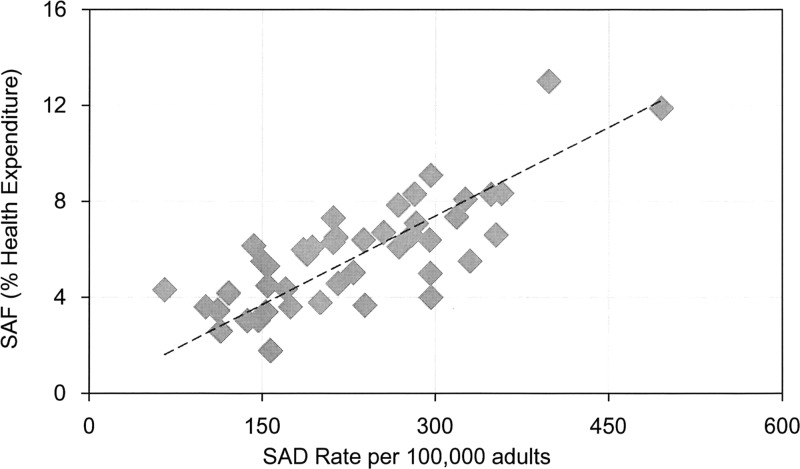
“7 We updated Good-child et al ’s model, recalculating values using tobacco-attributable death rates from GBD, 8 and then multiplied the obtained SAF of healthcare expenditures by total health expenditures reported in the WHO Health Expenditures Database 9 to quantify total healthcare spending…”
MethodFischer, B., Bullen, C., & Hall, W. (2020) · Drug and Alcohol Review · doi:10.1111/dar.13071 · Cited by 4
Krakowiak, E., Sygit, K., Sygit, M., Cipora, E., & Krakowiak, J. (2020) · International Journal of Environmental Research and Public Health · doi:10.3390/ijerph17103691 · Cited by 4
An exploration of associations between smoking motives and behavior as a function of body mass index
Ely, A. V., Keyser, H., Spilka, N. H., Franklin, T. R., Wetherill, R. R., & Audrain-McGovern, J. E. (2021) · Drug and Alcohol Dependence Reports · doi:10.1016/j.dadr.2021.100008 · Cited by 4
Kong, J.-H., Lim, S., Choi, S., & Kim, G. (2023) · Journal of the Korean Society for Research on Nicotine and Tobacco · doi:10.25055/jksrnt.2023.14.2.21 · Cited by 4
Choi, S. H., Templin, T., & Marrocco, A. M. (2023) · Journal of American College Health · doi:10.1080/07448481.2023.2227715 · Cited by 4
Vulovic, V., & Chaloupka, F. J. (2022) · MDPI eBooks · doi:10.3390/books978-3-03897-865-7-3 · Cited by 6
Overcoming the health system challenges in the 21st century and beyond?
Al-Alawy, K. (2019) · Public Health · doi:10.1016/j.puhe.2018.12.005 · Cited by 5
Fuchs, A., Orlić, E., & Cancho, C. A. (2019) · World Bank, Washington, DC eBooks · doi:10.1596/31249 · Cited by 4
Zylva, R. D., Mortimer, E. K., Miller, E. R., Tsourtos, G., Lawn, S., Wilson, C. J., Karnon, J. D., Woodman, R. J., & Ward, P. (2023) · Addiction Science & Clinical Practice · doi:10.1186/s13722-022-00355-w · Cited by 6
“[3] Although population prevalence of smoking is generally decreasing in high-income countries, [1] those in socioeconomically disadvantaged groups are less successful at quitting and are over-represented in smoking statistics.”
BackgroundWięcław, K., Stańko, K., Piasek, L., Szafran, A., Wiśniewska, K., Ostańska, A., Terelak, W., Ciechański, M., Witkowska, E., & Godek, G. (2023) · Journal of Education Health and Sport · doi:10.12775/jehs.2023.36.01.010 · Cited by 4
Lai, Y.-L., Gan, C. C. R., Nfor, O. N., Lu, W., Lee, S., & Liaw, Y. (2023) · Scientific Reports · doi:10.1038/s41598-023-48806-x · Cited by 3
“Smoking-related diseases are a major cause of death among working-age adults, accounting for nearly 12% of all deaths worldwide 2 .”
BackgroundThe impact of tobacco consumption on household catastrophic health expenditure in Türkiye
Saraçoğlu, S., Başar, D., & Öztürk, S. (2024) · Eastern Mediterranean Health Journal · doi:10.26719/2024.30.11.757 · Cited by 3
Kwon, J. A., Kim, N., Oh, J., Park, B., Choi, Y., Choi, Y., & Kim, B. (2025) · BMC Public Health · doi:10.1186/s12889-025-22258-6 · Cited by 4
Training health professionals in smoking cessation
Sharrad, K. J., Carson‐Chahhoud, K., Verbiest, M. E. A., Greenslade, S., Parkhouse, T., Assendelft, W. J., Crone, M. R., & Livingstone‐Banks, J. (2026) · Cochrane Database of Systematic Reviews · doi:10.1002/14651858.cd000214.pub3 · Cited by 7
Exercise-based interventions for smoking cessation: A systematic review and meta-analysis
Singh, B., Petersen, J. M., Miatke, A., Dumuid, D., Szeto, K., Dankiw, K. A., Mellow, M. L., Vaikar, S. J., Eglitis, E., Zhou, M., et al. (2026) · Journal of sport and health science/Journal of Sport and Health Science · doi:10.1016/j.jshs.2026.101138 · Cited by 5
Wies, C., Ssabbagh, M. A., Elango, V., Schiavone, S., Anderson, C. L., Theilmann, M., Geldsetzer, P., Hoe, C., Winkler, & Brinker, T. J. (2026) · Tobacco Control · doi:10.1136/tc-2025-059403 · Cited by 5
Risk factors for depression in asthmatic individuals: Findings from NHANES (2005–2018)
Yang, H., Lin, P., & Liang, Z. (2023) · PLoS ONE · doi:10.1371/journal.pone.0287336 · Cited by 3
“Cigarette smoking remained one of the most important public health problems in the world, with heavy social, functional, and economic burdens [14, 15].”
BackgroundBuilding a House on Sand: How Tobacco Use Is Devouring Resources
Aliabad, M. B., Asl, I. M., Abolhallaje, M., & Jafarı, M. (2023) · Addiction and Health · doi:10.34172/ahj.2023.1375 · Cited by 3
Chhabra, D., Sachan, T., Penberthy, J. K., & Dang, S. (2023) · Current Psychology · doi:10.1007/s12144-023-04967-6 · Cited by 3
Muhammad, R., & Nursani (2023) · Journal of Developing Economies · doi:10.20473/jde.v8i2.41636 · Cited by 4
“The annual health expenditures in Indonesia attributable to tobacco use are estimated to be approximately $1.2 billion ( Goodchild et al., 2018 ).”
BackgroundInfluentialHeikkinen, J., Palosaari, S., & Lehenkari, P. P. (2024) · Toxicology in Vitro · doi:10.1016/j.tiv.2024.105949 · Cited by 4
“Annually, smoking is responsible for over 7 million deaths, and the estimated global financial burden of smoking exceeds 1400 billion dollars each year (Reitsma et al., 2021; Goodchild et al., 2018).”
BackgroundAssociation of remote work with tobacco and alcohol use: a cross-sectional study in Japan
Sonoda, K., Okawa, S., & Tabuchi, T. (2025) · BMC Public Health · doi:10.1186/s12889-024-21066-8 · Cited by 3
“It is estimated that the total global cost of smoking exceeded USD 1,436 billion, equivalent to 1.8% of the world’s annual gross domestic product (GDP) [2].”
InfluentialGhadirzadeh, E., Moosazadeh, M., Kheradmand, M., Bagheri‐Nesami, M., Ghafari-Cherati, S., Gheibi, M., & Hosseini, A. (2025) · Inhalation Toxicology · doi:10.1080/08958378.2025.2499825 · Cited by 3
“…gross domestic product (GDP), wasting over 436.7 billion dollars each year in the United States, and a global financial estimated cost of over 1852 billion dollars annually, encompassing healthcare expenditures and productivity losses (Rezaei et al. 2016; Goodchild et al. 2018; Nargis et al. 2022).”
InfluentialShi, L., Kuang, Z., Tu, J., Wang, T., Liu, T., Liu, J., & Liu, J. (2025) · Frontiers in Public Health · doi:10.3389/fpubh.2025.1583045 · Cited by 4
Jackson, S. E., Cox, S., & Brown, J. (2025) · The Lancet Regional Health - Europe · doi:10.1016/j.lanepe.2025.101419 · Cited by 4
Electromyogram in Cigarette Smoking Activity Recognition
Senyurek, V. Y., Imtiaz, M. H., Belsare, P. V., Tiffany, S. T., & Sazonov, E. E. (2021) · Signals · doi:10.3390/signals2010008 · Cited by 3
“Smoking causes ten percent of all annual deaths in the world and causes productivity loss, health care expenditures, and other related costs, which correspond to 1.8% of the world’s annual gross domestic product [2,3].”
BackgroundInfluentialWu, S., Yoder, G., Lee, N. Y., Yan, S., & Wolfersteig, W. (2021) · Substance Use & Misuse · doi:10.1080/10826084.2021.1942051 · Cited by 4
Nicotine, Tobacco Smoking, and E-Cigarettes
Ditre, J. W., LaRowe, L. R., Powers, J. M., & Hooker, J. E. (2021) · Elsevier eBooks · doi:10.1016/b978-0-12-818697-8.00125-4 · Cited by 5
Sancho-Domingo, C., Carballo, J. L., Coloma‐Carmona, A., Román, C. J. V.-D. H., & Sánchez, S. A. (2023) · Addiction Research & Theory · doi:10.1080/16066359.2023.2264773 · Cited by 3
“Additional costs are attributed to reduced workforce productivity due to morbidity and premature mortality caused by tobacco (Rey-Brandariz et al. 2023), amounting to nearly 6% of global health expenditures (Goodchild et al. 2018; Nargis et al. 2022).”
Smoking Dynamics: Factors Supplementing Tobacco Smoking in Pakistan
Nadeem, M., Malik, M. I., Ullah, A., & Junaid, N. (2024) · IEEE Transactions on Computational Social Systems · doi:10.1109/tcss.2024.3350675 · Cited by 6
“Alongside wellbeing outcomes, smoking has brought about critical fi nancial misfortunes, adding up to 1.8% loss of worldwide gross domestic product (GDP) and this loss is to a great extent shared by developing nations [13].”
BackgroundInfluentialThe economic cost of direct smoking in South Korea
Kwon, K. N., Lee, K., & Chung, W. (2024) · Preventive Medicine Reports · doi:10.1016/j.pmedr.2024.102865 · Cited by 4
“Smoking has been identified as one of the leading causes of pre-ventable deaths and disability since the early 1960s (Office of Surgeon General, 2004; Murray and Lopez, 1997; Goodchild et al., 2018).”
BackgroundSchiek, H., Esch, T., & Hoetger, C. (2025) · Addiction Science & Clinical Practice · doi:10.1186/s13722-025-00559-w · Cited by 6
Cigarette Taxation and the Searching Popularity of Electronic Cigarettes
Kim, S. H., Chun, S., & Shin, D. W. (2018) · Journal of the Korean Society for Research on Nicotine and Tobacco · doi:10.25055/jksrnt.2018.9.2.86 · Cited by 3
The Implementation of Earmarking Tax Policy on Cigarette Tax in West Java Province
Atsani, M. P., & Murwendah, M. (2019) · Jurnal Ilmu Sosial dan Ilmu Politik · doi:10.22146/jsp.41485 · Cited by 6
Responding to health inequities in New Zealand: the potential of dissuasive cigarettes
Houghton, F. T., Duncan, B. B., Houghton, S., O’Doherty, D., & McInerney, D. (2019) · Journal of Primary Health Care · doi:10.1071/hc19013 · Cited by 12
Differential expression of nicotine withdrawal as a function of developmental age in the rat
Keeley, R. J., Mayer, T. E., Hsu, L., Lu, H., Yang, Y., & Stein, E. A. (2019) · Pharmacology Biochemistry and Behavior · doi:10.1016/j.pbb.2019.172802 · Cited by 3
“4 trillion USD (Goodchild et al., 2017), with past month use of tobacco products estimated at 24% (SAMHSA, 2015).”
BackgroundInfluentialHo, K. Y., Li, W. H. C., Lam, K. K. W., Wang, M. P., Xia, W., Ho, L. L. K., Ou, Y. J., Chan, S. S. C., & Lam, T. H. (2019) · Journal of Clinical Nursing · doi:10.1111/jocn.15101 · Cited by 3
Quantifying the social costs and benefits of tobacco in Estonia
Saar, I., & Koitla, H. (2020) · Tobacco Control · doi:10.1136/tobaccocontrol-2019-055419 · Cited by 3
Measures to reduce smoking: Brazil takes the lead
Galduróz, J. C. F., Tomita, N., & Bezerra, A. G. (2020) · Brazilian Journal of Psychiatry · doi:10.1590/1516-4446-2020-0853 · Cited by 3
Lakhdar, C. B., Deplancke, A., Lec, F. L., Massin, S., Piermattéo, A., & Vaillant, N. (2020) · BMJ Open · doi:10.1136/bmjopen-2019-036166 · Cited by 5
Building Momentum for Tobacco Control in the Western Pacific Region
Prasad, V. M., & Sy, J. M. (2020) · Asian Pacific Journal of Cancer Prevention · doi:10.31557/apjcp.2020.21.s1.1 · Cited by 3
Derbel, K., Maatoug, C., Mchita, A., Mabrouk, K. H., & Saad, H. B. (2021) · Clinical Medicine Insights Circulatory Respiratory and Pulmonary Medicine · doi:10.1177/11795484211047041 · Cited by 4
“4 trillion dollars from the global economy in a single year.(2) Compared to non-smokers, smokers are 10 times more likely to develop chronic lung cancer and chronic obstructive pulmonary disease (COPD), and three times more likely to die due to ischemic heart disease before the age of 65.”
BackgroundNandru, S., Kodali, P. B., & Thankappan, K. R. (2022) · Journal of Substance Use · doi:10.1080/14659891.2022.2043471 · Cited by 3
Metadata
- Authors
- Goodchild, M., Nargis, N., & Tursan d'Espaignet, E.
- Affiliations
- World Health Organization (CH)
- American Cancer Society (US)
- Corresponding author
- Goodchild, Mark
- Venue
- Tobacco Control
- Publisher
- BMJ
- Published
- 2017-01-30
- Volume
- 27
- Issue
- 1
- Pages
- 58-64
- ISSN
- 0964-4563 (ISSN-L)
- 1468-3318
- PMC
- PMC5801657
- OpenAlex
- W2580877667
- Cited by
- 669
- References
- 46
- Citations by year
- 2026: 70 · 2025: 81 · 2024: 83 · 2023: 70 · 2022: 95 · 2021: 74 · 2020: 67 · 2019: 68 · 2018: 45 · 2017: 15
- FWCI
- 39.44
- Type
- journal article
- Language
- en
- Open access
- hybrid
- doi.org
- Licence
- cc-by-nc
- Locations
- Tobacco Control (publishedVersion, cc-by-nc)
- PubMed Central (publishedVersion, cc-by-nc)
- PubMed (publishedVersion)
- HighWire Press Open Archive (submittedVersion)
- Funders
- World Health Organization
- Topics
- Health Sciences › Medicine › Public Health, Environmental and Occupational Health › Smoking Behavior and Cessation
- Social Sciences › Economics, Econometrics and Finance › Economics and Econometrics › Health Systems, Economic Evaluations, Quality of Life
- Health Sciences › Medicine › Public Health, Environmental and Occupational Health › Global Public Health Policies and Epidemiology
- Keywords
- economic burden, health care expenditure, productivity loss, low- and middle-income countries, global health burden, purchasing power parity
- MeSH terms
- Developing Countries, Efficiency, Health Expenditures, Humans, Smoking, Global Health, Health Care Costs, Cost of Illness
About these checks
Registry, retraction, Cites and statistics results are computed, not judged, with one exception: a printed reference that no index lists is read once by a model before it counts as a citation error. Claims are extracted by a model and kept only when their quote appears verbatim in the text; each cited source is then checked, with a model’s help, for whether it says what the claim relies on. Those verdicts can be wrong — read the claim’s quote and the cited source before relying on one.
Statistics and arithmetic are recomputed, not judged.
Confidence bands are shown only for fields calibrated on our annotated test set. None is calibrated yet, so no band is shown.
What counts as a claim ›How we measure confidence ›How we check this ›
Are you an author, or do you see a problem with this page? Request a review
Data sources
Bibliographic data: Semantic Scholar, OpenAlex, Crossref.
Contains information from the Semantic Scholar Academic Graph Datasets, made available under the ODC Attribution License (ODC-BY 1.0).
Semantic Scholar’s data is described in: Kinney, R., et al. (2023). The Semantic Scholar Open Data Platform. arXiv:2301.10140.
