

AI as Social Glue: Uncovering the Roles of Deep Generative AI during Social Music Composition
Open accessThe DOI matches its Crossref record; 80 of the 81 references it cites were found in a registry or an index, and 1 are not checked yet.
Abstract
Recent advances in deep generative neural networks have made it possible for artificial intelligence to actively collaborate with human beings in co-creating novel content (e.g. music, art). While substantial research focuses on (individual) human-AI collaborations, comparatively less research examines how AI can play a role in human-human collaborations during co-creation. In a qualitative lab study, we observed 30 participants (15 pairs) compose a musical phrase in pairs, both with and without AI. Our findings reveal that AI may play important roles in influencing human social dynamics during creativity, including: 1) implicitly seeding a common ground at the start of collaboration, 2) acting as a psychological safety net in creative risk-taking, 3) providing a force for group progress, 4) mitigating interpersonal stalling and friction, and 5) altering users’ collaborative and creative roles. This work contributes to the future of generative AI in social creativity by providing implications for how AI could enrich, impede, or alter creative social dynamics in the years to come.
Overview
The claims and statistics of this paper haven’t been checked yet.
Free: it reads the open-access text and checks the first 5 claims that cite a source we can check. Create a free account to check every claim.
Integrity signals
Registry
Cites
Statistics
Figures
Verification
Claims the paper makes
The claims and statistics of this paper haven’t been checked yet.
Free: it reads the open-access text and checks the first 5 claims that cite a source we can check. Create a free account to check every claim.
Claims other papers make about this one
Each is checked against this paper’s own text: does it say what the citing paper says it does?
The cited source says what the claim attributes to it.
In the citing paper
“Observed correlations between Interaction Stages (e.g., 'Collaborate' [68]), AI Agency Patterns (e.g., 'Proactive' [73] vs. 'Passive' [162]), and Modalities [152] directly inform Control Mechanism design.”
From Exploring Collaboration Patterns and Strategies in Human-AI Co-creation through the Lens of Agency: A Scoping Review of the Top-tier HCI Literature (2025) · cites this paper as [162]
The cited source says what the claim attributes to it.
In the citing paper
“Theoretically, AI's evolution from functional tool [156] to autonomous, proactive partner [3, 162, 172] challenges human-centric assumptions about creativity and requires new collaboration theories beyond mixed-initiative [71], potentially involving co-agency or emergent interaction structures [68, 194].”
From Exploring Collaboration Patterns and Strategies in Human-AI Co-creation through the Lens of Agency: A Scoping Review of the Top-tier HCI Literature (2025) · cites this paper as [162]
Self-check
Percentages, sums and reported differences re-computed from the paper’s own numbers.
The self-check needs the paper’s full text.
Citations
Cites
Psychological Safety and Learning Behavior in Work Teams
Edmondson, A. (1999) · Administrative Science Quarterly · doi:10.2307/2666999 · Cited by 12,026 · cited 2×
“Psychological safety may be particularly valuable in collaborations between unfamiliar partners, at the start of collaboration, or for novices with less artistic experience [19, 70].”
BackgroundBraun, V., & Clarke, V. (2012) · APA handbook of research methods in psychology, Vol 2: Research designs: Quantitative, qualitative, neuropsychological, and biological. · doi:10.1037/13620-004 · Cited by 10,299
Clark, H. H., & Brennan, S. E. (1991) · Perspectives on socially shared cognition. · doi:10.1037/10096-006 · Cited by 4,555 · cited 1×
“Finding common ground is a technique used by people to facilitate interpersonal relationships, and is often a critical ingredient for establishing mutual respect and trust in interpersonal collaborations and collective actions [13].”
BackgroundBaer, M., & Frese, M. (2003) · Journal of Organizational Behavior · doi:10.1002/job.179 · Cited by 1,563 · cited 1×
“A psychological safety net refers to a belief that one is not at risk of embarrassment or rejection in particular setting or role [19], and it is known to increase information sharing [72], group learning [19] or group performance [4].”
BackgroundMachines as teammates: A research agenda on AI in team collaboration
Seeber, I., Bittner, E., Briggs, R. O., de Vreede, T., de Vreede, G.-J., Elkins, A., Maier, R., Merz, A. B., Oeste-Reiß, S., Randrup, N., et al. (2020) · Information & Management · doi:10.1016/j.im.2019.103174 · Cited by 835 · cited 1×
“Examples of this style of research include emerging research agendas centered on AI as collaborative teammates [67, 73], and AI as a mediator of teamwork and interpersonal communication itself [30, 65].”
BackgroundPaulus, P. B., & Nijstad, B. A. (2003) · Oxford University Press eBooks · doi:10.1093/acprof:oso/9780195147308.001.0001 · Cited by 759
AI-Mediated Communication: Definition, Research Agenda, and Ethical Considerations
Hancock, J. T., Naaman, M., & Levy, K. (2020) · Journal of Computer-Mediated Communication · doi:10.1093/jcmc/zmz022 · Cited by 658 · cited 2×
“Examples of this style of research include emerging research agendas centered on AI as collaborative teammates [67, 73], and AI as a mediator of teamwork and interpersonal communication itself [30, 65].”
BackgroundThe reacTable: exploring the synergy between live music performance and tabletop tangible interfaces
Jordà, S., Geiger, G., Alonso, M., & Kaltenbrunner, M. (2007) · Proceedings of the 1st international conference on Tangible and embedded interaction · doi:10.1145/1226969.1226998 · Cited by 619 · cited 2×
“, Jam-O-Drum [8], Reactable [40], and MuSeeCol [27]), or new tools that allow users to collaboratively influence musical output (e.”
BackgroundDeepBach: a Steerable Model for Bach Chorales GenerationPreprint
Hadjeres, G., Pachet, F., & Nielsen, F. (2016) · arXiv (Cornell University) · doi:10.48550/arxiv.1612.01010 · Cited by 449 · cited 1×
“Beyond small segments of music, generative DNNs can now produce full, high-quality scores that automatically mesh well with local and distant regions of music [29, 34, 35, 64], making it conceivable for users to auto-complete long stretches of music, coherently fill in any missing parts of a song, or ask for new music…”
BackgroundProceedings of the 13th International Society for Music Information Retrieval Conference, ISMIR 2012
Gouyon, F., Herrera, P., Martins, L. G., & Müller, M. A. (2012) · Cited by 446
Research works printed but not linked: 2
- Alex Calderwood, Katy Ilonka Gero, and Lydia B. Chilton. 2020. How Novellists use Generative Language Models: An Exploratory User Study. In IUI Workshops.
- Alex Osborn. 2012. Applied imagination-principles and procedures of creative writing. Read Books Ltd.
Cited by
Items 101–142 of 142
Hu, Y., & Freeman, G. (2026) · CHI Conference on Human Factors in Computing Systems · doi:10.1145/3772318.3791077 · Cited by 6
Noise Pilot: Enabling Artistic Workflow Composition with Diffusion-Based Image Generation
Smith, J., Almeda, S. G., Aveni, T. J., Agarwal, A., & Hartmann, B. (2026) · CHI Conference on Human Factors in Computing Systems · doi:10.1145/3772318.3790531 · Cited by 5
A Theoretical Framework of the Structure of Augmented Creativity
Schirrmeister, T., Kintzel, K., & Clausen, S. (2026) · Information Systems Frontiers · doi:10.1007/s10796-026-10745-z · Cited by 2
“Examples for entities of the person environment are, their domain knowledge (e.g., Suh et al., 2021), experience with technology (e.g., Tsao & Nogues, 2024), or attitudes towards a technology (e.g., Li et al., 2024) as they shape the agency of the person; examples of the generative technologies…”
InfluentialFrom Prompts to Context: An Ontology-Driven Framework for Human-Generative AI Collaboration
Lê, N. L., Abel, M., & Laforge, B. (2026) · Information Systems Frontiers · doi:10.1007/s10796-026-10754-y · Cited by 2
Creative Fusion: Human - AI Collaborations in Music, Art, and Beyond
Shukla, G. (2024) · International Journal of Science and Research (IJSR) · doi:10.21275/sr24629104056 · Cited by 2
Tabari, P. (2022) · IEEE Symposium on Visual Languages and Human-Centric Computing (VL/HCC) · doi:10.1109/vl/hcc53370.2022.9833114 · Cited by 3
Panchanadikar, R., Hu, Y., & Freeman, G. (2026) · Proceedings of the 2026 ACM Conference on Fairness, Accountability, and Transparency · doi:10.1145/3805689.3812248 · Cited by 1
“For example, previous studies on human–AI co-creation in fields such as music composition [51, 72] and creative writing [28, 38] have demonstrated how generative AI systems, such as large language models and image generation models, can accelerate brainstorming, lower barriers to entry, and enable…”
Hu, X. (2025) · Learning and analytics in intelligent systems · doi:10.1007/978-3-031-98607-9_29 · Cited by 1
Soundwalking with AI: collaborative creativity as embodied learning
Galvao, M. S., & Sagesser, M. Z. (2025) · Frontiers in Computer Science · doi:10.3389/fcomp.2025.1571303 · Cited by 1
Revolutionizing sentiment analysis with generative AI: techniques, trends, and challenges
Mamun, R., Sadman, S., Nabil, H. R., Mridha, M. F., & Kabir, M. (2026) · Multimedia Tools and Applications · doi:10.1007/s11042-026-21390-8 · Cited by 1
“Suh et al. [ 66] Current advancements in deep generative neural networks have allowed AI to collaborate with humans in the creation of new content, but the role of AI in human co-creation of content is less explored.”
Freeman, G., Lampe, C. A. C., Mynatt, E. D., Candello, H. C. D. S. P., Inkpen, K. M., Goyal, N., Karahalios, K. G., Ma, X., & Woźniak, P. W. (2026) · CHI Conference Extended Abstracts on Human Factors in Computing Systems (CHI EA) · doi:10.1145/3772363.3790107 · Cited by 1
Generative AI in Children's Creative Collaboration: Impact, Perception, and Design Guidelines
Yoo, D., Newman, M., Pitt, C. R., Vo, K. H., Zhang, M., Kim, M., Davis, K., & Yip, J. (2026) · CHI Conference on Human Factors in Computing Systems · doi:10.1145/3772318.3790907 · Cited by 7
“In this way, our findings contribute to ongoing conversations about GenAI’s role in multi-human collaboration [7, 57, 88, 122, 132] and encourage the design of AI agents that amplify group agency and contributions, rather than focusing only on improving individual productivity [48, 130].”
Belibou, A., & Iftene, L. (2024) · Tehnologii informatice și de comunicație în domeniul muzical / Information and communication Technologies in Musical Field · doi:10.47809/ictmf.2024.01.05 · Cited by 3
Effects of Deep Neural Networks on the Perceived Creative Autonomy of a Generative Musical System
Smith, J. B., & Freeman, J. (2021) · Proceedings of the AAAI Conference on Artificial Intelligence and Interactive Digital Entertainment · doi:10.1609/aiide.v17i1.18895 · Cited by 3
“Other work in co-creative musical interaction dynamics explores how pairs of human collaborators respond to a third, AI col-laborator while composing music (Suh et al. 2021).”
BackgroundComputing Movie Script Similarity with Neural Word Embeddings
Patsis, T. (2021) · IEEE MIT Undergraduate Research Technology Conference (URTC) · doi:10.1109/urtc54388.2021.9701634
Analyses of Musical Success based on Time, Genre and Collaboration
Oliveira, G. P., Lacerda, A. M., & Moro, M. M. (2023) · Simpósio Brasileiro de Bancos de Dados (SBBD) · doi:10.5753/sbbd_estendido.2023.232874
Designing mixed-initiative video games
Yang, D. (2023) · Digital Repository Service (Northeastern University) · doi:10.17760/d20618670 · Cited by 1
Responses to AI and Human Recommendations in a Joint-Consumption Context
Khan, S. B. (2024) · Developments in marketing science: proceedings of the Academy of Marketing Science · doi:10.1007/978-3-031-49039-2_13
Sarkar, A. (2025) · Annual Symposium on Human-Computer Interaction for Work (CHIWORK) · doi:10.1145/3729176.3729189 · Cited by 3
Toward Human-AI Interaction in Music Composition: Studying Composers’ Practice
Gianet, E. T., Di, L., & Rapp, A. (2025) · Springer Proceedings in Humanities and Social Sciences · doi:10.1007/978-3-031-88334-7_11
Utilising generative AI to assist in the creation and production of Chinese popular music
Li, X., & Kim, H. (2025) · Online Journal of Music Sciences · doi:10.31811/ojomus.1668286
Human-AI and Social Robots Creative Collaboration
Chompunuch, S., Vinchon, F., & Lubart, T. (2026) · Springer eBooks · doi:10.1007/978-3-032-07753-0_8
-, S. R. S. (2026) · Advances in computational intelligence and robotics book series · doi:10.4018/979-8-3373-6279-3.ch005
Hou, I., Qin, A., Cheng, L., & Guo, P. J. (2026) · CHI Conference on Human Factors in Computing Systems · doi:10.1145/3772318.3791093 · Cited by 2
“…writing, and generating imagery have impacted many types of professional expert stakeholders, especially software engineers [31, 37, 68, 74], designers [59, 61, 75], educators [49], writers [23, 27], artists [16, 63, 65], and knowledge workers across areas like law, medicine, and business [8, 20].”
Echoes of Norms: Investigating Counterspeech Bots’ Influence on Bystanders in Online Communities
Wang, M., Ma, S., Li, N., Zhang, P., Li, C., Gu, N., & Lu, T. (2026) · CHI Conference on Human Factors in Computing Systems · doi:10.1145/3772318.3791797 · Cited by 1
“On the positive side , Civilbot, as a non-human agent, offers a baseline response free from social and reputational costs, serving as a psychological safety net similar to AI in creative tasks [77].”
Xu, H., Kharrufa, A., Solaiman, E., & Vlachokyriakos, V. (2026) · CHI Conference on Human Factors in Computing Systems · doi:10.1145/3772318.3791087 · Cited by 3
Designing Generative AI for Real-Time Multi-User Interaction in Co-Creative Dance
Yang, M., Weber, R., & Lottridge, D. M. (2026) · International Conference on Movement and Computing (MOCO) · doi:10.1145/3802842.3802865
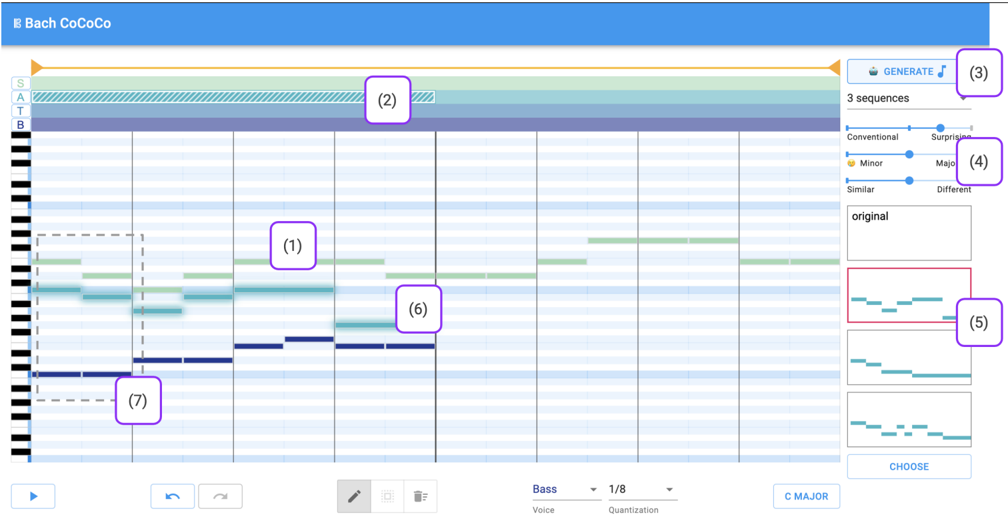
“In music, the Cococo music composition collaboration tool enables two human users to compose music while prompted creatively by generative AI [29].”
Egbe, D. A. (2026) · Queensland University of Technology · doi:10.5204/thesis.eprints.264872
Capturing Inspiration: Designing a Multimodal Human–AI Collaboration Framework for Music Creation
Wang, L., Zhou, Y., Dong, L., & Chang, D. (2025) · International Conference on Human-Engaged Computing (ICHEC) · doi:10.1145/3786995.3787005
“In a study with 30 participants working in pairs, AI as a Social Glue revealed that AI can seed common ground, provide psychological safety, accelerate group progress, and reduce interpersonal friction during co-creation [41].”
The Challenging Appropriation of Generative AI at Work
Héron, R., & Fréjus, M. (2026) · Communications in computer and information science · doi:10.1007/978-3-032-16448-3_26 · Cited by 1
Unveiling Hype Patterns in AI Advertising
Zhu, Y., Yao, Y., & Lupetti, M. L. (2026) · ACM International Conference on Interactive Media Experiences · doi:10.1145/3788851.3805004 · Cited by 1
MakeAloud: Think-Aloud to Bridge Design-Fabrication Workflows
Batra, R. K., Wannamaker, K., Fitzmaurice, G. W., & Matejka, J. (2026) · Designing Interactive Systems Conference · doi:10.1145/3800645.3813028
“Generative AI has emerged as a powerful technology for facilitating collaboration through creativity support tools [70].”
Lee, S., & Jeong, H. (2026) · International Journal of Human-Computer Interaction · doi:10.1080/10447318.2026.2689545
Agarwal, A., Sreethar, S., Natarajan, K., S.RanjithKumar, & Baskaran, P. (2025) · International Conference on Emerging Research in Computational Science (ICERCS) · doi:10.1109/icercs65898.2025.11580590
Impact of Chatbot Role on Perceived Support in a Collaborative Problem-Solving Task
Valbjörnsson, V. J., de Jong, S., Jacobsen, R. M., & van Berkel, N. (2026) · Annual Symposium on Human-Computer Interaction for Work (CHIWORK) · doi:10.1145/3805029.3818280
“These findings echo previous work demonstrating that people appreciate critical input from AI [34, 39].”
Zhang, H., & Kim, H. (2026) · Asia-pacific Journal of Convergent Research Interchange · doi:10.47116/apjcri.2026.08.04
Rethinking Creative Ideation: Toward Seamless Synergetic AI in Human–AI Design Collaboration
Zhang, C., Feng, Z., Zhou, T., & Han, T. (2025) · International Symposium on Computational Intelligence and Design · doi:10.1109/iscid68789.2025.00079
Tonelli, G., Gori, M., & Melacci, S. (2026) · Lecture notes in computer science · doi:10.1007/978-3-032-38407-2_57
The Dissonance Workshop: Live Performance and Generative Friction with AI
Snow, D., Cohen, A. E., Encinas, E., Schütt, J., Lindley, J., & Barry, M. (2026) · Nordic Conference on Human-Computer Interaction · doi:10.1145/3821402.3830199
Freeman, G., Mynatt, E. D., Candello, H. C. D. S. P., Inkpen, K. M., Karahalios, K. G., Shamma, D. A., & Morris, M. R. (2026) · ACM Conference on Computer Supported Cooperative Work (CSCW) · doi:10.1145/3785651.3831574
Freeman, G., Toxtli, C., Panchanadikar, R., Hu, Y., Frommel, J., Mandryk, R. L., Guckelsberger, C., & Denisova, A. (2026) · Annual Symposium on Computer-Human Interaction in Play · doi:10.1145/3800965.3834572
How Do Human Creators Embrace Human-AI Co-Creation? A Perspective on Human Agency of Screenwriters
Tang, Y., Zhou, J., Li, H., Xie, X., Ma, X., & Qu, H. (2026) · arXiv · Cited by 5
“…decision-making:inmusiccomposition,“steering”toolshelped novicespartitioncomplextasksandstrengthenedtheirsenseof ownershipandcompetence[41,58];instoryauthoring,AItools enableddesignerstofocusonnarrativechoiceswhileretaining controlovertheoutput[29,52].”
Metadata
- Authors
- Suh, M. (., Youngblom, E., Terry, M., & Cai, C. J.
- Affiliations
- Google (United States) (US)
- Venue
- Proceedings of the 2021 CHI Conference on Human Factors in Computing Systems
- Publisher
- ACM
- Published
- 2021-05-06
- Pages
- 1-11
- OpenAlex
- W3163054706
- Semantic Scholar
- 926012222b0932b256ab717113cba49d8de34501
- Cited by
- 138
- References
- 76
- Citations by year
- 2026: 31 · 2025: 39 · 2024: 30 · 2023: 24 · 2022: 12 · 2021: 2
- FWCI
- 5.45
- Type
- conference paper
- Language
- en
- Open access
- hybrid
- doi.org
- Licence
- Locations
- CHI Conference on Human Factors in Computing Systems (publishedVersion, cc-by-nc-nd)
- Topics
- Social Sciences › Arts and Humanities › Music › Music Technology and Sound Studies
- Physical Sciences › Computer Science › Human-Computer Interaction › Innovative Human-Technology Interaction
- Social Sciences › Arts and Humanities › Visual Arts and Performing Arts › Art, Technology, and Culture
- Keywords
- human-AI collaboration, human-human collaboration, co-creation, social dynamics, creativity, psychological safety, common ground, collaborative roles, music composition
About these checks
Registry, retraction, Cites and statistics results are computed, not judged, with one exception: a printed reference that no index lists is read once by a model before it counts as a citation error. Claims are extracted by a model and kept only when their quote appears verbatim in the text; each cited source is then checked, with a model’s help, for whether it says what the claim relies on. Those verdicts can be wrong — read the claim’s quote and the cited source before relying on one.
Statistics and arithmetic are recomputed, not judged.
Confidence bands are shown only for fields calibrated on our annotated test set. None is calibrated yet, so no band is shown.
What counts as a claim ›How we measure confidence ›How we check this ›
Are you an author, or do you see a problem with this page? Request a review
Data sources
Bibliographic data: Semantic Scholar, OpenAlex, Crossref.
Contains information from the Semantic Scholar Academic Graph Datasets, made available under the ODC Attribution License (ODC-BY 1.0).
Semantic Scholar’s data is described in: Kinney, R., et al. (2023). The Semantic Scholar Open Data Platform. arXiv:2301.10140.
