

The DOI matches its Crossref record, with a small difference in title or year; 63 of the 64 references it cites were found in a registry or an index, and 1 are not checked yet.
How Cultural Norms Influence Persuasive Design: A Study on Chinese Food Journaling Apps
Open accessAbstract
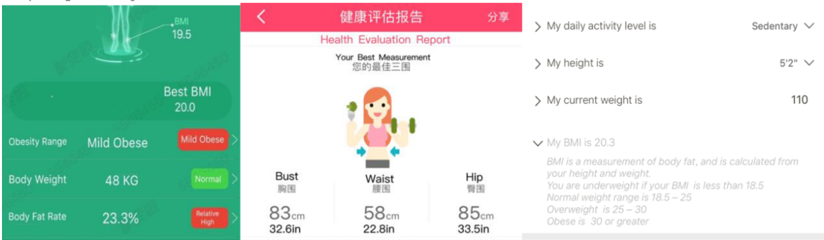
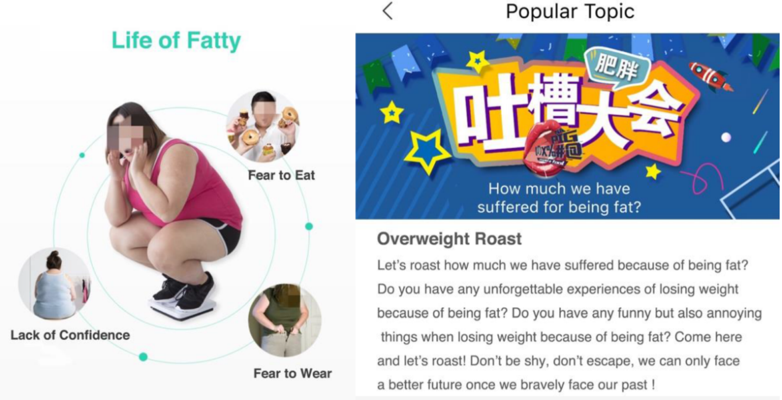
Persuasive features are often used in food journaling apps to help people reach various personal goals. Our understanding of persuasive design in food journaling apps has primarily been built from studying and designing apps in Western contexts. However, varied cultural perceptions around journaling goals, such as healthy eating and weight management, suggest that the design of persuasive features may differ across cultures. We therefore investigate how culture influences the use of persuasive techniques in Chinese food journaling apps and consequently people's journaling experiences. Through reviewing features of Chinese apps and interviewing people who have used them, we find that some Chinese apps heavily emphasize body shape, and people's motivations for journaling and desires for journaling apps similarly focus more on body shape than diet. We discuss tensions and opportunities for food journaling apps which align with or account for cultural norms while challenging unhealthy or problematic aspects of them.
Overview
The claims and statistics of this paper haven’t been checked yet.
Run the check — free, no account needed. It reads the open-access text and checks the sources it cites.
Integrity signals
Registry
Cites
Statistics
Figures





Verification
Claims the paper makes
The claims and statistics of this paper haven’t been checked yet.
Run the check — free, no account needed. It reads the open-access text and checks the sources it cites.
Claims other papers make about this one
Each is checked against this paper’s own text: does it say what the citing paper says it does?
The check wasn’t confident either way, so it gives no verdict — never disputed.
In the citing paper
“Existing work has explored how AI may empower healthcare work for providers, focusing on Clinical Decision Support Systems (CDSS) and clinical practices, highlighting how AI may assist human experts throughout medical diagnosis and treatments [41,73,76,115,127].”
From Talk2Care: An LLM-based Voice Assistant for Communication between Healthcare Providers and Older Adults (2024) · cites this paper as [73]
Experimental — accuracy not yet measured
Self-check
Percentages, sums and reported differences re-computed from the paper’s own numbers.
The self-check needs the paper’s full text.
Citations
Cites
Braun, V., & Clarke, V. (2012) · APA handbook of research methods in psychology, Vol 2: Research designs: Quantitative, qualitative, neuropsychological, and biological. · doi:10.1037/13620-004 · Cited by 10,299
Excess Deaths Associated With Underweight, Overweight, and Obesity
Flegal, K. M. (2005) · JAMA · doi:10.1001/jama.293.15.1861 · Cited by 2,811
Persuasive Systems Design: Key Issues, Process Model, and System Features
Oinas-Kukkonen, H., & Harjumaa, M. (2009) · Communications of the Association for Information Systems · doi:10.17705/1cais.02428 · Cited by 1,663
Persuasive technology: using computers to change what we think and do
Fogg, B. J. (2002) · Ubiquity · doi:10.1145/764008.763957 · Cited by 1,554
(2002) · Cited by 770
The Effect of Thin Ideal Media Images on Women’s Self-Objectification, Mood, and Body Image
Harper, B., & Tiggemann, M. (2007) · Sex Roles · doi:10.1007/s11199-007-9379-x · Cited by 497
Persuasive technology in the real world
Fritz, T., Huang, E. M., Murphy, G. C., & Zimmermann, T. (2014) · CHI Conference on Human Factors in Computing Systems · doi:10.1145/2556288.2557383 · Cited by 385
Food, eating behavior, and culture in Chinese society
Ma, G. (2015) · Journal of Ethnic Foods · doi:10.1016/j.jef.2015.11.004 · Cited by 353
Using mHealth Technology to Enhance Self-Monitoring for Weight Loss
Burke, L. E., Styn, M. A., Sereika, S. M., Conroy, M. B., Ye, L., Glanz, K., Sevick, M. A., & Ewing, L. J. (2012) · American Journal of Preventive Medicine · doi:10.1016/j.amepre.2012.03.016 · Cited by 295 · cited 1×
“For example, food journals sending daily messages giving feedback on weight loss process have been shown to increase engagement and efficiency in weight loss programs over traditional paper diaries [10].”
BackgroundGrimes, A., & Harper, R. H. R. (2008) · CHI Conference on Human Factors in Computing Systems · doi:10.1145/1357054.1357130 · Cited by 285
Research works printed but not linked: 5
- Elizabeth V. Eikey Yunan Chen and Kai Zheng. (2019). Do Recovery Apps Even Exist?: Why College Women with Eating Disorders Use (But Not Recommend) Diet and Fitness Apps Over Recovery Apps. Lecture Notes in Computer Science (including subseries Lecture Notes in Artificial Intelligence and Lecture Notes in Bioinformatics) Springer Verlag 727-740. http://doi.org/10.1007/978-3-030-15742-5_69 · DOI
- Elizabeth V. Eikey Madhu C. Reddy Kayla M. Booth Lynette Kvasny Johnna L. Blair Victor Li and Erika S. Poole. (2017). Desire to be Underweight: Exploratory Study on a Weight Loss App Community and User Perceptions of the Impact on Disordered Eating Behaviors. JMIR mHealth and uHealth 5(10) e6683. http://doi.org/10.2196/mhealth.6683 · DOI
- B. J. Fogg . ( 2019 ). Tiny Habits: The Small Changes That Change Everything . Eamon Dolan Books . B. J. Fogg. (2019). Tiny Habits: The Small Changes That Change Everything. Eamon Dolan Books.
- MyFitnessPal.com. ( 2017 ). MyFitnessPal on the App Store. https://apps.apple.com/us/app/myfitnesspal/id341232718 MyFitnessPal.com. (2017). MyFitnessPal on the App Store. https://apps.apple.com/us/app/myfitnesspal/id341232718
- Tom Plocher Rau Pei-Luen Patrick and Choong Yee-Yin. (2012). Cross-Cultural Design. In Handbook of Human Factors and Ergonomics. 162-191. http://doi.org/10.1002/9781118131350.ch6 · DOI
Cited by
Sorted by citations
Yang, Z., Xu, X., Yao, B., Rogers, E., Zhang, S., Intille, S., Shara, N., Gao, G. G., & Wang, D. (2024) · Proceedings of the ACM on Interactive, Mobile, Wearable and Ubiquitous Technologies · doi:10.1145/3659625 · Cited by 120
Goals for Goal Setting: A Scoping Review on Personal Informatics
Ekhtiar, T., Karahanoğlu, A., Gouveia, R. H. D. F., & Ludden, G. (2023) · Designing Interactive Systems Conference · doi:10.1145/3563657.3596087 · Cited by 37
A Model of Socially Sustained Self-Tracking for Food and Diet
Lu, X., Chen, Y., & Epstein, D. A. (2021) · Proceedings of the ACM on Human-Computer Interaction · doi:10.1145/3479595 · Cited by 30
Self-citationChan, G., Banire, B., Ataguba, G., Frempong, G., & Orji, R. (2024) · International Journal of Human-Computer Interaction · doi:10.1080/10447318.2024.2372135 · Cited by 35
Combining Momentary and Retrospective Self-Reflection in a Mobile Photo-Based Journaling Application
Karaturhan, P., Arıkan, E., Durak, P., Yantaç, A. E., & Kuşçu, K. (2022) · Nordic Conference on Human-Computer Interaction · doi:10.1145/3546155.3546676 · Cited by 21
Metadata
- Authors
- Lu, X., Chen, Y., & A. Epstein, D.
- Affiliations
- University of California, Irvine (US)
- Informatics University of California, Irvine, United States
- ORCID
- Venue
- Designing Interactive Systems Conference 2021
- Publisher
- ACM
- Published
- 2021-06-28
- Pages
- 619-637
- OpenAlex
- W3175258235
- Cited by
- 15
- References
- 63
- Citations by year
- 2026: 1 · 2025: 4 · 2024: 3 · 2023: 3 · 2022: 3 · 2021: 1
- FWCI
- 1.87
- Type
- conference paper
- Language
- en
- Open access
- hybrid
- doi.org
- Licence
- Locations
- Designing Interactive Systems Conference (publishedVersion, cc-by)
- Funders
- National Science Foundation (1850389)
- Topics
- Physical Sciences › Computer Science › Human-Computer Interaction › Innovative Human-Technology Interaction
- Health Sciences › Health Professions › General Health Professions › Mobile Health and mHealth Applications
- Physical Sciences › Computer Science › Human-Computer Interaction › Usability and User Interface Design
- Keywords
- persuasive design, cultural norms, Chinese users, body shape, healthy eating, weight management, user motivation, cross-cultural design
About these checks
Registry, retraction, Cites and statistics results are computed, not judged, with one exception: a printed reference that no index lists is read once by a model before it counts as a citation error. Claims are extracted by a model and kept only when their quote appears verbatim in the text; each cited source is then checked, with a model’s help, for whether it says what the claim relies on. Those verdicts can be wrong — read the claim’s quote and the cited source before relying on one.
Statistics and arithmetic are recomputed, not judged.
Confidence bands are shown only for fields calibrated on our annotated test set. None is calibrated yet, so no band is shown.
What counts as a claim ›How we measure confidence ›How we check this ›
Are you an author, or do you see a problem with this page? Request a review
