

Exploring Challenges and Opportunities to Support Designers in Learning to Co-create with AI-based Manufacturing Design Tools
Open accessThe DOI matches its Crossref record; 80 of the 80 references it cites were found in a registry or an index.
Abstract
AI-based design tools are proliferating in professional software to assist engineering and industrial designers in complex manufacturing and design tasks. These tools take on more agentic roles than traditional computer-aided design tools and are often portrayed as “co-creators.” Yet, working effectively with such systems requires different skills than working with complex CAD tools alone. To date, we know little about how engineering designers learn to work with AI-based design tools. In this study, we observed trained designers as they learned to work with two AI-based tools on a realistic design task. We find that designers face many challenges in learning to effectively co-create with current systems, including challenges in understanding and adjusting AI outputs and in communicating their design goals. Based on our findings, we highlight several design opportunities to better support designer-AI co-creation.
Overview
The claims and statistics of this paper haven’t been checked yet.
Free: it reads the open-access text and checks the first 5 claims that cite a source we can check. Create a free account to check every claim.
Integrity signals
Registry
Cites
Statistics
Figures
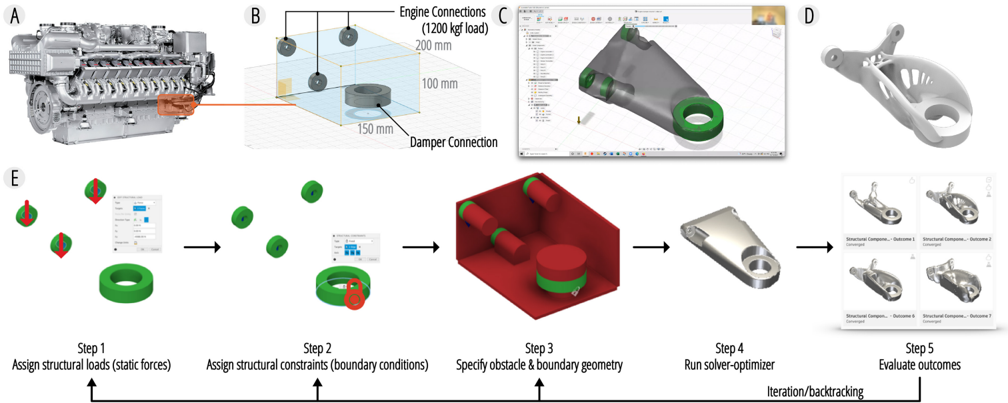
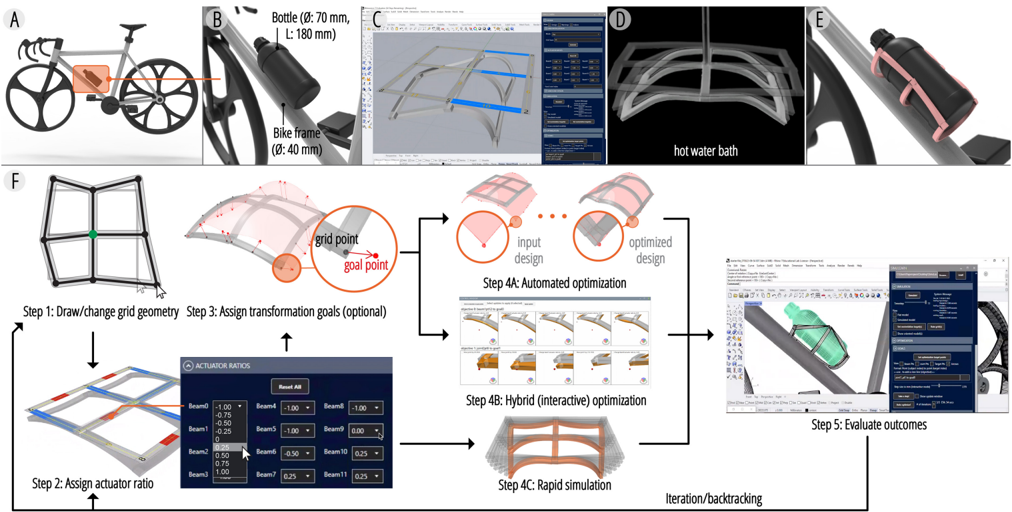
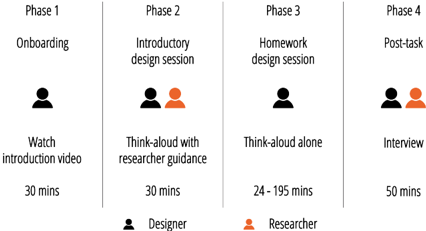
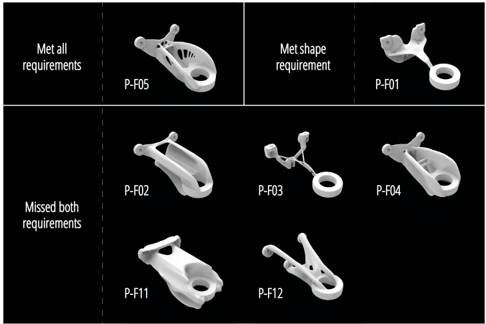
Verification
Claims the paper makes
The claims and statistics of this paper haven’t been checked yet.
Free: it reads the open-access text and checks the first 5 claims that cite a source we can check. Create a free account to check every claim.
Claims other papers make about this one
Each is checked against this paper’s own text: does it say what the citing paper says it does?
The source backs part of the claim, not all of it — or backs it for a different population, condition or comparison.
In the citing paper
“AI agency often starts as reactive to the initial prompt [60, 112] (AI-centric locus) but may shift towards co-operative during refinement (shared locus) [118].”
From Exploring Collaboration Patterns and Strategies in Human-AI Co-creation through the Lens of Agency: A Scoping Review of the Top-tier HCI Literature (2025) · cites this paper as [60]
Experimental — accuracy not yet measuredThe cited source says what the claim attributes to it.
In the citing paper
“Gmeiner et al. [60] highlighted designers' struggles to understand outputs and communicate goals when learning specific AI manufacturing tools.”
From Exploring Collaboration Patterns and Strategies in Human-AI Co-creation through the Lens of Agency: A Scoping Review of the Top-tier HCI Literature (2025) · cites this paper as [60]
The cited source says what the claim attributes to it.
In the citing paper
“Societally, the integration of autonomous AI into co-creation could significantly restructure creative industries and labor markets [18, 60, 118], raising critical questions about the future of creative work, including intellectual property [83], fair compensation [82], and evolving skill requirements [202].”
From Exploring Collaboration Patterns and Strategies in Human-AI Co-creation through the Lens of Agency: A Scoping Review of the Top-tier HCI Literature (2025) · cites this paper as [60]
Experimental — accuracy not yet measuredThe cited source says what the claim attributes to it.
In the citing paper
“Beyond coding, manufacturing designers who successfully learned to co-create with GenAI abstracted and explained the problem to themselves [70]”
From The Metacognitive Demands and Opportunities of Generative AI (2024) · cites this paper as [70]
The cited source says what the claim attributes to it.
In the citing paper
“Similarly, manufacturing designers cocreating with GenAI were uncertain about how to interpret outputs and whether users or the system were responsible for addressing errors [70].”
From The Metacognitive Demands and Opportunities of Generative AI (2024) · cites this paper as [70]
1 more claim about this paper
Create a free account to see every claim other papers make about this one.
Self-check
Percentages, sums and reported differences re-computed from the paper’s own numbers.
The self-check needs the paper’s full text.
Citations
Cites
High-Resolution Image Synthesis with Latent Diffusion Models
Rombach, R., Blattmann, A., Lorenz, D., Esser, P., & Ommer, B. (2022) · 2022 IEEE/CVF Conference on Computer Vision and Pattern Recognition (CVPR) · doi:10.1109/cvpr52688.2022.01042 · Cited by 20,302
The reflective practitioner: How professionals think in action
Stewart, C. J. (1984) · Patient Education and Counseling · doi:10.1016/0738-3991(84)90022-3 · Cited by 19,752
Reflecting on reflexive thematic analysis
Braun, V., & Clarke, V. (2019) · Qualitative Research in Sport, Exercise and Health · doi:10.1080/2159676x.2019.1628806 · Cited by 19,677 · cited 1×
“To understand participant’s challenges, needs, and expectations when learning to co-create with the AI system, we performed a reflexive thematic analysis [8] of the interview data (transcripts) and the think-aloud sessions (video, transcripts).”
MethodImage Style Transfer Using Convolutional Neural Networks
Gatys, L. A., Ecker, A. S., & Bethge, M. (2016) · 2016 IEEE Conference on Computer Vision and Pattern Recognition (CVPR) · doi:10.1109/cvpr.2016.265 · Cited by 6,025 · cited 1×
“Such AI tools use multiple techniques to generate designs from a set of goals and requirements, including constraint-based solvers [73], style transfer [2, 28], simulation and optimization [80], and genetic algorithms [59].”
MethodExplanation in Artificial Intelligence: Insights from the Social Sciences
Miller, T. (2017) · arXiv · doi:10.48550/arxiv.1706.07269 · Cited by 5,338 · cited 1×
“To address these issues, various strategies like explainable AI or intelligibility are aimed at helping users refine their mental models of AI systems [55, 70].”
BackgroundExplanation in artificial intelligence: Insights from the social sciences
Miller, T. (2019) · Artificial Intelligence · doi:10.1016/j.artint.2018.07.007 · Cited by 5,302
Clark, H. H., & Brennan, S. E. (1991) · Perspectives on socially shared cognition. · doi:10.1037/10096-006 · Cited by 4,555 · cited 2×
“[35] argue that like human-human collaboration, efective collaborations between humans and AI may require shared mental models between people and the AI to enable mechanisms such as adaptive coordination of actions among team members [16, 56].”
BackgroundThe Reflective Practitioner: How Professionals Think in Action
Schon, D. A., & DeSanctis, V. (1986) · The Journal of Continuing Higher Education · doi:10.1080/07377366.1986.10401080 · Cited by 3,224
Zero-shot text-to-image generation
Ramesh, A., Pavlov, M., Goh, G., Gray, S., Voss, C., Radford, A., Chen, M., & Sutskever, I. (2021) · arXiv · doi:10.48550/arxiv.2102.12092 · Cited by 2,417 · cited 3×
“Given recent advancements in generative image AI models (such as DALL-E [63] or Stable Diffusion [65]) with fast release cycles of new tools and capabilities, supporting creative professionals in learning to effectively co-create with such tools might become increasingly important.”
BackgroundCreativity in the design process: co-evolution of problem–solution
Dorst, K., & Cross, N. (2001) · Design Studies · doi:10.1016/s0142-694x(01)00009-6 · Cited by 2,357
Research works printed but not linked: 4
- 10.1109/vl · doi:10.1109/vl
- 36. Anna Kawakami, Nikos Arechiga, Luke Guerdan, Matthew Lee, Yang Cheng, Scott Carter, Anita Sun, Haiyi Zhu, and Alison Hu. 2022. Towards a Learner-Centered Explainable AI. Workshop on Human-Centered Explainable AI (HCXAI) at the ACM Conference on Human Factors in Computing Systems, CHI 2022 (2022), 7.
- 10.1109/vl · doi:10.1109/vl
- 50. Mary Lou Maher, Brian Magerko, Dan Venura, Douglas Fisher, Rogelio E. Cardona-Rivera, Nancy Fulda, John Gero, Minwoo Lee, David Wilson, James C. Kaufman, Maithilee Kunda, Michael Muller, Rachel K.E. Bellamy, Maya Ackerman, and Evangelia Chrysikou. 2022. A Research Plan for Integrating Generative and Cognitive AI for Human Centered, Explainable Co-Creative AI. In CHI 2022 Workshop on Generative AI and HCI. https://generativeaiandhci.github.io/
Cited by
Bahroun, Z., Anane, C., Ahmed, V., & Zacca, A. (2023) · Sustainability · doi:10.3390/su151712983 · Cited by 784
“Gmeiner et al. (2023) [31] Identifies challenges faced by designers when collaborating with AI-based design tools, including difficulties in understanding and adjusting AI-generated outputs and effectively communicating design objectives.”
BackgroundThe Metacognitive Demands and Opportunities of Generative AI
Tankelevitch, L., Kewenig, V., Simkute, A., Scott, A. E., Sarkar, A., Sellen, A., & Rintel, S. (2024) · Proceedings of the CHI Conference on Human Factors in Computing Systems · doi:10.1145/3613904.3642902 · Cited by 493
Design Principles for Generative AI Applications
Weisz, J. D., He, J., Muller, M., Hoefer, G., Miles, R., & Geyer, W. (2024) · Proceedings of the CHI Conference on Human Factors in Computing Systems · doi:10.1145/3613904.3642466 · Cited by 232
Li, W. (2025) · International Journal of Human–Computer Interaction · doi:10.1080/10447318.2024.2310354 · Cited by 167
“Behind AIGC-assisted design tools, the integration of the Technology Acceptance Model provides a crucial theoretical framework, assisting us in understanding and explaining user attitudes and behavioral intentions towards the adoption of new technology (Gmeiner et al., 2023).”
User Experience Design Professionals’ Perceptions of Generative Artificial Intelligence
Li, J., Cao, H., Lin, L., Hou, Y., Zhu, R., & El Ali, A. (2024) · Proceedings of the CHI Conference on Human Factors in Computing Systems · doi:10.1145/3613904.3642114 · Cited by 163
Suh, S., Chen, M., Min, B., Li, T. J.-J., & Xia, H. (2024) · Proceedings of the CHI Conference on Human Factors in Computing Systems · doi:10.1145/3613904.3642400 · Cited by 148
AI as a co-creator and a design material: Transforming the design process
Yu, W. F. (2025) · Design Studies · doi:10.1016/j.destud.2025.101303 · Cited by 88
Generative AI-enhanced human-AI collaborative conceptual design: A systematic literature review
Fang, C., Zhu, Y., Fang, L., Long, Y., Lin, H., Cong, Y., & Wang, S. J. (2025) · Design Studies · doi:10.1016/j.destud.2025.101300 · Cited by 135
Ironies of Generative AI: Understanding and Mitigating Productivity Loss in Human-AI Interaction
Simkute, A., Tankelevitch, L., Kewenig, V., Scott, A. E., Sellen, A., & Rintel, S. (2024) · International Journal of Human–Computer Interaction · doi:10.1080/10447318.2024.2405782 · Cited by 89
“In the design domain Gmeiner et al. (2023), found that manufacturing designers struggled with GenAI assistance.”
InfluentialÁlvarez Ariza, J., Benitez Restrepo, M., & Hernández Hernández, C. (2025) · IEEE Access · doi:10.1109/access.2025.3541424 · Cited by 51
Fan, P., & Jiang, Q. (2024) · Systems · doi:10.3390/systems12030068 · Cited by 70
DesignFusion: Integrating Generative Models for Conceptual Design Enrichment
Chen, L., Jing, Q., Tsang, Y., Wang, Q., Sun, L., & Luo, J. (2024) · Journal of Mechanical Design · doi:10.1115/1.4065487 · Cited by 67
ContextCam: Bridging Context Awareness with Creative Human-AI Image Co-Creation
Fan, X., Wu, Z., Yu, C., Rao, F., Shi, W., & Tu, T. (2024) · Proceedings of the CHI Conference on Human Factors in Computing Systems · doi:10.1145/3613904.3642129 · Cited by 51
Zhang, H., Chen, P., Xie, X., Lin, C., Liu, L., Li, Z., You, W., & Sun, L. (2024) · ACM Symposium on User Interface Software and Technology (UIST) · doi:10.1145/3654777.3676399 · Cited by 54
“On the one hand, ProtoDreamer supports designers to express design intentions to AI with familiar design language and intuitive interaction, enhancing the shared mental model between human designers and AI agents [22].”
InfluentialZhou, Z., Li, J., Zhang, Z., Yu, J., & Duh, H. B. (2024) · International Journal of Human-Computer Interaction · doi:10.1080/10447318.2024.2370635 · Cited by 55
“In design undertakings, complex design conditions and dynamic design activities bring challenges to collaboration between humans and AI (Gmeiner et al., 2023).”
Jin, Y., Yoon, J., Self, J. A., & Lee, K. (2024) · Archives of Design Research · doi:10.15187/adr.2024.07.37.3.25 · Cited by 67
“We built on our research methods from (Gmeiner et”
Wang, Y., Zhao, Y., Tian, X., Yang, J., & Luo, S. (2024) · International Journal of Technology and Design Education · doi:10.1007/s10798-024-09897-3 · Cited by 47
“The current challenges faced by design students include understanding and repairing AI outputs, collaborative use of tools, and effective communication of design goals (Gmeiner et al., 2023).”
Designing Co-Creative Systems: Five Paradoxes in Human–AI Collaboration
Salma, Z., Hijón‐Neira, R., & Pizarro, C. (2025) · Information · doi:10.3390/info16100909 · Cited by 48
Shi, X., Wang, Y., Rossi, R. A., & Zhao, J. (2025) · CHI Conference on Human Factors in Computing Systems · doi:10.1145/3706598.3714087 · Cited by 45
“This challenge is evident across studies in various design domains, where casual users [60], graphic designers [55], manufacturing designers [35], and game professionals [90] struggle to articulate visual intent through the tedious process of prompt engineering.”
RealtimeGen: An Intervenable AI Image Generation System for Commercial Digital Art Asset Creators
Li, Z., Zhang, Y., Zhou, S., Liu, Q., Zhang, J., Xu, H., Chen, S., Chen, X., & Sun, L. (2024) · International Journal of Human-Computer Interaction · doi:10.1080/10447318.2024.2382508 · Cited by 45
“The latest developments in artificial intelligence image generation systems show abilities in the field of painting that are comparable to humans (Albadarneh & Ahmad, 2017; Cetinic & She, 2022; Gmeiner et al., 2023; Hong & Curran, 2019; Karimova, 2022; Lee & Cho, 2020).”
Jiang, Q., Zhang, Y., Wei, W., & Gu, C. (2024) · Computers and Education Artificial Intelligence · doi:10.1016/j.caeai.2024.100287 · Cited by 43
Technology Acceptance and Innovation Diffusion: Are Users More Inclined Toward AIGC-Assisted Design?
Jiang, Q., Zhang, J., Wang, P.-H., & Zhang, Y. (2024) · International Journal of Human-Computer Interaction · doi:10.1080/10447318.2024.2408513 · Cited by 42
“Compared to traditional computer-aided design tools, these tools play a more proxy role and are often depicted as “co-creators” (Gmeiner et al., 2023).”
Kamath, P., Morreale, F., Bagaskara, P. L., Wei, Y., & Nanayakkara, S. (2024) · Proceedings of the CHI Conference on Human Factors in Computing Systems · doi:10.1145/3613904.3642040 · Cited by 37
“Interactive CSTs have been studied for their co-creation capabilities in visual arts [17, 27, 43, 53, 71], in writing [14, 23], in fashion [50], in UX design and engineering [38, 54, 63, 67], and in new musical interface design [91].”
BackgroundChen, L., Jing, Q., Tsang, Y., Wang, Q., Liu, R., Xia, D., Zhou, Y., & Sun, L. (2024) · ACM Symposium on User Interface Software and Technology (UIST) · doi:10.1145/3654777.3676337 · Cited by 46
Zhang, S., Wang, H., & Yi, X. (2025) · Proceedings of the ACM on Human-Computer Interaction · doi:10.1145/3757594 · Cited by 36
“[Implications] Grounded guidance for CSCW: We derive specific design implications and future research directions from the synthesis, providing evidence-based material for deeper CSCW discussions on trust, ethics, and the design of future co-creative systems.”
InfluentialHigh hopes, hard falls: consumer expectations and reactions to AI-human collaboration in advertising
Ryoo, Y., Bakpayev, M., Jeon, Y. A., Kim, K. K., & Yoon, S. (2025) · International Journal of Advertising · doi:10.1080/02650487.2025.2458996 · Cited by 40
“…continuous learning and enhance human creativity, despite some challenges in using and understanding AI-generated output (doshi and Hauser 2023; Gmeiner et al. 2023; Li et al. 2020; Wen et al. 2022). for example, while creativity is traditionally considered a human trait, doshi and Hauser…”
Zhang, H., Chen, P., Xie, X., Jiang, Z., Zhou, Z., & Sun, L. (2024) · ACM Transactions on Computer-Human Interaction · doi:10.1145/3689433 · Cited by 36
“It is challenging for designers to share design intentions with AI and iterate design ideas in a step-by-step procedure [14, 28].”
Tankelevitch, L., Glassman, E. L., He, J., Kazemitabaar, M., Kittur, A., Lee, M., Palani, S., Sarkar, A., Ramos, G., Rogers, Y., et al. (2025) · CHI Conference Extended Abstracts on Human Factors in Computing Systems (CHI EA) · doi:10.1145/3706599.3706745 · Cited by 39
Zhou, Y., & Chen, C. (2025) · Design and Artificial Intelligence · doi:10.1016/j.daai.2025.100017 · Cited by 45
Gmeiner, F., Marquardt, N., Bentley, M., Romat, H., Pahud, M., Brown, D., Roseway, A., Martelaro, N., Holstein, K., Hinckley, K., et al. (2025) · CHI Conference on Human Factors in Computing Systems · doi:10.1145/3706598.3713861 · Cited by 40
“Prior HCI research has documented interaction challenges in prompting and steering GenAI systems across domains such as coding, illustration design, or engineering [33, 43, 46].”
Self-citationCoExploreDS: Framing and Advancing Collaborative Design Space Exploration Between Human and AI
Chen, P., Yao, J., Cheng, Z., Cai, Y., Li, J., You, W., & Sun, L. (2025) · CHI Conference on Human Factors in Computing Systems · doi:10.1145/3706598.3713869 · Cited by 36
Drosos, I., Sarkar, A., Xu, X., Negreanu, C., Rintel, S., & Tankelevitch, L. (2024) · Proceedings of the 3rd Annual Meeting of the Symposium on Human-Computer Interaction for Work · doi:10.1145/3663384.3663389 · Cited by 30
Park, H., Eirich, J., Luckow, A., & Sedlmair, M. (2024) · Nordic Conference on Human-Computer Interaction · doi:10.1145/3679318.3685370 · Cited by 30
“For instance, Gmeiner et al. [13] engaged 14 industrial designers in the manufacturing sector in think-aloud studies and follow-up interviews to investigate the challenges they face while learning to use GenAI and ML-supported tools like Fusion360 and SimuLearn.”
GenAICHI 2024: Generative AI and HCI at CHI 2024
Muller, M. J., Kantosalo, A., Maher, M. L., Martin, C. P., & Walsh, G. (2024) · CHI Conference Extended Abstracts on Human Factors in Computing Systems (CHI EA) · doi:10.1145/3613905.3636294 · Cited by 33
“Since these workshops, multiple lines of progress in generative AI technologies and applications have brought about exciting new opportunities with LLMs and Foundation Models (FMs) [10, 16, 26, 46, 67, 93], while also presenting new technical and ethical challenges [30, 37, 59, 105].”
Generative AI Tools in Design Fields: Opportunities and Challenges in the Ideation Process
Akverdi, C., & Baykal, G. E. (2024) · Nordic Conference on Human-Computer Interaction · doi:10.1145/3677045.3685445 · Cited by 35
Jigsaw: Supporting Designers to Prototype Multimodal Applications by Chaining AI Foundation Models
Lin, D. C.-E., & Martelaro, N. (2024) · CHI Conference on Human Factors in Computing Systems · doi:10.1145/3613904.3641920 · Cited by 39
“Gmeiner et al. [20] identify the primary challenges for designers when co-creating with AI design tools as understanding and manipulating AI outputs and communicating design goals to the AI.”
BackgroundSelf-citationThink AI-side the Box! Exploring the Usability of text-to-image generators for architecture students
Dortheimer, J., Schubert, G., Dalach, A., Brenner, L. J., & Martelaro, N. (2023) · eCAADe proceedings · doi:10.52842/conf.ecaade.2023.2.567 · Cited by 33
Self-citationZhang, M., Cheng, Z., Shiu, S. T. R., Liang, J., Fang, C., Ma, Z., Fang, L., & Wang, S. J. (2023) · Computer Supported Cooperative Work and Social Computing · doi:10.1145/3584931.3607008 · Cited by 26
Exploring the Potential of Metacognitive Support Agents for Human-AI Co-Creation
Gmeiner, F., Luo, K., Wang, Y., Holstein, K., & Martelaro, N. (2025) · Designing Interactive Systems Conference · doi:10.1145/3715336.3735785 · Cited by 30
Self-citationCultural Considerations in AI Systems for the Global South: A Systematic Review
Anuyah, O., Wan, R., Adejoro, C. O., YEH, T. P., Metoyer, R., & Badillo-Urquiola, K. A. (2023) · African Human Computer Interaction Conference (AfriCHI) · doi:10.1145/3628096.3629046 · Cited by 32
The Role of AI in Transforming Assessment Practices in Education
Vetrivel, S. C., Vidhyapriya, P., & Arun, V. P. (2024) · Advances in educational marketing, administration, and leadership book series · doi:10.4018/979-8-3693-5443-8.ch003 · Cited by 42
AI‐Augmented Approaches to Creative Problem‐Solving: A Metacognitive Perspective
Hoßbach, C., & Isaksen, S. G. (2025) · Creativity and Innovation Management · doi:10.1111/caim.70003 · Cited by 26
Kellogg, K. C., Lifshitz‐Assaf, H., Randazzo, S., Mollick, E., Dell’Acqua, F., McFowland, E., Candelon, F., & Lakhani, K. R. (2025) · Information and Organization · doi:10.1016/j.infoandorg.2025.100559 · Cited by 29
Duan, R., Zhu, C., Chen, Y., Hu, Y., Shi, J., & Ramani, K. (2025) · Designing Interactive Systems Conference · doi:10.1145/3715336.3735824 · Cited by 22
Tankelevitch, L., Glassman, E. L., He, J., Kittur, A., Lee, M., Palani, S., Sarkar, A., Ramos, G., Rogers, Y., & Subramonyam, H. (2025) · arXiv (Cornell University) · doi:10.48550/arxiv.2508.21036 · Cited by 22
“They find that such interventions have the potential to support intent formulation, problem exploration, and outcome evaluation (see also [44, 46]).”
GenAICHI 2025: Generative AI and HCI at CHI 2025
Muller, M. J., Chilton, L. B., Maher, M. L., Martin, C. P., Choi, M., Walsh, G., & Kantosalo, A. (2025) · CHI Conference Extended Abstracts on Human Factors in Computing Systems (CHI EA) · doi:10.1145/3706599.3707213 · Cited by 23
“Since these workshops, multiple lines of progress in generative AI technologies and applications have brought about exciting new opportunities with LLMs and Foundation Models (FMs) [13, 25, 36, 63, 88, 121], while also presenting new technical and ethical challenges [39, 50, 80, 136].”
Li, H., Liu, Y., Guo, Q., Shi, M., Zhang, P., & Kim, S. B. (2025) · Systems · doi:10.3390/systems13040275 · Cited by 22
Human Delegation Behavior in Human-AI Collaboration: The Effect of Contextual Information
Spitzer, P., Holstein, J., Hemmer, P., Vössing, M., Kühl, N., Martin, D., & Satzger, G. (2025) · Proceedings of the ACM on Human-Computer Interaction · doi:10.1145/3710999 · Cited by 18
A Study of Factors Influencing Chinese Design Students’ Adoption of AIGC Tools
Wang, X., Li, M., Yao, Y., & Zhu, X. (2025) · IEEE Access · doi:10.1109/access.2025.3582599 · Cited by 23
“It has also reshaped the relationship between humans and machines and even the way humans understand the world [8].”
Baker, C., Rafferty, K., & Price, M. A. (2025) · Big Data and Cognitive Computing · doi:10.3390/bdcc9120305 · Cited by 19
An Exploratory Study on How AI Awareness Impacts Human-AI Design Collaboration
Cheng, Z., Chen, P., Song, W., Zhang, H., Li, Z., & Sun, L. (2025) · ACM International Conference on Intelligent User Interfaces (IUI) · doi:10.1145/3708359.3712162 · Cited by 23
A Data-Centric Framework for Implementing Artificial Intelligence in Smart Manufacturing
Mudgal, P. (2025) · Electronics · doi:10.3390/electronics14163304 · Cited by 22
He, Q., Zheng, W., Bao, H., Chen, R., & Tong, X. (2023) · Proceedings of the Eleventh International Symposium of Chinese CHI · doi:10.1145/3629606.3629675 · Cited by 15
Emerging Data Practices: Data Work in the Era of Large Language Models
Garcia, A. A., Candello, H. C. D. S. P., Badillo-Urquiola, K. A., & Wong-Villacrés, M. (2025) · CHI Conference on Human Factors in Computing Systems · doi:10.1145/3706598.3714069 · Cited by 24
“So far, work on this front has centered on exploring how users across creativity-related contexts integrate Gen AI models in their work-flow [39, 41, 65, 88, 122], design guidelines and implications for the unique demands of the Gen AI applications (e.g., its prompt-based interaction paradigm [126,…”
Zhang, H., Chen, P., Xie, X., Jiang, Z., Wu, Y., Li, Z., Chen, X., & Sun, L. (2025) · CHI Conference on Human Factors in Computing Systems · doi:10.1145/3706598.3713686 · Cited by 15
An Evidence-based Workflow for Studying and Designing Learning Supports for Human-AI Co-creation
Gmeiner, F., Conlin, J. L., Tang, E. H., Martelaro, N., & Holstein, K. (2024) · CHI Conference Extended Abstracts on Human Factors in Computing Systems (CHI EA) · doi:10.1145/3613905.3650763 · Cited by 15
Self-citationKapsalis, E. (2024) · arXiv (Cornell University) · doi:10.48550/arxiv.2401.05476 · Cited by 16
Scott, A. E., Tankelevitch, L., Panda, P., Vanukuru, R., Chen, X., & Rintel, S. (2025) · Annual Symposium on Human-Computer Interaction for Work (CHIWORK) · doi:10.1145/3729176.3729204 · Cited by 17
You, W., Lu, Y., Ma, Z., Li, N., Zhou, M., Zhao, X., Chen, P., & Sun, L. (2025) · ACM Transactions on Graphics · doi:10.1145/3730919 · Cited by 17
Qiao, H., Vermeulen, J., Fitzmaurice, G., & Matejka, J. (2025) · Proceedings of the 2025 CHI Conference on Human Factors in Computing Systems · doi:10.1145/3706598.3714103 · Cited by 11
“Vaithilingam et al. [57] found no significant improvement in task completion time when using Github Copilot and other researchers have also pointed out usability issues with GenAI in programming assistance [30], design [26, 42] and manufacturing [13].”
InfluentialAgentic AI in Personalized Medicine and Treatment: Healthcare Redefined, Really?
Shafik, W. (2025) · Advances in computational intelligence and robotics book series · doi:10.4018/979-8-3373-2307-7.ch004 · Cited by 11
A Human–AI Collaborative Framework for Additive Manufacturing Modeling and Decision-Making
Papacharalampopoulos, A., Foteinopoulos, P., Karagianni, O. M., & Stavropoulos, P. G. (2025) · Processes · doi:10.3390/pr13123877 · Cited by 11
Zhang, H., Chen, P., Yang, J., Wu, Y., Jiang, Z., Xie, X., You, W., & Sun, L. (2025) · CHI Conference on Human Factors in Computing Systems · doi:10.1145/3706598.3713528 · Cited by 10
“Previous studies have shown that GAI excels in supporting ideation [139], assisting prototype [41], stimulating inspiration [20], facilitating design reasoning [126], and advising iteration [76].”
Designer experiences and perspectives on the role of generative AI in industrial design
Süner-Pla-Cerdà, S., Şen, G., Kumbasar, E., Şahin, B., & Ünlü, C. E. (2025) · AI & Society · doi:10.1007/s00146-025-02504-6 · Cited by 17
Huang, E. J., Easterday, M. W., & Gerber, E. M. (2025) · Proceedings of the ACM on Human-Computer Interaction · doi:10.1145/3757549 · Cited by 12
Impacts of AI on Human Designers: A Systematic Literature Review
Sinlapanuntakul, P., & Zachry, M. R. (2025) · IEEE Transactions on Professional Communication · doi:10.1109/tpc.2025.3588655 · Cited by 11
“Control and workflow issues present significant challenges, as designers frequently struggle to collaborate effectively with AI-based tools, reporting that these systems often dominate rather than complement the design process [57].”
Fang, C., Zhang, M., Khiatani, P. V., Lin, H., Liu, W., & Wang, S. J. (2026) · Humanities and Social Sciences Communications · doi:10.1057/s41599-026-06796-x · Cited by 16
Kyaw, A. H., Jeon, S. H., Smith, M., & Gershenfeld, N. (2025) · arXiv (Cornell University) · doi:10.48550/arxiv.2504.19131 · Cited by 9
“Faster assembly could enable a closer iterative design loop between humans and AI in the making process in the future [9].”
Park, H., Eiband, M., Luckow, A., & Sedlmair, M. (2025) · CHI Conference Extended Abstracts on Human Factors in Computing Systems (CHI EA) · doi:10.1145/3706599.3719802 · Cited by 8
Enhancing Youth Engagement in Intangible Cultural Heritage through Human-GenAI Co-Creation
Chai, Y., Liu, Z., Li, S., Yue, X., Zhou, Z., & Duh, H. B. (2025) · International Journal of Human-Computer Interaction · doi:10.1080/10447318.2025.2554298 · Cited by 9
“The process of generating images that meet specific criteria or artistic visions remains heavily dependent on user input (Gmeiner et al., 2023).”
Ironies of Generative AI: Understanding and mitigating productivity loss in human-AI interactions
Simkute, A., Tankelevitch, L., Kewenig, V., Scott, A. E., Sellen, A., & Rintel, S. (2024) · arXiv · doi:10.48550/arxiv.2402.11364 · Cited by 7
“In the design domain Gmeiner et al. (2023), found that manufacturing designers struggled with GenAI assistance.”
InfluentialXiao, X., Chen, Y., & Liu, C. (2025) · International Journal of Industrial Ergonomics · doi:10.1016/j.ergon.2025.103824 · Cited by 8
Empirical Study of Problem-solution Co-evolution in Human-GAI Collaborative Conceptual Design
Guo, J. L., Yin, Y., Sun, L., & Chen, L. (2024) · Proceedings of DRS · doi:10.21606/drs.2024.983 · Cited by 7
Human-Centered AI in Design: Examining Educational Paradigms for Creativity and Responsibility
Shen, Y., Kang, B., & Münch, F. (2025) · Lecture notes in computer science · doi:10.1007/978-3-031-93236-6_5 · Cited by 8
Bir Diyalog Ortamı Olarak Üretken Yapay Zeka: Tasarımda Anlamsal Arayış Sürecinin Temsili
Ozar, B., & Koca, D. (2024) · Art-e Sanat Dergisi · doi:10.21602/sduarte.1462578 · Cited by 7
Does AI Help? A Review of How AIGC Affects Design Education
Dai, Z. (2024) · Arts Culture and Language · doi:10.61173/pdymj625 · Cited by 6
Case study: is there a space for TRIZ in the era of ChatGPT?
Čok, V., Samsa, L., Brojan, M., Tavčar, J., & Vukašinović, N. (2025) · Proceedings of the Design Society · doi:10.1017/pds.2025.10101 · Cited by 9
“Gmeiner et al. (2023) highlighted that the designers often struggle to collaborate effectively with AI-driven tools, requiring new learning approaches to maximize AI ’ s potential in innovation.”
Han, L., Gao, Y., Lu, X., Wang, B., Zhang, L., Wang, Z., & Yip, D. K. M. (2026) · CHI Conference on Human Factors in Computing Systems · doi:10.1145/3772318.3790720 · Cited by 6
DesignerlyLoop: Forming Design Intent through Curated Reasoning for Human-LLM Alignment
Wang, A., Li, Z., Tong, X., & Hui, P. (2026) · Designing Interactive Systems Conference · doi:10.1145/3800645.3812885 · Cited by 6
Path to Personalization: A Systematic Review of GenAI in Engineering Education
Khan, R. R., Bhaduri, S., Mackenzie, T., Paul, A., Sankalp, K. J., & Sen, I. (2024) · HAL · Cited by 23
How Can I Trust AI? : Extending a UXer-AI Collaboration Process in the Early Stages
Yoon, H., Oh, C., & Jun, S. (2024) · CHI Conference Extended Abstracts on Human Factors in Computing Systems (CHI EA) · doi:10.1145/3613905.3650879 · Cited by 8
Designing with Generative AI: Symbiosis, Authorship, and the Evolving Image
Abdipour, M. (2026) · She ji · doi:10.1016/j.sheji.2026.02.004 · Cited by 7
BI-CST: Behavioral Science-based Creativity Support Tool for Overcoming Design Fixation.
Yoo, D., & Joo, J. (2024) · Designing Interactive Systems Conference · doi:10.1145/3656156.3663704 · Cited by 6
“They have been studied not only for generating algorithms or facilitating style transformations [4] but also for aiding information-based ideation for shifting perspectives [18], idea generation [21], providing metaphor creation [8], and co-creating design work [10, 20].”
BackgroundZhang, C., Zhu, S., Yang, X., Tseng, Y.-C., Jiang, S., & Rzeszotarski, J. M. (2025) · Proceedings of the 7th ACM Conference on Conversational User Interfaces · doi:10.1145/3719160.3736618 · Cited by 4
Health care redefined: agentic AI in personalized medicine and treatment
Shafik, W. (2025) · Sustainable Artificial Intelligence-Powered Applications · doi:10.1007/978-3-031-89424-4_2 · Cited by 4
CompAct: Designing Interconnected Compliant Mechanisms with Targeted Actuation Transmissions
Yang, H., Shen, I., Martelaro, N., Zhu, B., Xie, H., Igarashi, T., & Yao, L. (2025) · CHI Conference on Human Factors in Computing Systems · doi:10.1145/3706598.3714307 · Cited by 4
“Moreover, the maximum strain in a bent flexure increases with thickness [11].”
Self-citationLeveraging generative AI tools for design method support: insights, challenges, and best practices
Sankowski, O., Inselmann, P., & Krause, D. (2025) · Proceedings of the Design Society · doi:10.1017/pds.2025.10237 · Cited by 4
“These could help designers to reflect on incorrect or undesirable outcomes, as well as on their level of trust in the tools (Gmeiner et al., 2023).”
InfluentialMeta-X design: from tools to partners in human–machine co–creation for industry 5.0
Yu, C., Yan, T., & Chen, Y. (2025) · Journal of Engineering Design · doi:10.1080/09544828.2025.2571005 · Cited by 4
“These divergences affect design outcomes such as quality, creativity, and alignment with user needs (Gmeiner et al. 2023).”
How does contextual fidelity impact how we think, talk, and act in AI-assisted engineering design?
Vyas, S., Cheruku, S., & Krishnamurthy, V. R. (2026) · Advanced Engineering Informatics · doi:10.1016/j.aei.2026.104456 · Cited by 4
When Designers Sweat: Behavioral Traces of GenAI Co-Creation
Cavallin, E., & Spagnol, S. (2026) · CHI Conference on Human Factors in Computing Systems · doi:10.1145/3772318.3791776 · Cited by 7
“(2) Pre-task questionnaire : The questionnaire was developed drawing on Gmeiner et al.’s [12] interview protocol for designer-AI co-creation, which itself was grounded in literature on collaboration quality and effectiveness of human teams [4, 14, 22, 30].”
Fang, C., Guo, J., Khiatani, P. V., Lin, H., Zhang, B., Yenigün, E. Ö., & Wang, S. G. (2026) · International Journal of Human-Computer Interaction · doi:10.1080/10447318.2026.2658255 · Cited by 6
Kuo, J.-Y., & Wang, T.-H. (2025) · AI & Society · doi:10.1007/s00146-025-02390-y · Cited by 5
Is pen-to-paper the buggy whip of design? Assessing the use of ai tools for design sketching
Holliman, A., & Brisco, R. (2024) · Proceedings of DRS · doi:10.21606/drs.2024.289 · Cited by 5
From designer to curator: cognitive and creative trade-offs in GenAI-assisted design
Jang, S. Y. (2026) · Fashion and Textiles · doi:10.1186/s40691-026-00459-w · Cited by 3
“These behaviors illustrate that the erosion of autonomy was not characterized by passivity but by an active negotiation of control within constrained creative systems (Gmeiner et al., 2023).”
Park, H., Eiband, M., Luckow, A., & Sedlmair, M. (2026) · CHI Conference on Human Factors in Computing Systems · doi:10.1145/3772318.3790307 · Cited by 3
Li, J., Wang, X., Liu, C., Chen, Y., Fang, L., Xu, Y., Zhang, L., Lee, K.-P., & Wang, S. J. (2026) · CHI Conference on Human Factors in Computing Systems · doi:10.1145/3772318.3791643 · Cited by 4
“When the system’s contribution remains opaque or under-articulated, senior professionals may struggle to evaluate AI outcomes properly [32], which further reduces willingness to adopt AI in practice [29].”
InfluentialAI Literacy Scale for Undergraduate Design Students: Development and Validation
Lin, S., & Tan, Z. (2026) · SAGE Open · doi:10.1177/21582440261463131 · Cited by 6
“Building on cognitive models of AI literacy (Long & Magerko, 2020) and empirical studies of AI-augmented design practice (Gmeiner et al., 2023; Song et al., 2024), this dimension emphasizes whether students can form accurate mental models of how AI systems work, interpret and interrogate…”
The Heuristic Design Innovation Approach for Data-Integrated Large Language Model
Zhou, L., Zhang, L., Chen, X., Ding, Y., & Wang, Y. (2024) · Lecture notes in computer science · doi:10.1007/978-3-031-60615-1_12 · Cited by 3
Impact of AI-Generated Visual Design Features on User Acceptance: A TAM-Based Analysis
Wei, L., & Chen, M. (2025) · Asia-pacific Journal of Convergent Research Interchange · doi:10.47116/apjcri.2025.02.05 · Cited by 3
Fewella, L. N. (2025) · Ain Shams Engineering Journal · doi:10.1016/j.asej.2025.103747 · Cited by 4
Metadata
- Authors
- Gmeiner, F., Yang, H., Yao, L., Holstein, K., & Martelaro, N.
- Affiliations
- Carnegie Mellon University (US)
- Venue
- Proceedings of the 2023 CHI Conference on Human Factors in Computing Systems
- Publisher
- ACM
- Published
- 2023-04-19
- Pages
- 1-20
- OpenAlex
- W4322831995
- Semantic Scholar
- 91810509404a4d4e233d13cf10e4cc07838b3096
- Cited by
- 130
- References
- 78
- Citations by year
- 2026: 37 · 2025: 54 · 2024: 33 · 2023: 6
- FWCI
- 115.04
- Type
- conference paper
- Language
- en
- Open access
- hybrid
- doi.org
- Licence
- Locations
- CHI Conference on Human Factors in Computing Systems (publishedVersion, cc-by)
- arXiv (Cornell University) (submittedVersion, cc-by)
- arXiv (Cornell University) (cc-by)
- Funders
- National Science Foundation (2118924)
- Topics
- Physical Sciences › Engineering › Mechanical Engineering › Design Education and Practice
- Physical Sciences › Computer Science › Human-Computer Interaction › Usability and User Interface Design
- Physical Sciences › Computer Science › Human-Computer Interaction › Innovative Human-Technology Interaction
- Keywords
- human-AI collaboration, manufacturing design, computer-aided design, agentic AI, design support
About these checks
Registry, retraction, Cites and statistics results are computed, not judged, with one exception: a printed reference that no index lists is read once by a model before it counts as a citation error. Claims are extracted by a model and kept only when their quote appears verbatim in the text; each cited source is then checked, with a model’s help, for whether it says what the claim relies on. Those verdicts can be wrong — read the claim’s quote and the cited source before relying on one.
Statistics and arithmetic are recomputed, not judged.
Confidence bands are shown only for fields calibrated on our annotated test set. None is calibrated yet, so no band is shown.
What counts as a claim ›How we measure confidence ›How we check this ›
Are you an author, or do you see a problem with this page? Request a review
Data sources
Bibliographic data: Semantic Scholar, OpenAlex, Crossref.
Contains information from the Semantic Scholar Academic Graph Datasets, made available under the ODC Attribution License (ODC-BY 1.0).
Semantic Scholar’s data is described in: Kinney, R., et al. (2023). The Semantic Scholar Open Data Platform. arXiv:2301.10140.
