

Designing for Control in Nurse-AI Collaboration During Emergency Medical Calls
Open accessThe DOI matches its Crossref record; 73 of the 73 references it cites were found in a registry or an index.
Abstract
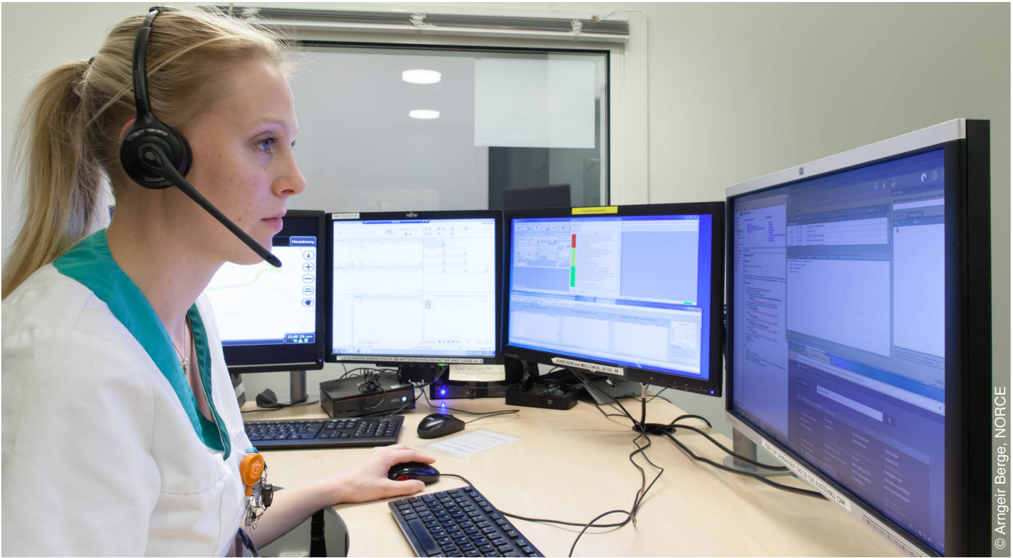
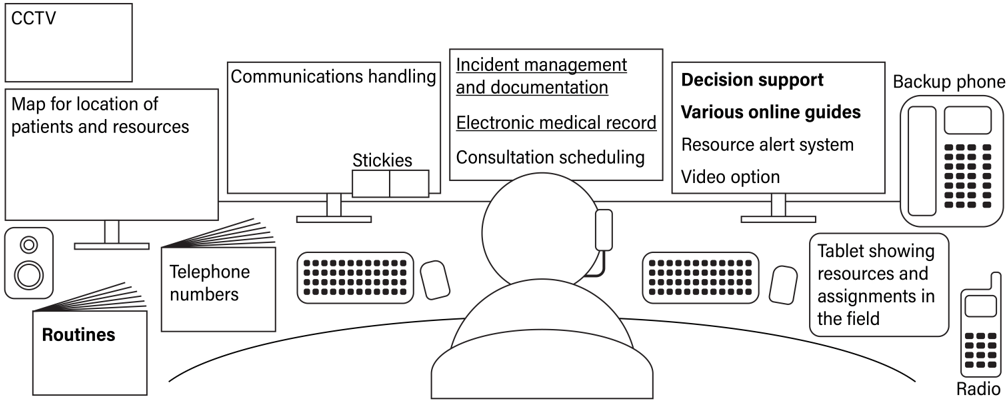
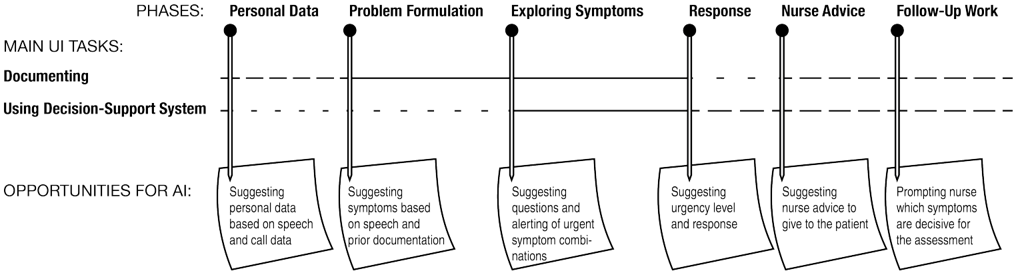
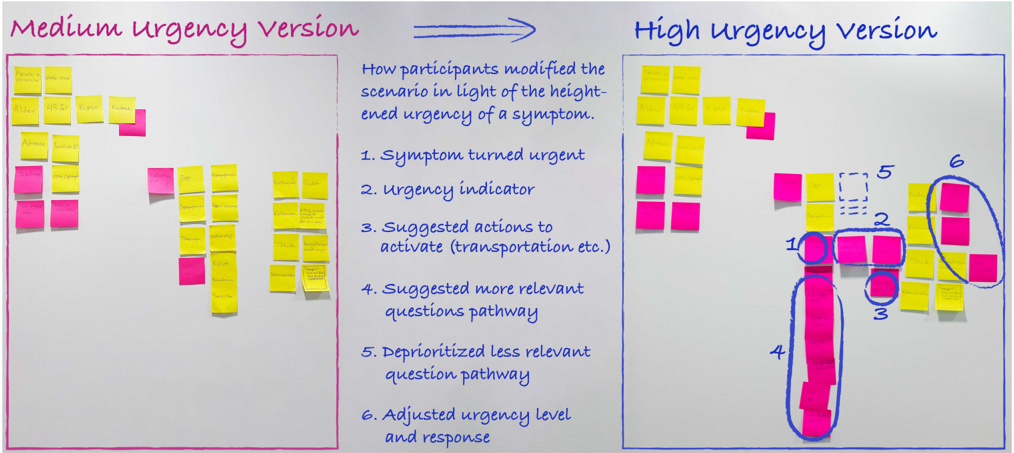
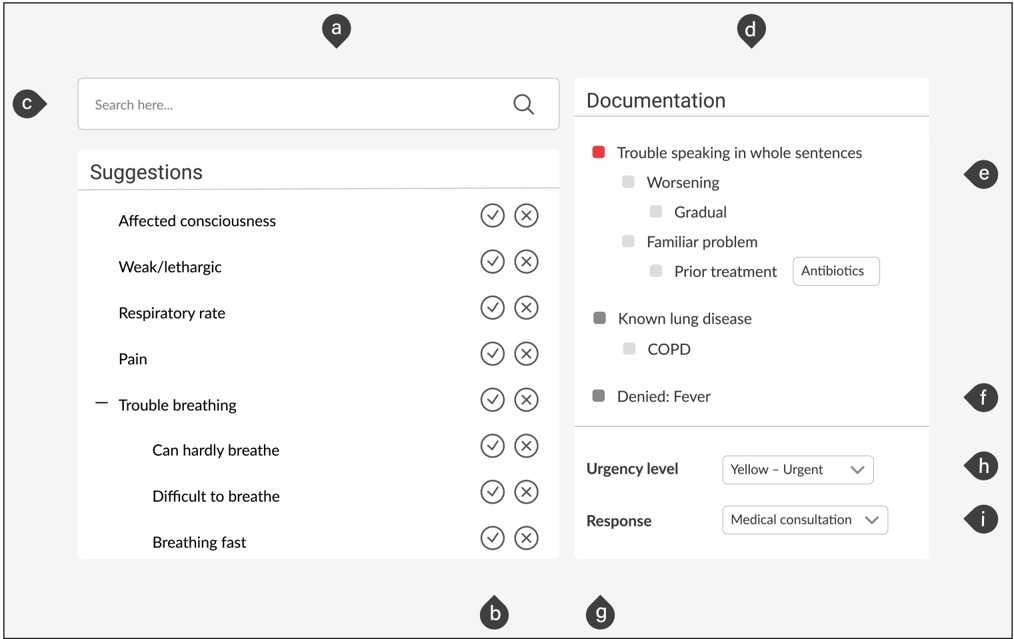
AI-powered symptom checkers are automating the work of telephone triage nurses in assessing patient urgency. Yet, these systems exclude several vulnerable patient groups and overlook telenurses’ competent interaction with their patients. This study, conducted in collaboration with telenurses, examines how AI can support their clinical assessment and was carried out in four phases: 1) interviews that revealed telenurses’ challenge of juggling decision-support and documentation interfaces, 2) a co-design workshop that conceptualized continuous nurse-AI interaction, 3) development of a prototype that suggested questions for nurses to ask callers, and 4) a role-play workshop that demonstrated nurse-AI interaction in practice. The study addresses how we can design for control in human-AI collaboration in order to enhance, rather than replace, human decision-making processes.
Overview
The claims and statistics of this paper haven’t been checked yet.
Free: it reads the open-access text and checks the first 5 claims that cite a source we can check. Create a free account to check every claim.
Integrity signals
Registry
Cites
Statistics
Figures

Verification
Claims the paper makes
The claims and statistics of this paper haven’t been checked yet.
Free: it reads the open-access text and checks the first 5 claims that cite a source we can check. Create a free account to check every claim.
Claims other papers make about this one
Each is checked against this paper’s own text: does it say what the citing paper says it does?
The source backs part of the claim, not all of it — or backs it for a different population, condition or comparison.
In the citing paper
“Medical AI employs expert-supervised reactive agency, where clinicians maintain final decision-making authority ( reactive ).”
From Exploring Collaboration Patterns and Strategies in Human-AI Co-creation through the Lens of Agency: A Scoping Review of the Top-tier HCI Literature (2025) · cites this paper as [18]
Experimental — accuracy not yet measuredThe check wasn’t confident either way, so it gives no verdict — never disputed.
In the citing paper
“Societally, the integration of autonomous AI into co-creation could significantly restructure creative industries and labor markets [18, 60, 118], raising critical questions about the future of creative work, including intellectual property [83], fair compensation [82], and evolving skill requirements [202].”
From Exploring Collaboration Patterns and Strategies in Human-AI Co-creation through the Lens of Agency: A Scoping Review of the Top-tier HCI Literature (2025) · cites this paper as [18]
Experimental — accuracy not yet measuredIn the citing paper
“Finally, providers may have concerns that these systems will infringe on their agency [5, 66, 70].”
From To Recommend or Not to Recommend: Designing and Evaluating AI-Enabled Decision Support for Time-Critical Medical Events (2025) · cites this paper as [5]
Self-check
Percentages, sums and reported differences re-computed from the paper’s own numbers.
The self-check needs the paper’s full text.
Citations
Cites
Using thematic analysis in psychology
Braun, V., & Clarke, V. (2006) · Qualitative Research in Psychology · doi:10.1191/1478088706qp063oa · Cited by 194,414
Sorting Things Out: Classification and Its Consequences
Bowker, G. C., & Star, S. L. (1999) · doi:10.7551/mitpress/6352.001.0001 · Cited by 6,188
Springer Science+Business Media
Технология (2013) · Betascript Publishing eBooks · Cited by 3,087
Speculative design: crafting the speculation
Auger, J. (2013) · Digital Creativity · doi:10.1080/14626268.2013.767276 · Cited by 732
Re-examining Whether, Why, and How Human-AI Interaction Is Uniquely Difficult to Design
Yang, Q., Steinfeld, A., Rosé, C., & Zimmerman, J. (2020) · Proceedings of the 2020 CHI Conference on Human Factors in Computing Systems · doi:10.1145/3313831.3376301 · Cited by 622
Human Performance Consequences of Stages and Levels of Automation: An Integrated Meta-Analysis
Onnasch, L., Wickens, C. D., Li, H., & Manzey, D. (2014) · Human Factors: The Journal of the Human Factors and Ergonomics Society · doi:10.1177/0018720813501549 · Cited by 524
Toward human-centered AI: a perspective from human-computer interaction
Xu, W. (2019) · Interactions · doi:10.1145/3328485 · Cited by 454
Human-Centered Tools for Coping with Imperfect Algorithms During Medical Decision-Making
Cai, C. J., Reif, E., Hegde, N., Hipp, J., Kim, B., Smilkov, D., Wattenberg, M., Viegas, F., Corrado, G. S., Stumpe, M. C., et al. (2019) · Proceedings of the 2019 CHI Conference on Human Factors in Computing Systems · doi:10.1145/3290605.3300234 · Cited by 405 · cited 3×
“Clinical assessment of patient calls is complex, and to design AI-enhanced decision-support, the algorithmic outputs must have a meaningful entryway into decision-making [14].”
BackgroundInfluentialArtificial intelligence and the implementation challenge
Shaw, J., Rudzicz, F., Jamieson, T., & Goldfarb, A. (2019) · Journal of Medical Internet Research · doi:10.2196/13659 · Cited by 389
Xu, W., Dainoff, M. J., Ge, L., & Gao, Z. (2023) · International Journal of Human–Computer Interaction · doi:10.1080/10447318.2022.2041900 · Cited by 363
Research works printed but not linked: 6
- 10.7551/mitpress · doi:10.7551/mitpress
- 10.1155/2017 · doi:10.1155/2017
- 10.1093/jamia · doi:10.1093/jamia
- 10.1093/jamia · doi:10.1093/jamia
- 59. Carlo Reverberi, Tommaso Rigon, Aldo Solari, Cesare Hassan, Paolo Cherubini, and Andrea Cherubini. 2022. Experimental evidence of efective human-AI collaboration in medical decision-making. Scientifc reports 12, 1 (2022), 14952.
- 80. Yue You and Xinning Gui. 2021. Self-Diagnosis through AI-enabled Chatbot- based Symptom Checkers: User Experiences and Design Considerations. AMIA Annual Symposium Proceedings 2020 (Jan 2021), 1354-1363.
Cited by
Zhang, S., Wang, H., & Yi, X. (2025) · Proceedings of the ACM on Human-Computer Interaction · doi:10.1145/3757594 · Cited by 36
"It depends": Configuring AI to Improve Clinical Usefulness Across Contexts
Zając, H. D., Ribeiro, J., Ingala, S., Gentile, S., Wanjohi, R., Gitau, S. N., Carlsen, J. F., Nielsen, M. B., & Andersen, T. O. (2024) · Designing Interactive Systems Conference · doi:10.1145/3643834.3660707 · Cited by 25
Zając, H. D., Andersen, T. O., Kwasa, E., Wanjohi, R., Onyinkwa, M. K., Mwaniki, E. K., Gitau, S. N., Yaseen, S. S., Carlsen, J. F., Fraccaro, M., et al. (2025) · ACM Transactions on Computer-Human Interaction · doi:10.1145/3715115 · Cited by 22
Islam, S., Shahriyar, R., Agarwala, A., Zaman, M., Ahamed, S. A., Rahman, R., Chowdhury, M. H., Sarker, F., & Mamun, K. A. (2025) · BMC Medical Informatics and Decision Making · doi:10.1186/s12911-025-02864-5 · Cited by 19
How Can I Signal You To Trust Me: Investigating AI Trust Signalling in Clinical Self-Assessments
Kollerup, N. K., Wester, J., Skov, M. B., & van Berkel, N. (2024) · Designing Interactive Systems Conference · doi:10.1145/3643834.3661612 · Cited by 16
Metadata
- Authors
- Berge, A., Guribye, F., Fotland, S.-L. S., Fonnes, G., Johansen, I. H., & Trattner, C.
- Affiliations
- NORCE Research AS (NO)
- University of Bergen (NO)
- ORCID
- Venue
- Proceedings of the 2023 ACM Designing Interactive Systems Conference
- Publisher
- ACM
- Published
- 2023-07-10
- Pages
- 1339-1352
- OpenAlex
- W4383682600
- Semantic Scholar
- f6b1d9184594c3a0b150d00c14e79c47d42ba1d1
- Cited by
- 20
- References
- 68
- Citations by year
- 2026: 7 · 2025: 8 · 2024: 5
- FWCI
- 3.61
- Type
- conference paper
- Language
- en
- Open access
- hybrid
- doi.org
- Licence
- Locations
- Designing Interactive Systems Conference (publishedVersion, cc-by)
- NORA - Norwegian Open Research Archives (submittedVersion, cc-by)
- Funders
- Norges Forskningsråd (310468)
- Topics
- Health Sciences › Medicine › Health Informatics › Artificial Intelligence in Healthcare and Education
- Health Sciences › Medicine › Public Health, Environmental and Occupational Health › Telemedicine and Telehealth Implementation
- Health Sciences › Health Professions › Health Information Management › Electronic Health Records Systems
- Keywords
- telephone triage, emergency medical calls, symptom checkers, human-AI interaction, clinical decision support, vulnerable patients, co-design, role play
About these checks
Registry, retraction, Cites and statistics results are computed, not judged, with one exception: a printed reference that no index lists is read once by a model before it counts as a citation error. Claims are extracted by a model and kept only when their quote appears verbatim in the text; each cited source is then checked, with a model’s help, for whether it says what the claim relies on. Those verdicts can be wrong — read the claim’s quote and the cited source before relying on one.
Statistics and arithmetic are recomputed, not judged.
Confidence bands are shown only for fields calibrated on our annotated test set. None is calibrated yet, so no band is shown.
What counts as a claim ›How we measure confidence ›How we check this ›
Are you an author, or do you see a problem with this page? Request a review
Data sources
Bibliographic data: Semantic Scholar, OpenAlex, Crossref.
Contains information from the Semantic Scholar Academic Graph Datasets, made available under the ODC Attribution License (ODC-BY 1.0).
Semantic Scholar’s data is described in: Kinney, R., et al. (2023). The Semantic Scholar Open Data Platform. arXiv:2301.10140.
