

The DOI matches its Crossref record; 2 of the 2 references it cites were found in a registry or an index.
An Analysis of PhotoDNA
Open accessAbstract
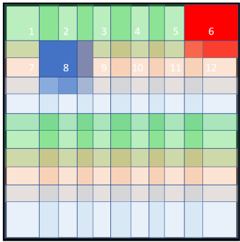
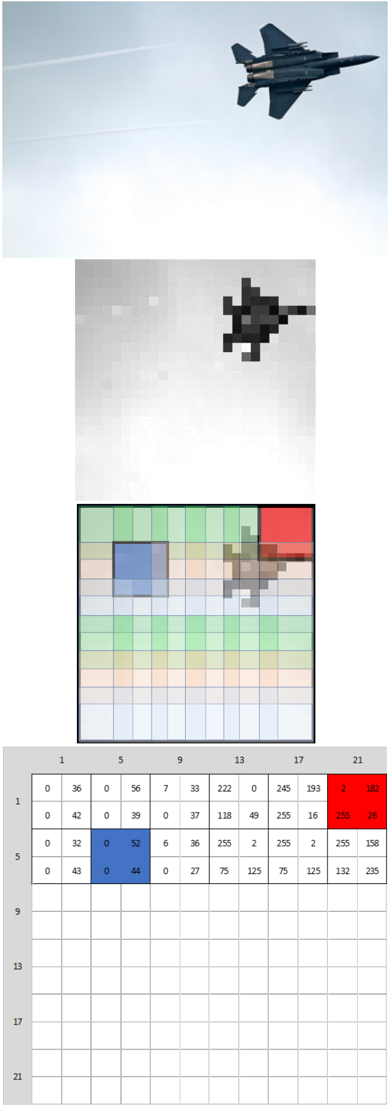
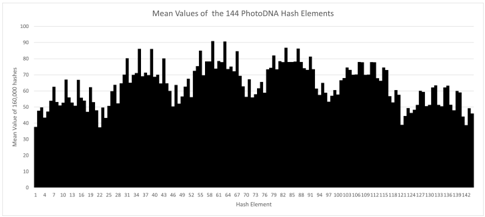
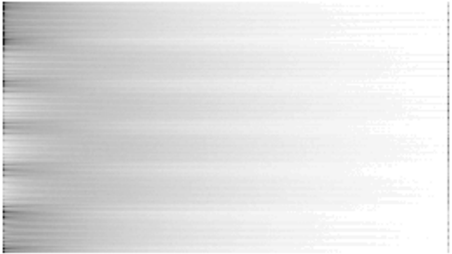
PhotoDNA is a popular hash used to combat CSAM. So far, only limited information has been provided about this hash in terms of its performance. In this paper, we provide an overview of robustness and false positives, as well as some basic observations about its structure. We show that it is robust against typical image processing such as lossy compression. On the other hand, it is only of limited robustness against cropping. We also give some suggestions for improving the algorithm or its use.
Overview
The claims and statistics of this paper haven’t been checked yet.
Run the check — free, no account needed. It reads the open-access text and checks the sources it cites.
Integrity signals
Registry
Cites
Statistics
Figures

Verification
Claims the paper makes
The claims and statistics of this paper haven’t been checked yet.
Run the check — free, no account needed. It reads the open-access text and checks the sources it cites.
Claims other papers make about this one
Each is checked against this paper’s own text: does it say what the citing paper says it does?
In the citing paper
“Both studies demonstrated that PHAs were robust to certain edits like compression but vulnerable to others like cropping.”
From Robustness of Practical Perceptual Hashing Algorithms to Hash-Evasion and Hash-Inversion Attacks (2024) · cites this paper as [32]
Self-check
Percentages, sums and reported differences re-computed from the paper’s own numbers.
The self-check needs the paper’s full text.
Citations
Cites
Qin, C., Liu, E., Feng, G., & Zhang, X. (2021) · IEEE Transactions on Circuits and Systems for Video Technology · doi:10.1109/tcsvt.2020.3047142 · Cited by 78
An Overview of Perceptual Hashing
Farid, H. (2021) · Journal of Online Trust and Safety · doi:10.54501/jots.v1i1.24 · Cited by 70
Research works printed but not linked: 21
- 10.1145/3407023.3409212 · DOI
- Olena Buchko 2022. Classification of Confidential Images Using Neural Hash. 5 (2022), 68–71.
- 10.5120/10765-5578 · DOI
- 10.23919/MIPRO.2017.7973569 · DOI · Paper page
- 10.1016/j.image.2019.115713 · DOI
- 10.21300/19.3.2018.593 · DOI
- Tsung-Yi Lin, Michael Maire, Serge J. Belongie, Lubomir D. Bourdev, Ross B. Girshick, James Hays, Pietro Perona, Deva Ramanan, Piotr Dollár, and C. Lawrence Zitnick. 2014. Microsoft COCO: Common Objects in Context. CoRR abs/1405.0312 (2014). arXiv:1405.0312http://arxiv.org/abs/1405.0312 · arXiv
- Dat Tien Nguyen Firoj Alam Ferda Ofli and Muhammad Imran. [n.d.]. Automatic Image Filtering on Social Networks Using Deep Learning and Perceptual Hashing During Crises. http://arxiv.org/pdf/1704.02602v1 · arXiv
- 10.1007/978-3-642-35515-8_15 · DOI · Paper page
- 10.1145/3538969.3544461 · DOI
- 10.1145/3339252.3341487 · DOI
- Martin Steinebach, Huajian Liu, and York Yannikos. 2012. Forbild: Efficient robust image hashing. In Media Watermarking, Security, and Forensics 2012, Vol. 8303. SPIE, 195–202.
- 10.1109/ARES.2014.85 · DOI
- 10.1007/978-3-319-14289-0_8 · DOI
- 10.1007/s11042-012-1188-8 · DOI
- 10.1109/TKDE.2018.2837745 · DOI · Paper page
- 10.1016/j.ijleo.2014.05.015 · DOI
- 10.1016/j.aeue.2013.02.009 · DOI
- Shaharyar Ahmed Khan Tareen and Zahra Saleem. 2018. A comparative analysis of sift, surf, kaze, akaze, orb, and brisk. In 2018 International conference on computing, mathematics and engineering technologies (iCoMET). IEEE, 1–10.
- 10.5555/1193214.1194040 · DOI
- 10.1117/12.876617 · DOI
Cited by
Sorted by citations
Robustness of Practical Perceptual Hashing Algorithms to Hash-Evasion and Hash-Inversion Attacks
Madden, J., Bhavsar, M., Dorje, L., & Li, X. (2024) · arXiv · doi:10.48550/arxiv.2406.00918
“One of the special issue of PHAs is that they seem not robust to some normal imaging editing methods, for which [32] examined PhotoDNA, while [11] investigated PDQ and NeuralHash.”
Metadata
- Authors
- Steinebach, M.
- Affiliations
- Fraunhofer Institute for Secure Information Technology (DE)
- Corresponding author
- Steinebach, Martin
- ORCID
- Steinebach, Martin
- Venue
- Proceedings of the 18th International Conference on Availability, Reliability and Security
- Publisher
- ACM
- Published
- 2023-08-29
- Pages
- 1-8
- OpenAlex
- W4385688380
- Cited by
- 7
- References
- 2
- Citations by year
- 2026: 3 · 2025: 3 · 2024: 1
- FWCI
- 0.75
- Type
- conference paper
- Language
- en
- Open access
- hybrid
- doi.org
- Licence
- Locations
- International Conference on Availability, Reliability and Security (ARES) (publishedVersion, cc-by)
- Fraunhofer-Publica (Fraunhofer-Gesellschaft) (submittedVersion)
- Funders
- Bundesministerium für Bildung und Forschung
- Topics
- Physical Sciences › Computer Science › Computer Vision and Pattern Recognition › Advanced Steganography and Watermarking Techniques
- Physical Sciences › Computer Science › Computer Vision and Pattern Recognition › Digital Media Forensic Detection
- Physical Sciences › Computer Science › Computer Vision and Pattern Recognition › Chaos-based Image/Signal Encryption
- Keywords
- content safety, child pornography, image hashing, hash robustness, false positives, lossy image compression, image cropping, image processing
About these checks
Registry, retraction, Cites and statistics results are computed, not judged, with one exception: a printed reference that no index lists is read once by a model before it counts as a citation error. Claims are extracted by a model and kept only when their quote appears verbatim in the text; each cited source is then checked, with a model’s help, for whether it says what the claim relies on. Those verdicts can be wrong — read the claim’s quote and the cited source before relying on one.
Statistics and arithmetic are recomputed, not judged.
Confidence bands are shown only for fields calibrated on our annotated test set. None is calibrated yet, so no band is shown.
What counts as a claim ›How we measure confidence ›How we check this ›
Are you an author, or do you see a problem with this page? Request a review
