

The DOI matches its Crossref record; 63 of the 63 references it cites were found in a registry or an index; none of the 54 sources its claims cite is checked for support yet.
“Write in English, Nobody Understands Your Language Here”: A Study of Non-English Trends in Open-Source Repositories
Open accessPublished version of a preprint
Abstract
The open-source software (OSS) community has historically been dominated by English as the primary language for code, documentation, and developer interactions. However, with growing global participation and better support for non-Latin scripts through standards like Unicode, OSS is gradually becoming more multilingual. This study investigates the extent to which OSS is becoming more multilingual, analyzing 9.14 billion GitHub issues, pull requests, and discussions, and 62,500 repositories across five programming languages and 30 natural languages, covering the period from 2015 to 2025. We examine six research questions to track changes in language use across communication, code, and documentation. We find that multilingual participation has steadily increased, especially in Korean, Chinese, and Russian. This growth appears not only in issues and discussions but also in code comments, string literals, and documentation files. While this shift reflects greater inclusivity and language diversity in OSS, it also creates language tension. The ability to express oneself in a native language can clash with shared norms around English use, especially in collaborative settings. Non-English or multilingual projects tend to receive less visibility and participation, suggesting that language remains both a resource and a barrier, shaping who gets heard, who contributes, and how open collaboration unfolds.
Overview
AI snapshot
Written from the paper’s full text.
TL;DR
This large-scale study finds GitHub open-source communication and code are becoming more multilingual, with non-English issue/PR content rising 164% from 2015 to 2025 and Korean, Chinese, and Russian leading growth. Multilingualism increases inclusivity, but non-English and mixed-language repositories receive fewer comments, contributors, and stars, while English-dominant projects resolve issues more slowly.
Key findings
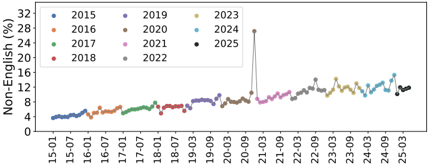
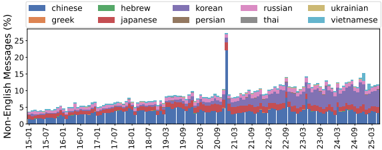
- Non-English content in issues and pull requests rose from 4.2% in 2015 to 11.3% in 2025, a 164% relative increase; Korean usage increased 1706% and Chinese 120%, with Chinese, Korean, Japanese, Russian, and Vietnamese as the top non-English languages.
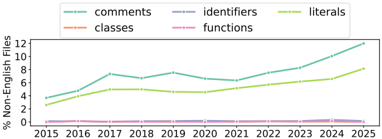
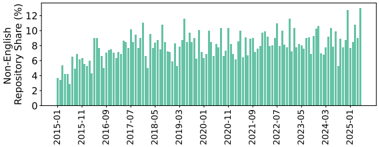
- In code, non-English comments rose from 3.6% to 11.9% of files and string literals from 3.2% to 9.6%; identifiers stayed mostly English (non-English identifiers 0.14% to 0.28%, variables 0.09% to 0.28%). Repositories with non-English documentation rose from 3.7% to 13.0%.
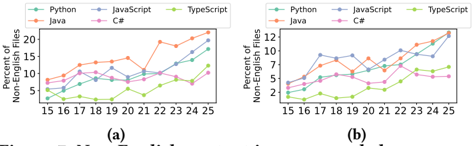
- Java had the highest multilingual code share: in 2025, 22.03% of Java files had non-English comments and 13.2% had non-English literals; Python had 17.1% comments and 13.3% literals, JavaScript 19.7% comments and 12.7% literals, while C# and TypeScript were lower (C# 10.2% comments; TypeScript 12.3% comments, 7.08% literals).
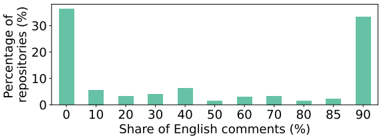
- English-dominant repositories had significantly more comments, contributors, and stars than mixed and non-English repositories; median stars were 36, 12, and 2, respectively. Issue resolution medians were 7.17 days for English projects, 4.70 for mixed, and 3.39 for non-English; 193,000 repositories used multiple languages, and language-enforcement phrases such as “write in English” appeared 3,801 times.
Methods
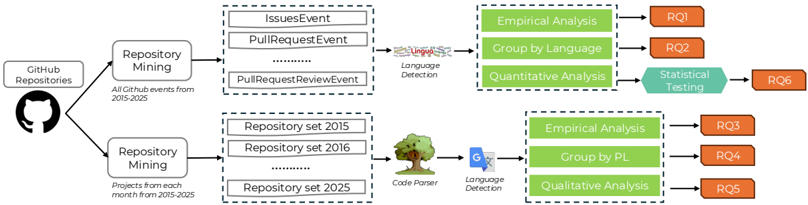
- Two pipelines: GHArchive for communication (9.14 billion messages from over 476 million repositories and 78.01 million developers, January 2015–May 2025; 1.7 billion retained natural-language data points) and the GitHub REST API for code patches (62,500 repositories across JavaScript, Python, TypeScript, Java, and C#; 385 patches per month, totaling 48,125 patches; 30 natural languages).
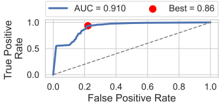
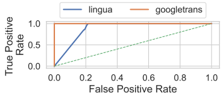
- Language detection used Lingua v2.1.1 for messages (AUC 0.91, confidence threshold 0.9) and the Google Cloud Translation API for code elements; tree-sitter parsed identifiers, function/class names, literals, and comments. Statistical testing used Kruskal-Wallis H-tests and pairwise Mann-Whitney U tests with Bonferroni correction.
Limitations
- Stated: language detection on short, informal, or code-mixed GitHub text is challenging, and strict confidence thresholds plus focus on non-Latin languages make estimates conservative lower bounds. Code analysis included only patches introducing new files over 500 characters; activity is limited to January 2015–May 2025; repository sampling and 90% language-dominance classification may miss less active or visible repositories; findings are limited to public GitHub and may not generalize to other platforms or private repositories.
- Evident: the study is observational, so the engagement differences cannot establish causality; the authors note causality is hard to confirm and some explanations remain hypotheses. Language detection also excludes Latin-based languages, so trends for Spanish, French, and similar languages are not measured.
Model-written summary. Check it against the paper before relying on it.
Integrity signals
Registry
Cites
Statistics
Figures
Verification
Claims the paper makes
90 Own result · 71 Own interpretation · 37 Sources not found · 7 Own method · 3 Not checked yet · 1 No basis given
A result the paper reports from its own data — it cites no other source for it, so there is none to check. The quote shows it is in the paper.
In the paper
“the proportion of non-English content increased consistently over this period, rising from an average of 4.2% in 2015 to 11.3% in 2025, representing a 164% relative increase over the decade.”
- Also stated in: § 1 Introduction · plain
“Our results show that non-English content in issues and pull requests grew by 164 percent between 2015 and 2025.”
§ "Write in English, Nobody Understands Your Language Here": A Study of Non-English Trends in Open-Source Repositories * > Data Collection.
plainstates a cause- Asserted: passes — The authors put it forward as true.
- Checkable: passes — It can be checked against evidence.
- Load-bearing: passes — The paper’s conclusions depend on it.
- Based: passes — The paper gives a reason why it holds.
- Rests on an assumption: GitHub activity is representative of open-source software development.
- Rests on an assumption: The sampled repositories are representative of the broader population of GitHub repositories.
- Rests on an assumption: Non-English text in messages and code indicates multilingual participation.
- Also stated in: § 1 Introduction · plain
A result the paper reports from its own data — it cites no other source for it, so there is none to check. The quote shows it is in the paper.
In the paper
“From 2022 onward, the percentage of non-English messages remained above 10% annually, signaling a lasting change in the linguistic makeup of open-source communities.”
§ "Write in English, Nobody Understands Your Language Here": A Study of Non-English Trends in Open-Source Repositories * > Data Collection.
plain- Asserted: passes — The authors put it forward as true.
- Checkable: passes — It can be checked against evidence.
- Load-bearing: passes — The paper’s conclusions depend on it.
- Based: passes — The paper gives a reason why it holds.
- Rests on an assumption: GitHub activity is representative of open-source software development.
- Rests on an assumption: The sampled repositories are representative of the broader population of GitHub repositories.
- Rests on an assumption: Non-English text in messages and code indicates multilingual participation.
A result the paper reports from its own data — it cites no other source for it, so there is none to check. The quote shows it is in the paper.
In the paper
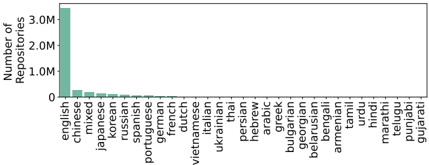
“In English-dominant repositories, such remarks were often framed as reminders or expectations to communicate in English, especially in response to issues written in other languages.”
§ "Write in English, Nobody Understands Your Language Here": A Study of Non-English Trends in Open-Source Repositories * > Number of Repositories
plainstates an association- Asserted: passes — The authors put it forward as true.
- Checkable: passes — It can be checked against evidence.
- Load-bearing: passes — The paper’s conclusions depend on it.
- Based: passes — The paper gives a reason why it holds.
A result the paper reports from its own data — it cites no other source for it, so there is none to check. The quote shows it is in the paper.
In the paper
“and 60% used Chinese in code elements, particularly in string literals.”
§ "Write in English, Nobody Understands Your Language Here": A Study of Non-English Trends in Open-Source Repositories * > Number of Repositories
plain- Asserted: passes — The authors put it forward as true.
- Checkable: passes — It can be checked against evidence.
- Load-bearing: passes — The paper’s conclusions depend on it.
- Based: passes — The paper gives a reason why it holds.
A result the paper states — it cites no source for it, so there is none to check. The quote shows it is in the paper.
In the paper
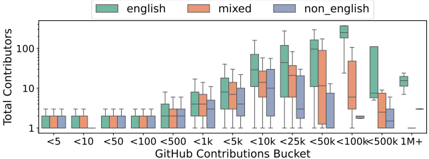
“English-dominant projects show steady contributor growth, likely due to greater visibility and broader accessibility.”
§ "Write in English, Nobody Understands Your Language Here": A Study of Non-English Trends in Open-Source Repositories * > <5 <10 <50 <100 <500 <1k <5k <10k <25k <50k<100k<500k 1M+
hedgedstates a possible cause- Asserted: passes — The authors put it forward as true.
- Checkable: passes — It can be checked against evidence.
- Load-bearing: passes — The paper’s conclusions depend on it.
- Based: passes — The paper gives a reason why it holds.
A result the paper reports from its own data — it cites no other source for it, so there is none to check. The quote shows it is in the paper.
In the paper
“Its influence peaked in December 2020, when it spiked to 22.1% of all messages, likely contributing to the multilingual surge observed in §4.”
§ "Write in English, Nobody Understands Your Language Here": A Study of Non-English Trends in Open-Source Repositories * > Data Collection.
plain- Asserted: passes — The authors put it forward as true.
- Checkable: passes — It can be checked against evidence.
- Load-bearing: unclear — It is unclear whether the paper’s conclusions depend on it.
- Based: passes — The paper gives a reason why it holds.
- Rests on an assumption: GitHub activity is representative of open-source software development.
- Rests on an assumption: The sampled repositories are representative of the broader population of GitHub repositories.
- Rests on an assumption: Non-English text in messages and code indicates multilingual participation.
A result the paper reports from its own data — it cites no other source for it, so there is none to check. The quote shows it is in the paper.
In the paper
“Non-English string literals rise from 4.2% in 2015 to 12.7% in 2025.”
§ "Write in English, Nobody Understands Your Language Here": A Study of Non-English Trends in Open-Source Repositories * > 7 RQ4: Does multilingualism vary across programming languages?
plainstates a cause- Asserted: passes — The authors put it forward as true.
- Checkable: passes — It can be checked against evidence.
- Load-bearing: passes — The paper’s conclusions depend on it.
- Based: passes — The paper gives a reason why it holds.
A result the paper states — it cites no source for it, so there is none to check. The quote shows it is in the paper.
In the paper
“JavaScript shows a pattern similar to Java.”
§ "Write in English, Nobody Understands Your Language Here": A Study of Non-English Trends in Open-Source Repositories * > 7 RQ4: Does multilingualism vary across programming languages?
plainstates an association- Asserted: passes — The authors put it forward as true.
- Checkable: passes — It can be checked against evidence.
- Load-bearing: unclear — It is unclear whether the paper’s conclusions depend on it.
- Based: passes — The paper gives a reason why it holds.
A result the paper states — it cites no source for it, so there is none to check. The quote shows it is in the paper.
In the paper
“As repositories grow, differences between language groups become clearer.”
§ "Write in English, Nobody Understands Your Language Here": A Study of Non-English Trends in Open-Source Repositories * > <5 <10 <50 <100 <500 <1k <5k <10k <25k <50k<100k<500k 1M+
plainstates an association- Asserted: passes — The authors put it forward as true.
- Checkable: passes — It can be checked against evidence.
- Load-bearing: passes — The paper’s conclusions depend on it.
- Based: passes — The paper gives a reason why it holds.
A result the paper states — it cites no source for it, so there is none to check. The quote shows it is in the paper.
In the paper
“Java has the most steady rise in multilingual content in all parts of the code that hold natural language.”
§ "Write in English, Nobody Understands Your Language Here": A Study of Non-English Trends in Open-Source Repositories * > 7 RQ4: Does multilingualism vary across programming languages?
plainstates an association- Asserted: passes — The authors put it forward as true.
- Checkable: passes — It can be checked against evidence.
- Load-bearing: passes — The paper’s conclusions depend on it.
- Based: passes — The paper gives a reason why it holds.
- It may state two separate claims as one. 69
- Probably not a substantial claim. 47
A result the paper reports from its own data — it cites no other source for it, so there is none to check. The quote shows it is in the paper.
In the paper
“Chinese consistently appears as the most dominant non-English language throughout the decade, growing from 1.6% in January 2015 to 3.4% in May 2025.”
§ "Write in English, Nobody Understands Your Language Here": A Study of Non-English Trends in Open-Source Repositories * > Data Collection.
plainstates a cause- Asserted: passes — The authors put it forward as true.
- Checkable: passes — It can be checked against evidence.
- Load-bearing: passes — The paper’s conclusions depend on it.
- Based: passes — The paper gives a reason why it holds.
It may state two separate claims as one.
- Rests on an assumption: GitHub activity is representative of open-source software development.
- Rests on an assumption: The sampled repositories are representative of the broader population of GitHub repositories.
- Rests on an assumption: Non-English text in messages and code indicates multilingual participation.
A result the paper reports from its own data — it cites no other source for it, so there is none to check. The quote shows it is in the paper.
In the paper
“The top five languages by average share across the 10-year period are Chinese (3.8%), Korean (1.9%),Japanese (1.5%), Russian (1.0%), and Vietnamese (0.18%).”
§ "Write in English, Nobody Understands Your Language Here": A Study of Non-English Trends in Open-Source Repositories * > Data Collection.
plain- Asserted: passes — The authors put it forward as true.
- Checkable: passes — It can be checked against evidence.
- Load-bearing: passes — The paper’s conclusions depend on it.
- Based: passes — The paper gives a reason why it holds.
It may state two separate claims as one.
- Rests on an assumption: GitHub activity is representative of open-source software development.
- Rests on an assumption: The sampled repositories are representative of the broader population of GitHub repositories.
- Rests on an assumption: Non-English text in messages and code indicates multilingual participation.
A result the paper reports from its own data — it cites no other source for it, so there is none to check. The quote shows it is in the paper.
In the paper
“In 2019, the average proportion of non-English content was 8.2%, increasing to 9.9% in 2020, marking a structural shift in participation dynamics.”
§ "Write in English, Nobody Understands Your Language Here": A Study of Non-English Trends in Open-Source Repositories * > Data Collection.
plainstates a cause- Asserted: passes — The authors put it forward as true.
- Checkable: passes — It can be checked against evidence.
- Load-bearing: passes — The paper’s conclusions depend on it.
- Based: passes — The paper gives a reason why it holds.
It may state two separate claims as one.
- Rests on an assumption: GitHub activity is representative of open-source software development.
- Rests on an assumption: The sampled repositories are representative of the broader population of GitHub repositories.
- Rests on an assumption: Non-English text in messages and code indicates multilingual participation.
A result the paper reports from its own data — it cites no other source for it, so there is none to check. The quote shows it is in the paper.
In the paper
“Korean usage increased by 1706 percent, and Chinese by 120 percent.”
§ "Write in English, Nobody Understands Your Language Here": A Study of Non-English Trends in Open-Source Repositories * > 1 Introduction
plainstates a cause- Asserted: passes — The authors put it forward as true.
- Checkable: passes — It can be checked against evidence.
- Load-bearing: passes — The paper’s conclusions depend on it.
- Based: passes — The paper gives a reason why it holds.
It may state two separate claims as one.
- Rests on an assumption: GitHub activity is representative of open-source software development.
- Rests on an assumption: The sampled repositories are representative of the broader population of GitHub repositories.
- Rests on an assumption: Non-English text in messages and code indicates multilingual participation.
A result the paper reports from its own data — it cites no other source for it, so there is none to check. The quote shows it is in the paper.
In the paper
“This growth appears not only in issues and discussions but also in code comments, string literals, and documentation files.”
§ "Write in English, Nobody Understands Your Language Here": A Study of Non-English Trends in Open-Source Repositories * > Abstract
hedgedstates an association- Asserted: passes — The authors put it forward as true.
- Checkable: passes — It can be checked against evidence.
- Load-bearing: passes — The paper’s conclusions depend on it.
- Based: passes — The paper gives a reason why it holds.
It may state two separate claims as one.
- Rests on an assumption: GitHub activity is representative of open-source software development.
- Rests on an assumption: The sampled repositories are representative of the broader population of GitHub repositories.
- Rests on an assumption: Non-English text in messages and code indicates multilingual participation.
In the paper
“For example, the French project ratpstatus [49] tracks transport disruptions in Île-de-France and is active, yet has only two contributors.”
§ "Write in English, Nobody Understands Your Language Here": A Study of Non-English Trends in Open-Source Repositories * > <5 <10 <50 <100 <500 <1k <5k <10k <25k <50k<100k<500k 1M+
What the sources say
- Not matchedcites [49]
Couldn’t be matched to a paper in Crossref, so it can’t be checked.
plainSingle case- Asserted: passes — The authors put it forward as true.
- Checkable: passes — It can be checked against evidence.
- Load-bearing: unclear — It is unclear whether the paper’s conclusions depend on it.
- Based: passes — The paper gives a reason why it holds.
It may state two separate claims as one.
- Not matched
A result the paper reports from its own data — it cites no other source for it, so there is none to check. The quote shows it is in the paper.
In the paper
“Our analysis found that language-related comments appeared in both English-dominant and non-English-dominant repositories, though the tone and intent varied.”
§ "Write in English, Nobody Understands Your Language Here": A Study of Non-English Trends in Open-Source Repositories * > Number of Repositories
plainstates an association- Asserted: passes — The authors put it forward as true.
- Checkable: passes — It can be checked against evidence.
- Load-bearing: passes — The paper’s conclusions depend on it.
- Based: passes — The paper gives a reason why it holds.
It may state two separate claims as one.
A result the paper reports from its own data — it cites no other source for it, so there is none to check. The quote shows it is in the paper.
In the paper
“Among non-English documentation, Chinese is the most prevalent, accounting for 3.3% of all repositories.”
§ "Write in English, Nobody Understands Your Language Here": A Study of Non-English Trends in Open-Source Repositories * > Results.
plain- Asserted: passes — The authors put it forward as true.
- Checkable: passes — It can be checked against evidence.
- Load-bearing: unclear — It is unclear whether the paper’s conclusions depend on it.
- Based: passes — The paper gives a reason why it holds.
It may state two separate claims as one.
A result the paper reports from its own data — it cites no other source for it, so there is none to check. The quote shows it is in the paper.
In the paper
“Russian (1.3%), Korean (0.7%), and Japanese (0.5%) are also commonly observed”
§ "Write in English, Nobody Understands Your Language Here": A Study of Non-English Trends in Open-Source Repositories * > Results.
plain- Asserted: passes — The authors put it forward as true.
- Checkable: passes — It can be checked against evidence.
- Load-bearing: unclear — It is unclear whether the paper’s conclusions depend on it.
- Based: passes — The paper gives a reason why it holds.
It may state two separate claims as one.
A result the paper reports from its own data — it cites no other source for it, so there is none to check. The quote shows it is in the paper.
In the paper
“Korean shows the most significant growth, rising from 0.3% in early 2015 to 5.2% in May 2025, with a peak of 7.3% in November 2024.”
§ "Write in English, Nobody Understands Your Language Here": A Study of Non-English Trends in Open-Source Repositories * > Data Collection.
plainstates a cause- Asserted: passes — The authors put it forward as true.
- Checkable: passes — It can be checked against evidence.
- Load-bearing: passes — The paper’s conclusions depend on it.
- Based: passes — The paper gives a reason why it holds.
It may state two separate claims as one.
- Rests on an assumption: GitHub activity is representative of open-source software development.
- Rests on an assumption: The sampled repositories are representative of the broader population of GitHub repositories.
- Rests on an assumption: Non-English text in messages and code indicates multilingual participation.
A result the paper reports from its own data — it cites no other source for it, so there is none to check. The quote shows it is in the paper.
In the paper
“We found 3801, 182, 1334, 717, and 149 occurrences of these phrases, respectively.”
§ "Write in English, Nobody Understands Your Language Here": A Study of Non-English Trends in Open-Source Repositories * > Number of Repositories
plain- Asserted: passes — The authors put it forward as true.
- Checkable: passes — It can be checked against evidence.
- Load-bearing: passes — The paper’s conclusions depend on it.
- Based: passes — The paper gives a reason why it holds.
It may state two separate claims as one.
A result the paper reports from its own data — it cites no other source for it, so there is none to check. The quote shows it is in the paper.
In the paper
“Korean-language content increased from 0.3% in 2015 to 5.2% in 2025, despite South Korea representing less than 1% of the global population.”
§ "Write in English, Nobody Understands Your Language Here": A Study of Non-English Trends in Open-Source Repositories * > Data Collection.
plainstates an association- Asserted: passes — The authors put it forward as true.
- Checkable: passes — It can be checked against evidence.
- Load-bearing: passes — The paper’s conclusions depend on it.
- Based: passes — The paper gives a reason why it holds.
It may state two separate claims as one.
- Rests on an assumption: GitHub activity is representative of open-source software development.
- Rests on an assumption: The sampled repositories are representative of the broader population of GitHub repositories.
- Rests on an assumption: Non-English text in messages and code indicates multilingual participation.
- Rests on an assumption: South Korea represents less than 1% of the global population.
A result the paper reports from its own data — it cites no other source for it, so there is none to check. The quote shows it is in the paper.
In the paper
“We find that multilingual participation has steadily increased, especially in Korean, Chinese, and Russian.”
§ "Write in English, Nobody Understands Your Language Here": A Study of Non-English Trends in Open-Source Repositories * > Abstract
plainstates a cause- Asserted: passes — The authors put it forward as true.
- Checkable: passes — It can be checked against evidence.
- Load-bearing: passes — The paper’s conclusions depend on it.
- Based: passes — The paper gives a reason why it holds.
It may state two separate claims as one.
- Rests on an assumption: GitHub activity is representative of open-source software development.
- Rests on an assumption: The sampled repositories are representative of the broader population of GitHub repositories.
- Rests on an assumption: Non-English text in messages and code indicates multilingual participation.
A result the paper reports from its own data — it cites no other source for it, so there is none to check. The quote shows it is in the paper.
In the paper
“Vietnamese has a low average but shows occasional spikes, reaching 2.2% in December 2024.”
§ "Write in English, Nobody Understands Your Language Here": A Study of Non-English Trends in Open-Source Repositories * > Data Collection.
plain- Asserted: passes — The authors put it forward as true.
- Checkable: passes — It can be checked against evidence.
- Load-bearing: unclear — It is unclear whether the paper’s conclusions depend on it.
- Based: passes — The paper gives a reason why it holds.
It may state two separate claims as one.
- Rests on an assumption: GitHub activity is representative of open-source software development.
- Rests on an assumption: The sampled repositories are representative of the broader population of GitHub repositories.
- Rests on an assumption: Non-English text in messages and code indicates multilingual participation.
A result the paper reports from its own data — it cites no other source for it, so there is none to check. The quote shows it is in the paper.
In the paper
“Third, although the average percentages for Thai, Vietnamese, and Persian remain below 0.2%, all three show clear upward trends.”
§ "Write in English, Nobody Understands Your Language Here": A Study of Non-English Trends in Open-Source Repositories * > Data Collection.
boostedstates an association- Asserted: passes — The authors put it forward as true.
- Checkable: passes — It can be checked against evidence.
- Load-bearing: unclear — It is unclear whether the paper’s conclusions depend on it.
- Based: passes — The paper gives a reason why it holds.
It may state two separate claims as one.
- Rests on an assumption: GitHub activity is representative of open-source software development.
- Rests on an assumption: The sampled repositories are representative of the broader population of GitHub repositories.
- Rests on an assumption: Non-English text in messages and code indicates multilingual participation.
A result the paper states — it cites no source for it, so there is none to check. The quote shows it is in the paper.
In the paper
“In smaller repositories, contributor counts are generally low and similar across all groups.”
§ "Write in English, Nobody Understands Your Language Here": A Study of Non-English Trends in Open-Source Repositories * > <5 <10 <50 <100 <500 <1k <5k <10k <25k <50k<100k<500k 1M+
plain- Asserted: passes — The authors put it forward as true.
- Checkable: passes — It can be checked against evidence.
- Load-bearing: unclear — It is unclear whether the paper’s conclusions depend on it.
- Based: passes — The paper gives a reason why it holds.
It may state two separate claims as one.
None of the sources cited for this claim could be matched to a paper in Crossref, so there is nothing to check it against.
In the paper
“For example, in a Japanese TypeScript project, developers used Japanese characters for both a variable and a class name in a VS Code extension plugin 5 .In a Java testing project, one function is defined using Korean characters 6 .Another Python script includes a Chinese function name for a math operation 7 .”
§ "Write in English, Nobody Understands Your Language Here": A Study of Non-English Trends in Open-Source Repositories * > Results.
What the sources say
- Not matchedcites [5]
Couldn’t be matched to a paper in Crossref, so it can’t be checked.
- Not matchedcites [6]
Couldn’t be matched to a paper in Crossref, so it can’t be checked.
- Not matchedcites [7]
Couldn’t be matched to a paper in Crossref, so it can’t be checked.
plain- Asserted: passes — The authors put it forward as true.
- Checkable: passes — It can be checked against evidence.
- Load-bearing: fails — The paper’s conclusions may not depend on it.
- Based: passes — The paper gives a reason why it holds.
Probably not a substantial claim. The paper’s conclusions may not depend on it. It may state two separate claims as one.
- Rests on an assumption: GitHub activity is representative of open-source software development.
- Rests on an assumption: The sampled repositories are representative of the broader population of GitHub repositories.
- Rests on an assumption: Non-English text in messages and code indicates multilingual participation.
- Not matched
A result the paper reports from its own data — it cites no other source for it, so there is none to check. The quote shows it is in the paper.
In the paper
“The share of files with non-English identifiers grew from 0.14% to 0.28%, and for variables, from 0.09% to 0.28%.”
§ "Write in English, Nobody Understands Your Language Here": A Study of Non-English Trends in Open-Source Repositories * > Results.
plainstates a cause- Asserted: passes — The authors put it forward as true.
- Checkable: passes — It can be checked against evidence.
- Load-bearing: passes — The paper’s conclusions depend on it.
- Based: passes — The paper gives a reason why it holds.
It may state two separate claims as one.
- Rests on an assumption: GitHub activity is representative of open-source software development.
- Rests on an assumption: The sampled repositories are representative of the broader population of GitHub repositories.
- Rests on an assumption: Non-English text in messages and code indicates multilingual participation.
A result the paper reports from its own data — it cites no other source for it, so there is none to check. The quote shows it is in the paper.
In the paper
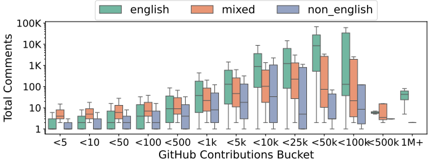
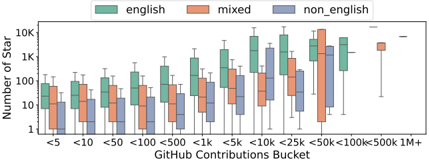
“The gap between English and mixed repositories widens steadily in larger buckets, with English-dominant repositories showing the highest levels of discussion beyond 1k contributions.”
§ "Write in English, Nobody Understands Your Language Here": A Study of Non-English Trends in Open-Source Repositories * > Statistical Testing.
plainstates an association- Asserted: passes — The authors put it forward as true.
- Checkable: passes — It can be checked against evidence.
- Load-bearing: passes — The paper’s conclusions depend on it.
- Based: passes — The paper gives a reason why it holds.
It may state two separate claims as one.
In the paper
“The Chinese API project [93] offers reverse data interfaces with frequent commits, also by just two contributors.”
§ "Write in English, Nobody Understands Your Language Here": A Study of Non-English Trends in Open-Source Repositories * > <5 <10 <50 <100 <500 <1k <5k <10k <25k <50k<100k<500k 1M+
What the sources say
- Not matchedcites [93]
Couldn’t be matched to a paper in Crossref, so it can’t be checked.
plainSingle case- Asserted: passes — The authors put it forward as true.
- Checkable: passes — It can be checked against evidence.
- Load-bearing: unclear — It is unclear whether the paper’s conclusions depend on it.
- Based: passes — The paper gives a reason why it holds.
It may state two separate claims as one.
- Not matched
A result the paper reports from its own data — it cites no other source for it, so there is none to check. The quote shows it is in the paper.
In the paper
“In 2025, 17.1% of Python files contain non-English comments, and 13.3% include non-English string literals.”
§ "Write in English, Nobody Understands Your Language Here": A Study of Non-English Trends in Open-Source Repositories * > 7 RQ4: Does multilingualism vary across programming languages?
plain- Asserted: passes — The authors put it forward as true.
- Checkable: passes — It can be checked against evidence.
- Load-bearing: passes — The paper’s conclusions depend on it.
- Based: passes — The paper gives a reason why it holds.
It may state two separate claims as one.
A result the paper reports from its own data — it cites no other source for it, so there is none to check. The quote shows it is in the paper.
In the paper
“Mixed-language repositories gain more traction than non-English ones but still fall behind English projects.”
§ "Write in English, Nobody Understands Your Language Here": A Study of Non-English Trends in Open-Source Repositories * > <5 <10 <50 <100 <500 <1k <5k <10k <25k <50k<100k<500k 1M+
plainstates an association- Asserted: passes — The authors put it forward as true.
- Checkable: passes — It can be checked against evidence.
- Load-bearing: passes — The paper’s conclusions depend on it.
- Based: passes — The paper gives a reason why it holds.
It may state two separate claims as one.
A result the paper reports from its own data — it cites no other source for it, so there is none to check. The quote shows it is in the paper.
In the paper
“Some maintainers use translation tools or switch languages to accommodate contributors, while others reject messages or ask users to follow a preferred language.”
§ "Write in English, Nobody Understands Your Language Here": A Study of Non-English Trends in Open-Source Repositories * > 11 Discussion
plain- Asserted: passes — The authors put it forward as true.
- Checkable: passes — It can be checked against evidence.
- Load-bearing: passes — The paper’s conclusions depend on it.
- Based: passes — The paper gives a reason why it holds.
It may state two separate claims as one.
A result the paper reports from its own data — it cites no other source for it, so there is none to check. The quote shows it is in the paper.
In the paper
“Monthly distribution of non-English natural languages in GitHub discussions from 2015 to 2025, highlighting the sustained presence of Chinese, Japanese, Russian, Korean, and Vietnamese, and the growing participation in Korean, Persian, and Vietnamese over time.”
§ "Write in English, Nobody Understands Your Language Here": A Study of Non-English Trends in Open-Source Repositories * > 13 Conclusion
plainstates an association- Asserted: passes — The authors put it forward as true.
- Checkable: passes — It can be checked against evidence.
- Load-bearing: passes — The paper’s conclusions depend on it.
- Based: passes — The paper gives a reason why it holds.
It may state two separate claims as one.
A result the paper reports from its own data — it cites no other source for it, so there is none to check. The quote shows it is in the paper.
In the paper
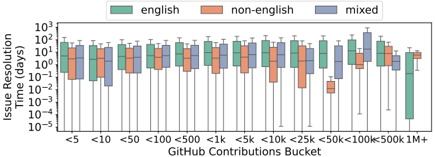
“English-dominant projects resolve issues the slowest, while non-English projects are the fastest.”
§ "Write in English, Nobody Understands Your Language Here": A Study of Non-English Trends in Open-Source Repositories * > 13 Conclusion
plainstates an association- Asserted: passes — The authors put it forward as true.
- Checkable: passes — It can be checked against evidence.
- Load-bearing: passes — The paper’s conclusions depend on it.
- Based: passes — The paper gives a reason why it holds.
It may state two separate claims as one.
A result the paper reports from its own data — it cites no other source for it, so there is none to check. The quote shows it is in the paper.
In the paper
“Mixed-language repositories follow, showing moderate growth, while non-Englishdominant repositories consistently receive the fewest stars across all sizes.”
§ "Write in English, Nobody Understands Your Language Here": A Study of Non-English Trends in Open-Source Repositories * > <5 <10 <50 <100 <500 <1k <5k <10k <25k <50k<100k<500k 1M+
plainstates an association- Asserted: passes — The authors put it forward as true.
- Checkable: passes — It can be checked against evidence.
- Load-bearing: passes — The paper’s conclusions depend on it.
- Based: passes — The paper gives a reason why it holds.
It may state two separate claims as one.
A result the paper reports from its own data — it cites no other source for it, so there is none to check. The quote shows it is in the paper.
In the paper
“English-dominant repositories take the longest to resolve issues, followed by mixed-language, and then non-English repositories.”
§ "Write in English, Nobody Understands Your Language Here": A Study of Non-English Trends in Open-Source Repositories * > <5 <10 <50 <100 <500 <1k <5k <10k <25k <50k<100k<500k 1M+
plainstates an association- Asserted: passes — The authors put it forward as true.
- Checkable: passes — It can be checked against evidence.
- Load-bearing: passes — The paper’s conclusions depend on it.
- Based: passes — The paper gives a reason why it holds.
It may state two separate claims as one.
A result the paper reports from its own data — it cites no other source for it, so there is none to check. The quote shows it is in the paper.
In the paper
“Pairwise Mann-Whitney U tests show significant differences across all pairs (𝑝 < 0.001), with median times of 7.17 days for English projects, 4.70 days for mixed projects, and 3.39 days for non-English projects.”
§ "Write in English, Nobody Understands Your Language Here": A Study of Non-English Trends in Open-Source Repositories * > <5 <10 <50 <100 <500 <1k <5k <10k <25k <50k<100k<500k 1M+
plainstates an association- Asserted: passes — The authors put it forward as true.
- Checkable: passes — It can be checked against evidence.
- Load-bearing: passes — The paper’s conclusions depend on it.
- Based: passes — The paper gives a reason why it holds.
It may state two separate claims as one.
A result the paper reports from its own data — it cites no other source for it, so there is none to check. The quote shows it is in the paper.
In the paper
“multilingual participation is steadily increasing, especially in Korean, Chinese, and Russian.”
- Also stated in: § 13 Conclusion · plain
“showing a consistent upward trend and increased multilingual participation in open-source development.”
§ "Write in English, Nobody Understands Your Language Here": A Study of Non-English Trends in Open-Source Repositories * > 13 Conclusion
plainstates a cause- Asserted: passes — The authors put it forward as true.
- Checkable: passes — It can be checked against evidence.
- Load-bearing: passes — The paper’s conclusions depend on it.
- Based: passes — The paper gives a reason why it holds.
It may state two separate claims as one.
- Also stated in: § 13 Conclusion · plain
A result the paper reports from its own data — it cites no other source for it, so there is none to check. The quote shows it is in the paper.
In the paper
“But as activity increases, English-dominant repositories attract substantially more stars, dominating the upper visibility tiers.”
§ "Write in English, Nobody Understands Your Language Here": A Study of Non-English Trends in Open-Source Repositories * > <5 <10 <50 <100 <500 <1k <5k <10k <25k <50k<100k<500k 1M+
plainstates a cause- Asserted: passes — The authors put it forward as true.
- Checkable: passes — It can be checked against evidence.
- Load-bearing: passes — The paper’s conclusions depend on it.
- Based: passes — The paper gives a reason why it holds.
It may state two separate claims as one.
A result the paper reports from its own data — it cites no other source for it, so there is none to check. The quote shows it is in the paper.
In the paper
“Pairwise Mann-Whitney U tests with Bonferroni correction showed that English-dominant repositories have significantly more stars than mixed and non-English repositories, and mixed repositories more than non-English ones (𝑝 < 0.001; medians: 36, 12, and 2, respectively).”
§ "Write in English, Nobody Understands Your Language Here": A Study of Non-English Trends in Open-Source Repositories * > <5 <10 <50 <100 <500 <1k <5k <10k <25k <50k<100k<500k 1M+
plainstates an association- Asserted: passes — The authors put it forward as true.
- Checkable: passes — It can be checked against evidence.
- Load-bearing: passes — The paper’s conclusions depend on it.
- Based: passes — The paper gives a reason why it holds.
It may state two separate claims as one.
In the paper
“They found that while industry projects contain some non-English text, open-source projects contain almost none, pointing to a strong English-language bias in public code repositories.”
§ "Write in English, Nobody Understands Your Language Here": A Study of Non-English Trends in Open-Source Repositories * > 1 Introduction
What the sources say
- Not matchedcites [63]
Couldn’t be matched to a paper in Crossref, so it can’t be checked.
boostedstates an association- Asserted: passes — The authors put it forward as true.
- Checkable: passes — It can be checked against evidence.
- Load-bearing: passes — The paper’s conclusions depend on it.
- Based: passes — The paper gives a reason why it holds.
Probably not a substantial claim. It may state two separate claims as one.
- Not matched
In the paper
“Today, scripts such as Chinese, Arabic, Cyrillic, and Bengali are widely used across digital writing, websites [11], and software projects.”
§ "Write in English, Nobody Understands Your Language Here": A Study of Non-English Trends in Open-Source Repositories * > 1 Introduction
What the sources say
- Not matchedcites [11]
Couldn’t be matched to a paper in Crossref, so it can’t be checked.
plain- Asserted: passes — The authors put it forward as true.
- Checkable: passes — It can be checked against evidence.
- Load-bearing: fails — The paper’s conclusions may not depend on it.
- Based: passes — The paper gives a reason why it holds.
Probably not a substantial claim. The paper’s conclusions may not depend on it.
- Not matched
In the paper
“Yoseph et al. identified language-related challenges as the third most commonly reported bias faced by contributors in open-source communities [1].”
§ "Write in English, Nobody Understands Your Language Here": A Study of Non-English Trends in Open-Source Repositories * > 1 Introduction
What the sources say
- Not matchedcites [1]
Couldn’t be matched to a paper in Crossref, so it can’t be checked.
plain- Asserted: passes — The authors put it forward as true.
- Checkable: passes — It can be checked against evidence.
- Load-bearing: fails — The paper’s conclusions may not depend on it.
- Based: passes — The paper gives a reason why it holds.
Probably not a substantial claim. The paper’s conclusions may not depend on it.
- Not matched
The paper states this without a source or data behind it here, so there is nothing to check it against. The quote shows it is in the paper.
In the paper
“Despite these insights, there is still a gap in the literature on how language use is evolving in open-source projects over time.”
§ "Write in English, Nobody Understands Your Language Here": A Study of Non-English Trends in Open-Source Repositories * > 1 Introduction
plain- Asserted: passes — The authors put it forward as true.
- Checkable: passes — It can be checked against evidence.
- Load-bearing: passes — The paper’s conclusions depend on it.
- Based: fails — The paper may give no reason why it holds.
Probably not a substantial claim. The paper may give no reason why it holds.
In the paper
“Platforms like Stack Overflow require all questions and answers to be in English [75], and most GitHub discussions also occur in English.”
§ "Write in English, Nobody Understands Your Language Here": A Study of Non-English Trends in Open-Source Repositories * > 1 Introduction
What the sources say
- Not matchedcites [75]
Couldn’t be matched to a paper in Crossref, so it can’t be checked.
plain- Asserted: passes — The authors put it forward as true.
- Checkable: passes — It can be checked against evidence.
- Load-bearing: unclear — It is unclear whether the paper’s conclusions depend on it.
- Based: passes — The paper gives a reason why it holds.
It may state two separate claims as one.
- Not matched
In the paper
“Ebbertz et al. showed that English accounted for 80% of web content in 1998, dropping to 56% by 2002 [22].”
§ "Write in English, Nobody Understands Your Language Here": A Study of Non-English Trends in Open-Source Repositories * > 1 Introduction
What the sources say
- Not matchedcites [22]
Couldn’t be matched to a paper in Crossref, so it can’t be checked.
plain- Asserted: passes — The authors put it forward as true.
- Checkable: passes — It can be checked against evidence.
- Load-bearing: fails — The paper’s conclusions may not depend on it.
- Based: passes — The paper gives a reason why it holds.
Probably not a substantial claim. The paper’s conclusions may not depend on it. It may state two separate claims as one.
- Not matched
In the paper
“Balali et al. found that differences in language fluency can negatively affect mentoring relationships, making onboarding more difficult both socially and technically [5].”
§ "Write in English, Nobody Understands Your Language Here": A Study of Non-English Trends in Open-Source Repositories * > 1 Introduction
What the sources say
- Not matchedcites [5]
Couldn’t be matched to a paper in Crossref, so it can’t be checked.
plainstates a cause- Asserted: passes — The authors put it forward as true.
- Checkable: passes — It can be checked against evidence.
- Load-bearing: fails — The paper’s conclusions may not depend on it.
- Based: passes — The paper gives a reason why it holds.
Probably not a substantial claim. The paper’s conclusions may not depend on it. It may state two separate claims as one.
- Not matched
In the paper
“Steinmacher et al. reported that limited English proficiency is one of the major barriers preventing newcomers from communicating or participating in discussions in open-source projects [77].”
§ "Write in English, Nobody Understands Your Language Here": A Study of Non-English Trends in Open-Source Repositories * > 1 Introduction
What the sources say
- Not matchedcites [77]
Couldn’t be matched to a paper in Crossref, so it can’t be checked.
plainstates a cause- Asserted: passes — The authors put it forward as true.
- Checkable: passes — It can be checked against evidence.
- Load-bearing: fails — The paper’s conclusions may not depend on it.
- Based: passes — The paper gives a reason why it holds.
Probably not a substantial claim. The paper’s conclusions may not depend on it.
- Not matched
None of the sources cited for this claim could be matched to a paper in Crossref, so there is nothing to check it against.
In the paper
“prior mining studies likewise exclude very small commits or diffs for this reason [39,47].”
§ "Write in English, Nobody Understands Your Language Here": A Study of Non-English Trends in Open-Source Repositories * > Temporal Sampling.
What the sources say
- Not matchedcites [39]
Couldn’t be matched to a paper in Crossref, so it can’t be checked.
- Not matchedcites [47]
Couldn’t be matched to a paper in Crossref, so it can’t be checked.
plainstates a cause- Asserted: passes — The authors put it forward as true.
- Checkable: passes — It can be checked against evidence.
- Load-bearing: fails — The paper’s conclusions may not depend on it.
- Based: passes — The paper gives a reason why it holds.
Probably not a substantial claim. The paper’s conclusions may not depend on it.
- Not matched
A conclusion the paper draws from its own results — it cites no other source for it, so there is none to check. The quote shows it is in the paper.
In the paper
“This likely supports the rise in multilingual content.”
§ "Write in English, Nobody Understands Your Language Here": A Study of Non-English Trends in Open-Source Repositories * > 7 RQ4: Does multilingualism vary across programming languages?
hedgedstates a possible cause- Asserted: passes — The authors put it forward as true.
- Checkable: passes — It can be checked against evidence.
- Load-bearing: passes — The paper’s conclusions depend on it.
- Based: passes — The paper gives a reason why it holds.
Probably not a substantial claim.
In the paper
“Java also stays common in mobile and GUI software, such as Android apps, where developers often put localized strings directly in code [3].”
§ "Write in English, Nobody Understands Your Language Here": A Study of Non-English Trends in Open-Source Repositories * > 7 RQ4: Does multilingualism vary across programming languages?
What the sources say
- Not matchedcites [3]
Couldn’t be matched to a paper in Crossref, so it can’t be checked.
plain- Asserted: passes — The authors put it forward as true.
- Checkable: passes — It can be checked against evidence.
- Load-bearing: passes — The paper’s conclusions depend on it.
- Based: passes — The paper gives a reason why it holds.
It may state two separate claims as one.
- Not matched
In the paper
“LLMs can understand and produce many languages [44], so they make it easier for developers to work in their native language.”
§ "Write in English, Nobody Understands Your Language Here": A Study of Non-English Trends in Open-Source Repositories * > 7 RQ4: Does multilingualism vary across programming languages?
What the sources say
- Not matchedcites [44]
Couldn’t be matched to a paper in Crossref, so it can’t be checked.
plainstates a cause- Asserted: passes — The authors put it forward as true.
- Checkable: passes — It can be checked against evidence.
- Load-bearing: passes — The paper’s conclusions depend on it.
- Based: passes — The paper gives a reason why it holds.
Probably not a substantial claim. It may state two separate claims as one.
- Not matched
A conclusion the paper draws from its own results — it cites no other source for it, so there is none to check. The quote shows it is in the paper.
In the paper
“This shift can improve inclusivity by making projects more accessible to local contributors.”
§ "Write in English, Nobody Understands Your Language Here": A Study of Non-English Trends in Open-Source Repositories * > Results.
plainstates a possible cause- Asserted: passes — The authors put it forward as true.
- Checkable: fails — It may be too vague to check against evidence.
- Load-bearing: passes — The paper’s conclusions depend on it.
- Based: passes — The paper gives a reason why it holds.
Probably not a substantial claim. It may be too vague to check against evidence.
A conclusion the paper draws from its own results — it cites no other source for it, so there is none to check. The quote shows it is in the paper.
In the paper
“While this shift reflects greater inclusivity and language diversity in OSS, it also creates language tension.”
§ "Write in English, Nobody Understands Your Language Here": A Study of Non-English Trends in Open-Source Repositories * > Abstract
plainstates a cause- Asserted: passes — The authors put it forward as true.
- Checkable: passes — It can be checked against evidence.
- Load-bearing: passes — The paper’s conclusions depend on it.
- Based: passes — The paper gives a reason why it holds.
It may state two separate claims as one.
- Rests on an assumption: GitHub activity is representative of open-source software development.
- Rests on an assumption: The sampled repositories are representative of the broader population of GitHub repositories.
- Rests on an assumption: Non-English text in messages and code indicates multilingual participation.
A conclusion the paper draws from its own results — it cites no other source for it, so there is none to check. The quote shows it is in the paper.
In the paper
“The rise in Persian-language content is especially notable given the context of international sanctions and access restrictions facing Iranian developers.”
§ "Write in English, Nobody Understands Your Language Here": A Study of Non-English Trends in Open-Source Repositories * > Data Collection.
plainstates an association- Asserted: passes — The authors put it forward as true.
- Checkable: passes — It can be checked against evidence.
- Load-bearing: fails — The paper’s conclusions may not depend on it.
- Based: fails — The paper may give no reason why it holds.
Probably not a substantial claim. The paper’s conclusions may not depend on it. The paper may give no reason why it holds.
- Rests on an assumption: GitHub activity is representative of open-source software development.
- Rests on an assumption: The sampled repositories are representative of the broader population of GitHub repositories.
- Rests on an assumption: Non-English text in messages and code indicates multilingual participation.
A conclusion the paper draws from its own results — it cites no other source for it, so there is none to check. The quote shows it is in the paper.
In the paper
“suggesting that language remains both a resource and a barrier, shaping who gets heard, who contributes, and how open collaboration unfolds.”
§ "Write in English, Nobody Understands Your Language Here": A Study of Non-English Trends in Open-Source Repositories * > Abstract
hedgedstates a cause- Asserted: passes — The authors put it forward as true.
- Checkable: passes — It can be checked against evidence.
- Load-bearing: passes — The paper’s conclusions depend on it.
- Based: passes — The paper gives a reason why it holds.
It may state two separate claims as one.
- Rests on an assumption: GitHub activity is representative of open-source software development.
- Rests on an assumption: The sampled repositories are representative of the broader population of GitHub repositories.
- Rests on an assumption: Non-English text in messages and code indicates multilingual participation.
A conclusion the paper draws from its own results — it cites no other source for it, so there is none to check. The quote shows it is in the paper.
In the paper
“Although the effect size is smaller than for participation, the difference remains systematic, indicating that language orientation influences collaboration at scale.”
§ "Write in English, Nobody Understands Your Language Here": A Study of Non-English Trends in Open-Source Repositories * > <5 <10 <50 <100 <500 <1k <5k <10k <25k <50k<100k<500k 1M+
hedgedstates a cause- Asserted: passes — The authors put it forward as true.
- Checkable: passes — It can be checked against evidence.
- Load-bearing: passes — The paper’s conclusions depend on it.
- Based: passes — The paper gives a reason why it holds.
It may state two separate claims as one.
None of the sources cited for this claim could be matched to a paper in Crossref, so there is nothing to check it against.
In the paper
“Prior work shows linguistic divides hinder global collaboration [88], while inclusive communication helps attract and retain diverse contributors [40].”
§ "Write in English, Nobody Understands Your Language Here": A Study of Non-English Trends in Open-Source Repositories * > <5 <10 <50 <100 <500 <1k <5k <10k <25k <50k<100k<500k 1M+
What the sources say
- Not matchedcites [88]
Couldn’t be matched to a paper in Crossref, so it can’t be checked.
- Not matchedcites [40]
Couldn’t be matched to a paper in Crossref, so it can’t be checked.
plainstates a cause- Asserted: passes — The authors put it forward as true.
- Checkable: passes — It can be checked against evidence.
- Load-bearing: fails — The paper’s conclusions may not depend on it.
- Based: passes — The paper gives a reason why it holds.
Probably not a substantial claim. The paper’s conclusions may not depend on it. It may state two separate claims as one.
- Not matched
In the paper
“which aligns with common naming practices and tools that default to English [17].”
§ "Write in English, Nobody Understands Your Language Here": A Study of Non-English Trends in Open-Source Repositories * > 7 RQ4: Does multilingualism vary across programming languages?
What the sources say
- Not matchedcites [17]
Couldn’t be matched to a paper in Crossref, so it can’t be checked.
plainstates an association- Asserted: passes — The authors put it forward as true.
- Checkable: passes — It can be checked against evidence.
- Load-bearing: fails — The paper’s conclusions may not depend on it.
- Based: passes — The paper gives a reason why it holds.
Probably not a substantial claim. The paper’s conclusions may not depend on it.
- Not matched
A conclusion the paper draws from its own results — it cites no other source for it, so there is none to check. The quote shows it is in the paper.
In the paper
“This may result from communication challenges ( §8), inconsistent norms, or unclear language policies that discourage contributors.”
§ "Write in English, Nobody Understands Your Language Here": A Study of Non-English Trends in Open-Source Repositories * > <5 <10 <50 <100 <500 <1k <5k <10k <25k <50k<100k<500k 1M+
hedgedstates a possible cause- Asserted: passes — The authors put it forward as true.
- Checkable: fails — It may be too vague to check against evidence.
- Load-bearing: fails — The paper’s conclusions may not depend on it.
- Based: passes — The paper gives a reason why it holds.
Probably not a substantial claim. It may be too vague to check against evidence. The paper’s conclusions may not depend on it. It may state two separate claims as one.
A conclusion the paper draws from its own results — it cites no other source for it, so there is none to check. The quote shows it is in the paper.
In the paper
“These findings reflect a substantial shift toward multilingual documentation, reinforcing the broader trend of increasing language diversity in open-source projects.”
§ "Write in English, Nobody Understands Your Language Here": A Study of Non-English Trends in Open-Source Repositories * > Results.
plainstates an association- Asserted: passes — The authors put it forward as true.
- Checkable: passes — It can be checked against evidence.
- Load-bearing: passes — The paper’s conclusions depend on it.
- Based: passes — The paper gives a reason why it holds.
It may state two separate claims as one.
In the paper
“Around the same time, GitHub noted that most new contributors are from non-English-speaking regions [28].”
§ "Write in English, Nobody Understands Your Language Here": A Study of Non-English Trends in Open-Source Repositories * > 7 RQ4: Does multilingualism vary across programming languages?
What the sources say
- Not matchedcites [28]
Couldn’t be matched to a paper in Crossref, so it can’t be checked.
plain- Asserted: passes — The authors put it forward as true.
- Checkable: passes — It can be checked against evidence.
- Load-bearing: fails — The paper’s conclusions may not depend on it.
- Based: passes — The paper gives a reason why it holds.
Probably not a substantial claim. The paper’s conclusions may not depend on it.
- Not matched
A conclusion the paper draws from its own results — it cites no other source for it, so there is none to check. The quote shows it is in the paper.
In the paper
“Since GitHub comments are central to issue triage, bug reporting, feature discussion, and community feedback, lower comment volume may hinder transparent collaboration or discourage new contributors from engaging.”
§ "Write in English, Nobody Understands Your Language Here": A Study of Non-English Trends in Open-Source Repositories * > Statistical Testing.
hedgedstates a possible cause- Asserted: passes — The authors put it forward as true.
- Checkable: fails — It may be too vague to check against evidence.
- Load-bearing: passes — The paper’s conclusions depend on it.
- Based: passes — The paper gives a reason why it holds.
Probably not a substantial claim. It may be too vague to check against evidence. It may state two separate claims as one.
- Rests on an assumption: GitHub comments are central to issue triage, bug reporting, feature discussion, and community feedback.
A conclusion the paper draws from its own results — it cites no other source for it, so there is none to check. The quote shows it is in the paper.
In the paper
“These projects often serve regional or linguistic communities and may be less visible on GitHub.”
§ "Write in English, Nobody Understands Your Language Here": A Study of Non-English Trends in Open-Source Repositories * > <5 <10 <50 <100 <500 <1k <5k <10k <25k <50k<100k<500k 1M+
hedgedstates a possible cause- Asserted: passes — The authors put it forward as true.
- Checkable: passes — It can be checked against evidence.
- Load-bearing: passes — The paper’s conclusions depend on it.
- Based: passes — The paper gives a reason why it holds.
Probably not a substantial claim. It may state two separate claims as one.
In the paper
“Recent studies also show that LLMs tend to prefer Python, choosing it in 90-97% of benchmark tasks and 58% of project setups [83].”
§ "Write in English, Nobody Understands Your Language Here": A Study of Non-English Trends in Open-Source Repositories * > 7 RQ4: Does multilingualism vary across programming languages?
What the sources say
- Not matchedcites [83]
Couldn’t be matched to a paper in Crossref, so it can’t be checked.
plain- Asserted: passes — The authors put it forward as true.
- Checkable: passes — It can be checked against evidence.
- Load-bearing: passes — The paper’s conclusions depend on it.
- Based: passes — The paper gives a reason why it holds.
It may state two separate claims as one.
- Not matched
In the paper
“For example, the official C# Dev Kit for Visual Studio Code requires a paid license for teams with more than five developers [52], which may limit use among small groups.”
§ "Write in English, Nobody Understands Your Language Here": A Study of Non-English Trends in Open-Source Repositories * > 7 RQ4: Does multilingualism vary across programming languages?
What the sources say
- Not matchedcites [52]
Couldn’t be matched to a paper in Crossref, so it can’t be checked.
hedgedstates a possible cause- Asserted: passes — The authors put it forward as true.
- Checkable: passes — It can be checked against evidence.
- Load-bearing: fails — The paper’s conclusions may not depend on it.
- Based: passes — The paper gives a reason why it holds.
Probably not a substantial claim. The paper’s conclusions may not depend on it. It may state two separate claims as one.
- Not matched
A conclusion the paper draws from its own results — it cites no other source for it, so there is none to check. The quote shows it is in the paper.
In the paper
“These results indicate a large practical effect, with language category explaining a substantial share of the variation in participation.”
§ "Write in English, Nobody Understands Your Language Here": A Study of Non-English Trends in Open-Source Repositories * > <5 <10 <50 <100 <500 <1k <5k <10k <25k <50k<100k<500k 1M+
hedgedstates an association- Asserted: passes — The authors put it forward as true.
- Checkable: passes — It can be checked against evidence.
- Load-bearing: passes — The paper’s conclusions depend on it.
- Based: passes — The paper gives a reason why it holds.
It may state two separate claims as one.
A conclusion the paper draws from its own results — it cites no other source for it, so there is none to check. The quote shows it is in the paper.
In the paper
“These examples are rare and do not yet reflect a large-scale shift, but they illustrate that non-English naming is both technically feasible and sometimes adopted.”
§ "Write in English, Nobody Understands Your Language Here": A Study of Non-English Trends in Open-Source Repositories * > Results.
plain- Asserted: passes — The authors put it forward as true.
- Checkable: passes — It can be checked against evidence.
- Load-bearing: passes — The paper’s conclusions depend on it.
- Based: passes — The paper gives a reason why it holds.
It may state two separate claims as one.
- Rests on an assumption: GitHub activity is representative of open-source software development.
- Rests on an assumption: The sampled repositories are representative of the broader population of GitHub repositories.
- Rests on an assumption: Non-English text in messages and code indicates multilingual participation.
A conclusion the paper draws from its own results — it cites no other source for it, so there is none to check. The quote shows it is in the paper.
In the paper
“This finding aligns with our earlier results in §6, where comments and literals showed the highest multilingual growth among code elements.”
§ "Write in English, Nobody Understands Your Language Here": A Study of Non-English Trends in Open-Source Repositories * > Number of Repositories
plainstates an association- Asserted: passes — The authors put it forward as true.
- Checkable: passes — It can be checked against evidence.
- Load-bearing: fails — The paper’s conclusions may not depend on it.
- Based: passes — The paper gives a reason why it holds.
Probably not a substantial claim. The paper’s conclusions may not depend on it.
A conclusion the paper draws from its own results — it cites no other source for it, so there is none to check. The quote shows it is in the paper.
In the paper
“For instance, Vietnamese README files help first-time contributors from Vietnam engage without needing English fluency.”
§ "Write in English, Nobody Understands Your Language Here": A Study of Non-English Trends in Open-Source Repositories * > Results.
plainstates a cause- Asserted: passes — The authors put it forward as true.
- Checkable: passes — It can be checked against evidence.
- Load-bearing: fails — The paper’s conclusions may not depend on it.
- Based: fails — The paper may give no reason why it holds.
Probably not a substantial claim. The paper’s conclusions may not depend on it. The paper may give no reason why it holds.
A conclusion the paper draws from its own results — it cites no other source for it, so there is none to check. The quote shows it is in the paper.
In the paper
“But language often creates tension for non-English participants.”
§ "Write in English, Nobody Understands Your Language Here": A Study of Non-English Trends in Open-Source Repositories * > 1 Introduction
plainstates an association- Asserted: passes — The authors put it forward as true.
- Checkable: passes — It can be checked against evidence.
- Load-bearing: passes — The paper’s conclusions depend on it.
- Based: fails — The paper may give no reason why it holds.
Probably not a substantial claim. The paper may give no reason why it holds.
- Rests on an assumption: GitHub activity is representative of open-source software development.
- Rests on an assumption: The sampled repositories are representative of the broader population of GitHub repositories.
- Rests on an assumption: Non-English text in messages and code indicates multilingual participation.
A conclusion the paper draws from its own results — it cites no other source for it, so there is none to check. The quote shows it is in the paper.
In the paper
“These limits make it harder for developers to use non-English text in core parts of code, even if they use their native language in comments or documentation.”
§ "Write in English, Nobody Understands Your Language Here": A Study of Non-English Trends in Open-Source Repositories * > Results.
plainstates a cause- Asserted: passes — The authors put it forward as true.
- Checkable: passes — It can be checked against evidence.
- Load-bearing: passes — The paper’s conclusions depend on it.
- Based: passes — The paper gives a reason why it holds.
Probably not a substantial claim.
- Rests on an assumption: GitHub activity is representative of open-source software development.
- Rests on an assumption: The sampled repositories are representative of the broader population of GitHub repositories.
- Rests on an assumption: Non-English text in messages and code indicates multilingual participation.
A conclusion the paper draws from its own results — it cites no other source for it, so there is none to check. The quote shows it is in the paper.
In the paper
“These languages often have more stable or corporate-focused communities and slower adoption.”
§ "Write in English, Nobody Understands Your Language Here": A Study of Non-English Trends in Open-Source Repositories * > 7 RQ4: Does multilingualism vary across programming languages?
plainstates an association- Asserted: passes — The authors put it forward as true.
- Checkable: passes — It can be checked against evidence.
- Load-bearing: fails — The paper’s conclusions may not depend on it.
- Based: passes — The paper gives a reason why it holds.
Probably not a substantial claim. The paper’s conclusions may not depend on it. It may state two separate claims as one.
In the paper
“for example, the Korean government's Open Source Software Invigoration Plan (2014) and the 2020 amendment to the Software Promotion Act mandated that publicly funded software projects release their code under open-source licenses [41].”
§ "Write in English, Nobody Understands Your Language Here": A Study of Non-English Trends in Open-Source Repositories * > Data Collection.
What the sources say
- Not matchedcites [41]
Couldn’t be matched to a paper in Crossref, so it can’t be checked.
plainstates a cause- Asserted: passes — The authors put it forward as true.
- Checkable: passes — It can be checked against evidence.
- Load-bearing: unclear — It is unclear whether the paper’s conclusions depend on it.
- Based: passes — The paper gives a reason why it holds.
It may state two separate claims as one.
- Not matched
In the paper
“Python is now the most used language worldwide, including in places where English is not the first language [28].”
§ "Write in English, Nobody Understands Your Language Here": A Study of Non-English Trends in Open-Source Repositories * > 7 RQ4: Does multilingualism vary across programming languages?
What the sources say
- Not matchedcites [28]
Couldn’t be matched to a paper in Crossref, so it can’t be checked.
plain- Asserted: passes — The authors put it forward as true.
- Checkable: passes — It can be checked against evidence.
- Load-bearing: fails — The paper’s conclusions may not depend on it.
- Based: passes — The paper gives a reason why it holds.
Probably not a substantial claim. The paper’s conclusions may not depend on it. It may state two separate claims as one.
- Not matched
A conclusion the paper draws from its own results — it cites no other source for it, so there is none to check. The quote shows it is in the paper.
In the paper
“These examples show how language barriers and low discoverability can discourage external contributors.”
§ "Write in English, Nobody Understands Your Language Here": A Study of Non-English Trends in Open-Source Repositories * > <5 <10 <50 <100 <500 <1k <5k <10k <25k <50k<100k<500k 1M+
plainstates a possible cause- Asserted: passes — The authors put it forward as true.
- Checkable: passes — It can be checked against evidence.
- Load-bearing: passes — The paper’s conclusions depend on it.
- Based: passes — The paper gives a reason why it holds.
It may state two separate claims as one.
In the paper
“TypeScript is still mostly developed and maintained by Microsoft [91], which may slow broader adoption.”
§ "Write in English, Nobody Understands Your Language Here": A Study of Non-English Trends in Open-Source Repositories * > 7 RQ4: Does multilingualism vary across programming languages?
What the sources say
- Not matchedcites [91]
Couldn’t be matched to a paper in Crossref, so it can’t be checked.
hedgedstates a possible cause- Asserted: passes — The authors put it forward as true.
- Checkable: passes — It can be checked against evidence.
- Load-bearing: fails — The paper’s conclusions may not depend on it.
- Based: passes — The paper gives a reason why it holds.
Probably not a substantial claim. The paper’s conclusions may not depend on it. It may state two separate claims as one.
- Not matched
What the paper did — it cites no source for this, so there is none to check. The quote shows it is in the paper.
In the paper
“We restrict analysis to non-Latin languages because Latin-based languages (e.g., English, Spanish, French) share vocabulary that often confuses detectors on short text.”
§ "Write in English, Nobody Understands Your Language Here": A Study of Non-English Trends in Open-Source Repositories * > 10 Threats to Validity
plainstates a cause- Asserted: passes — The authors put it forward as true.
- Checkable: passes — It can be checked against evidence.
- Load-bearing: passes — The paper’s conclusions depend on it.
- Based: fails — The paper may give no reason why it holds.
Probably not a substantial claim. The paper may give no reason why it holds. It may state two separate claims as one.
- Rests on an assumption: Latin-based languages share vocabulary that often confuses detectors on short text.
A conclusion the paper draws from its own results — it cites no other source for it, so there is none to check. The quote shows it is in the paper.
In the paper
“While it increases accessibility for non-English-speaking developers, it also introduces challenges for maintainers, researchers, and developers who must adapt to support broader participation.”
§ "Write in English, Nobody Understands Your Language Here": A Study of Non-English Trends in Open-Source Repositories * > 11 Discussion
plainstates a cause- Asserted: passes — The authors put it forward as true.
- Checkable: fails — It may be too vague to check against evidence.
- Load-bearing: passes — The paper’s conclusions depend on it.
- Based: passes — The paper gives a reason why it holds.
Probably not a substantial claim. It may be too vague to check against evidence. It may state two separate claims as one.
What the paper did — it cites no source for this, so there is none to check. The quote shows it is in the paper.
In the paper
“In practice, this threshold has minimal impact on group composition because the distribution of English content is strongly skewed toward the extremes, meaning lower thresholds (e.g., 80% or 70%) would produce similar groupings.”
§ "Write in English, Nobody Understands Your Language Here": A Study of Non-English Trends in Open-Source Repositories * > Partial Contribution History.
plain- Asserted: passes — The authors put it forward as true.
- Checkable: passes — It can be checked against evidence.
- Load-bearing: fails — The paper’s conclusions may not depend on it.
- Based: fails — The paper may give no reason why it holds.
Probably not a substantial claim. The paper’s conclusions may not depend on it. The paper may give no reason why it holds. It may state two separate claims as one.
A conclusion the paper draws from its own results — it cites no other source for it, so there is none to check. The quote shows it is in the paper.
In the paper
“Our findings are based on GitHub and may not generalize to platforms such as GitLab or Bitbucket, or to independently hosted open-source projects.”
§ "Write in English, Nobody Understands Your Language Here": A Study of Non-English Trends in Open-Source Repositories * > Partial Contribution History.
hedged- Asserted: passes — The authors put it forward as true.
- Checkable: passes — It can be checked against evidence.
- Load-bearing: fails — The paper’s conclusions may not depend on it.
- Based: passes — The paper gives a reason why it holds.
Probably not a substantial claim. The paper’s conclusions may not depend on it. It may state two separate claims as one.
A conclusion the paper draws from its own results — it cites no other source for it, so there is none to check. The quote shows it is in the paper.
In the paper
“While the effect size is small, the trend is systematic and somewhat counterintuitive: one might expect English-dominant projects, with larger contributor pools, to resolve issues faster.”
§ "Write in English, Nobody Understands Your Language Here": A Study of Non-English Trends in Open-Source Repositories * > <5 <10 <50 <100 <500 <1k <5k <10k <25k <50k<100k<500k 1M+
hedgedstates an association- Asserted: passes — The authors put it forward as true.
- Checkable: passes — It can be checked against evidence.
- Load-bearing: passes — The paper’s conclusions depend on it.
- Based: passes — The paper gives a reason why it holds.
It may state two separate claims as one.
A conclusion the paper draws from its own results — it cites no other source for it, so there is none to check. The quote shows it is in the paper.
In the paper
“At the same time, AI may also amplify linguistic tensions.”
§ "Write in English, Nobody Understands Your Language Here": A Study of Non-English Trends in Open-Source Repositories * > 11 Discussion
hedgedstates a possible cause- Asserted: passes — The authors put it forward as true.
- Checkable: fails — It may be too vague to check against evidence.
- Load-bearing: fails — The paper’s conclusions may not depend on it.
- Based: fails — The paper may give no reason why it holds.
Probably not a substantial claim. It may be too vague to check against evidence. The paper’s conclusions may not depend on it. The paper may give no reason why it holds.
A conclusion the paper draws from its own results — it cites no other source for it, so there is none to check. The quote shows it is in the paper.
In the paper
“AI tools offer a possible mitigation path: automatic translation, summarization, and code-aware rewriting could help newcomers read and write project artifacts in their preferred language, lowering the entry barrier.”
§ "Write in English, Nobody Understands Your Language Here": A Study of Non-English Trends in Open-Source Repositories * > 11 Discussion
hedgedstates a possible cause- Asserted: passes — The authors put it forward as true.
- Checkable: fails — It may be too vague to check against evidence.
- Load-bearing: fails — The paper’s conclusions may not depend on it.
- Based: fails — The paper may give no reason why it holds.
Probably not a substantial claim. It may be too vague to check against evidence. The paper’s conclusions may not depend on it. The paper may give no reason why it holds.
A conclusion the paper draws from its own results — it cites no other source for it, so there is none to check. The quote shows it is in the paper.
In the paper
“This paper presents the first large-scale study of multilingualism in open source software development across both communication and code.”
§ "Write in English, Nobody Understands Your Language Here": A Study of Non-English Trends in Open-Source Repositories * > 13 Conclusion
plain- Asserted: passes — The authors put it forward as true.
- Checkable: passes — It can be checked against evidence.
- Load-bearing: passes — The paper’s conclusions depend on it.
- Based: passes — The paper gives a reason why it holds.
Probably not a substantial claim.
A conclusion the paper draws from its own results — it cites no other source for it, so there is none to check. The quote shows it is in the paper.
In the paper
“Many tools assume English input, limiting their usefulness in multilingual repositories.”
§ "Write in English, Nobody Understands Your Language Here": A Study of Non-English Trends in Open-Source Repositories * > 11 Discussion
plainstates a cause- Asserted: passes — The authors put it forward as true.
- Checkable: passes — It can be checked against evidence.
- Load-bearing: passes — The paper’s conclusions depend on it.
- Based: fails — The paper may give no reason why it holds.
Probably not a substantial claim. The paper may give no reason why it holds.
A conclusion the paper draws from its own results — it cites no other source for it, so there is none to check. The quote shows it is in the paper.
In the paper
“Multilingualism does not remove gatekeeping but shifts its focus, as language choice can include or exclude depending on how norms are set.”
§ "Write in English, Nobody Understands Your Language Here": A Study of Non-English Trends in Open-Source Repositories * > 11 Discussion
plainstates a cause- Asserted: passes — The authors put it forward as true.
- Checkable: passes — It can be checked against evidence.
- Load-bearing: passes — The paper’s conclusions depend on it.
- Based: passes — The paper gives a reason why it holds.
It may state two separate claims as one.
A conclusion the paper draws from its own results — it cites no other source for it, so there is none to check. The quote shows it is in the paper.
In the paper
“Whether multilingual collaboration becomes more inclusive or more fragmented depends on project culture and governance.”
§ "Write in English, Nobody Understands Your Language Here": A Study of Non-English Trends in Open-Source Repositories * > 11 Discussion
plainstates a possible cause- Asserted: passes — The authors put it forward as true.
- Checkable: fails — It may be too vague to check against evidence.
- Load-bearing: passes — The paper’s conclusions depend on it.
- Based: passes — The paper gives a reason why it holds.
Probably not a substantial claim. It may be too vague to check against evidence.
A conclusion the paper draws from its own results — it cites no other source for it, so there is none to check. The quote shows it is in the paper.
In the paper
“As multilingual participation grows, these challenges may intensify.”
§ "Write in English, Nobody Understands Your Language Here": A Study of Non-English Trends in Open-Source Repositories * > 11 Discussion
hedgedstates a possible cause- Asserted: passes — The authors put it forward as true.
- Checkable: fails — It may be too vague to check against evidence.
- Load-bearing: fails — The paper’s conclusions may not depend on it.
- Based: fails — The paper may give no reason why it holds.
Probably not a substantial claim. It may be too vague to check against evidence. The paper’s conclusions may not depend on it. The paper may give no reason why it holds.
A conclusion the paper draws from its own results — it cites no other source for it, so there is none to check. The quote shows it is in the paper.
In the paper
“Non-English projects are often smaller and community-focused, which can lead to quicker responses within narrower scopes.”
§ "Write in English, Nobody Understands Your Language Here": A Study of Non-English Trends in Open-Source Repositories * > <5 <10 <50 <100 <500 <1k <5k <10k <25k <50k<100k<500k 1M+
plainstates a cause- Asserted: passes — The authors put it forward as true.
- Checkable: passes — It can be checked against evidence.
- Load-bearing: passes — The paper’s conclusions depend on it.
- Based: passes — The paper gives a reason why it holds.
Probably not a substantial claim. It may state two separate claims as one.
None of the sources cited for this claim could be matched to a paper in Crossref, so there is nothing to check it against.
In the paper
“These metrics matter because they signal popularity and activity to funders, contributors, and users [14,18,37].”
§ "Write in English, Nobody Understands Your Language Here": A Study of Non-English Trends in Open-Source Repositories * > 11 Discussion
What the sources say
- Not matchedcites [14]
Couldn’t be matched to a paper in Crossref, so it can’t be checked.
- Not matchedcites [18]
Couldn’t be matched to a paper in Crossref, so it can’t be checked.
- Not matchedcites [37]
Couldn’t be matched to a paper in Crossref, so it can’t be checked.
plainstates a cause- Asserted: passes — The authors put it forward as true.
- Checkable: passes — It can be checked against evidence.
- Load-bearing: passes — The paper’s conclusions depend on it.
- Based: passes — The paper gives a reason why it holds.
Probably not a substantial claim.
- Not matched
A conclusion the paper draws from its own results — it cites no other source for it, so there is none to check. The quote shows it is in the paper.
In the paper
“language and economics also significantly shape participation”
§ "Write in English, Nobody Understands Your Language Here": A Study of Non-English Trends in Open-Source Repositories * > 11 Discussion
plainstates an association- Asserted: passes — The authors put it forward as true.
- Checkable: passes — It can be checked against evidence.
- Load-bearing: passes — The paper’s conclusions depend on it.
- Based: fails — The paper may give no reason why it holds.
Probably not a substantial claim. The paper may give no reason why it holds. It may state two separate claims as one.
A conclusion the paper draws from its own results — it cites no other source for it, so there is none to check. The quote shows it is in the paper.
In the paper
“The rise of multilinguality in open-source repositories marks a shift in global software development.”
§ "Write in English, Nobody Understands Your Language Here": A Study of Non-English Trends in Open-Source Repositories * > 11 Discussion
plainstates a cause- Asserted: passes — The authors put it forward as true.
- Checkable: passes — It can be checked against evidence.
- Load-bearing: passes — The paper’s conclusions depend on it.
- Based: passes — The paper gives a reason why it holds.
Probably not a substantial claim.
None of the sources cited for this claim could be matched to a paper in Crossref, so there is nothing to check it against.
In the paper
“GitHub usage also varies by region and has faced access restrictions or bans in countries such as China, India, and Russia [92], as well as sanctions-related restrictions affecting regions including Iran, Syria, and Crimea [50].”
§ "Write in English, Nobody Understands Your Language Here": A Study of Non-English Trends in Open-Source Repositories * > Partial Contribution History.
What the sources say
- Not matchedcites [92]
Couldn’t be matched to a paper in Crossref, so it can’t be checked.
- Not matchedcites [50]
Couldn’t be matched to a paper in Crossref, so it can’t be checked.
plainstates an association- Asserted: passes — The authors put it forward as true.
- Checkable: passes — It can be checked against evidence.
- Load-bearing: unclear — It is unclear whether the paper’s conclusions depend on it.
- Based: passes — The paper gives a reason why it holds.
It may state two separate claims as one.
- Not matched
What the paper did — it cites no source for this, so there is none to check. The quote shows it is in the paper.
In the paper
“However, we apply the same time window across all language groups, so we believe that comparisons remain valid within the scope of the dataset.”
§ "Write in English, Nobody Understands Your Language Here": A Study of Non-English Trends in Open-Source Repositories * > Partial Contribution History.
hedged- Asserted: passes — The authors put it forward as true.
- Checkable: passes — It can be checked against evidence.
- Load-bearing: passes — The paper’s conclusions depend on it.
- Based: passes — The paper gives a reason why it holds.
It may state two separate claims as one.
What the paper did — it cites no source for this, so there is none to check. The quote shows it is in the paper.
In the paper
“Although this filter may exclude some meaningful edits, such as documentation updates or refactorings, applying it uniformly across all time periods and languages preserves comparability.”
§ "Write in English, Nobody Understands Your Language Here": A Study of Non-English Trends in Open-Source Repositories * > 10 Threats to Validity
plainstates a cause- Asserted: passes — The authors put it forward as true.
- Checkable: passes — It can be checked against evidence.
- Load-bearing: passes — The paper’s conclusions depend on it.
- Based: passes — The paper gives a reason why it holds.
Probably not a substantial claim.
A conclusion the paper draws from its own results — it cites no other source for it, so there is none to check. The quote shows it is in the paper.
In the paper
“These linguistic choices reflect cultural, educational, and economic forces that demographic indicators cannot capture.”
§ "Write in English, Nobody Understands Your Language Here": A Study of Non-English Trends in Open-Source Repositories * > 11 Discussion
plainstates a cause- Asserted: passes — The authors put it forward as true.
- Checkable: fails — It may be too vague to check against evidence.
- Load-bearing: passes — The paper’s conclusions depend on it.
- Based: passes — The paper gives a reason why it holds.
Probably not a substantial claim. It may be too vague to check against evidence.
- Rests on an assumption: Countries like India and Pakistan have multiple official languages, yet English is widely used as the working lingua franca.
None of the sources cited for this claim could be matched to a paper in Crossref, so there is nothing to check it against.
In the paper
“Instead, they often receive more issues and face coordination overhead due to scale and global participation [86,87].”
§ "Write in English, Nobody Understands Your Language Here": A Study of Non-English Trends in Open-Source Repositories * > <5 <10 <50 <100 <500 <1k <5k <10k <25k <50k<100k<500k 1M+
What the sources say
- Not matchedcites [86]
Couldn’t be matched to a paper in Crossref, so it can’t be checked.
- Not matchedcites [87]
Couldn’t be matched to a paper in Crossref, so it can’t be checked.
plainstates a cause- Asserted: passes — The authors put it forward as true.
- Checkable: passes — It can be checked against evidence.
- Load-bearing: passes — The paper’s conclusions depend on it.
- Based: passes — The paper gives a reason why it holds.
It may state two separate claims as one.
- Not matched
What the paper did — it cites no source for this, so there is none to check. The quote shows it is in the paper.
In the paper
“To mitigate errors, we use Lingua and the Google Translate API in strict confidence mode, accepting predictions only when confidence exceeds 0.9.”
§ "Write in English, Nobody Understands Your Language Here": A Study of Non-English Trends in Open-Source Repositories * > 10 Threats to Validity
plainstates a cause- Asserted: passes — The authors put it forward as true.
- Checkable: passes — It can be checked against evidence.
- Load-bearing: passes — The paper’s conclusions depend on it.
- Based: passes — The paper gives a reason why it holds.
Probably not a substantial claim. It may state two separate claims as one.
A conclusion the paper draws from its own results — it cites no other source for it, so there is none to check. The quote shows it is in the paper.
In the paper
“These factors may limit visibility and participation.”
§ "Write in English, Nobody Understands Your Language Here": A Study of Non-English Trends in Open-Source Repositories * > Partial Contribution History.
hedgedstates a possible cause- Asserted: passes — The authors put it forward as true.
- Checkable: passes — It can be checked against evidence.
- Load-bearing: fails — The paper’s conclusions may not depend on it.
- Based: passes — The paper gives a reason why it holds.
Probably not a substantial claim. The paper’s conclusions may not depend on it.
A conclusion the paper draws from its own results — it cites no other source for it, so there is none to check. The quote shows it is in the paper.
In the paper
“These findings suggest that linguistic orientation not only shapes collaboration but also affects how efficiently projects address reported problems.”
§ "Write in English, Nobody Understands Your Language Here": A Study of Non-English Trends in Open-Source Repositories * > <5 <10 <50 <100 <500 <1k <5k <10k <25k <50k<100k<500k 1M+
hedgedstates a cause- Asserted: passes — The authors put it forward as true.
- Checkable: passes — It can be checked against evidence.
- Load-bearing: passes — The paper’s conclusions depend on it.
- Based: passes — The paper gives a reason why it holds.
It may state two separate claims as one.
A conclusion the paper draws from its own results — it cites no other source for it, so there is none to check. The quote shows it is in the paper.
In the paper
“Finally, our analysis covers only public repositories; behavior in private repositories may differ.”
§ "Write in English, Nobody Understands Your Language Here": A Study of Non-English Trends in Open-Source Repositories * > Partial Contribution History.
hedged- Asserted: passes — The authors put it forward as true.
- Checkable: passes — It can be checked against evidence.
- Load-bearing: fails — The paper’s conclusions may not depend on it.
- Based: passes — The paper gives a reason why it holds.
Probably not a substantial claim. The paper’s conclusions may not depend on it. It may state two separate claims as one.
A conclusion the paper draws from its own results — it cites no other source for it, so there is none to check. The quote shows it is in the paper.
In the paper
“Developers using AI assistants may generate more non-English issues, comments, and documentation, increasing the burden on maintainers and reinforcing the language negotiations we observe in mixed-language repositories.”
§ "Write in English, Nobody Understands Your Language Here": A Study of Non-English Trends in Open-Source Repositories * > 11 Discussion
hedgedstates a possible cause- Asserted: passes — The authors put it forward as true.
- Checkable: passes — It can be checked against evidence.
- Load-bearing: fails — The paper’s conclusions may not depend on it.
- Based: fails — The paper may give no reason why it holds.
Probably not a substantial claim. The paper’s conclusions may not depend on it. The paper may give no reason why it holds. It may state two separate claims as one.
The paper relies on this without support.
GitHub activity is representative of open-source software development.
“To examine the role of multilingualism in open-source software development, we analyzed GitHub activity from January 2015 to May 2025.”
“Open-source platforms contain multiple forms of natural language content.”
The paper relies on this without support.
The sampled repositories are representative of the broader population of GitHub repositories.
“this dataset covers a representative, temporally balanced sample of repositories rather than the full population.”
The paper relies on this without support.
Non-English text in messages and code indicates multilingual participation.
“The open-source software (OSS) community has historically been dominated by English as the primary language for code, documentation, and developer interactions.However, with growing global participation and better support for non-Latin scripts through standards like Unicode, OSS is gradually becoming more multilingual.”
The paper relies on this without support.
South Korea represents less than 1% of the global population.
“despite South Korea representing less than 1% of the global population.”
The paper relies on this without support.
The manually annotated samples used to evaluate language detection are representative of the full dataset.
“We evaluated the classifier's performance using a manually annotated sample of messages”
“We empirically confirmed this limitation using a manually annotated sample of 1,000 short texts extracted from code.”
The paper relies on this without support.
Random sampling in GitHub data tends to overrepresent JavaScript and Python.
“Because random sampling in GitHub data tends to overrepresent JavaScript and Python, we applied stratified sampling to maintain balanced representation.”
The paper relies on this without support.
Many schools teach Python as the first programming language.
“Many schools teach Python as the first programming language, so students often write comments or literals in their own language.”
The paper relies on this without support.
Students often write comments or literals in their own language.
“Many schools teach Python as the first programming language, so students often write comments or literals in their own language.”
The paper relies on this without support.
C# use remains tied to Microsoft and enterprise settings.
“C# use remains tied to Microsoft and enterprise settings.”
The paper relies on this without support.
Much of the current research on developer communication has been conducted exclusively on English-language data.
“Much of the current research on developer communication, whether focused on toxicity [53,72,73], sexism [80], politeness [21], or emotional tone [54], has been conducted exclusively on English-language data.”
The paper relies on this without support.
Automation is central to modern workflows, from issue triage to documentation bots.
“Automation is central to modern workflows, from issue triage to documentation bots [30-32, 70, 89].”
The paper relies on this without support.
Larger repositories naturally attract more comments, stars, and contributors.
“Larger repositories naturally attract more comments, stars, and contributors, so comparing projects within similar activity levels provides a clearer picture of how language influences engagement.”
The paper relies on this without support.
GitHub comments are central to issue triage, bug reporting, feature discussion, and community feedback.
“Since GitHub comments are central to issue triage, bug reporting, feature discussion, and community feedback, lower comment volume may hinder transparent collaboration or discourage new contributors from engaging.”
The paper relies on this without support.
Stars reflect perceived value or utility and are shaped by visibility.
“Unlike contributor count, which reflects actual participation, stars reflect perceived value or utility and are shaped by visibility.”
The paper relies on this without support.
Issue resolution time is a key indicator of project responsiveness and maintenance quality.
“Issue resolution time is a key indicator of project responsiveness and maintenance quality.”
The paper relies on this without support.
Latin-based languages share vocabulary that often confuses detectors on short text.
“We restrict analysis to non-Latin languages because Latin-based languages (e.g., English, Spanish, French) share vocabulary that often confuses detectors on short text.”
The paper relies on this without support.
Separating small edits or mixed-language content within the same file is difficult for reliable code parsing.
“As our goal is to study longitudinal change, separating small edits or mixed-language content within the same file is difficult for reliable code parsing, which further motivates focusing on newly added files.”
The paper relies on this without support.
Behavior in private repositories may differ.
“Finally, our analysis covers only public repositories; behavior in private repositories may differ.”
The paper relies on this without support.
English remains the lingua franca of open source.
“English remains the lingua franca of open source”
The paper relies on this without support.
Language and economics are largely overlooked in the literature.
“they are largely overlooked in the literature”
The paper relies on this without support.
Countries like India and Pakistan have multiple official languages, yet English is widely used as the working lingua franca.
“Countries like India and Pakistan have multiple official languages, yet English is widely used as the working lingua franca.”
Self-check
Percentages, sums and reported differences re-computed from the paper’s own numbers.
Each contradiction between two passages listed here was confirmed by an independent check.
Rated minor: it would not touch a result — a value no result rests on, a p-value that stays on the same side of the significance level, or a conflict that is clerical, resolved elsewhere in the paper, or outside its own findings.
In the paper
§ "Write in English, Nobody Understands Your Language Here": A Study of Non-English Trends in Open-Source Repositories * > 1 Introduction
“Java has the highest share of multilingual comments and literals.”
§ "Write in English, Nobody Understands Your Language Here": A Study of Non-English Trends in Open-Source Repositories * > 7 RQ4: Does multilingualism vary across programming languages?
“In 2025, 17.1% of Python files contain non-English comments, and 13.3% include non-English string literals.”
Citations
Cites
Social coding in GitHub: transparency and collaboration in an open software repository
Dabbish, L., Stuart, C., Tsay, J., & Herbsleb, J. (2012) · Proceedings of the ACM 2012 conference on Computer Supported Cooperative Work · doi:10.1145/2145204.2145396 · Cited by 999
An exploratory study of the pull-based software development model
Gousios, G., Pinzger, M., & Deursen, A. V. (2014) · Proceedings of the 36th International Conference on Software Engineering · doi:10.1145/2568225.2568260 · Cited by 628
A large scale study of programming languages and code quality in github
Ray, B., Posnett, D., Filkov, V., & Dévanbu, P. (2014) · ACM Joint European Software Engineering Conference and Symposium on the Foundations of Software Engineering (ESEC/FSE) · doi:10.1145/2635868.2635922 · Cited by 398
Gender and Tenure Diversity in GitHub Teams
Vasilescu, B., Posnett, D., Ray, B., van den Brand, M., Serebrenik, A., Dévanbu, P., & Filkov, V. (2015) · CHI Conference on Human Factors in Computing Systems · doi:10.1145/2702123.2702549 · Cited by 378
Understanding the Factors That Impact the Popularity of GitHub Repositories
Borges, H. S., Hora, A., & Valente, M. T. (2016) · IEEE International Conference on Software Maintenance (ICSM) · doi:10.1109/icsme.2016.31 · Cited by 354
What’s in a GitHub Star? Understanding Repository Starring Practices in a Social Coding Platform
Borges, H., & Tulio Valente, M. (2018) · Journal of Systems and Software · doi:10.1016/j.jss.2018.09.016 · Cited by 317
Social Barriers Faced by Newcomers Placing Their First Contribution in Open Source Software Projects
Steinmacher, I., Conte, T. U., Gerosa, M. A., & Redmiles, D. (2015) · ACM Conference on Computer Supported Cooperative Work (CSCW) · doi:10.1145/2675133.2675215 · Cited by 306
Code Mixing: A Challenge for Language Identification in the Language of Social Media
Barman, U., Das, A., Wagner, J., & Foster, J. (2014) · Workshop on Computational Approaches to Code Switching · doi:10.3115/v1/w14-3902 · Cited by 276
A systematic literature review on the barriers faced by newcomers to open source software projects
Steinmacher, I., Silva, M. A. G., Gerosa, M. A., & Redmiles, D. (2014) · Information and Software Technology · doi:10.1016/j.infsof.2014.11.001 · Cited by 239
Global software development in practice lessons learned
Prikladnicki, R., Audy, J. L. N., & Evaristo, R. (2003) · Software Process Improvement and Practice · doi:10.1002/spip.188 · Cited by 198
Research works printed but not linked: 8
- Wafaa Alsaggaf H Baaqeel S Alkhuraiji and Hani Brdesee. 2022. The Inclusion of Python as Introductory Computer Programming in the Preparatory Year of Higher Education: Modeling for Students’ Perceptions. IJCSNS International Journal of Computer Science and Network Security 22 3 (2022) 565–574.
- Brett A Becker. 2019. Parlez-vous Java? Bonjour La Monde!= Hello World: Barriers to Programming Language Acquisition for Non-Native English Speakers.. In PPIG.
- 10.5555/2390374.2390382 · DOI
- Jacopo Bregolin. 2022. Communication effort and the cost of language: Evidence from stack overflow. Technical Report.
- Bogdan-Mihai Buzatu. 2025. Data hound: Analysing non-English data smells in large code datasets. Ph. D. Dissertation. Delft University of Technology.
- Philip Guo. 2014. Python Is Now the Most Popular Introductory Teaching Language at Top U.S. Universities — Communications of the ACM. https://cacm.acm.org/blogcacm/python-is-now-the-most-popular-introductory-teaching-language-at-top-u-s-universities/.
- Marco Ortu, Giuseppe Destefanis, Mohamad Kassab, Steve Counsell, Michele Marchesi, and Roberto Tonelli. 2015. Would you mind fixing this issue? an empirical analysis of politeness and attractiveness in software developed using agile boards. In International conference on Agile software development. Springer, 129–140.
- 10.5555/2486788.2486931 · DOI
Cited by
Sorted by citations
Feature Request Analysis and Processing: Tasks, Techniques, and Trends
Niu, F., Li, C., Zuo, H., Wu, J., & Xia, X. (2026) · ACM Transactions on Software Engineering and Methodology · doi:10.1145/3799899 · Cited by 5
Natural Language Code Retrieval for 1C:Enterprise: An Open Benchmark and Efficient Bi-encoder
Chesnokov, K., & Mingazov, C. (2026) · Lecture notes in computer science · doi:10.1007/978-3-032-41546-2_7
The Paradox of Value and Avoidance: Computer Science Students' Willingness to Communicate in English
Imam, N., & Rizvi, R. (2026) · International Journal of Emerging Multidisciplinaries Social Science · doi:10.54938/ijemdss.2026.05.5.831
Towards Multilingual AI-Assisted Software Engineering
Shivadharshan, S., Arrepu, A., & Chimalakonda, S. (2026) · IEEE/ACM International Conference on Automated Software Engineering (ASE) · doi:10.1145/3832783.3834558
On the Reuse Practices in GitHub Actions Workflows
Delicheh, H. O. (2026) · ORBi UMONS
Metadata
- Authors
- Bhuiyan, M. H. M., Kumar, M. K. B., & Staicu, C.-A.
- Affiliations
- Helmholtz Center for Information Security (DE)
- Venue
- Proceedings of the 2026 IEEE/ACM 48th International Conference on Software Engineering
- Publisher
- ACM
- Published
- 2026-04-12
- Pages
- 2415-2427
- ISSN
- 0270-5257 (ISSN-L)
- OpenAlex
- W7131318001
- Cited by
- 5
- References
- 56
- Citations by year
- 2026: 5
- FWCI
- 31.05
- Type
- conference paper
- Language
- en
- Open access
- hybrid
- doi.org
- Locations
- ACM/IEEE International Conference on Software Engineering: Companion Proceedings (ICSE-Companion) (publishedVersion, cc-by)
- arXiv (Cornell University) (submittedVersion, cc-by)
- arXiv (Cornell University) (cc-by)
- Topics
- Physical Sciences › Computer Science › Computer Science Applications › Open Source Software Innovations
- Physical Sciences › Computer Science › Information Systems › Software Engineering Research
- Physical Sciences › Computer Science › Information Systems › Software Engineering Techniques and Practices
- Keywords
- open source software, multilingualism, linguistic diversity, GitHub, code comments, documentation, Korean language, Chinese, Russian, language barriers, inclusivity, developer engagement, Unicode
About these checks
Registry, retraction, Cites and statistics results are computed, not judged, with one exception: a printed reference that no index lists is read once by a model before it counts as a citation error. Claims are extracted by a model and kept only when their quote appears verbatim in the text; each cited source is then checked, with a model’s help, for whether it says what the claim relies on. Those verdicts can be wrong — read the claim’s quote and the cited source before relying on one.
A language model drew the claims from the paper on 2026-11-10, under version 3 of the claim definition (model deepseek-v4.1-flash, prompt extract-v3).
A second model labelled each claim on 2026-11-10 (model jev-1.13-20260917, definition revision gold-guideline-v0.2).
Statistics and arithmetic are recomputed, not judged.
Confidence bands are shown only for fields calibrated on our annotated test set. None is calibrated yet, so no band is shown.
What counts as a claim ›How we measure confidence ›How we check this ›
Are you an author, or do you see a problem with this page? Request a review
