

The DOI matches its Crossref record.
Biochemical and Biophysical Characterization of the Enolase from Helicobacter pylori
Abstract
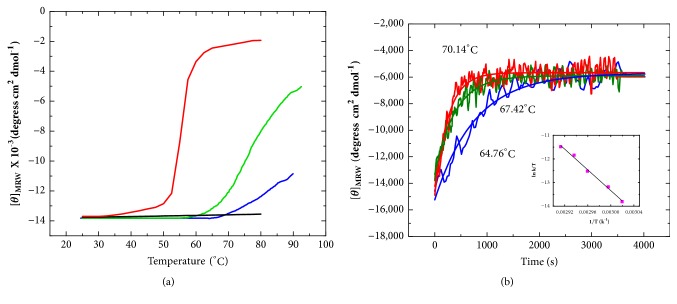
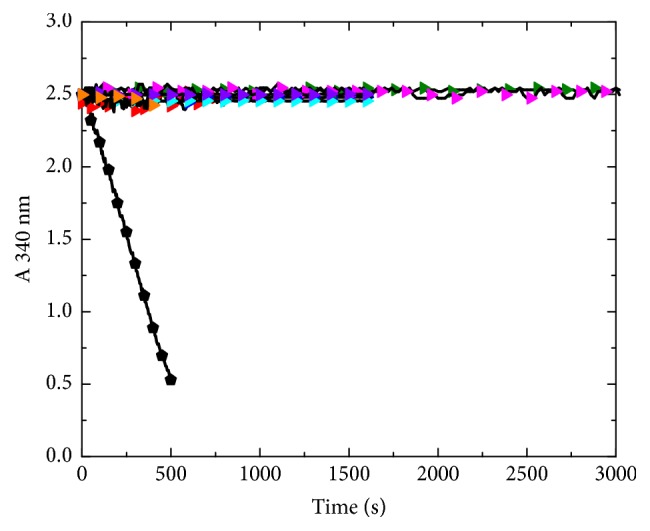
Enolase, which catalyses the conversion of 2-phospho-D-glycerate to phosphoenolpyruvate, is an important enzyme in the classic glycolysis pathway in cells. Enolase is highly conserved in organisms from bacteria to humans, indicating its importance in cells. Thus, enolase is a good target for developing new drugs. In the last decade, new functions of this enzyme have been found.Helicobacter pylori is a common human pathogen that causes gastric diseases and even gastric cancer. In this study, the sequence of H. pylori enolase (HpEno) was analysed; the conservation (at least partial) of binding sites for cofactor, plasminogen, and host extracellular RNA, as well as catalytic site, indicates that HpEno should be capable of performing the functions. Recombinant HpEno was overexpressed and purified from E. coli. Compared to the enolases from other species, HpEno had similar characteristics for its secondary structure. The temperature-induced profiles indicate that HpEno is quite stable to temperature, compared to other homologs. Regarding the kinetics of the unfolding reaction, we found that the activation enthalpy associated with the thermal unfolding reaction is equivalent to the reported activation enthalpy for yeast enolase, indicating a similar scaffold and kinetic stability. Although a wide range of experimental conditions were assayed, it was not possible to detect any enzymatic activity of HpEno. To prove the lack of activity, still a much wider range of experiments should be carried out.
Overview
The claims and statistics of this paper haven’t been checked yet.
Run the check — free, no account needed. It reads the open-access text and checks the sources it cites.
Integrity signals
Registry
Cites
Statistics
Figures
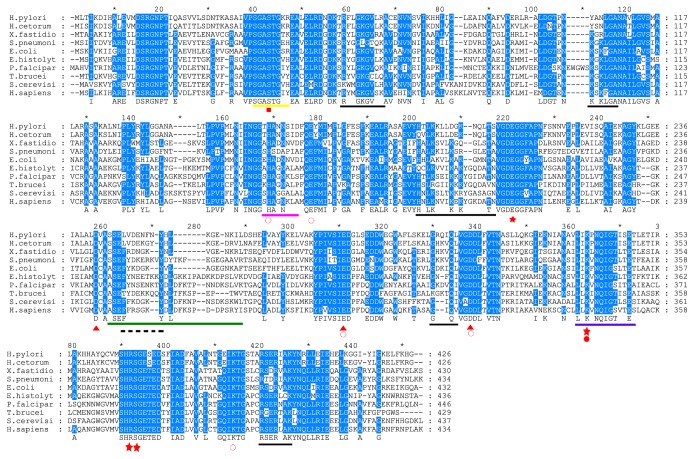
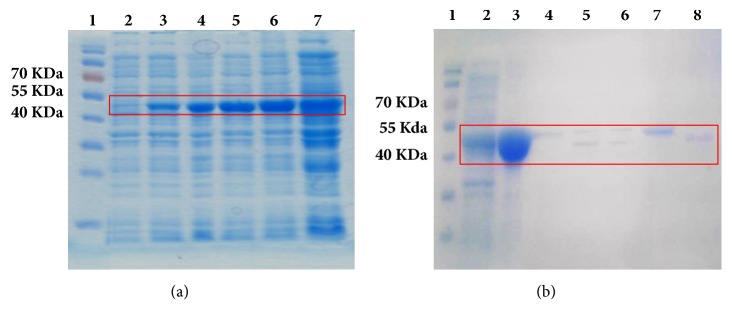
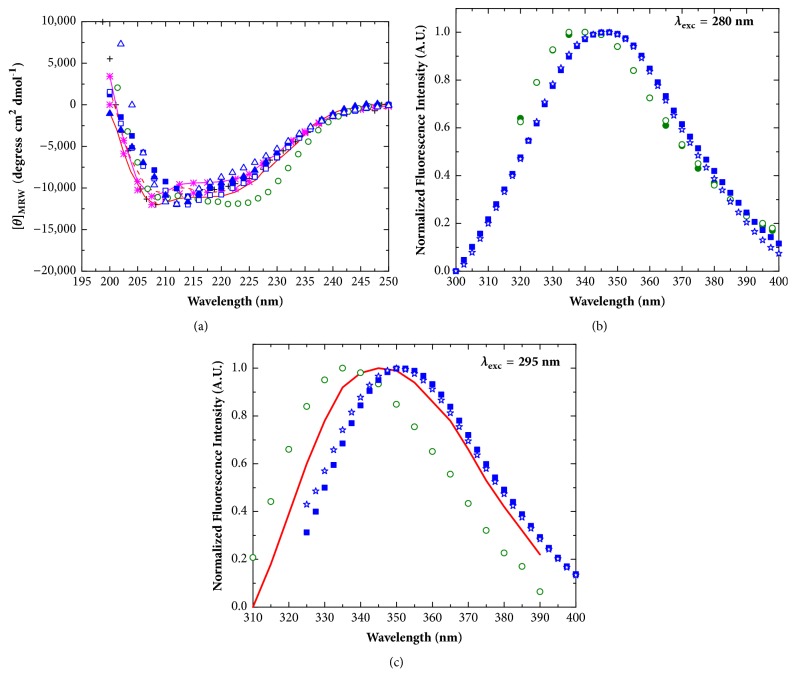
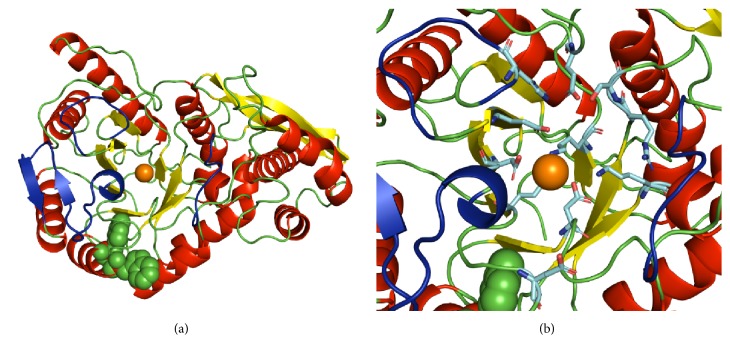
Verification
Claims the paper makes
The claims and statistics of this paper haven’t been checked yet.
Run the check — free, no account needed. It reads the open-access text and checks the sources it cites.
Claims other papers make about this one
Each is checked against this paper’s own text: does it say what the citing paper says it does?
In the citing paper
“Enolases from Toxoplasma gondii and Candida albicans show structural similarity within conserved catalytic regions”
From Parasites and allergies: a complex bidirectional relationship from evolutionary origins to modern therapeutics (2026) · cites this paper as Lopez-Lopez et al. 2018
In the citing paper
“which may contribute to cross-reactive antibody recognition”
From Parasites and allergies: a complex bidirectional relationship from evolutionary origins to modern therapeutics (2026) · cites this paper as Lopez-Lopez et al. 2018
Self-check
Percentages, sums and reported differences re-computed from the paper’s own numbers.
The self-check needs the paper’s full text.
Citations
Cites
No references could be resolved yet.
Research works printed but not linked: 57
- 10.1007/PL00000910 · DOI
- 10.1016/0014-5793(85)81143-1 · DOI
- 10.1007/BF00556365 · DOI
- 10.1155/2012/156795 · DOI
- 10.4061/2011/932549 · DOI
- 2009, Malaria Journal, 8
- 10.1016/j.bbagen.2007.01.015 · DOI
- 10.1111/j.1742-4658.2010.07819.x · DOI
- 10.1016/j.bbapap.2008.03.017 · DOI
- 10.1046/j.1365-2958.2001.02448.x · DOI
- 10.1016/j.bbrc.2007.10.098 · DOI
- 2009, RNA Biology, 6
- 10.1002/pro.5560040209 · DOI
- 10.1023/A:1020790604887 · DOI
- 10.1093/jb/mvg104 · DOI · Paper page
- 10.1006/jmbi.2001.5065 · DOI
- 10.1111/j.1742-4658.2007.06027.x · DOI
- 10.1016/j.jmb.2004.08.088 · DOI
- 1989, The Journal of Biological Chemistry, 264, 3685, 10.1016/S0021-9258(19)84906-2 · DOI
- 10.1016/S1286-4579(03)00111-4 · DOI
- 10.1155/2012/723183 · DOI
- 10.1016/j.micres.2017.04.008 · DOI
- 10.1016/j.sbi.2005.05.008 · DOI
- 10.1046/j.1432-1033.2003.03692.x · DOI
- 10.1016/j.ijbiomac.2011.07.021 · DOI
- 10.1111/j.1742-4658.2007.05738.x · DOI
- 10.1016/0076-6879(86)31045-0 · DOI
- 10.1038/nprot.2006.204 · DOI
- 10.1021/bi010528w · DOI
- 1996, Computer Applications in the Biosciences, 12, 543
- 10.1038/84513 · DOI
- 10.1002/pmic.200600875 · DOI
- 2008, Acta Crystallographica Section D, 64, 651, 10.1107/S0907444908008561 · DOI
- 10.1107/S0907444911016544 · DOI
- 10.1021/bi00225a012 · DOI
- 10.1021/bi952859c · DOI
- 10.1021/bi00636a023 · DOI
- 10.1016/S0167-4838(99)00233-2 · DOI
- 10.1021/bi0346345 · DOI
- 10.1186/s12917-014-0223-6 · DOI
- 10.1016/j.micres.2012.10.001 · DOI
- 10.1128/IAI.72.1.94-105.2004 · DOI
- 10.1074/jbc.M109.004317 · DOI
- 10.1099/mic.0.028795-0 · DOI
- 2016, Scientific Reports, 6, 37758, 10.1038/srep37758 · DOI
- 10.1016/j.pep.2008.02.015 · DOI
- 10.1021/bi00197a038 · DOI
- 10.1107/S1399004715018830 · DOI
- 10.1038/nprot.2008.197 · DOI
- 10.1002/prot.24333 · DOI
- 10.1016/j.abb.2009.02.012 · DOI
- 10.2174/1568026611212220009 · DOI
- 10.1590/S1415-47572003000200015 · DOI
- 10.1007/s10930-009-9215-y · DOI
- 10.1128/9781555818005 · DOI
- 10.1099/13500872-140-8-2085 · DOI
- 10.1128/IAI.71.5.2920-2923.2003 · DOI
Cited by
Sorted by citations
Packi, K., Świerczewski, D., Klimczak, S., Ochab, D., Gałęziewska, J., Gromek, P., Kruczkowska, W., Płuciennik, E., Kałuzińska-Kołat, Ż., & Kołat, D. (2026) · Antonie van Leeuwenhoek · doi:10.1007/s10482-026-02425-4
Metadata
- Authors
- López-López, M. D. J., Rodríguez-Luna, I. C., Lara-Ramírez, E. E., López-Hidalgo, M., Benítez-Cardoza, C. G., & Guo, X.
- Venue
- BioMed Research International
- Publisher
- Wiley
- Published
- 2018-12-17
- Volume
- 2018
- Pages
- 1-12
- ISSN
- 2314-6133
- 2314-6141
- PMC
- PMC6311853
- Cited by
- 13
- References
- 0
- Language
- en
- Funders
- Consejo Nacional de Ciencia y Tecnología (168541, SIP20120202, SIP20140076)
- Secretaría de Investigación y Posgrado, Instituto Politécnico Nacional (168541, SIP20120202, SIP20140076)
About these checks
Registry, retraction, Cites and statistics results are computed, not judged, with one exception: a printed reference that no index lists is read once by a model before it counts as a citation error. Claims are extracted by a model and kept only when their quote appears verbatim in the text; each cited source is then checked, with a model’s help, for whether it says what the claim relies on. Those verdicts can be wrong — read the claim’s quote and the cited source before relying on one.
Statistics and arithmetic are recomputed, not judged.
Confidence bands are shown only for fields calibrated on our annotated test set. None is calibrated yet, so no band is shown.
What counts as a claim ›How we measure confidence ›How we check this ›
Are you an author, or do you see a problem with this page? Request a review
