

Machine Learning Based Antenna Design for Physical Layer Security in Ambient Backscatter Communications
Open accessThe DOI matches its Crossref record; 15 of the 15 references it cites were found in a registry or an index.
Abstract
Ambient backscatter employs existing radio frequency (RF) signals in the environment to support sustainable and independent communications, thereby providing a new set of applications that promote the Internet of Things (IoT). However, nondirectional forms of communication are prone to information leakage. In order to ensure the security of the IoT communication system, in this paper, we propose a machine learning based antenna design scheme, which achieves directional communication from the relay tag to the receiving reader by combining patch antenna with log-periodic dual-dipole antenna (LPDA). A multiobjective genetic algorithm optimizes the antenna side lobe, gain, standing wave ratio, and return loss, with a goal of limiting the number of large side lobes and reduce the side lobe level (SLL). The simulation results demonstrate that our proposed antenna design is well suited for practical applications in physical layer security communication, where signal-to-noise ratio of the wiretap channel is reduced, communication quality of the main channel is ensured, and information leakage is prevented.
Overview
The claims and statistics of this paper haven’t been checked yet.
Free: it reads the open-access text and checks the first 5 claims that cite a source we can check. Create a free account to check every claim.
Integrity signals
Registry
Cites
Statistics
Figures
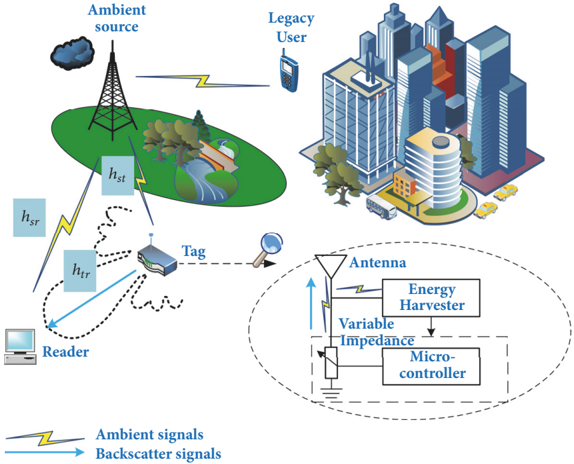
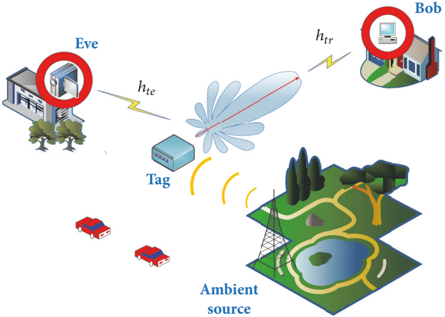
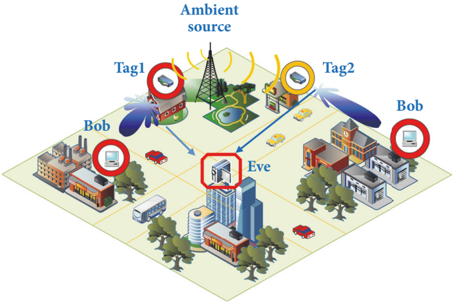
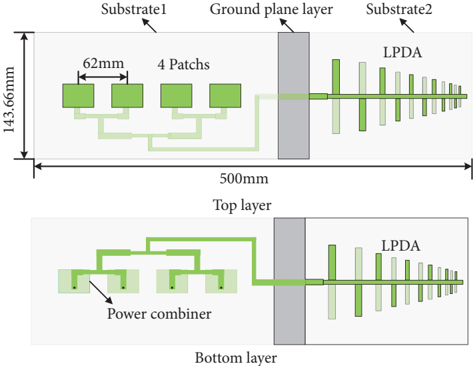


Verification
Claims the paper makes
The claims and statistics of this paper haven’t been checked yet.
Free: it reads the open-access text and checks the first 5 claims that cite a source we can check. Create a free account to check every claim.
Self-check
Percentages, sums and reported differences re-computed from the paper’s own numbers.
The self-check needs the paper’s full text.
Citations
Cites
Carver, K., & Mink, J. (1981) · IEEE Transactions on Antennas and Propagation · doi:10.1109/tap.1981.1142523 · Cited by 1,620
Ambient Backscatter Communication Systems: Detection and Performance Analysis
Wang, G., Gao, F., Fan, R., & Tellambura, C. (2016) · IEEE Transactions on Communications · doi:10.1109/tcomm.2016.2602341 · Cited by 427
Mukherjee, A. (2015) · Proceedings of the IEEE · doi:10.1109/jproc.2015.2466548 · Cited by 347
Ambient Backscatter Assisted Wireless Powered Communications
Lu, X., Niyato, D., Jiang, H., Kim, D. I., Xiao, Y., & Han, Z. (2018) · IEEE Wireless Communications · doi:10.1109/mwc.2017.1600398 · Cited by 221
Hoang, D. T., Niyato, D., Wang, P., Kim, D. I., & Han, Z. (2017) · IEEE Transactions on Communications · doi:10.1109/tcomm.2017.2710338 · Cited by 213
Wire-antenna designs using genetic algorithms
Altshuler, E. E., & Linden, D. S. (1997) · IEEE Antennas and Propagation Magazine · doi:10.1109/74.584498 · Cited by 198
Compact Open-Slot Antenna With Bandwidth Enhancement
Liu, W., Yin, Y., Xu, W., & Zuo, S. (2011) · IEEE Antennas and Wireless Propagation Letters · doi:10.1109/lawp.2011.2165197 · Cited by 121
A microwave printed planar log-periodic dipole array antenna
Pantoja, R. R., Sapienza, A., & Filho, F. M. (1987) · IRE Transactions on Antennas and Propagation · doi:10.1109/tap.1987.1143990 · Cited by 93
Improving Physical-Layer Security for CRNs Using SINR-Based Cooperative Beamforming
Zhu, F., & Yao, M. (2015) · IEEE Transactions on Vehicular Technology · doi:10.1109/tvt.2015.2412152 · Cited by 85
Dense-Device-Enabled Cooperative Networks for Efficient and Secure Transmission
Han, S., Xu, S., Meng, W., & Li, C. (2018) · IEEE Network · doi:10.1109/mnet.2018.1700292 · Cited by 76
Ambient Backscatter Communication Systems: Capacity and Outage Performance Analysis
Zhao, W., Wang, G., Fan, R., Fan, L., & Atapattu, S. (2018) · IEEE Access · doi:10.1109/access.2018.2828021 · Cited by 59
Adaptive Transmit and Receive Beamforming for Interference Mitigation
Zhu, C., Li, H., Cui, G., & Rangaswamy, M. (2014) · IEEE Signal Processing Letters · doi:10.1109/lsp.2014.2298497 · Cited by 58
Coding and Detection Schemes for Ambient Backscatter Communication Systems
Liu, Y., Wang, G., Dou, Z., & Zhong, Z. D. (2017) · IEEE Access · doi:10.1109/access.2017.2679135 · Cited by 53
An Agile Confidential Transmission Strategy Combining Big Data Driven Cluster and OBF
Han, S., Xu, S., Meng, W., & Li, C. (2017) · IEEE Transactions on Vehicular Technology · doi:10.1109/tvt.2017.2717949 · Cited by 31
Military antenna design using simple and competent genetic algorithms
Santarelli, S. G., Yu, T., Goldberg, D. E., Altshuler, E. E., O'Donnell, T. H., Southall, H. L., & Mailloux, R. J. (2006) · Mathematical and Computer Modelling · doi:10.1016/j.mcm.2005.05.024 · Cited by 30
Cited by
Quantum Machine Learning for 6G Communication Networks: State-of-the-Art and Vision for the Future
Nawaz, S. J., Sharma, S. K., Wyne, S., Patwary, M. N., & Asaduzzaman, M. (2019) · IEEE Access · doi:10.1109/access.2019.2909490 · Cited by 658
Security and privacy in 6G networks: New areas and new challenges
Wang, M., Zhu, T., Zhang, T., Zhang, J., Yu, S., & Zhou, W. (2020) · Digital Communications and Networks · doi:10.1016/j.dcan.2020.07.003 · Cited by 363
Security Requirements and Challenges of 6G Technologies and Applications
Abdel Hakeem, S. A., Hussein, H. H., & Kim, H. (2022) · Sensors · doi:10.3390/s22051969 · Cited by 235
Sarker, N., Podder, P., Mondal, M. R. H., Shafin, S. S., & Kamruzzaman, J. (2023) · IEEE Access · doi:10.1109/access.2023.3317371 · Cited by 189
Zero Touch Management: A Survey of Network Automation Solutions for 5G and 6G Networks
Coronado, E., Behravesh, R., Subramanya, T., Fernandez-Fernandez, A., Siddiqui, M. S., Costa-Perez, X., & Riggio, R. (2022) · IEEE Communications Surveys & Tutorials · doi:10.1109/comst.2022.3212586 · Cited by 183
Metadata
- Authors
- Hong, T., Liu, C., & Kadoch, M.
- Affiliations
- Beihang University (CN)
- Université du Québec (CA)
- Corresponding author
- Hong, Tao
- Venue
- Wireless Communications and Mobile Computing
- Publisher
- Wiley
- Published
- 2019-01-01
- Volume
- 2019
- Pages
- 1-10
- ISSN
- 1530-8669 (ISSN-L)
- 1530-8677
- OpenAlex
- W2908291798
- Cited by
- 49
- References
- 15
- Citations by year
- 2026: 3 · 2025: 3 · 2024: 5 · 2023: 12 · 2022: 10 · 2021: 7 · 2020: 7 · 2019: 2
- FWCI
- 2.34
- Type
- journal article
- Language
- en
- Open access
- hybrid
- doi.org
- Locations
- Wireless Communications and Mobile Computing (publishedVersion, cc-by)
- DOAJ (DOAJ: Directory of Open Access Journals) (submittedVersion)
- Espace ÉTS (ETS) (submittedVersion)
- Topics
- Physical Sciences › Engineering › Electrical and Electronic Engineering › Wireless Communication Security Techniques
- Physical Sciences › Engineering › Electrical and Electronic Engineering › Antenna Design and Analysis
- Physical Sciences › Engineering › Electrical and Electronic Engineering › Energy Harvesting in Wireless Networks
- Keywords
- ambient backscatter communication, physical layer security, directional communication, microstrip antenna, multi-objective genetic algorithm, wiretap channel, information leakage, Internet of Things
About these checks
Registry, retraction, Cites and statistics results are computed, not judged, with one exception: a printed reference that no index lists is read once by a model before it counts as a citation error. Claims are extracted by a model and kept only when their quote appears verbatim in the text; each cited source is then checked, with a model’s help, for whether it says what the claim relies on. Those verdicts can be wrong — read the claim’s quote and the cited source before relying on one.
Statistics and arithmetic are recomputed, not judged.
Confidence bands are shown only for fields calibrated on our annotated test set. None is calibrated yet, so no band is shown.
What counts as a claim ›How we measure confidence ›How we check this ›
Are you an author, or do you see a problem with this page? Request a review
Data sources
Bibliographic data: Semantic Scholar, OpenAlex, Crossref.
Contains information from the Semantic Scholar Academic Graph Datasets, made available under the ODC Attribution License (ODC-BY 1.0).
Semantic Scholar’s data is described in: Kinney, R., et al. (2023). The Semantic Scholar Open Data Platform. arXiv:2301.10140.
