

Adherence to Iron-Folic Acid Supplementation and Associated Factors among Pregnant Women in Kasulu Communities in North-Western Tanzania
Open accessThe DOI matches its Crossref record; 37 of the 38 references it cites were found in a registry or an index; 9 of the 12 sources its claims cite were checked for support.
Abstract
INTRODUCTION: Pregnant women are at a high risk of anaemia, with iron-folate deficiency being the most common cause of anaemia among pregnant women. Despite the well-known importance of iron and folic acid supplementation (IFAS) during pregnancy, adherence to these supplements is relatively low and associated factors were not well identified in the study area. This study is aimed at investigating adherence to IFAS and associated factors among pregnant women in Kasulu district, north-western Tanzania. METHODS: A health facility cross-sectional survey with a mixed-method approach was conducted in Kasulu district from March to April 2019. A structured questionnaire was given to 320 women with children aged 0-6 months to assess factors associated with adherence to IFAS among pregnant women. Data were entered into SPSS version 22.0 for analysis. Binary logistic regression was further employed to determine the factors associated with adherence to IFAS. Focus group discussions were done with 19 pregnant women and 15 mothers of children aged 0-6 months to obtain more clarifications on the factors associated with adherence to IFAS. Furthermore, in-depth interviews were done with six health care providers to explore their perceptions of IFAS. RESULTS: = 65) adhered to IFAS. Factors associated with adherence to IFAS among pregnant women included time to start ANC (AOR = 3.72, 95% CI: 1.42, 9.79), knowledge of anaemia (AOR = 3.84, 95% CI: 1.335, 10.66), counseling on the importance of the iron-folic acid (AOR = 3.86, 95% CI: 1.42, 10.50), IFAS given during clinical visit (AOR = 15.72, 95% CI: 5.34, 46.31), number of meals consumed (AOR = 3.44, 95% CI: 1.28, 9.21), number of children (AOR = 3.462, 95% CI: 1.035, 11.58), and distance to health facility (AOR = 0.34, 95% CI: 0.131, 0.886). Qualitative findings revealed that delayed first ANC visit, lack of remainder for pregnant women to take IFAS, low awareness about the negative effects of anaemia, low of knowledge of IFAS and management of side effects, negative beliefs about the use of IFAS, and follow-up mechanism were major reasons for poor adherence. CONCLUSION: Adherence to iron-folic acid supplementation during pregnancy was low. Strengthening systems for creating reminding mechanism, raising community awareness through educational programs to pregnant women and health providers could improve adherence to IFAS.
Overview
CoChat Summary
## TL;DR
This mixed-method, facility-based cross-sectional study in Kasulu district, Tanzania found low adherence to iron-folic acid supplementation (IFAS) among pregnant women. Adherence was associated with timing of ANC attendance, knowledge of anaemia and IFAS, counseling, tablets provided at visits, meal frequency, number of children, and distance to the health facility.
## Key findings
- Among 320 survey respondents, 20.3% (n = 65) adhered to IFAS.
- In multivariable analysis, adherence was associated with: time to start ANC (AOR = 3.72, 95% CI: 1.42–9.79), knowledge of anaemia (AOR = 3.84, 95% CI: 1.335–10.66), counseling on the importance of IFAS (AOR = 3.86, 95% CI: 1.42–10.50), IFAS given during clinical visit (AOR = 15.72, 95% CI: 5.34–46.31), number of meals consumed (AOR = 3.44, 95% CI: 1.28–9.21), number of children (AOR = 3.462, 95% CI: 1.035–11.58), and distance to health facility (AOR = 0.34, 95% CI: 0.131–0.886).
- Qualitative data identified major reasons for poor adherence as delayed first ANC visit, lack of reminders, low awareness of anaemia, low knowledge of IFAS and side effects, negative beliefs about IFAS, and weak follow-up mechanisms.
- The paper notes that more than 90% (n = 296) received IFAS from two clinics, but frequent stock-outs meant many women did not receive enough tablets for the recommended course.
## Methods
- Design: Health facility-based cross-sectional mixed-method study conducted in Kasulu district, Kigoma region, Tanzania, from March to April 2019.
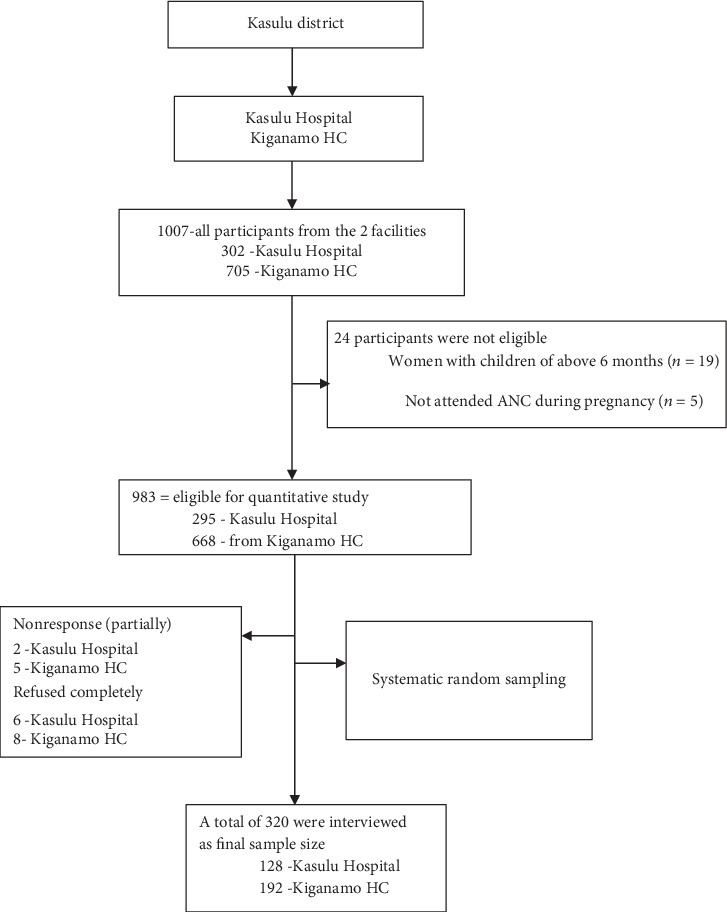
- Sample/data: Quantitative survey of 320 women with children aged 0–6 months; qualitative component included 19 pregnant women, 15 mothers of children aged 0–6 months, and 6 health care providers (4 FGDs and IDIs).
- Analysis: Quantitative data were analyzed in SPSS version 22 using descriptive statistics, chi-square testing, and binary logistic regression; qualitative interviews were transcribed, coded in NVivo version 10, and analyzed thematically, then triangulated with survey findings.
## Limitations
- The paper states that adherence was self-reported, which may have led to over- or underreporting of tablet intake.
- The paper states that pill counts, haemoglobin concentration, and biomarkers were not measured, though these could have better assessed adherence.
- Evident from the design: because the study is cross-sectional, it can show associations but not establish causation.
Model-written summary. Check it against the paper before relying on it.
Integrity signals
Registry
Cites
Statistics
Figures
Verification
Claims the paper makes
5 Valid · 2 Not valid · 0 Not checked · 21 Own results and interpretations
The cited sources support only part of this claim — read each source’s verdict below.
In the paper
“Despite the national guideline emphasis, adherence to iron-folic acid supplements during pregnancy is still low [4].”
§ Adherence to Iron-Folic Acid Supplementation and Associated Factors among Pregnant Women in Kasulu Communities in North-Western Tanzania > 1. Introduction
What the sources say
- Partly supportedcites [4] TDHS Tanzania 2015-16 Demogr. Heal. Surv. Malar. Indic. Surv sourceExperimental — accuracy not yet measured
The Supplementation strategies section describes poor compliance with iron–folic acid supplementation during pregnancy. The Iron section notes recommendations by UN agencies, but the paper does not establish low adherence in Tanzania or describe an emphasis in Tanzanian national guidelines. No page numbers are available in our copy. (LLM, conf=0.87)
plain- Asserted: passes — The authors put it forward as true.
- Checkable: passes — It can be checked against evidence.
- Load-bearing: passes — The paper’s conclusions depend on it.
- Based: passes — The paper gives a reason why it holds.
- Partly supported
The cited sources support only part of this claim — read each source’s verdict below.
In the paper
“Tanzania adopted the WHO recommendation and requires all pregnant women to consume 30-60 mg of a dose of iron and 400 μg of folic acid daily starting early at first antenatal visit [2, 4, 13].”
§ Adherence to Iron-Folic Acid Supplementation and Associated Factors among Pregnant Women in Kasulu Communities in North-Western Tanzania > 1. Introduction
What the sources say
- Not matchedcites [2] WHO The global prevalence of anaemia in 2011 2015 World Health Organization Geneva
We don’t have this paper’s reference list.
- Partly supportedcites [4] TDHS Tanzania 2015-16 Demogr. Heal. Surv. Malar. Indic. Surv sourceExperimental — accuracy not yet measured
The Dosage & potential interactions section (page unavailable) recommends 60 mg iron and 400 µg folic acid daily for pregnant women, with 30 mg iron recommended where foods are iron-fortified. The review also recommends iron–folic acid supplementation for pregnant women in developing countries, but it does not say Tanzania adopted or requires this regimen, or specify starting it at the first antenatal visit. (LLM, conf=0.88)
- Partly supportedcites [13] WHO Guideline: Daily Iron and Folic Acid Supplementation in Pregnant Women World Heal. Organ 2012 46 323 329 23586119 sourceExperimental — accuracy not yet measured
The Discussion (page not provided) states that WHO recommends 30–60 mg of iron and 400 μg of folic acid daily for all pregnant women. It does not say that Tanzania adopted or requires this regimen, or that supplementation must start at the first antenatal visit. Its discussion of early antenatal visits concerns the Ethiopian study, not Tanzanian policy. (LLM, conf=0.88)
plain- Asserted: passes — The authors put it forward as true.
- Checkable: passes — It can be checked against evidence.
- Load-bearing: passes — The paper’s conclusions depend on it.
- Based: passes — The paper gives a reason why it holds.
- Not matched
Every source the paper cites for this claim was checked and supports it.
In the paper
“IFAS is considered the best strategy to control anaemia during pregnancy, but low adherence to IFAS compromises the effectiveness of this strategy [4].”
§ Adherence to Iron-Folic Acid Supplementation and Associated Factors among Pregnant Women in Kasulu Communities in North-Western Tanzania > 1. Introduction
What the sources say
- Supportedcites [4] TDHS Tanzania 2015-16 Demogr. Heal. Surv. Malar. Indic. Surv source
The “Supplementation strategies” section (page not provided) says poor compliance with iron–folic acid supplementation schedules is among the problems leading to suboptimal effects on anemia. This directly supports the attributed claim. (LLM, conf=0.94)
plainstates a cause- Asserted: passes — The authors put it forward as true.
- Checkable: passes — It can be checked against evidence.
- Load-bearing: passes — The paper’s conclusions depend on it.
- Based: passes — The paper gives a reason why it holds.
- Supported
A result the paper reports from its own data — it cites no other source for it, so there is none to check. The quote shows it is in the paper.
In the paper
“Qualitative findings revealed that delayed first ANC visit, lack of remainder for pregnant women to take IFAS, low awareness about the negative effects of anaemia, low of knowledge of IFAS and management of side effects, negative beliefs about the use of IFAS, and follow-up mechanism were major reasons for poor adherence.”
§ Adherence to Iron-Folic Acid Supplementation and Associated Factors among Pregnant Women in Kasulu Communities in North-Western Tanzania > Abstract > Results
plainstates a cause- Asserted: passes — The authors put it forward as true.
- Checkable: passes — It can be checked against evidence.
- Load-bearing: passes — The paper’s conclusions depend on it.
- Based: passes — The paper gives a reason why it holds.
A result the paper reports from its own data — it cites no other source for it, so there is none to check. The quote shows it is in the paper.
In the paper
“counseling on the importance of the iron-folic acid (AOR = 3.86, 95% CI: 1.42, 10.50)”
§ Adherence to Iron-Folic Acid Supplementation and Associated Factors among Pregnant Women in Kasulu Communities in North-Western Tanzania > Abstract > Results
plainstates an associationn = 320 ·- Asserted: passes — The authors put it forward as true.
- Checkable: passes — It can be checked against evidence.
- Load-bearing: passes — The paper’s conclusions depend on it.
- Based: passes — The paper gives a reason why it holds.
- Rests on 2 assumptions not shown here.
12 more claims
Create a free account to see all 28 claims and to verify the 1 reference still open.
- Probably not a substantial claim. 7
- It may state two separate claims as one. 4
- The quote only partly states this claim. 3
Claims other papers make about this one
Each is checked against this paper’s own text: does it say what the citing paper says it does?
The cited source says what the claim attributes to it.
In the citing paper
“However, it is higher than the adherence rates reported in the Amharic Region of Ethiopia (20.4%) and Tanzania (20.3%) [7,21].”
Self-check
Percentages, sums and reported differences re-computed from the paper’s own numbers.
Self-check results appear here once an independent check has confirmed them.
Cited works that were retracted
Works this paper cites that were later retracted, from the retraction notices publishers deposit. Major when the notice came out before this paper was published.
Rated major: it would touch a result — a value a result rests on, reported and recomputed p-values on opposite sides of the significance level, two passages that conflict with no sign which is right, or a cited work retracted before this paper was published.
Cited work 10.1186/1471-2393-13-160 · retracted 2014-07-03 · notice 10.1186/1471-2393-14-202 · this paper published 2020-06-05
Citations
Cites
1 retracted
Sengpiel, V., Bacelis, J., Myhre, R., Myking, S., Pay, A. D., Haugen, M., Brantsæter, A.-L., Meltzer, H. M., Nilsen, R. M., Magnus, P., et al. (2013) · BMC Pregnancy and Childbirth · doi:10.1186/1471-2393-13-160 · Cited by 49
RetractedGlobal causes of maternal death: a WHO systematic analysis
Say, L., Chou, D., Gemmill, A., Tunçalp, Ö., Moller, A.-B., Daniels, J., Gülmezoglu, A. M., Temmerman, M., & Alkema, L. (2014) · The Lancet Global Health · doi:10.1016/s2214-109x(14)70227-x · Cited by 6,582 · cited 1×
“6% of maternal deaths [11] and 10% in Tanzania [12].”
BackgroundStevens, G. A., Finucane, M. M., De-Regil, L. M., Paciorek, C. J., Flaxman, S. R., Branca, F., Peña-Rosas, J. P., Bhutta, Z. A., & Ezzati, M. (2013) · The Lancet Global Health · doi:10.1016/s2214-109x(13)70001-9 · Cited by 1,932 · cited 17×
“Anaemia affects more than two billion people, 30-50% of whom are from developing countries including Tanzania [1].”
BackgroundInfluentialGenetics and development of neural tube defects
Copp, A. J., & Greene, N. D. (2010) · The Journal of Pathology · doi:10.1002/path.2643 · Cited by 482
Determinants of compliance with iron supplementation: Supplies, side effects, or psychology?
Galloway, R., & McGuire, J. (1994) · Social Science & Medicine · doi:10.1016/0277-9536(94)90135-x · Cited by 277 · cited 2×
“On the other hand, misinformation included fear to give birth to big baby, spot-on teeth of children and face of mothers, difficult delivery, not beneficial to babies, mothers experience with no history of having children with neural tube defects, and more bleeding during delivery was associated with low adherence to…”
BackgroundTaye, B., Abeje, G., & Mekonen, A. (2015) · Pan African Medical Journal · doi:10.11604/pamj.2015.20.43.4894 · Cited by 155 · cited 2×
“4%), also found the low adherence to IFAS among pregnant women [19, 20].”
BackgroundNguyen, P. H., Sanghvi, T. G., Kim, S. S., Tran, L. M., Afsana, K., Mahmud, Z., Aktar, B., & Menon, P. (2017) · PLoS ONE · doi:10.1371/journal.pone.0179873 · Cited by 144 · cited 1×
“This was consistent with studies conducted in North Wollo Zone-Ethiopia, Ibadan-Nigeria, Bangladesh, and Tamil Nadu-India, which reported that early registration in the first and second trimester has a positive effect to adherence to IFAS program than in the third trimester [16, 27, 29, 38].”
ResultTosh, D. N., Fu, Q., Callaway, C. W., McKnight, R. A., McMillen, I. C., Ross, M. G., Lane, R. H., & Desai, M. (2010) · American Journal of Physiology-Gastrointestinal and Liver Physiology · doi:10.1152/ajpgi.00052.2010 · Cited by 136
Kamau, M. W., Mirie, W., & Kimani, S. (2018) · BMC Public Health · doi:10.1186/s12889-018-5437-2 · Cited by 125
Ogundipe, O., Hoyo, C., Østbye, T., Oneko, O., Manongi, R., Lie, R. T., & Daltveit, A. K. (2012) · BMC Public Health · doi:10.1186/1471-2458-12-481 · Cited by 114 · cited 2×
“This study corroborates with the study conducted in Ethiopia [41, 42]; however, the other studies reported that fear of being sick or being sick was associated with adherence to the IFAS program [21, 26, 28, 43].”
Result
Research works printed but not linked: 5
- Hanson B. C. Mbaruku G. Manzi F. High risk of maternal death in southern Tanzania Ifakara Health Institute 2014 18 1 4
- WHO Guideline: Daily Iron and Folic Acid Supplementation in Pregnant Women World Heal. Organ 2012 46 323 329 23586119
- Ibrahim Z. M. El-hamid S. A. B. D. Mikhail H. Khattab M. S. Assessment of adherence to iron and folic acid supplementation and prevalence of anemia in pregnant women The Medical Journal of Cairo University 2011 79 2
- Niguse W. Murugan R. Determinants of adherence to iron-folic acid supplementation among pregnant women attending antenatal clinic in Asella town, Ethiopia International Journal of Therapeutic Applications 2018 35 60 67
- Ejaz R. Khan A. Raza M. A. Maternal health care: the case of iron supplementation in India Pakistan Journal of Commerce and Social Sciences 2013 7 2 263 275
Cited by
Gebremariam, A. D., Tiruneh, S. A., Abate, B. A., Engidaw, M. T., & Asnakew, D. T. (2019) · PLOS ONE · doi:10.1371/journal.pone.0210086 · Cited by 79
Saragih, I. D., Felipe‐Dimog, E. B., Saragih, I. S., & Lin, C. (2021) · Midwifery · doi:10.1016/j.midw.2021.103185 · Cited by 91
High burden of anemia among pregnant women in Tanzania: a call to address its determinants
Sunguya, B. F., Ge, Y., Mlunde, L. B., Mpembeni, R. N. M., Leyna, G. H., & Huang, J. (2021) · Nutrition Journal · doi:10.1186/s12937-021-00726-0 · Cited by 62
Billah, S. M., Raynes‐Greenow, C. H., Ali, N. B., Karim, F., Lotus, S. U., Azad, R., Sari, M., Mustaphi, P., Maniruzzaman, M., Rahman, S. M. M., et al. (2022) · Nutrients · doi:10.3390/nu14153114 · Cited by 45
Lavanya, P., Jayalakshmy, R., Rajaa, S., & Thulasingam, M. (2020) · Journal of Family Medicine and Primary Care · doi:10.4103/jfmpc.jfmpc_721_20 · Cited by 43
PAHs as environmental pollutants and their neurotoxic effects
Xu, P., Liu, B., Chen, H., Wang, H., Guo, X., & Yuan, J. (2024) · Comparative Biochemistry and Physiology Part C Toxicology & Pharmacology · doi:10.1016/j.cbpc.2024.109975 · Cited by 45
Felipe‐Dimog, E. B., Yu, C., Ho, C., & Liang, F. (2021) · Nutrients · doi:10.3390/nu13093060 · Cited by 31
Jhaveri, N. R., Poveda, N. E., Kachwaha, S., Comeau, D. L., Nguyen, P. H., & Young, M. F. (2023) · Frontiers in Nutrition · doi:10.3389/fnut.2023.1185696 · Cited by 34
“Most women in this study understood the importance of IFA and did not report issues in obtaining IFA, which contrasts with findings in prior literature in Africa and Southeast Asia that has reported limited knowledge on the importance of taking IFA supplements, supply chain issues, and lack of receipt of IFA during pr…”
ResultNimwesiga, C., Murezi, M., & Taremwa, I. M. (2021) · International Journal of Reproductive Medicine · doi:10.1155/2021/6632463 · Cited by 30
“These factors have been widely studied, and they affirm the importance of pregnant women understanding the positive attributes of IFAS [12, 16, 42].”
BackgroundTadesse, A. W., Aychiluhm, S. B., & Mare, K. U. (2021) · Heliyon · doi:10.1016/j.heliyon.2021.e07521 · Cited by 22
“The possible justification might be mothers who had four or more ANC visits may have adequate information about the importance of IFA intake adherence [46] and may took the prescribed IFA tablets for the recommended period compared to the women who have fewer than four antenatal care visits.”
BackgroundBahati, F., Kairu-Wanyoike, S., & Nzioki, J. M. (2021) · Wellcome Open Research · doi:10.12688/wellcomeopenres.16699.2 · Cited by 30
Smitha, M. V., Indumathi, P., Parichha, S., Kullu, S., Roy, S., Gurjar, S., & Meena, S. (2023) · Human Nutrition & Metabolism · doi:10.1016/j.hnm.2023.200237 · Cited by 27
Beressa, G., Lencha, B., Bosha, T., & Egata, G. (2022) · Scientific Reports · doi:10.1038/s41598-022-20614-9 · Cited by 22
John, S. E., Azizi, K. A., Hancy, A., Twinomujuni, A., Katana, D., Shine, J., Lyatuu, V., Sanga, A., Mwiru, R. S., Abdallah, F., et al. (2023) · PLOS Global Public Health · doi:10.1371/journal.pgph.0001828 · Cited by 22
“Evidence demonstrates that pregnant women in Tanzania taking iron and folic acid supplementation for at least 90 days were only twenty-one percent [16].”
BackgroundInfluentialAsmamaw, D. B., Debebe Negash, W., Bitew, D. A., & Belachew, T. B. (2022) · Frontiers in Nutrition · doi:10.3389/fnut.2022.1023046 · Cited by 11
“7% (18), and sub-Saharan African countries 71.”
Sharma, S., Smitha, M. V., & Balakrishnan, D. (2023) · European Journal of Obstetrics & Gynecology and Reproductive Biology X · doi:10.1016/j.eurox.2023.100235 · Cited by 24
“Low awareness about the consequences of anemia, negative beliefs, lack of reminders, management of side effects caused by oral IFAS, and follow-up mechanisms were significant reasons for non-adherence [23].”
BackgroundMohamed, A. I., Mohamed, J., Abdillahi, M. M., Abdeeq, B. A., & Lema, T. B. (2024) · Clinical Epidemiology and Global Health · doi:10.1016/j.cegh.2024.101565 · Cited by 11
Mare, K. U., Aychiluhm, S. B., Mulaw, G. F., Sabo, K. G., Ebrahim, O. A., Tebeje, T. M., & Seifu, B. L. (2024) · BMC Pregnancy and Childbirth · doi:10.1186/s12884-024-07105-7 · Cited by 15
Demie, T. G., Gessese, G. T., Woldeamanuel, B. T., Biratu, T. D., & Handebo, S. (2023) · Food Science & Nutrition · doi:10.1002/fsn3.3503 · Cited by 13
Sanin, K. I., Shaun, M. M. A., Rita, R. S., Hasan, M. K., Khanam, M., & Haque, M. A. (2023) · Nutrients · doi:10.3390/nu15061512 · Cited by 14
“The prevalence of consumption for a minimum of 90 days and a minimum of 180 days was calculated based on the self-reported intake to assess compliance with the World Health Organization (WHO) recommendation of at least six months of iron and folic acid (IFA) supplementation [30,31].”
MethodMekonen, E. G., & Alemu, S. A. (2021) · Heliyon · doi:10.1016/j.heliyon.2021.e07530 · Cited by 9
Bancha, B., Lajore, B. A., Petros, L., Hassen, H., & Jemal, A. (2022) · PLoS ONE · doi:10.1371/journal.pone.0275086 · Cited by 6
Silitonga, H. T. H., Salim, L. A., Nurmala, I., Hargono, R., & Purwandini, S. (2023) · Journal of Public Health in Africa · doi:10.4081/jphia.2023.2548 · Cited by 6
Tsegai, M. B., Berhe, A., Tesfaezgi, S. B., Weldemariam, D. G., Petros, K. T., Weldetinsae, H. B., & Tesfamariam, E. H. (2023) · International Journal of Women s Health · doi:10.2147/ijwh.s419813 · Cited by 11
Alemu, G. G., Adugna, D. G., Workie, A. M., Agimas, M. C., Baffa, L. D., Abuhay, H. W., Aweke, M. N., Alemu, T. G., & Baykemagn, N. D. (2025) · PLoS ONE · doi:10.1371/journal.pone.0329458 · Cited by 10
Islam, M. J., & Zobair, K. M. (2024) · PLOS Global Public Health · doi:10.1371/journal.pgph.0002993 · Cited by 8
Taye, M., Toma, T. M., Taye, W., Glagn, M., & Yihune, M. (2025) · Reproductive Health · doi:10.1186/s12978-025-01944-z · Cited by 12
Dennis, K., Marera, D., & Were, T. (2022) · The Egyptian Journal of Haematology · doi:10.4103/ejh.ejh_10_22 · Cited by 3
Abeje, S., Yosef, Y., & Fikadu, Y. (2023) · SAGE Open Nursing · doi:10.1177/23779608231189964 · Cited by 6
“3% of respondents have adhered to IFA supplementation (Lyoba et al., 2020).”
BackgroundInfluentialMshanga, C. N., & Maseta, E. J. (2022) · Tanzania Journal of Science · doi:10.4314/tjs.v48i3.11 · Cited by 4
Kim, S. S., Ouédraogo, C. T., Zagré, R. R., Ganaba, R., Zafimanjaka, M., Tharaney, M., & Menon, P. (2022) · Maternal and Child Nutrition · doi:10.1111/mcn.13457 · Cited by 3
“Recent studies from even a few African countries observed that ANC timing, anaemia knowledge, counselling on IFA and distance to health facility were important factors for adherence in Tanzania (Lyoba et al., 2020); knowledge about anaemia and benefits of IFA and health education were important in Ethiopia (Assefa et…”
BackgroundVerbunt, E., Corona, M. V., Tunçalp, Ö., Rogers, L. M., Prang, K.-H., Vaughan, C., & Bohren, M. A. (2025) · PLOS Global Public Health · doi:10.1371/journal.pgph.0005158 · Cited by 8
“…should take supplements, potential side-effects of supplements, and how side-effects were minimised (moderate confidence) [35,38,43,47,54,57,58,60,62,73–75 Women described receiving minimal information about supplements, such as that iron and folic acid were “good” for the mother and fetus and…”
InfluentialArifah, I., Ramadhani, N. S., Kusumawati, Y., & Setiawan, A. (2024) · Jurnal PROMKES · doi:10.20473/jpk.v12.i2.2024.168-179 · Cited by 6
“Pregnant women who know the benefits of consuming IFA tablets for their babies can also motivate themselves to continue consuming IFA tablets (Lyoba et al ., 2020).”
BackgroundResultFactors associated with stunting among children in Mvomero district Tanzania
Maseta, E. J. (2022) · Nutrition and Health · doi:10.1177/02601060221129004 · Cited by 7
“Few studies conducted in Morogoro reported determinant factors for stunting among infants and young children (Elisaria et al., 2021; Makori et al., 2018; Lyoba et al., 2020).”
Ampratwum, K. A., Nyanor, I., & Alem, J. N. (2023) · International Journal of Nutrition and Food Sciences · doi:10.11648/j.ijnfs.20231203.11 · Cited by 2
“However, it was higher than 20.3% in North West Tanzania [36], This was also far better than the outcome of the hospital based study in Uganda where compliance was 11.6% [37].”
BackgroundResultInfluentialShumi, L., Geda, A., & Bidira, K. (2024) · Health Science Reports · doi:10.1002/hsr2.1998 · Cited by 4
“– 28 The reason could be that knowledge helps women have a good understanding of the importance of prevention and treatment of anaemia during pregnancy by taking iron ‐ folate supplements.”
BackgroundSaeed, M., Adam, G. K., Hussein, S., AlHabardi, N., & Adam, I. (2024) · Patient Preference and Adherence · doi:10.2147/ppa.s476738 · Cited by 10
“18 and lower than the overall pooled prevalence (41.3”
BackgroundResultInfluentialUmmair, M., Durrani, A., Jamshaid, M., Amjad, M., Gul, M., Khan, J., & Khan, A. Q. (2025) · Cureus · doi:10.7759/cureus.79495 · Cited by 8
“Notably, forgetfulness and fear of side effects were shared factors in our study [13].”
The importance of iron deficiency and folic acid deficiency prevention upon pregnancy planning
Сергеевич, К. В., Kazenashev, V. V., Derevyanko, O. S., Тихомиров, А. Л., Рашитовна, Г. Л., Леонидовна, Д. Н., Владимировна, М. М., Lyapina, K. V., & Rurua, N. V. (2025) · Obstetrics Gynecology and Reproduction · doi:10.17749/2313-7347/ob.gyn.rep.2025.672 · Cited by 3
Tolera, C., Tafesse, T., Dessalegn, R., & Amenu, D. (2024) · Health Science Reports · doi:10.1002/hsr2.1952 · Cited by 3
“12,13 Nonetheless, this figure is greater than the 11% from the EDHS 2019, the 11.5% from a different study done in Wolaita, Southern Ethiopia, the 3.5% from eight rural districts in Ethiopia, and the 17.4% from a study done in a high ‐ focus state in India.”
ResultInfluentialDewi, A., Wirasto, A., & Dewi, T. S. (2023) · Research Square · doi:10.21203/rs.3.rs-3023111/v1 · Cited by 3
Alemu, T., Nkosi, Z. Z., & Yakob, T. (2024) · Nutrition and Metabolic Insights · doi:10.1177/11786388241263676 · Cited by 1
“16,17 21-23 Moreover, failure to take iron-folic acid during pregnancy, possibly lead to iron deficiency anemia.”
BackgroundWakhungu, H. K., Abong, G. O., Muthike, C., Mutono, N., Muema, J., Omondi, G., Thumbi, S. M., & Bukania, Z. (2025) · Food Science & Nutrition · doi:10.1002/fsn3.4625 · Cited by 2
“…in developing countries especially due to the high poverty rates, high food insecurity status and poor adherence to iron and folic acid supplementation among these women (Gebremariam et al. 2019; Kamau, Mirie, and Kimani 2018; Lyoba et al. 2020; Saragih et al. 2022; Sendeku, Azeze, and Fenta 2020).”
Malley, Z. A., Sauli, E., & Martin, H. (2025) · Current Research in Nutrition and Food Science Journal · doi:10.12944/crnfsj.13.1.34 · Cited by 4
Uptake of iron and folic acid supplements among pregnant women in Dar es Salaam, Tanzania
Koka, C. E., Bakari, S., Njiro, B. J., & Sunguya, B. F. (2025) · PLOS Global Public Health · doi:10.1371/journal.pgph.0005278 · Cited by 1
“We analyzed IFAS uptake as a categorical variablewas categorized as normal uptake (90 or more pills per pregnancy) and low uptake (less than 90 pills per pregnancy); the adequate IFAS uptake in our study wasis equivalent to at least a third of the WHO recommended dose in pregnancy (20,21).”
InfluentialDeterminants of compliance with routine antenatal medications among pregnant women in Lagos, Nigeria
Oshinyemi, T. E., Oluwatosin, O., Edet, O. B., ALUKO, J. O., & Adeyemo, M. O. A. (2024) · African Journal of Midwifery and Women s Health · doi:10.12968/ajmw.2022.0017 · Cited by 3
Bekele, Y. A., Gallagher, C., Batra, M., Buultjens, M., Eren, S., & Erbas, B. (2024) · Nutrition and Health · doi:10.1177/02601060241256200 · Cited by 3
“A cross-sectional study conducted in Nigeria and Tanzania reported that adherence to folate and combined iron folate supplementation was 36.5% and 20.3%, respectively (Ifeoluwapo et al., 2020; Lyoba et al., 2020).”
InfluentialEjara, D., Ferede, A., Shifa, J. E., Bekele, F., & Abate, K. H. (2024) · Scientific Reports · doi:10.1038/s41598-024-63111-x · Cited by 8
Beressa, G., Lencha, B., Bosha, T., et al. (2022) · Research Square · doi:10.21203/rs.3.rs-1635467/v1 · Cited by 1
Ssewankambo, U., & Nakaziba, R. (2022) · Research Square · doi:10.21203/rs.3.rs-1716066/v1 · Cited by 1
Compliance with Ifa Supplementation and its Barriers in Postpartum Women in Odisha, IndiaPreprint
Smitha, M. V., Indumathi, P., Parichha, S., Kullu, S., Roy, S., Meena, S., & Gurjar, S. (2023) · SSRN Electronic Journal · doi:10.2139/ssrn.4626996 · Cited by 1
Tareke, A. A., & Bekele, E. (2021) · Research Square · doi:10.21203/rs.3.rs-596119/v1
“visits(8, 9, 11), family size (8), birth order, timing of ANC initiation (12, 13), perceived distance to health facility (12), higher wealth status (9), anemia (13, 14) and gravidity(13) were variables that affect iron supplementation status during pregnancy.”
BackgroundBeressa, G., Lencha, B., Bosha, T., & Egata, G. (2022) · Research Square · doi:10.21203/rs.3.rs-1587247/v1
Tareke, A. A., & Bekele, E. (2021) · Research Square · doi:10.21203/rs.3.rs-596119/v2
“Many studies tried to identify factors that determine iron supplementation during pregnancy among those: maternal age(8-10), educational status (11), the poorest wealth index(10, 11), frequency of ANC visits(8, 9, 11), family size (8), birth order, timing of ANC initiation (12, 13), perceived distance to health facili…”
BackgroundIrmawati, I., Usman, A. N., Ahmad, M., & Arsyad, N. A. (2022) · Nurse and Health Jurnal Keperawatan · doi:10.36720/nhjk.v11i1.315 · Cited by 4
“Winfrida B. Lyoba, Joyce D. Mwakatoga, Charles Festo, Jackline Mrema, and Ester Elisaria (2020) Adherence to IronFolic Acid Supplementation and Associated Factors among Pregnant Women in Kasulu Communities in North-Western Tanzania (Lyoba et al., 2020) Cross-sectional survey.”
BackgroundTuranzomwe, S., Amanyire, J., & Tumwebaze, M. (2022) · American Journal of Health Medicine and Nursing Practice · doi:10.47672/ajhmn.1302 · Cited by 2
“In a cross-sectional study conducted among pregnant mothers in governmental health institutions of Adwa town, Tigray, Ethiopia, women who had support from their partners were about 2.2 times more likely to adhere to IFAS compared to their counterparts [25].”
ResultInfluentialAprilliana, A., Ilmiyani, S. N., Aprianti, N. F., et al. (2022) · ProHealth Journal · doi:10.59802/phj.202219152
“Waktu yang dihabiskan untuk menasihati ibu hamil tentang manfaat, konsekuensi tidak menggunakan tablet Fe dan asam folat, tepat resep, dan kesadaran manajemen efek samping adalah alasan untuk mematuhi program mengkonsumsi tablet Fe dan asam folat (Lyoba et al., 2020).”
BackgroundSugianti, E. (2021) · JURNAL RISET GIZI · doi:10.31983/jrg.v9i2.7689
Benjamin, G., Mrema, E. J., Nhumba, N., Wakoli, A. B., & Mwanga, H. H. (2025) · Bulletin of the National Research Centre/Bulletin of the National Research Center · doi:10.1186/s42269-025-01301-x · Cited by 2
Khatun, S., Poudyal, J. K., Parajuli, S., & Dhungana, G. P. (2025) · BMJ Open · doi:10.1136/bmjopen-2024-087459
Nakaziba, R., & Muhindo, M. (2026) · BMC Pregnancy and Childbirth · doi:10.1186/s12884-026-08668-3
“Unfortunately, in sub-Saharan Africa, very few pregnant women take folic acid during pregnancy [5, 6].”
Darod²*, A. F., Yusuf¹, M. A., Mahamoud¹, Z. S., Kahiye, A. M., & Mohamed, J. A. (2026) · Open Research Africa · doi:10.12688/openresafrica.16764.1
Raza, S., Shahbaz, L., Ijaz, R., & Sadaqat, U. (2026) · Pakistan BioMedical Journal · doi:10.54393/pbmj.v9i5.1375
Metta, E. O., Muhihi, A. J., Sudfeld, C. R., Smith, E., & Pembe, A. B. (2026) · Research Square · doi:10.21203/rs.3.rs-10274899/v1
Demographic Factors Affecting Pregnant Women's Self-Efficacy in Adherence to Taking Fe Tablets
., S., Rosdianto, N. O., Utami, S., et al. (2026) · Malaysian Journal of Medicine and Health Sciences · doi:10.47836/mjmhs.22.s9.32
Metadata
- Authors
- Lyoba, W. B., Mwakatoga, J. D., Festo, C., Mrema, J., & Elisaria, E.
- Affiliations
- Ifakara Health Institute (TZ)
- Sokoine University of Agriculture (TZ)
- Corresponding author
- Lyoba, Winfrida B.
- Venue
- International Journal of Reproductive Medicine
- Publisher
- Wiley
- Published
- 2020-06-05
- Volume
- 2020
- Pages
- 1-11
- ISSN
- 2314-5757 (ISSN-L)
- 2356-7104
- PMC
- PMC7293754
- OpenAlex
- W3033572533
- Cited by
- 66
- References
- 38
- Citations by year
- 2026: 5 · 2025: 10 · 2024: 12 · 2023: 12 · 2022: 14 · 2021: 11 · 2020: 1
- FWCI
- 9.13
- Type
- journal article
- Language
- en
- Open access
- hybrid
- doi.org
- Locations
- International Journal of Reproductive Medicine (publishedVersion, cc-by)
- PubMed Central (publishedVersion, cc-by)
- PubMed (publishedVersion)
- DOAJ (DOAJ: Directory of Open Access Journals) (submittedVersion, cc-by-sa)
- Funders
- African Development Bank Group
- Topics
- Health Sciences › Medicine › Pediatrics, Perinatology and Child Health › Global Maternal and Child Health
- Health Sciences › Medicine › Pediatrics, Perinatology and Child Health › Public Health and Nutrition
- Health Sciences › Medicine › Pediatrics, Perinatology and Child Health › Maternal and Neonatal Healthcare
- Keywords
- iron and folic acid supplementation, adherence, anemia in pregnancy, prenatal care timing, counseling, healthcare provider perceptions, distance to health facility
About these checks
Registry, retraction, Cites and statistics results are computed, not judged, with one exception: a printed reference that no index lists is read once by a model before it counts as a citation error. Claims are extracted by a model and kept only when their quote appears verbatim in the text; each cited source is then checked, with a model’s help, for whether it says what the claim relies on. Those verdicts can be wrong — read the claim’s quote and the cited source before relying on one.
The claim verdicts this report counts are experimental: their accuracy is not yet measured.
A language model drew the claims from the paper on 2026-10-10, under version 3 of the claim definition (model deepseek-v4.1-flash, prompt extract-v3).
A second model labelled each claim on 2026-10-10 (model jev-1.13-20260917, definition revision gold-guideline-v0.2).
Cited sources are checked with a language model’s help (gpt-6-sol).
Statistics and arithmetic are recomputed, not judged.
Confidence bands are shown only for fields calibrated on our annotated test set. None is calibrated yet, so no band is shown.
What counts as a claim ›How we measure confidence ›How we check this ›
Are you an author, or do you see a problem with this page? Request a review
Data sources
Bibliographic data: Semantic Scholar, OpenAlex, Crossref.
Contains information from the Semantic Scholar Academic Graph Datasets, made available under the ODC Attribution License (ODC-BY 1.0).
Semantic Scholar’s data is described in: Kinney, R., et al. (2023). The Semantic Scholar Open Data Platform. arXiv:2301.10140.
