

The DOI matches its Crossref record; 8 of the 8 references it cites were found in a registry or an index.
Sentiment Analysis of Texts on Public Health Emergencies Based on Social Media Data Mining
Open accessAbstract
Background: Since the COVID-19 pandemic, social media has become an important arena for the public to transmit and exchange messages, feelings, opinions, and information about the epidemic. In the era of social media, many UGC contents from self-media and various information about the epidemic on social media have strong emotional colors. These contents are not only rich in resources for text sentiment analysis but also reveal the laws and characteristics of the evolution of users' emotional tendencies in public health emergencies. It even ties together the interaction between media content and society. Objective: As the Sina Weibo platform's characteristics of communication are real-time, open, and "many-to-many," the objective of this study is to collect Weibo-blog contents tagged with the outbreak of COVID-19 in a certain metropolis in China and analyze the emotional evolution situation of Weibo-blogs of the unexpected public health emergency involved. This will provide a dynamic understanding of the mechanisms underlying the evolution of emotional conditions in the context of public health emergencies. Methods: This paper uses a Python crawler, the SnowNLP sentiment analysis model, and correlation analysis to calculate the emotional tendencies of the event "Covid-19 outbreak in a Chinese metropolis" on the Sina Weibo platform. The study was carried out in terms of the evolutionary stages of the event and the factors which induce it. Results: This paper revealed characteristics of time-varying laws and dynamic propagation of users' emotional evolution in public health emergencies. (1) This study refers to the life cycle model of COVID-19, combined with the statistics of the time series of the quantities of Weibo-blog posting, and divides the law of the quantities of Weibo-blog posting changing with the event into three stages: outbreak period, stalemate period, and resolution period. (2) Users' emotional tendencies are changeable and unstable which are easily induced by various factors. (3) There is a significant positive correlation between the reported confirmed cases and the quantities of Weibo-blog posts. (4) Individual emotional tendencies will have a positive changing trend with the public's average emotional tendencies after the event occurs. (5) There is no correlation between reposts, comments, and Weibo-blog emotional tendencies. Conclusion: The research found that, given staged evolution and repeated fluctuations of emotional tendencies, relevant departments should effectively use this law and set up different response plans according to different stages. In addition, what is highly coupled with users' emotional tendencies is not only the information about the virus but more large-scale infected by different intensities of emotions.
Overview
The claims and statistics of this paper haven’t been checked yet.
Run the check — free, no account needed. It reads the open-access text and checks the sources it cites.
Integrity signals
Registry
Cites
Statistics
Figures
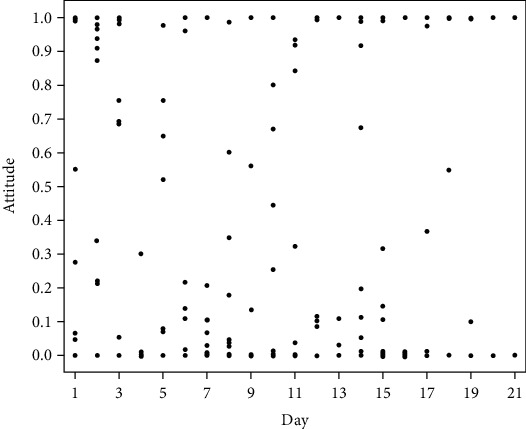
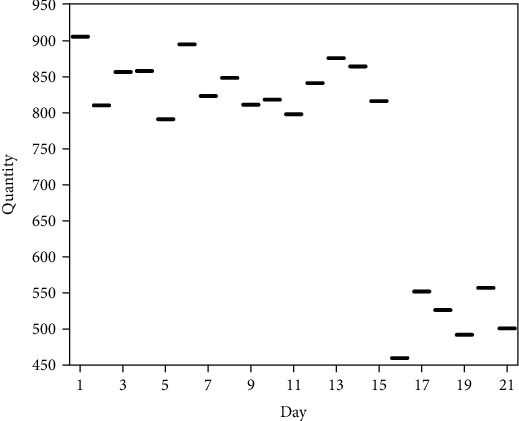
Verification
Claims the paper makes
The claims and statistics of this paper haven’t been checked yet.
Run the check — free, no account needed. It reads the open-access text and checks the sources it cites.
Self-check
Percentages, sums and reported differences re-computed from the paper’s own numbers.
The self-check needs the paper’s full text.
Citations
Cites
Predicting the semantic orientation of adjectives
Hatzivassiloglou, V., & McKeown, K. R. (1997) · Proceedings of the conference - Association for Computational Linguistics. Meeting · doi:10.3115/976909.979640 · Cited by 1,541
Modeling Public Mood and Emotion: Twitter Sentiment and Socio-Economic Phenomena
Bollen, J., Mao, H., & Pepe, A. (2021) · Proceedings of the International AAAI Conference on Web and Social Media · doi:10.1609/icwsm.v5i1.14171 · Cited by 936
Predicting the semantic orientation of adjectives
Hatzivassiloglou, V., & McKeown, K. R. (1997) · Conference of the European Chapter of the Association for Computational Linguistics · doi:10.3115/979617.979640 · Cited by 837
Reputations at risk: Engagement during social media crises
Ott, L., & Theunissen, P. (2014) · Public Relations Review · doi:10.1016/j.pubrev.2014.10.015 · Cited by 158
Agent-based simulations of emotion spreading in online social networksPreprint
Šuvakov, M., García, D., Schweitzer, F., & Tadić, B. (2012) · arXiv (Cornell University) · doi:10.48550/arxiv.1205.6278 · Cited by 20
Stochastic model for emotion contagion in social networks security based on machine learning
Fei, D.-Z. (2019) · Safety Science · doi:10.1016/j.ssci.2019.06.004 · Cited by 12
Agent-based simulations of emotion spreading in online social networksPreprint
\v{S}uvakov, M., García, D., Schweitzer, F., & Tadi\'c, B. (2012) · arXiv (Cornell University) · Cited by 8
Challenges of an ‘infodemic’: Separating fact from fiction in a pandemic
Bheekhun, Z., Lee, G., & Camporesi, S. (2021) · International Emergency Nursing · doi:10.1016/j.ienj.2021.101029 · Cited by 4
Research works printed but not linked: 4
- X. Qunying, 2020, Life cycle modeling and staged emergency management of COVID-19 outbreak, Urban Governance Research, 1, 12
- C. Liu, 2015, A study on the relationship between microblog sentiment and microblog communication power--an empirical analysis based on 24 public event-related microblogs, Journalism and Communication Research, 9, 92
- L. Jingmei, 2003, A plain Bayesian classifier in text processing, Journal of Harbin Engineering University, 1, 71
- J. H. Lin, 2012, A plain Bayesian-based sentiment classification for microblogs, Computer Engineering and Science, 9, 160
Cited by
Social Media Role and Its Impact on Public Health: A Narrative Review
Kanchan, S., & Gaidhane, A. (2023) · Cureus · doi:10.7759/cureus.33737 · Cited by 221
“It shed light on the patterns and characteristics of how users' emotional dispositions change during times of public health emergency [11], and how social networking can influence people's and groups' decision-making behavior [12], potentially increasing the risk of misinformation, various conspiracy theories, stigma,…”
BackgroundSuhaimin, M. S. M., Hijazi, M. H. A., Moung, E. G., Nohuddin, P. N. E., Chua, S., & Coenen, F. (2023) · Journal of King Saud University - Computer and Information Sciences · doi:10.1016/j.jksuci.2023.101776 · Cited by 54
Villanueva-Miranda, I., Xie, Y., & Xiao, G. (2025) · Frontiers in Public Health · doi:10.3389/fpubh.2025.1609749 · Cited by 49
AI applications in disaster governance with health approach: A scoping review
Kolivand, P., Azari, S., Bakhtiari, A., Namdar, P., Ayyoubzadeh, S. M., Rajaie, S., & Ramezani, M. (2025) · Archives of Public Health · doi:10.1186/s13690-025-01712-2 · Cited by 17
Ma, D., Zhang, C., Zhao, L., Huang, Q., & Liu, B. (2023) · ISPRS International Journal of Geo-Information · doi:10.3390/ijgi12100388 · Cited by 16
Khan, A., & Ali, R. (2024) · Social Network Analysis and Mining · doi:10.1007/s13278-024-01205-0 · Cited by 23
The impact of fake online reviews on customer satisfaction: an empirical study on JD.com
Xia, R., Dong, X., An, J., & Wang, H. (2024) · Electronic Commerce Research · doi:10.1007/s10660-024-09865-y · Cited by 13
Zhang, Y., Xie, Y., Shi, V., & Yin, K. (2023) · Behavioral Sciences · doi:10.3390/bs13040282 · Cited by 13
Obesity: An Instagram Analysis
Aiman, U., Mylavarapu, M., Gohil, N. V., Holge, S., Gajre, A., Akhila, K., & Ghadge, N. M. (2023) · Cureus · doi:10.7759/cureus.39619 · Cited by 12
Li, C., & Hu, X. (2025) · Data Science and Informetrics · doi:10.1016/j.dsim.2025.05.001 · Cited by 16
Liu, Y., & Hu, K. (2024) · PLoS ONE · doi:10.1371/journal.pone.0308745 · Cited by 9
The effect of video highlights on the intention to give free virtual gifts
Dai, X., & Wang, J. (2023) · Electronic Commerce Research and Applications · doi:10.1016/j.elerap.2023.101342 · Cited by 7
Awan, A. T., Gonzalez, A. D., & Sharma, M. (2024) · Information · doi:10.3390/info15050276 · Cited by 11
Zhang, Y., Wang, N., Koura, Y. H., Su, Y., Guo, X., & Song, W. (2024) · Online Information Review · doi:10.1108/oir-03-2024-0192 · Cited by 5
Attention and Sentiment of the Chinese Public toward a 3D Greening System Based on Sina Weibo
Zhao, W., Jin, G., Huang, C., & Zhang, J. (2023) · International Journal of Environmental Research and Public Health · doi:10.3390/ijerph20053972 · Cited by 4
Flood of techniques and drought of theories: emotion mining in disasters
Shapouri, S., Soleymani, S., & Rezayi, S. (2024) · Journal of Computational Social Science · doi:10.1007/s42001-024-00330-2 · Cited by 4
Public Attitudes Toward Violence Against Doctors: Sentiment Analysis of Chinese Users
Zheng, Y., Tian, M., Chen, J., Zhang, L., Gao, J., Li, X., Wen, J., & Qu, X. (2025) · JMIR Medical Informatics · doi:10.2196/63772 · Cited by 4
Ishfaq, F., Marwat, S. N. K., Khan, W. U., Shahzad, S., Khan, S., & Abbasi, Q. H. (2025) · Scientific Reports · doi:10.1038/s41598-025-30729-4 · Cited by 2
Koka, S. N. (2023) · International Conference on Research Methodologies in Knowledge Management, Artificial Intelligence and Telecommunication Engineering (RMKMATE) · doi:10.1109/rmkmate59243.2023.10368821 · Cited by 2
Sentiment Analysis of Monkeypox Tweets in Latin America
Saire, J. E. C., Pineda-Briseño, A., & Oblitas, J. (2024) · Communications in computer and information science · doi:10.1007/978-3-031-55486-5_17 · Cited by 2
Levett, J. J., Alnasser, A., Elkaim, L. M., Drager, J., & Pauyo, T. (2024) · Journal of ISAKOS Joint Disorders & Orthopaedic Sports Medicine · doi:10.1016/j.jisako.2024.100306 · Cited by 2
Review and Application of Knowledge Graph in Crisis Management
Wang, X., Li, M., Chen, W., Yao, Y., Li, Z., Liu, Y., & Zhang, H. (2023) · International Journal of Software Engineering and Knowledge Engineering · doi:10.1142/s0218194023300038 · Cited by 1
Understanding Public Emotions: Spatiotemporal Dynamics in the Post-Pandemic Era Through Weibo Data
Liu, Y., Yan, X., Liu, T., & Chen, Y. (2025) · Behavioral Sciences · doi:10.3390/bs15030364 · Cited by 1
Setiawan, F. A. A., & Fathonah, R. N. S. (2025) · JATI (Jurnal Mahasiswa Teknik Informatika) · doi:10.36040/jati.v9i5.14963 · Cited by 1
Müller, F., Tomczyk, S., & Fiedrich, F. (2026) · Journal of Medical Internet Research · doi:10.2196/79762 · Cited by 1
Li, S., Tian, C., Du, X., & Li, Y. (2026) · Information Processing & Management · doi:10.1016/j.ipm.2026.104832 · Cited by 1
#KaburAjaDulu and the reconfiguration of Indonesian national identity in the digital age
Susanto, T., & Oktavian, W. (2026) · National Identities · doi:10.1080/14608944.2026.2693646 · Cited by 1
Zhang, W., Xu, S., Cheng, Y., & Wang, S. (2023) · Research Square · doi:10.21203/rs.3.rs-2775096/v1
Text Sentiment Analysis on VIX’s Impact on Market Sentiment Dynamics
Liang, Z., Ismail, M. T., & Qu, H. (2024) · Lecture notes in networks and systems · doi:10.1007/978-3-031-66965-1_12
wang, J., Sun, X., zhang, W., jia, Y., & li, Y. (2025) · Research Square · doi:10.21203/rs.3.rs-5697919/v1
Müller, F., Tomczyk, S., & Fiedrich, F. (2025) · doi:10.2196/preprints.79762
Liu, X., Zhao, L., Liu, W., Hu, D., & Chen, M. (2025) · doi:10.2196/preprints.82585
Zhang, S., Zhang, L., Chen, Y., Song, J., Chen, J., Zheng, L., & Jing, B. (2025) · Buildings · doi:10.3390/buildings15213912
Cui, C., Fang, J., Liu, Y., Han, X., Li, Q., & Li, Y. (2025) · Buildings · doi:10.3390/buildings16010006
Zhao, M., Cheng, P., Schwebel, D. C., Xiao, W., Yang, L., Zhao, S., Li, L., Ning, P., Rao, Z., & Hu, G. (2026) · Global Health Research and Policy · doi:10.1016/j.ghrp.2026.02.002
He, M., & Zhang, R. (2026) · Digital Scholarship in the Humanities · doi:10.1093/llc/fqag073
Shen, C., Zhang, Y., & Ding, Y. (2026) · Frontiers in Public Health · doi:10.3389/fpubh.2026.1753674
Research on Data Mining and Visualization Analysis of Weibo Hot Search Based on Web Crawler
Liu, W., & Li, G. (2026) · International Conference on Computer Information and Big Data Applications (CIBDA) · doi:10.1145/3813822.3814048
Raharjo, S. B., Ma’rifataini, L., Yudhana, A., Firdaus, A. A., Afifah, W., Yanto, E. S., Suwarno, S., Pradita, I., & Dudin, A. (2026) · Reading Psychology · doi:10.1080/02702711.2026.2735238
Metadata
- Authors
- Hu, N.
- Affiliations
- Communication University of China, Nanjing (CN)
- Corresponding author
- Hu, Nan
- ORCID
- Hu, Nan
- Venue
- Computational and Mathematical Methods in Medicine
- Publisher
- Wiley
- Published
- 2022-08-09
- Volume
- 2022
- Pages
- 1-7
- ISSN
- 1748-670X (ISSN-L)
- 1748-6718
- PMC
- PMC9381183
- OpenAlex
- W4292458092
- Cited by
- 39
- References
- 8
- Citations by year
- 2026: 8 · 2025: 12 · 2024: 9 · 2023: 10
- FWCI
- 2.55
- Type
- journal article
- Language
- en
- Open access
- hybrid
- doi.org
- Locations
- Computational and Mathematical Methods in Medicine (publishedVersion, cc-by)
- PubMed Central (publishedVersion, cc-by)
- PubMed (publishedVersion)
- DOAJ (DOAJ: Directory of Open Access Journals) (submittedVersion)
- Topics
- Physical Sciences › Computer Science › Artificial Intelligence › Sentiment Analysis and Opinion Mining
- Social Sciences › Communication › Communication and COVID-19 Impact
- Social Sciences › Communication › Public Relations and Crisis Communication
- Keywords
- sentiment analysis, public health emergencies, COVID-19 pandemic, Weibo, social media, user emotions, emotional evolution, life-cycle model, confirmed cases, emergency planning
- MeSH terms
- COVID-19, SARS-CoV-2, Sentiment Analysis, China, Emergencies, Humans, Public Health, Data Mining, Pandemics, Social Media
About these checks
Registry, retraction, Cites and statistics results are computed, not judged, with one exception: a printed reference that no index lists is read once by a model before it counts as a citation error. Claims are extracted by a model and kept only when their quote appears verbatim in the text; each cited source is then checked, with a model’s help, for whether it says what the claim relies on. Those verdicts can be wrong — read the claim’s quote and the cited source before relying on one.
Statistics and arithmetic are recomputed, not judged.
Confidence bands are shown only for fields calibrated on our annotated test set. None is calibrated yet, so no band is shown.
What counts as a claim ›How we measure confidence ›How we check this ›
Are you an author, or do you see a problem with this page? Request a review
