

Growth Hormone Response to L-Arginine Alone and Combined with Different Doses of Growth Hormone-Releasing Hormone: A Systematic Review and Meta-Analysis
Open accessThe DOI matches its Crossref record; 83 of the 83 references it cites were found in a registry or an index; none of the 44 sources its claims cite is checked for support yet.
Abstract
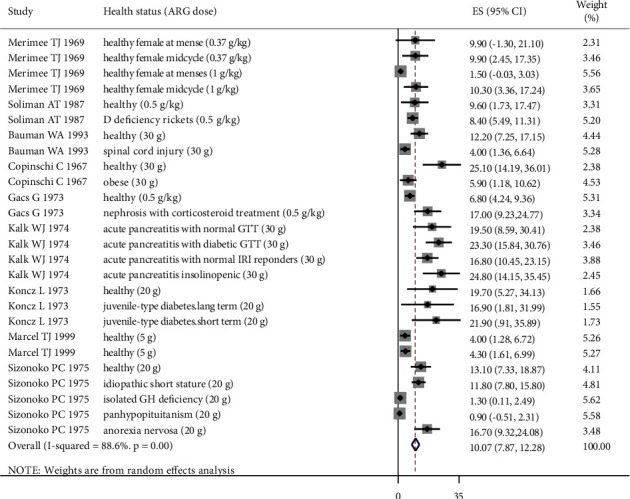
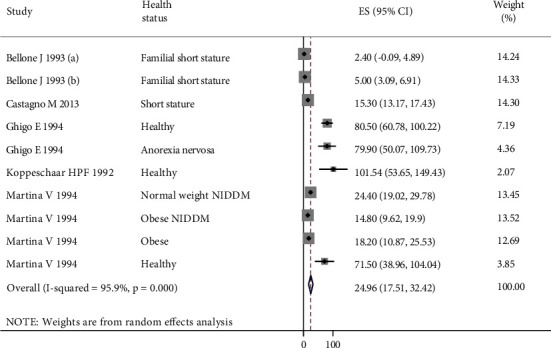
Background. Arginine (ARG) can modulate growth hormone (GH) release by suppressing its endogenous inhibitory regulator, somatostatin. ARG also induces the release of the GH-releasing hormone (GHRH). This study aims to review the effects of L-arginine supplementation alone and combined with GHRH in different doses on GH secretion. Methods. In this systematic review and meta-analysis, an electronic literature search was conducted on Medline database (PubMed), Scopus, and Web of Science databases. All eligible studies were randomized clinical trials that reported the effects of ARG supplementation alone or with GHRH on GH levels. Mean difference (MD) and 95% confidence intervals (CI) were computed as the effect size. Results. Meta-analyses showed significant effects of ARG alone on GH release (MD = 10.07, 95% CI: 7.87, 12.28). Moreover, the response of GH was greater with ARG in combination with GHRH (MD = 24.96, 95% CI: 17.51, 32.42). There was no significant difference between the patients and healthy individuals and between oral and injection use of ARG. The systematic review revealed the important role of ARG in combination with other amino acids on GH secretion in patients with GH deficiency. Conclusion. This study revealed that in GH-deficient individuals, high doses of ARG supplementation in combination with GHRH and/or other amino acids might have potential therapeutic effects on increasing GH concentrations. These findings propose that ARG supplementation can be considered as a potential stimulator in management of GH deficiency.
Overview
CoChat Summary
TL;DR
This systematic review and meta-analysis found that L-arginine alone significantly increased growth hormone levels, and the response was greater when L-arginine was combined with GHRH. The authors suggest high-dose arginine with GHRH and/or other amino acids may have potential therapeutic effects in GH deficiency.
Key findings
- ARG alone significantly increased GH: mean difference (MD) = 10.07 μg/ml (95% CI: 7.87, 12.28), with substantial heterogeneity (I² = 88.6%, p < 0.0001).
- ARG combined with GHRH produced a larger GH response: MD = 24.96 μg/ml (95% CI: 17.51, 32.42).
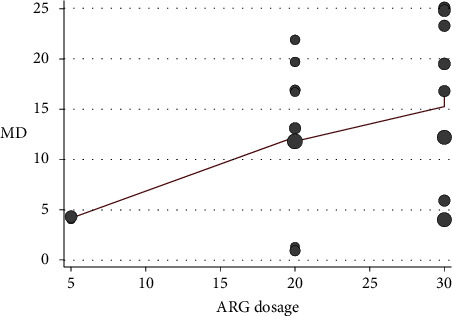
- Subgroup analyses found no significant differences between oral and injected ARG (p = 0.141), adults and children (p = 0.649), or healthy and non-healthy subjects (p = 0.390); meta-regression showed a marginally significant association between higher ARG dose and GH secretion (adjusted R² = 17.50%, p = 0.061).
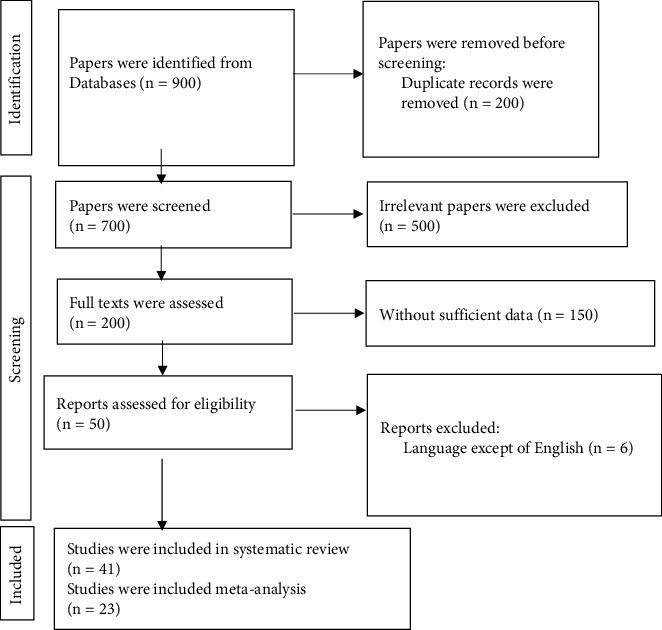
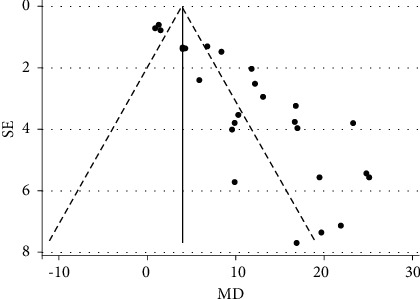
- The systematic review included 41 eligible studies, with 23 in the meta-analysis; evidence of publication bias was reported for ARG (Beg’s p = 0.028; Egger’s pbias < 0.001) and for ARG + GHRH (Egger’s pbias = 0.013).
Methods
- Systematic review and meta-analysis registered on PROSPERO (CRD42021242954) and reported per PRISMA 2020; searched Medline/PubMed, Scopus, and Web of Science up to January 2021, updated to October 2022.
- Included English-language human randomized clinical trials (parallel or crossover) reporting effects of ARG supplementation alone and/or with GHRH on GH levels; excluded animal, in vitro, and in vivo studies, combinations with other peptides/hormones such as insulin or lysine, and pregnancy/postpartum studies.
- Data were pooled using random-effects models to calculate mean differences (MDs) from peak posttreatment versus pretreatment GH; heterogeneity was assessed with I², with meta-regression, sensitivity analysis, and publication-bias tests (funnel plot, Beg’s, Egger’s) using STATA version 14. Quality was assessed with Cochrane risk-of-bias tools, and GRADE rated the evidence for GH secretion as moderate.
Limitations
- The paper states heterogeneity in some analyses, evidence of publication bias, unclear exact mechanisms of ARG-induced GH release, possible inconsistency from including nonresponders, and a need for further interventional studies for some hypotheses.
- Evident from the text: the ARG + GHRH meta-analysis was based on only 10 extracted data sets, and although 41 studies were included in the systematic review, only 23 entered the meta-analysis.
- Evident from the text: many included studies had unclear risk of bias (an average of 3 studies in every domain had overall unclear risk), and the GRADE rating for the outcome was only moderate.
Model-written summary. Check it against the paper before relying on it.
Integrity signals
Registry
Cites
Statistics
Figures
Verification
Claims the paper makes
0 Valid · 1 Not valid · 34 Not checked · 33 Own results and interpretations
A result the paper states — it cites no source for it, so there is none to check. The quote shows it is in the paper.
In the paper
“The present study showed that GH levels increased more with ARG + GHRH than with ARG or GHRH alone.”
§ Growth Hormone Response to L-Arginine Alone and Combined with Different Doses of Growth Hormone-Releasing Hormone: A Systematic Review and Meta-Analysis > 4. Discussion
plainstates a cause- Asserted: passes — The authors put it forward as true.
- Checkable: passes — It can be checked against evidence.
- Load-bearing: passes — The paper’s conclusions depend on it.
- Based: passes — The paper gives a reason why it holds.
A result the paper reports from its own data — it cites no other source for it, so there is none to check. The quote shows it is in the paper.
In the paper
“There was also evidence of publication bias regarding the effect of ARG + GHRH on GH levels according to Egger' test (pslop = 0.461, pbias = 0.013).”
§ Growth Hormone Response to L-Arginine Alone and Combined with Different Doses of Growth Hormone-Releasing Hormone: A Systematic Review and Meta-Analysis > 3. Results > 3.7. Publication Bias
plainstates an association- Asserted: passes — The authors put it forward as true.
- Checkable: passes — It can be checked against evidence.
- Load-bearing: unclear — It is unclear whether the paper’s conclusions depend on it.
- Based: passes — The paper gives a reason why it holds.
A result the paper reports from its own data — it cites no other source for it, so there is none to check. The quote shows it is in the paper.
In the paper
“Moreover, the response of GH was greater with ARG in combination with GHRH (MD = 24.96, 95% CI: 17.51, 32.42).”
- Also stated in: § 3.6. Effects of ARG + GHRH on Growth Hormone Levels · plain
“which is higher than seen in treatments with ARG alone.”
§ Growth Hormone Response to L-Arginine Alone and Combined with Different Doses of Growth Hormone-Releasing Hormone: A Systematic Review and Meta-Analysis > Abstract > Results
plainstates a cause- Asserted: passes — The authors put it forward as true.
- Checkable: passes — It can be checked against evidence.
- Load-bearing: passes — The paper’s conclusions depend on it.
- Based: passes — The paper gives a reason why it holds.
- Also stated in: § 3.6. Effects of ARG + GHRH on Growth Hormone Levels · plain
A result the paper reports from its own data — it cites no other source for it, so there is none to check. The quote shows it is in the paper.
In the paper
“There was evidence of publication bias regarding the effects of ARG on GH levels according to Beg's test (p = 0.028) and Egger' test (pslop = 0.123, pbias < 0.001). The funnel plot of included studies was also asymmetric (Figure 5).”
§ Growth Hormone Response to L-Arginine Alone and Combined with Different Doses of Growth Hormone-Releasing Hormone: A Systematic Review and Meta-Analysis > 3. Results > 3.7. Publication Bias
plainstates an association- Asserted: passes — The authors put it forward as true.
- Checkable: passes — It can be checked against evidence.
- Load-bearing: unclear — It is unclear whether the paper’s conclusions depend on it.
- Based: passes — The paper gives a reason why it holds.
A result the paper states — it cites no source for it, so there is none to check. The quote shows it is in the paper.
In the paper
“While IV infusion of ARG is a faster method of entering ARG into the plasma, oral ARG also increased GH secretion only about 10 min slower.”
§ Growth Hormone Response to L-Arginine Alone and Combined with Different Doses of Growth Hormone-Releasing Hormone: A Systematic Review and Meta-Analysis > 4. Discussion
plainstates a cause- Asserted: passes — The authors put it forward as true.
- Checkable: passes — It can be checked against evidence.
- Load-bearing: unclear — It is unclear whether the paper’s conclusions depend on it.
- Based: passes — The paper gives a reason why it holds.
41 more claims
Create a free account to see all 68 claims and to verify the 43 references still open.
- Probably not a substantial claim. 17
- It may state two separate claims as one. 10
Claims other papers make about this one
Each is checked against this paper’s own text: does it say what the citing paper says it does?
In the citing paper
“Arginine can stimulate growth hormone production.”
From Efficacy of Oral Arginine as Treatment to Improve Height in Prepubertal Children With Idiopathic Short Stature: A Systematic Review and Meta-Analysis (2026) · cites this paper as [3]
In the citing paper
“In human subjects, intravenous arginine stimulates GH production in GH stimulation tests.3,23”
From Efficacy of Oral Arginine as Treatment to Improve Height in Prepubertal Children With Idiopathic Short Stature: A Systematic Review and Meta-Analysis (2026) · cites this paper as [3]
Self-check
Percentages, sums and reported differences re-computed from the paper’s own numbers.
Each contradiction between two passages listed here was confirmed by an independent check.
Rated minor: it would not touch a result — a value no result rests on, a p-value that stays on the same side of the significance level, or a conflict that is clerical, resolved elsewhere in the paper, or outside its own findings.
In the paper
§ Growth Hormone Response to L-Arginine Alone and Combined with Different Doses of Growth Hormone-Releasing Hormone: A Systematic Review and Meta-Analysis > 3. Results > 3.3. Study Quality
“Overall, 42 studies reported low risk on randomization”
§ Growth Hormone Response to L-Arginine Alone and Combined with Different Doses of Growth Hormone-Releasing Hormone: A Systematic Review and Meta-Analysis > 3. Results > 3.1. Study Selection
“41 eligible studies were included in the systematic review”
Rated minor: it would not touch a result — a value no result rests on, a p-value that stays on the same side of the significance level, or a conflict that is clerical, resolved elsewhere in the paper, or outside its own findings.
In the paper
§ Growth Hormone Response to L-Arginine Alone and Combined with Different Doses of Growth Hormone-Releasing Hormone: A Systematic Review and Meta-Analysis > 3. Results > 3.2. Study Characteristics
“four studies assessed the effect of oral supplements”
§ Growth Hormone Response to L-Arginine Alone and Combined with Different Doses of Growth Hormone-Releasing Hormone: A Systematic Review and Meta-Analysis > 3. Results > 3.2. Study Characteristics
“[6, 28, 33, 34, 36]”
Rated minor: it would not touch a result — a value no result rests on, a p-value that stays on the same side of the significance level, or a conflict that is clerical, resolved elsewhere in the paper, or outside its own findings.
In the paper
§ Growth Hormone Response to L-Arginine Alone and Combined with Different Doses of Growth Hormone-Releasing Hormone: A Systematic Review and Meta-Analysis > 2. Methods > 2.2. Eligibility Criteria
“studies that combined L-arginine with other peptides or hormones like arginine + insulin or lysine, and studies reporting the effects of ARG in pregnancy or postpartum were excluded.”
§ Growth Hormone Response to L-Arginine Alone and Combined with Different Doses of Growth Hormone-Releasing Hormone: A Systematic Review and Meta-Analysis > 3. Results > 3.2. Study Characteristics
“Some studies demonstrated the responsiveness of GH to combinations of ARG with other amino acids like lysine and ornithine [30, 39].”
Citations
Cites
The PRISMA 2020 statement: An updated guideline for reporting systematic reviews
Page, M. J., McKenzie, J. E., Bossuyt, P. M., Boutron, I., Hoffmann, T. C., Mulrow, C. D., Shamseer, L., Tetzlaff, J. M., Akl, E. A., Brennan, S. E., et al. (2021) · BMJ · doi:10.1136/bmj.n71 · Cited by 108,283
The Cochrane Collaboration's tool for assessing risk of bias in randomised trials
Higgins, J. P. T., Altman, D. G., Gotzsche, P. C., Juni, P., Moher, D., Oxman, A. D., Savovic, J., Schulz, K. F., Weeks, L., Sterne, J. A. C., et al. (2011) · BMJ · doi:10.1136/bmj.d5928 · Cited by 33,817
Cochrane Handbook for Systematic Reviews of Interventions
(2019) · doi:10.1002/9781119536604 · Cited by 14,828
Effects of Human Growth Hormone in Men over 60 Years Old
Rudman, D., Feller, A. G., Nagraj, H. S., Gergans, G. A., Lalitha, P. Y., Goldberg, A. F., Schlenker, R. A., Cohn, L., Rudman, I. W., & Mattson, D. E. (1990) · New England Journal of Medicine · doi:10.1056/nejm199007053230101 · Cited by 1,555
The Diagnosis of Growth Hormone Deficiency in Children and Adults
Shalet, S. M., Toogood, A., Rahim, A., & Brennan, B. M. D. (1998) · Endocrine Reviews · doi:10.1210/edrv.19.2.0329 · Cited by 414
Diagnosis of growth-hormone deficiency in adults
Hoffman, D. M., O'Sullivan, A. J., Ho, K. K. Y., & Baxter, R. C. (1994) · The Lancet · doi:10.1016/s0140-6736(94)90181-3 · Cited by 386
Arginine Stimulates Growth Hormone Secretion by Suppressing Endogenous Somatostatin Secretion*
ALBA-ROTH, J., MÜLLER, O. A., SCHOPOHL, J., & WERDER, K. V. (1988) · The Journal of Clinical Endocrinology & Metabolism · doi:10.1210/jcem-67-6-1186 · Cited by 358
Corneli, G., Di Somma, C., Baldelli, R., Rovere, S., Gasco, V., Croce, C. G., Grottoli, S., Maccario, M., Colao, A., Lombardi, G., et al. (2005) · European Journal of Endocrinology · doi:10.1530/eje.1.01967 · Cited by 317
Ghigo, E. (1996) · Journal of Clinical Endocrinology & Metabolism · doi:10.1210/jc.81.9.3323 · Cited by 303
Plasma Growth Hormone Response to Intravenous Administration of Amino Acids
(1965) · The Journal of Clinical Endocrinology & Metabolism · doi:10.1210/jcem-25-8-1140 · Cited by 226
Arginine-Initiated Release of Human Growth Hormone: Factors Modifying the Response in Normal Man
Merimee, T. J., Rabinowitz, D., & Fineberg, S. E. (1969) · New England Journal of Medicine · doi:10.1056/nejm196906262802603 · Cited by 208
EFFECT OF ARGININE ON SERUM-LEVELS OF HUMAN GROWTH-HORMONE
Merimee, T., Lillicrap, D., & Rabinowitz, D. (1965) · The Lancet · doi:10.1016/s0140-6736(65)90399-5 · Cited by 201
Chapman, I. M. (1994) · Journal of Clinical Endocrinology & Metabolism · doi:10.1210/jc.78.6.1312 · Cited by 194
Corpas, E. (1992) · Journal of Clinical Endocrinology & Metabolism · doi:10.1210/jc.75.2.530 · Cited by 168
Rahim, A., Toogood, A. A., & Shalet, S. M. (1996) · Clinical Endocrinology · doi:10.1046/j.1365-2265.1996.00855.x · Cited by 159
Gharib, H., Cook, D. M., Saenger, P. H., Bengtsson, B.-A., Feld, S., Nippoldt, T. B., Rodbard, H. W., Seibel, J. A., Vance, M. L., Zimmerman, D., et al. (2003) · Endocrine Practice · doi:10.4158/ep.9.1.64 · Cited by 158
Use of amino acids as growth hormone-releasing agents by athletes
Chromiak, J. A., & António, J. (2002) · Nutrition · doi:10.1016/s0899-9007(02)00807-9 · Cited by 147
Gharahdaghi, N., Phillips, B. E., Szewczyk, N. J., Smith, K., Wilkinson, D. J., & Atherton, P. J. (2021) · Frontiers in Physiology · doi:10.3389/fphys.2020.621226 · Cited by 143
A study of growth hormone release in man after oral administration of amino acids
Isidori, A., Lo Monaco, A., & Cappa, M. (1981) · Current Medical Research and Opinion · doi:10.1185/03007998109114287 · Cited by 130
Plasma Growth Hormone after Arginine Infusion: Clinical Experiences
Merimee, T. J., Rabinowitz, D., Riggs, L., Burgess, J. A., Rimoin, D. L., & McKusick, V. A. (1967) · New England Journal of Medicine · doi:10.1056/nejm196702232760803 · Cited by 129
Makimura, H., Stanley, T., Mun, D., You, S. M., & Grinspoon, S. (2008) · The Journal of Clinical Endocrinology & Metabolism · doi:10.1210/jc.2008-1333 · Cited by 118
Effect of arginine on serum levels of insulin and growth hormone in obese subjects
Copinschi, G., Wegienka, L. C., Hane, S., & Forsham, P. H. (1967) · Metabolism · doi:10.1016/0026-0495(67)90076-5 · Cited by 114
Suminski, R. R., Robertson, R. J., Goss, F. L., Arslanian, S., Kang, J., DaSilva, S., Utter, A. C., & Metz, K. F. (1997) · International Journal of Sport Nutrition · doi:10.1123/ijsn.7.1.48 · Cited by 106
Qu, X.-D., Gaw Gonzalo, I. T., Al Sayed, M. Y., Cohan, P., Christenson, P. D., Swerdloff, R. S., Kelly, D. F., & Wang, C. (2005) · The Journal of Clinical Endocrinology & Metabolism · doi:10.1210/jc.2004-1450 · Cited by 103
Massara, F., Ghigo, E., Demislis, K., Tangolo, D., Mazza, E., Locatelli, V., Müller, E. E., Molinatti, G. M., & Camanni, F. (2008) · Neuroendocrinology · doi:10.1159/000124602 · Cited by 99
Ghigo, E., Aimaretti, G., Arvat, E., & Camanni, F. (2001) · Endocrine · doi:10.1385/endo:15:1:029 · Cited by 95
Zajac, A., Poprzęcki, S., Żebrowska, A., Chalimoniuk, M., & Langfort, J. (2010) · Journal of Strength and Conditioning Research · doi:10.1519/jsc.0b013e3181d321ff · Cited by 94
Longobardi, S. (1996) · Journal of Clinical Endocrinology & Metabolism · doi:10.1210/jc.81.3.1244 · Cited by 91
Corneli, G., Di Somma, C., Prodam, F., Bellone, J., Bellone, S., Gasco, V., Baldelli, R., Rovere, S., Schneider, H. J., Gargantini, L., et al. (2007) · European Journal of Endocrinology · doi:10.1530/eje-07-0384 · Cited by 87
Arvat, E. (1994) · Journal of Clinical Endocrinology & Metabolism · doi:10.1210/jc.79.5.1440 · Cited by 84
Aimaretti, G., Baffoni, C., Bellone, S., Di Vito, L., Corneli, G., Arvat, E., Benso, L., Camanni, F., & Ghigo, E. (2000) · The Journal of Clinical Endocrinology & Metabolism · doi:10.1210/jcem.85.10.6858 · Cited by 83
Sonntag, W. E., Forman, L. J., Miki, N., Steger, R. W., Ramos, T. H., Arimura, A., & Meites, J. (2008) · Neuroendocrinology · doi:10.1159/000123205 · Cited by 82
Ghigo, E., Massimo, P., Boffano, G. M., Arvat, E., Valente, F., Maccario, M., Mazza, E., & Camanni, F. (1992) · Metabolism · doi:10.1016/0026-0495(92)90220-5 · Cited by 77
Growth hormone responses to varying doses of oral arginine
Collier, S. R., Casey, D. P., & Kanaley, J. A. (2005) · Growth Hormone & IGF Research · doi:10.1016/j.ghir.2004.12.004 · Cited by 76
VANCE, M. L., KAISER, D. L., FROHMAN, L. A., RIVIER, J., VALE, W. W., & THORNER, M. O. (1987) · The Journal of Clinical Endocrinology & Metabolism · doi:10.1210/jcem-64-6-1136 · Cited by 73
Ghigo, E., Arvat, E., Valente, F., Nicolosi, M., Boffano, M., Procopio, M., Bellone, J., Maccario, M., Mazza, E., & Camanni, F. (2008) · Neuroendocrinology · doi:10.1159/000125890 · Cited by 65
Besset, A., Bonardet, A., Rondouin, G., Descomps, B., & Passouant, P. (1982) · European Journal of Endocrinology · doi:10.1530/acta.0.0990018 · Cited by 53
Blunted growth hormone response to intravenous arginine in subjects with a spinal cord injury
Bauman, W., Spungen, A., Flanagan, S., Zhong, Y.-G., Alexander, L., & Tsitouras, P. (1994) · Hormone and Metabolic Research · doi:10.1055/s-2007-1000798 · Cited by 51
Bredella, M. A., Torriani, M., Thomas, B. J., Ghomi, R. H., Brick, D. J., Gerweck, A. V., & Miller, K. K. (2009) · The Journal of Clinical Endocrinology & Metabolism · doi:10.1210/jc.2009-0438 · Cited by 51
GHRH Plus Arginine in the Diagnosis of Acquired GH Deficiency of Childhood-Onset
Maghnie, M. (2002) · Journal of Clinical Endocrinology & Metabolism · doi:10.1210/jc.87.6.2740 · Cited by 50
Andersen, M., Hansen, T. B., Staving, R. K., Bertelsen, J., Hangaard, J., Petersen, P. H., & Hagen, C. (1996) · University of Southern Denmark Research Portal (University of Southern Denmark) · Cited by 46
Grugni, G., Marzullo, P., Ragusa, L., Sartório, A., Trifirò, G., Liuzzi, A., Crinò, A., & on behalf of the Genetic Obesity Study Group of the Italian Society of Pediatric Endocrinology and Diabetology (2006) · Clinical Endocrinology · doi:10.1111/j.1365-2265.2006.02621.x · Cited by 45
Effect of Weight Loss on the Growth Hormone Response to Arginine Infusion in Obesity
El-Khodary, A. Z., Ball, M. F., STEIN, B., & Canary, J. J. (1971) · The Journal of Clinical Endocrinology & Metabolism · doi:10.1210/jcem-32-1-42 · Cited by 39
Fluctuations of human growth hormone secretion during menstrual cycle: Response to arginine
Merimee, T. J., Fineberg, S. E., & Tyson, J. E. (1969) · Metabolism · doi:10.1016/0026-0495(69)90095-x · Cited by 38
Sizonenko, P. C., Rabinovitch, A., Schneider, P., Paunier, L., Wollheim, C. B., & Zahnd, G. R. (1975) · Pediatric Research · doi:10.1203/00006450-197509000-00010 · Cited by 36
Ghigo, E., Ceda, G. P., Valcavi, R., Goffi, S., Zini, M., Mucci, M., Valenti, G., Cocchi, D., Müller, E. E., & Camanni, F. (1994) · Journal of Endocrinological Investigation · doi:10.1007/bf03347695 · Cited by 34
The effect of arginine infusion on plasmagrowth hormone and insulin in children
Root, A. W., Rodriguez, C. S., Bongiovanni, A. M., & Eberlein, W. R. (1969) · The Journal of Pediatrics · doi:10.1016/s0022-3476(69)80066-1 · Cited by 33
Koppeschaar, H. P. F., Horn, C., Thljssen, J. H. H., Page, M. D., Diéguez, C., & Scanion, M. F. (1992) · Clinical Endocrinology · doi:10.1111/j.1365-2265.1992.tb02250.x · Cited by 31
Maccario, M., Aimaretti, G., Grottoli, S., Gauna, C., Tassone, F., Corneli, G., Rossetto, R., Wu, Z., Strasburger, C., & Ghigo, E. (2001) · International Journal of Obesity · doi:10.1038/sj.ijo.0801671 · Cited by 30
Wideman, L., Weltman, J. Y., Patrie, J. T., Bowers, C. Y., Shah, N., Story, S., Veldhuis, J. D., & Weltman, A. (2000) · American Journal of Physiology-Regulatory, Integrative and Comparative Physiology · doi:10.1152/ajpregu.2000.279.4.r1467 · Cited by 30
Oral arginine attenuates the growth hormone response to resistance exercise
Collier, S. R., Collins, E., & Kanaley, J. A. (2006) · Journal of Applied Physiology · doi:10.1152/japplphysiol.00285.2006 · Cited by 30
Mechanism of estrogenic action in acromegaly
Schwartz, E., Echemendia, E., Schiffer, M., & Panariello, V. A. (1969) · Journal of Clinical Investigation · doi:10.1172/jci105982 · Cited by 27
Uyanga, V. A., Xin, Q., Sun, M., Zhao, J., Wang, X., Jiao, H., Onagbesan, O. M., & Lin, H. (2022) · Poultry Science · doi:10.1016/j.psj.2022.101816 · Cited by 27
Ghigo, E., Miola, C., Aimaretti, G., Valente, F., Massimo, P., Arvat, E., Yin-Zhang, W., & Camanni, F. (1992) · Metabolism · doi:10.1016/0026-0495(92)90127-v · Cited by 26
Dietary arginine and linear growth: the Copenhagen School Child Intervention Study
van Vught, A. J. A. H., Dagnelie, P. C., Arts, I. C. W., Froberg, K., Andersen, L. B., El-Naaman, B., Bugge, A., Nielsen, B. M., & Heitman, B. L. (2013) · British Journal of Nutrition · doi:10.1017/s0007114512002942 · Cited by 25
Ghigo, E., Arvat, E., Gianotti, L., Nicolosi, M., Valetto, M. R., Avagnina, S., Bellitti, D., Rolla, M., Müller, E. E., & Camanni, F. (1994) · Biological Psychiatry · doi:10.1016/0006-3223(94)91178-9 · Cited by 25
Marcell, T. J., Taaffe, D. R., Hawkins, S. A., Tarpenning, K. M., Pyka, G., Kohlmeier, L., Wiswell, R. A., & Marcus, R. (1999) · The Journals of Gerontology Series A: Biological Sciences and Medical Sciences · doi:10.1093/gerona/54.8.m395 · Cited by 24
Aimaretti, G. (2000) · Journal of Clinical Endocrinology & Metabolism · doi:10.1210/jc.85.10.3693 · Cited by 23
Massimo, P., Maccario, M., Grottoli, S., Oleandri, S. E., Boffano, G. M., Camanni, F., & Ghigo, E. (1995) · Clinical Endocrinology · doi:10.1111/j.1365-2265.1995.tb00532.x · Cited by 21
Neurotransmitter regulation of the anterior pituitary
Müller, E. E., & Nisticò, G. (1989) · Brain Messengers and the Pituitary · doi:10.1016/b978-0-12-510310-7.50011-9 · Cited by 20
A neuroendocrinological approach to evidence an impairment of central cholinergic function in aging
Ghigo, E., Goffi, S., Arvat, E., Imperiale, E., Boffano, G. M., Valetto, M. R., Mazza, E., Santi, I., Magliona, A., Boghen, M. F., et al. (1992) · Journal of Endocrinological Investigation · doi:10.1007/bf03345812 · Cited by 18
Deutschbein, T., Bidlingmaier, M., Schopohl, J., Strasburger, C. J., & Petersenn, S. (2016) · European Journal of Endocrinology · doi:10.1530/eje-16-0668 · Cited by 17
Marostica, E., Grugni, G., Nicolao, G. D., Marazzi, N., Crinò, A., Cappa, M., & Sartório, A. (2013) · Growth Hormone & IGF Research · doi:10.1016/j.ghir.2013.09.004 · Cited by 15
Maccario, M., Grottoli, S., Razzore, P., Procopio, M., Oleandri, S. E., Ciccarelli, E., Camanni, F., & Ghigo, E. (1996) · European Journal of Endocrinology · doi:10.1530/eje.0.1350205 · Cited by 14
Koncz, L., Soeldner, J. S., Balodimos, M. C., Boden, G. H., Gleason, R. E., & Younger, D. (1973) · Diabetes · doi:10.2337/diab.22.9.694 · Cited by 13
Rigamonti, A. E., Grugni, G., Marazzi, N., Bini, S., Bidlingmaier, M., & Sartório, A. (2015) · Growth Hormone & IGF Research · doi:10.1016/j.ghir.2015.06.002 · Cited by 11
Rodari, G., Profka, E., Giacchetti, F., Cavenaghi, I., Arosio, M., & Giavoli, C. (2021) · Scientific Reports · doi:10.1038/s41598-021-93963-6 · Cited by 10
Bellone, J., Bartolotta, E., Cardinale, G., Arvat, E., Cherubini, V., Aimaretti, G., Maccario, M., Mucci, M., Camanni, F., & Ghigo, E. (1993) · Journal of Endocrinological Investigation · doi:10.1007/bf03348897 · Cited by 10
Oron, T., Krieger, A., Yackobovitch‐Gavan, M., Tenenbaum, A., Diamant, R., Phillip, M., & Lazar, L. (2021) · Endocrine Practice · doi:10.1016/j.eprac.2021.08.004 · Cited by 9
Growth Hormone Secretion in Children during Corticosteroid Treatment: Responses to Arginine
Gács, G., Kun, E., & Czirbesz, Z. (1973) · Hormone and Metabolic Research · doi:10.1055/s-0028-1093973 · Cited by 9
Loche, S., Carta, D., Muntoni, A., Corda, R., & Pintory, C. (1993) · Acta Paediatrica · doi:10.1111/j.1651-2227.1993.tb12586.x · Cited by 8
Martina, V., Bruno, G., Tagliabue, M., Bertaina, S., Maccario, M., Grottoli, S., Massimo, P., Ozzello, A., & Camanni, F. (1995) · Hormone and Metabolic Research · doi:10.1055/s-2007-979901 · Cited by 8
Neural Control of Growth Hormone Secretion in Aged Humans
Ghigo, E., Arvat, E., Goffi, S., Bellone, J., Nicolosi, M., Procopio, M., Maccario, M., & Camanni, F. (1993) · Growth Hormone and Somatomedins during Lifespan · doi:10.1007/978-3-642-78217-6_23 · Cited by 7
Castagno, M., Monzani, A., Zanetta, S., Genoni, G., Giglione, E., Ricotti, R., Bona, G., Prodam, F., & Bellone, S. (2018) · Journal of Endocrinological Investigation · doi:10.1007/s40618-017-0824-6 · Cited by 7
Arginine-Induced Insulin and Growth Hormone Secretion in Children with Nutritional Rickets
Soliman, A. T., Aref, M. K., & Rogol, A. D. (1987) · Journal of Pediatric Gastroenterology and Nutrition · doi:10.1097/00005176-198707000-00017 · Cited by 5
Keller, A., Donaubauer, J., Kratzsch, J., Pfaeffle, R. W., Hirsch, W., Kiess, W., & Keller, E. (2007) · Journal of Pediatric Endocrinology and Metabolism · doi:10.1515/jpem.2007.20.12.1307 · Cited by 5
Thieme, F., Vogel, M., Gausche, R., Beger, C., Vasilakis, I.-A., Kratzsch, J., Körner, A., Kiess, W., & Pfäffle, R. W. (2022) · Hormone Research in Paediatrics · doi:10.1159/000526240 · Cited by 5
Matteini, M., Cotrozzi, G., Zammarchi, E., Relli, P., & Cappelli, G. (1980) · PubMed · Cited by 5
Loche, S., Carta, D., Muntoni, A., Corda, R., & Pintory, C. (1993) · Acta Paediatrica · doi:10.1111/j.1651-2227.1993.tb17634.x · Cited by 5
Rigamonti, A. E., Crinò, A., Bocchini, S., Convertino, A., Bidlingmaier, M., Haenelt, M., Tamini, S., Cella, S. G., Grugni, G., & Sartório, A. (2017) · Growth Hormone & IGF Research · doi:10.1016/j.ghir.2017.11.005 · Cited by 3
Imarah, A. A., Mohammed, M. S., Najm, R. A., Alzeyadi, M., Khayoon, S. Q., & Alhamadani, I. M. (2022) · PubMed Central · doi:10.22092/ari.2021.356610.1880 · Cited by 2
Hanew, K., Utsumi, A., Sugawara, A., Shimizu, Y., Tazawa, S., & Abe, K. (1993) · The Tohoku Journal of Experimental Medicine · doi:10.1620/tjem.169.91 · Cited by 2
Kalk, W. J., Pimstone, B. L., & Jackson, W. P. U. (1974) · Diabetologia · doi:10.1007/bf01221639 · Cited by 1
Research works printed but not linked: 1
- Orwin R. G. Vevea JLJThors, meta-analysis Evaluating coding decisions 2009 2 177 203
Cited by
Oyovwi, M. O., & Atere, A. D. (2024) · European Journal of Medicinal Chemistry Reports · doi:10.1016/j.ejmcr.2024.100175 · Cited by 69
The Effectiveness of L-arginine in Clinical Conditions Associated with Hypoxia
Kurhaluk, N. (2023) · International Journal of Molecular Sciences · doi:10.3390/ijms24098205 · Cited by 43
Central and peripheral regulation of the GH/IGF-1 axis: GHRH and beyond
Bioletto, F., Varaldo, E., Gasco, V., Maccario, M., Arvat, E., Ghigo, E., & Grottoli, S. (2024) · Reviews in Endocrine and Metabolic Disorders · doi:10.1007/s11154-024-09933-6 · Cited by 28
“While age does not influence the effect of arginine, its impact is influenced by sex, being enhanced in women with normal menstrual cycles, likely due to a positive correlation with estrogen levels [56, 187].”
Acrylate-guided chemoselective fluorescent detection of arginine and lysine in aqueous media
Liao, P., Yu, X., Fan, C., Zhang, B., Huang, J., Ya, W., Du, G., Dong, Q., & Zeng, C. (2023) · Dyes and Pigments · doi:10.1016/j.dyepig.2023.111288 · Cited by 17
Association between Childhood Overweight and Altered Concentrations of Circulating Amino Acids
Campos, J. D. O., Oliveira, T. L. P. S. D. A., Vitalis, O., Pereira, J. G., Nogueira, I. D. C. R., Santos, G. C. J., Chikh, K., Leandro, C. G., Costa‐Silva, J. H., & Pirola, L. (2024) · Nutrients · doi:10.3390/nu16121843 · Cited by 13
“…rather than being clinically detrimental as discussed above for adult cohorts, could be a specific and non-pathological characteristic of the young age, as arginine is an amino acid that stimulates the secretion of the growth hormone (GH) [33], a key anabolic hormone supporting children growth.”
Background
Metadata
- Authors
- Goli, P., Yazdi, M., Heidari-Beni, M., & Kelishadi, R.
- Affiliations
- Isfahan University of Medical Sciences (IR)
- Department of Nutrition, Child Growth and Development Research Center, Research Institute for Primordial Prevention of Non-Communicable Disease, Isfahan University of Medical Sciences, Isfahan, Iran
- Venue
- International Journal of Endocrinology
- Publisher
- Wiley
- Published
- 2022-11-23
- Volume
- 2022
- Pages
- 1-11
- ISSN
- 1687-8337 (ISSN-L)
- 1687-8345
- PMC
- PMC9712012
- OpenAlex
- W4309902447
- Cited by
- 24
- References
- 81
- Citations by year
- 2026: 8 · 2025: 8 · 2024: 3 · 2023: 5
- FWCI
- 0.46
- Type
- journal article
- Language
- en
- Open access
- gold
- doi.org
- Locations
- International Journal of Endocrinology (publishedVersion, cc-by)
- PubMed Central (publishedVersion, cc-by)
- PubMed (publishedVersion)
- DOAJ (DOAJ: Directory of Open Access Journals) (submittedVersion)
- Funders
- Isfahan University of Medical Sciences (199286)
- Topics
- Health Sciences › Medicine › Endocrinology, Diabetes and Metabolism › Growth Hormone and Insulin-like Growth Factors
- Health Sciences › Medicine › Reproductive Medicine › Hypothalamic control of reproductive hormones
- Health Sciences › Medicine › Endocrinology, Diabetes and Metabolism › Pituitary Gland Disorders and Treatments
- Keywords
- L-arginine, growth hormone secretion, growth hormone-releasing hormone, growth hormone deficiency, amino acid supplementation, somatostatin, combination therapy
About these checks
Registry, retraction, Cites and statistics results are computed, not judged, with one exception: a printed reference that no index lists is read once by a model before it counts as a citation error. Claims are extracted by a model and kept only when their quote appears verbatim in the text; each cited source is then checked, with a model’s help, for whether it says what the claim relies on. Those verdicts can be wrong — read the claim’s quote and the cited source before relying on one.
A language model drew the claims from the paper on 2026-11-28, under version 3 of the claim definition (model deepseek-v4.1-flash, prompt extract-v3).
A second model labelled each claim on 2026-11-28 (model jev-1.13-20260917, definition revision gold-guideline-v0.2).
Statistics and arithmetic are recomputed, not judged.
Confidence bands are shown only for fields calibrated on our annotated test set. None is calibrated yet, so no band is shown.
What counts as a claim ›How we measure confidence ›How we check this ›
Are you an author, or do you see a problem with this page? Request a review
Data sources
Bibliographic data: Semantic Scholar, OpenAlex, Crossref.
Contains information from the Semantic Scholar Academic Graph Datasets, made available under the ODC Attribution License (ODC-BY 1.0).
Semantic Scholar’s data is described in: Kinney, R., et al. (2023). The Semantic Scholar Open Data Platform. arXiv:2301.10140.
