

The DOI matches its Crossref record; 1 of the 1 references it cites were found in a registry or an index.
Structural Insight into Geranylgeranyl Diphosphate Synthase (GGDPS) for Cancer Therapy
Open accessPublished version of a preprint
Abstract
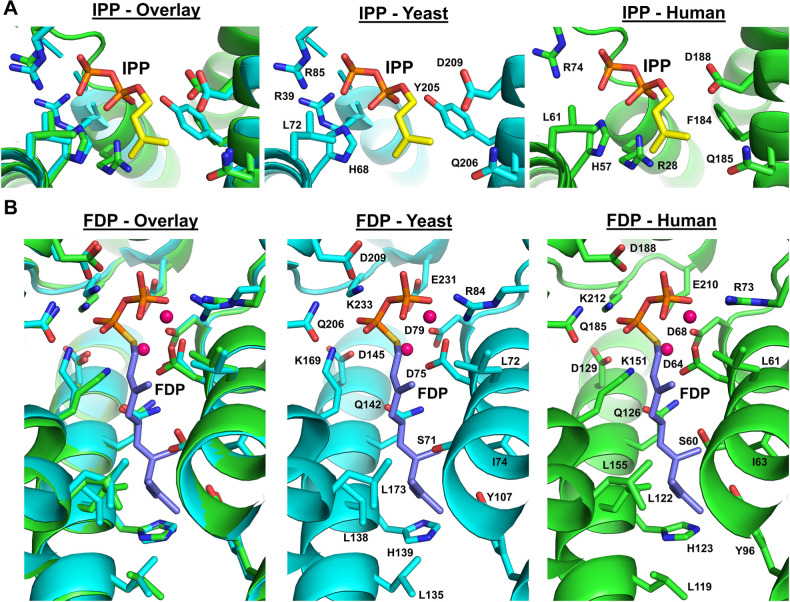
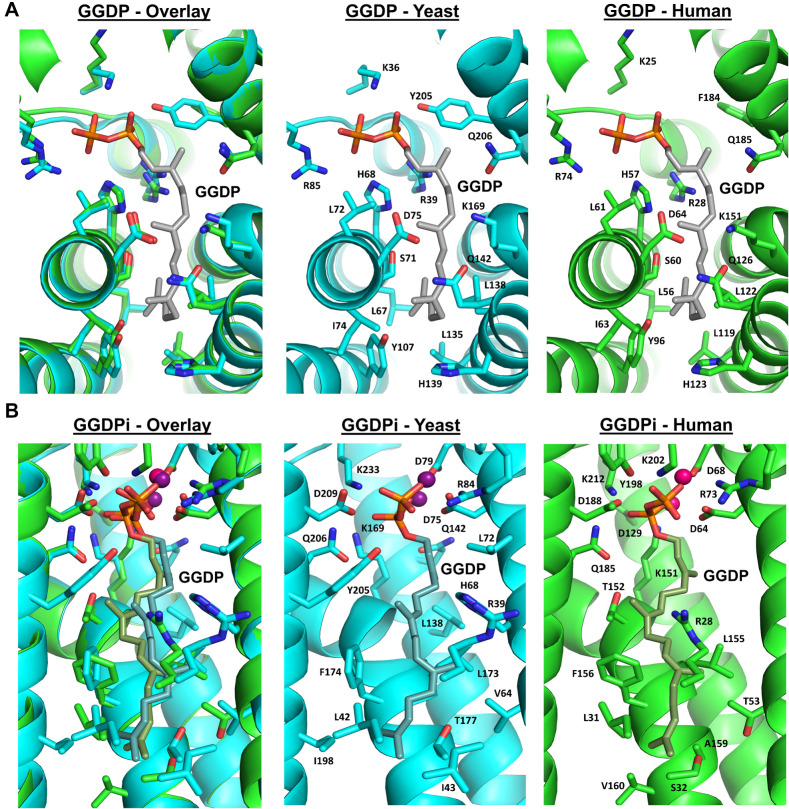
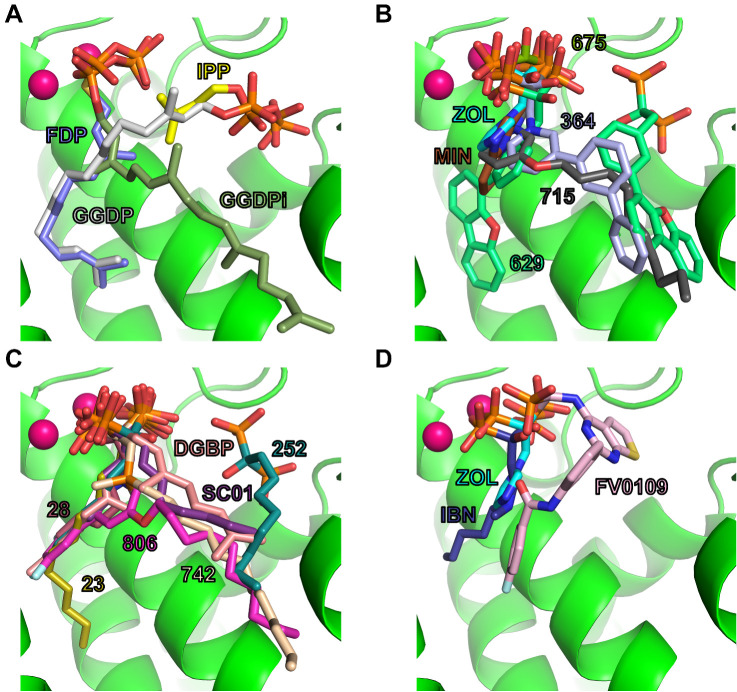
Geranylgeranyl diphosphate synthase (GGDPS), the source of the isoprenoid donor in protein geranylgeranylation reactions, has become an attractive target for anticancer therapy due to the reliance of cancers on geranylgeranylated proteins. Current GGDPS inhibitor development focuses on optimizing the drug-target enzyme interactions of nitrogen-containing bisphosphonate-based drugs. To advance GGDPS inhibitor development, understanding the enzyme structure, active site, and ligand/product interactions is essential. Here we provide a comprehensive structure-focused review of GGDPS. We reviewed available yeast and human GGDPS structures and then used AlphaFold modeling to complete unsolved structural aspects of these models. We delineate the elements of higher-order structure formation, product-substrate binding, the electrostatic surface, and small-molecule inhibitor binding. With the rise of structure-based drug design, the information provided here will serve as a valuable tool for rationally optimizing inhibitor selectivity and effectiveness.
Overview
The claims and statistics of this paper haven’t been checked yet.
Run the check — free, no account needed. It reads the open-access text and checks the sources it cites.
Integrity signals
Registry
Cites
Statistics
Figures
Verification
Claims the paper makes
The claims and statistics of this paper haven’t been checked yet.
Run the check — free, no account needed. It reads the open-access text and checks the sources it cites.
Self-check
Percentages, sums and reported differences re-computed from the paper’s own numbers.
The self-check needs the paper’s full text.
Citations
Cites
Highly accurate protein structure prediction with AlphaFold
Jumper, J., Evans, R., Pritzel, A., Green, T., Figurnov, M., Ronneberger, O., Tunyasuvunakool, K., Bates, R., Žídek, A., Potapenko, A., et al. (2021) · Nature · doi:10.1038/s41586-021-03819-2 · Cited by 43,764
Research works printed but not linked: 85
- Zhang, 1996, Protein prenylation: molecular mechanisms and functional consequences, Annu Rev Biochem, 65, 241, 10.1146/annurev.bi.65.070196.001325 · DOI
- Takai, 2001, Small GTP-binding proteins, Physiol Rev, 81, 153, 10.1152/physrev.2001.81.1.153 · DOI
- Tzeng, 2016, Rab-mediated vesicle trafficking in cancer, J Biomed Sci, 23, 70, 10.1186/s12929-016-0287-7 · DOI
- Prieto-Dominguez, 2019, Drugging the small GTPase pathways in cancer treatment: promises and challenges, 255
- Wang, 2016, Protein prenylation: unique fats make their mark on biology, Nat Rev Mol Cell Biol, 17, 110, 10.1038/nrm.2015.11 · DOI
- Swan, 2021, A requirement of protein geranylgeranylation for chemokine receptor signaling and Th17 cell function in an animal model of multiple sclerosis, Front Immunol, 12, 641188, 10.3389/fimmu.2021.641188 · DOI
- Vogt, 1996, Protein geranylgeranylation, not farnesylation, is required for the G1 to S phase transition in mouse fibroblasts, Oncogene, 13, 1991
- Kuchay, 2019, GGTase3 is a newly identified geranylgeranyltransferase targeting a ubiquitin ligase, Nat Struct Mol Biol, 26, 628, 10.1038/s41594-019-0249-3 · DOI
- Shirakawa, 2020, A SNARE geranylgeranyltransferase essential for the organization of the Golgi apparatus, EMBO J, 39, e104120, 10.15252/embj.2019104120 · DOI
- Marchwicka, 2022, Protein prenyltransferases and their inhibitors: structural and functional characterization, Int J Mol Sci, 23, 5424, 10.3390/ijms23105424 · DOI
- Taylor, 2003, Structure of mammalian protein geranylgeranyltransferase type-I, EMBO J, 22, 5963, 10.1093/emboj/cdg571 · DOI
- Thoma, 2000, Phosphoisoprenoid binding specificity of geranylgeranyltransferase type II, Biochemistry, 39, 12043, 10.1021/bi000835m · DOI
- Roth, 2020, Geranylgeranyl generosity: a new prenyl-transferase gives a fat to a SNARE protein, EMBO J, 39, e104744, 10.15252/embj.2020104744 · DOI
- Reid, 2004, Crystallographic analysis of CaaX prenyltransferases complexed with substrates defines rules of protein substrate selectivity, J Mol Biol, 343, 417, 10.1016/j.jmb.2004.08.056 · DOI
- Muehlebach, 2023, Geranylgeranyl diphosphate synthase: role in human health, disease and potential therapeutic target, Clin Transl Med, 13, e1167, 10.1002/ctm2.1167 · DOI
- Shah, 2019, Ras and Rap1: A tale of two GTPases, Semin Cancer Biol, 54, 29, 10.1016/j.semcancer.2018.03.005 · DOI
- Crosas-Molist, 2022, Rho GTPase signaling in cancer progression and dissemination, Physiol Rev, 102, 455, 10.1152/physrev.00045.2020 · DOI
- Kazanietz, 2017, The Rac GTPase in cancer: from old concepts to new paradigms, Cancer Res, 77, 5445, 10.1158/0008-5472.CAN-17-1456 · DOI
- Batool, 2019, A structure-based drug discovery paradigm, Int J Mol Sci, 20, 2783, 10.3390/ijms20112783 · DOI
- Aplin, 2022, Evolving experimental techniques for structure-based drug design, J Phys Chem B, 126, 6599, 10.1021/acs.jpcb.2c04344 · DOI
- Dudakovic, 2011, Geranylgeranyl diphosphate depletion inhibits breast cancer cell migration, Invest New Drugs, 29, 912, 10.1007/s10637-010-9446-y · DOI
- Agabiti, 2016, Molecular mechanisms linking geranylgeranyl diphosphate synthase to cell survival and proliferation, Mol Membr Biol, 33, 1, 10.1080/09687688.2016.1213432 · DOI
- Agabiti, 2017, Geranylgeranyl diphosphate synthase inhibition induces apoptosis that is dependent upon GGPP depletion, ERK phosphorylation, and caspase activation, Cell Death Dis, 8, e2678, 10.1038/cddis.2017.101 · DOI
- Agabiti, 2019, Regulation of the Notch-ATM-abl axis by geranylgeranyl diphosphate synthase inhibition, Cell Death Dis, 10, 733, 10.1038/s41419-019-1973-7 · DOI
- Holstein, 2010, Differential activities of thalidomide and isoprenoid biosynthetic pathway inhibitors in multiple myeloma cells, Leuk Res, 34, 344, 10.1016/j.leukres.2009.06.035 · DOI
- Dudakovic, 2008, Inhibition of geranylgeranyl diphosphate synthase induces apoptosis through multiple mechanisms and displays synergy with inhibition of other isoprenoid biosynthetic enzymes, J Pharmacol Exp Ther, 324, 1028, 10.1124/jpet.107.132217 · DOI
- Wasko, 2011, Bisphosphonates induce autophagy by depleting geranylgeranyl diphosphate, J Pharmacol Exp Ther, 337, 540, 10.1124/jpet.110.175521 · DOI
- Dykstra, 2015, Mechanisms for autophagy modulation by isoprenoid biosynthetic pathway inhibitors in multiple myeloma cells, Oncotarget, 6, 41535, 10.18632/oncotarget.6365 · DOI
- Haney, 2023, Evaluation of geranylgeranyl diphosphate synthase inhibition as a novel strategy for the treatment of osteosarcoma and Ewing sarcoma, Drug Dev Res, 84, 62, 10.1002/ddr.22012 · DOI
- Ullah, 2016, Protein Geranylgeranyltransferase type 1 as a target in cancer, Curr Cancer Drug Targets, 16, 563, 10.2174/1568009616666151203224603 · DOI
- Obeng, 2006, Proteasome inhibitors induce a terminal unfolded protein response in multiple myeloma cells, Blood, 107, 4907, 10.1182/blood-2005-08-3531 · DOI
- Holstein, 2011, Isoprenoid biosynthetic pathway inhibition disrupts monoclonal protein secretion and induces the unfolded protein response pathway in multiple myeloma cells, Leuk Res, 35, 551, 10.1016/j.leukres.2010.08.008 · DOI
- Born, 2013, Targeting HSP90 and monoclonal protein trafficking modulates the unfolded protein response, chaperone regulation and apoptosis in myeloma cells, Blood Cancer J, 3, e167, 10.1038/bcj.2013.64 · DOI
- Haney, 2019, In vivo evaluation of isoprenoid triazole bisphosphonate inhibitors of geranylgeranyl diphosphate synthase: impact of olefin stereochemistry on toxicity and biodistribution, J Pharmacol Exp Ther, 371, 327, 10.1124/jpet.119.258624 · DOI
- Haney, 2019, Inhibition of geranylgeranyl diphosphate synthase is a novel therapeutic strategy for pancreatic ductal adenocarcinoma, Oncogene, 38, 5308, 10.1038/s41388-019-0794-6 · DOI
- Reilly, 2017, Targeting protein geranylgeranylation slows tumor development in a murine model of prostate cancer metastasis, Cancer Biol Ther, 18, 872, 10.1080/15384047.2016.1219817 · DOI
- Reilly, 2015, Targeting geranylgeranylation reduces adrenal gland tumor burden in a murine model of prostate cancer metastasis, Clin Exp Metastasis, 32, 555, 10.1007/s10585-015-9727-0 · DOI
- Haney, 2021, In vivo evaluation of combination therapy targeting the isoprenoid biosynthetic pathway, Pharmacol Res, 167, 105528, 10.1016/j.phrs.2021.105528 · DOI
- Haney, 2022, Geranylgeranyl diphosphate synthase inhibitor and proteasome inhibitor combination therapy in multiple myeloma, Exp Hematol Oncol, 11, 5, 10.1186/s40164-022-00261-6 · DOI
- Lacbay, 2018, Unraveling the prenylation-cancer paradox in multiple myeloma with novel Geranylgeranyl Pyrophosphate Synthase (GGPPS) inhibitors, J Med Chem, 61, 6904, 10.1021/acs.jmedchem.8b00886 · DOI
- Wang, 2018, Overexpression of geranylgeranyl diphosphate synthase contributes to tumor metastasis and correlates with poor prognosis of lung adenocarcinoma, J Cell Mol Med, 22, 2177, 10.1111/jcmm.13493 · DOI
- Yu, 2014, GGPPS1 predicts the biological character of hepatocellular carcinoma in patients with cirrhosis, BMC Cancer, 14, 248, 10.1186/1471-2407-14-248 · DOI
- Sagami, 1992, Studies on geranylgeranyl diphosphate synthase from rat liver: specific inhibition by 3-azageranylgeranyl diphosphate, Arch Biochem Biophys, 297, 314, 10.1016/0003-9861(92)90678-P · DOI
- Sagami, 1994, Purification and properties of geranylgeranyl-diphosphate synthase from bovine brain, J Biol Chem, 269, 20561, 10.1016/S0021-9258(17)32030-6 · DOI
- Chang, 2006, Crystal structure of type-III geranylgeranyl pyrophosphate synthase from Saccharomyces cerevisiae and the mechanism of product chain length determination, J Biol Chem, 281, 14991, 10.1074/jbc.M512886200 · DOI
- Guo, 2007, Bisphosphonates target multiple sites in both cis- and trans-prenyltransferases, Proc Natl Acad Sci USA, 104, 10022, 10.1073/pnas.0702254104 · DOI
- Kavanagh, 2006, The crystal structure of human geranylgeranyl pyrophosphate synthase reveals a novel hexameric arrangement and inhibitory product binding, J Biol Chem, 281, 22004, 10.1074/jbc.M602603200 · DOI
- Wang, 2016, Structural analyses of short-chain prenyltransferases identify an evolutionarily conserved GFPPS clade in brassicaceae plants, Mol Plant, 9, 195, 10.1016/j.molp.2015.10.010 · DOI
- Wallrapp, 2013, Prediction of function for the polyprenyl transferase subgroup in the isoprenoid synthase superfamily, Proc Natl Acad Sci USA, 110, E1196, 10.1073/pnas.1300632110 · DOI
- Zhou, 2017, A recruiting protein of geranylgeranyl diphosphate synthase controls metabolic flux toward chlorophyll biosynthesis in rice, Proc Natl Acad Sci USA, 114, 6866, 10.1073/pnas.1705689114 · DOI
- Chang, 2010, Structure of a heterotetrameric geranyl pyrophosphate synthase from mint (Mentha piperita) reveals intersubunit regulation, Plant Cell, 22, 454, 10.1105/tpc.109.071738 · DOI
- Kim, 2019, Crystal structure of geranylgeranyl pyrophosphate synthase (crtE) from Nonlabens dokdonensis DSW-6, Biochem Biophys Res Commun, 518, 479, 10.1016/j.bbrc.2019.08.071 · DOI
- Kuzuguchi, 1999, Human geranylgeranyl diphosphate synthase. cDNA cloning and expression, J Biol Chem, 274, 5888, 10.1074/jbc.274.9.5888 · DOI
- Miyagi, 2007, Human geranylgeranyl diphosphate synthase is an octamer in solution, J Biochem, 142, 377, 10.1093/jb/mvm144 · DOI
- Lisnyansky, 2019, Metal coordination is crucial for geranylgeranyl diphosphate synthase-bisphosphonate interactions: a crystallographic and computational analysis, Mol Pharmacol, 96, 580, 10.1124/mol.119.117499 · DOI
- Waterhouse, 2009, Jalview Version 2–a multiple sequence alignment editor and analysis workbench, Bioinformatics, 25, 1189, 10.1093/bioinformatics/btp033 · DOI
- Kavanagh, 2006, The molecular mechanism of nitrogen-containing bisphosphonates as antiosteoporosis drugs, Proc Natl Acad Sci USA, 103, 7829, 10.1073/pnas.0601643103 · DOI
- Ramsay, 2017, Assessment of enzyme inhibition: a review with examples from the development of monoamine oxidase and cholinesterase inhibitory drugs, Molecules, 22, 1192, 10.3390/molecules22071192 · DOI
- Hopkins, 2002, The druggable genome, Nat Rev Drug Discov, 1, 727, 10.1038/nrd892 · DOI · Paper page
- Poulter, 1977, Mechanism of the prenyl-transfer reaction. Studies with (E)- and (Z)-3-trifluoromethyl-2-buten-1-yl pyrophosphate, Biochemistry, 16, 5470, 10.1021/bi00644a012 · DOI
- Poulter, 1978, Farnesyl pyrophosphate synthetase. Mechanistic studies of the 1'-4 coupling reaction with 2-fluorogeranyl pyrophosphate, J Biol Chem, 253, 7227, 10.1016/S0021-9258(17)34489-7 · DOI
- Szabo, 2002, Inhibition of geranylgeranyl diphosphate synthase by bisphosphonates and diphosphates: a potential route to new bone antiresorption and antiparasitic agents, J Med Chem, 45, 2185, 10.1021/jm010412y · DOI
- Lisnyansky, 2018, Reduced activity of geranylgeranyl diphosphate synthase mutant is involved in bisphosphonate-induced atypical fractures, Mol Pharmacol, 94, 1391, 10.1124/mol.118.113670 · DOI
- Zhang, 2009, Lipophilic bisphosphonates as dual farnesyl/geranylgeranyl diphosphate synthase inhibitors: an X-ray and NMR investigation, J Am Chem Soc, 131, 5153, 10.1021/ja808285e · DOI
- K-M Chen, 2008, Inhibition of geranylgeranyl diphosphate synthase by bisphosphonates: a crystallographic and computational investigation, J Med Chem, 51, 5594, 10.1021/jm800325y · DOI
- Martin, 1999, Nitrogen-containing bisphosphonates as carbocation transition state analogs for isoprenoid biosynthesis, Biochem Biophys Res Commun, 263, 754, 10.1006/bbrc.1999.1404 · DOI
- Sanders, 2003, 3-D QSAR investigations of the inhibition of Leishmania major farnesyl pyrophosphate synthase by bisphosphonates, J Med Chem, 46, 5171, 10.1021/jm0302344 · DOI
- Barney, 2010, Synthesis and biological evaluation of a series of aromatic bisphosphonates, Bioorg Med Chem, 18, 7212, 10.1016/j.bmc.2010.08.036 · DOI
- Foust, 2016, A new motif for inhibitors of geranylgeranyl diphosphate synthase, Bioorg Med Chem, 24, 3734, 10.1016/j.bmc.2016.06.019 · DOI
- Zhou, 2014, Synthesis of isoprenoid bisphosphonate ethers through C-P bond formations: Potential inhibitors of geranylgeranyl diphosphate synthase, Beilstein J Org Chem, 10, 1645, 10.3762/bjoc.10.171 · DOI
- Zhou, 2014, Geranyl and neryl triazole bisphosphonates as inhibitors of geranylgeranyl diphosphate synthase, Bioorg Med Chem, 22, 2791, 10.1016/j.bmc.2014.03.014 · DOI
- Zhou, 2013, Triazole-based inhibitors of geranylgeranyltransferase II, Bioorg Med Chem Lett, 23, 764, 10.1016/j.bmcl.2012.11.089 · DOI
- Allen, 2017, Olefin Isomers of a triazole bisphosphonate synergistically inhibit geranylgeranyl diphosphate synthase, Mol Pharmacol, 91, 229, 10.1124/mol.116.107326 · DOI
- Wills, 2015, Potent triazole bisphosphonate inhibitor of geranylgeranyl diphosphate synthase, ACS Med Chem Lett, 6, 1195, 10.1021/acsmedchemlett.5b00334 · DOI
- Wills, 2017, Bishomoisoprenoid triazole bisphosphonates as inhibitors of geranylgeranyl diphosphate synthase, Bioorg Med Chem, 25, 2437, 10.1016/j.bmc.2017.02.066 · DOI
- Bhuiyan, 2019, omega-Hydroxy isoprenoid bisphosphonates as linkable GGDPS inhibitors, 126633
- Matthiesen, 2018, alpha-Methylation enhances the potency of isoprenoid triazole bisphosphonates as geranylgeranyl diphosphate synthase inhibitors, Bioorg Med Chem, 26, 376, 10.1016/j.bmc.2017.10.023 · DOI
- Fairweather, 2021, Impact of alpha-modifications on the activity of triazole bisphosphonates as geranylgeranyl diphosphate synthase inhibitors, Bioorg Med Chem, 44, 116307, 10.1016/j.bmc.2021.116307 · DOI
- Rees, 2004, Fragment-based lead discovery, Nat Rev Drug Discov, 3, 660, 10.1038/nrd1467 · DOI
- Erlanson, 2012, Introduction to fragment-based drug discovery, Top Curr Chem, 317, 1
- Kirsch, 2019, Concepts and core principles of fragment-based drug design, Molecules, 24, 4309, 10.3390/molecules24234309 · DOI
- Kim, 2023, Target discovery using deep learning-based molecular docking and predicted protein structures with alphafold for novel antipsychotics, Psychiatry Investig, 20, 504, 10.30773/pi.2022.0343 · DOI
- Borkakoti, 2023, AlphaFold2 protein structure prediction: Implications for drug discovery, Curr Opin Struct Biol, 78, 102526, 10.1016/j.sbi.2022.102526 · DOI
- Naqvi, 2018, Advancements in docking and molecular dynamics simulations towards ligand-receptor interactions and structure-function relationships, Curr Top Med Chem, 18, 1755, 10.2174/1568026618666181025114157 · DOI
- Dove, 1999, Drug screening–beyond the bottleneck, Nat Biotechnol, 17, 859, 10.1038/12845 · DOI
Metadata
- Authors
- Pham, A. C., Holstein, S. A., & Borgstahl, G. E. O.
- Affiliations
- University of Nebraska Medical Center (US)
- Corresponding author
- Borgstahl, Gloria E.O.
- Venue
- Molecular Cancer Therapeutics
- Published
- 2023-09-26
- Volume
- 23
- Issue
- 1
- Pages
- 14-23
- ISSN
- 1535-7163 (ISSN-L)
- 1538-8514
- PMC
- PMC10762340
- OpenAlex
- W4387089883
- Cited by
- 9
- References
- 1
- Citations by year
- 2026: 4 · 2025: 4 · 2024: 1
- FWCI
- 0.24
- Type
- journal article
- Language
- en
- Open access
- hybrid
- doi.org
- Licence
- Locations
- Molecular Cancer Therapeutics (publishedVersion, cc-by-nc-nd)
- PubMed Central (publishedVersion, cc-by-nc-nd)
- PubMed (publishedVersion)
- Funders
- National Cancer Institute (R01CA258621, P30CA036727)
- U.S. Department of Education (P200A210032)
- Topics
- Life Sciences › Biochemistry, Genetics and Molecular Biology › Molecular Biology › Plant biochemistry and biosynthesis
- Life Sciences › Biochemistry, Genetics and Molecular Biology › Molecular Biology › Protein Kinase Regulation and GTPase Signaling
- Life Sciences › Biochemistry, Genetics and Molecular Biology › Structural Biology › Enzyme Structure and Function
- Keywords
- geranylgeranyl diphosphate synthase, protein geranylgeranylation, isoprenoid metabolism, anticancer drug targets, enzyme structure, active site, electrostatic surface, structure-based drug design
- MeSH terms
- Enzyme Inhibitors, Humans, Neoplasms, Terpenes, Protein Prenylation, Farnesyltranstransferase
About these checks
Registry, retraction, Cites and statistics results are computed, not judged, with one exception: a printed reference that no index lists is read once by a model before it counts as a citation error. Claims are extracted by a model and kept only when their quote appears verbatim in the text; each cited source is then checked, with a model’s help, for whether it says what the claim relies on. Those verdicts can be wrong — read the claim’s quote and the cited source before relying on one.
Statistics and arithmetic are recomputed, not judged.
Confidence bands are shown only for fields calibrated on our annotated test set. None is calibrated yet, so no band is shown.
What counts as a claim ›How we measure confidence ›How we check this ›
Are you an author, or do you see a problem with this page? Request a review
