

Xaluritamig, a STEAP1 × CD3 XmAb 2+1 Immune Therapy for Metastatic Castration-Resistant Prostate Cancer: Results from Dose Exploration in a First-in-Human Study
Open accessPublished version of a preprint
The DOI matches its Crossref record; 30 of the 30 references it cites were found in a registry or an index.
Abstract
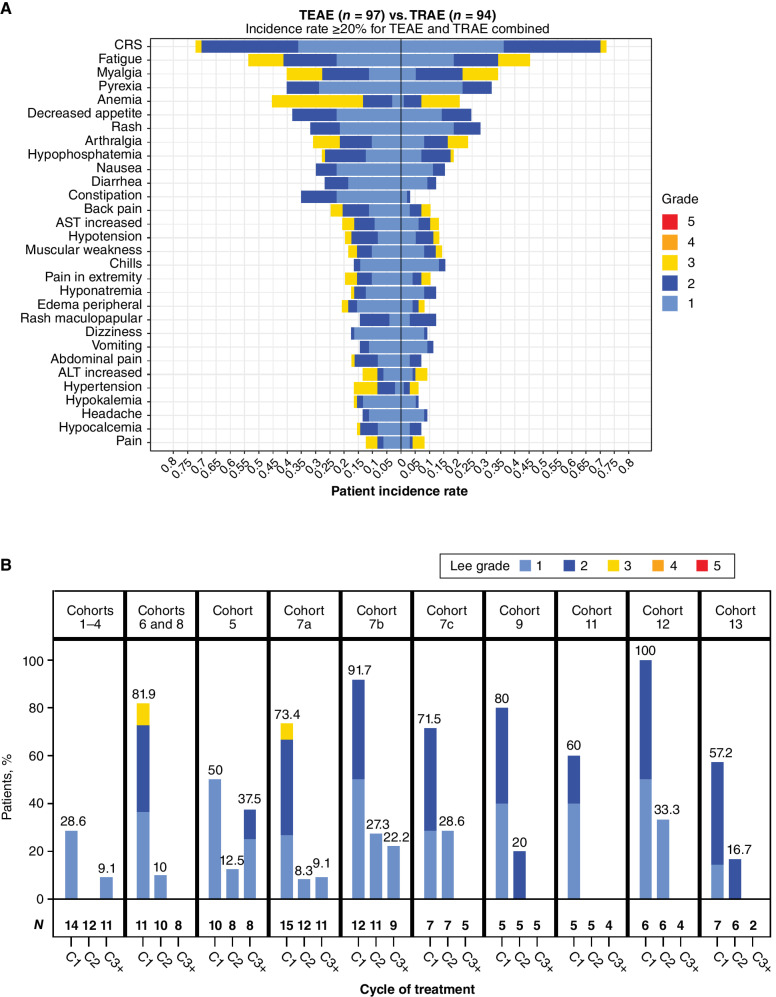
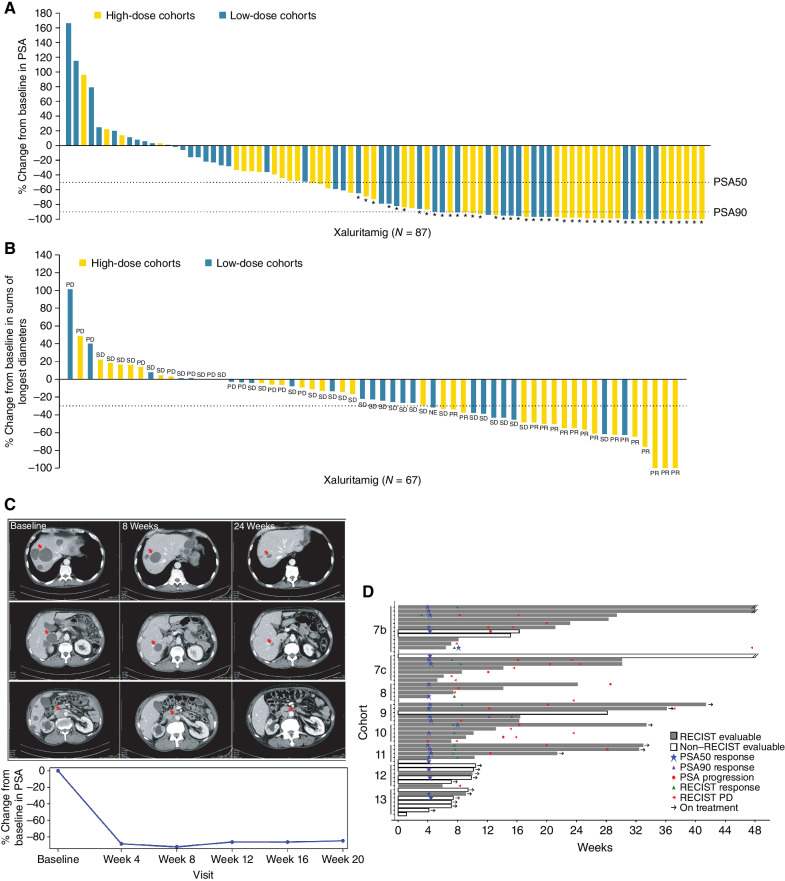
Xaluritamig (AMG 509) is a six-transmembrane epithelial antigen of the prostate 1 (STEAP1)–targeted T-cell engager designed to facilitate lysis of STEAP1-expressing cancer cells, such as those in advanced prostate cancer. This first-in-human study reports monotherapy dose exploration for patients with metastatic castration-resistant prostate cancer (mCRPC), primarily taxane pretreated. Ninety-seven patients received ≥1 intravenous dose ranging from 0.001 to 2.0 mg weekly or every 2 weeks. MTD was identified as 1.5 mg i.v. weekly via a 3-step dose. The most common treatment-related adverse events were cytokine release syndrome (CRS; 72%), fatigue (45%), and myalgia (34%). CRS occurred primarily during cycle 1 and improved with premedication and step dosing. Prostate-specific antigen (PSA) and RECIST responses across cohorts were encouraging [49% PSA50; 24% objective response rate (ORR)], with greater frequency at target doses ≥0.75 mg (59% PSA50; 41% ORR). Xaluritamig is a novel immunotherapy for prostate cancer that has shown encouraging results supporting further development. Significance: Xaluritamig demonstrated encouraging responses (PSA and RECIST) compared with historical established treatments for patients with late-line mCRPC. This study provides proof of concept for T-cell engagers as a potential treatment for prostate cancer, validates STEAP1 as a target, and supports further clinical investigation of xaluritamig in prostate cancer. See related commentary by Hage Chehade et al., p. 20. See related article by Nolan-Stevaux et al., p. 90. This article is featured in Selected Articles from This Issue, p. 5
Overview
The claims and statistics of this paper haven’t been checked yet.
Free: it reads the open-access text and checks the first 5 claims that cite a source we can check. Create a free account to check every claim.
Integrity signals
Registry
Cites
Statistics
Figures
Verification
Claims the paper makes
The claims and statistics of this paper haven’t been checked yet.
Free: it reads the open-access text and checks the first 5 claims that cite a source we can check. Create a free account to check every claim.
Claims other papers make about this one
Each is checked against this paper’s own text: does it say what the citing paper says it does?
The source backs part of the claim, not all of it — or backs it for a different population, condition or comparison.
In the citing paper
“A PSA50 response was observed in 49% of patients, and a PSA90 response was observed in 30%, supporting the need for further development.”
From PSMA-based Therapies and Novel Therapies in Advanced Prostate Cancer: The Now and the Future (2025) · cites this paper as [32]
Experimental — accuracy not yet measuredThe cited source says what the claim attributes to it.
In the citing paper
“Regarding this drug candidate’s safety profile, CRS occurred in 72% of patients, primarily during cycle 1, with other less common side effects including myalgia, myofascitis, and maculopapular rash. CRS events improved with premedication and step dosing, and only 3% of patients ultimately discontinued due to this”
From PSMA-based Therapies and Novel Therapies in Advanced Prostate Cancer: The Now and the Future (2025) · cites this paper as [32]
Self-check
Percentages, sums and reported differences re-computed from the paper’s own numbers.
The self-check needs the paper’s full text.
Citations
Cites
Controlling the False Discovery Rate: A Practical and Powerful Approach to Multiple Testing
Benjamini, Y., & Hochberg, Y. (1995) · Journal of the Royal Statistical Society Series B: Statistical Methodology · doi:10.1111/j.2517-6161.1995.tb02031.x · Cited by 109,482
lmerTest Package: Tests in Linear Mixed Effects Models
Kuznetsova, A., Brockhoff, P. B., & Christensen, R. H. B. (2017) · Journal of Statistical Software · doi:10.18637/jss.v082.i13 · Cited by 24,346
Siegel, R. L., Miller, K. D., Wagle, N. S., & Jemal, A. (2023) · CA: A Cancer Journal for Clinicians · doi:10.3322/caac.21763 · Cited by 16,303 · cited 1×
“%) globally in 2020 (1, 2 ).”
Current concepts in the diagnosis and management of cytokine release syndrome.
Lee, D. W., Gardner, R., Porter, D. L., Louis, C. U., Ahmed, N., Jensen, M., Grupp, S. A., & Mackall, C. L. (2014) · Blood · doi:10.1182/blood-2014-05-552729 · Cited by 2,806
Blinatumomab versus Chemotherapy for Advanced Acute Lymphoblastic Leukemia
Kantarjian, H., Stein, A., Gökbuget, N., Fielding, A. K., Schuh, A. C., Ribera, J.-M., Wei, A., Dombret, H., Foà, R., Bassan, R., et al. (2017) · New England Journal of Medicine · doi:10.1056/nejmoa1609783 · Cited by 2,143
Scher, H. I., Morris, M. J., Stadler, W. M., Higano, C., Basch, E., Fizazi, K., Antonarakis, E. S., Beer, T. M., Carducci, M. A., Chi, K. N., et al. (2016) · Journal of Clinical Oncology · doi:10.1200/jco.2015.64.2702 · Cited by 1,654 · cited 2×
“Assessments were performed at baseline, at week 8 (defined as the baseline scan for bone scans), every 8 weeks during weeks 1 to 24, every 12 weeks thereafter, and at end of treatment or safety follow-up visits .”
Self-citationOverall Survival Benefit with Tebentafusp in Metastatic Uveal Melanoma
Nathan, P., Hassel, J. C., Rutkowski, P., Baurain, J.-F., Butler, M. O., Schlaak, M., Sullivan, R. J., Ochsenreither, S., Dummer, R., Kirkwood, J. M., et al. (2021) · New England Journal of Medicine · doi:10.1056/nejmoa2103485 · Cited by 924
Guidelines for the Management of Pediatric and Adult Tumor Lysis Syndrome: An Evidence-Based Review
Coiffier, B., Altman, A., Pui, C.-H., Younes, A., & Cairo, M. S. (2008) · Journal of Clinical Oncology · doi:10.1200/jco.2007.15.0177 · Cited by 792
Glofitamab for Relapsed or Refractory Diffuse Large B-Cell Lymphoma
Dickinson, M. J., Carlo-Stella, C., Morschhauser, F., Bachy, E., Corradini, P., Iacoboni, G., Khan, C., Wróbel, T., Offner, F., Trněný, M., et al. (2022) · New England Journal of Medicine · doi:10.1056/nejmoa2206913 · Cited by 761
Critical aspects of the Bayesian approach to phase I cancer trials
Neuenschwander, B., Branson, M., & Gsponer, T. (2008) · Statistics in Medicine · doi:10.1002/sim.3230 · Cited by 439 · cited 1×
“…cancer (adenocarcinoma) that was refractory to a novel hormonal therapy, had disease progression following 1 to 2 taxane regimens (or were unsuitable for or had refused treatment with taxanes), and had evidence of PD as defined by the Prostate Cancer Working Group 3 (PCWG3) guidelines (32).”
Cited by
The present and future of bispecific antibodies for cancer therapy
Klein, C., Brinkmann, U., Reichert, J. M., & Kontermann, R. E. (2024) · Nature Reviews Drug Discovery · doi:10.1038/s41573-024-00896-6 · Cited by 490
“…activity enabling selectivity for tumour cells with high expression of STEAP1 compared with normal cells, demonstrated promising clinical activity in a phase I dose escalation study in patients with metastatic castration-resistant prostate cancer in a late-line treat-ment setting 160,161 .”
Cancer therapy with antibodies
Paul, S., Konig, M. F., Pardoll, D. M., Bettegowda, C., Papadopoulos, N., Wright, K. M., Gabelli, S. B., Ho, M., van Elsas, A., & Zhou, S. (2024) · Nature Reviews Cancer · doi:10.1038/s41568-024-00690-x · Cited by 248
Nolan-Stevaux, O., & Smith, R. (2024) · Frontiers in Immunology · doi:10.3389/fimmu.2024.1490911 · Cited by 101
Dorff, T., Horvath, L. G., Autio, K., Bernard-Tessier, A., Rettig, M. B., Machiels, J.-P., Bilen, M. A., Lolkema, M. P., Adra, N., Rottey, S., et al. (2024) · Clinical Cancer Research · doi:10.1158/1078-0432.ccr-23-2978 · Cited by 76
Self-citationZaidi, S., Park, J., Chan, J. M., Roudier, M. P., Zhao, J. L., Gopalan, A., Wadosky, K. M., Patel, R. A., Sayar, E., Karthaus, W. R., et al. (2024) · Proceedings of the National Academy of Sciences · doi:10.1073/pnas.2322203121 · Cited by 77
A pivotal decade for bispecific antibodies?
Surowka, M., & Klein, C. (2024) · mAbs · doi:10.1080/19420862.2024.2321635 · Cited by 69
“83,84 These data support the view that solid tumor targets that are sufficiently tumor specific to achieve potent anti-tumor efficacy while limiting on-target off-tumor toxicity are available.”
Nolan-Stevaux, O., Li, C., Liang, L., Zhan, J., Estrada, J., Osgood, T., Li, F., Zhang, H., Case, R., Murawsky, C. M., et al. (2024) · Cancer Discovery · doi:10.1158/2159-8290.cd-23-0984 · Cited by 55
Self-citationImmunotherapy in Prostate Cancer: From a “Cold” Tumor to a “Hot” Prospect
Kwon, W., & Joung, J. Y. (2025) · Cancers · doi:10.3390/cancers17071064 · Cited by 60
“Adverse events of grade 3 or higher were reported in 66% of patients, with 9% experiencing grade 4 events and 16% discontinuing treatment due to adverse events [70,71].”
Stein, M. N., Vinceneux, A., Robbrecht, D. G. J., Doger, B., Autio, K. A., Schweizer, M. T., Calvo, E., Medina, L., van Dongen, M., Deville, J., et al. (2025) · Journal of Clinical Oncology · doi:10.1200/jco-25-00678 · Cited by 53
Innovative strategies for T cell engagers for cancer immunotherapy
Bergamaschi, C., Gaspar, M., Ciucci, T., Sitnikova, S. I., Cayatte, C., Pica, M., & Dovedi, S. J. (2025) · mAbs · doi:10.1080/19420862.2025.2531223 · Cited by 44
Targeting the tumour cell surface in advanced prostate cancer
Boixareu, C., Taha, T., Venkadakrishnan, V. B., Bono, J. S. D., & Beltran, H. (2025) · Nature Reviews Urology · doi:10.1038/s41585-025-01014-w · Cited by 46
“…mCRPC (defined as lower or equal PSMA uptake than that reported in the liver in PSMA PET) 27 were excluded from the phase III Vision and phase II TheraP clinical trials (in which patients with mCRPC received [ 177 Lu]-PSMA-617 versus standard of care (SoC; Vision) or cabazitaxel (TheraP)).”
InfluentialPalecki, J., Bhasin, A., Bernstein, A., Mille, P. J., Tester, W. J., Kelly, W. K., & Zarrabi, K. K. (2024) · Cancer Biology & Therapy · doi:10.1080/15384047.2024.2356820 · Cited by 33
Self-citationNovel Therapeutic Strategies for Metastatic Prostate Cancer Care
Cimadamore, A., Boixareu, C., Sharp, A., Beltran, H., & Bono, J. S. D. (2025) · European Urology · doi:10.1016/j.eururo.2025.06.013 · Cited by 31
“STEAP1, a metalloproteinase rarely expressed in healthy tissues but overexpressed in mCRPC patients, was targeted in a phase 1 trial showing a 24% ORR and 48% disease stabilisation with an impressive PSA response rate [78].”
InfluentialT cell engagers emerge as a compelling therapeutic modality
Baeuerle, P. A., Sauer, K., Grieshaber‐Bouyer, R., & Michaelson, J. S. (2025) · The Journal of Experimental Medicine · doi:10.1084/jem.20251652 · Cited by 29
Lampe, H., Tam, L., & Hansen, A. R. (2024) · Frontiers in Pharmacology · doi:10.3389/fphar.2024.1399802 · Cited by 21
Precision Targeting in Metastatic Prostate Cancer: Molecular Insights to Therapeutic Frontiers
Kwon, W., & Joung, J. Y. (2025) · Biomolecules · doi:10.3390/biom15050625 · Cited by 24
“However, immune-related toxicities, notably cytokine release syndrome, fatigue, and anemia, constrained dosing to a weekly maximum tolerated dose of 1.5 mg [160].”
InfluentialSynergistic targeting strategies for prostate cancer
Li, X., Han, Z., & Ai, J. (2025) · Nature Reviews Urology · doi:10.1038/s41585-025-01042-6 · Cited by 27
“This BiTE showed encouraging results in 97 patients who had mCRPC with 49% PSA50 and a 24% objec-tive response rate (ORR) observed in 45 patients receiving low-dose xaluritamig, and 59% PSA50 and a 41% ORR observed in 52 patients receiving high-dose xaluritamig) 70,71 .”
Moore, G. L., Zeng, V. G., Diaz, J. E., Bonzon, C., Avery, K. N., Rashid, R., Qi, J., Nam, D. H., Jacinto, J. M., Dragovich, M. A., et al. (2024) · Molecular Cancer Therapeutics · doi:10.1158/1535-7163.mct-24-0327 · Cited by 21
PSMA-based Therapies and Novel Therapies in Advanced Prostate Cancer: The Now and the Future
Ayzman, A., Pachynski, R. K., & Reimers, M. A. (2025) · Current Treatment Options in Oncology · doi:10.1007/s11864-025-01317-5 · Cited by 18
T-cell Engagers in Prostate Cancer
Chehade, C. H., Özay, Z. İ., Ostrowski, M., Mercinelli, C., Gebrael, G., Sayegh, N., Swami, U., Azad, A., Antonarakis, E. S., & Agarwal, N. (2025) · European Urology · doi:10.1016/j.eururo.2025.02.001 · Cited by 20
STEAP Proteins: Roles in disease biology and potential for therapeutic intervention
Cai, Q., Jing, C., Wang, X., Xing, X., & Liu, W. (2025) · International Journal of Biological Macromolecules · doi:10.1016/j.ijbiomac.2025.142797 · Cited by 28
Advances in Targeted Therapy for Metastatic Prostate Cancer
Grewal, K., Dorff, T. B., Mukhida, S. S., Agarwal, N., & Hahn, A. W. (2025) · Current Treatment Options in Oncology · doi:10.1007/s11864-025-01323-7 · Cited by 22
“[61].”
Self-citationAbdelmotaleb, O., Schneider, A., Gassner, C., Märsch, S., & Klein, C. (2025) · Expert Opinion on Drug Discovery · doi:10.1080/17460441.2025.2522088 · Cited by 23
Current landscape of T-cell engagers in early-phase clinical development in solid cancers
Spinazzola, A., Iannantuono, G. M., Gulley, J. L., Giudice, E., Filetti, M., Sganga, S., Bianco, F. L., Floudas, C. S., & Daniele, G. (2025) · Frontiers in Immunology · doi:10.3389/fimmu.2025.1665838 · Cited by 19
Shastri, P. N., Shah, N., Lechmann, M., Mody, H. R., Retter, M. W., Zhu, M., Li, T. R., Wang, J., Shaik, M. N., Zheng, X., et al. (2024) · Clinical Pharmacology & Therapeutics · doi:10.1002/cpt.3439 · Cited by 15
Emerging therapies to overcome antiandrogen resistance and beyond in lethal prostate cancer
Huang, F., Li, K., Shevach, J. W., & Wang, Q. (2025) · Journal of the National Cancer Center · doi:10.1016/j.jncc.2025.04.004 · Cited by 30
T-Cell Engager Therapy in Prostate Cancer: Molecular Insights into a New Frontier in Immunotherapy
Kwon, W., & Joung, J. Y. (2025) · Cancers · doi:10.3390/cancers17111820 · Cited by 19
“Early TCE trials (e.g., Xaluritamig targeting STEAP1, potentially relevant for PSMA-low patients [9,19]) suggest ORRs that might rival those seen in VISION [56], although TCE data are less mature.”
InfluentialProstate Cancer Radioligand Therapy: PSMA and Beyond, Current Landscape and Future Directions
Bent, E. H., & Morris, M. J. (2025) · Current Oncology Reports · doi:10.1007/s11912-025-01686-y · Cited by 17
PSMA Theranostics in Prostate Cancer and Beyond: Current and Future Perspectives
Sandhu, K., Chen, D. C., Hennes, D. M. Z. B., Murphy, D. G., Lawrentschuk, N., & Perera, M. (2025) · Cancers · doi:10.3390/cancers17223717 · Cited by 16
“Six-transmembrane epithelialantigenof prostate ( STEAP1 ) [74,75] • Cell-surface metalloreductase overexpressed in up to 90% of prostate tumours, independent of PSMA status; • Expression of STEAP1 persists in PSMA-low and neuroendocrine-like variants; • Early-phase clinical trials with bispecific…”
Developmental Therapeutics in Metastatic Prostate Cancer: New Targets and New Strategies
Zhang, J., & Chadha, J. S. (2024) · Cancers · doi:10.3390/cancers16173098 · Cited by 16
“Clinical results from the part 1 dose exploration cohort were reported in October 2023 and published in January 2024 [47].”
BackgroundSlovin, S. F., Gao, X., Wei, X. X., Oh, D. Y., McKay, R. R., Falchook, G. S., Hussain, A., McKean, M. A., Wibmer, A. G., Ho, A. L., et al. (2026) · Clinical Cancer Research · doi:10.1158/1078-0432.ccr-25-3052 · Cited by 29
Self-citationA PSMA-Targeted Tri-Specific Killer Engager Enhances NK Cell Cytotoxicity against Prostate Cancer
Phung, S. K., Zorko, N. A., Soignier, Y., Waller, R. L., Shackelford, M., Walker, J. T., Nelson, T. D., Selleck, C., Bendzick, L. E., Kotz, L. E., et al. (2024) · Cancer Immunology Research · doi:10.1158/2326-6066.cir-24-0273 · Cited by 11
“However, high serum IL15 concentrations can cause adverse toxicity such as CRS and neurotoxicity (44).”
InfluentialSynergistic effects of immunotherapy and adjunctive therapies in prostate cancer management
Chen, J., Ma, N., Chen, B., Huang, Y. C., Li, J., Li, J., Chen, Z., Wang, P., Ran, B., Yang, J., et al. (2024) · Critical Reviews in Oncology/Hematology · doi:10.1016/j.critrevonc.2024.104604 · Cited by 10
New frontiers in prostate cancer treatment from systemic therapy to targeted therapy
Nouruzi, S., Kobelev, M., Tabrizian, N., Gleave, M. E., & Zoubeidi, A. (2025) · EMBO Molecular Medicine · doi:10.1038/s44321-025-00282-8 · Cited by 15
STEAP1: a promising target in prostate cancer therapy
Singh, R., & Kyte, J. A. (2025) · Trends in cancer · doi:10.1016/j.trecan.2025.05.007 · Cited by 10
Castagnino, P. A., Haas, D. A., Musante, L., Tancler, N. A., Tran, B. V., Kean, R. B., Steck, A. R., Martinez, L. A., Mostaghel, E. A., Hooper, D. C., et al. (2025) · Cancer Biology & Therapy · doi:10.1080/15384047.2025.2455722 · Cited by 9
“…for future clinical studies as STEAP1 targeting bispecific antibody therapeutics and chimeric antigen receptor T cell (CAR-T) immune therapies are emerging as novel approaches to treating advanced prostate cancers 58,59 as well as potential diagnostic and prognostic biomarker strategies 60 .”
Bispecific T-cell Engagers in Metastatic Castration-Resistant Prostate Cancer
Chehade, C. H., Gebrael, G., & Agarwal, N. (2024) · Cancer Discovery · doi:10.1158/2159-8290.cd-23-1230 · Cited by 8
Mechanisms of Immune Evasion in PTEN Loss Prostate Cancer
Esteban-Villarrubia, J., Ballesteros, P. Á., Martín-Serrano, M., Vico, M. R., Funes, J. M., de Velasco, G., Castro, E., Olmos, D., Castellano, D., & González‐Billalabeitia, E. (2024) · Immuno · doi:10.3390/immuno4040028 · Cited by 10
“Apart from specific subpopulations of patients, immunotherapy with ICI in PCa has shown only modest outcomes, although there are new immunotherapy drugs that have shown promising results that should be confirmed in phase II and III trials [106,107].”
CAR-T Cell Therapy for Prostate Cancer: Current Advances and Future Perspectives
Calabrò, M. L., Ettari, R., Chio, C. D., Luca, F. D., Previti, S., & Zappalà, M. (2025) · Biomedicines · doi:10.3390/biomedicines13102545 · Cited by 11
“Clinical studies have demonstrated that bsAbs targeting STEAP1 can be effective treatments for advanced PCa, with xaluritamig producing significant radiographic and PSA responses, confirming STEAP1 as a viable cancer target [66].”
Trial Watch - bispecific T cell engagers and higher-order multispecific immunotherapeutics
Xue, E., Deng, X., Doffe, F., Kroemer, G., & Kepp, O. (2026) · OncoImmunology · doi:10.1080/2162402x.2026.2632421 · Cited by 8
“72,73 Accordingly, contemporary development increasingly incorporates step-up dosing, conditional activation, and combination strategies, including checkpoint inhibition and costimulatory pathway modulation.”
Porter, L. H., Harrison, S., Risbridger, G. P., Lister, N. L., & Taylor, R. A. (2024) · The Journal of Steroid Biochemistry and Molecular Biology · doi:10.1016/j.jsbmb.2024.106571 · Cited by 10
Bizzaro, C. L., Bach, C. A., Santos, R. A., Verrillo, C. E., Naranjo, N. M., Chaudhari, I., Picone, F. J., Iqbal, W., Blidner, A. G., Rabinovich, G. A., et al. (2025) · Molecular Cancer Research · doi:10.1158/1541-7786.mcr-24-0903 · Cited by 9
Self-citationClinical Applications of the Gut Microbiome in Genitourinary Cancers
Nguyen, C. B., & Vaishampayan, U. N. (2024) · American Society of Clinical Oncology Educational Book · doi:10.1200/edbk_100041 · Cited by 8
Bono, J. S. D., Williams, A., Melero, I., Jayaram, A., Hawley, J. E., de Spéville, B. D., Moreno, I., Castellano, D., Reig, Ò., Knapen, D. G., et al. (2025) · Clinical Cancer Research · doi:10.1158/1078-0432.ccr-24-3581 · Cited by 8
The Role of STEAP1 in Prostate Cancer: Implications for Diagnosis and Therapeutic Strategies
Zhang, L., Ren, X., An, R., Song, H., Tian, Y., Wei, X., Shi, M., & Wang, Z. (2025) · Biomedicines · doi:10.3390/biomedicines13040794 · Cited by 7
“Trials are currently underway to explore the safety, pharmacokinetics, and efficacy of the maximum tolerated dose [70].”
Predicting the Pharmacokinetics of T‐Cell Engagers as a Function of Target‐Mediated Drug Disposition
Penney, M., Ippolito, A., Fevola, E., Rata, S., Brown, L., Gutierrez, P. M., & Jones, R. D. O. (2025) · Clinical and Translational Science · doi:10.1111/cts.70384 · Cited by 5
Landscape of T-cell engagers in solid tumors
Garcia-Lorenzo, E., Dorta, M., Doger, B., Pedregal, M., & Moreno, V. (2026) · The Oncologist · doi:10.1093/oncolo/oyag129 · Cited by 6
“32,37 These differences suggest that antigen density, tissue distribution, and binding kinetics may directly influence the observed toxicity profile.”
Dang, B., Liang, L., Li, Z., Luo, J., & Zhong, S. (2025) · Biology · doi:10.3390/biology14050544 · Cited by 6
“This therapy holds signi fi cant clinical importance in the treatment of advanced prostate cancer This therapy holds significant clinical importance in the treatment of advanced prostate cancer, including castration-resistant prostate cancer [69,70].”
Beyond PSMA: theranostic cell surface targets in metastatic prostate cancer
Ashraf, B., McKenzie, J., & Armstrong, A. J. (2025) · Prostate Cancer and Prostatic Diseases · doi:10.1038/s41391-025-01037-9 · Cited by 10
Self-citationZeyaullah, M., AlShahrani, A. M., Khan, M. S., Ahmad, M. F., Altijani, A. A. G., Mohamed, A. O. A., Hummad, H., Mohieldin, A., & Ahmad, S. R. (2026) · Cancers · doi:10.3390/cancers18071088 · Cited by 5
20 years of taxane therapy in prostate cancer — the past, present and future
Carceles‐Cordon, M., Rodríguez-Bravo, V., Petrylak, D. P., & Domenech, J. M. D. (2025) · Nature Reviews Urology · doi:10.1038/s41585-025-01104-9 · Cited by 5
“Future studies investigating the combination of taxa-nes with other immune-checkpoint inhibitors (for example, B7-H3) 263 or T cell engager molecules (for example, STEAP1 × CD3 antibodies) 264 may succeed in adding immunotherapy to the armamentarium for treating prostate cancer.”
Recent advances and future prospects of immunotherapeutic approaches in prostate cancer
Wang, N., Wang, C., Cui, S., Zhao, K., Zhang, J., Zhang, L., Jia, Y., & Kong, F. (2026) · Journal of Translational Medicine · doi:10.1186/s12967-026-07720-2 · Cited by 7
“Structurally, xaluritamig is a “2 + 1” bispecific molecule comprising two anti-STEAP1 scFvs and one anti-CD3 scFv, enhancing binding avidity to STEAP1-high tumor cells by nearly tenfold while reducing affinity for STEAP1-low normal tissues [89].”
Cell Therapies and Bispecific Engagers: Redefining Strategies against Checkpoint Resistance
Laubli, H. P., König, D., Donia, M., Binder, M., & Zippelius, A. (2026) · Clinical Cancer Research · doi:10.1158/1078-0432.ccr-24-3694 · Cited by 7
Tumor-associated antigen targets for novel immune-based strategies in prostate cancer
Bhasin, A., Mille, P. J., Eturi, A., Iskander, A. J., Tester, W. J., & Zarrabi, K. K. (2024) · Journal of Translational Genetics and Genomics · doi:10.20517/jtgg.2023.46 · Cited by 5
Immunotherapy in metastatic prostate cancer
Dwyer, L., Leslie, C., Mellor, R., Scheinberg, T., Taylor, R. A., & Horvath, L. G. (2025) · Therapeutic Advances in Medical Oncology · doi:10.1177/17588359251347857 · Cited by 4
Self-citationConnarn, J. N., Pourzanjani, A., Bose, M., Modi, S., Stieglmaier, J., Murphy, A., Mehta, K., & Upreti, V. V. (2025) · The Journal of Clinical Pharmacology · doi:10.1002/jcph.70074 · Cited by 4
Self-citationVogl, U. M., Merler, S., Angrisani, A., Turco, F., Davis, I. D., Efstathiou, J. A., Fizazi, K. S., James, N. D., Shore, N. D., Small, E. J., et al. (2025) · European Journal of Cancer · doi:10.1016/j.ejca.2025.116131 · Cited by 3
Clinically oriented immune heterogeneity in prostate cancer: emerging targets and strategies
Zhan, M., Zhao, B., Wu, J., Li, K., Chen, Y., Chen, H., Zhao, L., & Zhu, J. (2026) · Frontiers in Immunology · doi:10.3389/fimmu.2026.1753718 · Cited by 3
Unlocking the potential of T cell engagers in solid tumors
Wingrove, E., Bailis, J. M., Farago, A. F., & Soria, J. (2026) · Cancer Cell · doi:10.1016/j.ccell.2026.03.011 · Cited by 3
Arafa, A. T., Boytim, E., Ludwig, M., Kollitz, L., Yang, T., Storey, K. M., Bloom, S. H., Jha, G., Okazaki, I. J., Ryan, C. J., et al. (2026) · Cell Reports Medicine · doi:10.1016/j.xcrm.2026.102764 · Cited by 6
Immunotherapy toxicities in genito-urinary cancers: insights and challenges for clinicians
Mercinelli, C., Carli, C., Vita, R. D., Oliveri, M., Galli, L., & Necchi, A. (2025) · Current Opinion in Urology · doi:10.1097/mou.0000000000001295 · Cited by 3
Zhang, J., Yuan, W., Zhang, T., Liu, X., & Xu, D. (2025) · Discover Oncology · doi:10.1007/s12672-025-03304-6 · Cited by 3
Unlocking precision: Bispecific T cell engagers and the next frontier in uro-oncology
Tan, J. K., Gullapalli, S. V. N., Chapagain, P., Ghose, A., Grollemund, A., Speechley, A., Hasanova, M., Shinde, S. D., Kandala, A., Maniam, A., et al. (2025) · Critical Reviews in Oncology/Hematology · doi:10.1016/j.critrevonc.2025.105039 · Cited by 2
The path forward for T cell engagers in patients with prostate cancer
Subudhi, S. K., Siddiqui, B. A., Zarrabi, K. K., Kelly, W. K., & Drake, C. G. (2026) · Journal for ImmunoTherapy of Cancer · doi:10.1136/jitc-2025-013905 · Cited by 2
“49 Incorporating clinical strategies for early recognition and intervention in toxicities is essential, and tools are being developed to facilitate timely detection of toxicities.”
Self-citationNovel Theranostic Targets for Prostate Cancer Beyond Prostate-Specific Membrane Antigen
Heidari, P., Jadvar, H., Kako, B., & Esfahani, S. A. (2026) · PET Clinics · doi:10.1016/j.cpet.2026.02.003 · Cited by 2
Mapping the immune landscape of PCa: From tumor microenvironment to therapeutics
Huang, S., Ou, Y., Zhuang, W., Huang, J., Wang, B., Li, Z., & Huang, H. (2026) · Biochimica et Biophysica Acta (BBA) - Reviews on Cancer · doi:10.1016/j.bbcan.2026.189586 · Cited by 2
Wu, X., Li, P., Li, T., Fan, Q., & Wu, H. W. (2026) · Frontiers in Immunology · doi:10.3389/fimmu.2026.1774471 · Cited by 3
T-cell engagers in cancer immunotherapy: mechanisms, challenges, and future perspectives
Muthughavi, K., Khokhar, M., Jha, H. C., & Pandey, R. K. (2026) · Frontiers in Immunology · doi:10.3389/fimmu.2026.1755512 · Cited by 2
Mercinelli, C., Costanzo, F. D., Oing, C., Guandalini, G., Maiorano, B. A., Sammarco, E., Salfi, A., Serafin, D., Tateo, V., Cigliola, A., et al. (2026) · Expert Review of Anticancer Therapy · doi:10.1080/14737140.2026.2695214 · Cited by 2
Advances in systemic therapies for advanced prostate cancer
Childs, D. S., Hahn, A. W., Ravi, P. K., & Orme, J. J. (2026) · BMJ · doi:10.1136/bmj-2025-085211 · Cited by 3
Management of Metastatic Prostate Cancer
Amsberg, G. V., Busenbender, T., Coym, A., Kaune, M., Strewinsky, N., Ekrutt, J., Tilki, D., & Dyshlovoy, S. A. (2025) · Oncology Research and Treatment · doi:10.1159/000546930 · Cited by 3
“Six-transmembrane epithelial antigen of PSA (STEAP)1-directed T-cell engager xaluritamig (AMG 509) has achieved encouraging responses in heavily pretreated mCRPC patients with a PSA reduction of at least 50% in ~50% of the participants in a phase 1 trial [60].”
Role of Neoadjuvant Immunotherapy in Genitourinary Malignancies
Khorasanchi, A., Jatwani, K., Meng, L., Collier, K. A., Sundi, D., Dason, S., Singer, E. A., Gopalakrishnan, D., Mortazavi, A., Chatta, G. S., et al. (2024) · Cancers · doi:10.3390/cancers16244127 · Cited by 1
Trispecific eFab-eIg T-cell engagers targeting HER2 and HER3
Löffler, A.-K., Huber, A., Olayioye, M. A., Kontermann, R. E., & Seifert, O. (2025) · Frontiers in Immunology · doi:10.3389/fimmu.2025.1642454 · Cited by 1
Heo, J. Y., Sheng, M., Khalaf, D. J., Leong, H. S., & Emmenegger, U. (2025) · Prostate Cancer and Prostatic Diseases · doi:10.1038/s41391-025-01038-8 · Cited by 2
“Notably, no treatment-related fatalities occurred [45].”
Metastatic prostate cancer: Clinical trials to watch
Gebrael, G., Ostrowski, M., & Agarwal, N. (2025) · Med · doi:10.1016/j.medj.2025.100927 · Cited by 1
Novel immunotherapies for prostate cancer
Mo, G., & Narayan, V. (2026) · Urologic Oncology Seminars and Original Investigations · doi:10.1016/j.urolonc.2026.111092 · Cited by 1
Saxena, A., Yorker, M., Zorko, N. A., Narayan, V., Siddiqui, B. A., Saraiya, B., Tester, W. J., Mille, P. J., Shaver, A. L., Nikita, N., et al. (2026) · The Oncologist · doi:10.1093/oncolo/oyag172 · Cited by 1
Self-citationPrecision Immunotherapy: Revolutionizing Cancer Treatment With Targeted Innovations
Ahn, M., Szabados, B. E., Ince, W., Kim, J., Ku, B. M., & Keenan, B. P. (2026) · American Society of Clinical Oncology Educational Book · doi:10.1200/edbk-26-517508 · Cited by 1
Emerging antibody-drug conjugates in metastatic castration-resistant prostate cancer
Nguyen, C. B., & Reichert, Z. R. (2026) · Urologic Oncology Seminars and Original Investigations · doi:10.1016/j.urolonc.2026.06.022 · Cited by 2
Fan, L., Li, J., Mo, C., Chen, C., Gao, T., Wang, X., Ning, Z., Fan, N., & Ding, H. (2026) · Critical Reviews in Oncology/Hematology · doi:10.1016/j.critrevonc.2026.105499 · Cited by 1
Immunotherapeutic Treatment for Metastatic Prostate Cancer: A Review of Recent Clinical Trials
Jumah, T. A., Chijioke, D. U., Babalola, O. D., Amaechi, O. J., Adeleke, F. C., Charles, O. O., Oluokun, T. S., Abdulkareem, M. A., Owolabi, B., Saheed, E. S., et al. (2024) · Avicenna Journal of Medical Biochemistry · doi:10.34172/ajmb.2542 · Cited by 1
Bispezifische Antikörper in der Therapie des Prostatakarzinoms
Jung, S., Heitmann, J. S., Pflügler, M., Jung, G., Rausch, S., & Salih, H. R. (2025) · Die Urologie · doi:10.1007/s00120-025-02574-w · Cited by 1
Armoring STEAP1 CAR T cells with IL-18 potentiates antitumor activity in Ewing sarcomaPreprint
Bhatia, V., Tsao, A., Chong, T., Challita, P. P., Liang, K., Sayar, E., Huang, J., Lawlor, E. R., Haffner, M. C., Nabet, B., et al. (2025) · bioRxiv (Cold Spring Harbor Laboratory) · doi:10.64898/2025.12.08.693072 · Cited by 1
Self-citationDarr, C., Hilser, T., Yesilyurt, U.-U., Klein, D., Ingenwerth, M., Hadaschik, B. A., & Grünwald, V. (2024) · Uro-News · doi:10.1007/s00092-024-6415-x
Darr, C., Hilser, T., Yesilyurt, U.-U., Klein, D., Ingenwerth, M., Hadaschik, B. A., & Grünwald, V. (2025) · Im Focus Onkologie · doi:10.1007/s15015-024-4079-8
The 31st Annual Prostate Cancer Foundation Scientific Retreat Report
Miyahira, A. K., & Soule, H. R. (2025) · The Prostate · doi:10.1002/pros.70015
“The STEAP1 ‐ targeting bispecific T ‐ cell engager AMG 509 (Xaluritamig) has demonstrated promise in clinical trials, with encouraging PSA and radiographic responses [48].”
Neue Therapiestrategien für das Prostatakarzinom
Amsberg, G. V., Alsdorf, W. H., Coym, A., Dyshlovoy, S. A., Bokemeyer, C., & Omlin, A. G. (2025) · Die Onkologie · doi:10.1007/s00761-025-01770-9 · Cited by 1
Erickson, T. A. (2025) · Research Square · doi:10.1101/2025.08.05.668474
Tran, P. T., Wang, J. H., Tang, C. Z., & Kiess, A. P. (2025) · Journal of Clinical Oncology · doi:10.1200/jco-25-01855
Mulati, Y., Shen, Q., Chen, Y., Tian, Y., Yao, K., Yu, W., Cui, Y., Shi, X., Pang, X., Chang, D., et al. (2025) · Prostate Cancer and Prostatic Diseases · doi:10.1038/s41391-025-01066-4
Tonkin, E. G., Lepherd, M., Davies, J., Gampa, G., Hötzel, I., Koeppen, H., Liu, W., Melnikov, F., Niu, X., Nickles, D., et al. (2026) · Toxicological Sciences · doi:10.1093/toxsci/kfag015
Xia, X., Xia, Z., & Yu, L. (2026) · Current Issues in Molecular Biology · doi:10.3390/cimb48030282 · Cited by 1
“The CM-AMS@AD nanoparticle platform [15], while highly innovative in its triple-combination design, requires clinical translation data before firm development recommendations can be made.”
InfluentialOptimal management of oligometastatic prostate cancer: current state and future directions
Rooney, M. K., Corn, P. G., & Tran, P. T. (2026) · Current Opinion in Oncology · doi:10.1097/cco.0000000000001229
Treatments on the Horizon for Men with Advanced Prostate Cancer
Ehrlich, M. I., Gejman, R. S., Bernstein, E., & Stein, M. N. (2026) · Urologic Clinics of North America · doi:10.1016/j.ucl.2026.02.014
Wang, J. S., Sodhi, S. S., Tsao, L.-C., Lin, G. H., Moon, N., Zhang, Q., Liu, B., Tu, V. Y., Penaranda, J., Trotter, T. N., et al. (2026) · Journal of Translational Medicine · doi:10.1186/s12967-026-08927-z
Self-citationSTEAP1 Suppresses Oral Squamous Cell Carcinoma by Targeting Wnt/β‐Catenin Signalling and EMT
Jin, K., Liu, S., Jin, H., Zhang, D., Lu, R., & Wang, W. (2026) · Cancer Medicine · doi:10.1002/cam4.71862
B7-H3 (CD276) as Target for T Cell-Based Bispecific Antibody Therapy of Penile Cancer
Kiełbik, A., Bahlinger, V., Schürch, C. M., Barcena, M. L., Vakhrusheva, O., Thomas, A., Tsaur, I., Heitmann, J. S., Salih, H., & Hagelstein, I. (2026) · ImmunoTargets and Therapy · doi:10.2147/itt.s577364
“34,47 We have developed CC-1, a PSMA×CD3 bispecific antibody, that presently is being evaluated in metastatic prostate cancer (mCRPC) (NCT04104607) 48 as well as biochemical relapse of prostate cancer.”
Ogami, C., & Ishiguro, T. (2026) · Methods in molecular biology · doi:10.1007/978-1-0716-5037-0_16
Aggarwal, R. R., Zhang, J., Monk, P., Zhu, X., Jones, R. J., Linch, M. D., Costin, D., Bono, J. S. D., Karsh, L. I., Petrylak, D. P., et al. (2026) · Journal for ImmunoTherapy of Cancer · doi:10.1136/jitc-2025-014242 · Cited by 2
Molecular understanding and clinical aspects of adoptive cellular immunotherapy in prostate cancer
Du, X., Yan, Z., Su, P., Liang, H., Dong, D., & Wang, K. (2026) · Critical Reviews in Oncology/Hematology · doi:10.1016/j.critrevonc.2026.105395
Metadata
- Authors
- Kelly, W. K., Danila, D. C., Lin, C.-C., Lee, J.-L., Matsubara, N., Ward, P. J., Armstrong, A. J., Pook, D., Kim, M., Dorff, T. B., Fischer, S., Lin, Y.-C., Horvath, L. G., Sumey, C., Yang, Z., Jurida, G., Smith, K. M., Connarn, J. N., Penny, H. L., Stieglmaier, J., & Appleman, L. J.
- Affiliations
- Thomas Jefferson University (US)
- Memorial Sloan Kettering Cancer Center (US)
- National Taiwan University Hospital (TW)
- Asan Medical Center (KR)
- 7National Cancer Center Hospital East, Chiba, Japan.
- Sarah Cannon (US)
- Duke University (US)
- Monash Health (AU)
- Seoul National University (KR)
- City Of Hope National Medical Center (US)
- Kantonsspital St. Gallen (CH)
- Linkou Chang Gung Memorial Hospital (TW)
- The University of Sydney (AU)
- 16Sanford Cancer Center, Sioux Falls, South Dakota.
- Amgen (United States) (US)
- Amgen (Germany) (DE)
- UPMC Health System (US)
- Corresponding author
- Kelly, William K.
- ORCID
- Kelly, William K.
- Danila, Daniel C.
- Lin, Chia-Chi
- Lee, Jae-Lyun
- Matsubara, Nobuaki
- Ward, Patrick J.
- Armstrong, Andrew J.
- Pook, David
- Kim, Miso
- Dorff, Tanya B.
- Fischer, Stefanie
- Lin, Yung-Chang
- Horvath, Lisa G.
- Sumey, Christopher
- Yang, Zhao
- Jurida, Gabor
- Smith, Kristen M.
- Connarn, Jamie N.
- Penny, Hweixian L.
- Stieglmaier, Julia
- Appleman, Leonard J.
- Venue
- Cancer Discovery
- Published
- 2023-10-20
- Volume
- 14
- Issue
- 1
- Pages
- 76-89
- ISSN
- 2159-8274 (ISSN-L)
- 2159-8290
- PMC
- PMC10784743
- OpenAlex
- W4387798677
- Cited by
- 125
- References
- 30
- Citations by year
- 2026: 56 · 2025: 47 · 2024: 21 · 2023: 1
- FWCI
- 23.03
- Type
- journal article
- Language
- en
- Open access
- hybrid
- doi.org
- Licence
- Locations
- Cancer Discovery (publishedVersion, cc-by-nc-nd)
- PubMed Central (publishedVersion, cc-by-nc-nd)
- PubMed (publishedVersion)
- The Medicine Forum (submittedVersion, cc-by-nc-nd)
- Funders
- Amgen
- Topics
- Life Sciences › Biochemistry, Genetics and Molecular Biology › Cancer Research › Prostate Cancer Treatment and Research
- Health Sciences › Medicine › Oncology › Cancer Immunotherapy and Biomarkers
- Life Sciences › Biochemistry, Genetics and Molecular Biology › Molecular Biology › Protein Degradation and Inhibitors
- Keywords
- STEAP1, T-cell engagers, metastatic castration-resistant prostate cancer, dose escalation, maximum tolerated dose, cytokine release syndrome, taxane-pretreated patients, PSA response, RECIST response
- MeSH terms
- Antigens, Neoplasm, Humans, Immunotherapy, Male, Oxidoreductases, Treatment Outcome, Prostate-Specific Antigen, Prostatic Neoplasms, Castration-Resistant
About these checks
Registry, retraction, Cites and statistics results are computed, not judged, with one exception: a printed reference that no index lists is read once by a model before it counts as a citation error. Claims are extracted by a model and kept only when their quote appears verbatim in the text; each cited source is then checked, with a model’s help, for whether it says what the claim relies on. Those verdicts can be wrong — read the claim’s quote and the cited source before relying on one.
Statistics and arithmetic are recomputed, not judged.
Confidence bands are shown only for fields calibrated on our annotated test set. None is calibrated yet, so no band is shown.
What counts as a claim ›How we measure confidence ›How we check this ›
Are you an author, or do you see a problem with this page? Request a review
Data sources
Bibliographic data: Semantic Scholar, OpenAlex, Crossref.
Contains information from the Semantic Scholar Academic Graph Datasets, made available under the ODC Attribution License (ODC-BY 1.0).
Semantic Scholar’s data is described in: Kinney, R., et al. (2023). The Semantic Scholar Open Data Platform. arXiv:2301.10140.
