

A Phase II Study Investigating Cabozantinib in Patients with Refractory Metastatic Colorectal Cancer (AGICC 17CRC01)
Open accessPublished version of a preprint
The DOI matches its Crossref record; 56 of the 58 references it cites were found in a registry or an index.
Abstract
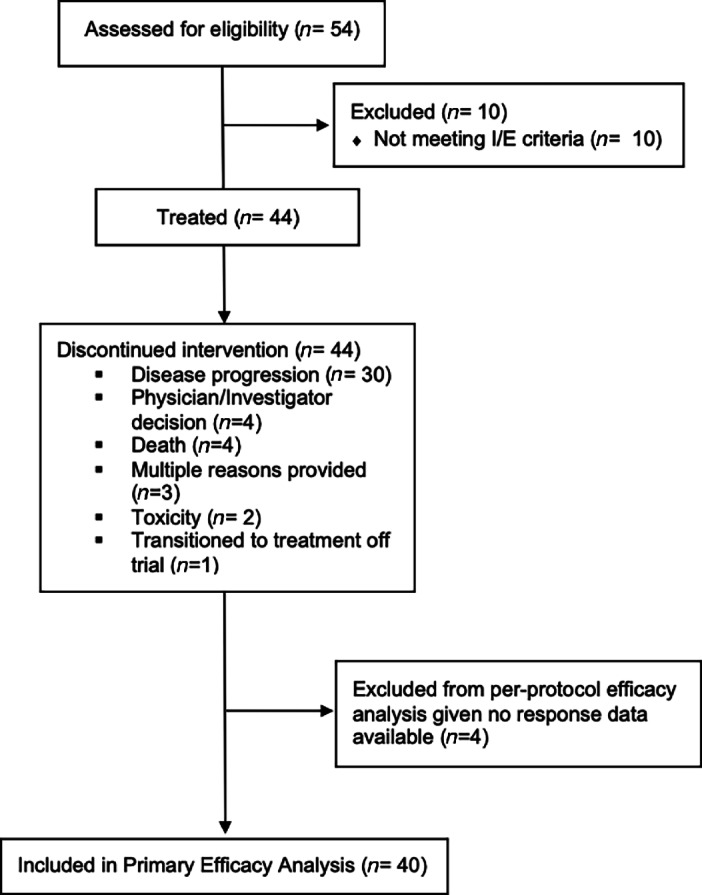
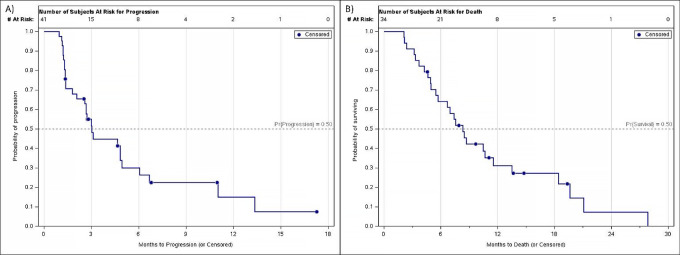
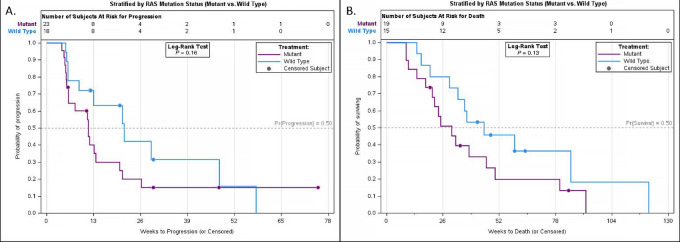
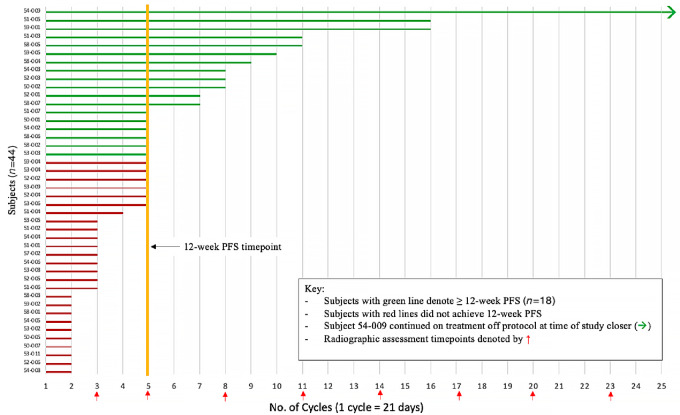
Purpose: Multi-tyrosine kinase inhibitors (TKI) have shown clinical activity in patients with metastatic colorectal cancer. Cabozantinib, a multi-TKI, exhibited potent antitumor activity superior to regorafenib in preclinical colorectal cancer patient-derived tumor xenograft models. This phase II study aimed to investigate cabozantinib, a multi-TKI, in patients with refractory, metastatic colorectal cancer (mCRC). Experimental Design: A nonrandomized, two-stage, phase II clinical trial evaluating 12-week progression-free survival (PFS) was conducted in eight cancer centers across the United States between May 2018 and July 2020. Results: A total of 44 patients were enrolled between May 2018 and May 2019, 40 of which were response evaluable. Of the total 769 reported adverse events (AE), 93 (12%) were ≥ grade 3. Five grade 5 AEs were reported of which four were unrelated to study drug and one was reported as possibly related due to bowel perforation. Eighteen patients (45%) achieved 12-week PFS with stable disease or better (confidence interval, 0.29–0.62; P < 0.001). One patient (3%) had a partial response, and 27 other patients achieved stable disease as best response per RECISTv1.1. Median PFS was 3.0 months, and median overall survival was 8.3 months. Of the 18 patients who achieved 12-week PFS, 12 had left-sided primary tumors, 11 were RAS wild type, 11 were PIK3CA wild type, and 6 had previous regorafenib therapy. The 12-week PFS rate was higher in RAS wild-type tumors compared with RAS mutant tumors (0.61 vs. 0.32; P = 0.11). Conclusions: This phase II study demonstrated clinical activity of cabozantinib in heavily pretreated, patients with refractory mCRC, and supports further investigation. Significance: Targeting angiogenesis through VEGF axis blockade provides incremental survival benefit in patients with mCRC. The hepatocyte growth factor/MET signal transduction pathway has been observed as a mechanism for acquired resistance. Dual inhibition of VEGF plus MET is an attractive therapeutic strategy. This phase II trial demonstrated clinical activity with cabozantinib, a multi-TKI targeting VEGFR2 and MET, in patients with refractory, mCRC.
Overview
The claims and statistics of this paper haven’t been checked yet.
Free: it reads the open-access text and checks the first 5 claims that cite a source we can check. Create a free account to check every claim.
Integrity signals
Registry
Cites
Statistics
Figures
Verification
Claims the paper makes
The claims and statistics of this paper haven’t been checked yet.
Free: it reads the open-access text and checks the first 5 claims that cite a source we can check. Create a free account to check every claim.
Claims other papers make about this one
Each is checked against this paper’s own text: does it say what the citing paper says it does?
In the citing paper
“The combination of anti-MET therapy using a multi-tyrosine kinase inhibitor cabozantinib [51] or tepotinib [52] with anti-EGFR therapy may be effective in patients with acquired resistance to anti-EGFR therapy through MET amplification [53] (Figure 1).”
From Recent Advances in Therapeutic Strategies to Improve Colorectal Cancer Treatment (2024) · cites this paper as [51]
Self-check
Percentages, sums and reported differences re-computed from the paper’s own numbers.
The self-check needs the paper’s full text.
Citations
Cites
Bevacizumab plus Irinotecan, Fluorouracil, and Leucovorin for Metastatic Colorectal Cancer
Hurwitz, H., Fehrenbacher, L., Novotny, W., Cartwright, T., Hainsworth, J., Heim, W., Berlin, J., Baron, A., Griffing, S., Holmgren, E., et al. (2004) · New England Journal of Medicine · doi:10.1056/nejmoa032691 · Cited by 10,968 · cited 1×
“While antiangiogenics have demonstrated incremental improvement in survival benefit, resistance to angiogenic inhibition uniformly develops over months in patients with mCRC (12, 13).”
BackgroundColorectal cancer statistics, 2020
Siegel, R. L., Miller, K. D., Goding Sauer, A., Fedewa, S. A., Butterly, L. F., Anderson, J. C., Cercek, A., Smith, R. A., & Jemal, A. (2020) · CA: A Cancer Journal for Clinicians · doi:10.3322/caac.21601 · Cited by 4,880
Wild-Type KRAS Is Required for Panitumumab Efficacy in Patients With Metastatic Colorectal Cancer
Amado, R. G., Wolf, M., Peeters, M., Van Cutsem, E., Siena, S., Freeman, D. J., Juan, T., Sikorski, R., Suggs, S., Radinsky, R., et al. (2008) · Journal of Clinical Oncology · doi:10.1200/jco.2007.14.7116 · Cited by 3,207
Pembrolizumab in Microsatellite-Instability-High Advanced Colorectal Cancer
André, T., Shiu, K.-K., Kim, T. W., Jensen, B. V., Jensen, L. H., Punt, C., Smith, D., Garcia-Carbonero, R., Benavides, M., Gibbs, P., et al. (2020) · New England Journal of Medicine · doi:10.1056/nejmoa2017699 · Cited by 3,099 · cited 1×
“, PD-1, nivolumab, pembrolizumab; and CTLA-4, ipilimumab) have also been FDA approved for use as first-line agent for microsatellite instable (MSI) tumor types (4, 5).”
BackgroundGrothey, A., Cutsem, E. V., Sobrero, A., Siena, S., Falcone, A., Ychou, M., Humblet, Y., Bouché, O., Mineur, L., Barone, C., et al. (2013) · The Lancet · doi:10.1016/s0140-6736(12)61900-x · Cited by 2,895 · cited 1×
“4 months over best supportive care and treatment resistance is inevitable (9, 10).”
BackgroundCabozantinib in Patients with Advanced and Progressing Hepatocellular Carcinoma
Abou-Alfa, G. K., Meyer, T., Cheng, A.-L., El-Khoueiry, A. B., Rimassa, L., Ryoo, B.-Y., Cicin, I., Merle, P., Chen, Y., Park, J.-W., et al. (2018) · New England Journal of Medicine · doi:10.1056/nejmoa1717002 · Cited by 2,344
Panitumumab–FOLFOX4 Treatment and RAS Mutations in Colorectal Cancer
Douillard, J.-Y., Oliner, K. S., Siena, S., Tabernero, J., Burkes, R., Barugel, M., Humblet, Y., Bodoky, G., Cunningham, D., Jassem, J., et al. (2013) · New England Journal of Medicine · doi:10.1056/nejmoa1305275 · Cited by 2,263
Nivolumab plus Cabozantinib versus Sunitinib for Advanced Renal-Cell Carcinoma
Choueiri, T. K., Powles, T., Burotto, M., Escudier, B., Bourlon, M. T., Zurawski, B., Oyervides Juárez, V. M., Hsieh, J. J., Basso, U., Shah, A. Y., et al. (2021) · New England Journal of Medicine · doi:10.1056/nejmoa2026982 · Cited by 1,791
Heinemann, V., von Weikersthal, L. F., Decker, T., Kiani, A., Vehling-Kaiser, U., Al-Batran, S.-E., Heintges, T., Lerchenmüller, C., Kahl, C., Seipelt, G., et al. (2014) · The Lancet Oncology · doi:10.1016/s1470-2045(14)70330-4 · Cited by 1,740
KRAS G12C Inhibition with Sotorasib in Advanced Solid Tumors
Hong, D. S., Fakih, M. G., Strickler, J. H., Desai, J., Durm, G. A., Shapiro, G. I., Falchook, G. S., Price, T. J., Sacher, A., Denlinger, C. S., et al. (2020) · New England Journal of Medicine · doi:10.1056/nejmoa1917239 · Cited by 1,733 · cited 1×
“Recently, studies have also shown potential for targeted inhibitors eliciting clinical responses in KRASG12C-mutant colorectal cancer (7, 8).”
BackgroundEncorafenib, Binimetinib, and Cetuximab in BRAF V600E–Mutated Colorectal Cancer
Kopetz, S., Grothey, A., Yaeger, R., Van Cutsem, E., Desai, J., Yoshino, T., Wasan, H., Ciardiello, F., Loupakis, F., Hong, Y. S., et al. (2019) · New England Journal of Medicine · doi:10.1056/nejmoa1908075 · Cited by 1,491 · cited 1×
“On the basis of the phase III BEACON trial, encorafenib, an oral small-molecule BRAF inhibitor, plus cetuximab has been FDA approved for treatment of subsequent line, BRAF-mutant mCRC (3).”
BackgroundRandomized Trial of TAS-102 for Refractory Metastatic Colorectal Cancer
Mayer, R. J., Van Cutsem, E., Falcone, A., Yoshino, T., Garcia-Carbonero, R., Mizunuma, N., Yamazaki, K., Shimada, Y., Tabernero, J., Komatsu, Y., et al. (2015) · New England Journal of Medicine · doi:10.1056/nejmoa1414325 · Cited by 1,431 · cited 8×
“1194 Cancer Res Commun; 2(10) October 2022 https://doi.”
BackgroundTargeting MET in cancer: rationale and progress
Gherardi, E., Birchmeier, W., Birchmeier, C., & Woude, G. V. (2012) · Nature Reviews Cancer · doi:10.1038/nrc3205 · Cited by 1,423
Van Cutsem, E., Tabernero, J., Lakomy, R., Prenen, H., Prausová, J., Macarulla, T., Ruff, P., van Hazel, G. A., Moiseyenko, V., Ferry, D., et al. (2012) · Journal of Clinical Oncology · doi:10.1200/jco.2012.42.8201 · Cited by 1,402 · cited 1×
“While antiangiogenics have demonstrated incremental improvement in survival benefit, resistance to angiogenic inhibition uniformly develops over months in patients with mCRC (12, 13).”
BackgroundCabozantinib versus Everolimus in Advanced Renal-Cell Carcinoma
Choueiri, T. K., Escudier, B., Powles, T., Mainwaring, P. N., Rini, B. I., Donskov, F., Hammers, H., Hutson, T. E., Lee, J.-L., Peltola, K., et al. (2015) · New England Journal of Medicine · doi:10.1056/nejmoa1510016 · Cited by 1,239 · cited 1×
“Cabozantinib was administered at a starting dose of 60 mg orally daily based on previously established safety and efficacy data in other tumor types (25, 26).”
MethodCabozantinib in Progressive Medullary Thyroid Cancer
Elisei, R., Schlumberger, M. J., Müller, S. P., Schöffski, P., Brose, M. S., Shah, M. H., Licitra, L., Jarzab, B., Medvedev, V., Kreissl, M. C., et al. (2013) · Journal of Clinical Oncology · doi:10.1200/jco.2012.48.4659 · Cited by 1,217
Fukuoka, S., Hara, H., Takahashi, N., Kojima, T., Kawazoe, A., Asayama, M., Yoshii, T., Kotani, D., Tamura, H., Mikamoto, Y., et al. (2020) · Journal of Clinical Oncology · doi:10.1200/jco.19.03296 · Cited by 890
Lanman, R. B., Mortimer, S. A., Zill, O. A., Sebisanovic, D., Lopez, R., Blau, S., Collisson, E. A., Divers, S. G., Hoon, D. S. B., Kopetz, E. S., et al. (2015) · PLoS ONE · doi:10.1371/journal.pone.0140712 · Cited by 695 · cited 1×
“While there are several blood-based assays commercially available to molecularly characterize tumors and monitor response via ctDNA, data on how to utilize these technologies as a predictive tool are limited (37).”
BackgroundAmplification of the MET Receptor Drives Resistance to Anti-EGFR Therapies in Colorectal Cancer
Bardelli, A., Corso, S., Bertotti, A., Hobor, S., Valtorta, E., Siravegna, G., Sartore-Bianchi, A., Scala, E., Cassingena, A., Zecchin, D., et al. (2013) · Cancer Discovery · doi:10.1158/2159-8290.cd-12-0558 · Cited by 657
Douillard, J. Y., Siena, S., Cassidy, J., Tabernero, J., Burkes, R., Barugel, M., Humblet, Y., Bodoky, G., Cunningham, D., Jassem, J., et al. (2014) · Annals of Oncology · doi:10.1093/annonc/mdu141 · Cited by 606
Myers, K. V., Amend, S. R., & Pienta, K. J. (2019) · Molecular Cancer · doi:10.1186/s12943-019-1022-2 · Cited by 470 · cited 1×
“The Tyro, AXL, and MerTK (TAM) receptor family regulate tumor-associated macrophages that elicit an immunosuppressive tumor microenvironment, and blockade of TAM receptors via cabozantinib may invigorate antitumor immune activation (47, 48).”
BackgroundParikh, A. R., Van Seventer, E. E., Siravegna, G., Hartwig, A. V., Jaimovich, A., He, Y., Kanter, K., Fish, M. G., Fosbenner, K. D., Miao, B., et al. (2021) · Clinical Cancer Research · doi:10.1158/1078-0432.ccr-21-0410 · Cited by 380
Dasari, A., Morris, V. K., Allegra, C. J., Atreya, C., Benson, A. B., Boland, P., Chung, K., Copur, M. S., Corcoran, R. B., Deming, D. A., et al. (2020) · Nature Reviews Clinical Oncology · doi:10.1038/s41571-020-0392-0 · Cited by 372
Self-citationHo, W. J., Zhu, Q., Durham, J., Popovic, A., Xavier, S., Leatherman, J., Mohan, A., Mo, G., Zhang, S., Gross, N., et al. (2021) · Nature Cancer · doi:10.1038/s43018-021-00234-4 · Cited by 360
Ou, S.-H. I., Jänne, P. A., Leal, T. A., Rybkin, I. I., Sabari, J. K., Barve, M. A., Bazhenova, L., Johnson, M. L., Velastegui, K. L., Cilliers, C., et al. (2022) · Journal of Clinical Oncology · doi:10.1200/jco.21.02752 · Cited by 322 · cited 1×
“Recently, studies have also shown potential for targeted inhibitors eliciting clinical responses in KRASG12C-mutant colorectal cancer (7, 8).”
BackgroundThe role of VEGF in the regulation of physiological and pathological angiogenesis
Ferrara, N. (2005) · Mechanisms of Angiogenesis · doi:10.1007/3-7643-7311-3_15 · Cited by 312 · cited 2×
“Specifically, VEGF ligand binding to VEGFR2 has been shown as a driver of tumor neovascularization (11).”
BackgroundGenomic Landscape of Cell-Free DNA in Patients with Colorectal Cancer
Strickler, J. H., Loree, J. M., Ahronian, L. G., Parikh, A. R., Niedzwiecki, D., Pereira, A. A. L., McKinney, M., Korn, W. M., Atreya, C. E., Banks, K. C., et al. (2018) · Cancer Discovery · doi:10.1158/2159-8290.cd-17-1009 · Cited by 295 · cited 1×
“quantify biomarkers in patients with heavily pretreated mCRC continues to evolvewith the hope of offsetting the challenges of tumor heterogeneity, comorbidity, and costs inherent to tissue biopsies (33).”
BackgroundGarlan, F., Laurent-Puig, P., Sefrioui, D., Siauve, N., Didelot, A., Sarafan-Vasseur, N., Michel, P., Perkins, G., Mulot, C., Blons, H., et al. (2017) · Clinical Cancer Research · doi:10.1158/1078-0432.ccr-16-3155 · Cited by 250 · cited 1×
“Although a limitation of our ctDNA analysis include small sample size, we believe our results are hypothesis generating as they are consistent with previous reports showing that ctDNA may offer early response analysis of treatment (29).”
ResultSmith, M., De Bono, J., Sternberg, C., Le Moulec, S., Oudard, S., De Giorgi, U., Krainer, M., Bergman, A., Hoelzer, W., De Wit, R., et al. (2016) · Journal of Clinical Oncology · doi:10.1200/jco.2015.65.5597 · Cited by 249 · cited 1×
“Cabozantinib was administered at a starting dose of 60 mg orally daily based on previously established safety and efficacy data in other tumor types (25, 26).”
MethodTakeuchi, H., Bilchik, A. J., Saha, S., Turner, R. R., Wiese, D., Tanaka, M., Kuo, C. T., Wang, H. J., & Hoon, D. S. �. (2003) · PubMed · Cited by 232
Outcomes and endpoints in trials of cancer treatment: the past, present, and future
Wilson, M. K., Karakasis, K., & Oza, A. M. (2015) · The Lancet Oncology · doi:10.1016/s1470-2045(14)70375-4 · Cited by 219 · cited 1×
“Also, the benefit of a surrogate endpoint of PFS rate at 12 weeks may not translate to an improved OS benefit, which is the gold standard for assessing efficacy of cancer therapeutics (56).”
BackgroundPietrantonio, F., Vernieri, C., Siravegna, G., Mennitto, A., Berenato, R., Perrone, F., Gloghini, A., Tamborini, E., Lonardi, S., Morano, F., et al. (2017) · Clinical Cancer Research · doi:10.1158/1078-0432.ccr-16-1863 · Cited by 182
Bergerot, P., Lamb, P., Wang, E., & Pal, S. K. (2019) · Molecular Cancer Therapeutics · doi:10.1158/1535-7163.mct-18-1399 · Cited by 124
Yau, T., Zagonel, V., Santoro, A., Acosta-Rivera, M., Choo, S. P., Matilla, A., He, A. R., Cubillo Gracián, A., El-Khoueiry, A. B., Sangro, B., et al. (2020) · Journal of Clinical Oncology · doi:10.1200/jco.2020.38.4_suppl.478 · Cited by 110
Holokai, L., Chakrabarti, J., Lundy, J., Croagh, D., Adhikary, P., Richards, S. S., Woodson, C., Steele, N., Kuester, R., Scott, A., et al. (2020) · Cancers · doi:10.3390/cancers12123816 · Cited by 110 · cited 1×
“Immunomodulatory effects of cabozantinib via downregulation of myeloidderived suppressor cells and regulatory T cells have also been reported previously (45, 46).”
BackgroundSelf-citationPrognostic value of c-Met in colorectal cancer: A meta-analysis
Liu, Y. (2015) · World Journal of Gastroenterology · doi:10.3748/wjg.v21.i12.3706 · Cited by 83 · cited 1×
“Previous reports have observed cMET overexpression in 30%–75% and MET amplification in 3%–4% of patients with mCRC analyzed by IHC and PCR, respectively (18).”
BackgroundRaghav, K., Morris, V., Tang, C., Morelli, P., Amin, H. M., Chen, K., Manyam, G. C., Broom, B., Overman, M. J., Shaw, K., et al. (2016) · Oncotarget · doi:10.18632/oncotarget.10559 · Cited by 77
Schöffski, P., Mir, O., Kasper, B., Pápai, Z., Blay, J., Italiano, A., Benson, C., Kopečková, K., Ali, N., Dileo, P., et al. (2020) · European Journal of Cancer · doi:10.1016/j.ejca.2020.04.021 · Cited by 72
Song, E., Tai, W., Messersmith, W. A., Bagby, S. M., Purkey, A., Quackenbush, K. S., Pitts, T. M., Wang, G., Blatchford, P. J., Yahn, R., et al. (2014) · International Journal of Cancer · doi:10.1002/ijc.29225 · Cited by 65 · cited 1×
“Preclinically, cabozantinib has shown impressive antitumor activity in PDX mouse models with tumor growth inhibition in 80% of treated colorectal explants (24).”
BackgroundSelf-citationde Oliveira, A. T. T., Matos, D., Logullo, Â. F., da Silva, S. R. M., Neto, R. A., Longatto‐Filho, A., & Saad, S. S. (2009) · PubMed · Cited by 63
Bendell, J. C., Hochster, H., Hart, L. L., Firdaus, I., Mace, J. R., McFarlane, J. J., Kozloff, M., Catenacci, D., Hsu, J. J., Hack, S. P., et al. (2017) · The Oncologist · doi:10.1634/theoncologist.2016-0223 · Cited by 63 · cited 1×
“Despite data showing the importance of aberrant MET expression in acquired therapeutic resistance in mCRC, the predictive value of MET expression by IHC has not been proven (36).”
BackgroundLenz, H., Lonardi, S., Zagonel, V., Cutsem, E. V., Limón, M. L., Wong, K. Y. M., Hendlisz, A., Aglietta, M., Alfonso, P. G., Neyns, B., et al. (2020) · Journal of Clinical Oncology · doi:10.1200/jco.2020.38.4_suppl.11 · Cited by 59 · cited 1×
“, PD-1, nivolumab, pembrolizumab; and CTLA-4, ipilimumab) have also been FDA approved for use as first-line agent for microsatellite instable (MSI) tumor types (4, 5).”
BackgroundDasari, A. N., Sobrero, A. F., Yao, J. C., Yoshino, T., Schelman, W. R., Yang, Z., Chien, C., Kania, M. K., Tabernero, J. M., & Eng, C. (2021) · Future Oncology · doi:10.2217/fon-2021-0202 · Cited by 56
Rimassa, L., Bozzarelli, S., Pietrantonio, F., Cordio, S., Lonardi, S., Toppo, L., Zaniboni, A., Bordonaro, R., Di Bartolomeo, M., Tomasello, G., et al. (2019) · Clinical Colorectal Cancer · doi:10.1016/j.clcc.2019.02.004 · Cited by 50
Scott, A. J., Arcaroli, J. J., Bagby, S. M., Yahn, R., Huber, K. M., Serkova, N. J., Nguyen, A., Kim, J., Thorburn, A., Vogel, J., et al. (2018) · Molecular Cancer Therapeutics · doi:10.1158/1535-7163.mct-17-0131 · Cited by 48 · cited 2×
“Targeting the cMET/HGF axis may restore efficacy of the antitumor effects of antiangiogenesis, which has been previously reported by our group investigating cabozantinib (XL184), amulti-tyrosine kinase inhibitor (TKI) targeting VEGF and MET, in patient-derived xenograft (PDX) mouse models (19).”
BackgroundSelf-citationEffect of cabozantinib on immunosuppressive subsets in metastatic urothelial carcinoma.
Apolo, A. B., Tomita, Y., Lee, M.-J., Lee, S., Frosch, A., Steinberg, S. M., Gulley, J. L., Schlom, J., Bottaro, D. P., & Trepel, J. B. (2014) · Journal of Clinical Oncology · doi:10.1200/jco.2014.32.15_suppl.4501 · Cited by 46 · cited 1×
“Immunomodulatory effects of cabozantinib via downregulation of myeloidderived suppressor cells and regulatory T cells have also been reported previously (45, 46).”
BackgroundWang, F., Yuan, X., Jia, J., Bi, X., Zhou, Z., Zhou, Q., Li, X., Luo, C., Deng, M., Yi, L., et al. (2020) · Scientific Reports · doi:10.1038/s41598-020-62961-5 · Cited by 34
Predictive Biomarkers in Metastatic Colorectal Cancer: A Systematic Review
Bañobre, J. R., Kandimalla, R., & Goel, A. (2019) · JCO Precision Oncology · doi:10.1200/po.18.00260 · Cited by 29 · cited 1×
“biomarkers for treatment of mCRC also includeHER/Neu overexpression and NTRK fusions (6).”
BackgroundCabozantinib and Panitumumab for RAS Wild-Type Metastatic Colorectal Cancer
Strickler, J. H., Rushing, C. N., Uronis, H. E., Morse, M. A., Niedzwiecki, D., Blobe, G. C., Moyer, A. N., Bolch, E. K., Webb, R., Haley, S. T., et al. (2021) · The Oncologist · doi:10.1002/onco.13678 · Cited by 25 · cited 1×
“For example, in a phase Ib study of 24 patients, evaluation of MET amplification in cfDNA as a predictive biomarker in patients with MET-amplified mCRC undergoing cabozantinib plus panitumuab showed response in only 1 of 5 patients (34, 35).”
BackgroundJia, J., Morse, M. A., Nagy, R. J., Lanman, R. B., & Strickler, J. H. (2018) · Frontiers in Oncology · doi:10.3389/fonc.2018.00305 · Cited by 17 · cited 1×
“For example, in a phase Ib study of 24 patients, evaluation of MET amplification in cfDNA as a predictive biomarker in patients with MET-amplified mCRC undergoing cabozantinib plus panitumuab showed response in only 1 of 5 patients (34, 35).”
BackgroundHara, T., Kimura, A., Miyazaki, T., Tanaka, H., Morimoto, M., Nakai, K., & Soeda, J. (2020) · Biochemistry and Biophysics Reports · doi:10.1016/j.bbrep.2020.100726 · Cited by 17 · cited 1×
“The Tyro, AXL, and MerTK (TAM) receptor family regulate tumor-associated macrophages that elicit an immunosuppressive tumor microenvironment, and blockade of TAM receptors via cabozantinib may invigorate antitumor immune activation (47, 48).”
BackgroundSaeed, A., Phadnis, M. A., Park, R., Sun, W., Al-Rajabi, R. M. T., Baranda, J. C., Williamson, S. K., Collins, Z. S., Firth-Braun, J., Saeed, A., et al. (2020) · Journal of Clinical Oncology · doi:10.1200/jco.2020.38.15_suppl.4563 · Cited by 16
Hara, H., Fukuoka, S., Takahashi, N., Kojima, T., Kawazoe, A., Asayama, M., Yoshii, T., Kotani, D., Tamura, H., Mikamoto, Y., et al. (2019) · Annals of Oncology · doi:10.1093/annonc/mdz157.006 · Cited by 9 · cited 1×
“The Japanese phase Ib REGONIVO trial investigating regorafenib plus nivolumab demonstrated an impressive ORR of 29% in patients with refractory, mismatch repair proficient mCRC (55).”
BackgroundDasari, A. N., Yao, J. C., Sobrero, A. F., Yoshino, T., Schelman, W. R., Nanda, S., Chien, C., Pu, S.-F., Kania, M. K., Tabernero, J. M., et al. (2021) · Journal of Clinical Oncology · doi:10.1200/jco.2021.39.3_suppl.tps154 · Cited by 4
Morris, V. K., Raghav, K. P. S., Dasari, A. N., Overman, M. J., Kee, B. K., Johnson, B., Parseghian, C. M., Shen, J. P., Huey, R. W., Raymond, V. M., et al. (2021) · Journal of Clinical Oncology · doi:10.1200/jco.2021.39.3_suppl.119 · Cited by 3
Lang, J., Leal, A. D., Hartmann, S. J., Marín‐Jiménez, J. A., Shulman, J., Capasso, A., Bagby, S. M., Yacob, B. W., Blanchford, P. J., Lieu, C. H., et al. (2020) · Cancer Immunology Research · doi:10.1158/2326-6074.tumimm19-a109 · Cited by 1
Self-citation
Research works printed but not linked: 1
- Choueiri TK, Escudier B, Powles T, Mainwaring PN, Rini BI, Donskov F,. Cabozantinib versus everolimus in advanced renal-cell carcinoma. N Engl J Med 2015; 373: 1814– 23. 26406150 PMC5024539 · DOI · Paper page
Cited by
Recent Advances in Therapeutic Strategies to Improve Colorectal Cancer Treatment
Gmeiner, W. H. (2024) · Cancers · doi:10.3390/cancers16051029 · Cited by 78
“The combination of anti-MET therapy using a multi-tyrosine kinase inhibitor cabozantinib [51] or tepotinib [52] with anti-EGFR therapy may be effective in patients with acquired resistance to anti-EGFR therapy through MET amplification [53] (Figure 1).”
MethodCabozantinib for the treatment of solid tumors: a systematic review
Maroto, P., Porta, C., Capdevila, J., Apolo, A. B., Viteri, S., Rodríguez‐Antona, C., Martín, L., & Castellano, D. (2022) · Therapeutic Advances in Medical Oncology · doi:10.1177/17588359221107112 · Cited by 66
Saeed, A., Park, R., Pathak, H. B., Al-Bzour, A. N., Dai, J., Phadnis, M. A., Al-Rajabi, R. M. T., Kasi, A., Baranda, J. C., Sun, W., et al. (2024) · Nature Communications · doi:10.1038/s41467-024-45960-2 · Cited by 62
“In a phase II clinical trial, cabozantinib has demonstrated single-agent disease-stabilizing activity in patients with chemore-fractory pMMR/MSS metastatic CRC 13 .”
Saeed, A., Park, R., Dai, J., Al-Rajabi, R. M. T., Kasi, A., Baranda, J. C., Williamson, S. K., Saeed, A., Ripp, J., Collins, Z. S., et al. (2023) · Cell Reports Medicine · doi:10.1016/j.xcrm.2023.100916 · Cited by 38
Evolving roles of MET as a therapeutic target in NSCLC and beyond
Lee, J. B., Shim, J. S. G., & Cho, B. C. (2025) · Nature Reviews Clinical Oncology · doi:10.1038/s41571-025-01051-9 · Cited by 44
“However, cabozantinib, a type II TKI targeting MET as well as several other RTKs, as monotherapy 122 or in combination with durvalumab 116 was associated with ORRs of only 3–8% and median PFS durations of 3.0–3.7 months in patients with prior treatment with anti-EGFR antibody.”
Influential
Metadata
- Authors
- Scott, A. J., Basu Mallick, A., Dotan, E., Cohen, S. J., Gold, P. J., Hochster, H. S., Subramaniam, S., Barzi, A., Watts, G. S., Blatchford, P. J., & Messersmith, W. A.
- Affiliations
- University of Arizona Cancer Center (US)
- 2Sidney Kimmel Cancer Center, Thomas Jefferson University, Philadelphia, Pennsylvania.
- Fox Chase Cancer Center (US)
- Thomas Jefferson University Hospital (US)
- 5Swedish Cancer Institute, Seattle, Washington.
- 6Rutgers Cancer Institute of New Jersey, New Brunswick, New Jersey.
- City Of Hope National Medical Center (US)
- Colorado School of Public Health (US)
- University of Colorado Cancer Center (US)
- Corresponding author
- Scott, Aaron J.
- ORCID
- Venue
- Cancer Research Communications
- Published
- 2022-10-14
- Volume
- 2
- Issue
- 10
- Pages
- 1188-1196
- ISSN
- 2767-9764 (ISSN-L)
- PMC
- PMC10035393
- OpenAlex
- W4295865084
- Cited by
- 18
- References
- 58
- Citations by year
- 2026: 3 · 2025: 4 · 2024: 7 · 2023: 1 · 2022: 2
- FWCI
- 1.46
- Type
- journal article
- Language
- en
- Open access
- gold
- doi.org
- Licence
- Locations
- Cancer Research Communications (publishedVersion, cc-by)
- PubMed Central (publishedVersion, cc-by)
- PubMed (publishedVersion)
- Funders
- Exelixis
- Topics
- Health Sciences › Medicine › Oncology › Colorectal Cancer Treatments and Studies
- Health Sciences › Medicine › Oncology › Colorectal Cancer Surgical Treatments
- Health Sciences › Medicine › Pulmonary and Respiratory Medicine › Lung Cancer Treatments and Mutations
- Keywords
- cabozantinib, metastatic colorectal cancer, refractory disease, tyrosine kinase inhibitors, RAS mutations, PIK3CA mutation, progression-free survival, regorafenib, acquired resistance, adverse events, intestinal perforation
- MeSH terms
- Anilides, Humans, Phenylurea Compounds, Prospective Studies, Pyridines, Colorectal Neoplasms, Vascular Endothelial Growth Factor A
About these checks
Registry, retraction, Cites and statistics results are computed, not judged, with one exception: a printed reference that no index lists is read once by a model before it counts as a citation error. Claims are extracted by a model and kept only when their quote appears verbatim in the text; each cited source is then checked, with a model’s help, for whether it says what the claim relies on. Those verdicts can be wrong — read the claim’s quote and the cited source before relying on one.
Statistics and arithmetic are recomputed, not judged.
Confidence bands are shown only for fields calibrated on our annotated test set. None is calibrated yet, so no band is shown.
What counts as a claim ›How we measure confidence ›How we check this ›
Are you an author, or do you see a problem with this page? Request a review
Data sources
Bibliographic data: Semantic Scholar, OpenAlex, Crossref.
Contains information from the Semantic Scholar Academic Graph Datasets, made available under the ODC Attribution License (ODC-BY 1.0).
Semantic Scholar’s data is described in: Kinney, R., et al. (2023). The Semantic Scholar Open Data Platform. arXiv:2301.10140.
