

The DOI matches its Crossref record; 32 of the 32 references it cites were found in a registry or an index.
Association of Inpatient Use of Angiotensin-Converting Enzyme Inhibitors and Angiotensin II Receptor Blockers With Mortality Among Patients With Hypertension Hospitalized With COVID-19
Open accessAbstract
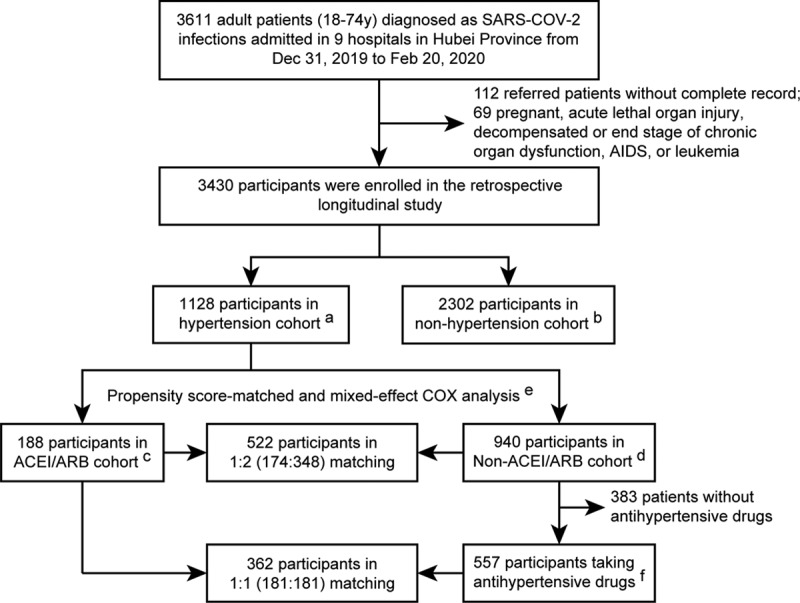
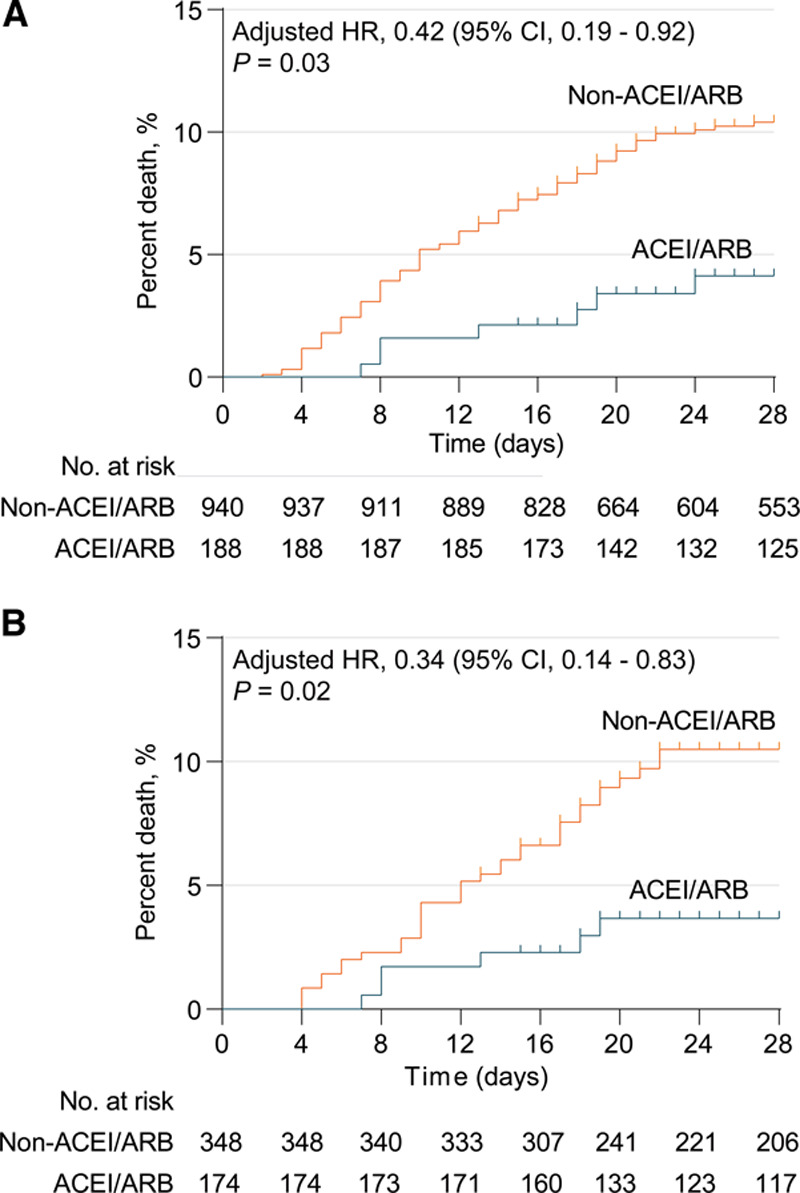
Rationale: Use of ACEIs (angiotensin-converting enzyme inhibitors) and ARBs (angiotensin II receptor blockers) is a major concern for clinicians treating coronavirus disease 2019 (COVID-19) in patients with hypertension. Objective: To determine the association between in-hospital use of ACEI/ARB and all-cause mortality in patients with hypertension and hospitalized due to COVID-19. Methods and Results: This retrospective, multi-center study included 1128 adult patients with hypertension diagnosed with COVID-19, including 188 taking ACEI/ARB (ACEI/ARB group; median age 64 [interquartile range, 55–68] years; 53.2% men) and 940 without using ACEI/ARB (non-ACEI/ARB group; median age 64 [interquartile range 57–69]; 53.5% men), who were admitted to 9 hospitals in Hubei Province, China from December 31, 2019 to February 20, 2020. In mixed-effect Cox model treating site as a random effect, after adjusting for age, gender, comorbidities, and in-hospital medications, the detected risk for all-cause mortality was lower in the ACEI/ARB group versus the non-ACEI/ARB group (adjusted hazard ratio, 0.42 [95% CI, 0.19–0.92]; P =0.03). In a propensity score-matched analysis followed by adjusting imbalanced variables in mixed-effect Cox model, the results consistently demonstrated lower risk of COVID-19 mortality in patients who received ACEI/ARB versus those who did not receive ACEI/ARB (adjusted hazard ratio, 0.37 [95% CI, 0.15–0.89]; P =0.03). Further subgroup propensity score-matched analysis indicated that, compared with use of other antihypertensive drugs, ACEI/ARB was also associated with decreased mortality (adjusted hazard ratio, 0.30 [95% CI, 0.12–0.70]; P =0.01) in patients with COVID-19 and coexisting hypertension. Conclusions: Among hospitalized patients with COVID-19 and coexisting hypertension, inpatient use of ACEI/ARB was associated with lower risk of all-cause mortality compared with ACEI/ARB nonusers. While study interpretation needs to consider the potential for residual confounders, it is unlikely that in-hospital use of ACEI/ARB was associated with an increased mortality risk.
Overview
The claims and statistics of this paper haven’t been checked yet.
Run the check — free, no account needed. It reads the open-access text and checks the sources it cites.
Integrity signals
Registry
Cites
Statistics
Figures
Verification
Claims the paper makes
The claims and statistics of this paper haven’t been checked yet.
Run the check — free, no account needed. It reads the open-access text and checks the sources it cites.
Claims other papers make about this one
Each is checked against this paper’s own text: does it say what the citing paper says it does?
The source backs part of the claim, not all of it — or backs it for a different population, condition or comparison.
In the citing paper
“Consistent with animal models, it was reported that AngII–AT1R axis inhibitors may be beneficial for COVID-19 patients (360–363) to decrease serum IL-6 levels (360).”
From IL-6 in inflammation, autoimmunity and cancer (2021) · cites this paper as [361]
Experimental — accuracy not yet measured
Self-check
Percentages, sums and reported differences re-computed from the paper’s own numbers.
The self-check needs the paper’s full text.
Citations
Cites
Clinical characteristics of coronavirus disease 2019 in China
Guan, W.-J., Ni, Z.-Y., Hu, Y., Liang, W.-H., Ou, C.-Q., He, J.-X., Liu, L., Shan, H., Lei, C.-L., Hui, D. S. C., et al. (2020) · New England Journal of Medicine · doi:10.1056/nejmoa2002032 · Cited by 30,246
Self-citationZhou, F., Yu, T., Du, R., Fan, G., Liu, Y., Liu, Z., Xiang, J., Wang, Y., Song, B., Gu, X., et al. (2020) · The Lancet · doi:10.1016/s0140-6736(20)30566-3 · Cited by 27,263
Self-citationWang, D., Hu, B., Hu, C., Zhu, F., Liu, X., Zhang, J., Wang, B., Xiang, H., Cheng, Z., Xiong, Y., et al. (2020) · JAMA · doi:10.1001/jama.2020.1585 · Cited by 20,148
Self-citationLa certeza de lo impredecible: Cultura Educación y Sociedad en tiempos de COVID19
Martínez González, M. (2020) · DSPACE System - Metalibrary (University of the Coast) · Cited by 18,463
A new coronavirus associated with human respiratory disease in China
Wu, F., Zhao, S., Yu, B., Chen, Y.-M., Wang, W., Song, Z.-G., Hu, Y., Tao, Z.-W., Tian, J.-H., Pei, Y.-Y., et al. (2020) · Nature · doi:10.1038/s41586-020-2008-3 · Cited by 11,688
Self-citationGorbalenya, A. E., Baker, S. C., Baric, R. S., de Groot, R. J., Drosten, C., Gulyaeva, A. A., Haagmans, B. L., Lauber, C., Leontovich, A. M., Neuman, B. W., et al. (2020) · Nature Microbiology · doi:10.1038/s41564-020-0695-z · Cited by 8,745
Sensitivity analysis in observational research: Introducing the E-value
VanderWeele, T. J., & Ding, P. (2017) · Annals of Internal Medicine · doi:10.7326/m16-2607 · Cited by 6,350
(2012) · Kidney International Supplements · doi:10.1038/kisup.2012.1 · Cited by 4,326
A Novel Paradigm for Heart Failure With Preserved Ejection Fraction
Paulus, W. J., & Tschöpe, C. (2013) · Journal of the American College of Cardiology · doi:10.1016/j.jacc.2013.02.092 · Cited by 3,564
A crucial role of angiotensin converting enzyme 2 (ACE2) in SARS coronavirus–induced lung injury
Kuba, K., Imai, Y., Rao, S., Gao, H., Guo, F., Guan, B., Huan, Y., Yang, P., Zhang, Y., Deng, W., et al. (2005) · Nature Medicine · doi:10.1038/nm1267 · Cited by 3,445
Self-citation
Cited by
Sorted by citations
Items 401–500 of 1,000
Christiansen, C. F., Pottegård, A., Heide‐Jørgensen, U., Bodilsen, J., Søgaard, O. S., Mæng, M., Vistisen, S. T., Schmidt, M., Lund, L. C., Reilev, M., et al. (2020) · Thorax · doi:10.1136/thoraxjnl-2020-215768 · Cited by 22
Bengtson, C. D., Montgomery, R. N., Nazir, U., Satterwhite, L. G., Kim, M. D., Bahr, N. C., Castro, M., Baumlin, N., & Salathe, M. A. (2021) · Frontiers in Medicine · doi:10.3389/fmed.2021.630209 · Cited by 20
Xu, W., Yang, Y., Zhu, J., Wu, S., Wang, J., Zhang, H., & Shao, X. (2022) · BMC Cardiovascular Disorders · doi:10.1186/s12872-022-02580-2 · Cited by 22
Braga, C. L., Silva-Aguiar, R. P., Battaglini, D., Peruchetti, D. B., Robba, C., Pelosi, P. P., Rocco, P. R. M., Caruso‐Neves, C., & Silva, P. L. (2020) · Pharmacology Research & Perspectives · doi:10.1002/prp2.623 · Cited by 22
PENGARUH KOMORBID HIPERTENSI TERHADAP SEVERITAS PASIEN YANG TERINFEKSI COVID 19
Gunawan, A., Prahasanti, K., & Utama, M. R. (2020) · JURNAL IMPLEMENTA HUSADA · doi:10.30596/jih.v1i2.4972 · Cited by 26
Vinci, R., Pedicino, D., Andreotti, F., Russo, G., d’Aiello, A., CRISTOFARO, R. D., Crea, F., & Liuzzo, G. (2020) · International Journal of Cardiology · doi:10.1016/j.ijcard.2020.11.016 · Cited by 22
Effects of ACEI and ARB on COVID-19 patients: A meta-analysis
Xue, Y., Sun, S., Cai, J., Zeng, L., Wang, S., Wang, S., Li, J., Sun, L., & Huo, J. (2020) · Journal of the Renin-Angiotensin-Aldosterone System · doi:10.1177/1470320320981321 · Cited by 22
Self-citationControversial Roles of the Renin Angiotensin System and Its Modulators During the COVID-19 Pandemic
Gressens, S. B., Lefthériotis, G., Dussaule, J., Flamant, M., Levy, B. I., & Vidal‐Petiot, E. (2021) · Frontiers in Physiology · doi:10.3389/fphys.2021.624052 · Cited by 22
Almutlaq, M., Alamro, A. A., Alroqi, F. J., & Barhoumi, T. (2021) · CJC Open · doi:10.1016/j.cjco.2021.04.004 · Cited by 24
Huh, K., Ji, W., Kang, M., Hong, J., Bae, G. H., Lee, R.-G., Na, Y., Choi, H., Gong, S. Y., & Jung, J. (2020) · medRxiv · doi:10.1101/2020.05.04.20089904 · Cited by 22
RAAS Inhibitors and Risk of Covid-19
Angeli, F., Verdecchia, P., & Reboldi, G. (2020) · New England Journal of Medicine · doi:10.1056/nejmc2030446 · Cited by 22
Hultström, M., von Seth, M., & Frithiof, R. (2020) · Journal of Hypertension · doi:10.1097/hjh.0000000000002531 · Cited by 19
Yahyavi, A., Hemmati, N., Derakhshan, P., Banivaheb, B., Behnagh, A. K., Tofighi, R., TehraniYazdi, A., & Kabir, A. (2020) · Internal and Emergency Medicine · doi:10.1007/s11739-020-02523-9 · Cited by 21
Rio, J. M., Piqueras‐Flores, J., de la Sierra, P. N.-S. M., Caamaño, M. N., Águila‐Gordo, D., Mateo-Gómez, C., Salas-Bravo, D., & Martínez, M. R. (2020) · Medicina Clínica (English Edition) · doi:10.1016/j.medcle.2020.07.013 · Cited by 23
Hakeam, H. A., Alsemari, M. A., Duhailib, Z. A., Ghonem, L., Alharbi, S., Mutairy, E. A., Sheraim, N. B., Alsalhi, M., Alhijji, A., AlQahtani, S. H., et al. (2020) · Journal of Cardiovascular Pharmacology and Therapeutics · doi:10.1177/1074248420976279 · Cited by 23
Lee, T., Cau, A., Cheng, M. P., Levin, A., Lee, T. C., Vinh, D. C., Lamontagne, F., Singer, J., Walley, K. R., Murthy, S., et al. (2021) · CJC Open · doi:10.1016/j.cjco.2021.03.001 · Cited by 21
Tse, G., Zhou, J., Lee, S., Wong, W. T., Li, X., Liu, T., Cao, Z., Zeng, D. D., Wai, A. K. C., Wong, I. C. K., et al. (2021) · Journal of Hypertension · doi:10.1097/hjh.0000000000002866 · Cited by 21
Risk Factors for COVID-19: Diabetes, Hypertension, and Obesity
Buscemi, S., Corleo, D., & Randazzo, C. (2021) · Advances in experimental medicine and biology · doi:10.1007/978-3-030-85113-2_7 · Cited by 24
Loader, J., Taylor, F., Lampa, E., & Sundström, J. (2022) · Journal of the American Heart Association · doi:10.1161/jaha.122.025289 · Cited by 21
Immune system changes in those with hypertension when infected with SARS-CoV-2
Su, S., Chen, R., Zhang, S., Shu, H., & Luo, J. (2022) · Cellular Immunology · doi:10.1016/j.cellimm.2022.104562 · Cited by 23
Al‐Harbi, S. A. (2022) · Journal of Saudi Chemical Society · doi:10.1016/j.jscs.2022.101528 · Cited by 21
COVID-19 and cardiovascular disease in patients with chronic kidney disease
Vecchio, L. D., Balafa, O. C., Dounousi, E. C., Ekart, R., Fernández‐Fernández, B., Mark, P. B., Sarafidis, P. A., Valdivielso, J. M., Ferro, C. J., & Mallamaci, F. (2023) · Nephrology Dialysis Transplantation · doi:10.1093/ndt/gfad170 · Cited by 21
Gheblawi, M., Wang, K., Viveiros, A., Nguyen, Q., Zhong, J., Turner, A. J., Raizada, M. K., Grant, M. B., & Oudit, G. Y. (2020) · Circulation Research · doi:10.1161/circresaha.120.317332 · Cited by 21
Devaux, C. A., & Camoin-Jau, L. (2022) · Frontiers in Microbiology · doi:10.3389/fmicb.2022.1042200 · Cited by 20
A Significance of High Prevalence of Diabetes and Hypertension in Severe COVID-19 Patients
Yanai, H. (2020) · Journal of Clinical Medicine Research · doi:10.14740/jocmr4218 · Cited by 21
Ткачева, О. Н., Kotovskaya, Y. V., Aleksanyan, L. A., Milto, A. S., Naumov, A. V., Strazhesko, I. D., Vorobyeva, N. M., Dudinskaya, Е. N., Павловна, М. И., Krylov, K. Y., et al. (2020) · CARDIOVASCULAR THERAPY AND PREVENTION · doi:10.15829/1728-8800-2020-2601 · Cited by 20
Yokoyama, Y., Aikawa, T., Takagi, H., Briasoulis, Α., & Kuno, T. (2020) · Journal of Medical Virology · doi:10.1002/jmv.26588 · Cited by 19
Drug Repurposing for the Treatment of COVID‐19: A Knowledge Graph Approach
Yan, V. K. C., Li, X., Ye, X., Ou, M., Luo, R., Zhang, Q., Tang, B., Cowling, B. J., Hung, I. F., Siu, C., et al. (2021) · Advanced Therapeutics · doi:10.1002/adtp.202100055 · Cited by 20
Yue, J., Xu, H., Zhou, Y. F., Liu, W., Han, X., Mao, Q., Li, S., Tam, L., Ma, J., & Liu, W. Y. (2021) · Frontiers in Endocrinology · doi:10.3389/fendo.2021.611526 · Cited by 20
The Race for ACE: Targeting Angiotensin-Converting Enzymes (ACE) in SARS-CoV-2 Infection
Schieffer, E., & Schieffer, B. (2022) · Journal of the Renin-Angiotensin-Aldosterone System · doi:10.1155/2022/2549063 · Cited by 20
Tanwar, V., Adelstein, J. M., & Wold, L. E. (2020) · Cardiovascular Research · doi:10.1093/cvr/cvaa293 · Cited by 21
Lafaurie, M., Martin‐Blondel, G., Delobel, P., Charpentier, S., Sommet, A., & Moulis, G. (2020) · Fundamental and Clinical Pharmacology · doi:10.1111/fcp.12613 · Cited by 20
Matsoukas, J., Apostolopoulos, V., Zulli, A., Moore, G. J., Kelaidonis, K., Moschovou, K., & Mavromoustakos, T. (2021) · Molecules · doi:10.3390/molecules26030618 · Cited by 20
A risk score based on baseline risk factors for predicting mortality in COVID-19 patients
Chen, Z., Chen, J., Zhou, J., Lei, F., Zhou, F., Qin, J., Zhang, X., Zhu, L., Liu, Y.-M., Wang, H., et al. (2021) · Current Medical Research and Opinion · doi:10.1080/03007995.2021.1904862 · Cited by 20
Self-citationEl‐Battrawy, I., Nuñez-Gil, I. J., Abumayyaleh, M., Estrada, V., Becerra‐Muñoz, V. M., Uribarri, A., Fernández‐Rozas, I., Feltes, G. I., Arroyo‐Espliguero, R., Trabattoni, D., et al. (2021) · European Journal of Clinical Investigation · doi:10.1111/eci.13582 · Cited by 19
Minh, L. H. N., Abozaid, A. A., Ha, N. X., Quang, L. L., Gad, A. G., Tiwari, R., Le, T., Quyen, D. T. K., AL-Manaseer, B. M., Nguyen, D. K., et al. (2021) · Reviews in Medical Virology · doi:10.1002/rmv.2288 · Cited by 18
Xiang, Y., Wong, K. C.-Y., & So, H. (2021) · Pharmaceutics · doi:10.3390/pharmaceutics13091514 · Cited by 18
Papadopoulou, A., Fragkou, P., Maratou, E., Dimopoulou, D., Kominakis, A., Kokkinopoulou, I., Kroupis, C., Nikolaidou, A., Antonakos, G., Papaevangelou, V., et al. (2021) · Journal of Medical Virology · doi:10.1002/jmv.27417 · Cited by 18
Chen, H., Peng, J., Wang, T., Wen, J., Chen, S., Huang, Y., & Zhang, Y. (2023) · Biochemical Pharmacology · doi:10.1016/j.bcp.2022.115370 · Cited by 19
López‐Otero, D., López‐País, J., Antonio, C. E. C., Muiños, P. J. A., González-Ferrero, T., Pérez-Poza, M., García, Ó. O., Díaz‐Fernández, B., Bastos-Fernández, M., Bouzas‐Cruz, N., et al. (2020) · Revista Española de Cardiología · doi:10.1016/j.recesp.2020.05.030 · Cited by 19
Lahens, A., Mullaert, J., Gressens, S. B., Gault, N., Flamant, M., Deconinck, L., Joly, V., Yazdanpanah, Y., Lescure, F.-X., & Vidal‐Petiot, E. (2020) · Journal of Hypertension · doi:10.1097/hjh.0000000000002658 · Cited by 19
Renin–angiotensin system inhibitors and mortality in patients with COVID-19
Rossi, L. C., Malagoli, A., Biagi, A., Zanni, A., Sticozzi, C., Comastri, G., Pannone, L., Gandolfi, S., Vergara, P., & VILLANI, G. Q. (2020) · Infection · doi:10.1007/s15010-020-01550-0 · Cited by 19
COVID–19 infection and stroke risk
Sadeghmousavi, S., & Rezaei, N. (2020) · Reviews in the Neurosciences · doi:10.1515/revneuro-2020-0066 · Cited by 20
Lee, S. A., Park, R., Yang, J. H., Min, I. K., Park, J. T., Han, S. H., Kang, S., & Yoo, T. (2021) · Scientific Reports · doi:10.1038/s41598-021-92323-8 · Cited by 21
Yin, J., Wang, C., Song, X., Li, X.-M., & Miao, M. (2022) · American Journal of Hypertension · doi:10.1093/ajh/hpac001 · Cited by 19
Drugs Modulating Renin-Angiotensin System in COVID-19 Treatment
Labandeira-García, J. L., Labandeira, C. M., Valenzuela, R., Pedrosa, M. A., Quijano, A., & Rodriguez-Perez, A. I. (2022) · Biomedicines · doi:10.3390/biomedicines10020502 · Cited by 20
SARS-CoV-2 receptor binding domain fusion protein efficiently neutralizes virus infection
Chaouat, A. E., Achdout, H., Kol, I., Berhani, O., Roi, G., Vitner, E. B., Melamed, S., Politi, B., Zahavy, E., Brizić, I., et al. (2021) · PLoS Pathogens · doi:10.1371/journal.ppat.1010175 · Cited by 20
The Efficacy of the Mineralcorticoid Receptor Antagonist Canrenone in COVID-19 Patients
Vicenzi, M., Ruscica, M., Iodice, S., Rota, I., Ratti, A., Cosola, R. D., Corsini, A., Bollati, V., Aliberti, S., & Blasi, F. (2020) · Journal of Clinical Medicine · doi:10.3390/jcm9092943 · Cited by 19
Covino, M., Matteis, G. D., Burzo, M. L., Santoro, M. C., Fuorlo, M., Sabia, L., Sandroni, C., Gasbarrini, A., Franceschi, F., Gambassi, G., et al. (2020) · Internal Medicine Journal · doi:10.1111/imj.15078 · Cited by 20
Vascular Events, Vascular Disease and Vascular Risk Factors—Strongly Intertwined with COVID-19
Scutelnic, A., & Heldner, M. R. (2020) · Current Treatment Options in Neurology · doi:10.1007/s11940-020-00648-y · Cited by 19
Koshy, A. N., Murphy, A. C., Farouque, O., Ramchand, J., Burrell, L. M., & Yudi, M. (2020) · Internal Medicine Journal · doi:10.1111/imj.15002 · Cited by 19
Renin-Angiotensin-Aldosterone System (RAAS) Inhibitors and Coronavirus Disease 2019 (COVID-19)
Albashir, A. A. D. (2021) · Southern Medical Journal · doi:10.14423/smj.0000000000001200 · Cited by 19
de Abajo, F. J., Rodríguez-Miguel, A., Rodríguez‐Martín, S., Lerma, V., García‐Lledó, A., on behalf of MED-ACE2-COVID19 Study Group, de Abajo, F. J., Rodríguez-Miguel, A., Rodríguez‐Martín, S., Lerma, V., et al. (2021) · BMC Medicine · doi:10.1186/s12916-021-01992-9 · Cited by 21
Nguyen, A. B., Upadhyay, G. A., Chung, B., Smith, B., Besser, S. A., Johnson, J. A., Blair, J. A., Ward, R. P., DeCara, J. M., Polonsky, T. S., et al. (2020) · medRxiv · doi:10.1101/2020.06.28.20141929 · Cited by 19
Beyond dexamethasone, emerging immuno‐thrombotic therapies for COVID‐19
Jensen, M. P., George, M., Gilroy, D., & Sofat, R. (2021) · British Journal of Clinical Pharmacology · doi:10.1111/bcp.14540 · Cited by 17
Which ones, when and why should renin-angiotensin system inhibitors work against COVID-19?
Montanari, M., Canonico, B., Nordi, E., Vandini, D., Barocci, S., Benedetti, S., Carlotti, E., & Zamai, L. (2021) · Advances in Biological Regulation · doi:10.1016/j.jbior.2021.100820 · Cited by 19
Angeli, F., Verdecchia, P., Balestrino, A., Bruschi, C., Ceriana, P., Chiovato, L., Vecchia, L. A. D., Fanfulla, F., Rovere, M. T. L., Perego, F., et al. (2022) · Journal of Cardiovascular Development and Disease · doi:10.3390/jcdd9010015 · Cited by 18
White, C. A., Kappel, J. E., Levin, A., Moran, S. M., Pandeya, S., Thanabalasingam, S. J., On behalf of the CSN COVID-19 Rapid Response Team, Antonsen, J. E., Banks, C. A., Clark, D., et al. (2020) · Canadian Journal of Kidney Health and Disease · doi:10.1177/2054358120939354 · Cited by 18
Renin-Angiotensin System Blockade and Mortality in Patients With Hypertension and COVID-19 Infection
Salah, H. M., Calcaterra, G., & Mehta, J. L. (2020) · Journal of Cardiovascular Pharmacology and Therapeutics · doi:10.1177/1074248420947628 · Cited by 18
Megaly, M. S., & Glogoza, M. (2020) · Scottish Medical Journal · doi:10.1177/0036933020949219 · Cited by 18
Association of ACE2 receptor and ACEIs/ARBs with disease severity in COVID-19
Sinha, S., Sehgal, A., & Sehgal, R. (2020) · Drug Discoveries & Therapeutics · doi:10.5582/ddt.2020.03064 · Cited by 18
Kocayiğit, İ., Kocayiğit, H., Yaylacı, S., Can, Y., Erdem, A. F., & Karabay, O. (2020) · Revista da Associação Médica Brasileira · doi:10.1590/1806-9282.66.s2.71 · Cited by 38
Type I interferon: From innate response to treatment for COVID‐19
Lin, F.-Y., & Shen, K. (2020) · Pediatric Investigation · doi:10.1002/ped4.12226 · Cited by 18
Huh, K., Ji, W., Kang, M., Hong, J., Bae, G. H., Lee, R.-G., Na, Y., & Jung, J. (2020) · International Journal of Infectious Diseases · doi:10.1016/j.ijid.2020.12.041 · Cited by 18
Pironti, G., Andersson, D. C., & Lund, L. H. (2021) · Frontiers in Cell and Developmental Biology · doi:10.3389/fcell.2021.640723 · Cited by 18
Evaluation and management of COVID-19-related severity in people with type 2 diabetes
Wang, B., Glicksberg, B. S., Nadkarni, G. N., & Vashishth, D. (2021) · BMJ Open Diabetes Research & Care · doi:10.1136/bmjdrc-2021-002299 · Cited by 18
Hu, S. (2020) · Journal of Medical Virology · doi:10.1002/jmv.25937 · Cited by 18
Águila‐Gordo, D., Rio, J. M., Mazoteras-Muñoz, V., Caamaño, M. N., de la Sierra, P. N.-S. M., & Piqueras‐Flores, J. (2020) · Revista Española de Geriatría y Gerontología · doi:10.1016/j.regg.2020.09.006 · Cited by 24
Kashour, T. S., Abdulhak, A. A. B., Tlayjeh, H., Hassett, L. C., Noman, A. T., Mohsen, A., Al-Mallah, M. H., & Tleyjeh, I. M. (2020) · American Journal of Therapeutics · doi:10.1097/mjt.0000000000001281 · Cited by 18
The seroprevalence and kinetics of IgM and IgG in the progression of COVID-19
Qin, X., Shen, J., Dai, E., Li, H., Tang, G., Zhang, L., Hou, X., Lu, M., Wu, X., Duan, S., et al. (2021) · BMC Immunology · doi:10.1186/s12865-021-00404-0 · Cited by 17
Self-citationElAbd, R., AlTarrah, D., Al‐Youha, S., Bastaki, H., Almazeedi, S. M., Al‐Haddad, M., Jamal, M. H., & Al-Sabah, S. K. (2021) · Frontiers in Medicine · doi:10.3389/fmed.2021.600385 · Cited by 18
Aghajani, M. H., Moradi, O., Tehrani, H. A., Amini, H., Pourheidar, E., Hatami, F., Rabiei, M. M., & Sistanizad, M. (2021) · International Journal of Clinical Practice · doi:10.1111/ijcp.14434 · Cited by 17
Ticinesi, A., Nouvenne, A., Prati, B., Guida, L., Parise, A., Cerundolo, N., Bonaguri, C., Aloe, R., Guerra, A., & Meschi, T. (2021) · Mediators of Inflammation · doi:10.1155/2021/5593806 · Cited by 17
Vahedian‐Azimi, A., Rahimi‐Bashar, F., Najafi, A., Kidde, J., Shahriary, A., Shojaei, S., Pourhoseingholi, M. A., Jamialahmadi, T., & Sahebkar, A. (2021) · Advances in experimental medicine and biology · doi:10.1007/978-3-030-71697-4_17 · Cited by 17
Barry, M. A., Alotaibi, M., Almohaya, A. M., Aldrees, A., Alhijji, A., Al-Thabit, N., Alhasani, S., Akkielah, L., AlRajhi, A., Nouh, T. A., et al. (2021) · Journal of Infection and Public Health · doi:10.1016/j.jiph.2021.09.023 · Cited by 17
Understanding the role of nACE2 in neurogenic hypertension among COVID-19 patients
Kulkarni, P. G., Sakharkar, A. J., & Banerjee, T. (2021) · Hypertension Research · doi:10.1038/s41440-021-00800-4 · Cited by 17
Barotrauma in COVID 19: Incidence, pathophysiology, and effect on prognosis
Steinberger, S., Finkelstein, M. S., Pagano, A., Manna, S., Toussie, D., Chung, M., Bernheim, A., Concepcion, J., Gupta, S., Eber, C. D., et al. (2022) · Clinical Imaging · doi:10.1016/j.clinimag.2022.06.014 · Cited by 17
Sittichai, N., Parasin, N., Saokaew, S., Kanchanasurakit, S., Kayod, N., Praikaew, K., Phisalprapa, P., & Prasannarong, M. (2022) · Frontiers in Physiology · doi:10.3389/fphys.2022.1030568 · Cited by 17
Distinct Features of Vascular Diseases in COVID-19
Ceasovschih, A., Șorodoc, V., Shor, A., Haliga, R. E., Roth, L., Lionte, C., Aursulesei, V. O., Sîrbu, O., Culiș, N., Shapieva, A. N., et al. (2023) · Journal of Inflammation Research · doi:10.2147/jir.s417691 · Cited by 18
Seccia, T. M., Shagjaa, T., Morpurgo, M., Caroccia, B., Sanga, V., Faoro, S., Venturini, F., Iadicicco, G., Lococo, S., Mazzitelli, M., et al. (2023) · Journal of Clinical Medicine · doi:10.3390/jcm12206618 · Cited by 17
Azami, P., Vafa, R. G., Heydarzadeh, R., Sadeghi, M., Amiri, F., Azadian, A., Khademolhosseini, A., Yousefi, M., Montaseri, M., Hosseini, N., et al. (2024) · BMC Cardiovascular Disorders · doi:10.1186/s12872-024-03916-w · Cited by 17
Ridgway, H. F., Moore, G. J., Gadanec, L. K., Zulli, A., Apostolopoulos, V., Hoffmann, W., Wegrzyn, K. E., Vassilaki, N., Mpekoulis, G., Zouridakis, M., et al. (2024) · Expert Opinion on Therapeutic Targets · doi:10.1080/14728222.2024.2362675 · Cited by 17
Prasad, A., Panhwar, M. S., Hendel, R. C., Sheikh, O., Mushtaq, Z., Dollar, F., Vinas, A., Alraies, M. C., Almonani, A., Nguyen, T. H., et al. (2020) · American Heart Journal · doi:10.1016/j.ahj.2020.06.009 · Cited by 18
Golpe, R., Pérez‐de‐Llano, L. A., Dacal-Rivas, D., Guerrero-Sande, H., Vide, B. P., & Ventura-Valcárcel, P. (2020) · Medicina Clínica (English Edition) · doi:10.1016/j.medcle.2020.06.028 · Cited by 17
Edmonston, D. L., South, A. M., Sparks, M. A., & Cohen, J. B. (2020) · Advances in Chronic Kidney Disease · doi:10.1053/j.ackd.2020.07.002 · Cited by 19
Cardiovascular Implications of COVID-19 Infections
Thakkar, A. N., Tea, I., & Al-Mallah, M. H. (2020) · Methodist DeBakey Cardiovascular Journal · doi:10.14797/mdcj-16-2-146 · Cited by 18
Lebek, S., Tafelmeier, M., Messmann, R., Provazník, Z., Schmid, Ç., Maier, L. S., Birner, C. M., Arzt, M. E., & Wagner, S. (2020) · European Journal of Heart Failure · doi:10.1002/ejhf.2020 · Cited by 17
Pre-existing conditions in Hispanics/Latinxs that are COVID-19 risk factors
Chang, T. S., Ding, Y., Freund, M. K., Johnson, R., Schwarz, T., Yabu, J. M., Hazlett, C. J., Chiang, J. N., Wulf, D. A., Antonio, A. L., et al. (2021) · iScience · doi:10.1016/j.isci.2021.102188 · Cited by 17
Țimpău, A. S., Miftode, R.-Ş., Leca, D. A., Timpau, R., Miftode, I.-L., Petriş, A. O., Costache, I. I., Mitu, O., Nicolae, A., Oancea, A. F., et al. (2022) · Life · doi:10.3390/life12071085 · Cited by 17
Coronavirus disease‐19 and cardiovascular disease: A risk factor or a risk marker?
Liu, J., Virani, S. S., Alam, M., Denktas, A. E., Hamzeh, I., & Khalid, U. (2020) · Reviews in Medical Virology · doi:10.1002/rmv.2172 · Cited by 16
Matsushita, K., Marchandot, B., Carmona, A., Curtiaud, A., Elidrissi, A., Trimaille, A., Kibler, M., Cardi, T., Heger, J., Hess, S., et al. (2020) · ESC Heart Failure · doi:10.1002/ehf2.13083 · Cited by 16
Nunes, J. P. L. (2020) · Porto Biomedical Journal · doi:10.1097/j.pbj.0000000000000085 · Cited by 16
Halalau, A., Odish, F., Imam, Z., Sharrak, A., Brickner, E., Lee, P. B., Foglesong, A., Michel, A., Gill, I., Qu, L., et al. (2021) · International Journal of General Medicine · doi:10.2147/ijgm.s305295 · Cited by 16
Huang, N. X., Yuan, Q., Fang, F., Yan, B. P., & Sanderson, J. E. (2023) · PLoS ONE · doi:10.1371/journal.pone.0280280 · Cited by 16
Shukla, A. K., Awasthi, K., Usman, K., & Banerjee, M. (2024) · World Journal of Diabetes · doi:10.4239/wjd.v15.i4.606 · Cited by 17
Cardiovascular manifestations of COVID-19
Altamimi, H., Abid, A., Othman, F., & Patel, A. A. A. H. (2020) · Heart Views · doi:10.4103/heartviews.heartviews_150_20 · Cited by 16
Zhou, Y., Ren, Q., Chen, G., Jin, Q., Cui, Q., Luo, H., Zheng, K., Qin, Y., & Li, X. (2020) · Frontiers in Medicine · doi:10.3389/fmed.2020.588301 · Cited by 16
Clinical characteristics and fatal outcomes of hypertension in patients with severe COVID-19
Cheng, X., Cai, G., Wen, X., Gao, L., Jiang, D., Sun, M., Qin, S., Zhou, J., & Zhang, D. (2020) · Aging · doi:10.18632/aging.104019 · Cited by 16
Self-citationButler‐Laporte, G., Nakanishi, T., Mooser, V., Renieri, A., Amitrano, S., Zhou, S., Chen, Y., Forgetta, V., & Richards, J. B. (2020) · International Journal of Epidemiology · doi:10.1093/ije/dyaa229 · Cited by 16
Coronavirus disease 2019: a comprehensive review and meta-analysis on cardiovascular biomarkers
Qiang, Z., Wang, B., Garrett, B. C., Rainey, R. P., & Superko, H. R. (2021) · Current Opinion in Cardiology · doi:10.1097/hco.0000000000000851 · Cited by 18
Metadata
- Authors
- Zhang, P., Zhu, L., Cai, J., Lei, F., Qin, J.-J., Xie, J., Liu, Y.-M., Zhao, Y.-C., Huang, X., Lin, L., Xia, M., Chen, M.-M., Cheng, X., Zhang, X., Guo, D., Peng, Y., Ji, Y.-X., Chen, J., She, Z.-G., Wang, Y., Xu, Q., Tan, R., Wang, H., Lin, J., Luo, P., Fu, S., Cai, H., Ye, P., Xiao, B., Mao, W., Liu, L., Yan, Y., Liu, M., Chen, M., Zhang, X.-J., Wang, X., Touyz, R. M., Xia, J., Zhang, B.-H., Huang, X., Yuan, Y., Loomba, R., Liu, P. P., & Li, H.
- Affiliations
- Wuhan University (CN)
- Central South University (CN)
- Renmin Hospital of Wuhan University (CN)
- Institute of Model Animal of Wuhan University (P.Z., L.Z., F.L., J.-J.Q., Y.-M.L., Y.-C.Z., X. Huang, L. Lin, M.X., M.-M.C., X.C., Y.-X.J., J. Chen, Z.-G.S., X.-J.Z., H.L.)
- From the Cardiology (P.Z., L.Z., J.-J.Q., J. Xie, Y.-M.L., Y.-C.Z., X. Huang, M.-M.C., X.C., Z.-G.S., X.-J.Z., H.L.), Renmin Hospital of Wuhan University
- Zhongnan Hospital of Wuhan University (CN)
- University of California, Los Angeles (US)
- Queen Mary University of London (GB)
- Wuhan Kanghuashuhai Technology Company (R.T.), Wuhan
- Wuhan Ninth Hospital (H.C., M.L.)
- Central Hospital of Wuhan (CN)
- Stomatology, Xiantao First People’s Hospital (B.X.)
- Huanggang Central Hospital (CN)
- Ezhou Central Hospital (CN)
- Wuhan No. 7 Hospital (CN)
- University of Glasgow (GB)
- Huazhong University of Science and Technology (CN)
- Neonatology (B.-H.Z.), Renmin Hospital of Wuhan University
- University of California San Diego (US)
- Ottawa Heart Institute (CA)
- Corresponding author
- Zhang, Peng
- Zhu, Lihua
- Cai, Jingjing
- Lei, Fang
- Qin, Juan-Juan
- ORCID
- Zhang, Peng
- Zhu, Lihua
- Cai, Jingjing
- Lei, Fang
- Qin, Juan-Juan
- Xie, Jing
- Huang, Xuewei
- Lin, Lijin
- Cheng, Xu
- Zhang, Xiao
- Guo, Deliang
- Peng, Yuanyuan
- Ji, Yan-Xiao
- Chen, Jing
- She, Zhi-Gang
- Wang, Yibin
- Xu, Qingbo
- Wang, Haitao
- Lin, Jun
- Luo, Pengcheng
- Fu, Shouzhi
- Cai, Hongbin
- Ye, Ping
- Xiao, Bing
- Liu, Mingyu
- Chen, Manhua
- Zhang, Xiao-Jing
- Wang, Xinghuan
- Touyz, Rhian M.
- Xia, Jiahong
- Huang, Xiaodong
- Yuan, Yufeng
- Loomba, Rohit
- Liu, Peter P.
- Li, Hongliang
- Venue
- Circulation Research
- Published
- 2020-06-05
- Volume
- 126
- Issue
- 12
- Pages
- 1671-1681
- ISSN
- 0009-7330 (ISSN-L)
- 1524-4571
- PMC
- PMC7265882
- OpenAlex
- W3016572296
- Cited by
- 1,133
- References
- 32
- Citations by year
- 2026: 6 · 2025: 16 · 2024: 47 · 2023: 81 · 2022: 120 · 2021: 324 · 2020: 537
- FWCI
- 34.87
- Type
- journal article
- Language
- en
- Update notices
- correction (2020-08-27)
- Open access
- hybrid
- doi.org
- Licence
- cc-by
- Locations
- Circulation Research (publishedVersion, cc-by)
- PubMed Central (publishedVersion, cc-by)
- PubMed (publishedVersion)
- ENLIGHTEN (Jurnal Bimbingan dan Konseling Islam) (acceptedVersion, cc-by-sa)
- eScholarship (California Digital Library) (submittedVersion, cc-by)
- Funders
- National Key R&D program of China (2016YFF0101504, 2020YFC0845500)
- National Science Foundation of China (81630011; 81970364;81970070;81970011;81870171; 81700356)
- Major Research Plan of the National Natural Science Foundation of China (91639304)
- Hubei Science and Technology Support Project (2019BFC582; 2018BEC473; 2017BEC001)
- Medical flight plan of Wuhan University
- Topics
- Health Sciences › Medicine › Infectious Diseases › COVID-19 Clinical Research Studies
- Health Sciences › Medicine › Cardiology and Cardiovascular Medicine › Renin-Angiotensin System Studies
- Health Sciences › Medicine › Oncology › COVID-19 and healthcare impacts
- Keywords
- COVID-19 pandemic, hypertension, ACE inhibitors, angiotensin receptor blockers, all-cause mortality, antihypertensive drugs, hospitalized patients, SARS-CoV-2, 2020 outbreak, propensity score matching
- MeSH terms
- COVID-19, Aged, Angiotensin-Converting Enzyme Inhibitors, Female, Humans, Hypertension, Inpatients, Male, Middle Aged, Pneumonia, Viral, Hospital Mortality, Coronavirus Infections, Angiotensin Receptor Antagonists, Pandemics
About these checks
Registry, retraction, Cites and statistics results are computed, not judged, with one exception: a printed reference that no index lists is read once by a model before it counts as a citation error. Claims are extracted by a model and kept only when their quote appears verbatim in the text; each cited source is then checked, with a model’s help, for whether it says what the claim relies on. Those verdicts can be wrong — read the claim’s quote and the cited source before relying on one.
Statistics and arithmetic are recomputed, not judged.
Confidence bands are shown only for fields calibrated on our annotated test set. None is calibrated yet, so no band is shown.
What counts as a claim ›How we measure confidence ›How we check this ›
Are you an author, or do you see a problem with this page? Request a review
