

Women and Gender in Tibetan Medicine
Open accessThe DOI matches its Crossref record; 75 of the 75 references it cites were found in a registry or an index; none of the 121 sources its claims cite is checked for support yet.
Abstract
"Women and Gender in Tibetan Medicine" published on 15 Sep 2012 by Brill.
Overview
CoChat Summary
TL;DR
This introductory essay reviews research on women and gender in Tibetan medicine (Sowa Rigpa), arguing that medicine offered relatively more room for female practitioners than other Tibetan institutions but remained male-dominated in texts, institutions, and representations. It highlights growing numbers of female practitioners since the 1980s while showing that Tibetan medicine remains marginal in reproductive health and that the female body is largely depicted as reproductive, desiring, and “extra.”
Key findings
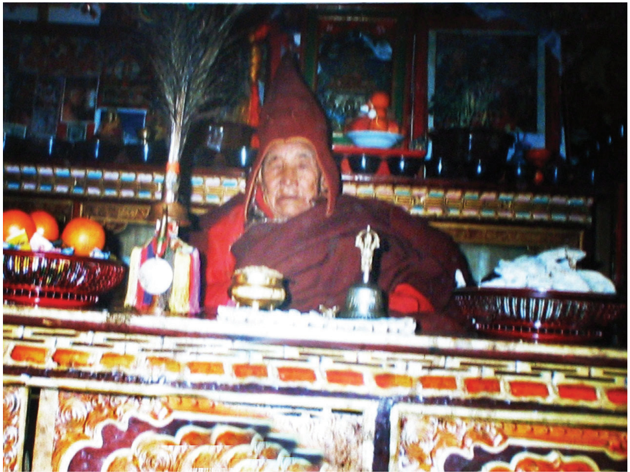
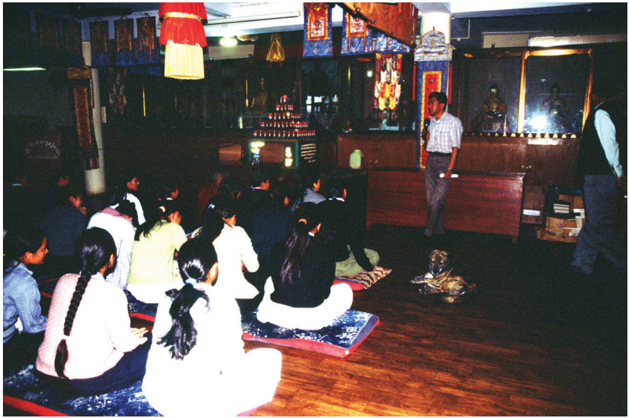
- Female practitioners historically known mostly through kinship and “medical houses” (*sman grong*), with examples such as Khandro Yangga and Lobsang Dolma; female doctors are seriously under-represented in traditional and modern writings. Since the 1980s, female participation has grown: Byams-pa ’Phrin-las reported in 2000 that 42% of Lhasa Mentsikhang staff were women; in 2007 the director of the Tibetan Medical College in Lhasa said 50% of approximately 300 students were women; at Dharamsala Men-Tsee-Khang, more than half of students were female at the time of writing.
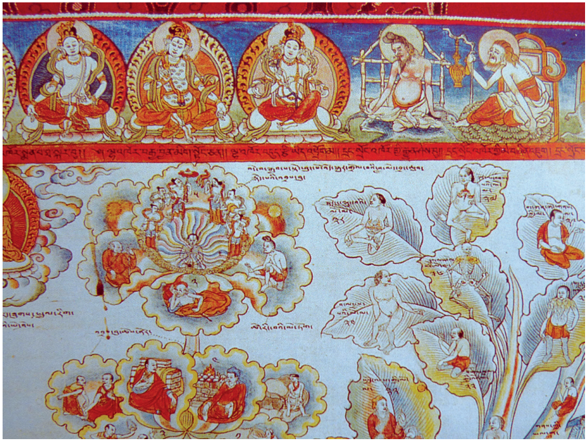
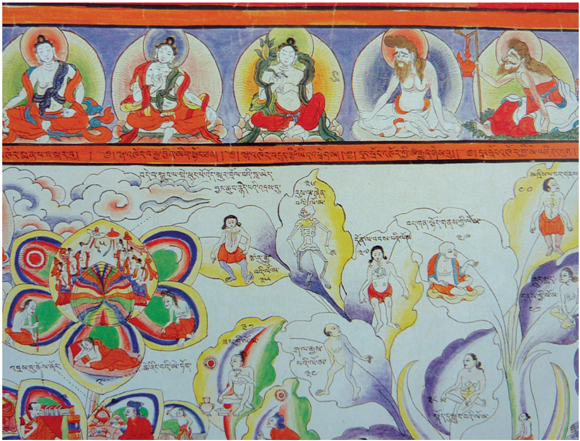
- Tibetan medical literature and illustrations treat the male body as default and largely cast women as reproductive/sexual: the *Four Tantras* describes the female body as “lower birth” with extra illnesses, including 32 “particular” women’s disorders in Chapters 74–75 and eight “common” disorders in Chapter 76; women are repeatedly linked to wind and desire, while female medical deities such as Mengyi Lhamo are much less prominent than the Medicine Buddha.
- Tibetan medicine is marginal in reproductive health and childbirth: maternal mortality in some TAR regions was reported as high as 400–500 deaths per 100,000, compared with Nepal at 290/100,000 and other PRC areas at 45/100,000 on average; in Shigatse prefecture in the early 2000s, NGOs reported 90% of women delivered at home and 94% did so without trained birth assistants. Birth control is dominated by biomedicine, while Sowa Rigpa traditionally focused on enhancing fertility.
- Analyzing medical lineages as “medical houses” opens interpretations more open to gender variation: sons, daughters, in-marrying husbands, and adopted members could become potential apprentices, though most apprentices remained sons or nephews due to broader gender models and perceptions of female body/mind.
Methods
- Design: introductory essay/review for a special issue of *Asian Medicine*, emerging from the 2009 IASTAM panel “Women and Gender in Medicine and Healing Across Asia” in Bhutan; it reviews gendered productions, transmissions, practices, representations, and reproductive health.
- Data/sample: draws on the authors’ ethnographic and historical research, largely in Central Tibet, plus scholarship on other Sowa Rigpa regions and the articles in the special issue; no new systematic sample or survey is reported.
- Analysis: synthetic review and conceptual argument, using anthropological kinship theory of the “house” and textual/visual analysis of Tibetan medical literature and illustrations.
Limitations
- Stated in the paper: the review cannot be exhaustive given the long history and vast regional expansion of Sowa Rigpa; it relies largely on data from Central Tibet; female doctors’ voices and accounts remain lacking in textual and oral history; little is known about female authorship and manuscript traditions; the extent of the increase in female practitioners is difficult to pinpoint.
- Evident from the text: as an introduction/review, it synthesizes secondary literature and special-issue articles rather than presenting primary empirical data; some claims, such as blood-letting being improper for female *amchi*, are said to need further investigation.
Model-written summary. Check it against the paper before relying on it.
Integrity signals
Registry
Cites
Statistics
Figures
Verification
Claims the paper makes
0 Valid · 24 Not valid · 117 Not checked · 102 Own results and interpretations
A result the paper states — it cites no source for it, so there is none to check. The quote shows it is in the paper.
In the paper
“Most of the female doctors who practised before 1980 and who we know about, have gained their skills through kinship relations.”
plainstates a cause- Asserted: passes — The authors put it forward as true.
- Checkable: passes — It can be checked against evidence.
- Load-bearing: passes — The paper’s conclusions depend on it.
- Based: passes — The paper gives a reason why it holds.
None of the sources cited for this claim could be matched to a paper, so there is nothing to check it against.
In the paper
“There are by now many known examples, as most recently reported by Tashi Tsering, 24 of female doctors who were trained by a male relative.”
What the sources say
- Not matchedcites Tashi Tsering
This doesn’t read as a citation we can look up.
- Not matchedcites [24]
The reference list we hold has no entry [24].
boosted- Asserted: passes — The authors put it forward as true.
- Checkable: passes — It can be checked against evidence.
- Load-bearing: passes — The paper’s conclusions depend on it.
- Based: passes — The paper gives a reason why it holds.
- Not matched
A result the paper reports from its own data — it cites no other source for it, so there is none to check. The quote shows it is in the paper.
In the paper
“In fact the possibility of a daughter inheriting a medical lineage was often ridiculed.”
plain- Asserted: passes — The authors put it forward as true.
- Checkable: passes — It can be checked against evidence.
- Load-bearing: passes — The paper’s conclusions depend on it.
- Based: passes — The paper gives a reason why it holds.
A result the paper states — it cites no source for it, so there is none to check. The quote shows it is in the paper.
In the paper
“These prohibitions can be contrasted with examples of female amchi who are in fact skilled and wellknown for making tsho thal.”
boosted- Asserted: passes — The authors put it forward as true.
- Checkable: passes — It can be checked against evidence.
- Load-bearing: unclear — It is unclear whether the paper’s conclusions depend on it.
- Based: passes — The paper gives a reason why it holds.
In the paper
“Byams-pa 'Phrin-las in 2000 reported that 42 per cent of all Mentsikhang staff in Lhasa were women, 46”
What the sources say
- Not matchedcites [46]
The reference list we hold has no entry [46].
plain- Asserted: passes — The authors put it forward as true.
- Checkable: passes — It can be checked against evidence.
- Load-bearing: unclear — It is unclear whether the paper’s conclusions depend on it.
- Based: passes — The paper gives a reason why it holds.
- Not matched
86 more claims
Create a free account to see all 243 claims and every source verdict.
- Probably not a substantial claim. 91
- It may state two separate claims as one. 94
Self-check
Percentages, sums and reported differences re-computed from the paper’s own numbers.
Each contradiction between two passages listed here was confirmed by an independent check.
Rated minor: it would not touch a result — a value no result rests on, a p-value that stays on the same side of the significance level, or a conflict that is clerical, resolved elsewhere in the paper, or outside its own findings.
In the paper
§ Contemporary medical writing and gender models
“124 Adams 2001b:225”
§ References
“--2001b, 'The Sacred in the Scientific: Ambiguous Practices of Sciences in Tibetan Medi- cine', Cultural Anthropology, 16.4: 542-575.”
Rated minor: it would not touch a result — a value no result rests on, a p-value that stays on the same side of the significance level, or a conflict that is clerical, resolved elsewhere in the paper, or outside its own findings.
In the paper
§ Conclusion
“Chertow 2008, p. 151.”
§ References
“--2008, 'Embodying the nation. Childbirth in Contemporary Tibet', in: R. Barnett and R. Schwartz (eds), Tibetan Modernities, PIATS Oxford 2003, Leiden: Brill, 75-99.”
Rated minor: it would not touch a result — a value no result rests on, a p-value that stays on the same side of the significance level, or a conflict that is clerical, resolved elsewhere in the paper, or outside its own findings.
In the paper
§ Conclusion
“Gyatso and Havnevik 1995, p. 13.”
§ References
“Gyatso, Janet and Hanna Havnevik 2005, Women in Tibet, London: Hurst and Company.”
Citations
Cites
Modernity at Large: Cultural Dimensions of Globalization.
de Zoysa, D. A., & Appadurai, A. (1998) · International Migration Review · doi:10.2307/2547675 · Cited by 18,135
Gender and the Politics of History
Scott, J. W. (1988) · Columbia University Press eBooks · doi:10.7312/scot91266 · Cited by 3,011
A Passion for Difference: Essays in Anthropology and Gender
Moore, H. L. (1994) · Cited by 589
Other-worldly: making Chinese medicine through transnational frames
(2010) · Choice Reviews Online · doi:10.5860/choice.48-0367 · Cited by 191
Defining Women's Health: A Dozen Messages from More than 150 Ethnographies
Inhorn, M. C. (2006) · Medical Anthropology Quarterly · doi:10.1525/maq.2006.20.3.345 · Cited by 186
The Violence of LiberationGender and Tibetan Buddhist Revival in Post-Mao China
Makley, C. (2007) · University of California Press eBooks · doi:10.1525/california/9780520250598.001.0001 · Cited by 135
Stratification, Polyandry, and Family Structure in Central Tibet
Goldstein, M. C. (1971) · Journal of Anthropological Research · doi:10.1086/soutjanth.27.1.3629185 · Cited by 130
A history of modern Tibet, 1913-1951: the demise of the Lamaist state
(1990) · Choice Reviews Online · doi:10.5860/choice.27-5894 · Cited by 125
Being a Buddhist Nun: The Struggle for Enlightenment in the Himalayas
Gutschow, K. (2004) · doi:10.4159/9780674038080 · Cited by 118
Prisoners of Shangri-La: Tibetan Buddhism and the West
(1998) · Choice Reviews Online · doi:10.5860/choice.36-0918 · Cited by 100
ADAMS, V., MILLER, S., CRAIG, S., NYIMA, SONAM, DROYOUNG, LHAKPEN, & VARNER, M. (2005) · Medical Anthropology Quarterly · doi:10.1525/maq.2005.19.3.267 · Cited by 94
The Sacred in the Scientific: Ambiguous Practices of Science in Tibetan Medicine
Adams, V. (2001) · Cultural Anthropology · doi:10.1525/can.2001.16.4.542 · Cited by 89 · cited 7×
“129 Adams 2001, pp. 226–227.”
BackgroundInfluentialReligion, Medicine and the Human Embryo in Tibet
Garrett, F. (2008) · doi:10.4324/9780203927427 · Cited by 76
One Plus One Makes Three: Buddhist Gender, Monasticism, and the Law of the Non-excluded Middle
Gyatso, J. (2003) · History of Religions · doi:10.1086/423006 · Cited by 75
Tibetan Buddhist Nuns: History, Cultural Norms and Social Reality
Havnevik, H. (1990) · Medical Entomology and Zoology · Cited by 71
Tibetan Fertility Transitions in China and South Asia
Childs, G., Goldstein, M. C., Jiao, B., & Beall, C. M. (2005) · Population and Development Review · doi:10.1111/j.1728-4457.2005.00068.x · Cited by 71
Objects, Processes, and Female Infertility in Chinese Medicine
Farquhar, J. (1991) · Medical Anthropology Quarterly · doi:10.1525/maq.1991.5.4.02a00040 · Cited by 66
Adams, V. (1998) · Medical Anthropology Quarterly · doi:10.1525/maq.1998.12.1.74 · Cited by 62
Having A “Safe Delivery”: Conflicting Views from Tibet
Adams, V., Miller, S., Chertow, J., Craig, S., Samen, A., & Varner, M. (2005) · Health Care for Women International · doi:10.1080/07399330500230920 · Cited by 58 · cited 5×
“100 Adams et al. 2005a, TIN 2002.”
BackgroundInfluentialA Flourishing Yin: Gender in China's Medical History, 960-1665
Davin, D., & Furth, C. (2000) · The American Historical Review · doi:10.2307/2652061 · Cited by 52
A Flourishing Yin: Gender in China's Medical History, 960-1665
Davin, D., & Furth, C. (2000) · The American Historical Review · doi:10.1086/ahr/105.5.1711 · Cited by 52
Being a Buddhist Nun: The Struggle for Enlightenment in the Himalayas
Towne, B., & Gutschow, K. (2004) · The Women's Review of Books · doi:10.2307/3880385 · Cited by 51 · cited 2×
“…towards women as a continuous ‘misogyny of Buddhist traditions, on the one hand, and the deification of a female principle in Buddhism, on the other’.75 The growing body of literature on women and Tibetan Buddhism, i.e. female practitioners for the most part, indicates that 69 Gutschow 2004, p. 16.”
BackgroundGarrett, F. (2009) · Journal of Indian Philosophy · doi:10.1007/s10781-009-9070-3 · Cited by 45
When a Woman Becomes a Religious Dynasty: The Samding Dorje Phagmo of Tibet
Diemberger, H. (2007) · Columbia University Press eBooks · doi:10.7312/diem14320 · Cited by 44
Fohr, S. D., & Birnbaum, R. (1982) · Philosophy East and West · doi:10.2307/1398476 · Cited by 44
‘Global Pharma in the Land of Snows: Tibetan Medicines, sars, and Identity Politics across Nations’
Adams, V., & Craig, S. (2008) · Asian Medicine · doi:10.1163/157342108x381205 · Cited by 42
Their Footprints Remain : Biomedical Beginnings Across the Indo-Tibetan Frontier
McKay, A. (2007) · Amsterdam University Press eBooks · doi:10.5117/9789053565186 · Cited by 42
Tibetan diary: from birth to death and beyond in a Himalayan valley of Nepal
(2005) · Choice Reviews Online · doi:10.5860/choice.42-5346 · Cited by 37
Saving Tibet? An Inquiry into Modernity, Lies, Truths, and Beliefs
Adams, V. (2005) · Medical Anthropology · doi:10.1080/01459740590905651 · Cited by 36
Maternal and neonatal outcomes of hospital vaginal deliveries in Tibet
Miller, S., Tudor, C., Nyima, Thorsten, V. R., Sonam, Droyoung, Craig, S., Le, P., Wright, L. L., & Varner, M. W. (2007) · International Journal of Gynecology & Obstetrics · doi:10.1016/j.ijgo.2007.03.033 · Cited by 36
The Body of a Nun: Nunhood and Gender in Contemporary Amdo
Makley, C. (2005) · Cited by 35
Textual Scholarship, Medical Tradition, and Mahāyāna Buddhist Ideals in Tibet
Schaeffer, K. R. (2003) · Journal of Indian Philosophy · doi:10.1023/a:1026397405584 · Cited by 34
Fertility and Family Planning in Rural Tibet
Goldstein, M. C., (Benjor), B. J., Beall, C. M., & Tsering, P. (2002) · The China Journal · doi:10.2307/3182072 · Cited by 33 · cited 1×
“112 Their sites of study were rural areas of Shigatse and Lhasa Municipality Prefectures, Goldstein et al. 2002, Goldstein and Beall 1991.”
BackgroundHornbeck, S. K., & Bell, C. (1925) · The American Historical Review · doi:10.2307/1835690 · Cited by 33
B., L. A., & MacDonald, D. (1929) · Geographical Journal · doi:10.2307/1784378 · Cited by 30
China's Birth Control Policy in the Tibet Autonomous Region: Myths and Realities
Goldstein, M. C., & Beall, C. M. (1991) · Asian Survey · doi:10.2307/2645246 · Cited by 29
Tibetan Medical paintings. Illustrations to the Blue Beryl treatise of Sangye Gyamtso (1653-1705)
Blondeau, A.-M. (1993) · Périodiques Scientifiques en Édition Électronique · Cited by 28
Thinking with Cases: Specialist Knowledge in Chinese Cultural History
Makeham, J. (2009) · ANU Open Research (Australian National University) · Cited by 28
(2010) · eScholarship (California Digital Library) · Cited by 26
The Age of Wild Ghosts: Memory, Violence, and Place in Southwest China
Scoggin, M. (2002) · American Ethnologist · doi:10.1525/ae.2002.29.2.465 · Cited by 26
Thinking with Cases: Specialist Knowledge in Chinese Cultural History (review)
(2009) · China Review International · doi:10.1353/cri.2009.0041 · Cited by 24
Naxi and Moso ethnography: Kin, rites, pictographs
elisabeth-hsu-michael-oppitz-universitat-zurich (1998) · Cited by 21
China's Birth Control Policy in the Tibet Autonomous Region: Myths and Realities
Goldstein, M. C., & Beall, C. M. (1991) · Asian Survey · doi:10.1525/as.1991.31.3.00p0043x · Cited by 21
Precious Pills: Medicine and Social Change among Tibetan Refugees in India
Prost, A. (2008) · Cited by 20
Himalayan Buddhist Villages: Environment, resources, society and religious life in Zangskar, Ladakh
Osmaston, H., & Crook, J. (1994) · Bristol Research (University of Bristol) · Cited by 19
(2008) · Cited by 18
Traditional Medicine in Bhutan
McKay, A., & Wangchuk, D. (2005) · Asian Medicine · doi:10.1163/157342105777996737 · Cited by 18
Feminization and Marginalization? Women Ayurvedic Doctors and Modernizing Health Care in Nepal
Cameron, M. M. (2010) · Medical Anthropology Quarterly · doi:10.1111/j.1548-1387.2010.01084.x · Cited by 16
The Tibetan Art of Parenting: From before Conception through Early Childhood
Wade, J. (1997) · Pre- and Peri-natal Psychology Journal · Cited by 15
(2007) · Choice Reviews Online · doi:10.5860/choice.44-2996 · Cited by 15
Many Contexts, Many Meanings? Gendered Values Among the Northern Lio of Flores, Indonesia
Howell, S. L. (1996) · Journal of the Royal Anthropological Institute · doi:10.2307/3034095 · Cited by 14
Pregnancy and Childbirth in Tibet: Knowledge, Perspectives, and Practices
Craig, S. R. (2009) · Science Across Cultures: the History of Non-Western Science · doi:10.1007/978-90-481-2599-9_13 · Cited by 14
The Tibetan Art of Parenting: From Before Conception Through Early Childhood
Maiden, A. H., & Farwell, E. (2008) · Medical Entomology and Zoology · Cited by 13
Commoners and Nobles: Hereditary Divisions in Tibet
Fjeld, H. (2005) · KTH Publication Database DiVA (KTH Royal Institute of Technology) · Cited by 13
Self-citationWard, M. P., & Dolma, R. (1970) · Geographical Journal · doi:10.2307/1796213 · Cited by 12
Hofer, T. (2007) · BRILL eBooks · doi:10.1163/ej.9789004155503.i-449.127 · Cited by 11
Self-citationThe Inheritance of Change – Transmission and Practice of Tibetan Medicine in Ngamring
Hofer, T. (2012) · Cited by 10
Self-citationTibetan and Indian ideas of birth pollution: similarities and contrasts
Rozario, S., & Samuel, G. B. (2003) · Routledge eBooks · doi:10.4324/9780203220214-17 · Cited by 10
Hofer, T. (2011) · UCL Discovery (University College London) · Cited by 8
Self-citationFrom home to hospital: the extension of obstetrics in Ladakh
Gutschow, K. (2011) · Cited by 8
Bon Lineage Doctors And The Local Transmission Of Knowing Medical Practice In Nagchu
Schrempf, M. (2007) · BRILL eBooks · doi:10.1163/ej.9789004155503.i-449.34 · Cited by 6
Being a Buddhist Nun: The Struggle for Enlightenment in the Himalayas
Klima, A. (2005) · American Anthropologist · doi:10.1525/aa.2005.107.3.529 · Cited by 6
Beiträge zur Geschichte der medizinischen Literatur Tibets
Taube, M. (1981) · VGH Wissenschaftsverlag eBooks · Cited by 5
Embodying The Nation: Childbirth In Contemporary Tibet
Chertow, J. (2008) · BRILL eBooks · doi:10.1163/ej.9789004155220.i-458.37 · Cited by 5
Diemberger, H. (1993) · Cited by 5
Tibetan Medical Schools of The Aga Area (Chita Region)
Bolsokhoyeva, N. (2007) · Asian Medicine · doi:10.1163/157342008x307929 · Cited by 4
Other‐Worldly: Making Chinese Medicine through Transnational Frames
Song, P. P. (2012) · American Anthropologist · doi:10.1111/j.1548-1433.2011.01413_14.x · Cited by 4
Pollution And Social Networks In Contemporary Rural Tibet
Fjeld, H. (2008) · BRILL eBooks · doi:10.1163/ej.9789004155220.i-458.26 · Cited by 4
Self-citationSpelling Mistakes, Philology, and Feminist Criticism: Women and Boys in Tibetan Medicine
Gyatso, J. (2008) · Cited by 4
Tibetan Medicine Illustrated in Original Texts
Pingree, D. E. (1973) · JAMA · doi:10.1001/jama.1973.03220370065039 · Cited by 3
Dolma & Dolkar : mother and daughter of Tibetan medicine
Josayma, T. T., & Dhondup, K. (1990) · Medical Entomology and Zoology · Cited by 3
CALKOWSKI, M. S. (1990) · Cited by 3
(2011) · Duo Research Archive (University of Oslo) · Cited by 2
Jacoby, S. (2009) · The Journal of the International Association of Buddhist Studies · Cited by 2
The Buddhist Discourse On Gender In Tibetan Medical Iconography
Young, S. (2011) · BRILL eBooks · doi:10.1163/ej.9789004155190.1-348.88 · Cited by 1
Research works printed but not linked: 23
- bKra-shis Tshe-ring 1994, 'Bod du grags can mi sna'i gras bud med kyi bod lugs sman pa'i lo rgyus rags tsam gleng ba yid gdung sel ba'i sman mchog' in g.Yu-mtsho, 2, 1, pp. 48-84.
- Lha-mo sKyid 2007, 'Zla mtshan gyi rnam par dpyad blo chung byis pa'i mgul rgyun' in Krung go'i bod kyi gso rig, vol. 1, 103-11.
- Acharya, Meena and Lynn Bennett 1981, 'The rural women of Nepal: An aggregate analysis and summary of eight villages studies,' Status for Women in Nepal, vol. 2, part 9. Kathmandu: Centre for Economic Development and Administration, Tribhuvan University.
- --2002, 'Establishing Proof: Translating "Science" and the State in Tibetan Medicine', in M. Nichter and M. Lock (eds), New Horizons in Medical Anthropology. Essays in honour of Charles Leslie, London and New York: Routledge, 200-220.
- Adams, Vincanne and Fei Fei Li 2008, 'Integration or Erasure? Modernizing Medicine at Lhasa's Mentsikhang', in Laurent Pordié (ed), Exploring Tibetan Medicine in Contemporary Context: Perspectives in Social Sciences, London: Routledge, 105-31.
- Brauen, Martin 2002, Peter Aufschnaiter's Eight Years in Tibet, Bangkok: White Orchid Press.
- Carsten, Janet and Stephen Hugh-Jones 1995, About the House. Lévi-Strauss and Beyond, Cam- bridge: Cambridge University Press.
- Chertow, Jennifer M. 2007, Gender, Power, Space: Transnational bodies and the cultures of health in contemporary Tibet, PhD Dissertation, Department of Anthropology, Stanford.
- --Forthcoming, Healing Elements: Efficacy and the Social Ecologies of Tibetan Medicine, Berkeley: University of California Press.
- --2007, When a Woman Becomes a Religious Dynasty, New York: Columbia University Press.
- --2007, The Rise of the Polyandrous House: Marriage, Kinship and Social Mobility in Rural Tsang, Tibet, PhD thesis, Faculty of Social Sciences, Oslo: University of Oslo.
- Hancart-Petitet, Pascale and Laurent Pordié (in press), 'Birth in Shun Shade: Notes on Role of the Amchi Regarding Childbirth', in L. Pordié (ed.) Healing at the Periphery: Ethnographies of Tibetan Medicine in India, Durham and London: Duke University Press.
- --1999, The Life of Jetsun Lochen Rinpoche (1865-1951) as Told in Her Autobiography, PhD thesis, Faculty of Arts, University of Oslo.
- --2011b, 'Changing Representations of the Tibetan Woman Doctor Khandro Yangkar (1907-1973)', in A. McKay and A. Balicki-Dengjongpa (eds), Buddhist Himalayas: Studies in Religion, History and Culture. Proceedings of the Golden Jubilee Conference of the Namgyal Insti- tute of Tibetology Gangtok, 2008, I: Tibet and the Himalaya, Gangtok: Namgyal Institute of Tibetology, 99-122.
- Howell, Signe L. 1996, 'Many contexts, many meanings? Gendered values among the Lio moral system', Journal of the Royal Anthropological Institute, 2.2: 253-269.
- Janes, C. 1995, 'The Transformation of Tibetan Medicine', Medical Anthropology Quarterly, 9.1: 6-39. Downloaded from Brill.com 01/26/2024 04:09:41PM via Open Access. This is an open access article distributed under the terms of the CC BY 4.0 License. https://creativecommons.org/licenses/by/4.0/ Jäger, Karin 1999, 'Nektar der Unsterblichkeit' Zwei Kapitel aus der Tibetischen Kinderheilkunde, Egelsbach: Verlag Dr. Hänsel-Hoherhausen.
- --2011, 'Making a "Medical System": Tibetan Medicine in Exile', paper given at the 'Con- temporary Issues in the Anthropology of Tibetan Medicine' workshop, 21st-22nd of January, Cardiff University.
- Millard, Colin 2011, 'Between Science, Bon and Buddhism: multiple values in Tibetan medical education', paper given at the 'Contemporary Issues in the Anthropology of Tibetan Medi- cine' workshop, 21st-22nd January, Cardiff University.
- Samuel, Geoffrey 1994, 'Tibet and the Southeast Asian Highlands: Rethinking the Intellectual Context of Tibetan Studies', in P. Kvaerne (ed), Tibetan Studies: Proceedings of the 6th Semi- nar of the International Association for Tibetan Studies, PIATS Fagernes 1992, Oslo: Institute for Comparative Research in Human Culture, 696-710.
- --2008, 'The Politics of Tibetan Medicine and the Constitution of an Object of Study', in L. Pordié (ed.), Tibetan Medicine in the Contemporary World-Global Politics of Medical Knowledge and Practice, London and New York: Routledge, 251-63.
- Saxer, Martin 2010, Manufacturing Good Practice-GMP and shifting notions of quality in Tibetan medicine, Institute of Social and Cultural Anthropology. PhD thesis. Oxford, Univer- sity of Oxford.
- Sponberg, Alan 1992, 'Attitudes toward Women and the Feminine in Early Buddhism', in J.I. Cabezón (ed), Buddhism, Sexuality, and Gender, Albany: State University of New York Press, 3-36.
- Vorndran, Eika 1999, Good to be Human: Coming into Existence in a Tibetan Bon Exile Com- munity, MA thesis. Vienna.
Cited by
Gerke, B. (2013) · Asian Medicine · doi:10.1163/15734218-12341287 · Cited by 19
Khalikova, V. R. (2021) · Open Encyclopedia of Anthropology · doi:10.29164/21medplural · Cited by 36
Blaikie, C., Craig, S. R., Gerke, B., & Hofer, T. (2015) · Current Anthropology · doi:10.1086/680464 · Cited by 26
Self-citationGender Equality in and on Tibetan Buddhist Nuns’ Terms
Padma’tsho, & Jacoby, S. (2020) · Religions · doi:10.3390/rel11100543 · Cited by 22
“Another rich domain of research on women in Tibet is medicine—among others see (Josayma and Dhondup 1990; Tsering 2005; Chos ’phel and Tshe ring 2008; Fjeld and Hofer 2012).”
BackgroundIntroduction: Medicine and Healing in Tibetan Societies
Samuel, G. B. (2013) · East Asian Science Technology and Society An International Journal · doi:10.1215/18752160-2333224 · Cited by 9
Metadata
- Authors
- Fjeld, H., & Hofer, T.
- Affiliations
- University of Oslo (NO)
- Venue
- Asian Medicine
- Publisher
- Walter de Gruyter GmbH
- Published
- 2012-09-15
- Volume
- 6
- Issue
- 2
- Pages
- 175-216
- ISSN
- 1573-420X (ISSN-L)
- 1573-4218
- OpenAlex
- W1974803408
- Cited by
- 19
- References
- 73
- Citations by year
- 2022: 3 · 2021: 8 · 2020: 1 · 2019: 1 · 2015: 2 · 2014: 1 · 2013: 3
- FWCI
- 34.59
- Type
- journal article
- Language
- en
- Open access
- hybrid
- doi.org
- Locations
- Asian Medicine (publishedVersion, cc-by)
- Explore Bristol Research (publishedVersion, cc-by)
- Bristol Research (University of Bristol) (publishedVersion, other-oa)
- Bristol Research (University of Bristol) (submittedVersion, cc-by)
- Funders
- Norges Forskningsråd
- Topics
- Social Sciences › Arts and Humanities › History › History of Medicine Studies
- Social Sciences › Arts and Humanities › History › Historical Studies on Reproduction, Gender, Health, and Societal Changes
- Health Sciences › Medicine › Complementary and alternative medicine › Traditional Chinese Medicine Studies
- Keywords
- Tibetan medicine, women in medicine, gender and medicine, women's health, medical illustration
About these checks
Registry, retraction, Cites and statistics results are computed, not judged, with one exception: a printed reference that no index lists is read once by a model before it counts as a citation error. Claims are extracted by a model and kept only when their quote appears verbatim in the text; each cited source is then checked, with a model’s help, for whether it says what the claim relies on. Those verdicts can be wrong — read the claim’s quote and the cited source before relying on one.
A language model drew the claims from the paper on 2026-10-05, under version 3 of the claim definition (model deepseek-v4.1-flash, prompt extract-v3).
A second model labelled each claim on 2026-10-05 (model jev-1.13-20260917, definition revision gold-guideline-v0.2).
Statistics and arithmetic are recomputed, not judged.
Confidence bands are shown only for fields calibrated on our annotated test set. None is calibrated yet, so no band is shown.
What counts as a claim ›How we measure confidence ›How we check this ›
Are you an author, or do you see a problem with this page? Request a review
Data sources
Bibliographic data: Semantic Scholar, OpenAlex, Crossref.
Contains information from the Semantic Scholar Academic Graph Datasets, made available under the ODC Attribution License (ODC-BY 1.0).
Semantic Scholar’s data is described in: Kinney, R., et al. (2023). The Semantic Scholar Open Data Platform. arXiv:2301.10140.
