

Platikos and moirikos: Ancient Horoscopic Practice in the Light of Vettius Valens’ Anthologies
Open accessThe DOI matches its Crossref record; 17 of the 19 references it cites were found in a registry or an index; none of the 68 sources its claims cite is checked for support yet.
Abstract
Abstract From the ancient practice, implied by many textual sources although never formally prescribed, of identifying the twelve horoscopic places (the δωδεκάτροπος dōdekatropos) with the zodiacal signs, recent scholarship has often concluded that such identification constituted a tenet of ancient astrology even at a conceptual level. On the basis of a close reading of Vettius Valens’ Anthologies, supported by other ancient sources, this paper argues that while the places, like other elements of horoscopic practice, were often provisionally approximated by sign position alone, calculation of places by degree, with boundaries differing from those of the zodiacal signs, was consistently upheld in principle as more accurate and useful. Specifically, Valens’ preference appears to have been for places calculated from the quadrants formed by the intersections of horizon and meridian, a method also occasionally used in the Anthologies for defining planetary configurations and for annual transmission (παράδοσις paradosis). In several cases, such methods are explicitly employed even for horoscopes presented in a simple, signs-only format.
Overview
CoChat Summary
TL;DR
Gansten argues that Vettius Valens’ *Anthologies* do not support whole-sign places as the conceptually normative system of ancient astrology; instead, Valens consistently treats calculation of places by degree as more accurate and useful, while sign-only calculation is “rough” (*platikos*). The paper concludes that Valens’ preferred degree-based method was quadrant places defined by the horizon and meridian, with equal places explicitly described only once in the *Anthologies*.
Key findings
- Against recent scholarship, the paper finds that Valens upheld places calculated by degree as “accurate” (*akribēs*) and sign-based places as provisional or “rough” (*platikos*), even though most of the more than 120 example nativities in the *Anthologies* are “basic horoscopes” listing only sign positions.
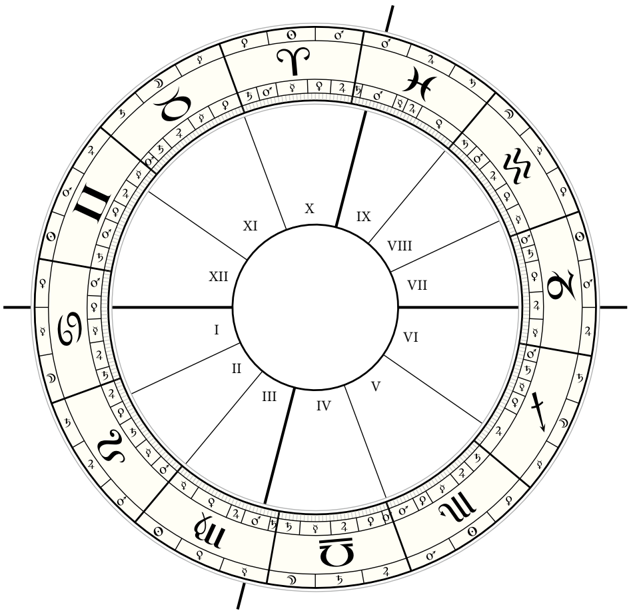
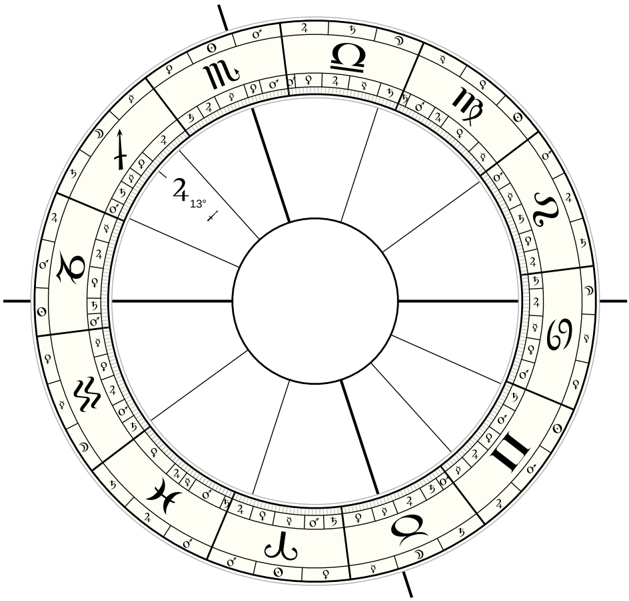
- Valens’ preferred degree method appears to be quadrant places, formed by trisecting the quadrants created by the horizon and meridian; quadrant divisions are used in passages such as III 2 and V 6, and occasionally for planetary configurations and annual transmission (*paradosis*).
- Equal places—30° segments measured from the ascendant degree—are described unambiguously only once in the *Anthologies* (IX 3), where Valens cites Asclepius; Firmicus Maternus later uses *signum* and *locus* interchangeably for such degree-based 30° segments, and Ptolemy describes a similar equal-place system with a 5° displacement.
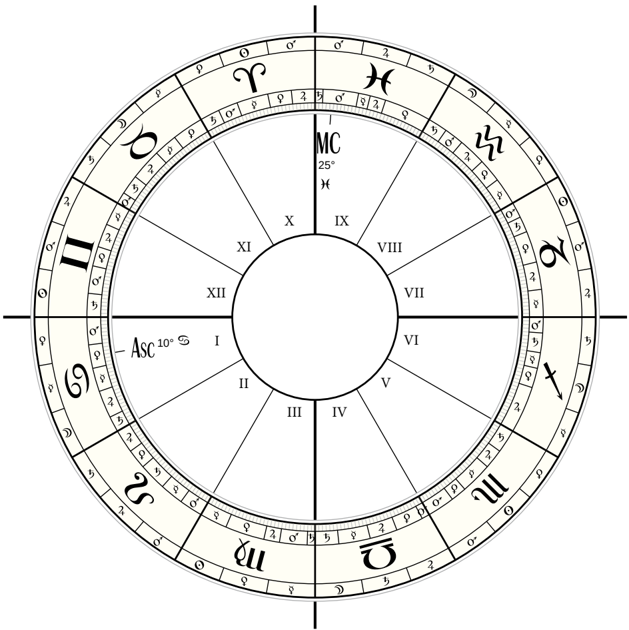
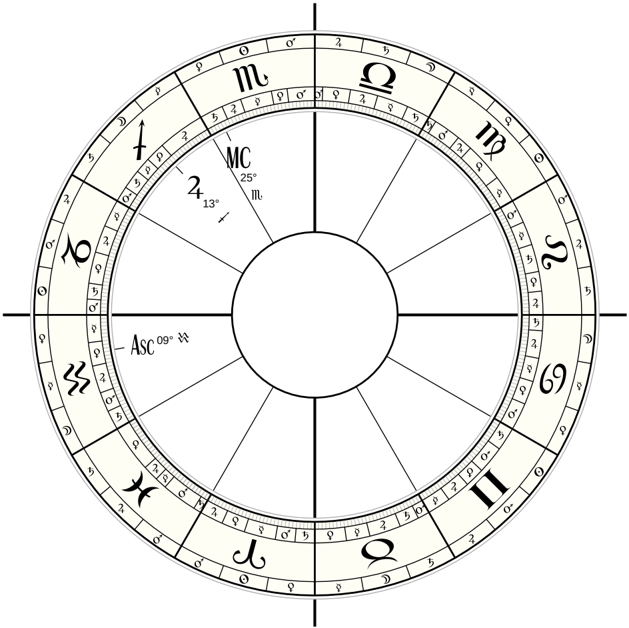
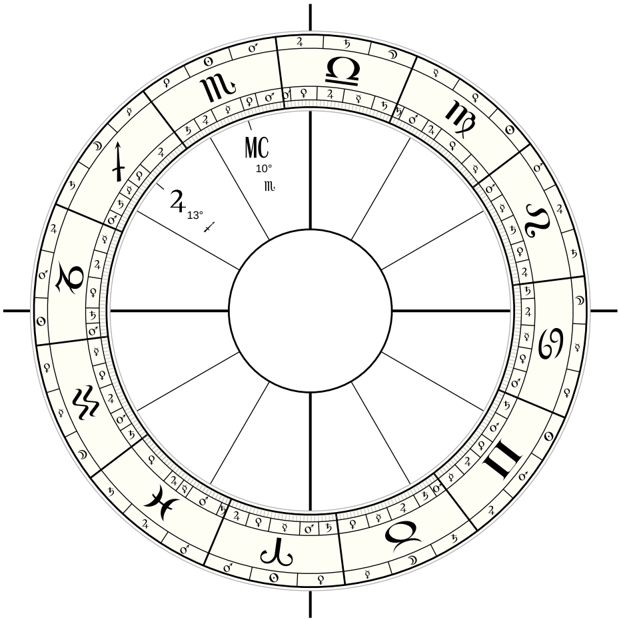
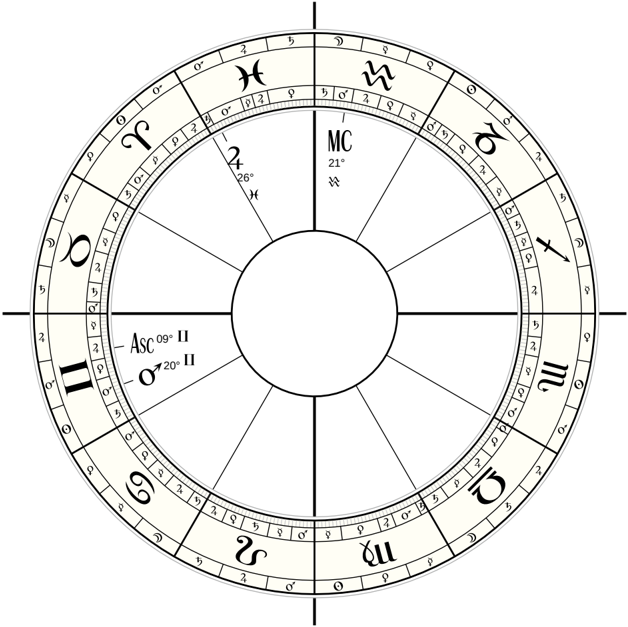
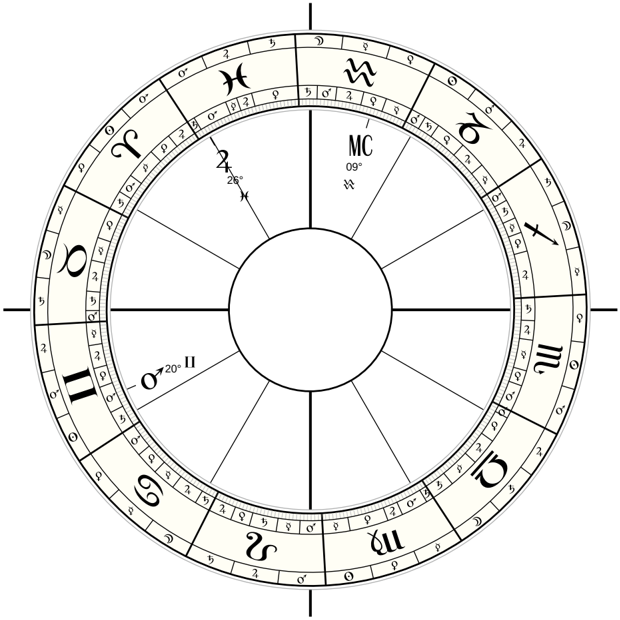
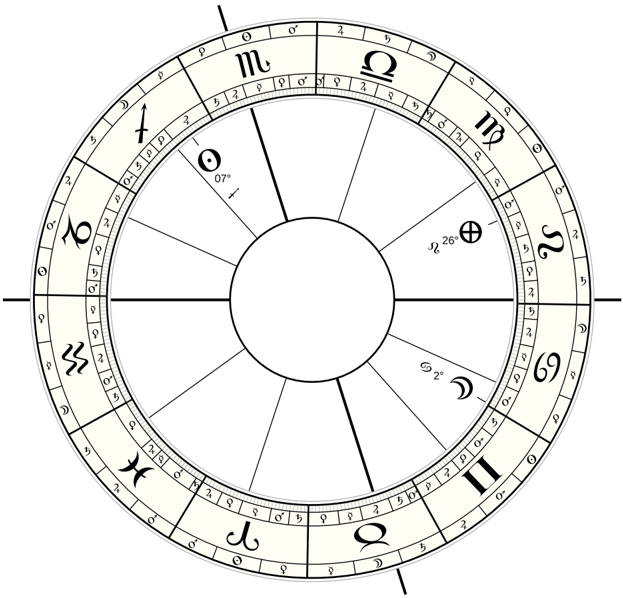
- Some “basic horoscopes” that list only signs actually presuppose calculation by degree: for example, a nativity with ascendant in Gemini and midheaven in Aquarius by degree, and another where the Lot of Fortune calculated by degree falls in Leo opposite the ascendant even though the sun and moon do not occupy opposing signs.
Methods
- Close reading of Vettius Valens’ *Anthologies*, supported by other ancient sources including Firmicus Maternus, Ptolemy, Manilius, and Paulus Alexandrinus, with translations compared against Schönberger and Knobloch, Riley, and Schmidt.
- The analysis follows two hermeneutic principles: prefer an internally coherent single-author model over one attributing contradictory views to Valens, and prefer more detailed/explicit statements over more frequent but simplified ones.
- It is a qualitative philological and technical study of textual passages, example nativities, and astrological concepts such as places, aspects, lots, and transmission; it does not conduct a quantitative corpus analysis.
Limitations
- The paper does not state a formal limitations section.
- Evident from the text: the argument depends on close reading and interpretation of technical passages, and some key readings involve textual emendations or disputed translations (e.g., *embaseōn* for *ekbaseōn*, restoring the numeral γ, and disagreements with Riley, Schmidt, and Brennan).
- Evident from the text: the study is focused on Valens’ *Anthologies* and selected supporting sources, and the paper acknowledges uncertainty about historical development and about what Valens’ example horoscopes would have looked like under modern calculation.
Model-written summary. Check it against the paper before relying on it.
Integrity signals
Registry
Cites
Statistics
Figures
Verification
Claims the paper makes
0 Valid · 11 Not valid · 55 Not checked · 72 Own results and interpretations
A result the paper states — it cites no source for it, so there is none to check. The quote shows it is in the paper.
In the paper
“The overwhelming majority of the more than 120 example nativities discussed in the Anthologies list only the sign positions of the ascendant and of some or all of the seven planets, with the occasional addition of secondary points calculated from them; in other words, they are”
§ Platikos and moirikos: Ancient Horoscopic Practice in the Light of Vettius Valens' Anthologies > Places by Sign and by Degree in Valens' Anthologies
plain- Asserted: passes — The authors put it forward as true.
- Checkable: passes — It can be checked against evidence.
- Load-bearing: passes — The paper’s conclusions depend on it.
- Based: passes — The paper gives a reason why it holds.
None of the sources cited for this claim have been checked yet.
In the paper
“Like the description of quadrant places discussed below, this section refers to an earlier textual authority by name:”
§ Platikos and moirikos: Ancient Horoscopic Practice in the Light of Vettius Valens' Anthologies > Gansten
plain- Asserted: passes — The authors put it forward as true.
- Checkable: passes — It can be checked against evidence.
- Load-bearing: unclear — It is unclear whether the paper’s conclusions depend on it.
- Based: passes — The paper gives a reason why it holds.
A result the paper states — it cites no source for it, so there is none to check. The quote shows it is in the paper.
In the paper
“From time to time, Valens, too, conforms to this pattern:”
§ Platikos and moirikos: Ancient Horoscopic Practice in the Light of Vettius Valens' Anthologies > Gansten
plainstates an association- Asserted: passes — The authors put it forward as true.
- Checkable: passes — It can be checked against evidence.
- Load-bearing: unclear — It is unclear whether the paper’s conclusions depend on it.
- Based: passes — The paper gives a reason why it holds.
A result the paper states — it cites no source for it, so there is none to check. The quote shows it is in the paper.
In the paper
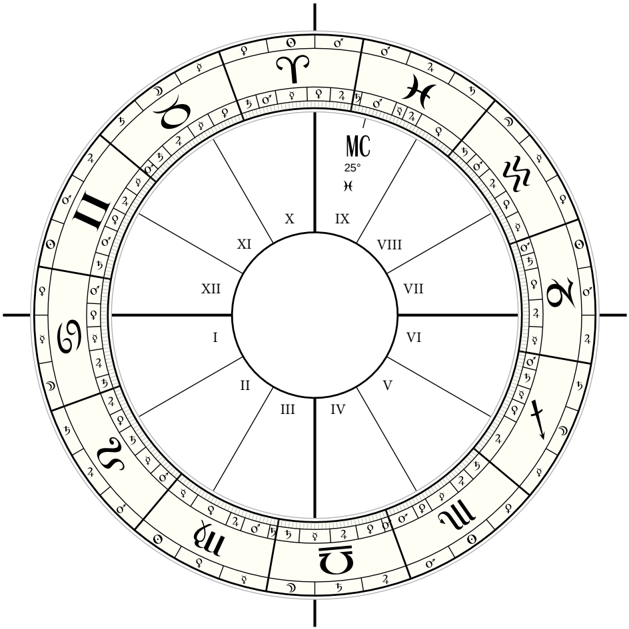
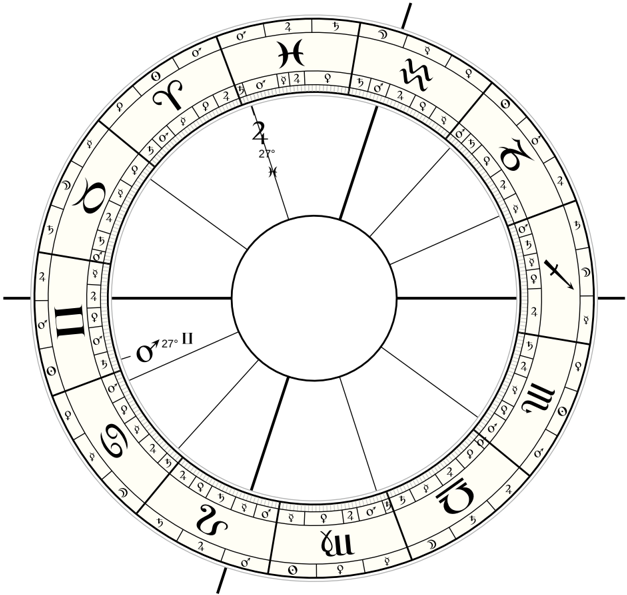
“These arguments all agree with a whole-sign method of determining the places (see fig. 1)”
§ Platikos and moirikos: Ancient Horoscopic Practice in the Light of Vettius Valens' Anthologies > International Journal of Divination & Prognostication 4 (2023) 1-43
plainstates an association- Asserted: passes — The authors put it forward as true.
- Checkable: passes — It can be checked against evidence.
- Load-bearing: passes — The paper’s conclusions depend on it.
- Based: passes — The paper gives a reason why it holds.
A result the paper reports from its own data — it cites no other source for it, so there is none to check. The quote shows it is in the paper.
In the paper
“Not many of Valens' examples are as elaborately argued as this, and most rather resemble the following, chosen somewhat at random, in their brevity:”
- Also stated in: § Gansten · plain
“Once again, only the sign placements of the ascendant, planets, and some additional points are given, or even just implied.”
§ Platikos and moirikos: Ancient Horoscopic Practice in the Light of Vettius Valens' Anthologies > Gansten
plain- Asserted: passes — The authors put it forward as true.
- Checkable: passes — It can be checked against evidence.
- Load-bearing: passes — The paper’s conclusions depend on it.
- Based: passes — The paper gives a reason why it holds.
- Also stated in: § Gansten · plain
46 more claims
Create a free account to see all 138 claims and every source verdict.
- Probably not a substantial claim. 56
- It may state two separate claims as one. 48
- The quote only partly states this claim. 2
- Borderline: one of the tests for a substantial claim is unclear. 1
Citations
Cites
Pagan Mysteries in the Renaissance
Dionisotti, C., Knowles, D., Grierson, P., Crombie, A. C., Reynolds, B., J.R.W., V., E. R., & W., R. (1959) · Italian Studies · doi:10.1179/007516359790612685 · Cited by 266
Pagan mysteries in the Renaissance
Wind, E. (1958) · Cited by 190
The Daimon in Hellenistic Astrology: Origins and Influence
Greenbaum, D. G. (2016) · BRILL eBooks · doi:10.1163/9789004306219 · Cited by 111
Vettii Valentis Antiocheni Anthologiarum libri novem
Antiochenus, V. V. (1986) · De Gruyter eBooks · doi:10.1515/9783110958225 · Cited by 93
Hellenistic Astrology: The Study of Fate and Fortune
Brennan, C. (2017) · Medical Entomology and Zoology · Cited by 67
Greenbaum, D. G. (2020) · BRILL eBooks · doi:10.1163/9789004400566_039 · Cited by 46
Heilen, S. (2015) · De Gruyter eBooks · doi:10.1515/9783110288735 · Cited by 42
Manilius (1977) · Digital Loeb Classical Library · doi:10.4159/dlcl.manilius-astronomica.1977 · Cited by 41
Ancient Rejection and Adoption of Ptolemy’s Frame of Reference for Longitudes
Jones, A. (2009) · Archimedes · doi:10.1007/978-90-481-2788-7_2 · Cited by 24
Hellenistic Astronomy The Science in Its Contexts
Bowen, A. C., & Rochberg, F. (2020) · Cited by 18
Research works printed but not linked: 12
- Dykes, Benjamin. The Astrology of Sahl b. Bishr, vol. I. Minneapolis, MN: Cazimi Press, 2019.
- Dykes, Benjamin. Persian Nativities IV: On the Revolutions of the Years of Nativities by Abū Ma'shar. Minneapolis, MN: Cazimi Press, 2019.
- Gansten, Martin. The Jewel of Annual Astrology: A Parallel SanskritEnglish Critical Edition of Balabhadra's Hāyanaratna. Leiden and Boston: Brill, 2020. https://doi.org/10 .1163/9789004433717. Gansten International Journal of Divination & Prognostication 4 (2023) 1-43 · DOI
- Holden, James Herschel. "Ancient House Division." In Journal of Research of the American Federation of Astrologers 1, no. 1 (1982): 19-28.
- Claudius Ptolemy. Tetrabiblos. Translated by Frank Egleston Robbins. Cambridge, MA: Harvard University Press, 1964 [1940].
- Claudius Ptolemy. Tetrabiblos, Book III. Translated by Robert Schmidt, edited by Robert Hand. Berkeley Springs, WV: Golden Hind Press, 1996.
- Schmidt, Robert. Definitions and Foundations. Cumberland, MD: Golden Hind Press, 2009.
- Platikos and moirikos International Journal of Divination & Prognostication 4 (2023) 1-43
- Sphujidhvaja. The Yavanajātaka of Sphujidhvaja. Translated and edited by David Pingree. 2 vols. Cambridge, MA: Harvard University Press, 1978.
- Vettius Valens. The Anthology Book II, Part 1. Translated by Robert Schmidt, edited by Robert Hand. Berkeley Springs, WV: Golden Hind Press, 1994.
- Vettius Valens. The Anthology Book IV. Translated by Robert Schmidt, edited by Robert Hand. Berkeley Springs, WV: Golden Hind Press, 1996.
- Vettius Valens. The Anthology Book VII. Translated by Robert Schmidt. Cumberland, MD: Golden Hind Press, 2001.
Cited by
Mak, B. M. (2024) · The Medieval History Journal · doi:10.1177/09719458241247636
Metadata
- Authors
- Gansten, M.
- Affiliations
- Lund University (SE)
- Corresponding author
- Gansten, Martin
- ORCID
- Gansten, Martin
- Venue
- International Journal of Divination and Prognostication
- Publisher
- Walter de Gruyter GmbH
- Published
- 2023-01-06
- Volume
- 4
- Issue
- 1
- Pages
- 1-43
- ISSN
- 2589-9198 (ISSN-L)
- 2589-9201
- OpenAlex
- W4315465112
- Cited by
- 1
- References
- 19
- Citations by year
- 2024: 1
- FWCI
- 1.37
- Type
- journal article
- Language
- en
- Open access
- hybrid
- doi.org
- Locations
- International Journal of Divination and Prognostication (publishedVersion, cc-by)
- Topics
- Social Sciences › Arts and Humanities › Religious studies › Historical, Religious, and Philosophical Studies
- Physical Sciences › Physics and Astronomy › Astronomy and Astrophysics › Historical Astronomy and Related Studies
- Social Sciences › Arts and Humanities › Philosophy › Classical Philosophy and Thought
- Keywords
- anthology, ancient astrology, zodiac signs, planetary configurations, paradosis
About these checks
Registry, retraction, Cites and statistics results are computed, not judged, with one exception: a printed reference that no index lists is read once by a model before it counts as a citation error. Claims are extracted by a model and kept only when their quote appears verbatim in the text; each cited source is then checked, with a model’s help, for whether it says what the claim relies on. Those verdicts can be wrong — read the claim’s quote and the cited source before relying on one.
A language model drew the claims from the paper on 2026-10-04, under version 3 of the claim definition (model deepseek-v4.1-flash, prompt extract-v3).
A second model labelled each claim on 2026-10-04 (model jev-1.13-20260917, definition revision gold-guideline-v0.2).
Statistics and arithmetic are recomputed, not judged.
Confidence bands are shown only for fields calibrated on our annotated test set. None is calibrated yet, so no band is shown.
What counts as a claim ›How we measure confidence ›How we check this ›
Are you an author, or do you see a problem with this page? Request a review
How to cite
Cite CoChat for the checks on this page, and the paper for its own findings.
- This page
- CoChat. (2026). Citation check: Platikos and moirikos: Ancient Horoscopic Practice in the Light of Vettius Valens’ Anthologies. https://app.cochat.ai/papers/10.1163/25899201-12340029
- The paper
- Gansten, M. (2023). Platikos and moirikos: Ancient Horoscopic Practice in the Light of Vettius Valens’ Anthologies. International Journal of Divination and Prognostication. https://doi.org/10.1163/25899201-12340029
Data sources
Bibliographic data: Semantic Scholar, OpenAlex, Crossref.
Contains information from the Semantic Scholar Academic Graph Datasets, made available under the ODC Attribution License (ODC-BY 1.0).
Semantic Scholar’s data is described in: Kinney, R., et al. (2023). The Semantic Scholar Open Data Platform. arXiv:2301.10140.
