

The DOI matches its Crossref record; 37 of the 37 references it cites were found in a registry or an index.
Symptoms of Anxiety, Depression, and Peritraumatic Dissociation in Critical Care Clinicians Managing Patients with COVID-19. A Cross-Sectional Study
Open accessAbstract
Rationale: Frontline healthcare providers (HCPs) during the coronavirus disease (COVID-19) pandemic are at high risk of mental morbidity. Objectives: To assess the prevalence of symptoms of anxiety, depression, and peritraumatic dissociation in HCPs. Methods: This was a cross-sectional study in 21 ICUs in France between April 20, 2020, and May 21, 2020. The Hospital Anxiety and Depression Scale and the Peritraumatic Dissociative Experience Questionnaire were used. Factors independently associated with reported symptoms of mental health disorders were identified. Measurements and Main Results: The response rate was 67%, with 1,058 respondents (median age 33 yr; 71% women; 68% nursing staff). The prevalence of symptoms of anxiety, depression, and peritraumatic dissociation was 50.4%, 30.4%, and 32%, respectively, with the highest rates in nurses. By multivariable analysis, male sex was independently associated with lower prevalence of symptoms of anxiety, depression, and peritraumatic dissociation (odds ratio of 0.58 [95% confidence interval, 0.42–0.79], 0.57 [95% confidence interval, 0.39–0.82], and 0.49 [95% confidence interval, 0.34–0.72], respectively). HCPs working in non–university-affiliated hospitals and nursing assistants were at high risk of symptoms of anxiety and peritraumatic dissociation. Importantly, we identified the following six modifiable determinants of symptoms of mental health disorders: fear of being infected, inability to rest, inability to care for family, struggling with difficult emotions, regret about the restrictions in visitation policies, and witnessing hasty end-of-life decisions. Conclusions: HCPs experience high levels of psychological burden during the COVID-19 pandemic. Hospitals, ICU directors, and ICU staff must devise strategies to overcome the modifiable determinants of adverse mental illness symptoms.
Overview
The claims and statistics of this paper haven’t been checked yet.
Run the check — free, no account needed. It reads the open-access text and checks the sources it cites.
Integrity signals
Registry
Cites
Statistics
Figures
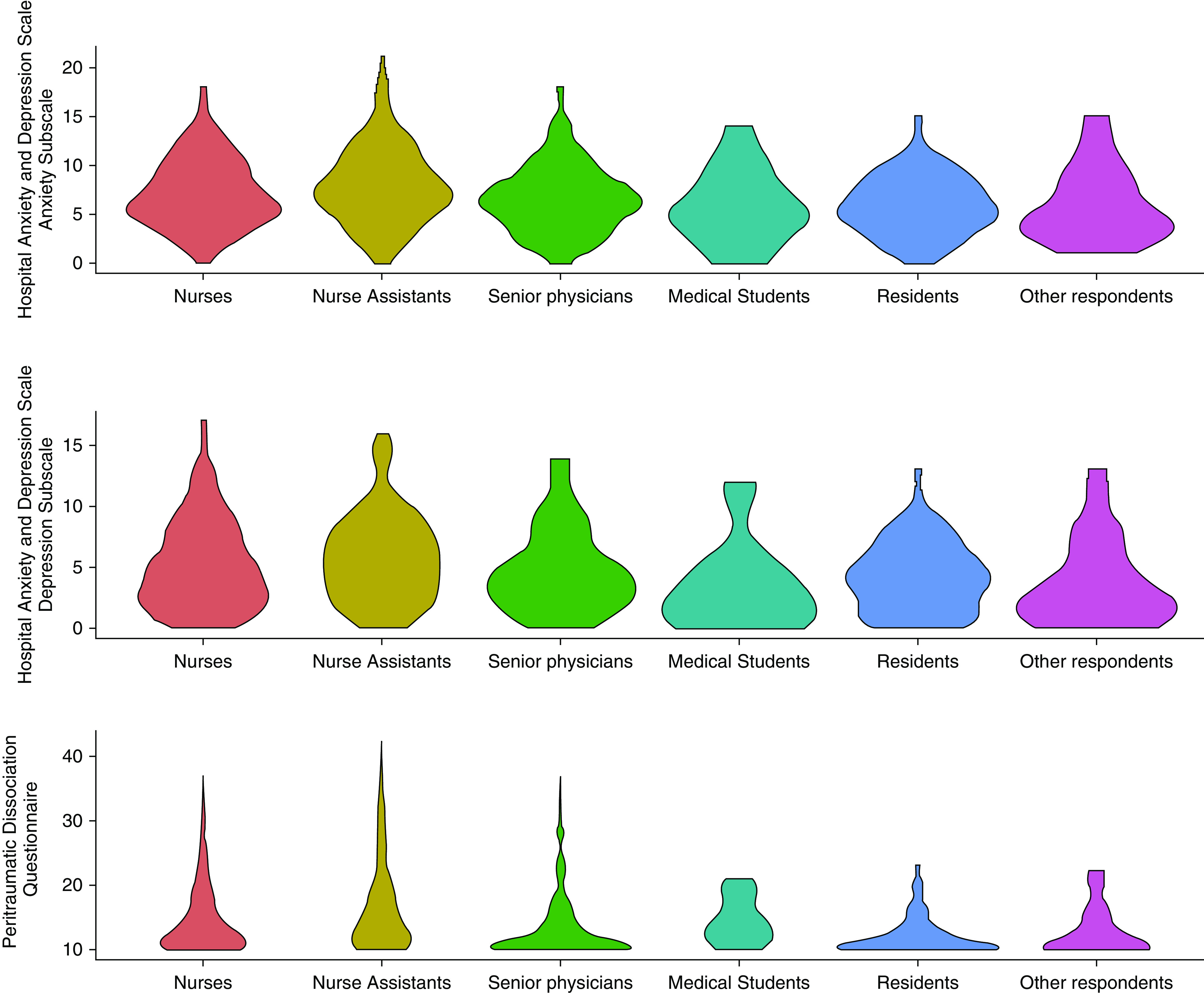
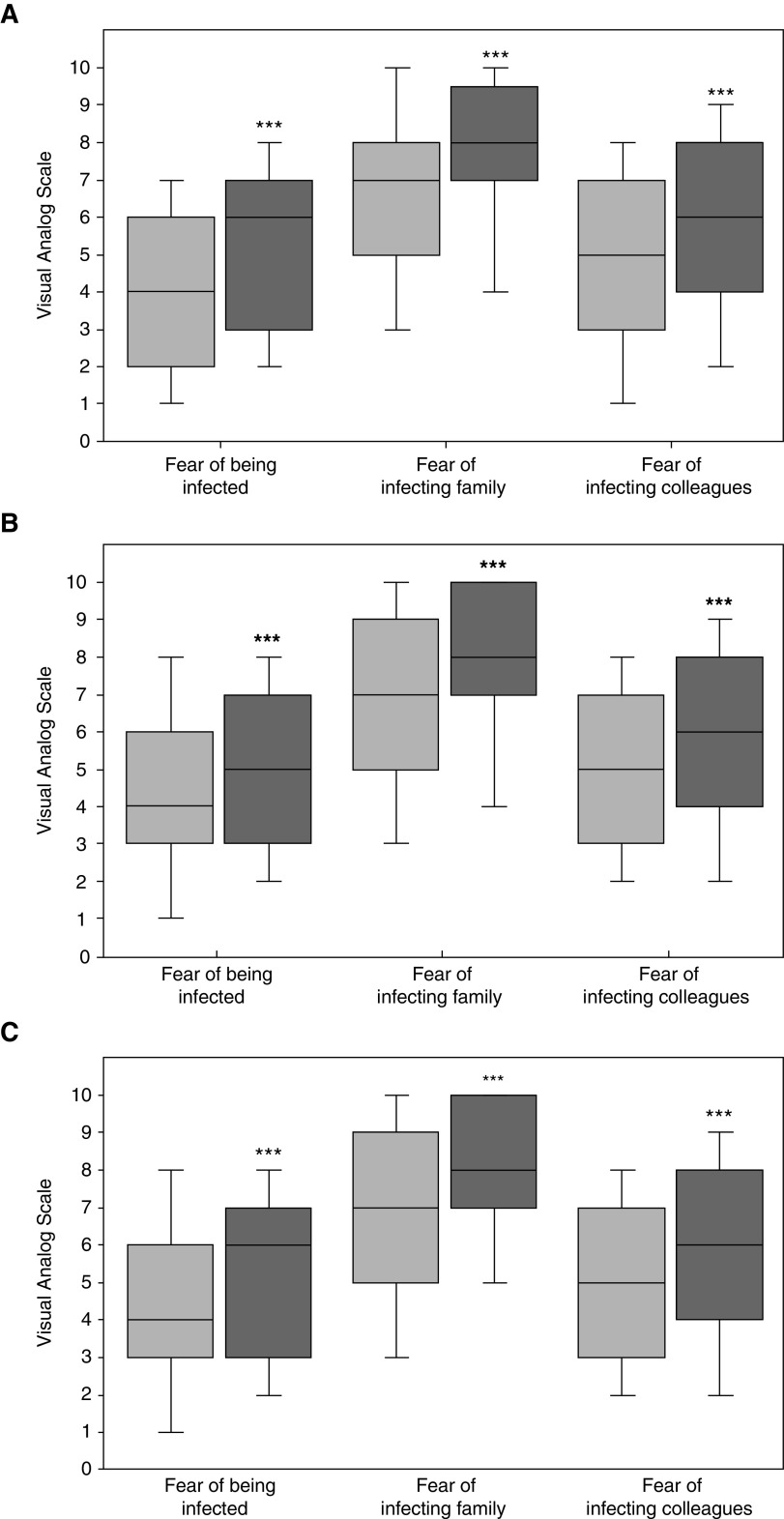
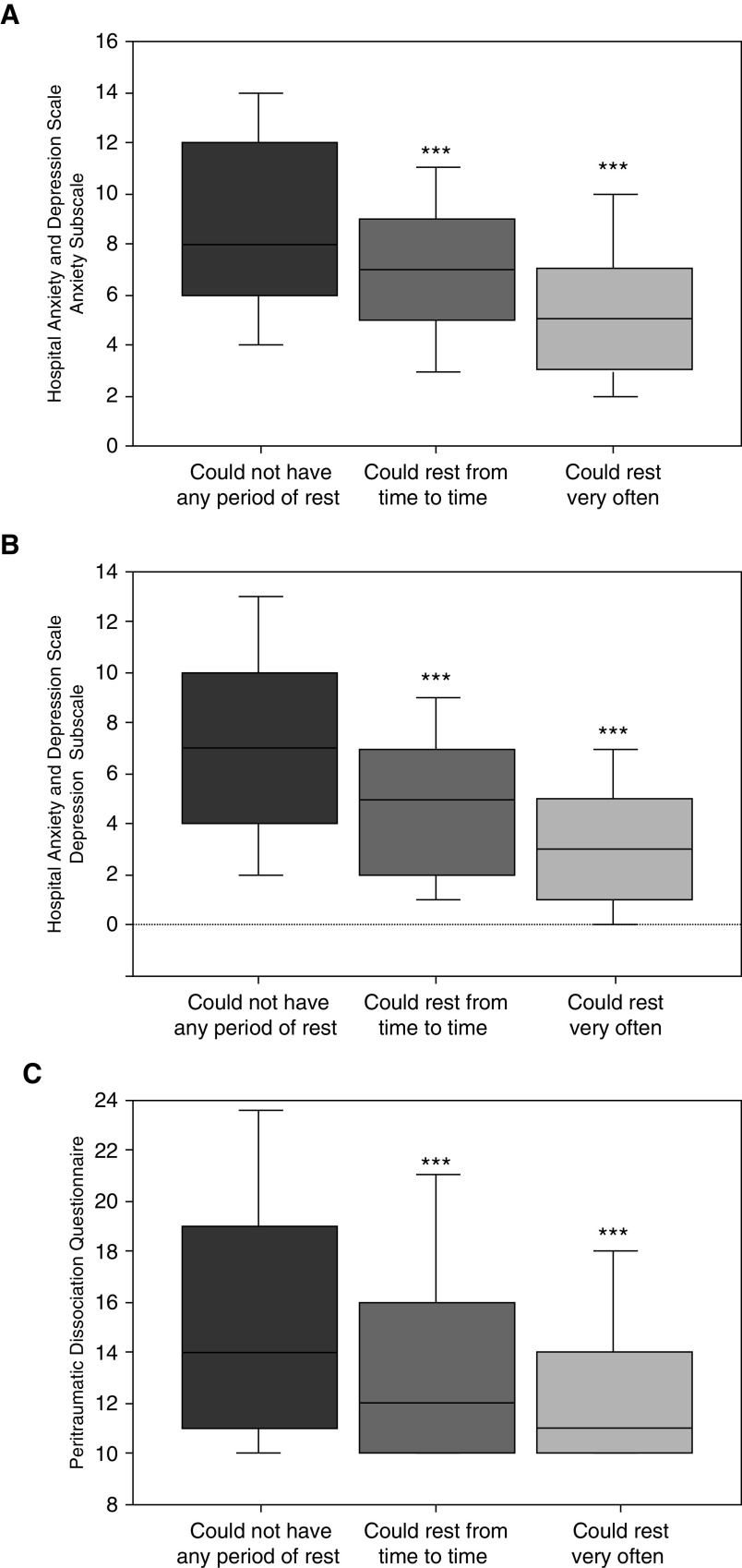
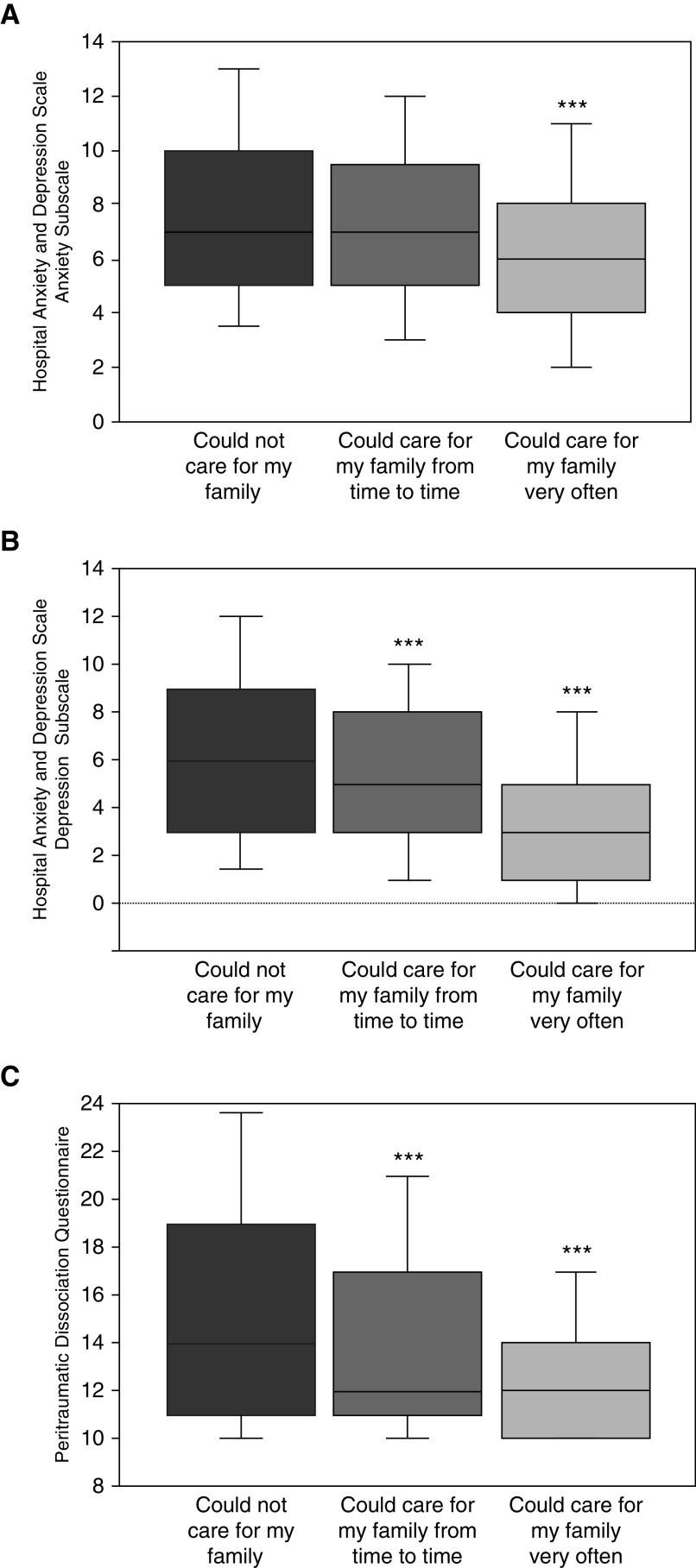
Verification
Claims the paper makes
The claims and statistics of this paper haven’t been checked yet.
Run the check — free, no account needed. It reads the open-access text and checks the sources it cites.
Claims other papers make about this one
Each is checked against this paper’s own text: does it say what the citing paper says it does?
In the citing paper
“Studies from Italy and France reported a high prevalence of depressive symptoms, post-traumatic stress disorder, and burnout; risk factors for adverse psychological outcomes included younger age, female sex, being a nurse, and working directly with patients with COVID-19.7, 8, 9”
From COVID-19: a heavy toll on health-care workers (2021) · cites this paper as [9]
Self-check
Percentages, sums and reported differences re-computed from the paper’s own numbers.
The self-check needs the paper’s full text.
Citations
Cites
The Hospital Anxiety and Depression Scale
Zigmond, A. S., & Snaith, R. P. (1983) · Acta Psychiatrica Scandinavica · doi:10.1111/j.1600-0447.1983.tb09716.x · Cited by 47,139
The Psychological Impact of Quarantine and How to Reduce It: Rapid Review of the Evidence
Brooks, S. K., Webster, R. K., Smith, L. E., Woodland, L., Wessely, S., Greenberg, N., & Rubin, G. J. (2020) · doi:10.2139/ssrn.3532534 · Cited by 16,394
The psychological impact of quarantine and how to reduce it: Rapid review of the evidence
Brooks, S. K., Webster, R. K., Smith, L. E., Woodland, L., Wessely, S., Greenberg, N., & Rubin, G. J. (2020) · The Lancet · doi:10.1016/s0140-6736(20)30460-8 · Cited by 16,378
Lai, J., Ma, S., Wang, Y., Cai, Z., Hu, J., Wei, N., Wu, J., Du, H., Chen, T., Li, R., et al. (2020) · JAMA Network Open · doi:10.1001/jamanetworkopen.2020.3976 · Cited by 8,015
Hospital Nurse Staffing and Patient Mortality, Nurse Burnout, and Job Dissatisfaction
Aiken, L. H. (2002) · JAMA · doi:10.1001/jama.288.16.1987 · Cited by 5,226
Pappa, S., Ntella, V., Giannakas, T., Giannakoulis, V. G., Papoutsi, E., & Katsaounou, P. (2020) · Brain Behavior and Immunity · doi:10.1016/j.bbi.2020.05.026 · Cited by 3,617 · cited 2×
“Furthermore, in a systematic review and meta-analysis (4), anxiety was assessed in 12 studies, with a pooled prevalence of 23.”
BackgroundAlhazzani, W., Møller, M. H., Arabi, Y. M., Loeb, M., Gong, M. N., Fan, E., Oczkowski, S., Levy, M. M., Derde, L., Dzierba, A., et al. (2020) · Intensive Care Medicine · doi:10.1007/s00134-020-06022-5 · Cited by 2,105
The mental health of medical workers in Wuhan, China dealing with the 2019 novel coronavirus.
Kang, L., Li, Y., Hu, S., Chen, M., Yang, C., Yang, B. X., Wang, Y., Hu, J., Lai, J., Ma, X., et al. (2020) · The Lancet Psychiatry · doi:10.1016/s2215-0366(20)30047-x · Cited by 2,061
Educational Levels of Hospital Nurses and Surgical Patient Mortality
Aiken, L. H. (2003) · JAMA · doi:10.1001/jama.290.12.1617 · Cited by 1,780
Effect of Reducing Interns' Work Hours on Serious Medical Errors in Intensive Care Units
Landrigan, C. P., Rothschild, J. M., Cronin, J. W., Kaushal, R., Burdick, E., Katz, J. T., Lilly, C. M., Stone, P. H., Lockley, S. W., Bates, D. W., et al. (2004) · New England Journal of Medicine · doi:10.1056/nejmoa041406 · Cited by 1,760 · cited 1×
“In a randomized study, serious medical errors committed by interns were substantially more common when the interns had frequent shifts of 24 hours or more (24).”
Background
Cited by
Sorted by citations
Items 101–200 of 276
Providing compassionate care in the ICU
Curtis, J. R., & Levy, M. M. (2022) · American Journal of Respiratory and Critical Care Medicine · doi:10.1164/rccm.202112-2787ed · Cited by 13
The psychological impact of COVID-19 pandemic on healthcare workers
Tong, F., Zhang, L., Huang, L., Yang, H., Wen, M., Jiang, L., Zou, R., Liu, F., Peng, W., Huang, X., et al. (2022) · Frontiers in Public Health · doi:10.3389/fpubh.2022.963673 · Cited by 13
Roger, C., Ling, L., Pétrier, M., Elotmani, L., Atchade, E., Allaouchiche, B., Aubrun, F., Constantin, J., Dahyot‐Fizelier, C., Delhaye, N., et al. (2024) · Annals of General Psychiatry · doi:10.1186/s12991-023-00488-5 · Cited by 14
Köse, S., Gezginci, E., Göktaş, S., & Murat, M. (2021) · Intensive and Critical Care Nursing · doi:10.1016/j.iccn.2021.103161 · Cited by 13
Mental Health of Nurses during the Fourth Wave of the COVID-19 Pandemic in Poland
Dziedzic, B., Kobos, E., Sienkiewicz, Z., & Idzik, A. (2022) · International Journal of Environmental Research and Public Health · doi:10.3390/ijerph19031785 · Cited by 13
Agyei, F. B., Bayuo, J., Baffour, P. K., & Laari, C. K. (2021) · BMC Health Services Research · doi:10.1186/s12913-021-07112-w · Cited by 13
Online mental health care during the COVID-19 pandemic
Guedes, A. D. C., Kantorski, L. P., Willrich, J. Q., Coimbra, V. C. C., Wünsch, C. G., Sperb, L. C. S. D. O., & Sperb, C. B. (2021) · Revista Brasileira de Enfermagem · doi:10.1590/0034-7167-2021-0554 · Cited by 15
Woo, H. Y., Oh, S., Lim, L., Im, H., Lee, H., Ha, E. J., & Ryu, H. G. (2024) · Critical Care Medicine · doi:10.1097/ccm.0000000000006429 · Cited by 12
Ethical obligations for supporting healthcare workers during the COVID-19 pandemic
Supady, A., Curtis, J. R., Brown, C. E., Duerschmied, D., von Zepelin, L. A., Moss, M. M., & Brodie, D. (2021) · European Respiratory Journal · doi:10.1183/13993003.00124-2021 · Cited by 12
Copel, L. C., Smeltzer, S. C., Byrne, C. D., Chen, M., Havens, D. S., Kaufmann, P., Brom, H. M., Durning, J. D., Maldonado, L. T., Bradley, P. K., et al. (2023) · PLoS ONE · doi:10.1371/journal.pone.0282946 · Cited by 15
Osório, F. D. L., Zuardi, A. W., Silveira, I. L. M., Crippa, J. A. S., Hallak, J. E. C., Pereira‐Lima, K., & Loureiro, S. R. (2022) · Frontiers in Psychiatry · doi:10.3389/fpsyt.2022.852157 · Cited by 11
Fujita, K., Kashihara, E., Kanai, O., Hata, H., Yasoda, A., Odagaki, T., & Mio, T. (2021) · Frontiers in Medicine · doi:10.3389/fmed.2021.767110 · Cited by 11
Primary care nurses during the coronavirus disaster and their struggle: Qualitative research
Mizumoto, J., Mitsuyama, T., Kumagaya, S., Eto, M., Izumiya, M., & Horita, S. (2022) · Journal of General and Family Medicine · doi:10.1002/jgf2.566 · Cited by 11
Has COVID-19 taken a heavier toll on the mental health of ICU nurses?
Görmez, A., Elbay, R. Y., & Çağ, Y. (2021) · Intensive and Critical Care Nursing · doi:10.1016/j.iccn.2021.103042 · Cited by 11
Posttraumatic Growth in Intensive Care Unit Health Care Professionals After COVID-19
Azoulay, É., Argaud, L., Labbé, V., Dumas, G., Bruneel, F., Jourdain, M., Guitton, C., Seguin, A., Jaber, S., Schnell, D., et al. (2025) · JAMA Network Open · doi:10.1001/jamanetworkopen.2025.27443 · Cited by 10
Self-citationFighting a family tragedy: family-centred care in times of the COVID-19 pandemic
Zante, B., Camenisch, S. A., Jeitziner, M., Jenni‐Moser, B., & Schefold, J. C. (2020) · Anaesthesiology Intensive Therapy · doi:10.5114/ait.2020.100501 · Cited by 10
Pfeifer, M. R. (2021) · Sustainability · doi:10.3390/su131810055 · Cited by 10
Giraldo, J. D. B., Pulido, J., Valencia, J. G., Acevedo, D. C. A., & Cardeño, C. (2021) · Revista Colombiana de Psiquiatría · doi:10.1016/j.rcp.2021.09.002 · Cited by 15
Oosthuizen, S. J., Bergh, A., Silver, A., Malatji, R., Mfolo, V., & Botha, T. (2021) · African Journal of Primary Health Care & Family Medicine · doi:10.4102/phcfm.v14i1.3034 · Cited by 10
Conn, L. G., Coburn, N. G., Prospero, L. D., Hallet, J. I., Legere, L., MacCharles, T., Slutsker, J., Tagger, R., Wright, F. C., & Haas, B. (2022) · SSM - Qualitative Research in Health · doi:10.1016/j.ssmqr.2022.100147 · Cited by 10
Stress and burnout among Greek critical care nurses during the COVID-19 pandemic
Sikioti, T., Zartaloudi, A., Pappa, D., Μangoulia, P., Fradelos, Ε. C., Kourti, F. E., Koutelekos, I. G., Dousis, E., Margari, N., Stavropoulou, A., et al. (2023) · AIMS Public Health · doi:10.3934/publichealth.2023051 · Cited by 9
Wozniak, H., Tejero-Aranguren, J., Venkataraman, V., Courvoisier, D. S., & Herridge, M. S. (2025) · Journal of Critical Care · doi:10.1016/j.jcrc.2025.155159 · Cited by 9
Sarangi, A., & Kim, D. (2021) · The Southwest Respiratory and Critical Care Chronicles · doi:10.12746/swrccc.v9i41.853 · Cited by 9
Visitors not Welcome: Hospital Visitation Restrictions and Institutional Betrayal
Marmo, S., & Hirsch, J. (2022) · Journal of Policy Practice and Research · doi:10.1007/s42972-022-00063-4 · Cited by 9
Endacott, R., & Blot, S. I. (2022) · Current Opinion in Critical Care · doi:10.1097/mcc.0000000000000995 · Cited by 9
Tian, H., Qiao, T., Teng, J., Chen, K., Ke, J., Shan, L., Li, M., Shen, C., & Han, Y. (2023) · Psychological Medicine · doi:10.1017/s0033291723002271 · Cited by 9
Take control by letting go? Sustainable employability of nurses in Intensive Care Units
Stalpers, D., Tilburgs, B., & van Mol, M. M. C. (2021) · Nursing in Critical Care · doi:10.1111/nicc.12725 · Cited by 9
Fiest, K. M., Krewulak, K. D., Makuk, K., Jaworska, N., Hernández, L., Bagshaw, S. M., Burns, K. E. A., Cook, D. J., Doig, C. J., Fox‐Robichaud, A., et al. (2021) · Critical Care Explorations · doi:10.1097/cce.0000000000000562 · Cited by 10
PTSD Symptoms and Functional Impairment among Nurses Treating COVID-19 Patients
Ayotte, B. J., Scherr, A. E. S., & Kellogg, M. B. (2022) · SAGE Open Nursing · doi:10.1177/23779608221074651 · Cited by 9
Muñoz-Muñoz, M., Carretero-Bravo, J., Pérez-Muñoz, C., & Díaz-Rodríguez, M. (2022) · Healthcare · doi:10.3390/healthcare10050796 · Cited by 9
d’Ussel, M., Fels, A., Durand, X., Lemogne, C., Châtellier, G., Castreau, N., & Adam, F. (2022) · PLoS ONE · doi:10.1371/journal.pone.0267032 · Cited by 9
McPeake, J. M., Sevin, C. M., & Mikkelsen, M. E. (2021) · Current Opinion in Critical Care · doi:10.1097/mcc.0000000000000856 · Cited by 9
Impact of Hospital Visitor Restrictions during the COVID-19 Pandemic
Munshi, L., Odutayo, A., Evans, G. A., Keresteci, M., Drury, J., Kain, D. C., Johnstone, J., Stall, N. M., Barrett, K. A., Slutsky, A. S., et al. (2021) · doi:10.47326/ocsat.2021.02.31.1.0 · Cited by 9
A koronavírus-világjárvány hatása az intenzív ellátásban dolgozók mentális egészségére
Bódi, B., Szvath, P., Mátay, G., Takács, S., Hermann, C., & Zana, Á. (2023) · Orvosi Hetilap · doi:10.1556/650.2023.32888 · Cited by 8
Nussbaum, S. H., Ales, F., Giromini, L., Watson, M., & Erdődi, L. A. (2023) · Psychological Injury and Law · doi:10.1007/s12207-023-09487-z · Cited by 8
Pestana, D., Moura, K., Moura, C., Mouliakis, T., D’Aragon, F., Tsang, J. L. Y., & Binnie, A. (2024) · PLoS ONE · doi:10.1371/journal.pone.0290749 · Cited by 9
Twenty articles that critical care clinicians should read about COVID-19
Tsang, J. L. Y., Binnie, A., & Fowler, R. (2021) · Intensive Care Medicine · doi:10.1007/s00134-020-06329-3 · Cited by 8
Yang, X., Miao, J., Fan, W., Wang, L., Sun, S., Li, H., Wang, N., Wang, X., Lin, M., & He, R. (2021) · Frontiers in Psychology · doi:10.3389/fpsyg.2021.747557 · Cited by 8
Poiroux, L., Constan, A., Blanchard, P., Morfin, R., Micaëlli, D., & Valéra, S. (2021) · Nursing in Critical Care · doi:10.1111/nicc.12591 · Cited by 8
Impact of COVID-19 Pandemic on Pediatric Intensive Care Unit Visiting Policies: A Worldwide Survey
Camporesi, A., Zanin, A., Kanaris, C., Gemma, M. F., & Lanziotti, V. S. (2021) · Journal of Pediatric Intensive Care · doi:10.1055/s-0041-1739263 · Cited by 8
In the context of COVID-19: the impact of employees’ risk perception on work engagement
Hai-Dong, L., Ya-Juan, Y., & Lu, L. (2022) · Connection Science · doi:10.1080/09540091.2022.2071839 · Cited by 10
How can we help healthcare workers during a catastrophic event such as the COVID-19 pandemic
Wozniak, H., Benzakour, L., Larpin, C., Sgardello, S., Moullec, G., Corbaz, S., Roos, P., Vieux, L., Juvet, T. M., Suard, J.-C., et al. (2022) · Healthcare · doi:10.3390/healthcare10061113 · Cited by 7
Implementation science research in the intensive care unit: a scoping review
Sun, Y., Ding, M., Liu, C., Dong, W.-S., Xia, Y., & Wei, L. (2025) · BMJ Open · doi:10.1136/bmjopen-2025-106654 · Cited by 7
Gast, S., Barroso, J. V., Blanchard, F. A., Campbell, A. A., Carter, S. J., Clark, E. V., Hilton, R., Branson, R. D., Greenberg, S., & Kleinpell, R. M. (2022) · American Journal of Critical Care · doi:10.4037/ajcc2022784 · Cited by 7
Burnout Syndrome During COVID-19 Second Wave on ICU Caregivers
Caillet, A., Fillon, M., Plou, M., Tisson, E., Vacheron, C., & Allaouchiche, B. (2022) · The Journal of Critical Care Medicine · doi:10.2478/jccm-2022-0026 · Cited by 7
Przyłęcki, P., Wieczorkowska, M., Pawlak, A., Cedrowska-Adamus, W., & Gulczyńska, E. (2023) · Frontiers in Public Health · doi:10.3389/fpubh.2023.1187312 · Cited by 7
Foster, J. R., Lee, L. A., Seabrook, J. A., Ryan, M. J., Slumkoski, C., Walls, M., Betts, L. J., Burgess, S. A., Moghadam, N., Garros, D., et al. (2023) · Canadian Journal of Anesthesia/Journal canadien d anesthésie · doi:10.1007/s12630-023-02547-7 · Cited by 7
Song, C.-S., Ma, S.-R., Lee, J.-Y., & Chun, B.-Y. (2024) · Healthcare · doi:10.3390/healthcare12050559 · Cited by 7
The Legal and Ethical Dimensions of Hospital Visitation Bans in the COVID-19 Era
Lassi, N., Jiang, S., & Du, Y. (2025) · Healthcare · doi:10.3390/healthcare13030288 · Cited by 7
Mental health during the first wave of COVID-19 in Canada, the USA, Brazil and Italy
Turna, J., Patterson, B. A., Bergmann, C. G., Lamberti, N., Rahat, M., Dwyer, H., Francisco, A. P., Vismara, M. E. M., Dell’Osso, B. M., Sideris, B., et al. (2021) · International Journal of Psychiatry in Clinical Practice · doi:10.1080/13651501.2021.1956544 · Cited by 7
Ecarnot, F., Lombion, S., Pourrez, A., Laurent, A., Fournier, A., Lheureux, F., Loiseau, M., Rigaud, J., Binquet, C., Meunier‐Beillard, N., et al. (2022) · PLoS ONE · doi:10.1371/journal.pone.0274326 · Cited by 10
van den Boogaard, M., & Zegers, M. (2022) · Intensive and Critical Care Nursing · doi:10.1016/j.iccn.2022.103258 · Cited by 7
An outbreak of restrictive intensive care unit visiting policies
dos Santos, S. S., & Nassar, A. P. (2021) · Intensive and Critical Care Nursing · doi:10.1016/j.iccn.2021.103140 · Cited by 7
Learning Systems as a Path to Improve ICU Staff Wellbeing
McPeake, J. M., Iwashyna, T. J., & Salluh, J. I. (2022) · CHEST Journal · doi:10.1016/j.chest.2022.03.017 · Cited by 7
Sharma, M., Wahlster, S., Town, J. A., Patel, P. V., Jannotta, G. E., Amorim, E., Lewis, A. K., Greer, D. M., Maia, I. S., Kross, E. K., et al. (2024) · Critical Care Science · doi:10.62675/2965-2774.20240112-en · Cited by 6
Impact psychologique de la pandémie de COVID-19 sur les soignants en réanimation
Laurent, A., Fournier, A., Poujol, A.-L., Deltour, V., Lheureux, F., Meunier‐Beillard, N., Loiseau, M., Ecarnot, F., Rigaud, J., Binquet, C., et al. (2021) · Médecine Intensive Réanimation · doi:10.37051/mir-00075 · Cited by 6
Impact of the COVID-19 Pandemic on the Hawai'i Nursing Workforce: A Cross-sectional Survey.
Fontenot, H. B., Michel, A. D., Lim, E., Glauberman, G., Ryan, N., Davis, K. F., & Mattheus, D. J. (2022) · PubMed Central · Cited by 6
Türkmen, E., & Kebapçı, A. (2022) · Journal of Nursing Scholarship · doi:10.1111/jnu.12779 · Cited by 6
Evolution of Visiting the Intensive Care Unit
Milner, K. A. (2023) · Critical Care Clinics · doi:10.1016/j.ccc.2023.01.005 · Cited by 6
The effect of the COVID-19 pandemic on health care workers’ anxiety levels: a meta-analysis
Zhang, L., Yan, M., Takashima, K., Guo, W., & Yamada, Y. (2022) · PeerJ · doi:10.7717/peerj.13225 · Cited by 6
Manning, J. C., Bramley, L., Coad, J. E., Evans, C., Evans, K., Tinkler, L., & Cooper, J. E. (2021) · Journal of research in nursing · doi:10.1177/17449871211018737 · Cited by 6
PROGNOSTIC ASSESSMENT OF STRESS-RELATED FACTORS IN HEALTHCARE WORKERS DURING THE COVID-19 PANDEMIC
Пінчук, І., Pishel, V., Polyvіanaia, M., Chumak, S., Ilnytska, T., Степанова, Н. Р., Filimonova, N. B., Kopchak, O. O., Yachnik, Y., Kolodezhny, O., et al. (2022) · Psychiatria Danubina · doi:10.24869/psyd.2022.572 · Cited by 6
Liu, Z., Zhang, H., Wang, N., Feng, Y., Liu, J., Wu, L., Liu, Z., Liu, X., Liang, L., Liu, J., et al. (2023) · Journal of Multidisciplinary Healthcare · doi:10.2147/jmdh.s421619 · Cited by 5
Purgato, M., Tedeschi, F., Riello, M., Zaccoletti, D., Mediavilla, R., Ayuso‐Mateos, J. L., MacTaggart, D., Barbui, C., & Rusconi, E. (2025) · BMJ Mental Health · doi:10.1136/bmjment-2024-301379 · Cited by 5
Kolozsvári, L. R., Rekenyi, V., Garbóczy, S., Hőgye-Nagy, Á., Szemán-Nagy, A., Sayed-Ahmad, M., & Héjja-Nagy, K. (2023) · International Journal of Environmental Research and Public Health · doi:10.3390/ijerph20085491 · Cited by 7
Pujo, J. M., Fitriani, D. Y., Adi, N. P., Portecop, P., Résière, D., Mansyur, M., & Kallel, H. (2022) · Disaster Medicine and Public Health Preparedness · doi:10.1017/dmp.2022.24 · Cited by 5
Mosolova, E., Sosin, D. N., & Mosolov, S. N. (2021) · IntechOpen eBooks · doi:10.5772/intechopen.98292 · Cited by 5
Mental Health Impact and Burnout in Critical Care Staff During Coronavirus Disease 2019 Outbreak
Gramaglia, C. M., Bazzano, S., Gambaro, E., Cena, T., Azzolina, D., Costa, A. N., Zeppegno, P., & Corte, F. D. (2022) · Türk anesteziyoloji ve reanimasyon derneği dergisi · doi:10.5152/tjar.2022.21263 · Cited by 5
Job strain and psychological impact of COVID-19 in ICU caregivers during pandemic period
Caillet, A., Conejero, I., & Allaouchiche, B. (2021) · Anaesthesia Critical Care & Pain Medicine · doi:10.1016/j.accpm.2021.100850 · Cited by 5
Niecke, A., Henning, M., Hellmich, M., Erim, Y., Morawa, E., Beschoner, P., Jerg‐Bretzke, L., Geiser, F., Baranowski, A., Weidner, K., et al. (2024) · Medizinische Klinik - Intensivmedizin und Notfallmedizin · doi:10.1007/s00063-024-01164-6 · Cited by 4
Garner, O., Velamuri, K., Staggers, K. A., & Braun, A. B. (2023) · BMC Medical Education · doi:10.1186/s12909-023-04358-2 · Cited by 4
Voices of Musicians: Virtual Live Bedside Music Concerts in Inpatient Care
Ambler, M., Janss, A., Stafford, R. S., Lin, B. Y., Florom-Smith, A. L., & Kang, A. W. C. (2023) · Healthcare · doi:10.3390/healthcare11222929 · Cited by 4
Kecemasan, Depresi, dan Kualitas Tidur Mahasiswa Praktek Klinik Keperawatan Saat Pandemi COVID-19
Widiani, E., Rahmawati, I., & Hidayah, N. (2023) · Window of Health Jurnal Kesehatan · doi:10.33096/woh.v6i01.284 · Cited by 4
Dissociation in Long-Term Care Home Staff During COVID-19: Challenges and Promising Practices
Duan, Y., Smith, L. J., DeGraves, B. S., Angel, C., Wang, A., Saeidzadeh, S., Lanius, R. A., & Estabrooks, C. A. (2024) · Journal of the American Medical Directors Association · doi:10.1016/j.jamda.2024.105357 · Cited by 4
Surawattanasakul, V., Kiratipaisarl, W., Phetsayanavin, V., Pholvivat, C., Auernaruemonsuk, N., Lamlert, C., Soonthornvinit, W., Hengboriboon, L., & Siviroj, P. (2025) · Healthcare · doi:10.3390/healthcare13030335 · Cited by 4
Perron, C., Martisella, M., & Bouthillier, M.-É. (2022) · Frontières · doi:10.7202/1089343ar · Cited by 4
Amir‐Behghadami, M., & Janati, A. (2021) · Informatics in Medicine Unlocked · doi:10.1016/j.imu.2021.100615 · Cited by 4
Nugent, S. M., Golden, S. E., Chapa, J., Tuepker, A., Slatore, C. G., & Vranas, K. C. (2023) · Critical Care Explorations · doi:10.1097/cce.0000000000000854 · Cited by 4
Kumar, S., Patnaik, R., Ghatak, T., Kumar, A., Verma, A., Singh, R. K., & Sanjeev, O. P. (2022) · Indian Journal of Critical Care Medicine · doi:10.5005/jp-journals-10071-24245 · Cited by 3
Shirvani, M. M., Rezaee, N., Tabatabaei, S. M. N., & Navidian, A. (2023) · Medical - Surgical Nursing Journal · doi:10.5812/msnj-136064 · Cited by 3
Care and compassion at time of pandemic: an ICU field experience in Italy
Ferrari, A., Russo, S., Quagliotto, C., Granello, R., Menato, L., Nola, A., Addesa, S., Cassella, S., Farnia, A., Strepparava, M. G., et al. (2022) · Journal of Anesthesia Analgesia and Critical Care · doi:10.1186/s44158-021-00031-6 · Cited by 3
Dumont, C., & Babykina, G. (2022) · Healthcare · doi:10.3390/healthcare10081404 · Cited by 3
Gu, W., Liu, X., Sun, R., Jiang, Y., Cao, Z., Wu, M., Ma, J., Chen, Z., Chen, Y., Zhang, Y., et al. (2021) · Frontiers in Medicine · doi:10.3389/fmed.2021.740064 · Cited by 3
Shiraishi, T., Ataka, K., Kimura, M., Nabeshima, N., Ito, T., Ide, A., Kondo, T., Ozaki, A., & Tsukada, J. (2022) · Palliative Care Research · doi:10.2512/jspm.17.65 · Cited by 3
Review Literatur: Faktor Resiko Depresi dan Kecemasan Pada Tenaga Kesehatan Selama Wabah COVID-19
Widiani, E., & Palupi, L. M. (2022) · Jurnal Kesehatan Andalas · doi:10.25077/jka.v11i1.1923 · Cited by 3
Burnout and Depression of Medical Faculty: After Mass Resignation of Junior Doctors in Korea
Seong, S. J., Hwang, J. Y., Song, J. Y., Park, K. J., Jo, Y. T., Lee, J.-H., & Park, D.-G. (2026) · Journal of Korean Medical Science · doi:10.3346/jkms.2026.41.e102 · Cited by 2
Richman, N., McNaughton, C. D., Wolfe, C. C., Overbeeke, T., & McCoin, N. S. (2021) · AEM Education and Training · doi:10.1002/aet2.10579 · Cited by 2
Predisposição dos transtornos ansiosos em profissionais de saúde: uma revisão integrativa
Ferreira, D. D. A. S., Melo, K. C., Miranda, L. S. C., Oliveira, A. T. F., Hernandes, L. F., Bomfim, D. M. M., Ferreira, E. H. B., Moraes, K. R. P., Duarte, A. P. C., Chaves, J. N., et al. (2021) · Research Society and Development · doi:10.33448/rsd-v10i13.21238 · Cited by 2
Lived Experiences of Healthcare Professionals During the COVID-19 Public Health Emergency
Singh, R., & Malik, A. (2022) · Advances in psychology, mental health, and behavioral studies (APMHBS) book series · doi:10.4018/978-1-7998-8813-0.ch001 · Cited by 2
Fortællinger fra en pandemi – intensivsygeplejerskernes oplevelser af første bølge af COVID-19
Holm, A., & Dreyer, P. (2022) · Nordisk Sygeplejeforskning · doi:10.18261/nsf.12.2.4 · Cited by 2
Gender sensitivity of the COVID-19 mental health research in Europe: a scoping review
López-Atanes, M., Sáenz-Herrero, M., Zach, N., Lakeberg, M., Ugedo, A., Fraile-García, E., Erkoreka, L., Segarra, R., Schäfer, I., & Brand, T. (2024) · International Journal for Equity in Health · doi:10.1186/s12939-024-02286-1 · Cited by 2
Saida, I. B., Raouene, S., Toumi, R., Ennouri, E., Jerbi, S., Meddeb, K., Maoua, M., & Boussarsar, M. (2025) · Scientific Reports · doi:10.1038/s41598-025-22187-9 · Cited by 2
Ismail, I., Djalil, N., Simunati, S., Sukriyadi, S., & Basri, M. (2023) · Bina Generasi Jurnal Kesehatan · doi:10.35907/bgjk.v14i2.245 · Cited by 2
Ansiedade em profissionais de saúde durante a pandemia do novo coronavírus: Uma revisão integrativa
Fenzke, M. N., Aguiar, B. F., Viante, W. J. M., Vicari, K., Brotto, B. R. P. P., & Miranda, F. M. D. (2021) · Research Society and Development · doi:10.33448/rsd-v10i9.18025 · Cited by 2
d’Ussel, M., Adam, F., Fels, A., Châtellier, G., & Philippart, F. (2022) · Frontiers in Public Health · doi:10.3389/fpubh.2022.913126 · Cited by 2
Knowledge mobilization in critical care and the evolving communication role of nurses
Kelly, S., Garner, J., Treadway, V., & Sadera, G. (2022) · Nursing in Critical Care · doi:10.1111/nicc.12821 · Cited by 3
Djillali, S., Ouandelous, N. N., Zouani, N., von Roten, F. C., & de Roten, Y. (2021) · Annales Médico-psychologiques revue psychiatrique · doi:10.1016/j.amp.2021.03.006 · Cited by 2
Supporting a Precious Resource: Healthcare Clinicians
Jun, J., & Costa, D. K. (2020) · American Journal of Respiratory and Critical Care Medicine · doi:10.1164/rccm.202009-3576ed · Cited by 2
Sabah, N. U., Kawish, A. B., Javed, S., Kiyani, Y. F., Batool, S., & Khan, S. A. (2024) · Pakistan Journal of Health Sciences · doi:10.54393/pjhs.v5i07.1306 · Cited by 1
White, P., Williams, R., & Harrington, J. (2024) · Holistic Nursing Practice · doi:10.1097/hnp.0000000000000717 · Cited by 1
Metadata
- Authors
- Azoulay, E., Cariou, A., Bruneel, F., Demoule, A., Kouatchet, A., Reuter, D., Souppart, V., Combes, A., Klouche, K., Argaud, L., Barbier, F., Jourdain, M., Reignier, J., Papazian, L., Guidet, B., Géri, G., Resche-Rigon, M., Guisset, O., Labbé, V., Mégarbane, B., Van Der Meersch, G., Guitton, C., Friedman, D., Pochard, F., Darmon, M., & Kentish-Barnes, N.
- Affiliations
- Medical ICU, St. Louis University Hospital, Public Assistance Hospitals of Paris, Paris, France
- Université Paris Cité (FR)
- Hôpital André Mignot (FR)
- Inserm (FR)
- Centre Hospitalier Universitaire d'Angers (FR)
- Centre Hospitalier Sud Francilien (FR)
- Hôpital Saint-Louis (FR)
- Hôpital Lapeyronie (FR)
- Hospices Civils de Lyon (FR)
- Centre hospitalier universitaire d'Orléans (FR)
- Hôpital Roger Salengro (FR)
- Centre Hospitalier Universitaire de Nantes (FR)
- Assistance Publique Hôpitaux de Marseille (FR)
- Assistance Publique – Hôpitaux de Paris (FR)
- Clinical Research Unit, St. Louis Hospital, Paris, France
- Hôpital Saint-André (FR)
- Medical-Surgical ICU, Avicenne University Hospital, Public Assistance Hospitals of Paris, Bobigny, France
- Centre Hospitalier du Mans (FR)
- Hôpital Raymond-Poincaré (FR)
- ORCID
- Venue
- American Journal of Respiratory and Critical Care Medicine
- Publisher
- Oxford University Press (OUP)
- Published
- 2020-11-01
- Volume
- 202
- Issue
- 10
- Pages
- 1388-1398
- ISSN
- 1073-449X (ISSN-L)
- 1535-4970
- PMC
- PMC7667906
- OpenAlex
- W3081772318
- Cited by
- 272
- References
- 36
- Citations by year
- 2026: 10 · 2025: 15 · 2024: 28 · 2023: 38 · 2022: 87 · 2021: 88 · 2020: 6
- FWCI
- 21.92
- Type
- journal article
- Language
- en
- Open access
- hybrid
- doi.org
- Licence
- Locations
- American Journal of Respiratory and Critical Care Medicine (publishedVersion, cc-by-nc-nd)
- PubMed Central (publishedVersion, cc-by-nc-nd)
- PubMed (publishedVersion)
- HAL (submittedVersion, other-oa)
- Topics
- Social Sciences › Psychology › Clinical Psychology › COVID-19 and Mental Health
- Health Sciences › Health Professions › General Health Professions › Healthcare professionals’ stress and burnout
- Health Sciences › Medicine › Public Health, Environmental and Occupational Health › Occupational Health and Burnout
- Keywords
- COVID-19 pandemic, critical care clinicians, anxiety, depression, peritraumatic dissociation, mental health, mental health of healthcare workers, intensive care unit, nurses, sex differences, fear of infection, visitor restrictions, end-of-life decisions, psychological burden
- MeSH terms
- Betacoronavirus, COVID-19, SARS-CoV-2, Adult, Anxiety, Critical Care, Cross-Sectional Studies, Depression, Female, France, Health Personnel, Humans, Male, Pneumonia, Viral, Surveys and Questionnaires, Stress, Psychological, Prevalence, Coronavirus Infections, Stress Disorders, Traumatic, Pandemics
About these checks
Registry, retraction, Cites and statistics results are computed, not judged, with one exception: a printed reference that no index lists is read once by a model before it counts as a citation error. Claims are extracted by a model and kept only when their quote appears verbatim in the text; each cited source is then checked, with a model’s help, for whether it says what the claim relies on. Those verdicts can be wrong — read the claim’s quote and the cited source before relying on one.
Statistics and arithmetic are recomputed, not judged.
Confidence bands are shown only for fields calibrated on our annotated test set. None is calibrated yet, so no band is shown.
What counts as a claim ›How we measure confidence ›How we check this ›
Are you an author, or do you see a problem with this page? Request a review
