

The DOI matches its Crossref record; 25 of the 26 references it cites were found in a registry or an index; 1 of the 29 sources its claims cite were checked for support.
Cross-talk between HIF and PD-1/PD-L1 pathways in carcinogenesis and therapy
Open accessAbstract
Tumor-associated hypoxia plays an important role in carcinogenesis and metastasis. The expression, activation, and stabilization of hypoxia-inducible transcription factors (HIFs) support malignant cell survival, proliferation, plasticity, and motility. Hypoxia also upregulates the expression of programmed cell death ligand 1 (PD-L1) in malignant and immune regulatory cells. Therefore, the combination of HIF inhibitors and checkpoint inhibitors (CPIs) is promising for boosting antitumor immunity and diminishing malignant cell plasticity and therapy resistance. In this issue of the JCI, Salman et al. report the development of a specific agent that inhibited HIF-1/2-mediated gene expression in tumor cells and suppressed tumor growth. Bailey, Liu, et al. in this issue demonstrate that targeting HIF-1α abrogated PD-L1-mediated immune evasion by suppressing PD-L1 expression on malignant and myeloid regulatory cells, causing tumor rejection. These findings suggest that targeting the HIF/PD-L1 axis with specific HIF inhibitors should improve the safety and efficacy of CPIs for cancer therapy.
Overview
AI snapshot
Written from the paper’s full text.
TL;DR
This JCI commentary reviews the cross-talk between hypoxia-inducible factors (HIFs) and the PD-1/PD-L1 axis in cancer, arguing that combining HIF inhibitors with checkpoint inhibitors (CPIs) could improve antitumor immunity and reduce therapy resistance. It highlights two companion JCI studies showing that HIF inhibition suppresses tumor growth and PD-L1–mediated immune evasion.
Key findings
- Hypoxia stabilizes HIF-1/HIF-2, which promote angiogenesis, immunosuppression, EMT, and metabolic reprogramming, and upregulate PD-L1 on malignant and myeloid regulatory cells; hypoxia correlates with worse prognosis and resistance to therapy.
- Salman et al. developed a low-molecular-weight agent inhibiting HIF-1/2–mediated gene expression that suppressed tumor growth in mice, reduced vascularization and immunosuppression (fewer TAMs and MDSCs via suppressed IL-4, IL-13, CXCL1), increased CTL/NK infiltration (via CXCL9/CXCL10), and raised the complete response rate to anti–PD-1 from 25% to 67%.
- Bailey, Liu, et al. showed that pharmaceutical or genetic HIF-1α targeting suppressed PD-L1 on malignant cells and myeloid regulatory cells, reactivated TILs, caused tumor rejection, downregulated PD-1, upregulated granzyme B and perforin, and potentiated anti–CTLA-4 therapy.
- Bailey, Liu, et al. also found that HIF-1α inhibition blocked PD-L1 at the tumor site but induced PD-L1 in normal tissues, suggesting a route to safer immunotherapy by differential PD-L1 regulation.
Methods
- Design: a commentary/review article in the Journal of Clinical Investigation discussing the HIF/PD-L1 axis and two companion studies published in the same issue.
- Data: no primary data; the article synthesizes published experimental and clinical literature (including refs. 1–25) and describes the findings of Salman et al. (ref. 23) and Bailey, Liu, et al. (ref. 24).
- Analysis: narrative synthesis of mechanisms and therapeutic implications, with a proposed framework for combining HIF inhibitors with CPIs.
Limitations
- Not stated in the paper (the commentary does not include a limitations section).
- Evident from the text: this is a commentary without original data, so its conclusions rest on the two cited companion studies and prior literature; the highlighted findings derive largely from murine tumor models, and the authors note that testing in different tumor models and understanding interactions with TGF-β, IL-1, hormones, and growth factors remain necessary.
Model-written summary. Check it against the paper before relying on it.
Integrity signals
Registry
Cites
Statistics
Figures
Verification
Claims the paper makes
27 Not checked yet · 4 Own interpretation · 1 Partly supported · 1 No basis given · accuracy not yet measured
The cited sources support only part of this claim — read each source’s verdict below.
In the paper
“For instance, hypoxia impacts the efficiency of cancer immunotherapy by contributing to the immune-eliminated phenotype, which is a key barrier to the therapeutic effect of adoptive cell therapy (5).”
§ Cross-talk between HIF and PD-1/PD-L1 pathways in carcinogenesis and therapy > Hypoxia-inducible factors in cancer
What the sources say
- Partly supportedcites [5] sourceExperimental — accuracy not yet measured
Section 4 identifies hypoxia as a contributor to the immune-excluded phenotype in solid tumors and describes impaired T-cell infiltration as a challenge for immunotherapy. Section 4.1 links these barriers to poor clinical response. The cited paper says “immune-excluded,” not “immune-eliminated”; it does not establish the latter phenotype. (LLM, conf=0.87)
plaindirect- Asserted: passes — The authors put it forward as true.
- Checkable: passes — It can be checked against evidence.
- Load-bearing: passes — The paper’s conclusions depend on it.
- Based: passes — The paper gives a reason why it holds.
- Partly supported
A conclusion the paper draws from its own results — it cites no other source for it, so there is none to check. The quote shows it is in the paper.
In the paper
“These findings suggest that targeting the HIF/PD-L1 axis with specific HIF inhibitors should improve the safety and efficacy of CPIs for cancer therapy.”
§ Cross-talk between HIF and PD-1/PD-L1 pathways in carcinogenesis and therapy > Abstract
hedgeddirect- Asserted: passes — The authors put it forward as true.
- Checkable: unclear — It is unclear whether it could be checked against evidence.
- Load-bearing: passes — The paper’s conclusions depend on it.
- Based: passes — The paper gives a reason why it holds.
- Rests on an assumption: The murine tumor model results for HIF inhibitors and CPI combinations are predictive of human cancer therapy.
In the paper
“The expression, activation, and stabilization of hypoxia-inducible transcription factors (HIFs) support malignant cell survival, proliferation, plasticity, and motility.”
§ Cross-talk between HIF and PD-1/PD-L1 pathways in carcinogenesis and therapy > Abstract
What the sources say
- Not checked yetcites [1] source
plaindirect- Asserted: passes — The authors put it forward as true.
- Checkable: passes — It can be checked against evidence.
- Load-bearing: passes — The paper’s conclusions depend on it.
- Based: passes — The paper gives a reason why it holds.
In the paper
“Tumor-associated hypoxia plays an important role in carcinogenesis and metastasis.”
§ Cross-talk between HIF and PD-1/PD-L1 pathways in carcinogenesis and therapy > Abstract
What the sources say
- Not checked yetcites [1] source
plaincorrelational- Asserted: passes — The authors put it forward as true.
- Checkable: passes — It can be checked against evidence.
- Load-bearing: passes — The paper’s conclusions depend on it.
- Based: passes — The paper gives a reason why it holds.
None of the sources cited for this claim have been checked yet.
In the paper
“Hypoxia also upregulates the expression of programmed cell death ligand 1 (PD-L1) in malignant and immune regulatory cells.”
§ Cross-talk between HIF and PD-1/PD-L1 pathways in carcinogenesis and therapy > Abstract
plaindirect- Asserted: passes — The authors put it forward as true.
- Checkable: passes — It can be checked against evidence.
- Load-bearing: passes — The paper’s conclusions depend on it.
- Based: passes — The paper gives a reason why it holds.
In the paper
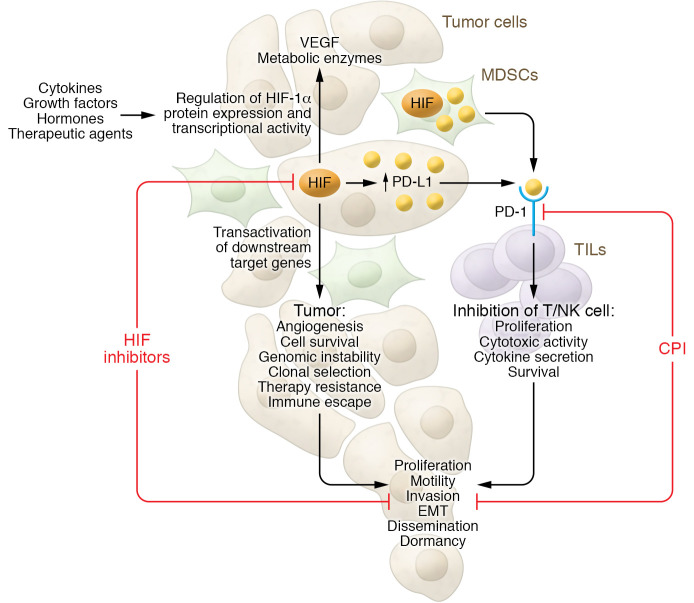
“HIF-1 promotes tumor progression via the stimulation of angiogenesis, immunosuppression, epithelial-mesenchymal transition (EMT), and metabolic reprogramming, supporting malignant cell survival, proliferation, plasticity, and motility (ref. 1 and Figure 1).”
§ Cross-talk between HIF and PD-1/PD-L1 pathways in carcinogenesis and therapy > Hypoxia-inducible factors in cancer
What the sources say
- Not checked yetcites ref. 1
plaindirect- Asserted: passes — The authors put it forward as true.
- Checkable: passes — It can be checked against evidence.
- Load-bearing: passes — The paper’s conclusions depend on it.
- Based: passes — The paper gives a reason why it holds.
In the paper
“Recent data indicate that hypoxia is also able to upregulate expression of PD-L1 in malignant cells via HIF-1α and HIF-2α (17).”
§ Cross-talk between HIF and PD-1/PD-L1 pathways in carcinogenesis and therapy > Conclusions
What the sources say
- Not checked yetcites [17] source
hedgeddirect- Asserted: passes — The authors put it forward as true.
- Checkable: passes — It can be checked against evidence.
- Load-bearing: passes — The paper’s conclusions depend on it.
- Based: passes — The paper gives a reason why it holds.
In the paper
“For instance, analysis of the melanoma genome atlas data shows a correlation of the HIF-1 signaling signature with PD-L1 mRNA expression, especially with IFN-γ–induced expression of PD-L1 mRNA (25).”
§ Cross-talk between HIF and PD-1/PD-L1 pathways in carcinogenesis and therapy > Conclusions
What the sources say
- Not checked yetcites [25] source
plaincorrelational- Asserted: passes — The authors put it forward as true.
- Checkable: passes — It can be checked against evidence.
- Load-bearing: passes — The paper’s conclusions depend on it.
- Based: passes — The paper gives a reason why it holds.
None of the sources cited for this claim have been checked yet.
In the paper
“Importantly, HIF-1α inhibition synergizes with anti–PD-1 therapy to inhibit tumor development (Figure 1).”
§ Cross-talk between HIF and PD-1/PD-L1 pathways in carcinogenesis and therapy > PD-L1/HIF cross-talk and therapeutic applicability
plaindirect- Asserted: passes — The authors put it forward as true.
- Checkable: passes — It can be checked against evidence.
- Load-bearing: passes — The paper’s conclusions depend on it.
- Based: passes — The paper gives a reason why it holds.
In the paper
“Importantly, HIF-1α inhibition potentiated immunotherapeutic effects of anti–CTLA-4 therapy in experimental models.”
§ Cross-talk between HIF and PD-1/PD-L1 pathways in carcinogenesis and therapy > PD-L1/HIF cross-talk and therapeutic applicability
What the sources say
- Not checked yetcites [24] Bailey, 2022, Targeting HIF-1α abrogates PD-L1–mediated immune evasion in tumor microenvironment but promotes tolerance in normal tissues, J Clin Invest source
plaindirect- Asserted: passes — The authors put it forward as true.
- Checkable: passes — It can be checked against evidence.
- Load-bearing: passes — The paper’s conclusions depend on it.
- Based: passes — The paper gives a reason why it holds.
- It may state two separate claims as one. 15
- Probably not a substantial claim. 3
A conclusion the paper draws from its own results — it cites no other source for it, so there is none to check. The quote shows it is in the paper.
In the paper
“Therefore, the combination of HIF inhibitors and checkpoint inhibitors (CPIs) is promising for boosting antitumor immunity and diminishing malignant cell plasticity and therapy resistance.”
§ Cross-talk between HIF and PD-1/PD-L1 pathways in carcinogenesis and therapy > Abstract
hedgedconditional- Asserted: passes — The authors put it forward as true.
- Checkable: passes — It can be checked against evidence.
- Load-bearing: passes — The paper’s conclusions depend on it.
- Based: passes — The paper gives a reason why it holds.
It may state two separate claims as one.
In the paper
“Bailey, Liu, et al. in this issue demonstrate that targeting HIF-1α abrogated PD-L1–mediated immune evasion by suppressing PD-L1 expression on malignant and myeloid regulatory cells, causing tumor rejection.”
§ Cross-talk between HIF and PD-1/PD-L1 pathways in carcinogenesis and therapy > Abstract
What the sources say
- Not checked yetcites [24] Bailey, 2022, Targeting HIF-1α abrogates PD-L1–mediated immune evasion in tumor microenvironment but promotes tolerance in normal tissues, J Clin Invest source
boosteddirect- Asserted: passes — The authors put it forward as true.
- Checkable: passes — It can be checked against evidence.
- Load-bearing: passes — The paper’s conclusions depend on it.
- Based: passes — The paper gives a reason why it holds.
It may state two separate claims as one.
In the paper
“Hence, in a clinical setting, hypoxia correlates with worse prognosis in different cancer types and, in addition, imparts resistance to different therapeutic approaches (4).”
§ Cross-talk between HIF and PD-1/PD-L1 pathways in carcinogenesis and therapy > Hypoxia-inducible factors in cancer
What the sources say
- Not checked yetcites [4] Semenza, 2002, HIF-1 and tumor progression: pathophysiology and therapeutics, Trends Mol Med source
plaincorrelational- Asserted: passes — The authors put it forward as true.
- Checkable: passes — It can be checked against evidence.
- Load-bearing: unclear — It is unclear whether the paper’s conclusions depend on it.
- Based: passes — The paper gives a reason why it holds.
It may state two separate claims as one.
In the paper
“In this issue of the JCI, Salman et al. report the development of a specific agent that inhibited HIF-1/2–mediated gene expression in tumor cells and suppressed tumor growth.”
§ Cross-talk between HIF and PD-1/PD-L1 pathways in carcinogenesis and therapy > Abstract
What the sources say
- Not checked yetcites [23] Salman, 2022, HIF inhibitor 32-134D eradicates murine hepatocellular carcinoma in combination with anti-PD1 therapy, J Clin Invest source
plaindirect- Asserted: passes — The authors put it forward as true.
- Checkable: passes — It can be checked against evidence.
- Load-bearing: passes — The paper’s conclusions depend on it.
- Based: passes — The paper gives a reason why it holds.
It may state two separate claims as one.
In the paper
“Clinical studies of HIF inhibitors indicate benefit and justify further evaluation either as a single agent or in combination with other antitumor agents (6).”
§ Cross-talk between HIF and PD-1/PD-L1 pathways in carcinogenesis and therapy > Hypoxia-inducible factors in cancer
What the sources say
- Not checked yetcites [6] source
hedgeddirect- Asserted: passes — The authors put it forward as true.
- Checkable: passes — It can be checked against evidence.
- Load-bearing: passes — The paper’s conclusions depend on it.
- Based: passes — The paper gives a reason why it holds.
It may state two separate claims as one.
In the paper
“In a murine melanoma model, inhibition of HIF-1α transcriptional activity results in CCL2- and CCL5-mediated increases in NK cells and CTLs in the tumor bed, and improves the antitumor potential of peptide vaccination and anti–PD-1 blocking antibody (22).”
§ Cross-talk between HIF and PD-1/PD-L1 pathways in carcinogenesis and therapy > PD-L1/HIF cross-talk and therapeutic applicability
What the sources say
- Not checked yetcites [22] source
plaindirect- Asserted: passes — The authors put it forward as true.
- Checkable: passes — It can be checked against evidence.
- Load-bearing: passes — The paper’s conclusions depend on it.
- Based: passes — The paper gives a reason why it holds.
It may state two separate claims as one.
In the paper
“Combination therapies based on PD-1/PD-L1 blockade for a wide range of cancer types have been introduced and can improve patient survival (20).”
§ Cross-talk between HIF and PD-1/PD-L1 pathways in carcinogenesis and therapy > PD-1/PD-L1 axis in cancer
What the sources say
- Not checked yetcites [20] source
plaindirect- Asserted: passes — The authors put it forward as true.
- Checkable: passes — It can be checked against evidence.
- Load-bearing: unclear — It is unclear whether the paper’s conclusions depend on it.
- Based: passes — The paper gives a reason why it holds.
It may state two separate claims as one.
In the paper
“Inducible expression of PD-L1 at the tumor site is involved in cancer escape because its binding to PD-1 on effector T cells causes T cell exhaustion and apoptosis, while apoptosis of regulatory T cells is inhibited (19).”
§ Cross-talk between HIF and PD-1/PD-L1 pathways in carcinogenesis and therapy > PD-1/PD-L1 axis in cancer
What the sources say
- Not checked yetcites [19] Han, 2020, PD-1/PD-L1 pathway: current researches in cancer, Am J Cancer Res
plaindirect- Asserted: passes — The authors put it forward as true.
- Checkable: passes — It can be checked against evidence.
- Load-bearing: passes — The paper’s conclusions depend on it.
- Based: passes — The paper gives a reason why it holds.
It may state two separate claims as one.
In the paper
“HIF-1α inhibition in vivo downregulated PD-1 expression, upregulated cytolytic effector molecules granzyme B and perforin, and decreased apoptosis in TILs in the tumor microenvironment.”
§ Cross-talk between HIF and PD-1/PD-L1 pathways in carcinogenesis and therapy > PD-L1/HIF cross-talk and therapeutic applicability
What the sources say
- Not checked yetcites [24] Bailey, 2022, Targeting HIF-1α abrogates PD-L1–mediated immune evasion in tumor microenvironment but promotes tolerance in normal tissues, J Clin Invest source
plaindirect- Asserted: passes — The authors put it forward as true.
- Checkable: passes — It can be checked against evidence.
- Load-bearing: passes — The paper’s conclusions depend on it.
- Based: passes — The paper gives a reason why it holds.
It may state two separate claims as one.
In the paper
“Bailey, Liu, et al. confirmed these results (24).”
§ Cross-talk between HIF and PD-1/PD-L1 pathways in carcinogenesis and therapy > Conclusions
What the sources say
- Not checked yetcites [24] Bailey, 2022, Targeting HIF-1α abrogates PD-L1–mediated immune evasion in tumor microenvironment but promotes tolerance in normal tissues, J Clin Invest source
plain- Asserted: passes — The authors put it forward as true.
- Checkable: passes — It can be checked against evidence.
- Load-bearing: fails — The paper’s conclusions may not depend on it.
- Based: passes — The paper gives a reason why it holds.
Probably not a substantial claim. The paper’s conclusions may not depend on it.
In the paper
“Salman et al. also support the notion that highly specific and nontoxic HIF inhibitors deserve further investigation when applied alone or in combination with CPIs and other targeted therapy (23).”
§ Cross-talk between HIF and PD-1/PD-L1 pathways in carcinogenesis and therapy > Conclusions
What the sources say
- Not checked yetcites [23] Salman, 2022, HIF inhibitor 32-134D eradicates murine hepatocellular carcinoma in combination with anti-PD1 therapy, J Clin Invest source
plain- Asserted: passes — The authors put it forward as true.
- Checkable: passes — It can be checked against evidence.
- Load-bearing: passes — The paper’s conclusions depend on it.
- Based: passes — The paper gives a reason why it holds.
Probably not a substantial claim.
- Rests on an assumption: HIF inhibitors can be developed that are highly specific and nontoxic in humans.
In the paper
“The synthesized low-molecular-weight agent targeted both HIF-1 and HIF-2, inducing HIF-α subunit degradation and thus inhibiting activation of HIF-1– and HIF-2–target gene transcription.”
§ Cross-talk between HIF and PD-1/PD-L1 pathways in carcinogenesis and therapy > PD-L1/HIF cross-talk and therapeutic applicability
What the sources say
- Not checked yetcites [23] Salman, 2022, HIF inhibitor 32-134D eradicates murine hepatocellular carcinoma in combination with anti-PD1 therapy, J Clin Invest source
plaindirect- Asserted: passes — The authors put it forward as true.
- Checkable: passes — It can be checked against evidence.
- Load-bearing: passes — The paper’s conclusions depend on it.
- Based: passes — The paper gives a reason why it holds.
It may state two separate claims as one.
The paper states this without a source or data behind it here, so there is nothing to check it against. The quote shows it is in the paper.
In the paper
“Numerous experimental and clinical data reveal that hypoxia induces radioresistance and resistance to a variety of chemotherapeutic agents, affects antitumoral immune responses, and controls crucial regulatory pathways, impacting key aspects of cancer biology.”
§ Cross-talk between HIF and PD-1/PD-L1 pathways in carcinogenesis and therapy > Hypoxia-inducible factors in cancer
boosteddirect- Asserted: passes — The authors put it forward as true.
- Checkable: passes — It can be checked against evidence.
- Load-bearing: passes — The paper’s conclusions depend on it.
- Based: passes — The paper gives a reason why it holds.
It may state two separate claims as one.
In the paper
“For instance, in vivo treatment with PX-478 and anti–PD-1 antibodies suppresses tumor growth and prolongs animal survival, which is associated with downregulation of EMT phenotypes, lower immunosuppression, and enhanced TIL homing (21).”
§ Cross-talk between HIF and PD-1/PD-L1 pathways in carcinogenesis and therapy > PD-L1/HIF cross-talk and therapeutic applicability
What the sources say
- Not checked yetcites [21] source
plaincorrelational- Asserted: passes — The authors put it forward as true.
- Checkable: passes — It can be checked against evidence.
- Load-bearing: passes — The paper’s conclusions depend on it.
- Based: passes — The paper gives a reason why it holds.
It may state two separate claims as one.
In the paper
“The authors also reported an interesting observation; although HIF-1α inhibition blocked PD-L1 expression at the tumor site, it induced PD-L1 in normal tissues.”
§ Cross-talk between HIF and PD-1/PD-L1 pathways in carcinogenesis and therapy > PD-L1/HIF cross-talk and therapeutic applicability
What the sources say
- Not checked yetcites [24] Bailey, 2022, Targeting HIF-1α abrogates PD-L1–mediated immune evasion in tumor microenvironment but promotes tolerance in normal tissues, J Clin Invest source
plaindirect- Asserted: passes — The authors put it forward as true.
- Checkable: passes — It can be checked against evidence.
- Load-bearing: passes — The paper’s conclusions depend on it.
- Based: passes — The paper gives a reason why it holds.
It may state two separate claims as one.
In the paper
“In vivo alterations of the tumor immune environment involved fewer protumorigenic tumor-associated macrophages (TAMs) and MDSCs due to the suppression of IL-4, IL-13, and CXCL1 expression, and elevated infiltration by antitumor CTLs and NK cells attracted by elevated CXCL9 and CXCL10 levels.”
§ Cross-talk between HIF and PD-1/PD-L1 pathways in carcinogenesis and therapy > PD-L1/HIF cross-talk and therapeutic applicability
What the sources say
- Not checked yetcites [23] Salman, 2022, HIF inhibitor 32-134D eradicates murine hepatocellular carcinoma in combination with anti-PD1 therapy, J Clin Invest source
plaindirect- Asserted: passes — The authors put it forward as true.
- Checkable: passes — It can be checked against evidence.
- Load-bearing: passes — The paper’s conclusions depend on it.
- Based: passes — The paper gives a reason why it holds.
It may state two separate claims as one.
In the paper
“The smaller tumors were associated with lower tumor vascularization due to decreased expression of multiple genes encoding angiogenic factors, and lower immunosuppression due to diminished expression of genes encoding proteins mediating immunosuppression.”
§ Cross-talk between HIF and PD-1/PD-L1 pathways in carcinogenesis and therapy > PD-L1/HIF cross-talk and therapeutic applicability
What the sources say
- Not checked yetcites [23] Salman, 2022, HIF inhibitor 32-134D eradicates murine hepatocellular carcinoma in combination with anti-PD1 therapy, J Clin Invest source
plaincorrelational- Asserted: passes — The authors put it forward as true.
- Checkable: passes — It can be checked against evidence.
- Load-bearing: passes — The paper’s conclusions depend on it.
- Based: passes — The paper gives a reason why it holds.
It may state two separate claims as one.
A conclusion the paper draws from its own results — it cites no other source for it, so there is none to check. The quote shows it is in the paper.
In the paper
“The findings on differential regulation of PD-L1 expression by HIF suggest that a combination of HIF inhibition with some CPIs, like anti–CTLA-4, for example, should be experimentally verified.”
§ Cross-talk between HIF and PD-1/PD-L1 pathways in carcinogenesis and therapy > Conclusions
hedgedconditional- Asserted: passes — The authors put it forward as true.
- Checkable: fails — It may be too vague to check against evidence.
- Load-bearing: passes — The paper’s conclusions depend on it.
- Based: passes — The paper gives a reason why it holds.
Probably not a substantial claim. It may be too vague to check against evidence.
The paper relies on this without support.
The murine tumor model results for HIF inhibitors and CPI combinations are predictive of human cancer therapy.
“These findings suggest that targeting the HIF/PD-L1 axis with specific HIF inhibitors should improve the safety and efficacy of CPIs for cancer therapy.”
The paper relies on this without support.
HIF inhibitors can be developed that are highly specific and nontoxic in humans.
“Salman et al. also support the notion that highly specific and nontoxic HIF inhibitors deserve further investigation when applied alone or in combination with CPIs and other targeted therapy (23).”
The paper relies on this without support.
HIF-1α inhibition-induced PD-L1 expression in normal tissues leads to immune tolerance in humans.
“Promotion of immune tolerance by differential regulation of PD-L1 in normal and cancer tissues is an important approach for safer and more successful immunotherapy (24).”
Claims other papers make about this one
Each is checked against this paper’s own text: does it say what the citing paper says it does?
In the citing paper
“Hypoxia can directly upregulate the expression of various cellular immune checkpoints (such as programmed cell death‐ligand 1, PD‐L1) in the TME.”
From Hypoxia signaling in cancer: Implications for therapeutic interventions (2023) · cites this paper as [108]
Citations
Cites
1 retracted
Lee, K., Qian, D. Z., Rey, S., Wei, H., Liu, J. O., & Semenza, G. L. (2009) · Proceedings of the National Academy of Sciences · doi:10.1073/pnas.0812801106 · Cited by 289 · cited 4×
“For example, rapamycin can inhibit hypoxia-induced HIF-1α expression (4), while doxorubicin and daunorubicin inhibit HIF-1 by blocking its binding to DNA (12).”
BackgroundInfluentialRetractedNoman, M. Z., Desantis, G., Janji, B., Hasmim, M., Karray, S., Dessen, P., Bronte, V., & Chouaib, S. (2014) · Journal of Experimental Medicine · doi:10.1084/jem.20131916 · Cited by 2,166 · cited 8×
“Recent data indicate that hypoxia is also able to upregulate expression of PD-L1 in malignant cells via HIF-1α and HIF-2α (17).”
BackgroundInfluentialPD-1/PD-L1 pathway: current researches in cancer.
Han, Y., Liu, D., & Li, L. (2020) · PubMed Central · Cited by 1,602
Combination strategies with PD-1/PD-L1 blockade: current advances and future directions
Yi, M., Zheng, X., Niu, M., Zhu, S., Ge, H., & Wu, K. (2022) · Molecular Cancer · doi:10.1186/s12943-021-01489-2 · Cited by 1,445 · cited 1×
“Combination therapies based on PD-1/PD-L1 blockade for a wide range of cancer types have been introduced and can improve patient survival (20).”
BackgroundHIF-1 and tumor progression: pathophysiology and therapeutics
Semenza, G. L. (2002) · Trends in Molecular Medicine · doi:10.1016/s1471-4914(02)02317-1 · Cited by 1,060 · cited 2×
“Hence, in a clinical setting, hypoxia correlates with worse prognosis in different cancer types and, in addition, imparts resistance to different therapeutic approaches (4).”
BackgroundHypoxia, Clonal Selection, and the Role of HIF-1 in Tumor Progression
Semenza, G. L. (2000) · Critical Reviews in Biochemistry and Molecular Biology · doi:10.1080/10409230091169186 · Cited by 657 · cited 1×
“Transient acute hypoxic conditions and chronic hypoxia generate a metabolically diverse tumor microenvironment (3), which induces an intense conditional pressure on cancerous cells that encourages the survival of aggressive malignant clones.”
BackgroundBerchem, G., Noman, M. Z., Bosseler, M., Paggetti, J., Baconnais, S., Cam, É. L., Nanbakhsh, A., Moussay, E., Mami‐Chouaib, F., Janji, B., et al. (2015) · OncoImmunology · doi:10.1080/2162402x.2015.1062968 · Cited by 325 · cited 1×
“This suggestion is based on data showing that a hypoxic environment permits escape of cancerous cells from killing by cytotoxic T lymphocytes (CTLs) and natural killer (NK) cells via granzyme B degradation and TGF-β– containing extracellular vesicles (15, 16).”
BackgroundKoh, M. Y., Spivak-Kroizman, T., Venturini, S., Welsh, S., Williams, R. R., Kirkpatrick, D. L., & Powis, G. (2008) · Molecular Cancer Therapeutics · doi:10.1158/1535-7163.mct-07-0463 · Cited by 309 · cited 1×
“PX-478, a melphalan derivative, lowers HIF-1α levels by inhibiting HIF1α deubiquitination, decreasing HIF-1α mRNA expression, and reducing HIF-1α translation (11).”
BackgroundHIF Inhibitors: Status of Current Clinical Development
Fallah, J., & Rini, B. I. (2019) · Current Oncology Reports · doi:10.1007/s11912-019-0752-z · Cited by 308 · cited 2×
“Alternatively, some approved drugs known to indirectly alter the HIF-1α pathway could also act as adjuvant therapy for existing cancer treatments (6).”
BackgroundDeng, J., Li, J., Sarde, A., Lines, J. L., Lee, Y.-C., Qian, D. C., Pechenick, D. A., Manivanh, R., Le Mercier, I., Lowrey, C. H., et al. (2019) · Cancer Immunology Research · doi:10.1158/2326-6066.cir-18-0507 · Cited by 224
Cited by
Sorted by citations
PD-1/PD-L1 checkpoint inhibitors in advanced hepatocellular carcinoma immunotherapy
Li, Q., Han, J., Yang, Y., & Chen, Y. (2022) · Frontiers in Immunology · doi:10.3389/fimmu.2022.1070961 · Cited by 255
Metabolic reprogramming and immune evasion: the interplay in the tumor microenvironment
Zhang, H., Li, S., Wang, D., Liu, S. M., Xiao, T., Gu, W., Yang, H., Wang, H. Z., Yang, M., & Chen, P. (2024) · Biomarker Research · doi:10.1186/s40364-024-00646-1 · Cited by 178
“HIF-1α also plays a crucial role in the glycolytic reprogramming of TAMs [183, 184]; consequently, inhibition of HIF-1 and HIF-2 has been shown to suppress hepatocellular carcinoma growth and enhance the efficacy of anti-programmed death 1 (PD1) therapy [185].”
BackgroundRegulatory T cells in immune checkpoint blockade antitumor therapy
Zhang, A., Fan, T., Liu, Y., Yu, G., Li, C., & Jiang, Z. (2024) · Molecular Cancer · doi:10.1186/s12943-024-02156-y · Cited by 174
“Therefore, HIF-1α inhibitors, such as PX-478, may be ideal partners for CTLA-4 targeted immunotherapy, offering potential therapeutic synergy [189].”
BackgroundBigos, K. J. A., Quiles, C. G., Lunj, S., Smith, D. J., Krause, M., Troost, E. G. C., West, C., Hoskin, P., & Choudhury, A. (2024) · Frontiers in Oncology · doi:10.3389/fonc.2024.1331355 · Cited by 146
Ren, Y., Wang, R., Weng, S., Xu, H., Zhang, Y., Chen, S., Liu, S., Ba, Y., Zhou, Z., Luo, P., et al. (2023) · Molecular Cancer · doi:10.1186/s12943-023-01831-w · Cited by 149
“Understanding this relationship can help design new drug combinations between anti-PD-(L)1 and ROS modulators [165].”
BackgroundYang, J., Ren, B., Yin, X., Xiang, L., Hua, Y., Huang, X., Wang, H., Mao, Z., Chen, W., & Deng, J. (2024) · Advanced Materials · doi:10.1002/adma.202402720 · Cited by 125
PD-L1: From cancer immunotherapy to therapeutic implications in multiple disorders
Lee, D., Cho, M., Kim, E., Seo, Y., & Cha, J. (2024) · Molecular Therapy · doi:10.1016/j.ymthe.2024.09.026 · Cited by 125
“PD-L1 expression can be upregulated by the nuclear factor kappa B (NF-k B) pathway, 67 a major in fl ammatory signaling pathway, as well as the IFN signaling pathway 68 and HIF-1 a 69 (Figure 4A, expression regulatory pathway_PD-L1).”
Hypoxia signaling in cancer: Implications for therapeutic interventions
Zhuang, Y., Liu, K., He, Q., Gu, X., Jiang, C., & Wu, J. (2023) · MedComm · doi:10.1002/mco2.203 · Cited by 119
Alleviating hypoxia to improve cancer immunotherapy
Fan, P., Zhang, N., Candi, E., Agostini, M., Piacentini, M., Bernassola, F., Bove, P., Alessandro, M., Giuseppe, N., Valentina, R., et al. (2023) · Oncogene · doi:10.1038/s41388-023-02869-2 · Cited by 101
“…regulators, orchestrating the upregulation of a plethora of cellular immune checkpoints within the intricate con fi nes of the tumor microenvironment, such as V-type immunoglobulin domain-containing suppressor of T cell activation (VISTA) [50] and programmed cell death-ligand 1 (PD-L1) [51, 52].”
BackgroundFu, Y., Mackowiak, B., Feng, D., Lu, H., Guan, Y., Lehner, T., Pan, H., Wang, X. W., He, Y., & Gao, B. (2023) · Gut · doi:10.1136/gutjnl-2022-327924 · Cited by 86
Chen, X., Feng, L., Huang, Y., Wu, Y., & Xie, N. (2022) · Cancers · doi:10.3390/cancers15010104 · Cited by 84
“Abbreviations: PD-1, programmed cell death protein 1; PD-L1, programmed cell death 1 ligand 1; TCR, T cell receptor; MHC, major histocompatibility complex; APC, antigen-presenting cell; TNBC, triple negative breast cancer; TIM-3, T cell immunoglobulin domain and mucin domain-3; TGF-β, transforming growth factor-beta;…”
BackgroundInfluentialModulation of macrophage metabolism as an emerging immunotherapy strategy for cancer
Dussold, C., Zilinger, K., Turunen, J. R., Heimberger, A. B., & Miska, J. M. (2024) · Journal of Clinical Investigation · doi:10.1172/jci175445 · Cited by 81
“Another study using concentrations of etomoxir that have more selective effects from immunosuppressive phenotypes and decreased PD1/PD-L1 expression (89, 90).”
BackgroundAlizadeh, H., Akbarabadi, P., Dadfar, A., Tareh, M. R., & Soltani, B. M. (2025) · Molecular Cancer · doi:10.1186/s12943-025-02345-3 · Cited by 67
“Targeting HIF-1α has been shown to downregulate PD-L1, restore TIL function, and promote cytotoxic T-cell infiltration [75].”
HIF-1 and HIF-2 in cancer: structure, regulation, and therapeutic prospects
Shi, Y., & Gilkes, D. M. (2025) · Cellular and Molecular Life Sciences · doi:10.1007/s00018-024-05537-0 · Cited by 81
Adjuvant Properties of Caffeic Acid in Cancer Treatment
Cortez, N., Villegas, C., Burgos, V., Cabrera‐Pardo, J. R., Ortíz, L., González‐Chavarría, I., Nchiozem‐Ngnitedem, V., & Paz, C. (2024) · International Journal of Molecular Sciences · doi:10.3390/ijms25147631 · Cited by 60
“These multifaceted mechanisms orchestrated by CA in cancer progression are depicted”
BackgroundMetabolic Reprogramming in Cancer: Implications for Immunosuppressive Microenvironment
Aden, D., Sureka, N., Zaheer, S., Chaurasia, J. K., & Zaheer, S. (2024) · Immunology · doi:10.1111/imm.13871 · Cited by 58
“HIFs may also influence other immune checkpoint molecules, further contributing to immune suppression in the TME [247, 248].”
Immune checkpoint inhibitors in bone metastasis: Clinical challenges, toxicities, and mechanisms
Joseph, G. J., Johnson, D. B., & Johnson, R. W. (2023) · Journal of bone oncology · doi:10.1016/j.jbo.2023.100505 · Cited by 55
“Pre-clinical studies suggest the importance of multiple immune cell subsets (e.g., MDSCs, CD8 + T cells), PD-1/PD-L1 expression in the bone microenvironment, and the hypoxic bone and tumor microenvironments in tumor-induced bone disease.”
BackgroundXiang, Y., Chen, Q., Nan, Y., Liu, M., Xiao, Z., Yang, Y., Zhang, J., Ying, X., Long, X., Wang, S., et al. (2023) · Advanced Functional Materials · doi:10.1002/adfm.202312092 · Cited by 44
A Roadmap of CAR-T-Cell Therapy in Glioblastoma: Challenges and Future Perspectives
Montoya, M., Gallus, M., Phyu, S. M., Haegelin, J., de Groot, J., & Okada, H. (2024) · Cells · doi:10.3390/cells13090726 · Cited by 43
“In the tumor immune microenvironment, HIF-1 signaling induces the expression of prostaglandin E2 (PGE2) and PD-1/PD-L1 [120–122].”
BackgroundYu, J. H., Qu, S., Shi, G., Fan, L., Qian, J., Sun, Z., Lu, F., & Han, X. (2024) · ACS Nano · doi:10.1021/acsnano.4c11334 · Cited by 36
Yu, S., Su, S., Wang, P., Li, J., Chen, C., Xin, H., Gong, Y., Wang, H., Ye, X., Mao, L., et al. (2024) · Cancer Letters · doi:10.1016/j.canlet.2024.216872 · Cited by 33
Zheng, H., Wang, G., Liu, M., & Cheng, H. (2023) · Frontiers in Oncology · doi:10.3389/fonc.2023.1168226 · Cited by 32
“They can up-regulate PD-L1 levels by binding the hypoxia-response element in the PD-L1 proximal promoter (104, 105).”
BackgroundZhang, T., Lv, Q., & Jin, W. (2024) · Biochimica et Biophysica Acta (BBA) - Reviews on Cancer · doi:10.1016/j.bbcan.2024.189137 · Cited by 36
Cui, Z., Ruan, Z., Li, M., Ren, R., Ma, Y., Zeng, J., Sun, J., Ye, W., Xu, W., Guo, X., et al. (2023) · International Immunopharmacology · doi:10.1016/j.intimp.2023.110652 · Cited by 30
Liu, J., Zhang, X., Fan, X., Liu, P., Mi, Z., Tan, H., & Rong, P. (2025) · Journal of Experimental & Clinical Cancer Research · doi:10.1186/s13046-025-03477-6 · Cited by 32
“Studies have also suggested that AMPK and HIF-1α regulate PD-L1 [28–30], Our results demonstrated that Liensinine markedly decreased the protein levels of PD-L1.”
Navigating the Immune Maze: Pioneering Strategies for Unshackling Cancer Immunotherapy Resistance
Yao, L., Wang, Q., & Ma, W. (2023) · Cancers · doi:10.3390/cancers15245857 · Cited by 27
“This oxygen deficiency is correlated with elevated PD-L1 expression, which mutes T-cell responses, facilitating tumor evasion [48,49].”
BackgroundLight‐Enhanced Hypoxia‐Responsive Gene Editing for Hypoxia‐Resistant Photodynamic and Immunotherapy
Qu, S., Ji, Y., Fan, L., Yan, T., Zhu, G., Song, H., Yang, K., & Han, X. (2023) · Advanced Healthcare Materials · doi:10.1002/adhm.202302615 · Cited by 26
Crosstalk between hypoxia-induced pyroptosis and immune escape in cancer: From mechanisms to therapy
Meybodi, S. M., Ejlalidiz, M., Manshadi, M. R., Raeisi, M., Zarin, M., Kalhor, Z., Saberiyan, M., & Hamblin, M. R. (2024) · Critical Reviews in Oncology/Hematology · doi:10.1016/j.critrevonc.2024.104340 · Cited by 24
Novel Approaches with HIF-2α Targeted Therapies in Metastatic Renal Cell Carcinoma
Nguyen, C. B., Oh, E., Bahar, P., Vaishampayan, U. N., Else, T., & Alva, A. S. (2024) · Cancers · doi:10.3390/cancers16030601 · Cited by 26
“As discussed earlier, hypoxic conditions not only stimulate HIF signaling but also increase PD-L1 expression with cross-talk between both HIF and tumor immune pathways [13].”
BackgroundCombination therapy with nivolumab (anti-PD-1 monoclonal antibody): A new era in tumor immunotherapy
Kiasari, B. A., Abbasi, A., Darestani, N. G., Adabi, N., Moradian, A., Yazdani, Y., Hosseini, G. S., Gholami, N., & Janati, S. (2022) · International Immunopharmacology · doi:10.1016/j.intimp.2022.109365 · Cited by 26
Yuan, X., Liu, X., Jiang, D., Zheng, Z., Ma, X., Wu, S., Li, X., Lü, J., & Fu, M. (2025) · Cancer Immunology Immunotherapy · doi:10.1007/s00262-025-04047-7 · Cited by 24
“As highlighted by Shurin and Umansky (2022) [26], inhibition of HIF-1α can downregulate PD-L1 expression, positioning HIF-1α as a promising target for enhancing the efficacy of anti-PD-1/ PD-L1 immunotherapies.”
Wei, Y., Zhang, D., Shi, H., Qian, H., Chen, H., Zeng, Q., Jin, F., Ye, Y., Ou, Z., Guo, M., et al. (2023) · Genes & Diseases · doi:10.1016/j.gendis.2023.06.013 · Cited by 23
“29,30 Since tissue hypoxia is a normal phenomenon in tumors, future studies should investigate whether PDK1 and HIF-1 a form a positive feedback loop that regulates tumor progression.”
BackgroundHypoxia-Inducible Factor in Renal Cell Carcinoma: From Molecular Insights to Targeted Therapies
Roviello, G., Aquino, I. D. G., Vascotto, I. A., Venturi, G., D’Angelo, A., Winchler, C., Guarino, A., Cacioppo, S., Modesti, M., Mela, M. M., et al. (2024) · Genes · doi:10.3390/genes16010006 · Cited by 27
Huang, M., Yang, S., Tai, W., Zhang, L., Zhou, Y., Cho, W. C. S., Chan, L., & Wong, S. C. C. (2023) · International Journal of Molecular Sciences · doi:10.3390/ijms24108720 · Cited by 19
“Recent experimental analyses have shown that HCC under a hypoxic environment has significant changes in proliferation, apoptosis, migration, invasion, and epithelial-mesenchymal transition [4].”
BackgroundRashid, M. M., Corbin, B. A., Jella, P. K., Ortiz, C. J., Samee, M. A. H., Pautler, R. G., & Allen, M. J. (2022) · Journal of the American Chemical Society · doi:10.1021/jacs.2c10373 · Cited by 19
Chen, H.-Y., Lin, C., Wu, S.-C., Yang, Z., Chiang, Y., Huang, K., Wang, K.-L., Ali, M. K., Shieh, T., Chang, H., et al. (2023) · Biomedicine & Pharmacotherapy · doi:10.1016/j.biopha.2023.115533 · Cited by 17
Nanoparticle-Based Immunotherapy for Reversing T-Cell Exhaustion
Li, F., Wang, Y. J., Chen, D., & Du, Y. (2024) · International Journal of Molecular Sciences · doi:10.3390/ijms25031396 · Cited by 17
“Additionally, HIF-1 α also initiates downstream gene PD-L1 transcription [170].”
BackgroundTian, J., Wan, S., Yang, Z., Wang, M., Zhou, W., Wo, G., Fu, S.-P., Zheng, S., Zhou, G., Hu, X., et al. (2024) · Advanced Healthcare Materials · doi:10.1002/adhm.202400030 · Cited by 17
Interactions between glioblastoma and myeloid cells
Li, Y., Chen, Y., Cai, K., Qin, Y., Wang, X., Zhang, B., Shi, L., He, Z., Wang, J., Long, J., et al. (2025) · Frontiers in Cell and Developmental Biology · doi:10.3389/fcell.2025.1632122 · Cited by 15
Xiang, G., Cui, Y., Wang, P., Feng, Y., Zhang, C., Lou, J., & Zhou, X. (2025) · Journal of Nanobiotechnology · doi:10.1186/s12951-025-03766-4 · Cited by 19
“…well established in immune and tumor cells and likely relevant in β-cells, is mediated by STAT3-dependent induction of c-Myc and HIF-1α, which enhances glucose uptake, lactate production, and histone acetylation at the PD-L1 promoter, thereby stabilizing PD-L1 mRNA and protein expression [132].”
Chen, Z., He, Q., Qian, R., Cai, J., Wang, Z., Zhou, X., Zhang, X., Wang, Q., Si, H., Li, J., et al. (2025) · Advanced Functional Materials · doi:10.1002/adfm.202502807 · Cited by 14
Associations between HIFs and tumor immune checkpoints: mechanism and therapy
Liu, J., Jiang, Y., Chen, L., Qian, Z., & Zhang, Y. (2024) · Discover Oncology · doi:10.1007/s12672-023-00836-7 · Cited by 13
“Hence, combining HIF inhibitors and CPIs can be promising for increasing anticancer immune response while decreasing tumor cell plasticity and therapeutic resistance [197].”
BackgroundNazari, A., Osati, P., Fakhr, S. S., Faghihkhorasani, F., Ghanaatian, M., Faghihkhorasani, F., Rezaei‐Tazangi, F., Far, N. P., Shourideh, A., Ebrahimi, N., et al. (2024) · Antioxidants and Redox Signaling · doi:10.1089/ars.2023.0491 · Cited by 13
Wang, Z., Wang, M., Chen, Q., Wang, M., Li, F., Lv, L., Wen, Z., Xu, Z., Yang, Y., Bi, C., et al. (2025) · Advanced Science · doi:10.1002/advs.202504729 · Cited by 13
From immune exclusion to exhaustion: tumor microenvironment drives therapy response
Maletin, N. (2026) · Frontiers in Immunology · doi:10.3389/fimmu.2026.1785587 · Cited by 16
“Furthermore, hypoxia can induce checkpoint molecules; for example, HIF-1 can elevate PD-L1 expression on tumor cells, directly inhibiting T-cell activity (102, 103).”
Kciuk, M., Wanke, K., Kruczkowska, W., Marciniak, B., & Kontek, R. (2025) · Molecules · doi:10.3390/molecules30132686 · Cited by 14
“PD-L1 expression in tumors is regulated by inflammatory cytokines (e.g., interferon gamma (IFN-γ )) [35], hypoxia-inducible factors (HIFs) [36], genomic alterations [37–40], and epigenetic modifications [40–43].”
Ao, K., Sun, Z., Hao, Y., Qin, J., Xu, C., Wen, X., Yang, Z., Li, L., Gan, S., Chen, X., et al. (2025) · ACS Central Science · doi:10.1021/acscentsci.5c00812 · Cited by 13
“69,70 Our previous research revealed that suppression of NAT10 inhibits malignant progression and synergizes with PD-L1 checkpoint blockade by reprogramming glycolytic metabolism and ameliorating immunosuppression in CCa.”
Hypoxic microenvironment in cancer: role in metabolic reprogramming
Sureka, N., Maheshwari, R., Agravat, A., Singhal, S., Zaman, S., Rishi, B., Siraj, F., Zaheer, S., & Misra, A. (2026) · Frontiers in Oncology · doi:10.3389/fonc.2026.1771365 · Cited by 11
Wang, D., Liu, X., Li, M., & Ning, J. (2023) · Molecular Carcinogenesis · doi:10.1002/mc.23648 · Cited by 12
“8 The irregular growth rate of tumor cells resulted in the occurrence of hypoxic levels.”
BackgroundAbdallah, F. M., Ghoneim, A. I., Abd-Alhaseeb, M. M., Abdel-Raheem, I. T., & Helmy, M. W. (2024) · Biomedicine & Pharmacotherapy · doi:10.1016/j.biopha.2024.117468 · Cited by 12
Multiple signaling pathways in the frontiers of lung cancer progression
Liu, H., Zhou, D., Ou, Y., Chen, S., Long, Y., Yuan, T., Li, Y., & Tan, Y. (2025) · Frontiers in Immunology · doi:10.3389/fimmu.2025.1593793 · Cited by 11
Characterization of Exhausted T Cell Signatures in Pan-Cancer Settings
Juthi, R. T., Sazed, S. A., Mareboina, M., Zaravinos, A., & Georgakopoulos‐Soares, I. (2025) · International Journal of Molecular Sciences · doi:10.3390/ijms26052311 · Cited by 10
“It was demonstrated that the hypoxia-inducible factor (HIF) pathway plays a crucial role in tumor progression, immune suppression, and PD-L1 expression, reinforcing the importance of considering tumor hypoxia in Tex-related studies [41].”
Ginsenosides: Allies of gastrointestinal tumor immunotherapy
Feng, Y., Ma, F., Wu, E., Cheng, Z., Wang, Z., Li, Y., & Zhang, J. (2022) · Frontiers in Pharmacology · doi:10.3389/fphar.2022.922029 · Cited by 10
Taghizadeh‐Hesary, F., Ghadyani, M., Kashanchi, F., & Behnam, B. (2024) · Cancers · doi:10.3390/cancers16173044 · Cited by 9
“…inducing the secretion of immunosuppressive factors (prostaglandin E 2 and transforming growth factor-β ) [86], expression of programmed death protein-ligand 1 (PD-L1) on cancer cells [87], and reducing tumor-associated antigen presentation via major histocompatibility complex class I (MHC-1) [88].”
BackgroundLi, J., Ma, Y., Wu, Q., Ping, P., Li, J., & Xu, X. (2024) · Frontiers in Oncology · doi:10.3389/fonc.2024.1488730 · Cited by 10
Devi, D., Sharma, K., Khan, T., Rani, H., Rana, R., Sharma, H., Kaur, P., Prajapati, L., Rizwan, A., Allieu, M., et al. (2025) · Pathology - Research and Practice · doi:10.1016/j.prp.2025.156271 · Cited by 10
Xue, J., Zhang, L., Zhang, K., Wu, Y., Zhou, K., & Lü, X. (2025) · Frontiers in Immunology · doi:10.3389/fimmu.2025.1697056 · Cited by 10
“Under low-oxygen conditions, HIF-1 a is stabilized and translocates to the nucleus where it binds hypoxia-response elements (HREs) in the promoters of genes including PD-L1, thereby directly up-regulating immune-checkpoint expression and contributing to T-cell dysfunction and immune escape (54).”
Jeknić, S., Kudo, T., Song, J. J., & Covert, M. W. (2023) · Journal of Biological Chemistry · doi:10.1016/j.jbc.2023.104599 · Cited by 9
Shutting off the fuel supply to target metabolic vulnerabilities in multiple myeloma
Rana, P. S., Goparaju, K., & Driscoll, J. J. (2023) · Frontiers in Oncology · doi:10.3389/fonc.2023.1141851 · Cited by 10
Recent advances in immunotherapy for gliomas: overcoming barriers and advancing precision strategies
Jabri, A., Mhannayeh, A., Taftafa, B., Alsharif, M., Sibai, D., Alsharif, R., Abbad, T., Elsalti, A., Ahmed, Z., Salma, J., et al. (2026) · Frontiers in Immunology · doi:10.3389/fimmu.2025.1690464 · Cited by 11
“Recent studies have further emphasized the molecular crosstalk between hypoxia pathways and PD-1/PD-L1 signaling, revealing complex feedback loops that sustain immune evasion in gliomas (91).”
Lu, L., Johnson, C. H., Khan, S. A., & Irwin, M. (2026) · Cytokine & Growth Factor Reviews · doi:10.1016/j.cytogfr.2026.01.004 · Cited by 11
Montecchi, T., Nannini, G., Tommaso, D. D., Cassioli, C., Coppola, F., Ringressi, M. N., Carraro, F., Naldini, A., Taddei, A., Marotta, G., et al. (2024) · Cancer Immunology Immunotherapy · doi:10.1007/s00262-023-03614-0 · Cited by 7
“abrogate PD-L1 mediated immune evasion by suppressing PD-L1 expression on tumor cells and tumor-associated macrophages, thereby fostering the implementation of combination therapies based on HIF inhibitors and anti-PD-L1 monoclonal antibodies.(41)”
MethodLi, C., Xue, Y., Yinwang, E., & Ye, Z. (2025) · Cancer Reports · doi:10.1002/cnr2.70044 · Cited by 7
Noda, Y., Atsumi, N., Nakaya, T., Iwai, H., & Tsuta, K. (2025) · Head and Neck Pathology · doi:10.1007/s12105-025-01798-8 · Cited by 7
“These results suggest that PD-L1 may be a more effective ICIs target than PD-1 and CTLA4, with CD4 + T-cells playing a key role in the tumor immune response in progressive HNSCC. T-cells playing a key role in the tumor immune response in progressive HNSCC.”
Yang, S., Liu, Y., Pei, Y., & Qian, Z. (2024) · International Journal of Biological Macromolecules · doi:10.1016/j.ijbiomac.2024.139318 · Cited by 6
Zhan, T., Feng, X., Huang, H., Zhan, J.-C., Liu, X.-K., & Cheng, Q. (2025) · World Journal of Gastrointestinal Oncology · doi:10.4251/wjgo.v17.i9.108649 · Cited by 8
“Over time, the persistent hypoxic microenvironment provides a foundation for the immune escape of HCC. Firstly, tumor cells can escape the surveillance and killing by cytotoxic T lymphocytes and NK cells through the degradation of granzyme B and the extracellular vesicles containing TGF-β [116].”
Abadi, R. N. S., Abadi, Z., & Hooshmand, S. (2025) · Molecular Biology Reports · doi:10.1007/s11033-025-11367-5 · Cited by 6
“This upregulation of Pd-1/PD-L1 is seen as an indirect result of increased Hypoxia Induced Factors HIF-1α and HIF-2α [20 ], which is also noted to increase TIM-3 and LAG-3 expression [16].”
Fu, X., Zhang, H., Liu, W., Wu, T.-T., & Zheng, Y.-Z. (2026) · Materials Today Bio · doi:10.1016/j.mtbio.2026.102956 · Cited by 6
“Since HIF-1 α — induced under hypoxia or inflammatory conditions — can transcriptionally activate PD-L1 and ABC transporters [62 – 64], we hypothesize that the strong initial immune activation by MC-PLGVRGD may trigger localized hypoxia or metabolic stress through necroptosis, leading to an…”
Ranjbar, A., Soltanshahi, M., Taghiloo, S., & Asgarian‐Omran, H. (2023) · Iranian journal of pharmaceutical research · doi:10.5812/ijpr-140507 · Cited by 6
“Interestingly, recent data show that hypoxia can upregulate the expression of PD-L1 in tumor cells via HIF-1 α and PKM2 (30, 31).”
BackgroundDu, J., Chu-ting, Z., Li, T., & Li, Y. (2024) · World Journal of Hepatology · doi:10.4254/wjh.v16.i12.1371 · Cited by 6
Li, P., Dong, Z., Jiang, Q., Yu, C., Liu, Y., Yuan, R., Qiu, Y., Meng, T., Hu, F., & Yuan, H. (2026) · Journal of Controlled Release · doi:10.1016/j.jconrel.2025.114406 · Cited by 6
Song, G., Xue, S., Zhu, Y., Wu, C., & Ji, X. (2024) · BMC Pharmacology and Toxicology · doi:10.1186/s40360-024-00828-5 · Cited by 6
Myeloid metabolism and its role in immunotherapy of cancer
Garlatti, V., Consonni, F. M., Ballerini, G., Incerti, M., Balboni, A., Cassatella, M. A., & Sica, A. (2025) · Journal for ImmunoTherapy of Cancer · doi:10.1136/jitc-2025-012127 · Cited by 5
PD-L1 and HIF-2α Upregulation in Head and Neck Paragangliomas after Embolization
Fischer, A., Macciò, U., Wang, K., Friemel, J., Broglie, M. A., Vetter, D., Lehmann, K., Reul, A., Robledo, M., Hantel, C., et al. (2023) · Cancers · doi:10.3390/cancers15215199 · Cited by 5
“Intriguingly, the hypoxia-associated pathway upregulates the expression of PD-L1 in malignant cells via HIF-1 α and HIF-2 α , thus promoting immune tolerance within the tumor microenvironment [23–25].”
BackgroundUchihara, M., Tanabe, A., Kojima, Y., Shimoi, T., Maeshima, A. M., Umamoto, K., Shimomura, A., Shimizu, C., Yamazaki, Y., Nakamura, E., et al. (2024) · Cancers · doi:10.3390/cancers16122191 · Cited by 5
“We observed that high PD-L1 expression was associated with high HIF-2 α NUC expression in PPGLs. Hypoxia-related pathways, which enhance PD-L1 expression in cancer cells, contribute to immune tolerance in the TME [24,45].”
BackgroundThe Illustration of Altered Glucose Dependency in Drug-Resistant Cancer Cells
Bishayee, K., Lee, S.-H., & Park, Y. S. (2023) · International Journal of Molecular Sciences · doi:10.3390/ijms241813928 · Cited by 5
“Moreover, HIF-1 α can trigger the PD-L1 expression by binding to the hypoxic response element at PD-L1 gene promoter [182,183].”
Yu, X., He, Y., Zhong, J., Li, Y., Zhu, Y., Chen, Y., Yin, J., Yuan, Z., & Yin, P. (2026) · Materials Today Bio · doi:10.1016/j.mtbio.2026.102824 · Cited by 4
“Meanwhile, the enhancement of HSPs and HIF-1 α would further up-regulate the expression level of PD-L1 which would bind to PD-1 receptor of immune cells to mediate immune escape, thus impairing the long-term antitumor immune activity [41,42].”
Pei, W.-B., Lei, Z., Xie, F.-Q., Chen, P., Su, Y.-C., Qin, Y.-S., Li, J., Shen, Q.-W., Ma, M., Chun-yi, G., et al. (2026) · Acta Pharmacologica Sinica · doi:10.1038/s41401-025-01728-y · Cited by 4
Rodríguez-Lara, V., Cortés-Ramírez, G., Angeles-Torres, I. A., Rodríguez‐Cid, J. R., Pedraza-Reyes, S. M., Ávila-Costa, M. R., Ordóñez-Librado, J. L., & Cerbón, M. A. (2025) · Frontiers in Immunology · doi:10.3389/fimmu.2025.1602579 · Cited by 6
Co, I. L., Yu, C., Lamorte, S., Ciudad, M. T., Landon‐Brace, N., Cadavid, J. L., Xia, Z. J., Fomina, A., Nurse, M., McGaha, T. L., et al. (2023) · bioRxiv (Cold Spring Harbor Laboratory) · doi:10.1101/2023.07.13.548899 · Cited by 4
Liu, Y., Yang, X., Qin, M., Chen, W., Liu, C., Jiang, W., Wang, Y., Tan, S., Sun, H., Chen, J., et al. (2026) · Journal of Ethnopharmacology · doi:10.1016/j.jep.2026.121554 · Cited by 3
Hypoxia-induced PD-L1 expression and modulation of muscle stem cell allograft rejection
Raiten, J., Abd, G. M., Handelsman, S., Patel, H. V., Ku, J. C., Parsons, A. M., Wassink, J. L., Hayes, S. L., Overbay, J., & Li, Y. (2024) · Frontiers in Pharmacology · doi:10.3389/fphar.2024.1471563 · Cited by 3
MicroRNA-223: a key regulator of liver tumour microenvironment
Avila, M. A. (2023) · Gut · doi:10.1136/gutjnl-2022-329322 · Cited by 3
Oxygen-carrying nanovaccine potentiates cancer immunotherapy for heterogeneous solid tumors
Tian, J., Yang, Z., Wan, S., Shou, C., Zhang, L., Zhao, Y., Chen, S., Huang, K., Zhao, H., Song, X., et al. (2026) · Materials Today Bio · doi:10.1016/j.mtbio.2026.102875 · Cited by 2
“The hypoxic TME induces an abnormal hydroxylation of hypoxia-inducible factor-1 α (HIF-1 α ), leading to the obstruction of HIF-1 α degradation, which then acts as a transcription factor to upregulate the expression of PD-L1 [6].”
Xia, J., & Zhai, B. (2026) · Frontiers in Immunology · doi:10.3389/fimmu.2026.1699202 · Cited by 2
“For instance, studies have shown that high levels of lactate can enhance PD-L1 expression through transcriptional activation by hypoxia-inducible factor 1-alpha (HIF-1 a ) (41).”
Therapeutic potential for coxib-nitric oxide releasing hybrids in cancer treatment
Giordani, A., Poce, G., Consalvi, S., Maramai, S., Saletti, M., Rossi, A., Patrignani, P., Biava, M., & Anzini, M. (2023) · Elsevier eBooks · doi:10.1016/b978-0-443-13342-8.00009-0 · Cited by 2
Chi, Z.-C. (2025) · World Chinese Journal of Digestology · doi:10.11569/wcjd.v33.i1.11 · Cited by 1
Li, W., Wei, J., Zhang, P., Cheng, M., Xu, M., Zhu, L., & Liu, M. (2025) · Frontiers in Immunology · doi:10.3389/fimmu.2025.1625273 · Cited by 1
“It also upregulates PD-L1 expression on both cancer and dendritic cells, which directly inhibits cytotoxic T lymphocyte function and reinforces the immunosuppressive landscape (17 – 21).”
Shao, L., & Chen, L. (2025) · New cell · doi:10.61958/nchf9858 · Cited by 1
Whelan, G., & Neves, K. B. (2026) · British Journal of Pharmacology · doi:10.1111/bph.70378 · Cited by 1
Nanodynamic Therapy in Colorectal Cancer: Engineering Precision Immunotherapy and Multimodal Synergy
Wang, F., Zhang, Z., Chen, J., Qian, L., Chen, B., Zhai, L., Zhao, J., Chen, T., Zhou, J., Gou, K., et al. (2026) · International Journal of Nanomedicine · doi:10.2147/ijn.s598076 · Cited by 1
Flexible Dual-Apt Scaffolds Reveal gPD-L1-sEVs in Breast Cancer
Qiu, X., Yang, F., Guo, X., Xu, P., Wang, X., Lv, L., Xie, J., Yu, Z., Li, P., Xiao, H., et al. (2026) · Analytical Chemistry · doi:10.1021/acs.analchem.6c01173 · Cited by 1
Li, Q., Huo, Y., Zhu, X., Cheng, Z., Sun, Y., Jin, S., Sun, M., Zhang, H., Wu, X., & Jin, Y. (2026) · Bioconjugate Chemistry · doi:10.1021/acs.bioconjchem.6c00191 · Cited by 1
Chen, Y. (2023) · Frontiers in Medical Science Research · doi:10.25236/fmsr.2023.051103 · Cited by 1
Miyata, S., Ishii, T., & Kitanaka, S. (2023) · Preprints.org · doi:10.20944/preprints202305.1300.v1
Ulloa-Navas, M. J., Luo, Y., Sanchez-Garavito, J. E., Qie, Y., Jones, V. K., Brooks, M., Aramburu-Berckemeyer, M. M., Hundal, T., Gadd, M. E., Gomez-Palmero, C., et al. (2024) · bioRxiv (Cold Spring Harbor Laboratory) · doi:10.1101/2024.11.22.624897 · Cited by 1
Murray, R. C. (2024) · Digital Repository Service (Northeastern University) · doi:10.17760/d20653008
Research Progress on Shengxian Decoction in the Treatment of Non-Small Cell Lung Cancer
Liao, H., & Zhu, J. (2024) · Journal of Contemporary Medical Practice · doi:10.53469/jcmp.2024.06(12).18
“[ Experiments have confirmed that inhibiting HIF-1 can enhance the response of human NK cells [43], and downregulate the expression of PD-L1, thereby eliminating PD-L1 mediated immune escape [44].”
苗, 舜. (2025) · Advances in Clinical Medicine · doi:10.12677/acm.2025.1551481
Human Cytomegalovirus-Induced Immune Tolerance in Glioma
Baba, R. E., & Herbein, G. (2025) · Current Clinical Microbiology Reports · doi:10.1007/s40588-025-00250-3
“Hypoxia, commonly found in gliomas due to rapid tumor growth and limited blood supply, activates hypoxia-inducible factors (HIFs) that support tumor survival and promote immune evasion by recruiting Tregs, MDSCs, and TAMs [16, 17].”
Metadata
- Authors
- Shurin, M. R., & Umansky, V.
- Affiliations
- University of Pittsburgh Medical Center (US)
- German Cancer Research Center (DE)
- Corresponding author
- Shurin, Michael R.
- Venue
- Journal of Clinical Investigation
- Published
- 2022-05-02
- Volume
- 132
- Issue
- 9
- ISSN
- 0021-9738 (ISSN-L)
- 1558-8238
- PMC
- PMC9057611
- OpenAlex
- W4225246674
- Semantic Scholar
- a20a1dd856629f2de755ae6db054bceeadf62ed8
- Cited by
- 113
- References
- 26
- Citations by year
- 2026: 26 · 2025: 27 · 2024: 31 · 2023: 24 · 2022: 5
- FWCI
- 9.15
- Type
- journal article
- Language
- en
- Open access
- gold
- doi.org
- Licence
- Locations
- Journal of Clinical Investigation (publishedVersion, cc-by)
- PubMed Central (publishedVersion, cc-by)
- PubMed (publishedVersion)
- DOAJ (DOAJ: Directory of Open Access Journals) (submittedVersion, cc-by-sa)
- Funders
- University of Pittsburgh
- Deutsches Krebsforschungszentrum
- Universität Heidelberg
- National Cancer Institute (P30CA047904)
- Topics
- Life Sciences › Biochemistry, Genetics and Molecular Biology › Cancer Research › Cancer, Hypoxia, and Metabolism
- Health Sciences › Medicine › Oncology › Cancer Immunotherapy and Biomarkers
- Life Sciences › Biochemistry, Genetics and Molecular Biology › Cancer Research › Ferroptosis and cancer prognosis
- Keywords
- hypoxia-inducible factor, HIF-1α, PD-L1, PD-1/PD-L1 axis, tumor hypoxia, HIF inhibitors, immune checkpoint inhibitors, cancer immunotherapy, tumor immune evasion, treatment resistance, carcinogenesis, metastasis
- MeSH terms
- Hypoxia, Humans, Ligands, Neoplasms, Apoptosis, B7-H1 Antigen, Programmed Cell Death 1 Receptor, Carcinogenesis
About these checks
Registry, retraction, Cites and statistics results are computed, not judged, with one exception: a printed reference that no index lists is read once by a model before it counts as a citation error. Claims are extracted by a model and kept only when their quote appears verbatim in the text; each cited source is then checked, with a model’s help, for whether it says what the claim relies on. Those verdicts can be wrong — read the claim’s quote and the cited source before relying on one.
A language model drew the claims from the paper on 2026-10-10, under version 3 of the claim definition (model deepseek-v4.1-flash, prompt extract-v3).
A second model labelled each claim on 2026-10-10 (model jev-1.13-20260917, definition revision gold-guideline-v0.2).
Cited sources are checked with a language model’s help (gpt-6-sol).
Statistics and arithmetic are recomputed, not judged.
Confidence bands are shown only for fields calibrated on our annotated test set. None is calibrated yet, so no band is shown.
What counts as a claim ›How we measure confidence ›How we check this ›
Are you an author, or do you see a problem with this page? Request a review
