

The DOI matches its Crossref record.
Effective Teaching and Examination Strategies for Undergraduate Learning During COVID-19 School Restrictions
Open accessAbstract
On Friday, March 13, 2020, all school teaching in the Republic of Trinidad and Tobago, West Indies was suspended until further notice because of the novel coronavirus COVID-19 pandemic. This immediately jeopardized the completion of course content at the University of the West Indies, St. Augustine campus. This article presents effective teaching and examination strategies that can be utilized in teaching undergraduates during COVID-19 school restrictions. The introductory digital electronics course of the Department of Electrical and Computer Engineering at the University of the West Indies will be utilized to demonstrate the merits of these strategies. The research will focus on demonstrating that the teaching methodologies utilized avoided the student performance from degrading below what has been experienced in the past 5 academic years. Student feedback on the methodology utilized is also incorporated in this article to highlight key benefits gained by students.
Overview
The claims and statistics of this paper haven’t been checked yet.
Run the check — free, no account needed. It reads the open-access text and checks the sources it cites.
Integrity signals
Registry
Cites
Statistics
Figures
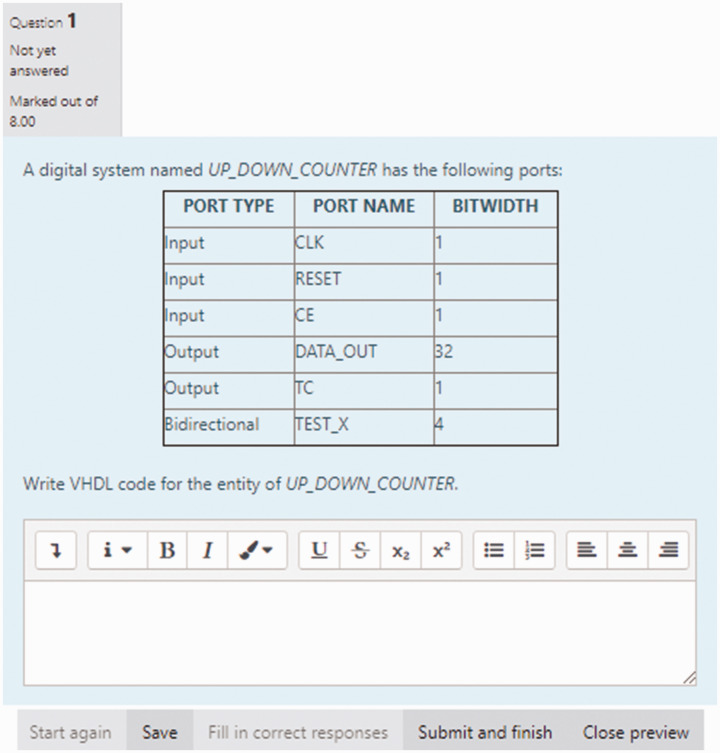
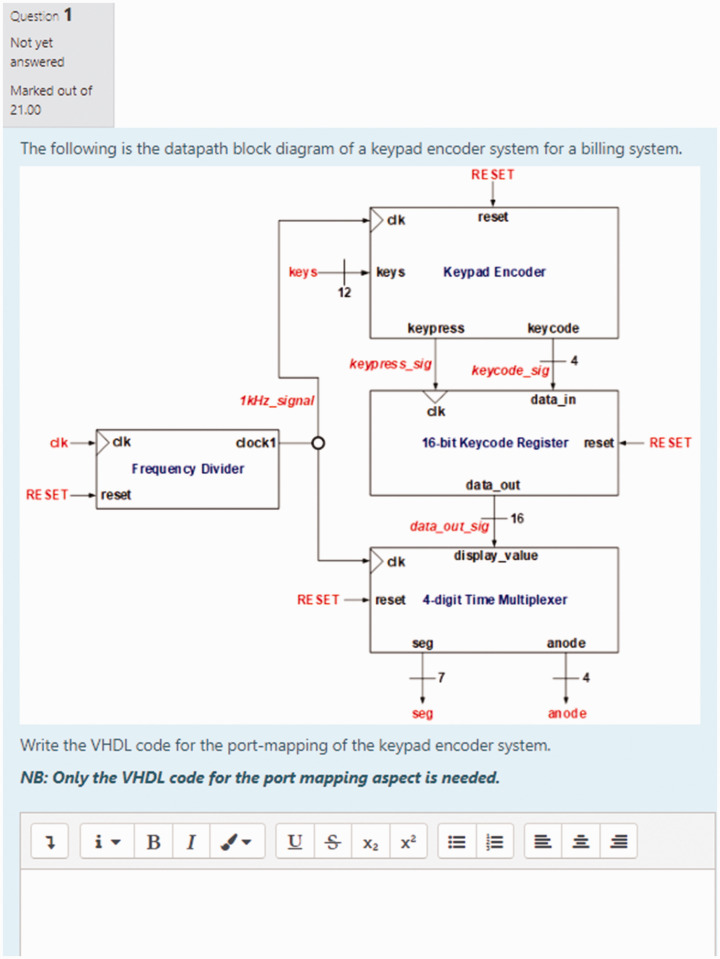
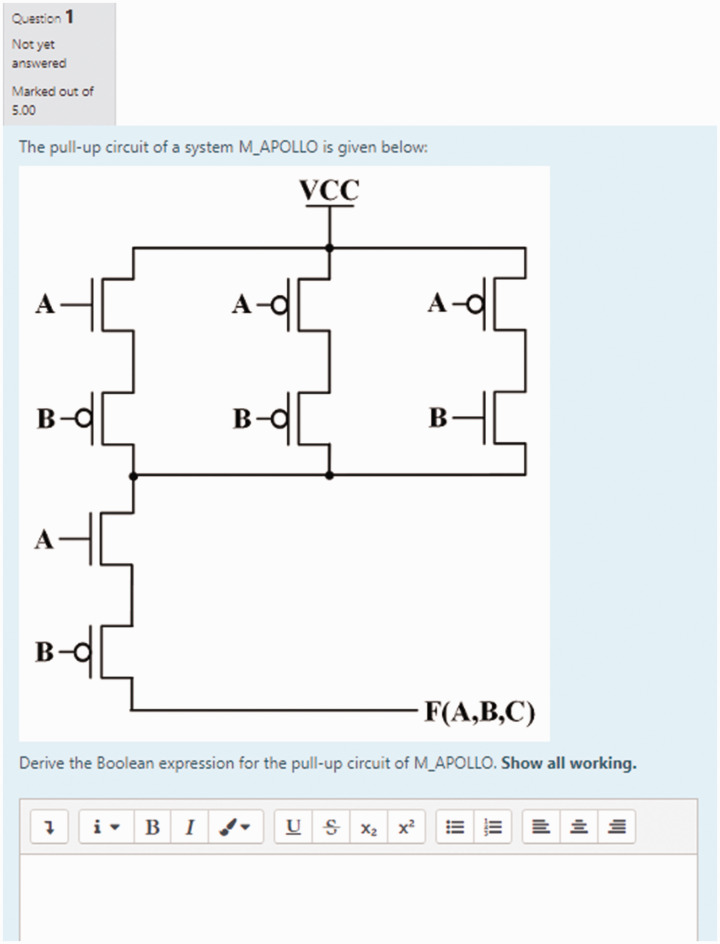
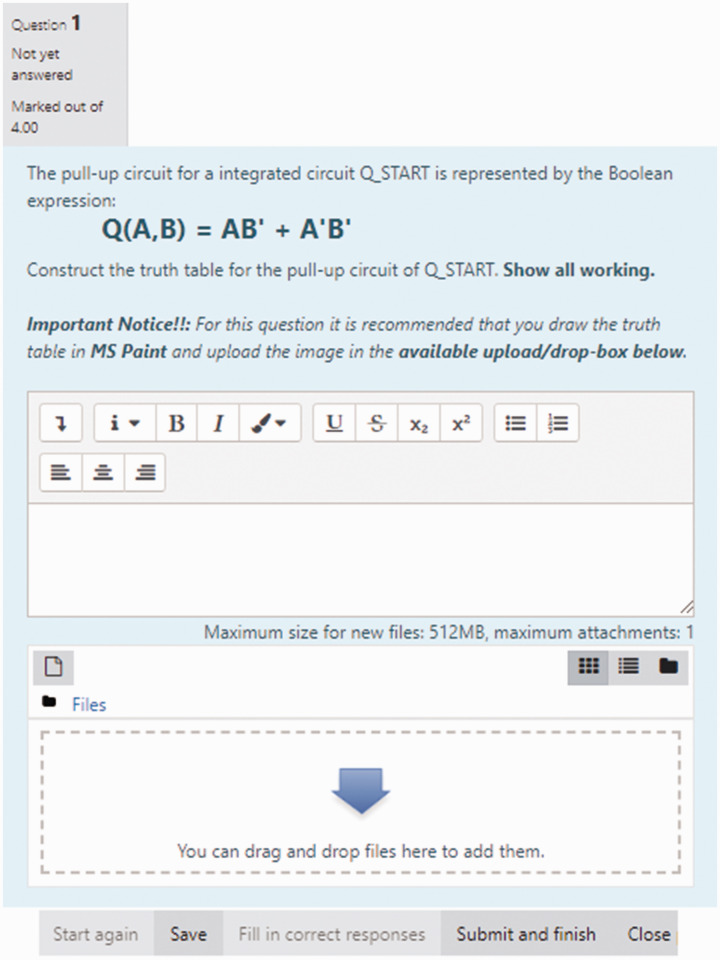
Verification
Claims the paper makes
The claims and statistics of this paper haven’t been checked yet.
Run the check — free, no account needed. It reads the open-access text and checks the sources it cites.
Claims other papers make about this one
Each is checked against this paper’s own text: does it say what the citing paper says it does?
The source backs part of the claim, not all of it — or backs it for a different population, condition or comparison.
In the citing paper
“George (2020) maintained that the use of this method in EMS can promote teamwork for all learners.”
From Exploration of curriculum changes in the learning and teaching methods of economic and management sciences (2025) · cites this paper as George (2020)
Experimental — accuracy not yet measured
Self-check
Percentages, sums and reported differences re-computed from the paper’s own numbers.
The self-check needs the paper’s full text.
Citations
Cites
No references could be resolved yet.
Research works printed but not linked: 12
- George M. L., 2018, International Journal of Innovative Research and Development (IJIRD), 7, 45
- George M. L. (2019). Digital logic theory for engineers – A classic workbook (1st ed.). Lambert Academic Publishing Inc.
- George M. L., 2020, International Journal of Advanced Science and Technology, 29, 1225
- George M.L., 2019, i-Manager’s Journal on Software Engineering, 14, 20
- Joseph S., Schumm M., Rummel O., Soska A., Reschke M., Mottok J., Niemetz M., Schroll-Decker I. (2013, March 13–15). Teaching finite state machines with case method and role play. In 2013 IEEE Global Engineering Education Conference (EDUCON) (pp. 1305–1312). Institute of Electrical and Electronics Engineers (IEEE). · DOI
- 10.1177/0047239516661713 · DOI · Paper page
- Montãnanaa J. M., Lemus-Zúñigab L. G., Garzac A. A., Benlloch-Dualdeb J. V. (2015, June 11–13). Teaching strategy on VHDL course based on participative learning. In 2015 International Conference on Information Technology Based Higher Education and Training (ITHET) (pp. 1–6). Institute of Electrical and Electronics Engineers (IEEE) . · DOI
- Nickels K. (2000, September). Pros and cons of replacing discrete logic with programmable logic in introductory digital logic courses [Paper presentation]. Proceedings of American Society for Engineering Education Annual Conference. Springfield, Massachusetts.
- Prasad P. W. C., Alsadoon A., Beg A., Chan A. (2014). Incorporating simulation tools in the teaching of digital logic design. In 2014 IEEE International Conference on Control System, Computing and Engineering (ICCSCE) (pp. 18–22). Institute of Electrical and Electronics Engineers (IEEE). · DOI
- Roy G., Ghosh D., Mandal C. (2015, December 10–12). A virtual laboratory package to support teaching of logic design and computer organization. In 2015 IEEE Seventh International Conference on Technology for Education (p. 3). Institute of Electrical and Electronics Engineers (IEEE). · DOI
- 10.1109/TE.2008.921796 · DOI
- Zhao X., Okamoto T. (2009, July 25–28). An email-based discussion learning system with ubiquitous device support. In Proceedings of 2009 4th International Conference on Computer Science & Education (pp. 1420–1424). Institute of Electrical and Electronics Engineers (IEEE). · DOI
Cited by
Mathebula, D., Nkondo, L. G., Dlamini, N. P., & Khumalo, P. N. (2025) · Journal of Education · doi:10.17159/2520-9868/i97a08 · Cited by 2
Metadata
- Authors
- George, M. L.
- Affiliations
- University of the West Indies (TT)
- Corresponding author
- George, Marcus L.
- ORCID
- George, Marcus L.
- Venue
- Journal of Educational Technology Systems
- Publisher
- SAGE Publications
- Published
- 2020-06-17
- Volume
- 49
- Issue
- 1
- Pages
- 23-48
- ISSN
- 0047-2395 (ISSN-L)
- 1541-3810
- PMC
- PMC7301292
- OpenAlex
- W3036305619
- Cited by
- 166
- References
- 0
- Citations by year
- 2026: 5 · 2025: 10 · 2024: 21 · 2023: 23 · 2022: 48 · 2021: 47 · 2020: 12
- FWCI
- 46.55
- Type
- journal article
- Language
- en
- Open access
- hybrid
- doi.org
- Locations
- Journal of Educational Technology Systems (publishedVersion, cc-by)
- PubMed Central (publishedVersion, cc-by)
- Topics
- Social Sciences › Education › Education during COVID-19 pandemic
- Social Sciences › Education › E-Learning and COVID-19
- Social Sciences › Education › Educational Innovations and Technology
- Keywords
- COVID-19 pandemic, school closures, teaching methods, test-taking strategies, undergraduate education, digital electronics course, electrical and computer engineering education, student performance, student feedback, distance education, University of the West Indies
About these checks
Registry, retraction, Cites and statistics results are computed, not judged, with one exception: a printed reference that no index lists is read once by a model before it counts as a citation error. Claims are extracted by a model and kept only when their quote appears verbatim in the text; each cited source is then checked, with a model’s help, for whether it says what the claim relies on. Those verdicts can be wrong — read the claim’s quote and the cited source before relying on one.
Statistics and arithmetic are recomputed, not judged.
Confidence bands are shown only for fields calibrated on our annotated test set. None is calibrated yet, so no band is shown.
What counts as a claim ›How we measure confidence ›How we check this ›
Are you an author, or do you see a problem with this page? Request a review
How to cite
Cite CoChat for the checks on this page, and the paper for its own findings.
- This page
- CoChat. (2026). Citation check: Effective Teaching and Examination Strategies for Undergraduate Learning During COVID-19 School Restrictions. https://app.cochat.ai/papers/10.1177/0047239520934017
- The paper
- George, M. L. (2020). Effective Teaching and Examination Strategies for Undergraduate Learning During COVID-19 School Restrictions. Journal of Educational Technology Systems. https://doi.org/10.1177/0047239520934017
Data sources
Bibliographic data: Semantic Scholar, OpenAlex, Crossref.
Contains information from the Semantic Scholar Academic Graph Datasets, made available under the ODC Attribution License (ODC-BY 1.0).
Semantic Scholar’s data is described in: Kinney, R., et al. (2023). The Semantic Scholar Open Data Platform. arXiv:2301.10140.
