

Trends in older people’s drinking habits, Sweden 2004–2017
Open accessThe DOI matches its Crossref record; 22 of the 24 references it cites were found in a registry or an index.
Abstract
Aims: To examine if and how the drinking habits of older people aged 60–79 years in Sweden have changed during 2004–2017, with a specific focus on age groups and gender. Data and measures: A Swedish, nationally representative, repeated cross-sectional telephone survey covering the years 2004–2017 ( n = 225,134) was used. Four aspects of alcohol consumption were investigated: proportion of alcohol consumers, frequency of drinking, amount per drinking occasion, and prevalence of heavy episodic drinking. Results: Three of the four measures investigated showed increases in alcohol consumption in the older age groups, particularly among women. Proportion of alcohol consumers, frequency of drinking and prevalence of heavy episodic drinking during the past month increased in most older age groups among both women and men, while the average amount per drinking occasion remained stable. Thus, total consumption in older age groups has increased over time, since the proportion of drinkers and the frequency of drinking has increased. Increases were particularly marked among women and in the age groups 70–74 and 75–79 years. In age groups below 60 years, these measures showed either declines or stability. Conclusions: There has been a steady increase in alcohol consumption across all the older age groups studied, which implies that the changing drinking habits are not isolated only to certain birth cohorts. Instead there seems to be a continuous shift in older people’s drinking habits which can be expected to continue. However, these increases are from very low levels, and older people’s drinking is still at modest levels. Public health implications must be studied further.
Overview
The claims and statistics of this paper haven’t been checked yet.
Free: it reads the open-access text and checks the first 5 claims that cite a source we can check. Create a free account to check every claim.
Integrity signals
Registry
Cites
Statistics
Figures
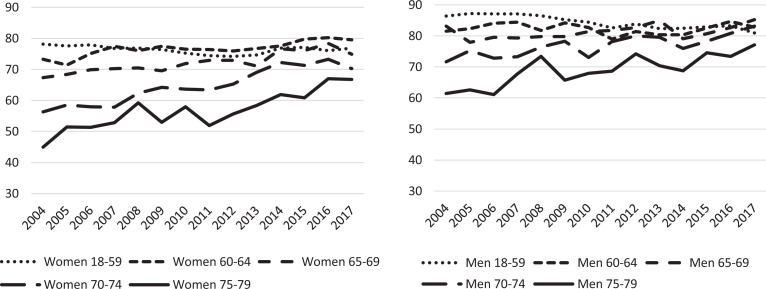
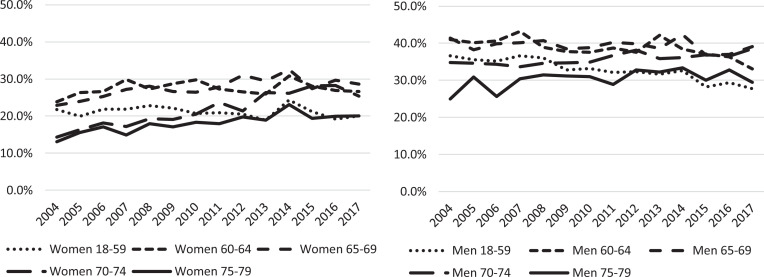
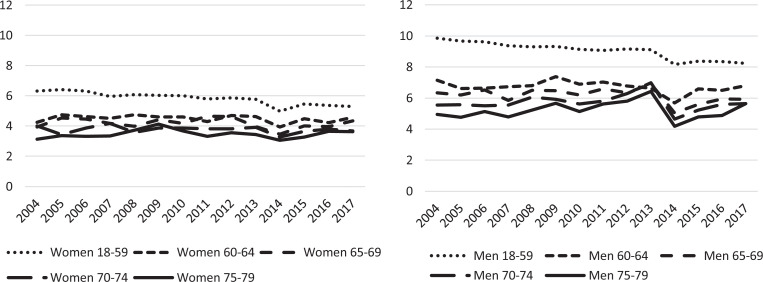
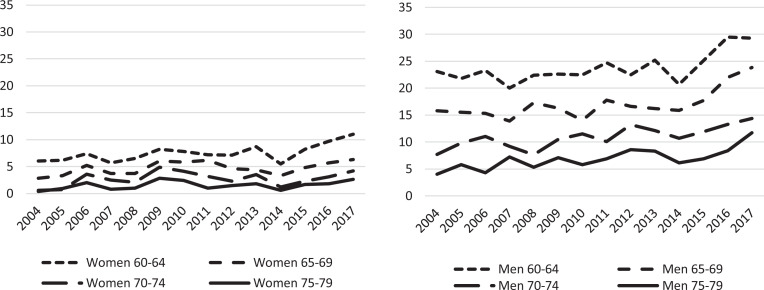
Verification
Claims the paper makes
The claims and statistics of this paper haven’t been checked yet.
Free: it reads the open-access text and checks the first 5 claims that cite a source we can check. Create a free account to check every claim.
Self-check
Percentages, sums and reported differences re-computed from the paper’s own numbers.
The self-check needs the paper’s full text.
Citations
Cites
Griswold, M. G., Fullman, N., Hawley, C., Arian, N., Zimsen, S. R. M., Tymeson, H. D., Venkateswaran, V., Tapp, A. D., Forouzanfar, M. H., Salama, J. S., et al. (2018) · The Lancet · doi:10.1016/s0140-6736(18)31310-2 · Cited by 3,524
Wood, A. M., Kaptoge, S., Butterworth, A. S., Willeit, P., Warnakula, S., Bolton, T., Paige, E., Paul, D. S., Sweeting, M., Burgess, S., et al. (2018) · The Lancet · doi:10.1016/s0140-6736(18)30134-x · Cited by 1,188 · cited 1×
“We do know that alcohol is a major contributor to the disease burden in society (Griswold et al., 2018; Wood et al., 2018) and that older people are more susceptible to the effects of alcohol (Anderson et al., 2012).”
Stockwell, T., Donath, S., Cooper‐Stanbury, M., Chikritzhs, T., Catalano, P., & Mateo, C. (2004) · Addiction · doi:10.1111/j.1360-0443.2004.00815.x · Cited by 488 · cited 2×
“Self-reports of alcohol consumption are usually underestimated (Stockwell et al., 2004).”
Britton, A., Ben-Shlomo, Y., Benzeval, M., Kuh, D., & Bell, S. (2015) · BMC Medicine · doi:10.1186/s12916-015-0273-z · Cited by 246 · cited 1×
“Older age has previously been associated with steep reductions in drinking, and both the prevalence and volume of drinking have been modest among those aged 65 years and older (Britton et al., 2015).”
Epidemiology of alcohol and drug use in the elderly
Wang, Y., & Andrade, L. H. (2013) · Current Opinion in Psychiatry · doi:10.1097/yco.0b013e328360eafd · Cited by 124 · cited 1×
“The increased number of older people and the increased alcohol consumption in this group entails a potentially large-scale public health issue (Hallgren et al., 2010) and has, due to the scarce amount of research on the topic, been dubbed “a silent epidemic” (Wang & Andrade, 2013).”
AGAHI, N., & PARKER, M. G. (2005) · Ageing and Society · doi:10.1017/s0144686x05004058 · Cited by 104
Self-citationKraus, L., Eriksson, M., Lindell, A., Pabst, A., Piontek, D., & Room, R. (2015) · Alcohol and Alcoholism · doi:10.1093/alcalc/agv013 · Cited by 98
Norström, T. (1987) · British Journal of Addiction · doi:10.1111/j.1360-0443.1987.tb01525.x · Cited by 83 · cited 1×
“This change in alcohol policy caused both increases in population drinking and a redistribution of drinking in the population (Norstrom, 1987).”
Alcohol and older people from a public health perspective
Anderson, P., VINTAGE project Working Group, Scafato, E., & Galluzzo, L. (2012) · Annali dell Istituto Superiore di Sanità · doi:10.4415/ann_12_03_04 · Cited by 56
Age, Period and Cohort Analysis of Light and Binge Drinking in Finland, 1968-2008
Härkönen, J., & Mäkelä, P. (2011) · Alcohol and Alcoholism · doi:10.1093/alcalc/agr025 · Cited by 52 · cited 1×
“…older people are usually attributed to a generational shift where the birth cohorts now growing old have lower abstinence rates and elevated consumption patterns compared to previous birth cohorts (Ahacic et al., 2012; Harkonen & Makela, 2011; Kraus, Tinghog, et al., 2015; Raninen et al., 2016).”
Batljan, I., Lågergren, M., & Thorslund, M. (2009) · European Journal of Ageing · doi:10.1007/s10433-009-0120-1 · Cited by 41 · cited 1×
“…now growing old are generally more active, have better health, and more financial resources compared to earlier cohorts (Agahi & Parker, 2005; Batljan et al., 2009; Parker & Agahi, 2013; Waern et al., 2014) – all of which are factors that enable and facilitate alcohol consumption at older…”
Alcohol consumption and harm among elderly Europeans: falling between the cracks
Hallgren, M. Å., Hogberg, P., & Andréasson, S. (2010) · European Journal of Public Health · doi:10.1093/eurpub/ckq111 · Cited by 40 · cited 1×
“The increased number of older people and the increased alcohol consumption in this group entails a potentially large-scale public health issue (Hallgren et al., 2010) and has, due to the scarce amount of research on the topic, been dubbed “a silent epidemic” (Wang & Andrade, 2013).”
Kraus, L., Østhus, S., Amundsen, E. J., Piontek, D., Härkönen, J., Legleye, S., Bloomfield, K., Mäkelä, P., Landberg, J., & Törrönen, J. (2015) · Addiction · doi:10.1111/add.12989 · Cited by 38
Raninen, J., Leifman, H., & Ramstedt, M. (2013) · Alcohol and Alcoholism · doi:10.1093/alcalc/agt051 · Cited by 36
Self-citationTrends in alcohol‐related mortality in Sweden 1969–2002: an age‐period‐cohort analysis
Rosén, M., & Haglund, B. (2006) · Addiction · doi:10.1111/j.1360-0443.2006.01421.x · Cited by 35 · cited 1×
“Our results are also in line with previous research reporting elevated rates of drinking and alcohol-related mortality in these cohorts (Kraus, Osthus, et al., 2015; Kraus, Tinghog, et al., 2015; Raninen et al., 2016; Rosen & Haglund, 2006).”
Wærn, M., Marlow, T., Morin, J., Östling, S., & Skoog, I. G. (2013) · Age and Ageing · doi:10.1093/ageing/aft136 · Cited by 33
Increased alcohol use over the past 20 years among the oldest old in Sweden
Kelfve, S., Agahi, N., Darin‐Mattsson, A., & Lennartsson, C. (2014) · Nordic Studies on Alcohol and Drugs · doi:10.2478/nsad-2014-0020 · Cited by 30 · cited 6×
“Although more recent cohorts of older people have a higher proportion of drinkers and drink more frequently compared to previous cohorts (Kelfve et al., 2014), the age pattern in the population has remained fairly similar.”
InfluentialSelf-citationAlcohol use of older adults: drinking alcohol for medicinal purposes
Immonen, S., Valvanne, J., & Pitkälä, K. H. (2011) · Age and Ageing · doi:10.1093/ageing/afr089 · Cited by 28 · cited 1×
“Older people mainly drink for social reasons and enjoyment (Immonen et al., 2011; Landberg et al., 2018), and continue to do so into very old ages because their generally more active lifestyle, better health and financial status allow them to.”
Agahi, N., Dahlberg, L., & Lennartsson, C. (2019) · Drug and Alcohol Dependence · doi:10.1016/j.drugalcdep.2018.12.011 · Cited by 27 · cited 1×
“Having higher levels of social contact and a greater number of activities in old age is associated with more frequent drinking and the continuation of frequent drinking patterns over time (Agahi et al., 2019).”
Self-citationChanges in sobriety in the Swedish population over three decades: age, period or cohort effects?
Ahačić, K., Kennison, R. F., & Kåreholt, I. (2011) · Addiction · doi:10.1111/j.1360-0443.2011.03692.x · Cited by 23 · cited 4×
“…older people are usually attributed to a generational shift where the birth cohorts now growing old have lower abstinence rates and elevated consumption patterns compared to previous birth cohorts (Ahacic et al., 2012; Harkonen & Makela, 2011; Kraus, Tinghog, et al., 2015; Raninen et al., 2016).”
InfluentialRaninen, J., Härkönen, J., & Landberg, J. (2016) · Addiction · doi:10.1111/add.13323 · Cited by 17 · cited 2×
“…older people are usually attributed to a generational shift where the birth cohorts now growing old have lower abstinence rates and elevated consumption patterns compared to previous birth cohorts (Ahacic et al., 2012; Harkonen & Makela, 2011; Kraus, Tinghog, et al., 2015; Raninen et al., 2016).”
Self-citationParker, M. G., & Agahi, N. (2012) · Springer eBooks · doi:10.1007/978-1-4419-8345-9_16 · Cited by 8 · cited 1×
“…now growing old are generally more active, have better health, and more financial resources compared to earlier cohorts (Agahi & Parker, 2005; Batljan et al., 2009; Parker & Agahi, 2013; Waern et al., 2014) – all of which are factors that enable and facilitate alcohol consumption at older ages.”
Self-citation
Research works printed but not linked: 3
- 8. Guttormsson U. Gröndahl M. (2017). Trender i dryckesmönster: befolkningens självrapporterade alkoholvanor under 2000-talet [Trends in drinking patterns: the general populations self-reported drinking habits during the 2000s]. Centralförbundet för alkohol-och narkotikaupplysning.
- 18. Ramstedt M. Raninen J. (2012). Alkoholkonsumtionen ökar bland äldre [Increasing alcohol consumption among elderly]. Alkohol&Narkotika, 3, 6– 9.
- 19. Raninen J. (2015). Ingen dricker som Svensson: om svenska befolkningens dryckesvanor [Nobody drinks like the average Swede: on the drinking habits of the Swedish population]. Centralförbundet för alkokhol- och narkotikaupplysning.
Cited by
Nadkarni, A., Bhatia, U., Bedendo, A., de Paula, T. C. S., de Andrade Tostes, J. G., Segura-Garcia, L., Tiburcio, M., & Andréasson, S. (2022) · International Journal of Mental Health Systems · doi:10.1186/s13033-022-00548-5 · Cited by 28
Comparing older people’s drinking habits in four Nordic countries: Summary of the thematic issue
Tigerstedt, C., Agahi, N., Bye, E. K., Ekholm, O., Härkönen, J., Jensen, H. A. R., Lau, C. J., Mäkelä, P., Moan, I. S., Parikka, S., et al. (2020) · Nordic Studies on Alcohol and Drugs · doi:10.1177/1455072520954326 · Cited by 23
“…no joint and standardised Nordic drinking habits study exists that could examine older people’s use of alcohol, we carried out four separate country-specific studies presented earlier in this thematic issue (Bye & Moan, 2020; Jensen et al., 2020; Raninen & Agahi, 2020; Tigerstedt et al., 2020).”
MethodSelf-citationWahlström, J., Magnusson, C., Låftman, S. B., & Svensson, J. (2023) · BMC Public Health · doi:10.1186/s12889-023-15097-w · Cited by 22
McInerney, K., Best, D. W., & Cross, A. J. (2022) · Nordic Studies on Alcohol and Drugs · doi:10.1177/14550725221143170 · Cited by 14
“This rapidly ageing population presents one of the major challenges for health and social care systems throughout Europe, a challenge exacerbated by increases in alcohol misuse among older adults (Hallgren et al., 2009; Raninen & Agahi, 2020).”
BackgroundAhlner, F., Falk, H., Johansson, L., Fässberg, M. M., Sterner, T. R., Samuelsson, J., Zettergren, A., Wærn, M., & Skoog, I. G. (2022) · International Journal of Environmental Research and Public Health · doi:10.3390/ijerph19148248 · Cited by 16
Metadata
- Authors
- Raninen, J., & Agahi, N.
- Affiliations
- Södertörn University (SE)
- Karolinska Institutet (SE)
- Corresponding author
- Raninen, Jonas
- Venue
- Nordic Studies on Alcohol and Drugs
- Publisher
- SAGE Publications
- Published
- 2020-09-17
- Volume
- 37
- Issue
- 5
- Pages
- 459-469
- ISSN
- 1455-0725 (ISSN-L)
- 1458-6126
- PMC
- PMC8899064
- OpenAlex
- W3088614232
- Cited by
- 11
- References
- 24
- Citations by year
- 2026: 1 · 2025: 1 · 2024: 1 · 2023: 2 · 2022: 3 · 2020: 3
- FWCI
- 1.43
- Type
- journal article
- Language
- en
- Open access
- diamond
- doi.org
- Licence
- Locations
- Nordic Studies on Alcohol and Drugs (publishedVersion, cc-by-nc)
- PubMed Central (publishedVersion, cc-by-nc)
- PubMed (publishedVersion)
- Funders
- Systembolagets råd för alkoholforskning (2018-0074)
- Forskningsrådet om Hälsa, Arbetsliv och Välfärd (2016-00884)
- Topics
- Health Sciences › Medicine › Epidemiology › Substance Abuse Treatment and Outcomes
- Health Sciences › Medicine › Pathology and Forensic Medicine › Alcohol Consumption and Health Effects
- Health Sciences › Medicine › Public Health, Environmental and Occupational Health › Aging, Health, and Disability
- Keywords
- alcohol consumption, older adults, drinking habits, binge drinking, gender differences, age differences, temporal trends, birth cohort, Sweden
About these checks
Registry, retraction, Cites and statistics results are computed, not judged, with one exception: a printed reference that no index lists is read once by a model before it counts as a citation error. Claims are extracted by a model and kept only when their quote appears verbatim in the text; each cited source is then checked, with a model’s help, for whether it says what the claim relies on. Those verdicts can be wrong — read the claim’s quote and the cited source before relying on one.
Statistics and arithmetic are recomputed, not judged.
Confidence bands are shown only for fields calibrated on our annotated test set. None is calibrated yet, so no band is shown.
What counts as a claim ›How we measure confidence ›How we check this ›
Are you an author, or do you see a problem with this page? Request a review
Data sources
Bibliographic data: Semantic Scholar, OpenAlex, Crossref.
Contains information from the Semantic Scholar Academic Graph Datasets, made available under the ODC Attribution License (ODC-BY 1.0).
Semantic Scholar’s data is described in: Kinney, R., et al. (2023). The Semantic Scholar Open Data Platform. arXiv:2301.10140.
