

Bioinformatics-Based Identification of Potential Hypoxia-Related Genes Associated With Peyronie’s Disease
Open accessThe DOI matches its Crossref record; 22 of the 22 references it cites were found in a registry or an index.
Abstract
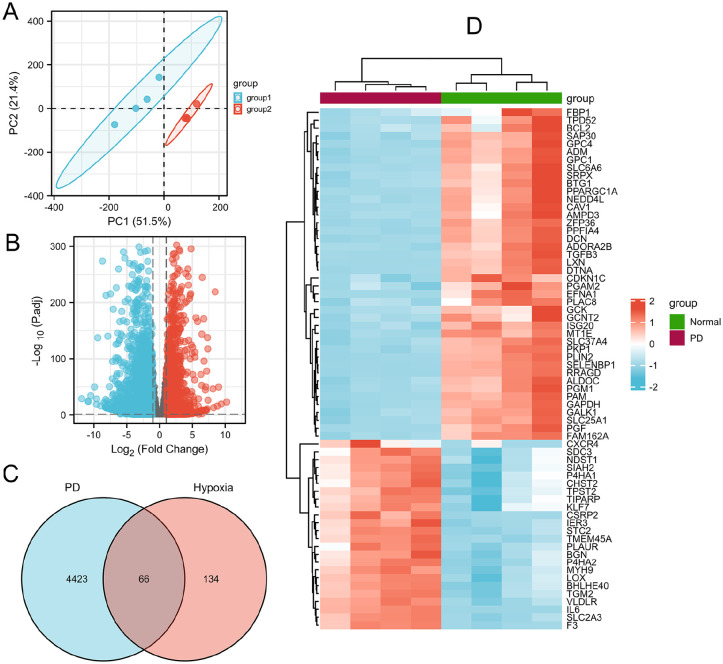
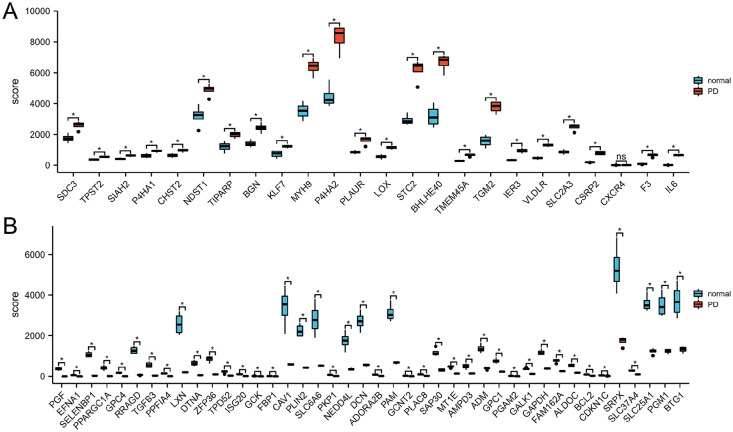
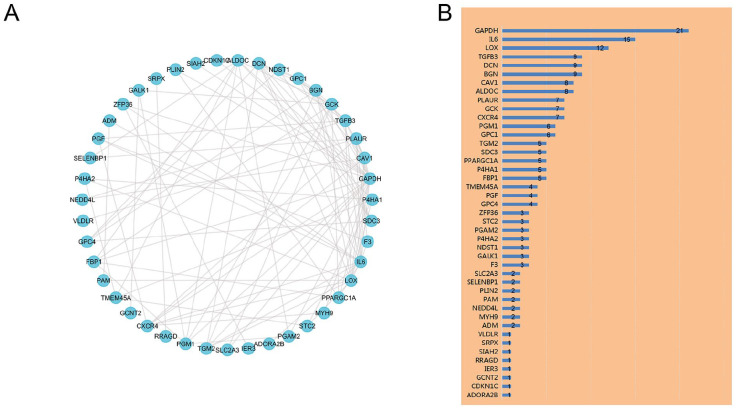
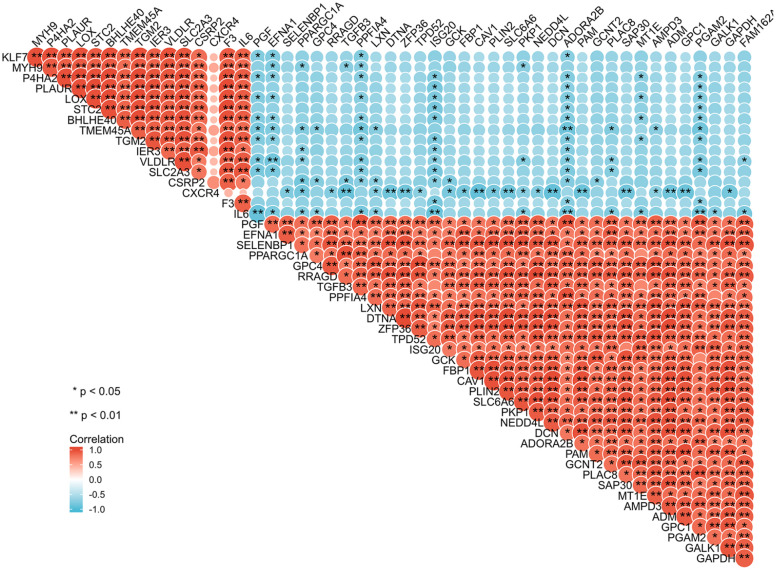
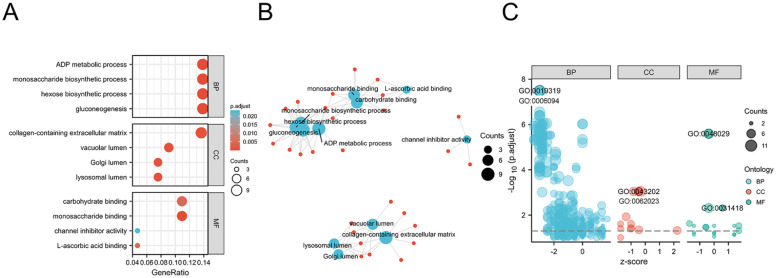
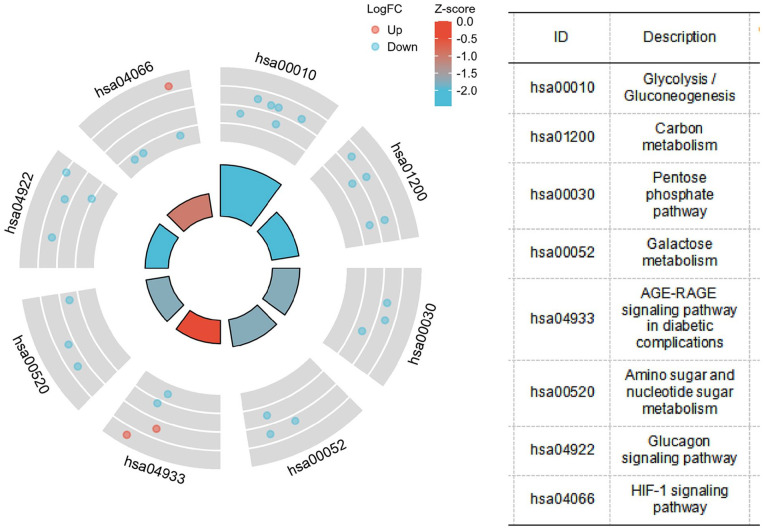
Hypoxia is one of the most important predisposing conditions for Peyronie's disease (PD) and the pathogenetic mechanism is yet to be completely elucidated. This study applied bioinformatic approaches to select candidate hypoxia-related genes involved in the pathogenesis of PD. The Gene Expression Omnibus (GEO) data set GSE146500 was introduced to compare the transcriptional profiling between normal and PD samples. The differential expression of hypoxia-related gene was determined with R software. On the selected candidate genes, further functional analyses were applied, including protein-protein interactions (PPIs), gene correlation, gene ontology (GO), and Kyoto Encyclopedia of Genes and Genomes (KEGG) pathway. A total of 66 candidate genes (24 candidates overexpressed in PD and 42 showing reduced expression in PD) were distinguished according to the differential expression between human fibroblast cells from normal and PD patients. The interactions among these candidate genes were recognized according to PPI analysis. The functional enrichment analyses revealed the potential modulatory functions of the candidate genes in some major biological processes, especially in glycolysis/gluconeogenesis and carbon metabolism. The findings would facilitate further study on the pathogenesis of PD, which might consequently promote the improvement of clinical strategies against PD.
Overview
The claims and statistics of this paper haven’t been checked yet.
Free: it reads the open-access text and checks the first 5 claims that cite a source we can check. Create a free account to check every claim.
Integrity signals
Registry
Cites
Statistics
Figures
Verification
Claims the paper makes
The claims and statistics of this paper haven’t been checked yet.
Free: it reads the open-access text and checks the first 5 claims that cite a source we can check. Create a free account to check every claim.
Claims other papers make about this one
Each is checked against this paper’s own text: does it say what the citing paper says it does?
The source backs part of the claim, not all of it — or backs it for a different population, condition or comparison.
In the citing paper
“Recent research has uncovered several genetic risk loci and gene mutations associated with PD. 6,20,138”
From Research advances in Peyronie's disease: a comprehensive review on genomics, pathways, phenotypic manifestation, and therapeutic targets. (2024) · cites this paper as [138]
Experimental — accuracy not yet measured
Self-check
Percentages, sums and reported differences re-computed from the paper’s own numbers.
The self-check needs the paper’s full text.
Citations
Cites
Wang, G. L., Jiang, B. H., Rue, E. A., & Semenza, G. L. (1995) · Proceedings of the National Academy of Sciences · doi:10.1073/pnas.92.12.5510 · Cited by 6,212 · cited 1×
“It regulates the transcriptional activity of multiple essential genes in tissue repair and the target genes may have pro-inflammatory, angiogenic, and potentially profibrotic properties (Wang et al., 1995).”
BackgroundChiche, J., Ilc, K., Laferrière, J., Trottier, E., Dayan, F., Mazure, N. M., Brahimi-Horn, M. C., & Pouysségur, J. (2009) · Cancer Research · doi:10.1158/0008-5472.can-08-2470 · Cited by 750 · cited 1×
“The cellular responses to the hypoxic state involve multiple genes, thereby activating the tissue repair processes to restore the biological functions of the damaged tissue (Chiche et al., 2009).”
BackgroundMoreland, R. B., Traish, A., McMillin, M. A., Smith, B., Goldstein, I., & Saenz de Tejada, I. (1995) · Journal of Urology · doi:10.1016/s0022-5347(01)67730-9 · Cited by 246
GHOLAMI, S. S., GONZALEZ-CADAVID, N. F., LIN, C.-S., RAJFER, J., & LUE, T. F. (2003) · Journal of Urology · doi:10.1097/01.ju.0000053800.62741.fe · Cited by 211
Vernet, D., Ferrini, M. G., Valente, E. G., Magee, T. R., Bou–Gharios, G., Rajfer, J., & González-Cadavid, N. F. (2002) · Nitric Oxide · doi:10.1016/s1089-8603(02)00124-6 · Cited by 154 · cited 1×
“In addition, according to valid evidence, after bilateral cavernous nerve injury (BCNI), increased expression and activity of penile lysyl oxidase (LOX) could be detected, which promoted penile fibrosis, reduced SMC content, and induced ED (Wan et al., 2018).”
BackgroundDavila, H. H., Ferrini, M. G., Rajfer, J., & Gonzalez‐Cadavid, N. F. (2003) · BJU International · doi:10.1046/j.1464-410x.2003.04224.x · Cited by 121
Understanding the course of Peyronie's disease
Garaffa, G., Trost, L. W., Serefoglu, E. C., Ralph, D., & Hellstrom, W. J. G. (2013) · International Journal of Clinical Practice · doi:10.1111/ijcp.12129 · Cited by 75
Ferrini, M. G., Rivera, S., Moon, J., Vernet, D., Rajfer, J., & Gonzalez-Cadavid, N. F. (2010) · The Journal of Sexual Medicine · doi:10.1111/j.1743-6109.2010.01884.x · Cited by 60 · cited 1×
“Previous articles investigated the effects of iNOS silencing in mice, thereby confirming its anti-fibrotic effect and highlighting its significance in protecting smooth muscle cells (SMCs) of corpus cavernosum (Ferrini et al., 2010).”
BackgroundThe Natural History of Peyronie’s Disease
Di Maida, F., Cito, G., Lambertini, L., Valastro, F., Morelli, G., Mari, A., Carini, M., Minervini, A., & Cocci, A. (2021) · The World Journal of Men's Health · doi:10.5534/wjmh.200065 · Cited by 59 · cited 1×
“PD’s pathophysiology is still subject of great discussion (Di Maida et al., 2021).”
Expanding roles of the hypoxia-response network in chronic kidney disease
Tanaka, T. (2016) · Clinical and Experimental Nephrology · doi:10.1007/s10157-016-1241-4 · Cited by 54 · cited 1×
“However, once the severity or the duration of the injury exceeds the healing power of tissue regeneration, the resultant chronic hypoxia may activate an alternative pathway that induces fibrosis, thereby resulting in scar formation and irreversible loss of normal biological functions (Tanaka, 2016).”
Background
Cited by
Molecular Mechanisms and Risk Factors Related to the Pathogenesis of Peyronie’s Disease
Mitsui, Y., Yamabe, F., Hori, S., Uetani, M., Kobayashi, H., Nagao, K., & Nakajima, K. (2023) · International Journal of Molecular Sciences · doi:10.3390/ijms241210133 · Cited by 41
“Lack of oxygen, the terminal electron acceptor of the electron transport chain, increases ROS generation, further promoting cellular and tissue damage and myofibroblast activation [81,90].”
BackgroundChi, J., Bi, W., Lou, K., Ma, J., Wu, J., & Cui, Y. (2024) · Sexual Medicine Reviews · doi:10.1093/sxmrev/qeae006 · Cited by 14
Self-citationUnveiling the molecular Hallmarks of Peyronie’s disease: a comprehensive narrative review
Şahin, A., Babayev, H., Cirigliano, L., Preto, M., Falcone, M., Altıntaş, E., & Gül, M. (2024) · International Journal of Impotence Research · doi:10.1038/s41443-024-00845-2 · Cited by 10
Current insights and future directions in Peyronie's disease management: A narrative review
Howell, S., Green, T., & Khalafalla, K. M. (2024) · UroPrecision · doi:10.1002/uro2.104 · Cited by 6
Cui, Y., Chen, L., Wang, X., Yu, L., & Wu, J. (2022) · Frontiers in Pharmacology · doi:10.3389/fphar.2022.1019358 · Cited by 4
Self-citation
Metadata
- Authors
- Cui, Y., Wang, Y., Men, C., Wu, J., & Liu, L.
- Affiliations
- Qingdao University (CN)
- Corresponding author
- Cui, Yuanshan
- Venue
- American Journal of Men's Health
- Publisher
- SAGE Publications
- Published
- 2022-07
- Volume
- 16
- Issue
- 4
- Pages
- 15579883221111720-15579883221111720
- ISSN
- 1557-9883 (ISSN-L)
- 1557-9891
- PMC
- PMC9340336
- OpenAlex
- W4288056284
- Cited by
- 6
- References
- 22
- Citations by year
- 2024: 3 · 2023: 2 · 2022: 1
- FWCI
- 1.09
- Type
- journal article
- Language
- en
- Open access
- gold
- doi.org
- Licence
- Locations
- American Journal of Men s Health (publishedVersion, cc-by-nc)
- PubMed Central (publishedVersion, cc-by-nc)
- PubMed (publishedVersion)
- DOAJ (DOAJ: Directory of Open Access Journals) (submittedVersion, cc-by-sa)
- Funders
- national natural science foundation of china (81801429)
- Topics
- Health Sciences › Medicine › Rheumatology › Dupuytren's Contracture and Treatments
- Health Sciences › Medicine › Urology › Urological Disorders and Treatments
- Health Sciences › Medicine › Psychiatry and Mental health › Sexual function and dysfunction studies
- Keywords
- Peyronie's disease, hypoxia, hypoxia-related genes, candidate gene identification, differential gene expression, human fibroblasts, protein-protein interaction, glycolysis/gluconeogenesis, carbon metabolism, pathogenesis
- MeSH terms
- Hypoxia, Humans, Male, Penile Induration, Computational Biology, Gene Expression Profiling, Gene Ontology
About these checks
Registry, retraction, Cites and statistics results are computed, not judged, with one exception: a printed reference that no index lists is read once by a model before it counts as a citation error. Claims are extracted by a model and kept only when their quote appears verbatim in the text; each cited source is then checked, with a model’s help, for whether it says what the claim relies on. Those verdicts can be wrong — read the claim’s quote and the cited source before relying on one.
Statistics and arithmetic are recomputed, not judged.
Confidence bands are shown only for fields calibrated on our annotated test set. None is calibrated yet, so no band is shown.
What counts as a claim ›How we measure confidence ›How we check this ›
Are you an author, or do you see a problem with this page? Request a review
How to cite
Cite CoChat for the checks on this page, and the paper for its own findings.
- This page
- CoChat. (2026). Citation check: Bioinformatics-Based Identification of Potential Hypoxia-Related Genes Associated With Peyronie’s Disease. https://app.cochat.ai/papers/10.1177/15579883221111720
- The paper
- Cui, Y., Wang, Y., Men, C., Wu, J., & Liu, L. (2022). Bioinformatics-Based Identification of Potential Hypoxia-Related Genes Associated With Peyronie’s Disease. American Journal of Men's Health. https://doi.org/10.1177/15579883221111720
Data sources
Bibliographic data: Semantic Scholar, OpenAlex, Crossref.
Contains information from the Semantic Scholar Academic Graph Datasets, made available under the ODC Attribution License (ODC-BY 1.0).
Semantic Scholar’s data is described in: Kinney, R., et al. (2023). The Semantic Scholar Open Data Platform. arXiv:2301.10140.
